Have you ever had that experience of being really seen? Paid attention to in that deep way where the other person notices things about you that no one else ever seems to, maybe even sees things in you that you didn’t know were there, but now you see them too? Maybe with a therapist, or a romantic partner, or a really sensitive, observant friend or family member? There’s something tingly and terrifying about being seen that way, but also deeply satisfying and rewarding. The pay-off of that vulnerability is intimacy.
When we talk about evaluation being an intimate experience (something I’ve heard several people mention over the last few months and experienced myself), that’s what I think about. Really, evaluation is saying, “I want to see all of you. The parts you love, the parts that make you tremble, the parts you don’t even know are there. I want us to look at them together, and I want to know you inside and out.” When we evaluate, we’re asking the people we work with to be completely open and vulnerable with us about things that matter a lot to them, to lay it all out there for close observation and follow-up commentary and judgement, often for a paying audience. Evaluators are there to see you, to help you see yourself, and help others see you too. Terrifying. And thrilling, in the right context.
I’ve had the chance to talk about intimacy a lot lately with a friend of mine, Erin Clark. Erin is a writer, performer, athlete, and all-around sparkly, amazing person. She has the gift of being an elegant and soulful thinker and you can find out more about how she’s been navigating intimacy in her own life by reading her digital memoir, Love All The Way (not entirely safe for work, I’ll warn you now), and checking out her recent guest appearance on the Free Her Spirit podcast.
When it comes to intimacy, one of the things Erin talks about in the podcast is how people are constantly forcing intimacies on her when they see that she uses a wheelchair. She gives an example of an exchange where a woman in an airport abruptly transitions from asking about outlets to charge her phone to probing Erin about why she’s in the wheelchair and whether she’s experienced some kind of trauma. Here’s what Erin said about this kind of interaction:
“It’s a very loaded and violating exchange that happens so frequently it becomes mundane, which is very weird. … A lot of the heartbreak I experience, or the struggle for me in having a disability, comes down to intimacies being forced on me so frequently that it shuts down my ability to feel intimacies, so that strangers are having conversations with me that only lovers should, and people are carrying me or touching me or taking me over in ways that only people I’ve developed that trust with, who’ve earned that, should. But because it feels so casual to people, so right to them, so, you know, allowed and permissed, that there aren’t a lot of ways for me to maintain those boundaries and protect my chosen intimacies that don’t involve being shut down completely.”
(You should definitely listen to the whole episode, or read the transcript, because Erin has magical things to say about being a sex icon, a world-champion pole-dancer and a paragliding pilot in Spain, and her insights into experiencing life through risk, desire, and intuition. Erin is my #LivingInComplexity icon. You can find out more about her by following her on Instagram, checking out her website, and also by reading her soon-to-be-published memoir about love, sex, risk, family, intimacy, travel, adventure, self-discovery, and so much more. I’m halfway through reading a draft of it and it’s already made me cry a lot, write poetry, and dream up a list of fabulous risks I can take.)
The context that Erin is talking about isn’t the same as program evaluation, but it still got me thinking. Evaluation is an intimate experience, so there are implications for how little autonomy organizations and communities have to enter into it authentically. Even for evaluations that aren’t explicitly mandated or when participation in evaluation processes is meant to be consent-based, there can be a sense of, “Well, we need to do it because it’s what’s expected. We don’t really have a choice. It’s not up to us. This is how the system works.” And the system works that way because of assumptions made about how to manage social services and distribute funding and resources—that accountability and efficacy of services and policies comes from externally-imposed ‘objective’ scrutiny and surveillance (whether from funders to programs, or service providers to service users), and not the fostering of authentic, mutual relationships founded on trust and respect. (Even though a lot of us working in this area know that the people closest to and most invested in the thing being evaluated are the best-positioned for informed and insightful critique of it and the most motivated to hold it to the highest standard of meaningful impact.)
Real intimacy isn’t possible when you aren’t allowed to have control over your boundaries and your privacy. Real trust doesn’t grow in a culture of mistrust. The most accountability is demanded from those with the least structural power, dragged upward instead of flowing downward, and evaluation is under constant pressure to be co-opted into maintaining this arrangement of who is scrutinized and who does the scrutinizing, for which the quality and meaning of our work suffers. Vulnerability is a gift, and gifts have to be given, not taken. Like Erin says, we are supposed to earn our intimacies, not assume we are entitled them, and we do all kinds of harm when we do.
It’s a bad system, but there’s promise here too. When we do find ways to foster the conditions for meaningful, enthusiastic, consensual participation in evaluation, when we collectively resist, disrupt, and subvert the power dynamics that rear up in so many places throughout the process, when we make spaces for each other and ourselves to “heal from the trauma of being judged” (thank you forever for that phrase, Chris—it’s definitely going on a t-shirt), then we can participate in the magic of intimacy in evaluation. We can let down our guards and set our masks aside for a little while (that means us too, fellow evaluators), and share our scars and fears, hopes and delights, questions and insights, and dive into discovery together.
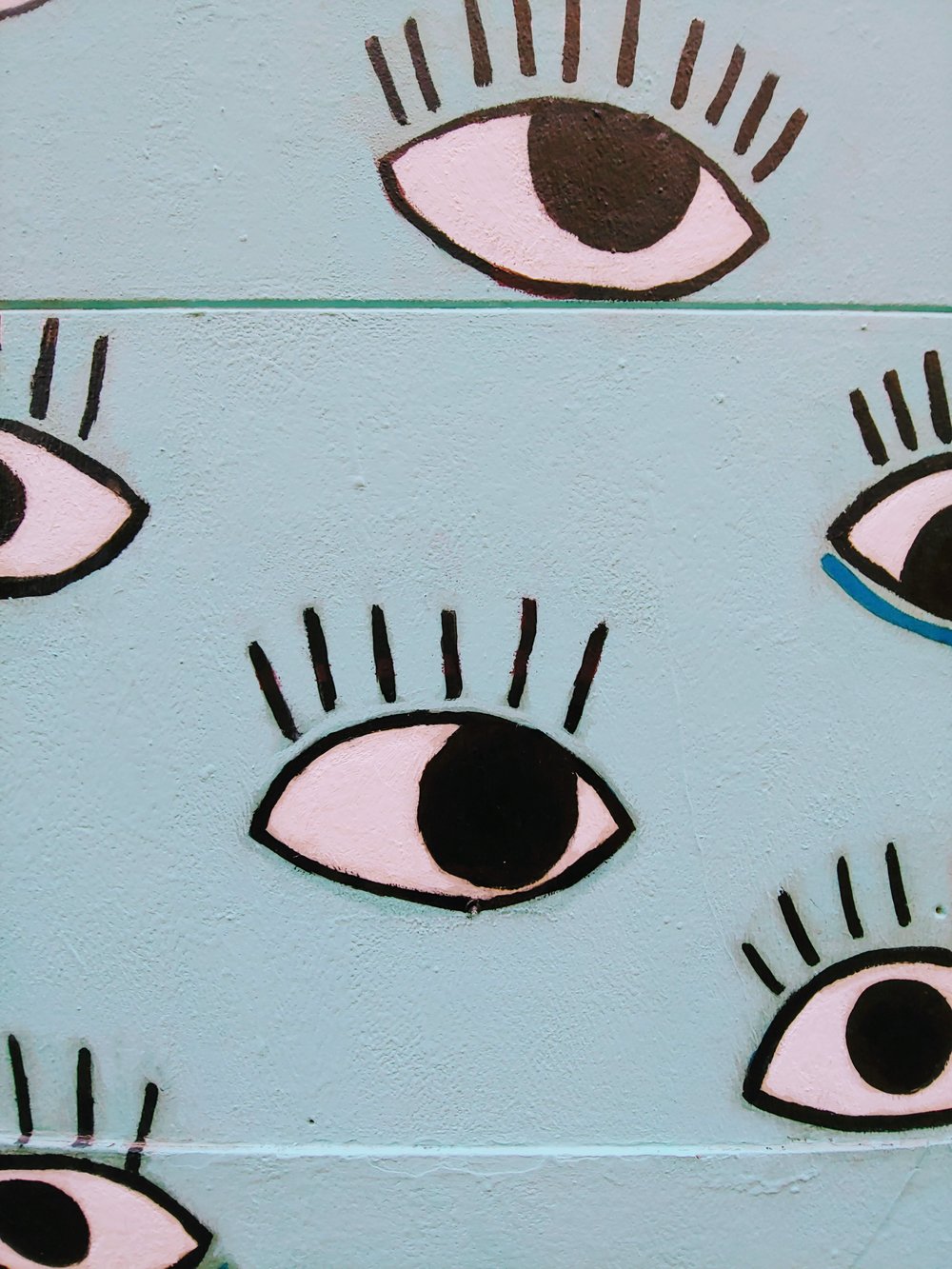
Photo by erika akire on Unsplash. A light blue wall with cartoonish eyes painted on it.
 English
 Afrikaans
 Shqip
Shqip አማርኛ
አማርኛ العربية
 Հայերեն
 Azərbaycan dili
 Euskara
 Беларуская мова
 বাংলা
বাংলা Bosanski
 Български
 Català
 Cebuano
 Chichewa
 简体中文
简体中文 繁體中文
繁體中文 Corsu
Corsu Hrvatski
 Čeština
 Dansk
Dansk Nederlands
 Esperanto
 Eesti
Eesti Filipino
 Suomi
Suomi Français
 Frysk
Frysk Galego
 ქართული
 Deutsch
 Ελληνικά
 ગુજરાતી
 Kreyol ayisyen
 Harshen Hausa
 Ōlelo Hawaiʻi
 עִבְרִית
 हिन्दी
 Hmong
Hmong Magyar
 Íslenska
 Igbo
Igbo Bahasa Indonesia
 Gaeilge
 Italiano
 日本語
日本語 Basa Jawa
 ಕನ್ನಡ
ಕನ್ನಡ Қазақ тілі
 ភាសាខ្មែរ
 한국어
한국어 كوردی
كوردی Кыргызча
 ພາສາລາວ
 Latin
Latin Latviešu valoda
 Lietuvių kalba
 Lëtzebuergesch
 Македонски јазик
 Malagasy
 Bahasa Melayu
 മലയാളം
 Maltese
 Te Reo Māori
 मराठी
मराठी Монгол
 ဗမာစာ
ဗမာစာ नेपाली
 Norsk bokmål
 پښتو
پښتو فارسی
فارسی Polski
 Português
 ਪੰਜਾਬੀ
 Română
 Русский
 Samoan
 Gàidhlig
 Српски језик
 Sesotho
 Shona
Shona سنڌي
سنڌي සිංහල
සිංහල Slovenčina
 Slovenščina
 Afsoomaali
 Español
 Basa Sunda
 Kiswahili
 Svenska
 Тоҷикӣ
 தமிழ்
தமிழ் తెలుగు
 ไทย
ไทย Türkçe
 Українська
 اردو
اردو O‘zbekcha
 Tiếng Việt
 Cymraeg
 isiXhosa
 יידיש
יידיש Yorùbá
 Zulu
Zulu