Happy Valentine’s Day! As many of you know, the idiom “Less is More” is attributed to minimalist architect Ludwig Mies van der Rohe.
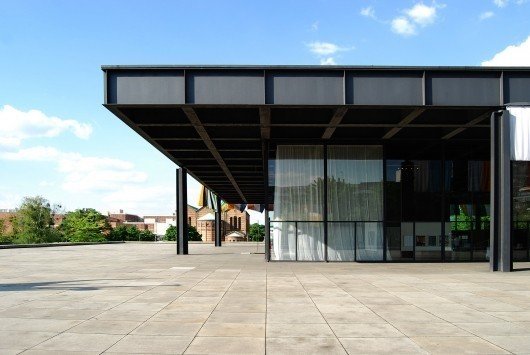
I am grateful to him for coining the phrase and inspiring me to adopt it into my Intentional Practice. Intentional Practice has two important guiding beliefs, both of which are hard to practice. Despite their difficulty, I  them anyway because of the conceptual and behavioral challenges they present. I am not one to shy away from pursuing difficult tasks; in fact, they inspire me to learn new ways of thinking, which in turn may push me towards new actions. I will save the other belief for another post (for the curious-minded—it is “Museums can’t be all things to all people”); today, the three simple words noted above—Less is More—are particularly important.
Simple words, only three of them, and all with so few letters, echo the point. Here are two ways that Less is More supports Intentional Practice thinking (I’ll try to be brief):
1. Intentional practice planning and evaluation activities support achieving impact. As such, to achieve and measure impact through supporting outcomes among visitors, visitors will have had to experience the essence of the museum so they can consider and process it and then know it. For example, if a museum’s impact statement is “People deepen their connection to nature and consider their role in sustaining their natural world for future generations,”[1] visitors may not be able to make sense of the experiences if exhibits and programming cover too much or different territory—conceptually. If programs and exhibitions focus on ideas that support the museum’s core concept, as expressed in that the impact statement, and go deep with the concept, there is a greater chance that visitors will experience more.
One core concept—not two or three—one. One concept presented in a multitude of ways through a variety of mediums reinforces the concept that supports the museum’s intended impact. From a planning perspective, the impact statement serves as a guidepost for disciplined, and sometimes ruthless, decision making. From an evaluation perspective, visitors will be better able to process their experience because there are fewer ideas for them to manage; in turn, they will be experiencing the essence of the museum deeply, and as such, the evaluation process will have a better chance of detecting the effect of their experience and the ways in which the museum is achieving impact.
2. Less is More is also meaningful because it suggests that numbers may not equal success. For too long, museums’ focus on attendance suggests that high numbers are an indicator of quality. A number is a number. If numbers were important, I am compelled to ask, “What number is enough”? What if success were measured by the quality of the visitor experience? What if “More” came to mean quality of experience whereby visitors were describing the ways in which the museum did (or did not) help them understand the ramifications of climate change (for example)? Let’s connect the visitor experience to point #1: what if “Less” was presented, thereby creating physical and conceptual space for the idea to sink in, and in doing so, the experience became “More”? The “Less” part of the phrase invites depth, and experiences become “More.”
[1] Courtesy of The Wild Center, Tupper Lake, NY
The post I ❤️ Less is More appeared first on RK&A.
 English
 Afrikaans
 Shqip
Shqip አማርኛ
አማርኛ العربية
 Հայերեն
 Azərbaycan dili
 Euskara
 Беларуская мова
 বাংলা
বাংলা Bosanski
 Български
 Català
 Cebuano
 Chichewa
 简体中文
简体中文 繁體中文
繁體中文 Corsu
Corsu Hrvatski
 Čeština
 Dansk
Dansk Nederlands
 Esperanto
 Eesti
Eesti Filipino
 Suomi
Suomi Français
 Frysk
Frysk Galego
 ქართული
 Deutsch
 Ελληνικά
 ગુજરાતી
 Kreyol ayisyen
 Harshen Hausa
 Ōlelo Hawaiʻi
 עִבְרִית
 हिन्दी
 Hmong
Hmong Magyar
 Íslenska
 Igbo
Igbo Bahasa Indonesia
 Gaeilge
 Italiano
 日本語
日本語 Basa Jawa
 ಕನ್ನಡ
ಕನ್ನಡ Қазақ тілі
 ភាសាខ្មែរ
 한국어
한국어 كوردی
كوردی Кыргызча
 ພາສາລາວ
 Latin
Latin Latviešu valoda
 Lietuvių kalba
 Lëtzebuergesch
 Македонски јазик
 Malagasy
 Bahasa Melayu
 മലയാളം
 Maltese
 Te Reo Māori
 मराठी
मराठी Монгол
 ဗမာစာ
ဗမာစာ नेपाली
 Norsk bokmål
 پښتو
پښتو فارسی
فارسی Polski
 Português
 ਪੰਜਾਬੀ
 Română
 Русский
 Samoan
 Gàidhlig
 Српски језик
 Sesotho
 Shona
Shona سنڌي
سنڌي සිංහල
සිංහල Slovenčina
 Slovenščina
 Afsoomaali
 Español
 Basa Sunda
 Kiswahili
 Svenska
 Тоҷикӣ
 தமிழ்
தமிழ் తెలుగు
 ไทย
ไทย Türkçe
 Українська
 اردو
اردو O‘zbekcha
 Tiếng Việt
 Cymraeg
 isiXhosa
 יידיש
יידיש Yorùbá
 Zulu
Zulu