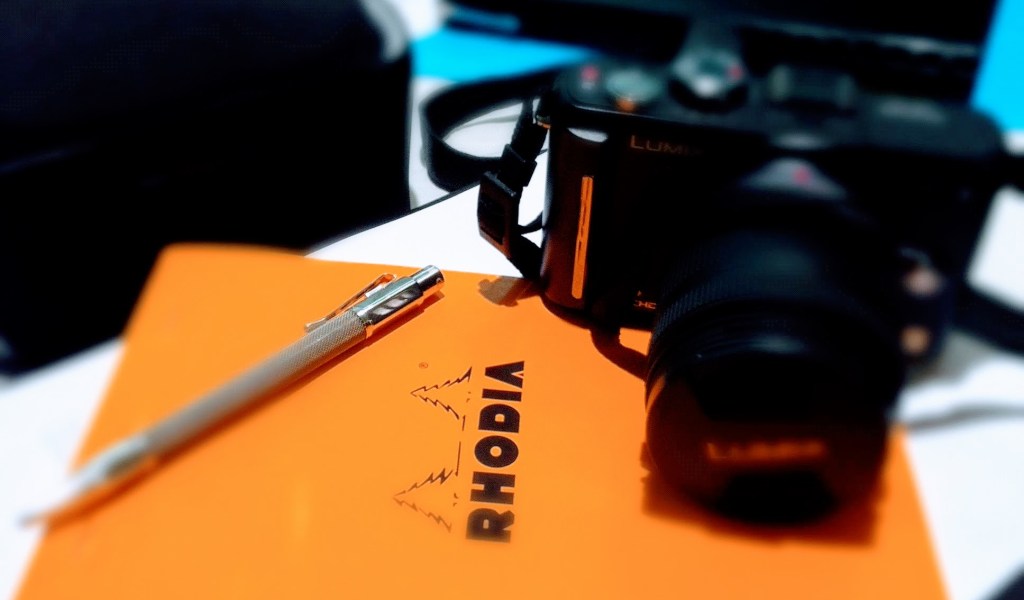
Gathering insights about how people live, work, socialize and experience their world is one of the principal challenges facing innovators, design researchers or those looking to do design-driven evaluation. It’s easy to forget that most of us have access to a powerful tool for data gathering on our phone or in the body of a camera.
Camera work can be a great means for capturing social life and patterns. Whether it is through using a process like Photovoice or using it as part of an array of data gathering tools, cameras are often forgotten when we think about how to learn from our users. Let’s look at one way we can use cameras to support understanding our users’ context better: The cultural probe.
The Probe
A camera (or phone camera), notebook, and instructions are all that’s needed for your prospective users to turn their lives into an anthropological adventure. This method is user-focused and meant to involve your prospective users taking pictures and notes and thoughts about what they are recording. The instructions are tied mostly to the basics of photography (e.g., consideration of light, framing, and ethics of taking pictures of others, in certain settings, etc.).
Instructions can also focus participants’ attention on specific things. For example, you may wish to have your participants focus on a topic, setting, context, interaction, or situation — anything you want to learn more about. Keeping it too general is often not a good idea and can be anxiety- or confusion-provoking in your participants. If they are too specific, you might lose some of the creative possibilities.
The probe part of this method is the ‘thing’ you want your participants to focus on. The cultural part comes from what context, framing, explanation, or interpretation participants (and others) bring to the photos.
Interpretation & Expression
What makes the cultural probe method useful is that it allows for a guided activity that has a standard format while producing artifacts — pictures — that delve into the uniqueness of your users’ lives.
What participants choose to take pictures of can be instructive. It provides an opportunity to discuss why something was included and why other things might not be.
What context the photos were taken is also helpful as it indicates priorities, habits, situations, or choices that the participant makes.
Photographs provide a means to ask questions about what is in the pictures, how things are framed, and what kind of reflections are made by participants from the photos.
This method can also be used in group settings where people agree ahead of time (with the right to withdraw agreement, of course) to share some of the photos they take. It can be useful in times of conflict or ambiguity when participants themselves aren’t sure what is going on and collective sensemaking is needed.
The camera is a powerful tool. Its insights can help us design services and products better, create and learn more from people, and provide a means of qualitative evaluation data, too.
We love this method. If you want help using cameras as a storytelling, design, or evaluation tool contact us and we can help you along.
 English
 Afrikaans
 Shqip
Shqip አማርኛ
አማርኛ العربية
 Հայերեն
 Azərbaycan dili
 Euskara
 Беларуская мова
 বাংলা
বাংলা Bosanski
 Български
 Català
 Cebuano
 Chichewa
 简体中文
简体中文 繁體中文
繁體中文 Corsu
Corsu Hrvatski
 Čeština
 Dansk
Dansk Nederlands
 Esperanto
 Eesti
Eesti Filipino
 Suomi
Suomi Français
 Frysk
Frysk Galego
 ქართული
 Deutsch
 Ελληνικά
 ગુજરાતી
 Kreyol ayisyen
 Harshen Hausa
 Ōlelo Hawaiʻi
 עִבְרִית
 हिन्दी
 Hmong
Hmong Magyar
 Íslenska
 Igbo
Igbo Bahasa Indonesia
 Gaeilge
 Italiano
 日本語
日本語 Basa Jawa
 ಕನ್ನಡ
ಕನ್ನಡ Қазақ тілі
 ភាសាខ្មែរ
 한국어
한국어 كوردی
كوردی Кыргызча
 ພາສາລາວ
 Latin
Latin Latviešu valoda
 Lietuvių kalba
 Lëtzebuergesch
 Македонски јазик
 Malagasy
 Bahasa Melayu
 മലയാളം
 Maltese
 Te Reo Māori
 मराठी
मराठी Монгол
 ဗမာစာ
ဗမာစာ नेपाली
 Norsk bokmål
 پښتو
پښتو فارسی
فارسی Polski
 Português
 ਪੰਜਾਬੀ
 Română
 Русский
 Samoan
 Gàidhlig
 Српски језик
 Sesotho
 Shona
Shona سنڌي
سنڌي සිංහල
සිංහල Slovenčina
 Slovenščina
 Afsoomaali
 Español
 Basa Sunda
 Kiswahili
 Svenska
 Тоҷикӣ
 தமிழ்
தமிழ் తెలుగు
 ไทย
ไทย Türkçe
 Українська
 اردو
اردو O‘zbekcha
 Tiếng Việt
 Cymraeg
 isiXhosa
 יידיש
יידיש Yorùbá
 Zulu
Zulu