A couple years ago, I worked on this report:
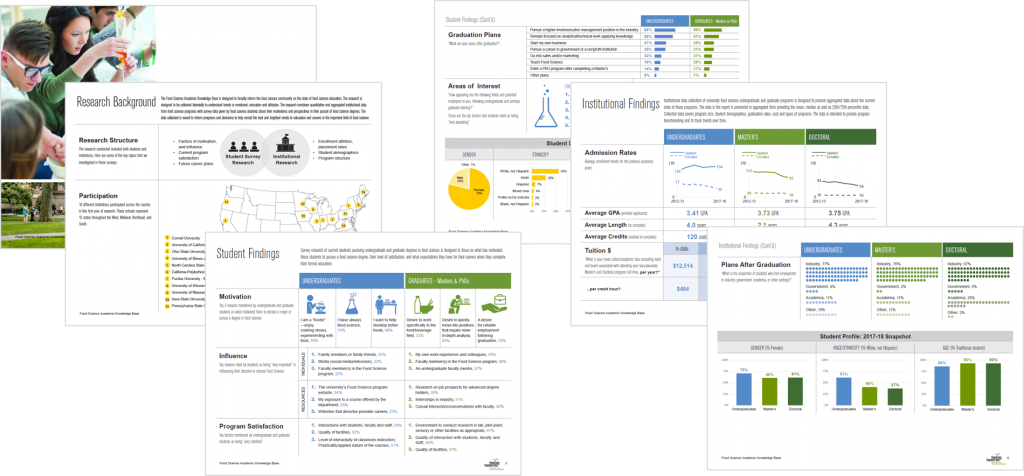
This report summarized survey responses from both universities and their students. Even with hundreds of survey responses and dozens of survey questions, we kept the report’s body to just six pages!
How’d we choose which findings to include in the report’s main body?!
That can be a daunting task. But it doesn’t have to be.
It’s much easier to pare down our report’s content when we’ve got appendices to back us up.
We don’t have to worry about forgetting any important details, since readers can simply flip to the back to learn more.
We get to be transparent by showing all the data (in the appendices) without overwhelming our busy readers (by trying to shove everything into the body of the report).
This particular report was six pages long plus 33 pages of appendices!
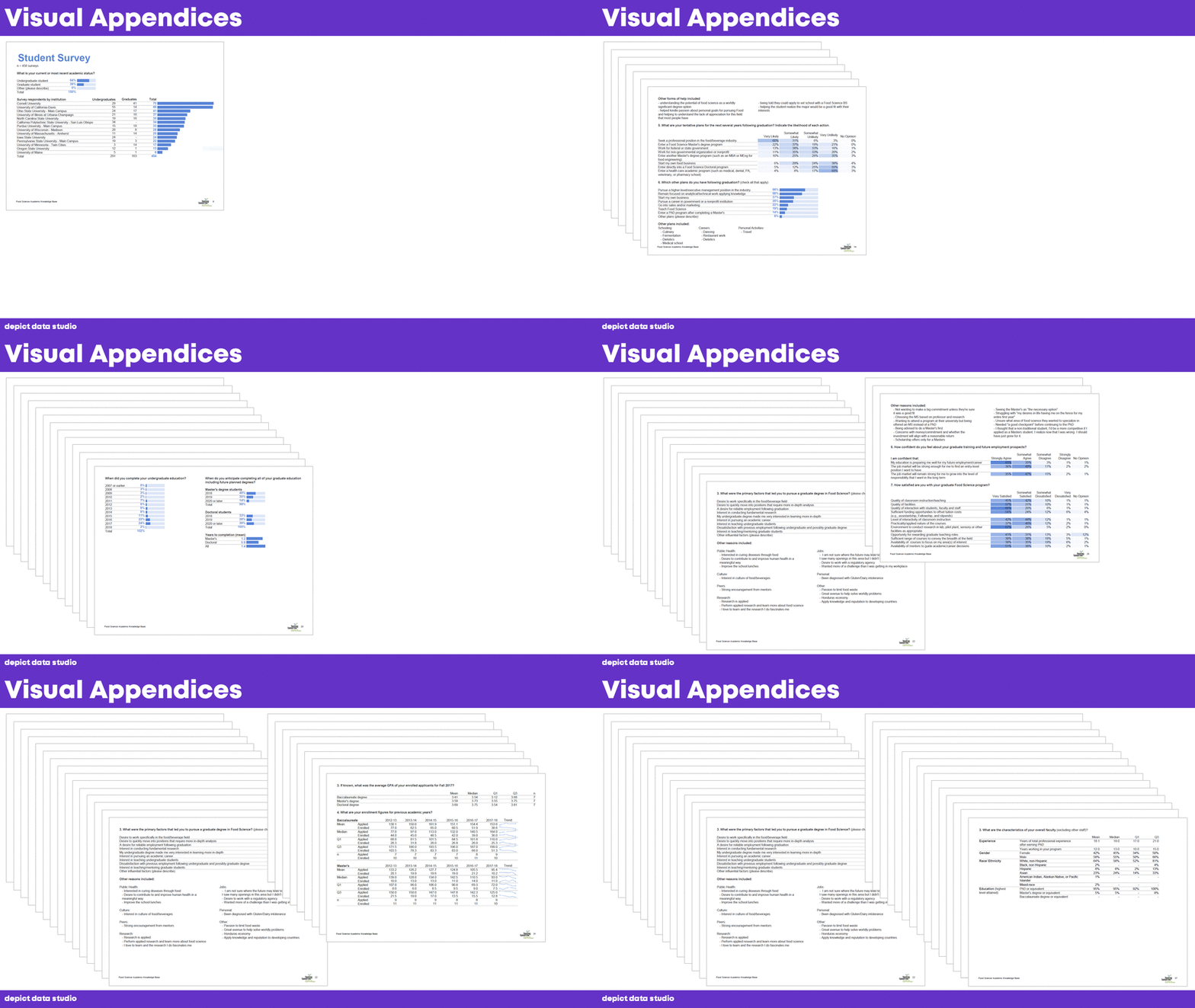
What Can—and Should—Be Included in Appendices
Here’s everything that can be removed from the report’s main body and pushed to the appendix:
- Question-by-question survey responses (i.e., tables and tables of closed-ended and open-ended survey data)
- Data collection instruments (e.g., an empty copy of the questions from the survey)
- Transcripts from qualitative data collection (like focus groups or interviews)
- Meeting minutes or other official documents we might’ve referenced quickly within the body of the report
- Anything that would put our non-technical audiences to sleep
- Anything that’s not central to the key takeaway message from the report
- Anything we feel like we should include just in case
- Anything that one person who asks lots of questions might need to know about
- Patterns over time (e.g., our report’s main body could focus on this year’s data, but we might include tables that compare this year’s data to last year’s data in the appendix)
What Appendices Typically Look Like
Here’s what tables in the back of reports typically look like: Tiny font sizes, cluttered tables, and no visuals to help readers spot the key patterns.
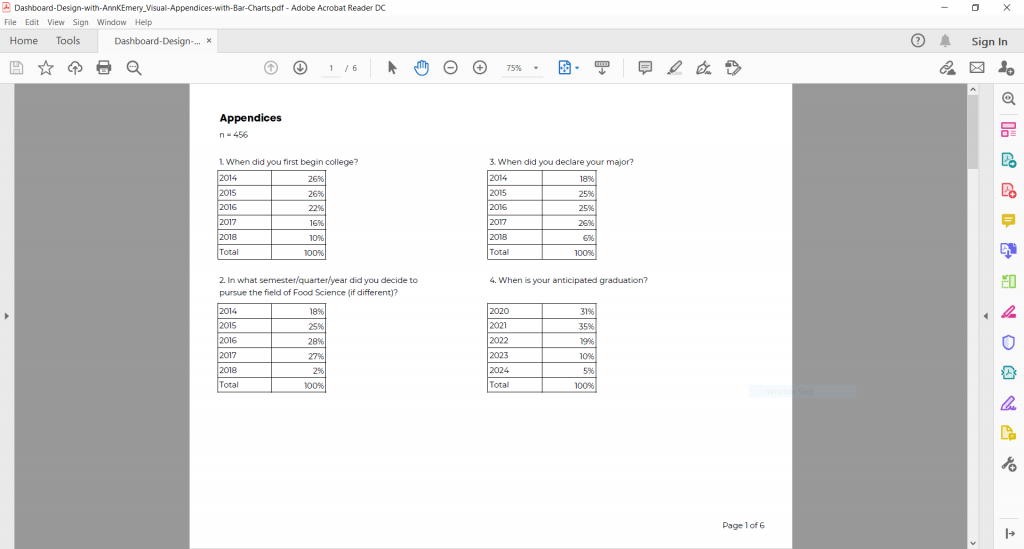
But what if I told you our appendices could get even better than that—in under an hour??
Introducing… Visual Appendices!
Here’s my wish for your next report: Visual appendices!
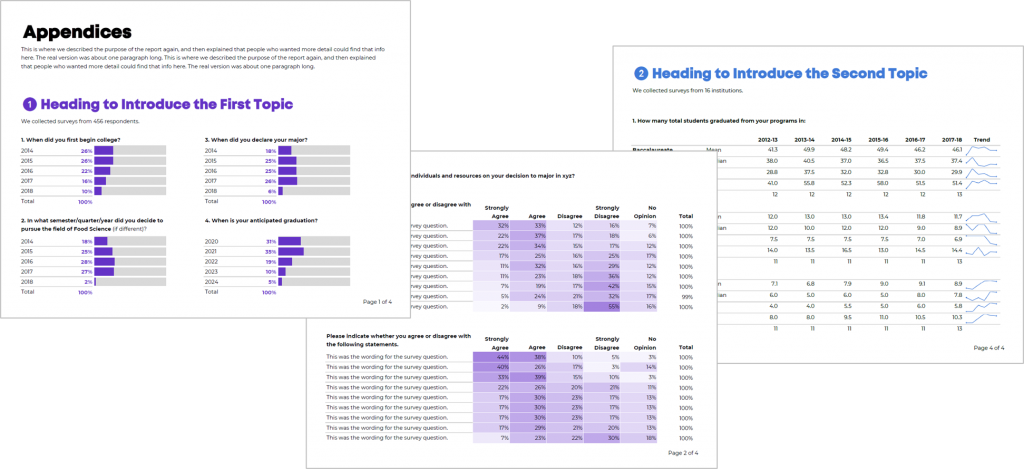
5 Easy Edits to Appendices
Let’s start with those original appendices that I showed you a moment ago…
First, declutter the existing tables. Remove all the unnecessary borders and lines.
Oops! Too bare. Don’t worry, we’ll continue editing in the next step.
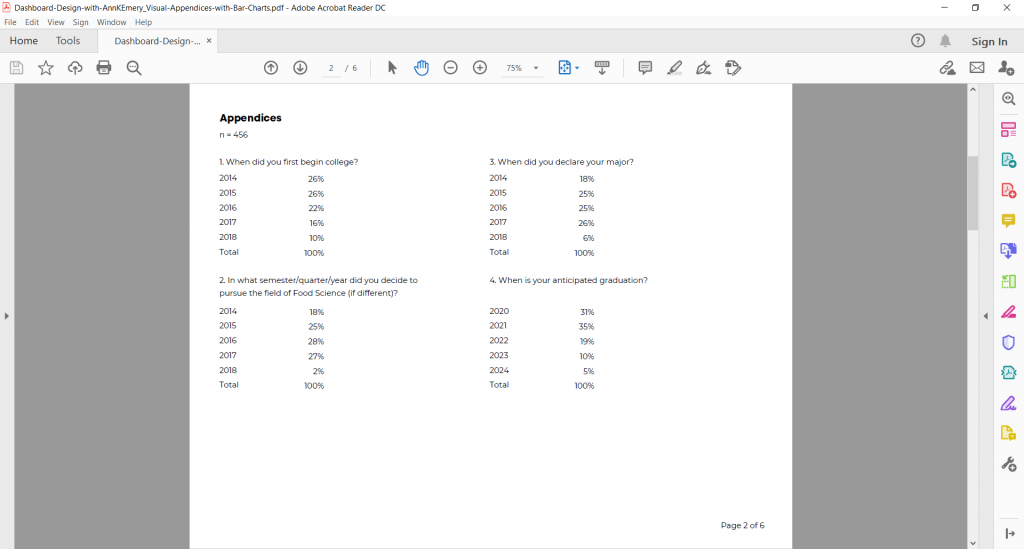
Second, I re-add the horizontal lines in gray rather than in black. Light gray horizontal lines ensure that our viewers can still read across the rows without distracting from the data by adding lots of dark ink.
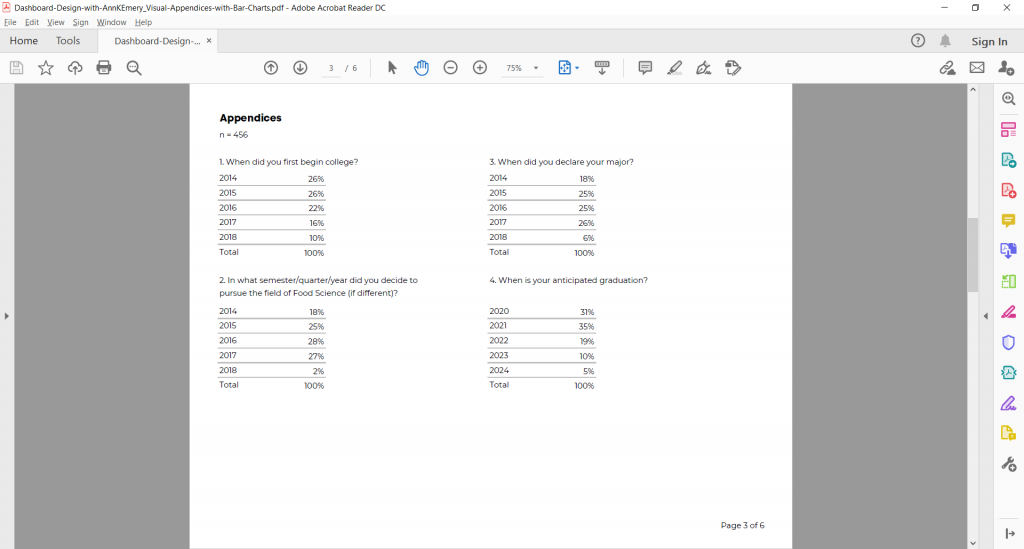
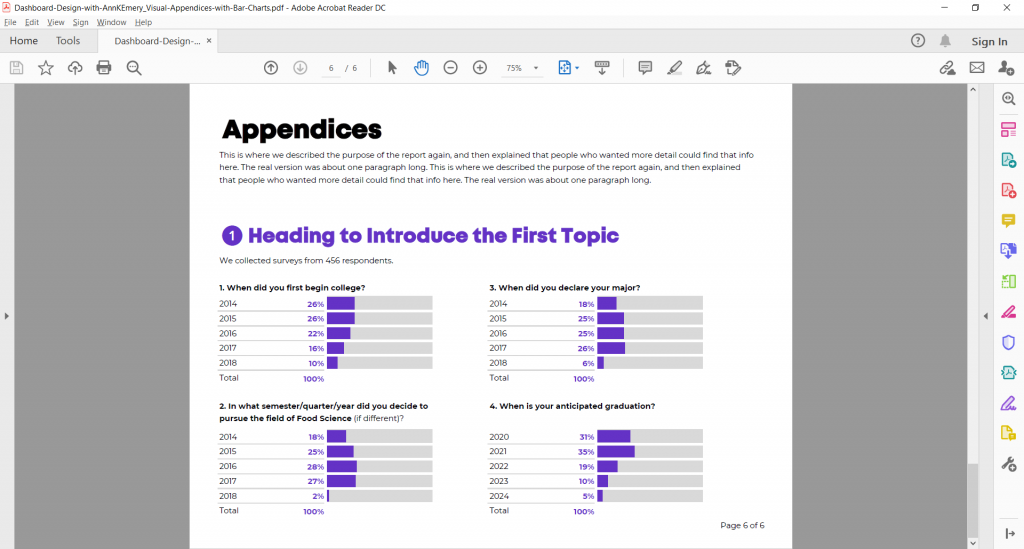
Third, add visuals! This is the most fun part.
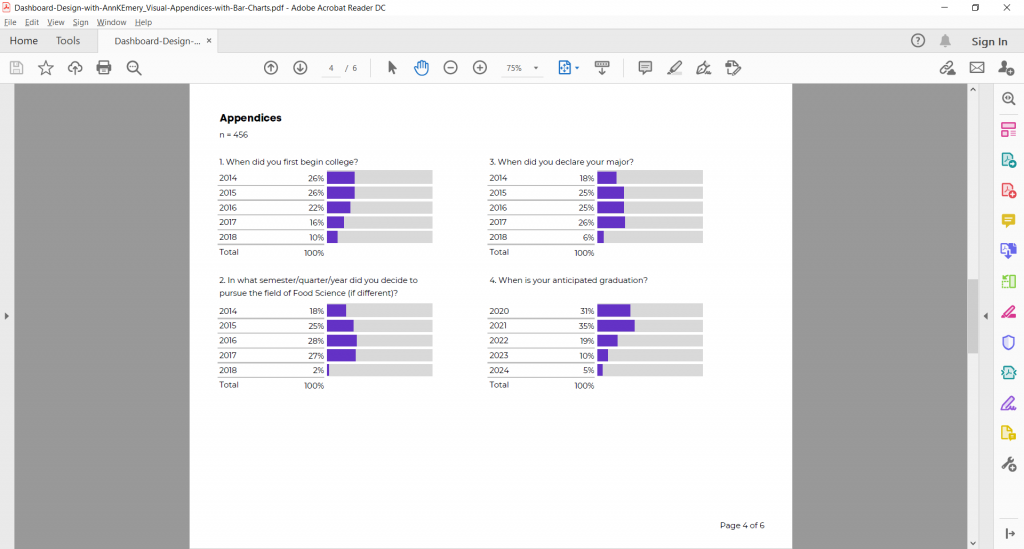
Fourth, apply a text hierarchy. A text hierarchy means our title is going to be the largest, boldest, darkest text on the page (followed by Heading 1s, 2s, and 3s).
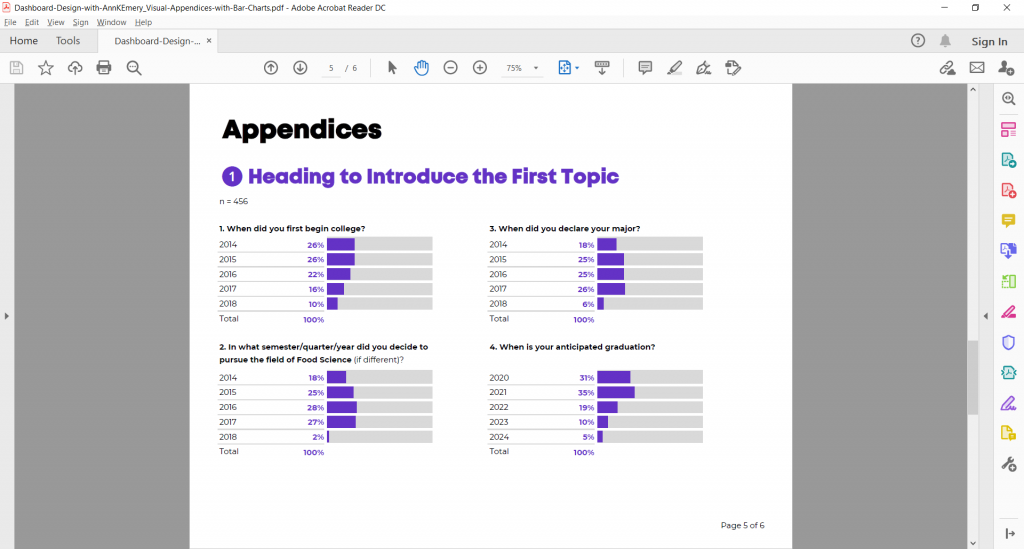
Fifth, add some plain-language text. In this fictional example, I’ve added a short introductory section. I’ve also changed the n=456 jargon into a friendly sentence: “We collected data from 456 respondents.”
3 Quick Visuals to Include in Appendices
There are plenty of quick visuals that we can include in our appendices. Here are a few of my favorite styles.
Bar Charts (or Stacked Bar Charts)
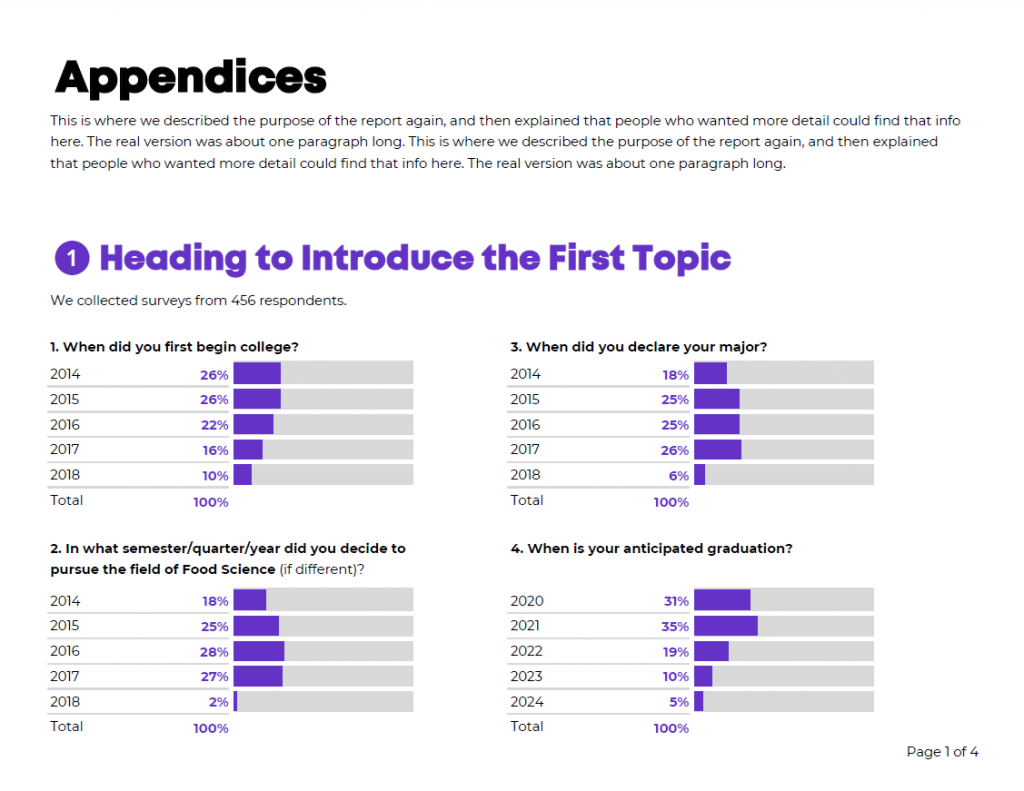
I showed you this approach already. We can build bar charts or stacked bars to visualize how many (“frequencies”).
Heat Tables (or Any Type of Color-Coded Cells)
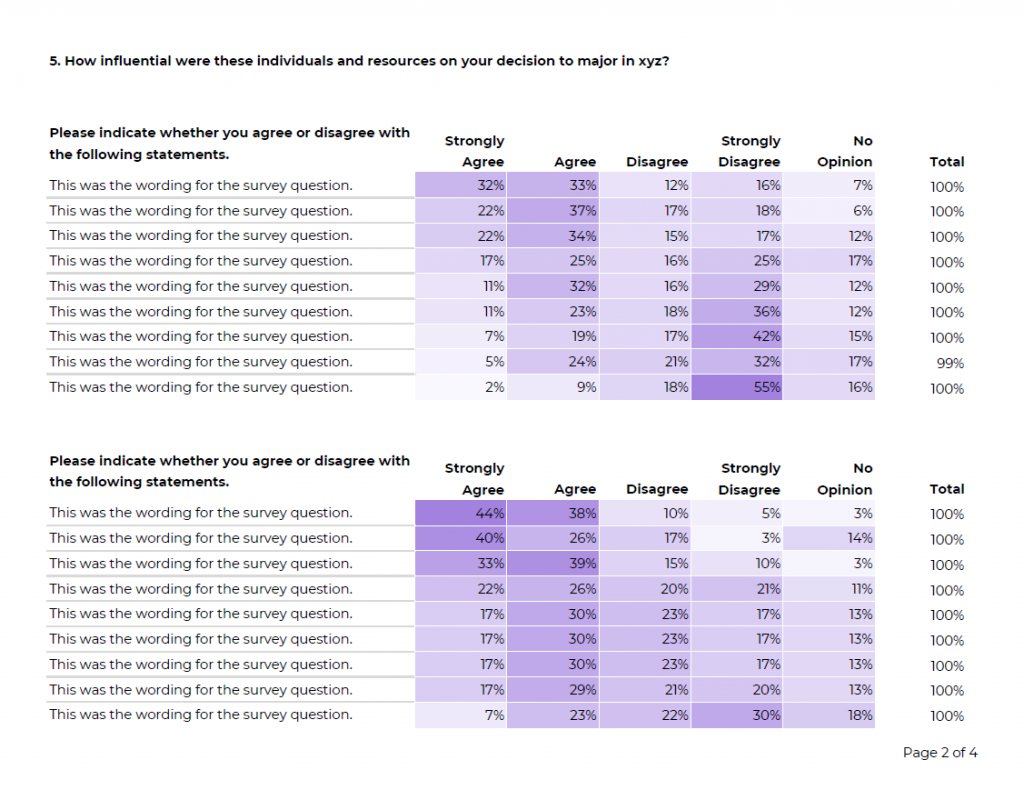
I love creating heat tables to help readers spot the highs and lows in the dataset. Heat tables are more helpful than bar charts when our tables have several rows and columns (like these fictional tables below, which have seven columns each).
Trend Lines (or Vertical Columns)
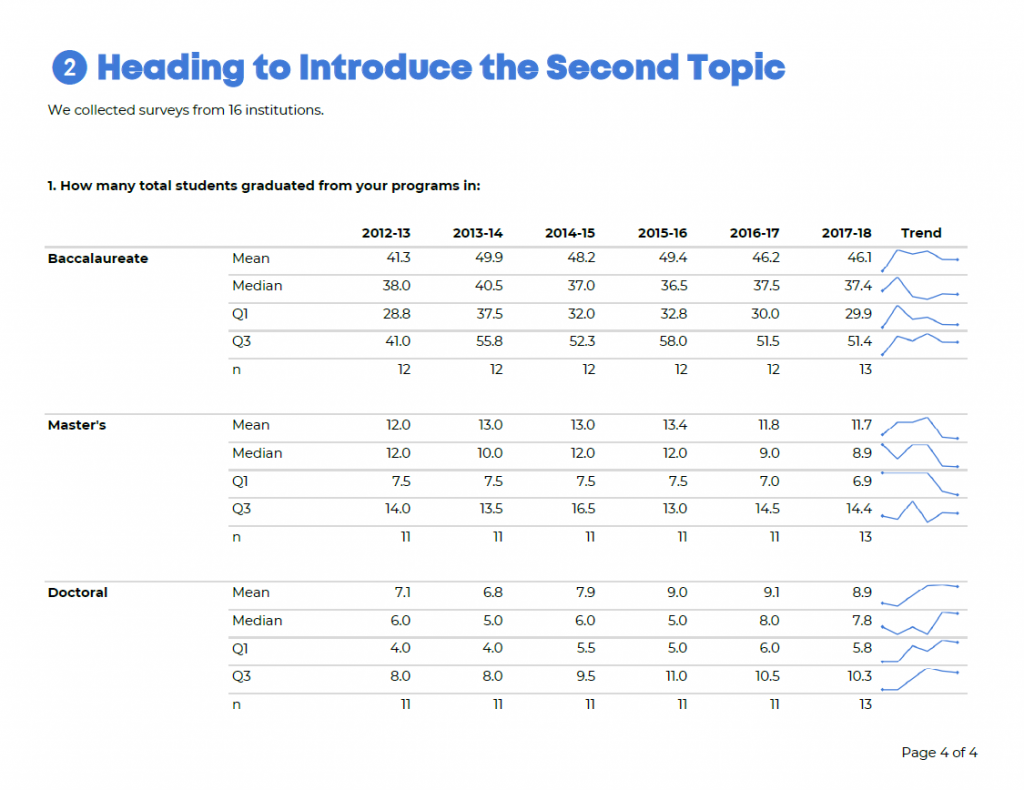
Finally, I love creating trend lines (or, vertical columns) to show patterns over time. In this fictional example, we’re comparing how the patterns shifted between the 2012-13 academic year and the 2017-18 academic year.
The next time you’re adding appendices to your report, add visual appendices!
Bonus: Learn How to Make Visual Appendices
I’m leading a live 60-minute training on visual appendices as part of the Dashboard Design Full Course, which opens for once-a-year enrollment the week of November 16-20, 2020. Learn more.
 English
 Afrikaans
 Shqip
Shqip አማርኛ
አማርኛ العربية
 Հայերեն
 Azərbaycan dili
 Euskara
 Беларуская мова
 বাংলা
বাংলা Bosanski
 Български
 Català
 Cebuano
 Chichewa
 简体中文
简体中文 繁體中文
繁體中文 Corsu
Corsu Hrvatski
 Čeština
 Dansk
Dansk Nederlands
 Esperanto
 Eesti
Eesti Filipino
 Suomi
Suomi Français
 Frysk
Frysk Galego
 ქართული
 Deutsch
 Ελληνικά
 ગુજરાતી
 Kreyol ayisyen
 Harshen Hausa
 Ōlelo Hawaiʻi
 עִבְרִית
 हिन्दी
 Hmong
Hmong Magyar
 Íslenska
 Igbo
Igbo Bahasa Indonesia
 Gaeilge
 Italiano
 日本語
日本語 Basa Jawa
 ಕನ್ನಡ
ಕನ್ನಡ Қазақ тілі
 ភាសាខ្មែរ
 한국어
한국어 كوردی
كوردی Кыргызча
 ພາສາລາວ
 Latin
Latin Latviešu valoda
 Lietuvių kalba
 Lëtzebuergesch
 Македонски јазик
 Malagasy
 Bahasa Melayu
 മലയാളം
 Maltese
 Te Reo Māori
 मराठी
मराठी Монгол
 ဗမာစာ
ဗမာစာ नेपाली
 Norsk bokmål
 پښتو
پښتو فارسی
فارسی Polski
 Português
 ਪੰਜਾਬੀ
 Română
 Русский
 Samoan
 Gàidhlig
 Српски језик
 Sesotho
 Shona
Shona سنڌي
سنڌي සිංහල
සිංහල Slovenčina
 Slovenščina
 Afsoomaali
 Español
 Basa Sunda
 Kiswahili
 Svenska
 Тоҷикӣ
 தமிழ்
தமிழ் తెలుగు
 ไทย
ไทย Türkçe
 Українська
 اردو
اردو O‘zbekcha
 Tiếng Việt
 Cymraeg
 isiXhosa
 יידיש
יידיש Yorùbá
 Zulu
Zulu