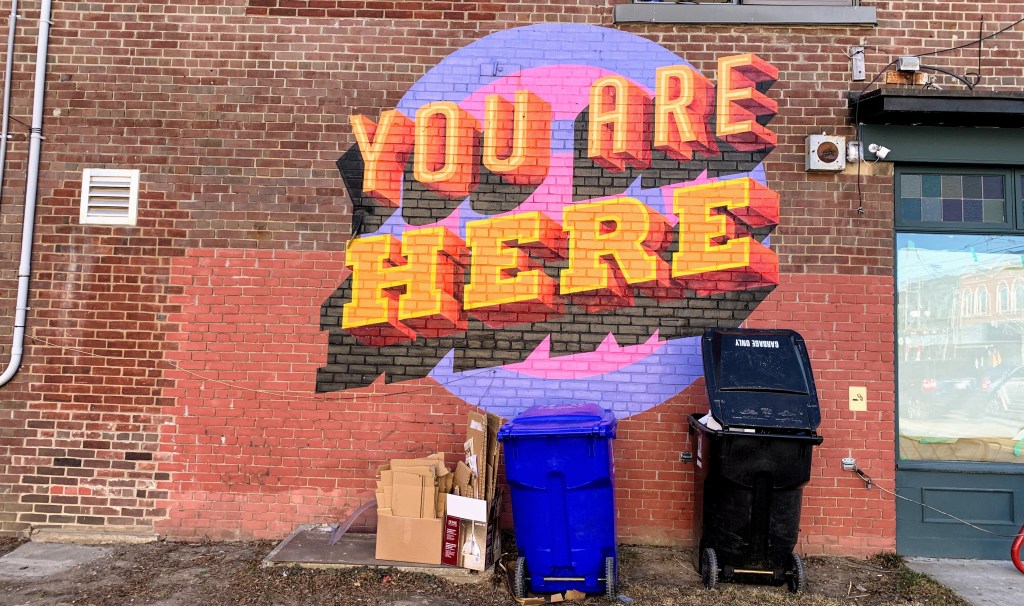
The power of perspective is one of the things that differentiates high output and impact innovators from others. It’s easy to get lucky or have good timing, but it’s another to create value when those things don’t happen.
One of the ways we do this is by engaging in some perspective-taking. This simple exercise and question set can help build some of the ‘thought muscles’ that can help encourage us to see, imagine, and engage things differently for creative benefit.
The Exercise
This works best when physically in the same space and can work online as well. What you need is to create a space where people can re-position themselves against a central object that can be almost anything except a ball (because it looks the same from every angle). Place your participants around the object with a comfortable space to sit or stand.
You can do this virtually using a dynamic space like Kumospace or some other virtual reality-like environment. It can also work using a board like Miro or Mural with some designed object in the middle, but it is more awkward.
The idea is that everyone has a chance to literally see things from a different point of view.
This can be done as an observation exercise but is more enhanced when it is combined with drawing. Asking people to draw what they see — no matter what kind of skills or abilities participants have with sketching — is a great means to engage people in thinking more deeply about their perspective.
Once individuals have had time to observe and reflect on what they see, the next step is to have everyone share their perspective. This is where drawings are useful as people can speak to what they drew as drawing focuses us on certain elements and provides a means to account for those perspectives. It also allows others to point to the drawing and make specific, not general comments.
It’s that specificity that is key to illuminating and articulating differences of perspective.
Uses
The role of this method is to reveal how where we sit in a system — even a small one of people interconnected around a shared experience of an object — can have remarkably different perceptions of the same thing in the same space.
It begins to build cultural practices around creating space for exploring and sharing perspectives within an organization and can serve as a base for better organizational design and learning.
It’s simple, engaging, and revealing in its method.
 English
 Afrikaans
 Shqip
Shqip አማርኛ
አማርኛ العربية
 Հայերեն
 Azərbaycan dili
 Euskara
 Беларуская мова
 বাংলা
বাংলা Bosanski
 Български
 Català
 Cebuano
 Chichewa
 简体中文
简体中文 繁體中文
繁體中文 Corsu
Corsu Hrvatski
 Čeština
 Dansk
Dansk Nederlands
 Esperanto
 Eesti
Eesti Filipino
 Suomi
Suomi Français
 Frysk
Frysk Galego
 ქართული
 Deutsch
 Ελληνικά
 ગુજરાતી
 Kreyol ayisyen
 Harshen Hausa
 Ōlelo Hawaiʻi
 עִבְרִית
 हिन्दी
 Hmong
Hmong Magyar
 Íslenska
 Igbo
Igbo Bahasa Indonesia
 Gaeilge
 Italiano
 日本語
日本語 Basa Jawa
 ಕನ್ನಡ
ಕನ್ನಡ Қазақ тілі
 ភាសាខ្មែរ
 한국어
한국어 كوردی
كوردی Кыргызча
 ພາສາລາວ
 Latin
Latin Latviešu valoda
 Lietuvių kalba
 Lëtzebuergesch
 Македонски јазик
 Malagasy
 Bahasa Melayu
 മലയാളം
 Maltese
 Te Reo Māori
 मराठी
मराठी Монгол
 ဗမာစာ
ဗမာစာ नेपाली
 Norsk bokmål
 پښتو
پښتو فارسی
فارسی Polski
 Português
 ਪੰਜਾਬੀ
 Română
 Русский
 Samoan
 Gàidhlig
 Српски језик
 Sesotho
 Shona
Shona سنڌي
سنڌي සිංහල
සිංහල Slovenčina
 Slovenščina
 Afsoomaali
 Español
 Basa Sunda
 Kiswahili
 Svenska
 Тоҷикӣ
 தமிழ்
தமிழ் తెలుగు
 ไทย
ไทย Türkçe
 Українська
 اردو
اردو O‘zbekcha
 Tiếng Việt
 Cymraeg
 isiXhosa
 יידיש
יידיש Yorùbá
 Zulu
Zulu