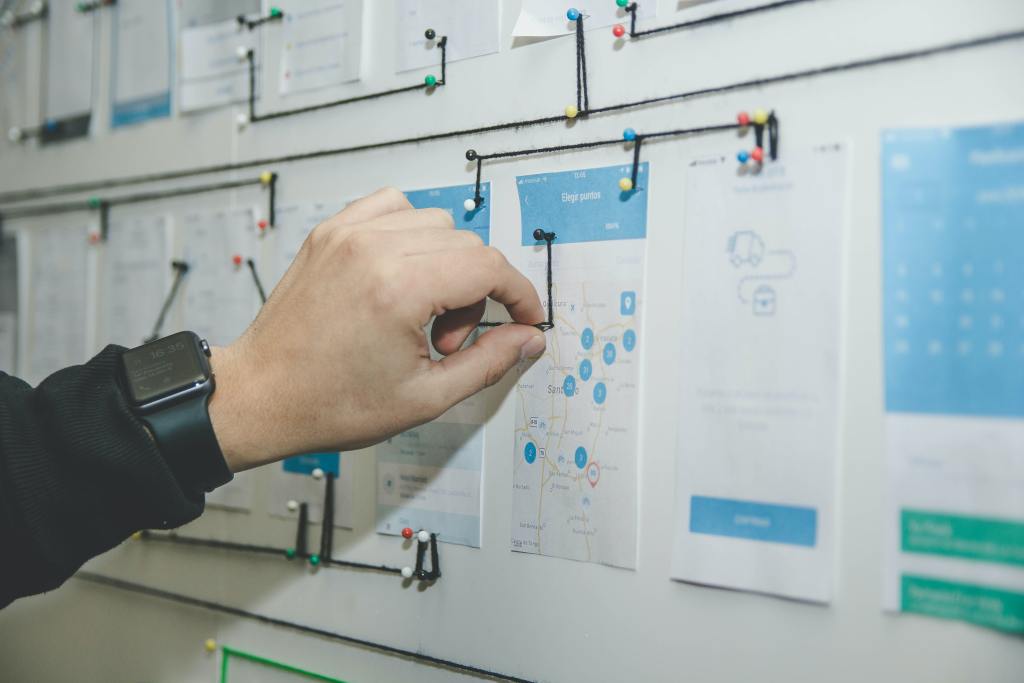
A mind map is a powerful, simple organizing tool that features a lot of information on a single page. We use mind maps and other visual tools to communicate relationships between ideas, people, project components and topics with our clients and partners. We present a short introduction to how and why you might want to use mind maps in your work.
A mind map is a visual representation of a project that links actors and actions together. This article focuses on using mind maps, not creating them.
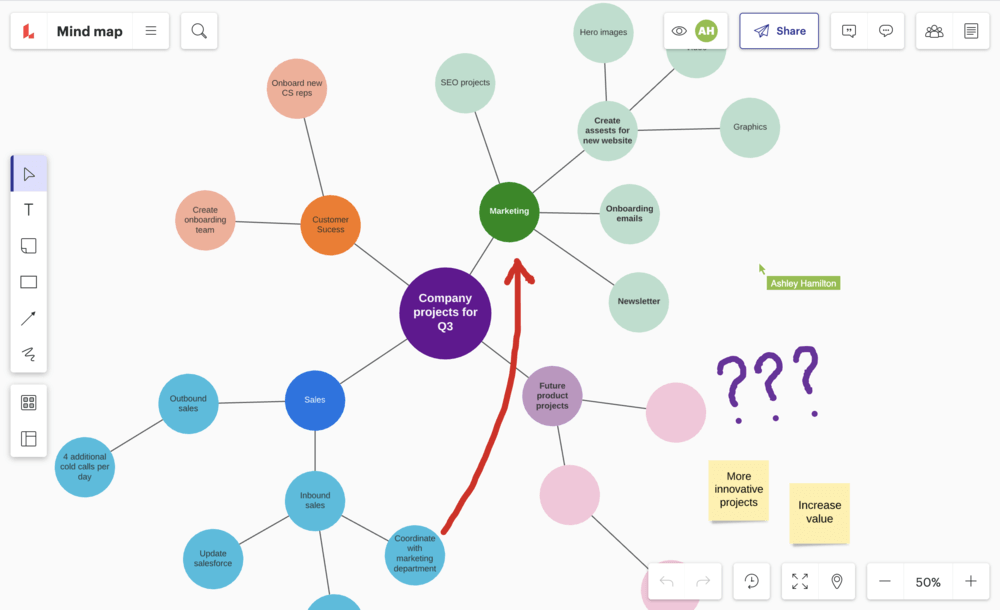
Below is an example from software provider Lucidspark (which is a tool for creating mindmaps) that illustrates what a mind map is and how it can connect ideas and actions together.
Visualizing our Relationships
A search of Google (or any other search engine) will find thousands of visual examples of what a mind map is. There are few ‘essentials’ for mind mapping, which is among its most attractive features.
A complex project is one where there are many things happening at the same time, at different time scales, and involving many interdependencies and actors. That’s just a way of saying: there’s a lot going on.
It doesn’t matter how you organize your mind map only that it is useful. That means it provides information that you can make decisions with and act on. If it does that, it’s a good mind map.
Once we have that in place, the mind map allows us to examine the relationships between the nodes and topics to assess their fit. The expression ‘getting on the same page‘ reflects an ability for all of those looking at the document to have a similar representation of what’s on that page. The mind map allows us to verify relationships between entities, determine gaps or inaccuracies, and explore different ways of connecting things together.
There may not be a single ‘master’ map that is better than all, but there may be a map that is more useful than others.
How to Use Mind Maps
When we use this with clients and partners on projects we aim for the following:
- To examine the assumptions involved in the project
- To explore alternative relationships of fit and see if the map is the best representation of what we are looking at
- To guide the project and keep the topics on track
- To provide a building block for connecting ideas together (in ways that weren’t done previously)
- To map out a system of relationships
- To use colour and visuals to surface feelings, thoughts, and other emotional aspects of the project that might influence the strategy or outcomes
By creating a visual representation we see the whole project and the relationship context. Relationships are the key in any complex system. When we visualize these relationships it allows us to see how the actions in one relationship can affect others. Visual maps can aid us in anticipating possible effects.
(Note: We don’t use the term ‘unintended effects’ – just effects because in complex systems it’s too hard to predict cause and effect with any degree of accuracy).
We continually refer back to our maps to help ensure we are accounting for all relationships of importance throughout the project and not just those that have the most amount of activity within them. It’s incredibly difficult to track this in our heads or in something like a spreadsheet or text document.
Mind maps can be great tools to visualize a lot of information and get you and your collaborators on the same page when it comes to understanding what is going on in a complex system and program. Try it out — they are easy to create and simple to use.
If you want to use this approach to visualizing your programs and using this to help you innovate, contact us – we’d love to hear from you.
The post Mind Maps For Complex Projects appeared first on Cense.
 English
 Afrikaans
 Shqip
Shqip አማርኛ
አማርኛ العربية
 Հայերեն
 Azərbaycan dili
 Euskara
 Беларуская мова
 বাংলা
বাংলা Bosanski
 Български
 Català
 Cebuano
 Chichewa
 简体中文
简体中文 繁體中文
繁體中文 Corsu
Corsu Hrvatski
 Čeština
 Dansk
Dansk Nederlands
 Esperanto
 Eesti
Eesti Filipino
 Suomi
Suomi Français
 Frysk
Frysk Galego
 ქართული
 Deutsch
 Ελληνικά
 ગુજરાતી
 Kreyol ayisyen
 Harshen Hausa
 Ōlelo Hawaiʻi
 עִבְרִית
 हिन्दी
 Hmong
Hmong Magyar
 Íslenska
 Igbo
Igbo Bahasa Indonesia
 Gaeilge
 Italiano
 日本語
日本語 Basa Jawa
 ಕನ್ನಡ
ಕನ್ನಡ Қазақ тілі
 ភាសាខ្មែរ
 한국어
한국어 كوردی
كوردی Кыргызча
 ພາສາລາວ
 Latin
Latin Latviešu valoda
 Lietuvių kalba
 Lëtzebuergesch
 Македонски јазик
 Malagasy
 Bahasa Melayu
 മലയാളം
 Maltese
 Te Reo Māori
 मराठी
मराठी Монгол
 ဗမာစာ
ဗမာစာ नेपाली
 Norsk bokmål
 پښتو
پښتو فارسی
فارسی Polski
 Português
 ਪੰਜਾਬੀ
 Română
 Русский
 Samoan
 Gàidhlig
 Српски језик
 Sesotho
 Shona
Shona سنڌي
سنڌي සිංහල
සිංහල Slovenčina
 Slovenščina
 Afsoomaali
 Español
 Basa Sunda
 Kiswahili
 Svenska
 Тоҷикӣ
 தமிழ்
தமிழ் తెలుగు
 ไทย
ไทย Türkçe
 Українська
 اردو
اردو O‘zbekcha
 Tiếng Việt
 Cymraeg
 isiXhosa
 יידיש
יידיש Yorùbá
 Zulu
Zulu