
Design is about the creation of products, services, policies, and systems for use and benefit. It’s a structured, creative process that shapes what we do, how we do it, and what impact we create. Design is fundamentally about innovation: doing something different or new for benefit within a context.
Inspiration, Utility, and Values
How should we measure design and its impact on our organization? We suggest three core evaluation metrics above all to consider.
- Inspiration. A design has to inspire you. If you’re not excited about what you’re producing, why would it inspire your clients, customers, or users? By inspiration, we mean that it must capture or focus attention, delight, or attract energy. It does not mean a design has to be glamorous, just that it’s noticed for its purpose or appropriately invisible. For example, creating a negative opt-in to organ donation on driver’s license renewal forms vastly increases the donor pool (and reflects the desire of the population to be donors in the process) because it means people have to choose not to donate, rather than the opposite. Even with something benign like a form adjustment, Inspiration is an outcome.
- Utility. Use is the second key metric. Design is about being fit for purpose and if there is a poor fit then the benefits will also be poor. A great design fits the purpose for what it was designed for and is useful. It doesn’t have to be the best, just useful and better than the available alternatives. If your design is not used, then no matter how functional, attractive, or conceptually sound it is, it is a failure.
- Values. The alignment of your design with the values of your organization is critical to ensuring that the benefits that you accrue are the ones you want. If you value sustainability and responsibility, then your design has to reflect that. To illustrate, if you’re a company or organization that stands for human rights and ethical practices, what you produce (your designs) needs to reflect that. We see a lot of problems with organizations that say one thing and then design for something else.
From Perfection to Fit
There are no ‘perfect’ designs. A design is made within a time and context and the value and benefit of that design will change over time as the context changes. Even if we want things to stay the same and stable, the world around our designs is changing and evolving. Designs are also made with constraints posed by resources, time, and circumstances. However, design is designed — your process and procedures need to aspire and be set up to achieve the results you’re looking for.
These changes are why evaluation is such an important part of design: we need to continue to monitor and evaluate our designs in light of changes in context and circumstance.
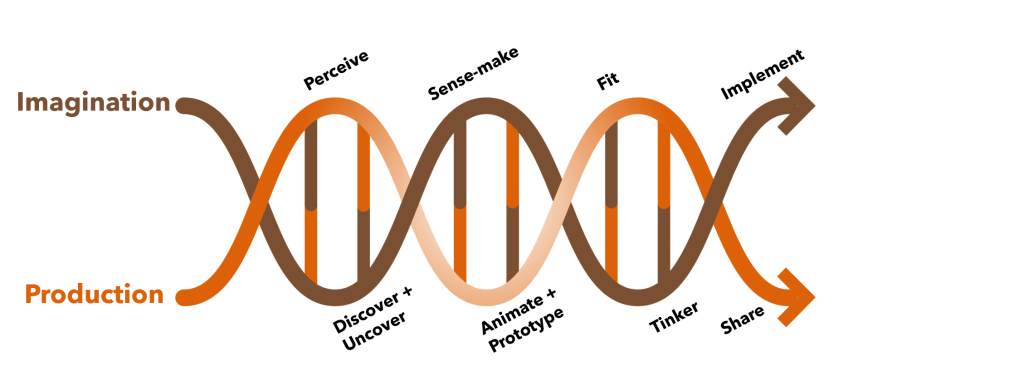
We can’t hope for inspiration, utility, and alignment with values unless we design our designs to match that. Models like the Design Helix (below) can provide some guidance on what can be done to facilitate this.
The process of design and innovation is part art and part science. If you’re looking to design better — whether it’s to improve your products and services, make better policies, or build a culture of innovation we can help. Let’s talk.
Photo by Annie Spratt on Unsplash
The post Three Metrics for Design Evaluation appeared first on Cense Ltd. .
 English
 Afrikaans
 Shqip
Shqip አማርኛ
አማርኛ العربية
 Հայերեն
 Azərbaycan dili
 Euskara
 Беларуская мова
 বাংলা
বাংলা Bosanski
 Български
 Català
 Cebuano
 Chichewa
 简体中文
简体中文 繁體中文
繁體中文 Corsu
Corsu Hrvatski
 Čeština
 Dansk
Dansk Nederlands
 Esperanto
 Eesti
Eesti Filipino
 Suomi
Suomi Français
 Frysk
Frysk Galego
 ქართული
 Deutsch
 Ελληνικά
 ગુજરાતી
 Kreyol ayisyen
 Harshen Hausa
 Ōlelo Hawaiʻi
 עִבְרִית
 हिन्दी
 Hmong
Hmong Magyar
 Íslenska
 Igbo
Igbo Bahasa Indonesia
 Gaeilge
 Italiano
 日本語
日本語 Basa Jawa
 ಕನ್ನಡ
ಕನ್ನಡ Қазақ тілі
 ភាសាខ្មែរ
 한국어
한국어 كوردی
كوردی Кыргызча
 ພາສາລາວ
 Latin
Latin Latviešu valoda
 Lietuvių kalba
 Lëtzebuergesch
 Македонски јазик
 Malagasy
 Bahasa Melayu
 മലയാളം
 Maltese
 Te Reo Māori
 मराठी
मराठी Монгол
 ဗမာစာ
ဗမာစာ नेपाली
 Norsk bokmål
 پښتو
پښتو فارسی
فارسی Polski
 Português
 ਪੰਜਾਬੀ
 Română
 Русский
 Samoan
 Gàidhlig
 Српски језик
 Sesotho
 Shona
Shona سنڌي
سنڌي සිංහල
සිංහල Slovenčina
 Slovenščina
 Afsoomaali
 Español
 Basa Sunda
 Kiswahili
 Svenska
 Тоҷикӣ
 தமிழ்
தமிழ் తెలుగు
 ไทย
ไทย Türkçe
 Українська
 اردو
اردو O‘zbekcha
 Tiếng Việt
 Cymraeg
 isiXhosa
 יידיש
יידיש Yorùbá
 Zulu
Zulu