Sometimes our graphs have a single, overarching takeaway message.
Maybe the numbers simply went up over time. Or down.
Other times, it’s more complicated.
Here’s how to explain multiple takeaway messages in presentations: with multiple slides, one per takeaway message.
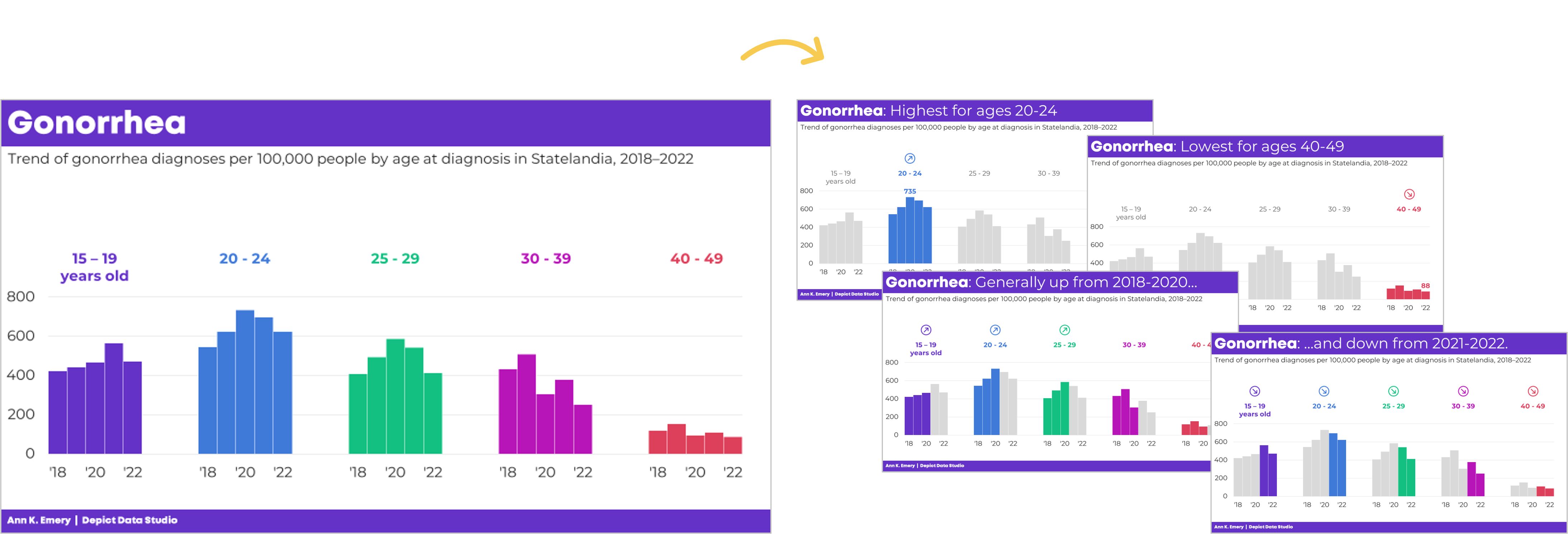
Before: Everything Smushed on One Slide
Here’s what I typically see: lots of possible takeaway messages shoved into a single graph on a single slide.
The presenter says something like this:
“Next, let’s talk about gonorrhea diagnoses in our state. We’re looking at the number of diagnoses per 100,000 people. We’re also looking at age ranges. This is the person’s age when they were diagnosed with gonorrhea. We’ve got five years’ worth of data: from 2018 through 2022. Let’s look at a few key findings. Gonorrhea diagnoses were highest for people in their early twenties. In 2020, for example, there were 735 gonorrhea diagnoses per 100,000 people ages 20-24 in our state. Gonorrhea was lowest for ages 40-49. In 2022, for example, there were 88 diagnoses per 100,000 people ages 40-49 in our state. Here’s another pattern we found: Gonorrhea diagnoses generally went up from 2018 through 2020. For the three younger age groups, at least. And, gonorrhea diagnoses went down from 2021 to 2022 for all age groups.”
And while you’re talking through allllllll those numbers and age ranges and timeframes, the audience only sees this:
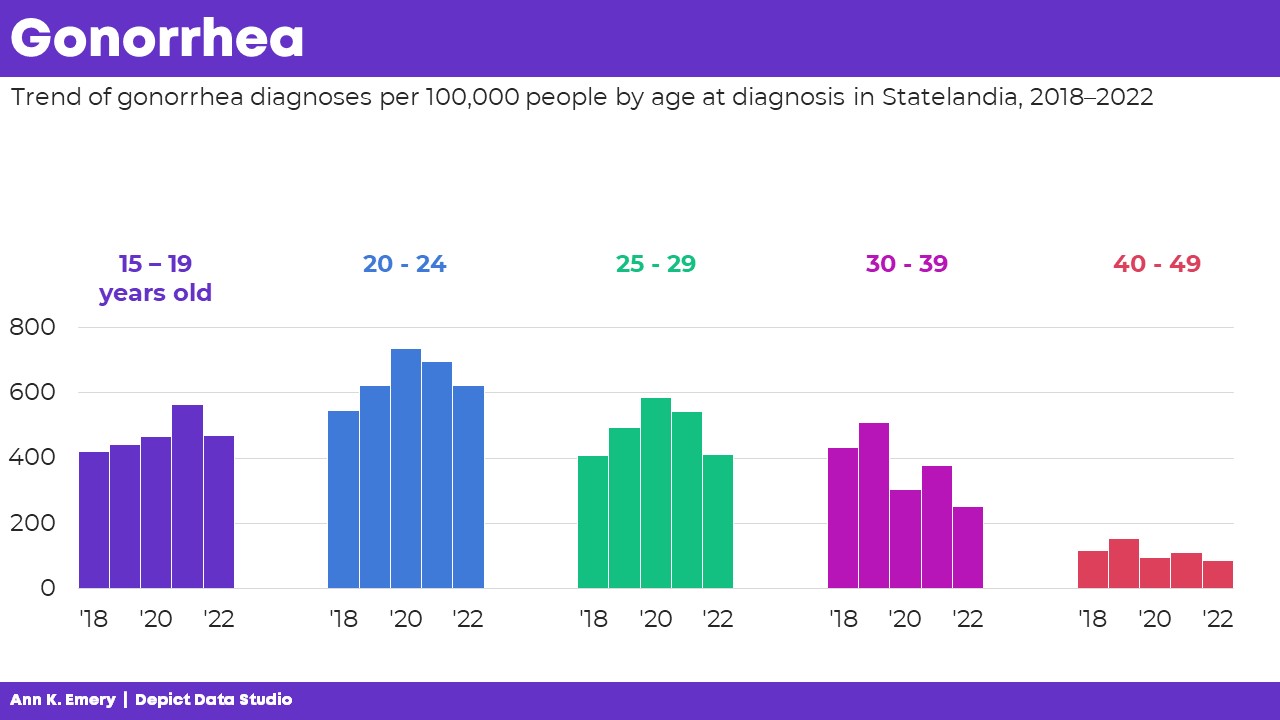
You see the problem, right??
The presenter is talking about one thing… but the audience is probably looking at something else.
That’s the very definition of Death by PowerPoint.
After: Describing One Takeaway Message at a Time with Multiple Slides
Instead, let’s use multiple slides!
We’re aiming for a single takeaway message per slide.
That way, what we say = what the audience sees.
There should be a perfect cohesion between sight and sound.
The presentation would look and sound like this:
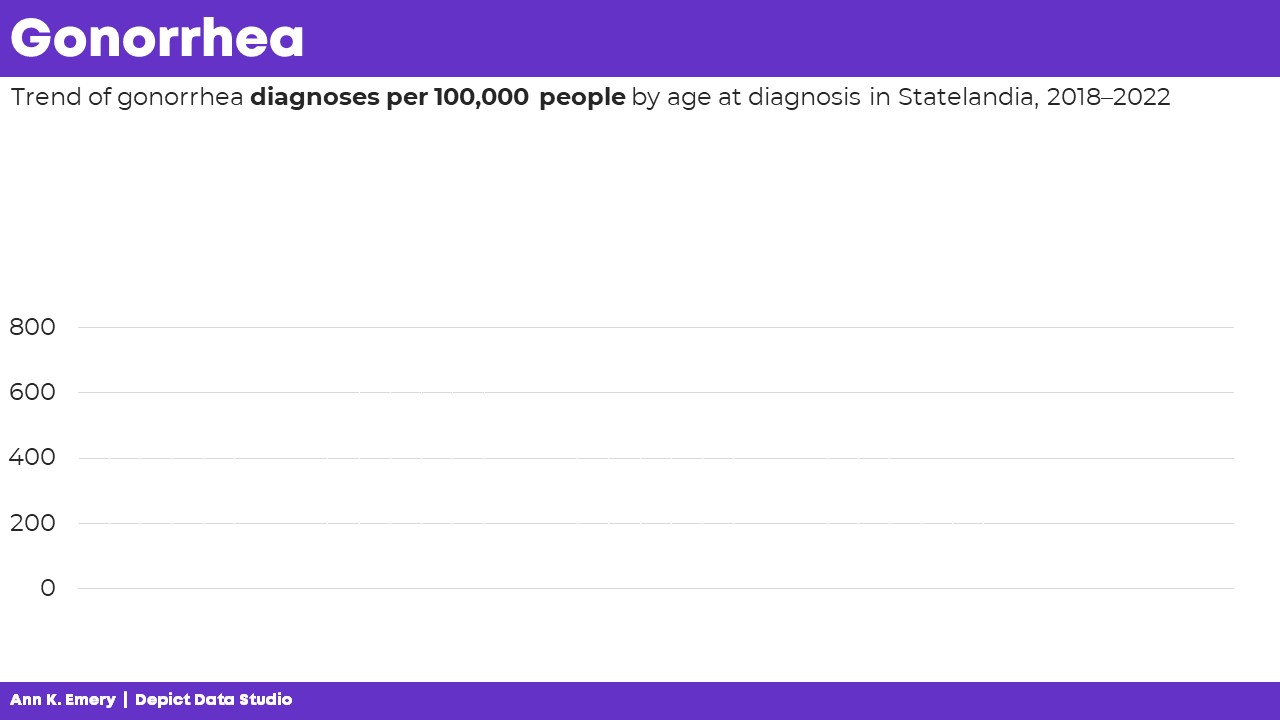
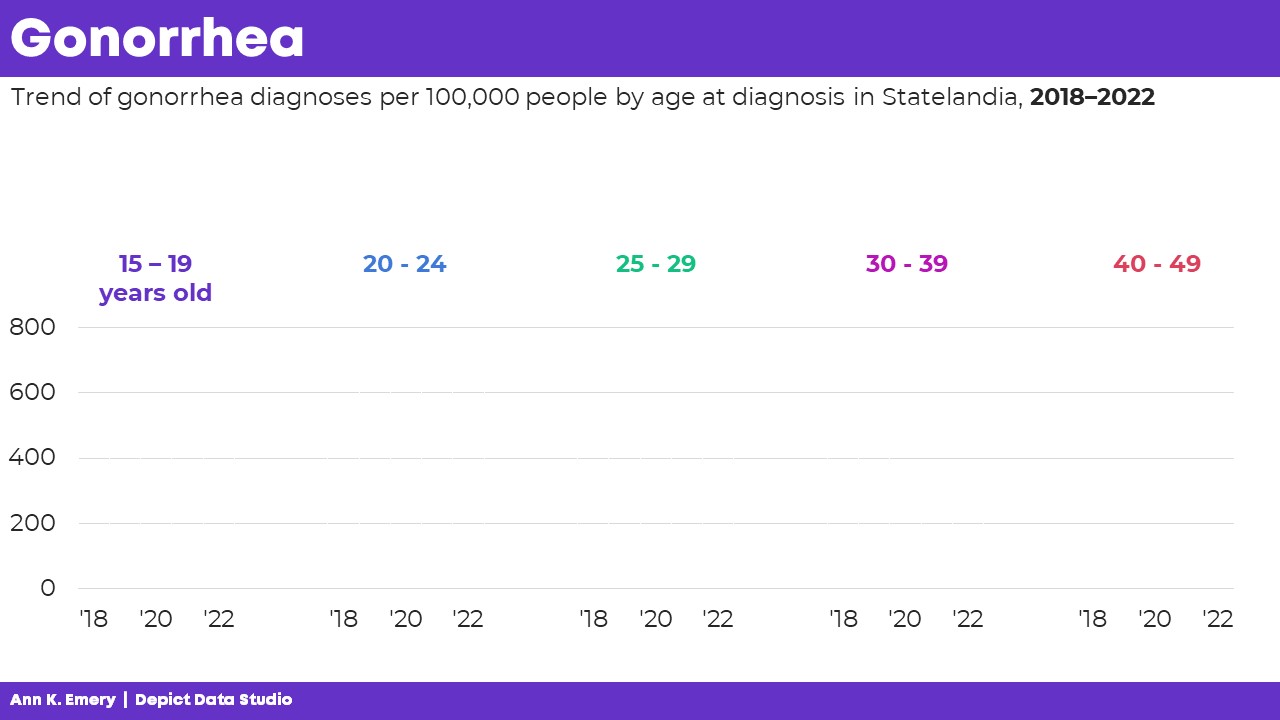
“Next, let’s talk about gonorrhea diagnoses in our state. We’re looking at the number of diagnoses per 100,000 people.”
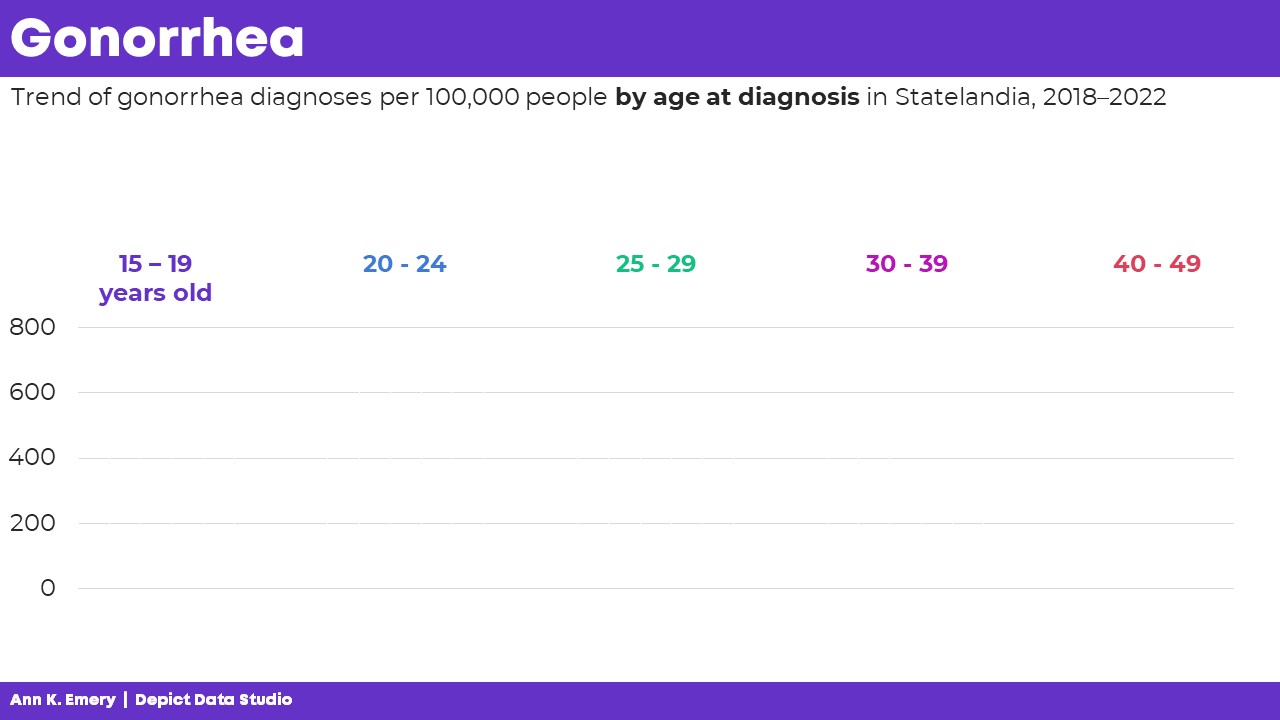
“We’re also looking at age ranges. This is the person’s age when they were diagnosed with gonorrhea.”
“We’ve got five years’ worth of data: from 2018 through 2022.”
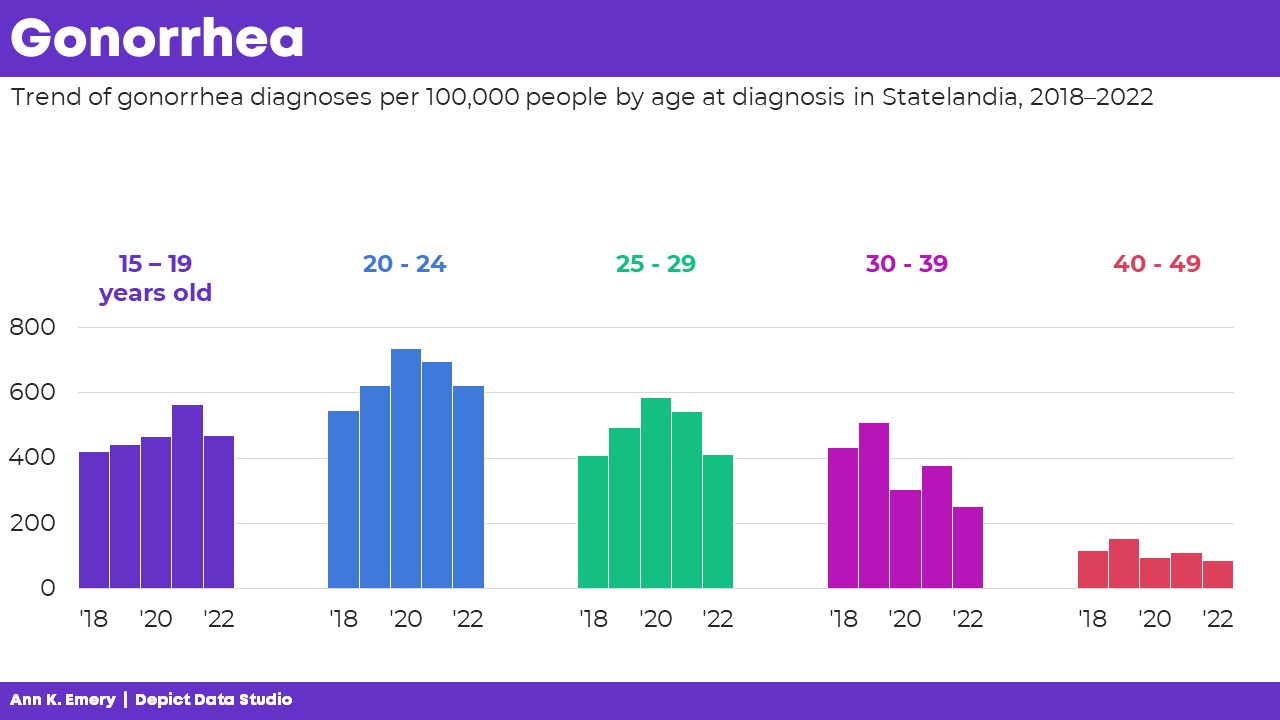
“Here are the patterns at a glance. Next, let’s look at a few key findings.”
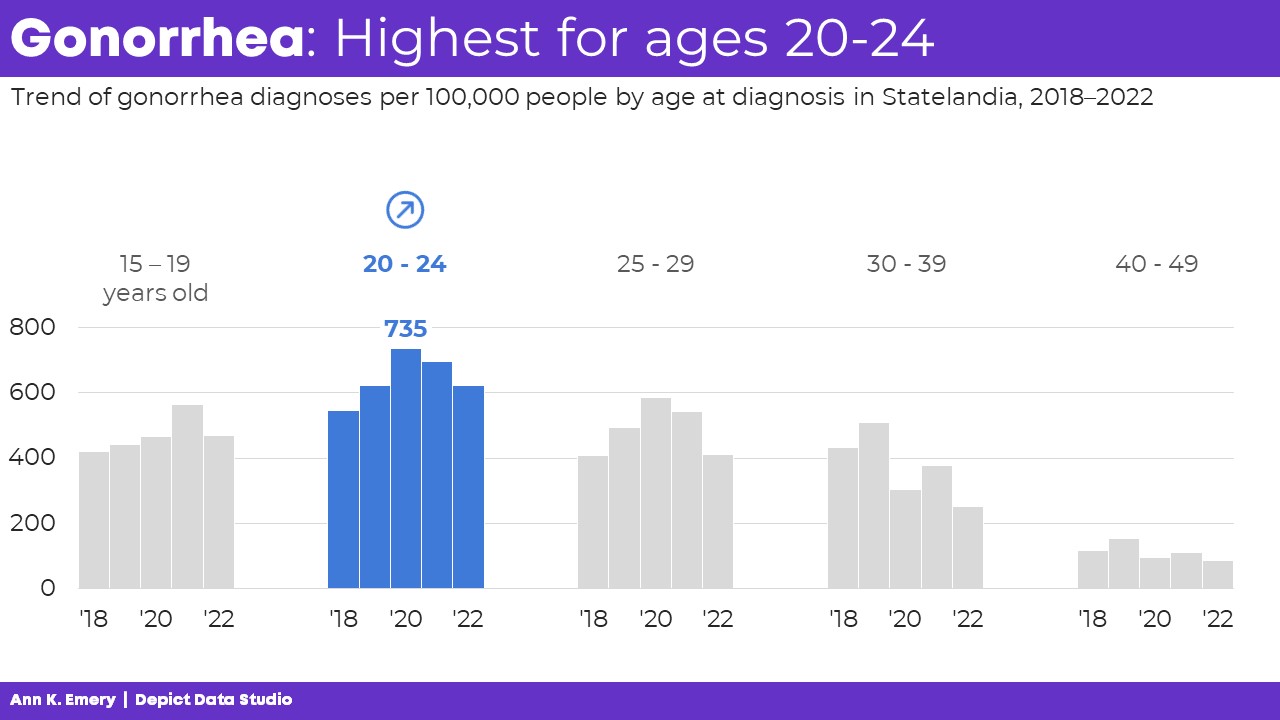
“Gonorrhea diagnoses were highest for people in their early twenties. In 2020, for example, there were 735 gonorrhea diagnoses per 100,000 people ages 20-24 in our state.”
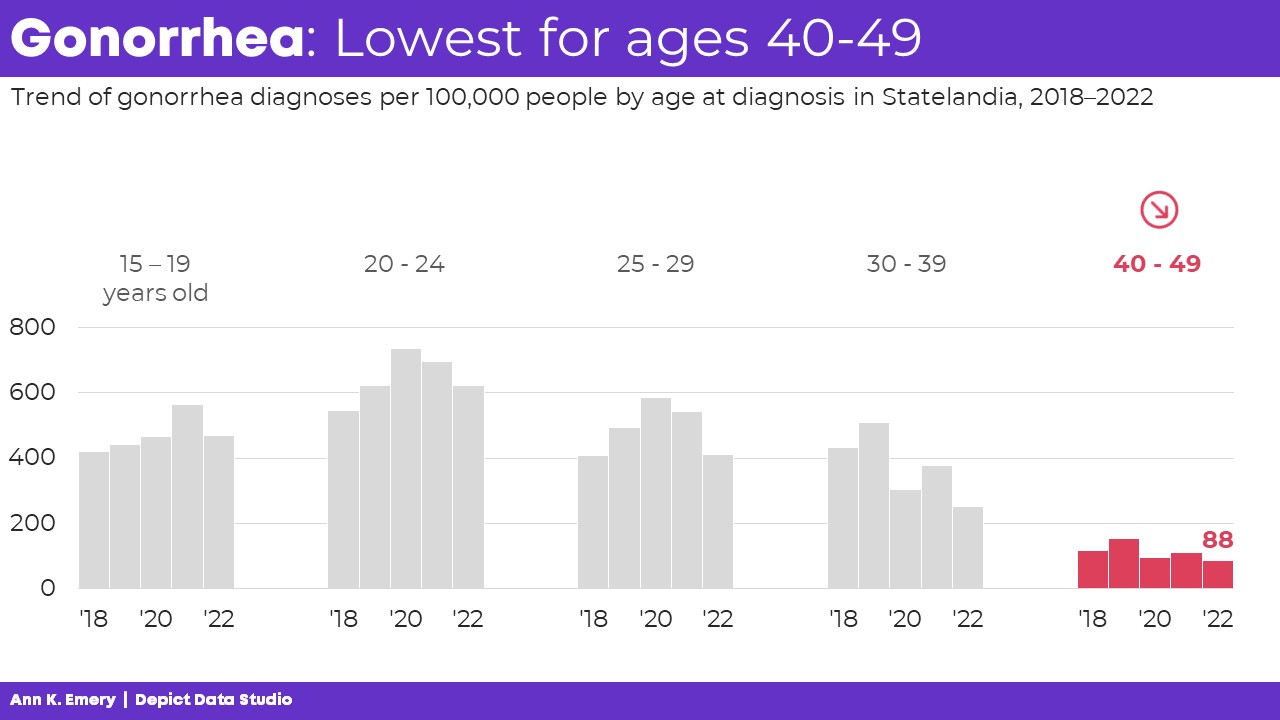
“Gonorrhea was lowest for ages 40-49. In 2022, for example, there were 88 diagnoses per 100,000 people ages 40-49 in our state.”
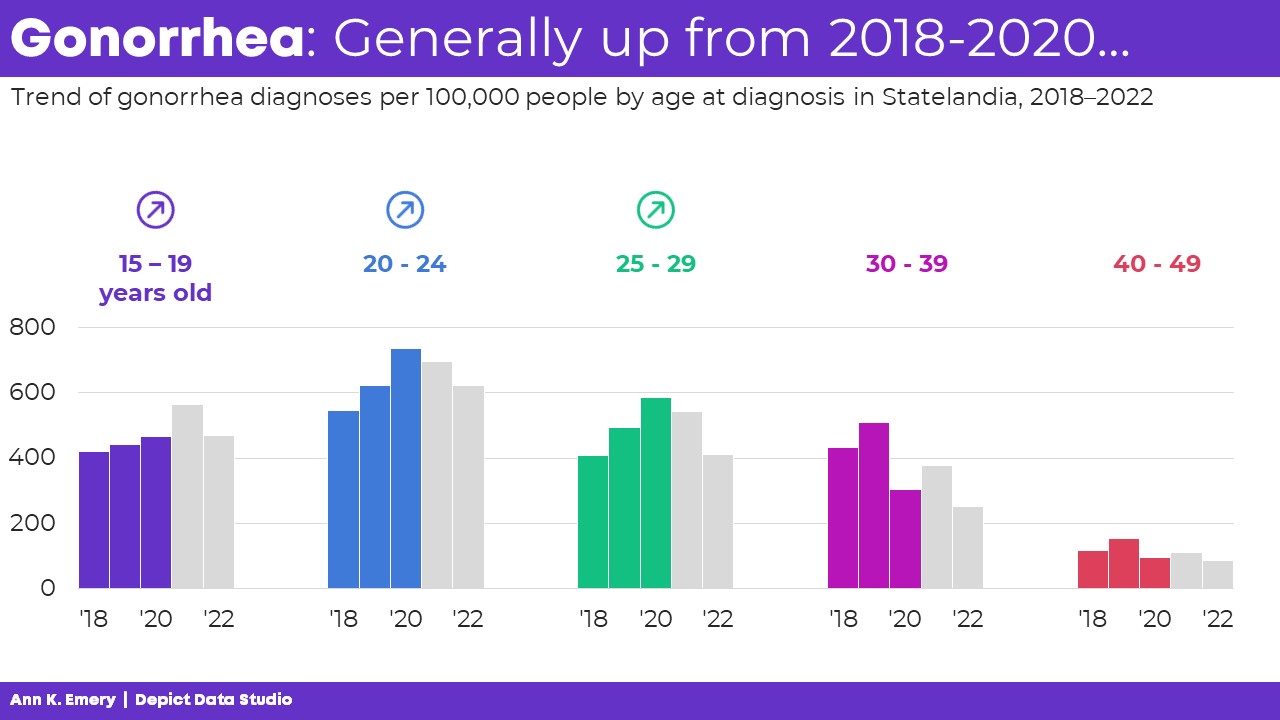
“Here’s another pattern we found: Gonorrhea diagnoses generally went up from 2018 through 2020. For the three younger age groups, at least.”
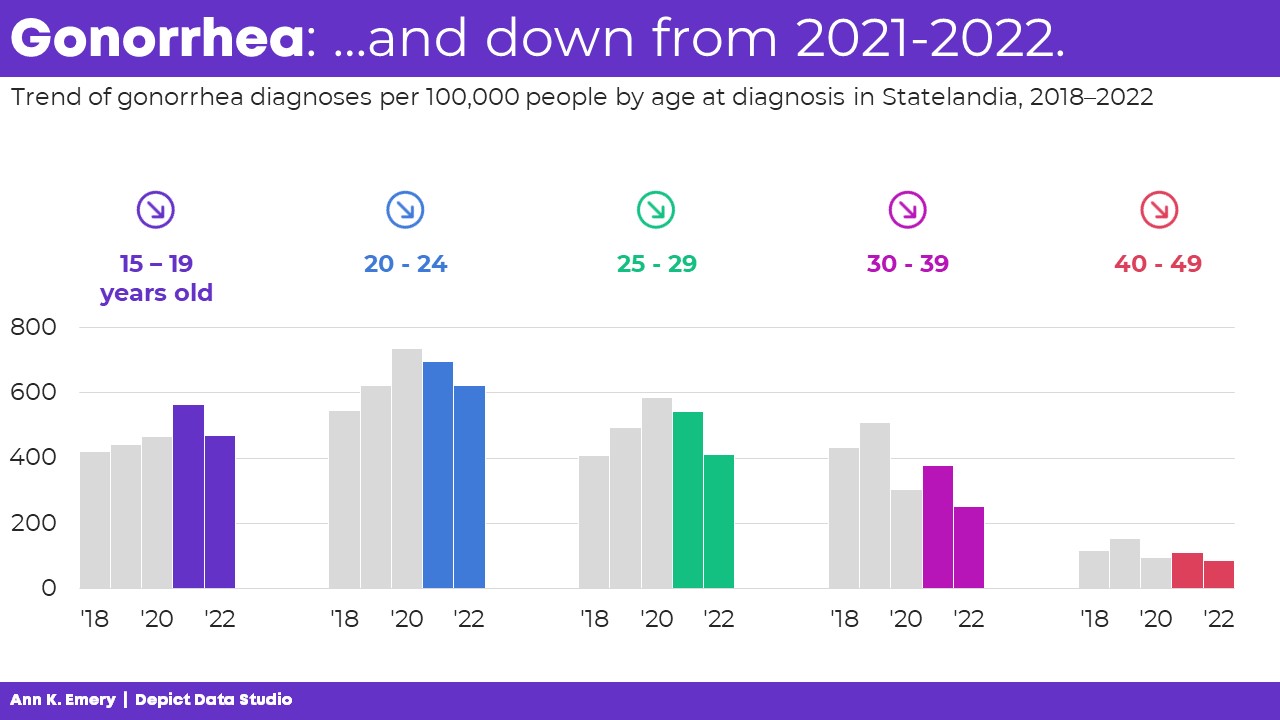
“And, gonorrhea diagnoses went down from 2021 to 2022 for all age groups.”
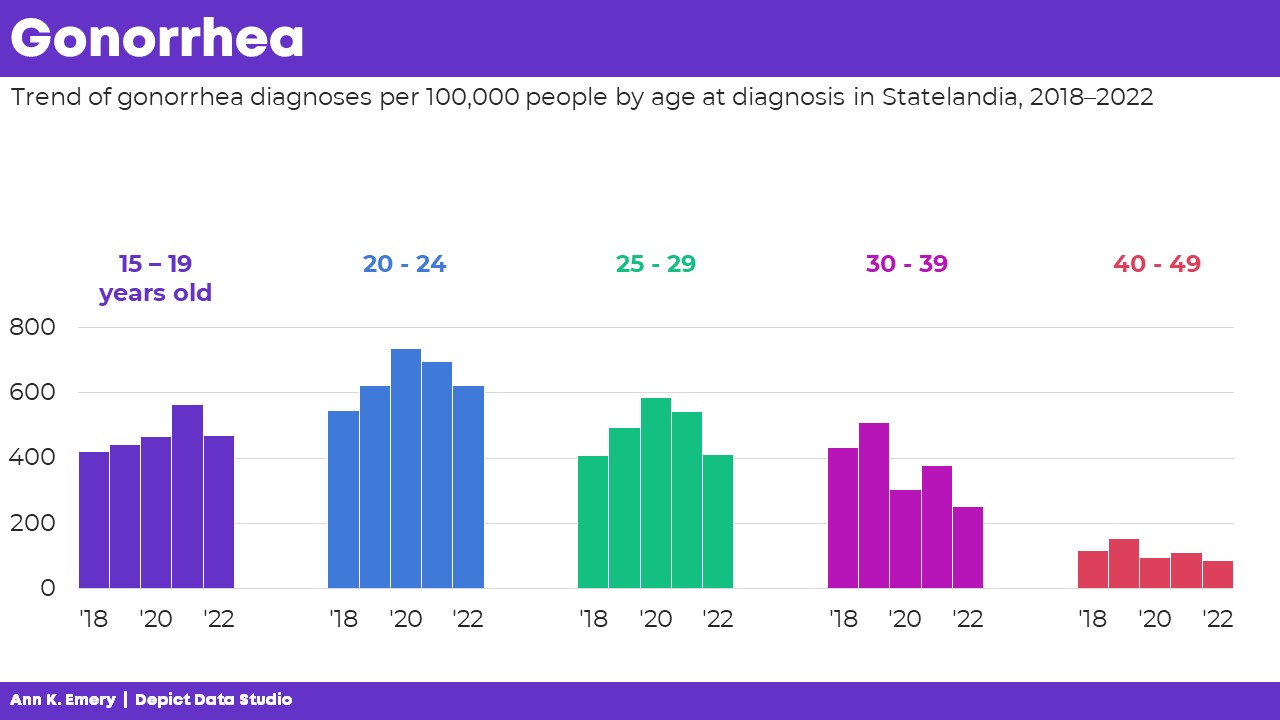
Finally, you’d show the “full” graph again, pausing for questions and a discussion.
The Bottom Line: Use More Slides!!!
We’re not making the presentation longer. We’re speaking for the same amount of time as before.
We’re not rushing or slurring our words. We’re speaking at the same pace as before.
We’re not wasting paper or ink. These are the slides shown on screen during a presentation. If you want to print something, just print the “full” graph (which is slide 462 in the screenshot below).

We’re syncing our words and visuals.
We’re keeping our audience’s attention.
Because if they’re not even paying attention… How will they possibly understand, remember, and use the findings for decision making?!
 English
 Afrikaans
 Shqip
Shqip አማርኛ
አማርኛ العربية
 Հայերեն
 Azərbaycan dili
 Euskara
 Беларуская мова
 বাংলা
বাংলা Bosanski
 Български
 Català
 Cebuano
 Chichewa
 简体中文
简体中文 繁體中文
繁體中文 Corsu
Corsu Hrvatski
 Čeština
 Dansk
Dansk Nederlands
 Esperanto
 Eesti
Eesti Filipino
 Suomi
Suomi Français
 Frysk
Frysk Galego
 ქართული
 Deutsch
 Ελληνικά
 ગુજરાતી
 Kreyol ayisyen
 Harshen Hausa
 Ōlelo Hawaiʻi
 עִבְרִית
 हिन्दी
 Hmong
Hmong Magyar
 Íslenska
 Igbo
Igbo Bahasa Indonesia
 Gaeilge
 Italiano
 日本語
日本語 Basa Jawa
 ಕನ್ನಡ
ಕನ್ನಡ Қазақ тілі
 ភាសាខ្មែរ
 한국어
한국어 كوردی
كوردی Кыргызча
 ພາສາລາວ
 Latin
Latin Latviešu valoda
 Lietuvių kalba
 Lëtzebuergesch
 Македонски јазик
 Malagasy
 Bahasa Melayu
 മലയാളം
 Maltese
 Te Reo Māori
 मराठी
मराठी Монгол
 ဗမာစာ
ဗမာစာ नेपाली
 Norsk bokmål
 پښتو
پښتو فارسی
فارسی Polski
 Português
 ਪੰਜਾਬੀ
 Română
 Русский
 Samoan
 Gàidhlig
 Српски језик
 Sesotho
 Shona
Shona سنڌي
سنڌي සිංහල
සිංහල Slovenčina
 Slovenščina
 Afsoomaali
 Español
 Basa Sunda
 Kiswahili
 Svenska
 Тоҷикӣ
 தமிழ்
தமிழ் తెలుగు
 ไทย
ไทย Türkçe
 Українська
 اردو
اردو O‘zbekcha
 Tiếng Việt
 Cymraeg
 isiXhosa
 יידיש
יידיש Yorùbá
 Zulu
Zulu