This article is rated as:
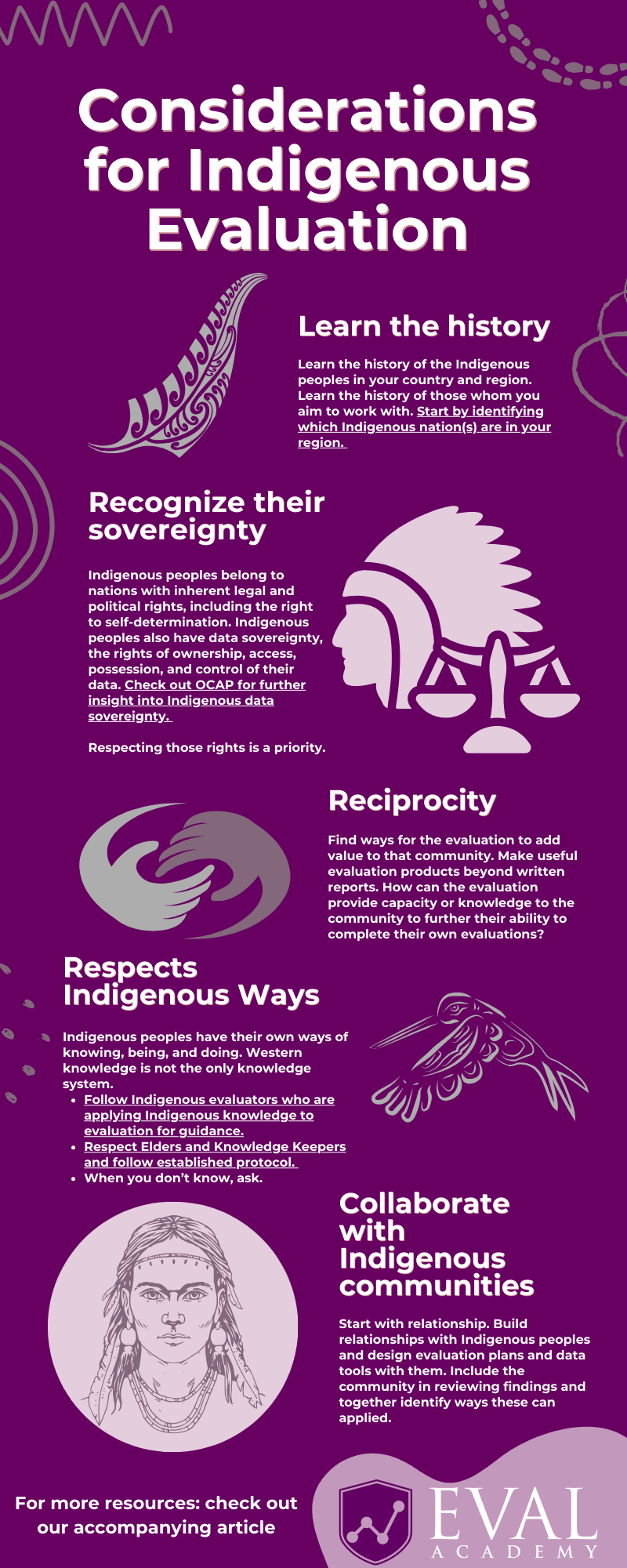
Eval Academy just released a new infographic, “Considerations for Indigenous Evaluation”!
Truth and Reconciliation Day / Orange Shirt Day is on September 30. This may inspire questions around ways evaluators can support Indigenous evaluation. This infographic provides some aspects to consider when planning an evaluation with Indigenous peoples.
Who’s it for?
This infographic is for anyone looking to learn more about Indigenous evaluation.
Stratified Sampling Tool (Single Strata)
CA$0.00
What’s the purpose?
This infographic provides some aspects to consider when designing a program evaluation with Indigenous people. Indigenous evaluation uses methodologies grounded in Indigenous knowledge, values, and cultural practices. Many Indigenous methodologies employ a ‘Two-Eyed Seeing’ approach, as discussed by Elder Albert Marshall, that applies both Western and Indigenous knowledge. At Eval Academy, we have an expanded definition of Indigenous evaluation in our dictionary.
What’s included?
A one-page, downloadable infographic as a PDF file.
Learn more: related articles and links
History:
-
Truth and Reconciliation Commission’s What We Have Learned: Principles of Truth and Reconciliation (2015).
-
University of Alberta’s Indigenous Canada course available on Coursera.
-
Indigenous people’s map available on the Native Land Digital website.
-
North American Residential/Indian Day School map available on the National Centre for Truth and Reconciliation’s website.
Ethics and data ownership:
-
The First Nations Information Governance Centre’s Ownership, Control, Access and Possession (OCAP™)
-
National Aboriginal History Organization (NAHO)’s Principles of Ethical Métis Research (2011).
Indigenous Protocols:
-
Protocols for Engaging with Indigenous Peoples and Communities is available on the Downie & Wenjack Fund website to help guide schools and non-profits in work with Indigenous communities.
Indigenous research and evaluation methodologies and examples:
-
Indigenous Insights: An Evaluation Podcast is hosted by Dr. Gladys Rowe and is available on her website.
-
Dr. Janice Cindy Gaudet wrote about her research and Indigenous knowledge she used in keeoukaywin: The Visiting Way – Fostering an Indigenous Research Methodology (2019).
-
Robline Davey explored a few Indigenous research methodologies in Searching for Métis Research Methodologies: natoonikew poor ayshitotamun michif (2023).
-
Dr. Tiffany Dionne Prete wrote about her research and using Indigenous cultural teachings in Beadworking as an Indigenous Research Paradigm (2019).
 English
 Afrikaans
 Shqip
Shqip አማርኛ
አማርኛ العربية
 Հայերեն
 Azərbaycan dili
 Euskara
 Беларуская мова
 বাংলা
বাংলা Bosanski
 Български
 Català
 Cebuano
 Chichewa
 简体中文
简体中文 繁體中文
繁體中文 Corsu
Corsu Hrvatski
 Čeština
 Dansk
Dansk Nederlands
 Esperanto
 Eesti
Eesti Filipino
 Suomi
Suomi Français
 Frysk
Frysk Galego
 ქართული
 Deutsch
 Ελληνικά
 ગુજરાતી
 Kreyol ayisyen
 Harshen Hausa
 Ōlelo Hawaiʻi
 עִבְרִית
 हिन्दी
 Hmong
Hmong Magyar
 Íslenska
 Igbo
Igbo Bahasa Indonesia
 Gaeilge
 Italiano
 日本語
日本語 Basa Jawa
 ಕನ್ನಡ
ಕನ್ನಡ Қазақ тілі
 ភាសាខ្មែរ
 한국어
한국어 كوردی
كوردی Кыргызча
 ພາສາລາວ
 Latin
Latin Latviešu valoda
 Lietuvių kalba
 Lëtzebuergesch
 Македонски јазик
 Malagasy
 Bahasa Melayu
 മലയാളം
 Maltese
 Te Reo Māori
 मराठी
मराठी Монгол
 ဗမာစာ
ဗမာစာ नेपाली
 Norsk bokmål
 پښتو
پښتو فارسی
فارسی Polski
 Português
 ਪੰਜਾਬੀ
 Română
 Русский
 Samoan
 Gàidhlig
 Српски језик
 Sesotho
 Shona
Shona سنڌي
سنڌي සිංහල
සිංහල Slovenčina
 Slovenščina
 Afsoomaali
 Español
 Basa Sunda
 Kiswahili
 Svenska
 Тоҷикӣ
 தமிழ்
தமிழ் తెలుగు
 ไทย
ไทย Türkçe
 Українська
 اردو
اردو O‘zbekcha
 Tiếng Việt
 Cymraeg
 isiXhosa
 יידיש
יידיש Yorùbá
 Zulu
Zulu