It’s so easy to think social problems are simple.
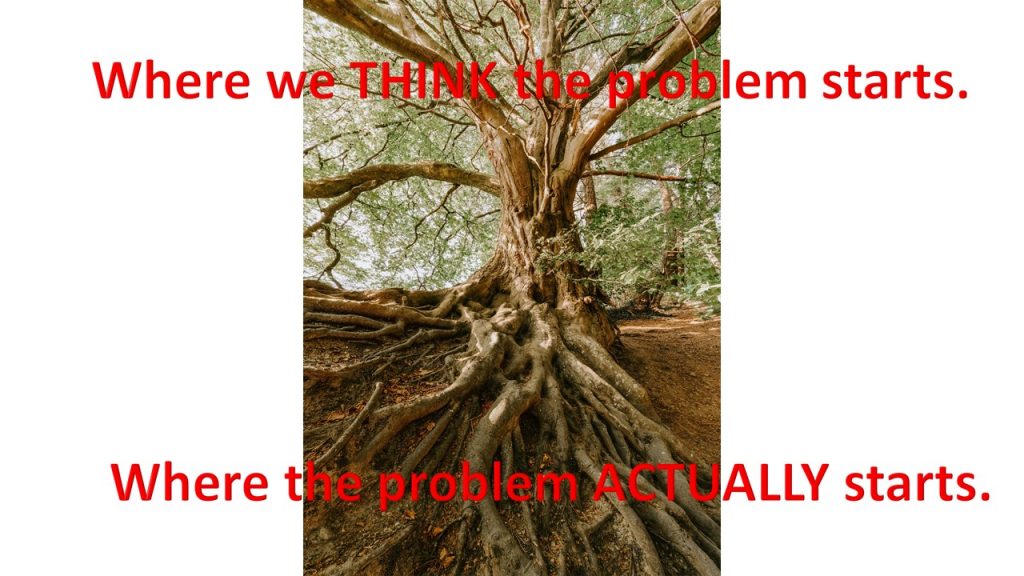
Take interpersonal violence for example. When it is discussed, most people ask, “Why does she stay?”
For a few years in graduate school, I ran a randomized community survey that asked people to tell us what they thought of why violence against women happens and what should be done about it. It’s kind of amazing to hear what people think. Or maybe it’s not.
It’s her fault.
She probably did something to make him mad.
Why doesn’t she just leave?
Rarely, if ever, do people ask, “What is it about our society that allows violence to happen?”
As a community psychologist, I am more interested in this question. (Not sure what a community psychologist does? (Click here to learn more).
As we struggle on through the COVID-19 pandemic and a national identity crisis following the recent (and not so recent) deaths of unarmed black men and women, we literally have to get our head out of the trees. It’s way past time to look at environmental context and root causes. I am not sure about you, but I am tired of plugging holes in the dam. There are just too many of them.
What would it look like if we really lived up to our tag line, Partnering for Social Change? That is the question I asked myself a few weeks ago when I took the week off to rewrite my business plan.
Social change may sound scary, but it really involves questioning our assumptions and recognizing and considering complexity. People live in families, within neighborhoods, within cities, within states, within a country. All of these systems shape us.
I once evaluated a community-based elementary afterschool program whose participants attended a school with a history of low scores on state achievement tests. The afterschool program met for about 2 ½ hours after school. The funder of the afterschool program had an advisory board. During a meeting, the chair of the advisory board said she wanted to set a benchmark that all students would be 100% competent on state achievement tests. That goal, while aspirational, failed to account for the multiple systems that surrounded these students. It put all of the pressure and responsibility on the children, and none on the systems surrounding them. Clearly programs can’t do all things for all people, but if we truly want to make a difference, we have to work on the right levers in the right systems.
Think about a game of Jenga or Pick Up Sticks. Some things are foundational.
So, this is what we will begin to explore. Because if we really want to make a difference, we have to get to the root issues.
Take a moment and consider the program you are running right now. What are the family, community and systems pressures that affect the people you most want to serve?
 English
 Afrikaans
 Shqip
Shqip አማርኛ
አማርኛ العربية
 Հայերեն
 Azərbaycan dili
 Euskara
 Беларуская мова
 বাংলা
বাংলা Bosanski
 Български
 Català
 Cebuano
 Chichewa
 简体中文
简体中文 繁體中文
繁體中文 Corsu
Corsu Hrvatski
 Čeština
 Dansk
Dansk Nederlands
 Esperanto
 Eesti
Eesti Filipino
 Suomi
Suomi Français
 Frysk
Frysk Galego
 ქართული
 Deutsch
 Ελληνικά
 ગુજરાતી
 Kreyol ayisyen
 Harshen Hausa
 Ōlelo Hawaiʻi
 עִבְרִית
 हिन्दी
 Hmong
Hmong Magyar
 Íslenska
 Igbo
Igbo Bahasa Indonesia
 Gaeilge
 Italiano
 日本語
日本語 Basa Jawa
 ಕನ್ನಡ
ಕನ್ನಡ Қазақ тілі
 ភាសាខ្មែរ
 한국어
한국어 كوردی
كوردی Кыргызча
 ພາສາລາວ
 Latin
Latin Latviešu valoda
 Lietuvių kalba
 Lëtzebuergesch
 Македонски јазик
 Malagasy
 Bahasa Melayu
 മലയാളം
 Maltese
 Te Reo Māori
 मराठी
मराठी Монгол
 ဗမာစာ
ဗမာစာ नेपाली
 Norsk bokmål
 پښتو
پښتو فارسی
فارسی Polski
 Português
 ਪੰਜਾਬੀ
 Română
 Русский
 Samoan
 Gàidhlig
 Српски језик
 Sesotho
 Shona
Shona سنڌي
سنڌي සිංහල
සිංහල Slovenčina
 Slovenščina
 Afsoomaali
 Español
 Basa Sunda
 Kiswahili
 Svenska
 Тоҷикӣ
 தமிழ்
தமிழ் తెలుగు
 ไทย
ไทย Türkçe
 Українська
 اردو
اردو O‘zbekcha
 Tiếng Việt
 Cymraeg
 isiXhosa
 יידיש
יידיש Yorùbá
 Zulu
Zulu