Have you ever planned a meeting complete with a well thought-out, organized agenda, only to toss it because your group had more important needs? That was exactly what I experienced last week.
In a call I was leading this past Friday, one of the participants, a community collaborative leader, went right to what is on a lot of minds these days, especially community collaborative and coalition leaders. He asked, how he as a community collaborative leader could respond to his community’s need to talk about the racial tension in his community?
We had a really great conversation.
One of the leaders on the call shared his pastor’s challenge to his congregation to understand the difference between remedies and solutions. Remedies are short term fixes. For example, a backpack program that sends food home to families experiencing food insecurity is a remedy. Remedies might be necessary, but they aren’t solutions because they don’t address root causes.
If we really want to make a difference, we need upstream solutions. We need to understand why people are falling in the river in the first place. In our example, why are so many families experiencing food insecurity?
In my last blog, I suggested that we all have the tendency to look at simple solutions. Usually we identify individuals as the sole cause of their problems. I spend a lot of time working with community coalitions. When I ask what change they want to see in their community, people- often default to finding fault with individuals without considering the systems that make their life harder.
Root Cause Analysis is a method that you can use to get your organization to examine root causes and these my friend, will help you identify the solutions that can lead to lasting change.
Here are 3 root cause analysis methods you might want to use with your organization. Note that the examples I use here are not extensive and are just meant to get you thinking.
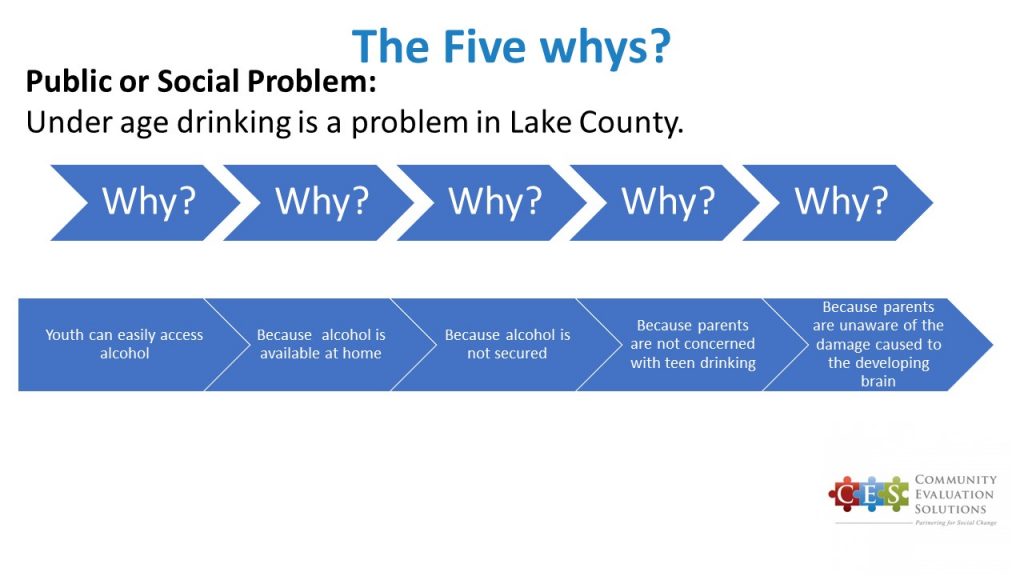
The Five Whys
This technique asks the question “Why?” five times. Each time you should ask your group to think more deeply about the social problem you are focused on and drill down into it.
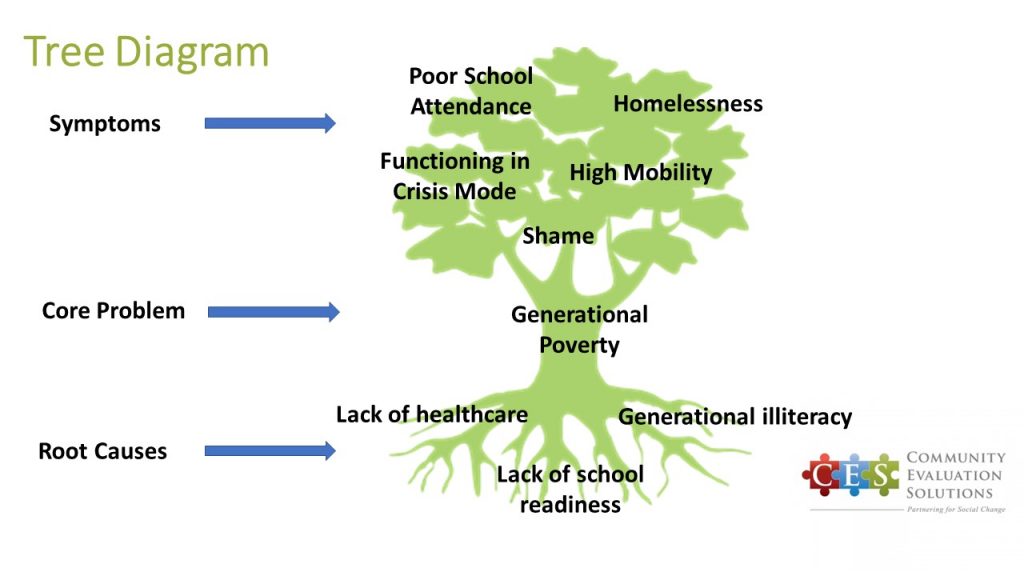
The Tree Diagram
The tree diagram helps you identify a problem and the symptoms of that problem, as well as the root causes. The diagram displays the structure of causes for a problem and provides insight into possible solutions.
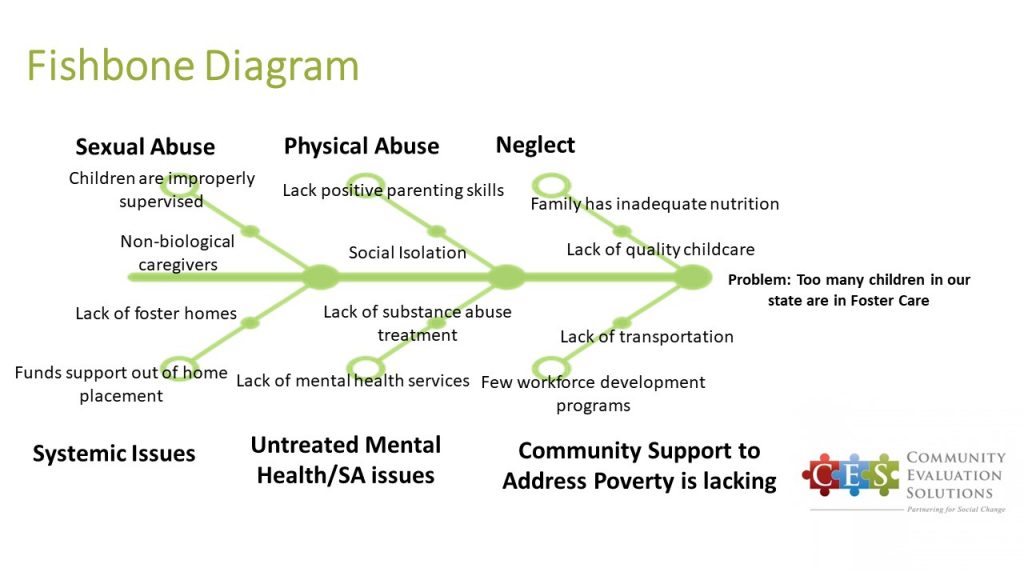
The Fishbone Diagram
The Fishbone Diagram (aka Ishikawa Cause and Effect Diagram) helps visualize a problem (the fish head) and then drills down via categories in this cause and effect model, forming what resembles a fishbone appearance.
Take a moment and consider the social problem or public health issue your community is grappling with. What root causes affect the people you most want to serve?
 English
 Afrikaans
 Shqip
Shqip አማርኛ
አማርኛ العربية
 Հայերեն
 Azərbaycan dili
 Euskara
 Беларуская мова
 বাংলা
বাংলা Bosanski
 Български
 Català
 Cebuano
 Chichewa
 简体中文
简体中文 繁體中文
繁體中文 Corsu
Corsu Hrvatski
 Čeština
 Dansk
Dansk Nederlands
 Esperanto
 Eesti
Eesti Filipino
 Suomi
Suomi Français
 Frysk
Frysk Galego
 ქართული
 Deutsch
 Ελληνικά
 ગુજરાતી
 Kreyol ayisyen
 Harshen Hausa
 Ōlelo Hawaiʻi
 עִבְרִית
 हिन्दी
 Hmong
Hmong Magyar
 Íslenska
 Igbo
Igbo Bahasa Indonesia
 Gaeilge
 Italiano
 日本語
日本語 Basa Jawa
 ಕನ್ನಡ
ಕನ್ನಡ Қазақ тілі
 ភាសាខ្មែរ
 한국어
한국어 كوردی
كوردی Кыргызча
 ພາສາລາວ
 Latin
Latin Latviešu valoda
 Lietuvių kalba
 Lëtzebuergesch
 Македонски јазик
 Malagasy
 Bahasa Melayu
 മലയാളം
 Maltese
 Te Reo Māori
 मराठी
मराठी Монгол
 ဗမာစာ
ဗမာစာ नेपाली
 Norsk bokmål
 پښتو
پښتو فارسی
فارسی Polski
 Português
 ਪੰਜਾਬੀ
 Română
 Русский
 Samoan
 Gàidhlig
 Српски језик
 Sesotho
 Shona
Shona سنڌي
سنڌي සිංහල
සිංහල Slovenčina
 Slovenščina
 Afsoomaali
 Español
 Basa Sunda
 Kiswahili
 Svenska
 Тоҷикӣ
 தமிழ்
தமிழ் తెలుగు
 ไทย
ไทย Türkçe
 Українська
 اردو
اردو O‘zbekcha
 Tiếng Việt
 Cymraeg
 isiXhosa
 יידיש
יידיש Yorùbá
 Zulu
Zulu