This is a series of posts providing quick of overviews of important topics in research and evaluation. Each post in this series will include 3 cartoons from my archives along with 3 links to recommended resources.
Telling the story of a program.
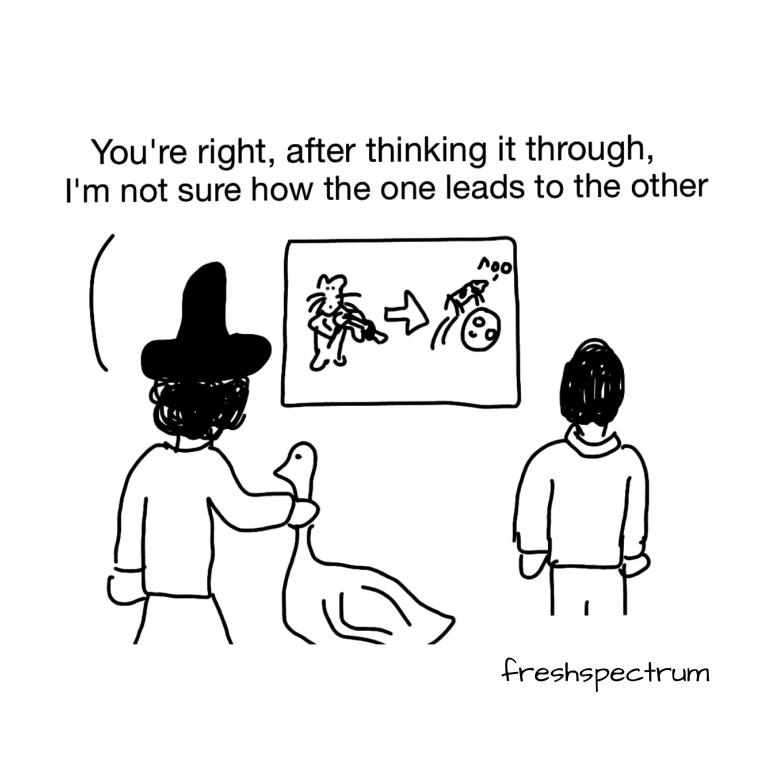
A theory of change is a description of why a particular way of working will be effective, showing how change happens in the short, medium and long term to achieve the intended impact. It can be represented in a visual diagram, as a narrative, or both.
Connecting the Pieces
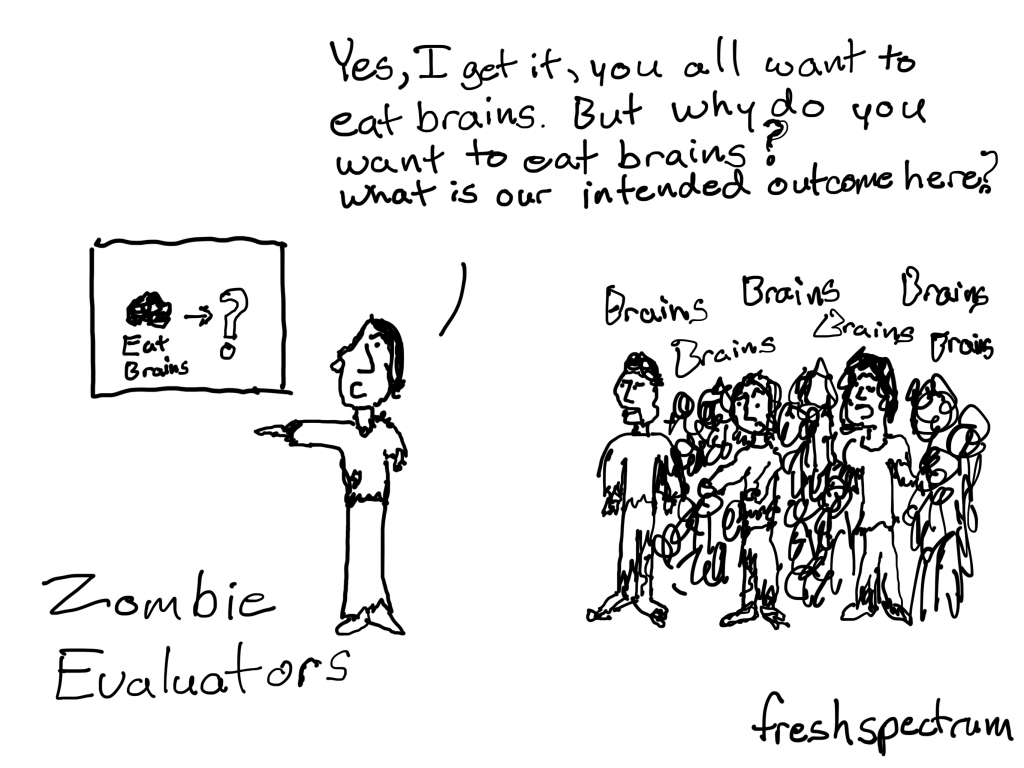
Not only does the ToC show the outcomes/preconditions, it also outlines the causal linkages in an intervention between the shorter-term, intermediate, and longer-term outcomes. The identified changes are mapped—as the “outcomes pathway”—showing each outcome in logical relationship to all the others, as well as chronological flow.
Ideally, every outcome/precondition should be accompanied by at least one indicator to measure success.
What is this thing called ‘Theory of Change’? by Ann-Murray Brown for the USAID Learning Lab
Too much at stake not to have a clearly defined process.
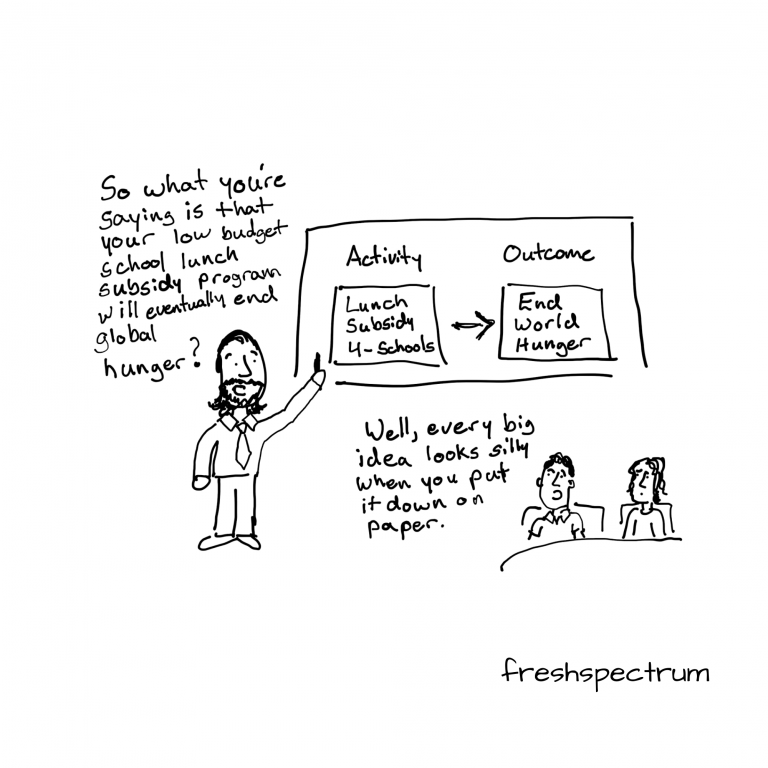
Thinking through a theory of change shows how the work progresses. It doesn’t stop the work.
Some stakeholders may react in frustration to the theory of change development process because they view it as “taking time to think” which takes time away from “doing the work.” However, the thinking involved in developing a theory of change does not in any way preclude doing the work … it is almost impossible to determine whether progress has occurred in a community change initiative if you have not explicitly identified the steps to progress. Communities have too much at stake to engage in work without a clearly defined purpose.
Theory of Change – A Practical Tool for Action, Results and Learning. The Annie E. Casey Foundation.
Like the cartoons? I create new cartoons regularly for my Patrons > https://www.patreon.com/freshspectrum. Patrons also get access to my private dropbox folder where I store all my cartoons.
 English
 Afrikaans
 Shqip
Shqip አማርኛ
አማርኛ العربية
 Հայերեն
 Azərbaycan dili
 Euskara
 Беларуская мова
 বাংলা
বাংলা Bosanski
 Български
 Català
 Cebuano
 Chichewa
 简体中文
简体中文 繁體中文
繁體中文 Corsu
Corsu Hrvatski
 Čeština
 Dansk
Dansk Nederlands
 Esperanto
 Eesti
Eesti Filipino
 Suomi
Suomi Français
 Frysk
Frysk Galego
 ქართული
 Deutsch
 Ελληνικά
 ગુજરાતી
 Kreyol ayisyen
 Harshen Hausa
 Ōlelo Hawaiʻi
 עִבְרִית
 हिन्दी
 Hmong
Hmong Magyar
 Íslenska
 Igbo
Igbo Bahasa Indonesia
 Gaeilge
 Italiano
 日本語
日本語 Basa Jawa
 ಕನ್ನಡ
ಕನ್ನಡ Қазақ тілі
 ភាសាខ្មែរ
 한국어
한국어 كوردی
كوردی Кыргызча
 ພາສາລາວ
 Latin
Latin Latviešu valoda
 Lietuvių kalba
 Lëtzebuergesch
 Македонски јазик
 Malagasy
 Bahasa Melayu
 മലയാളം
 Maltese
 Te Reo Māori
 मराठी
मराठी Монгол
 ဗမာစာ
ဗမာစာ नेपाली
 Norsk bokmål
 پښتو
پښتو فارسی
فارسی Polski
 Português
 ਪੰਜਾਬੀ
 Română
 Русский
 Samoan
 Gàidhlig
 Српски језик
 Sesotho
 Shona
Shona سنڌي
سنڌي සිංහල
සිංහල Slovenčina
 Slovenščina
 Afsoomaali
 Español
 Basa Sunda
 Kiswahili
 Svenska
 Тоҷикӣ
 தமிழ்
தமிழ் తెలుగు
 ไทย
ไทย Türkçe
 Українська
 اردو
اردو O‘zbekcha
 Tiếng Việt
 Cymraeg
 isiXhosa
 יידיש
יידיש Yorùbá
 Zulu
Zulu