This is a series of posts providing quick of overviews of important topics in research and evaluation. Each post in this series will include 3 cartoons from my archives along with 3 links to recommended resources.
Summative Evaluation can be the Scary One for Program People

BOTTOM LINE – Summative evaluation requires rigorous evidence because the stakes are high. The evaluation data must be high quality and credible to external stakeholders interested in the model.
Evaluation Flash Cards [PDF] – by Michael Quinn Patton for Otto Bremer Trust
Making Sure that a Program Works
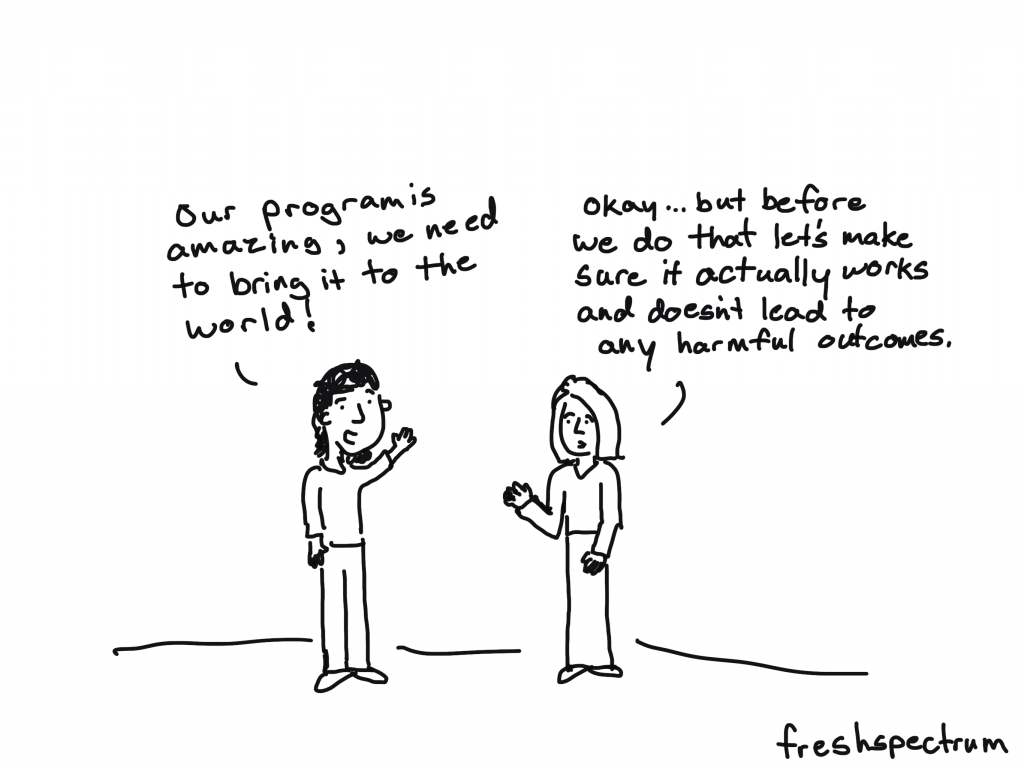
An evaluation is a systematic and purposeful collection and analysis of data used to document the effectiveness of programs or interventions. Rigorous evaluation can determine if programs or interventions should be maintained, improved, or eliminated. The term summative evaluation (sometimes referred to as ex-post evaluation or outcome evaluation) was first introduced in the mid-1960s by Lee Cronbach and Michael Scriven and refers to a process of evaluating a program’s or intervention’s impact or efficacy through careful examination of program design and management. It is often used to assess the accountability of a program or intervention.
Summative Evaluation – from The SAGE Encyclopedia of Educational Research, Measurement, and Evaluation
Summative, Formative, Developmental Evaluation
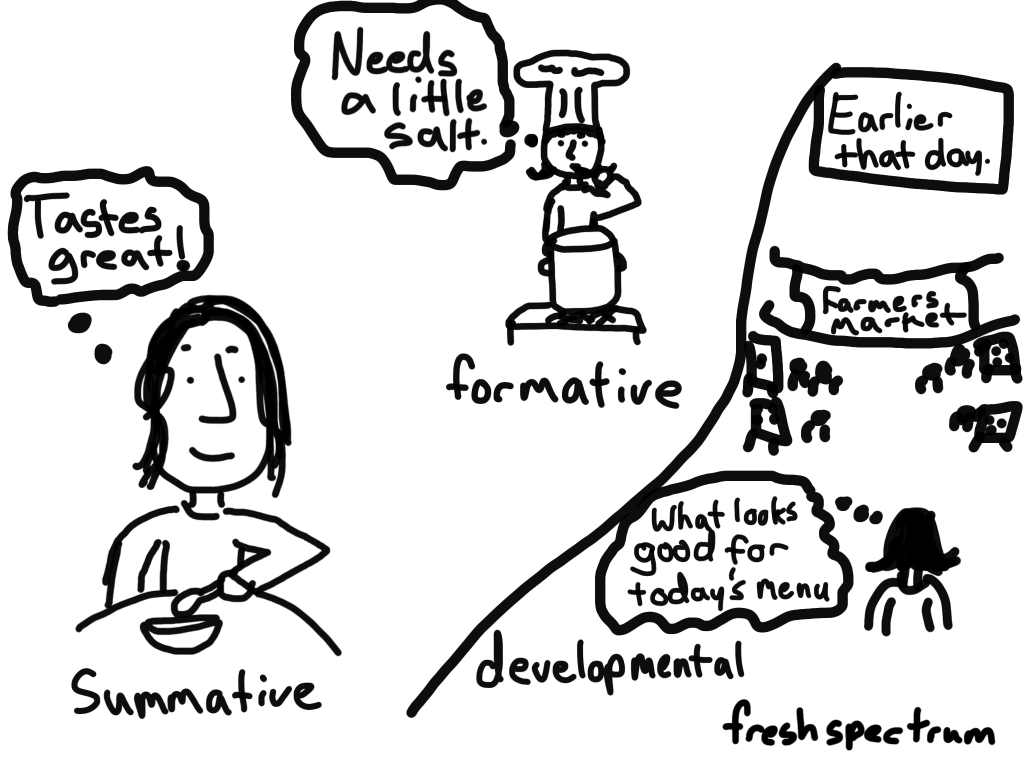
Distinguished evaluation theorist and practitioner Bob Stake has explained, “When the cook tastes the soup, that’s formative; when the guests taste the soup, that’s summative” (quoted in Scriven, 1991, p. 169). More generally, anything done to the soup during preparation in the kitchen is improvement oriented; when the soup is served, summative judgment is rendered by the guests who consume the soup. And what of developmental evaluation in this metaphor?
Developmental evaluation begins when, before cooking, the chef goes to the market to see what vegetables are the freshest, what fish has just arrived, and meanders through the market considering possibilities, thinking about who the guests will be, what they were served last time, what the weather is like, and considers how adventurous and innovative to be with the meal.
Michael Quinn Patton from his book on Developmental Evaluation
 English
 Afrikaans
 Shqip
Shqip አማርኛ
አማርኛ العربية
 Հայերեն
 Azərbaycan dili
 Euskara
 Беларуская мова
 বাংলা
বাংলা Bosanski
 Български
 Català
 Cebuano
 Chichewa
 简体中文
简体中文 繁體中文
繁體中文 Corsu
Corsu Hrvatski
 Čeština
 Dansk
Dansk Nederlands
 Esperanto
 Eesti
Eesti Filipino
 Suomi
Suomi Français
 Frysk
Frysk Galego
 ქართული
 Deutsch
 Ελληνικά
 ગુજરાતી
 Kreyol ayisyen
 Harshen Hausa
 Ōlelo Hawaiʻi
 עִבְרִית
 हिन्दी
 Hmong
Hmong Magyar
 Íslenska
 Igbo
Igbo Bahasa Indonesia
 Gaeilge
 Italiano
 日本語
日本語 Basa Jawa
 ಕನ್ನಡ
ಕನ್ನಡ Қазақ тілі
 ភាសាខ្មែរ
 한국어
한국어 كوردی
كوردی Кыргызча
 ພາສາລາວ
 Latin
Latin Latviešu valoda
 Lietuvių kalba
 Lëtzebuergesch
 Македонски јазик
 Malagasy
 Bahasa Melayu
 മലയാളം
 Maltese
 Te Reo Māori
 मराठी
मराठी Монгол
 ဗမာစာ
ဗမာစာ नेपाली
 Norsk bokmål
 پښتو
پښتو فارسی
فارسی Polski
 Português
 ਪੰਜਾਬੀ
 Română
 Русский
 Samoan
 Gàidhlig
 Српски језик
 Sesotho
 Shona
Shona سنڌي
سنڌي සිංහල
සිංහල Slovenčina
 Slovenščina
 Afsoomaali
 Español
 Basa Sunda
 Kiswahili
 Svenska
 Тоҷикӣ
 தமிழ்
தமிழ் తెలుగు
 ไทย
ไทย Türkçe
 Українська
 اردو
اردو O‘zbekcha
 Tiếng Việt
 Cymraeg
 isiXhosa
 יידיש
יידיש Yorùbá
 Zulu
Zulu