This is a series of posts providing quick of overviews of important topics in research and evaluation. Each post in this series will include at least 3 cartoons from my archives and at least 3 links to recommended resources. I only give quotes here and recommend that you follow the links below each quote for more detailed information.
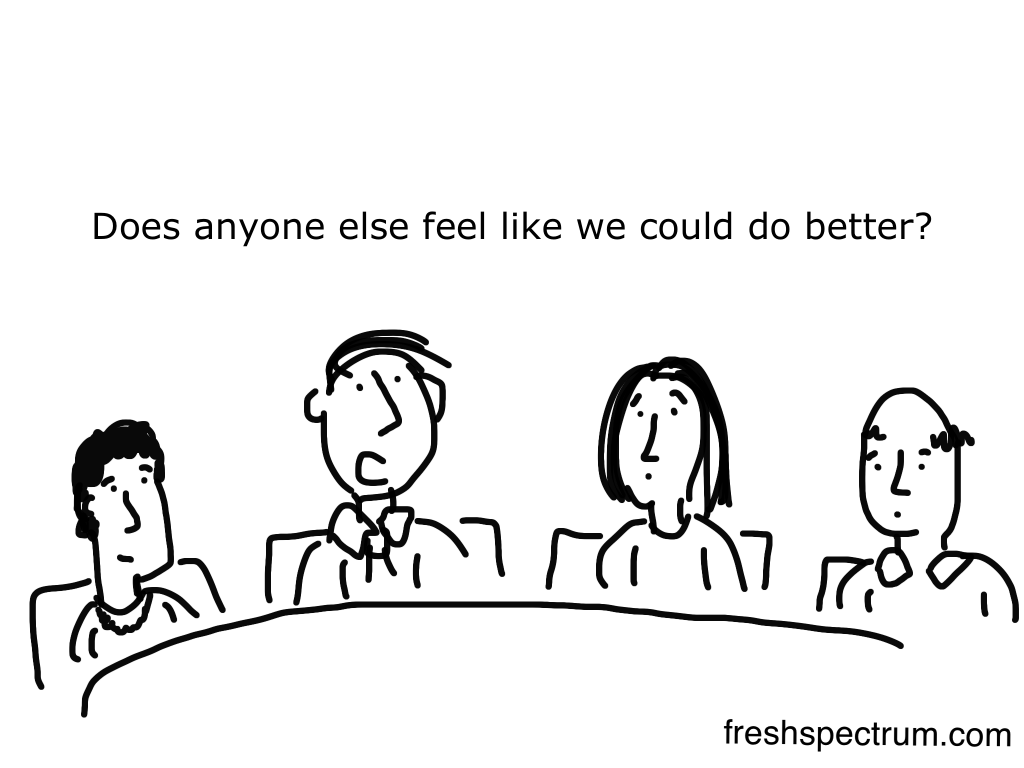
Key Evaluation Questions (KEQs) are the high-level questions that an evaluation is designed to answer – not specific questions that are asked in an interview or a questionnaire. Having an agreed set of Key Evaluation Questions (KEQs) makes it easier to decide what data to collect, how to analyze it, and how to report it.
KEQs usually need to be developed and agreed on at the beginning of evaluation planning – however sometimes KEQs are already prescribed by an evaluation system or a previously developed evaluation framework.
Try not to have too many Key Evaluation Questions – a maximum of 5-7 main questions will be sufficient. It might also be useful to have some more specific questions under the KEQs.
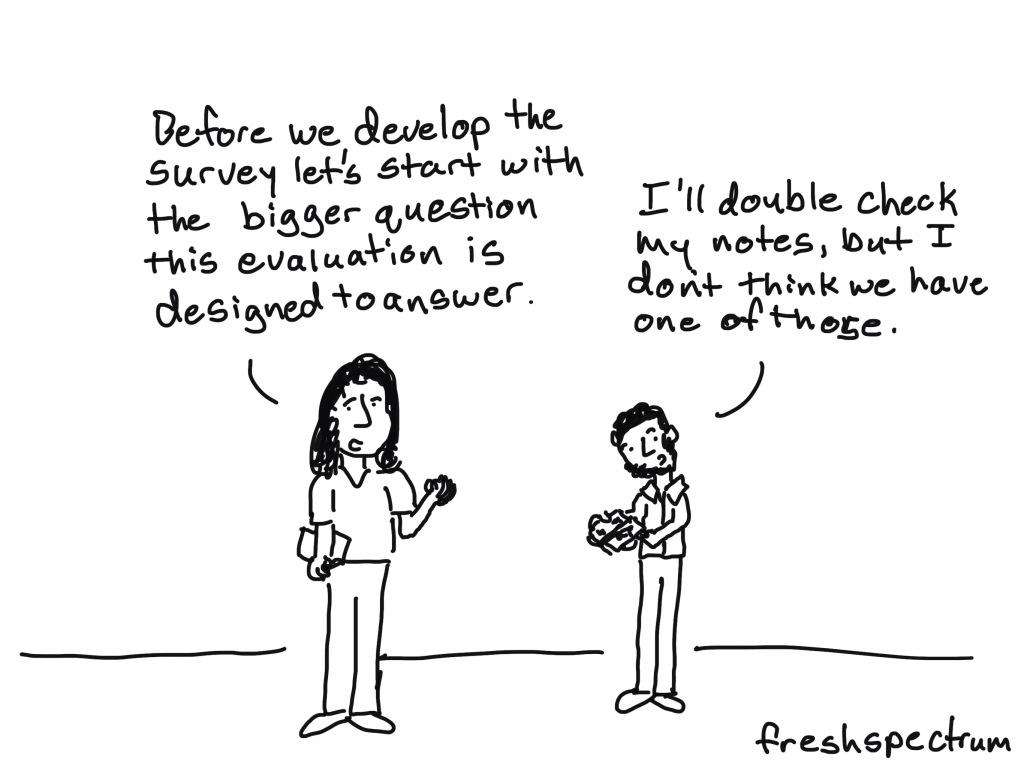
Before we decide what types of data we need (qualitative or quantitative) we need to know the bigger question of the project: What specific problem does the project or program address?
Evaluation questions, similar to research questions in academic research projects, guide the methods and tools used to collect data to understand the problem under investigation. Evaluation questions may seem intuitive, and thus be quickly developed to get to the more detailed program planning. But, without well-developed, relevant, and accurate evaluation questions, developed with stakeholders connected to the problem, projects can move around a problem without addressing the most appropriate issues.
I keep six honest serving-men
(They taught me all I knew);
Their names are What and Why and When
And How and Where and Who.
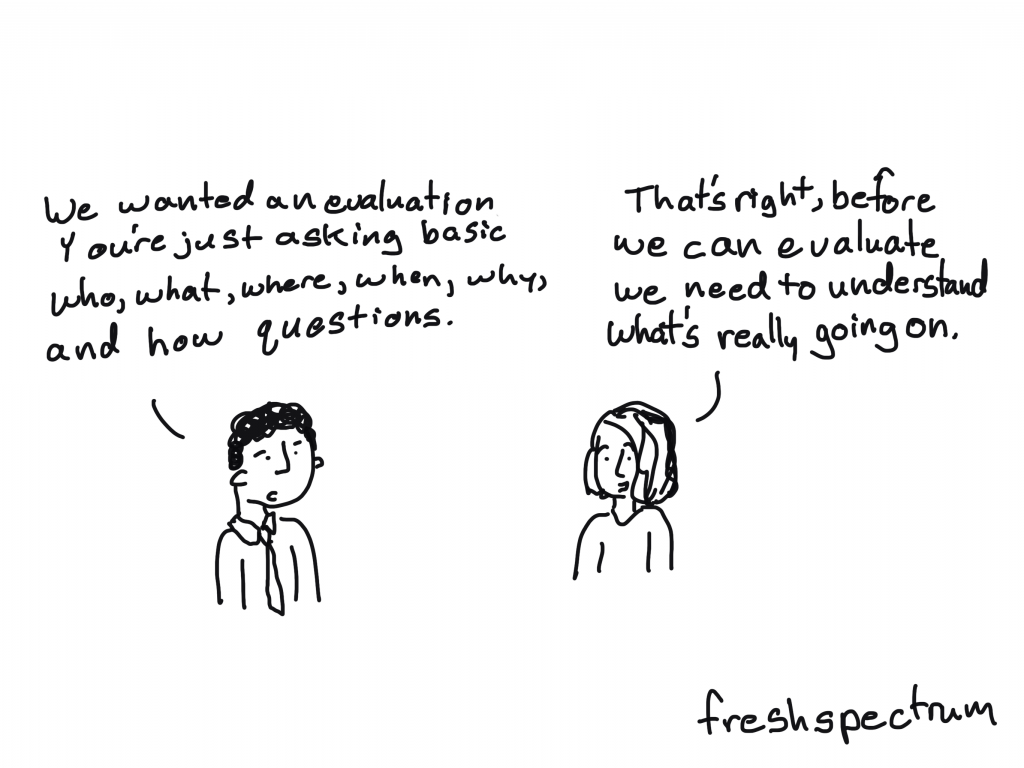
— Rudyard Kipling (1865–1936), The Elephant’s ChildFor professionals as diverse as journalists, police detectives, lawyers, and evaluators, Kipling’s five Ws and one H is the formula for full understanding and a complete report. These are descriptive, factual, and open-ended questions. None can be answered “yes” or “no.” You have to find out what happened. When first entering a program situation (for example, on a site visit), it can be helpful to begin with some basic facts to get the lay of the land. Keep it simple: Who’s proposing to do what? Where? When? How? Why?
Evaluation Flashcards developed by Michael Quinn Patton for the Otto Bremer Trust
 English
 Afrikaans
 Shqip
Shqip አማርኛ
አማርኛ العربية
 Հայերեն
 Azərbaycan dili
 Euskara
 Беларуская мова
 বাংলা
বাংলা Bosanski
 Български
 Català
 Cebuano
 Chichewa
 简体中文
简体中文 繁體中文
繁體中文 Corsu
Corsu Hrvatski
 Čeština
 Dansk
Dansk Nederlands
 Esperanto
 Eesti
Eesti Filipino
 Suomi
Suomi Français
 Frysk
Frysk Galego
 ქართული
 Deutsch
 Ελληνικά
 ગુજરાતી
 Kreyol ayisyen
 Harshen Hausa
 Ōlelo Hawaiʻi
 עִבְרִית
 हिन्दी
 Hmong
Hmong Magyar
 Íslenska
 Igbo
Igbo Bahasa Indonesia
 Gaeilge
 Italiano
 日本語
日本語 Basa Jawa
 ಕನ್ನಡ
ಕನ್ನಡ Қазақ тілі
 ភាសាខ្មែរ
 한국어
한국어 كوردی
كوردی Кыргызча
 ພາສາລາວ
 Latin
Latin Latviešu valoda
 Lietuvių kalba
 Lëtzebuergesch
 Македонски јазик
 Malagasy
 Bahasa Melayu
 മലയാളം
 Maltese
 Te Reo Māori
 मराठी
मराठी Монгол
 ဗမာစာ
ဗမာစာ नेपाली
 Norsk bokmål
 پښتو
پښتو فارسی
فارسی Polski
 Português
 ਪੰਜਾਬੀ
 Română
 Русский
 Samoan
 Gàidhlig
 Српски језик
 Sesotho
 Shona
Shona سنڌي
سنڌي සිංහල
සිංහල Slovenčina
 Slovenščina
 Afsoomaali
 Español
 Basa Sunda
 Kiswahili
 Svenska
 Тоҷикӣ
 தமிழ்
தமிழ் తెలుగు
 ไทย
ไทย Türkçe
 Українська
 اردو
اردو O‘zbekcha
 Tiếng Việt
 Cymraeg
 isiXhosa
 יידיש
יידיש Yorùbá
 Zulu
Zulu