This post was written for, and originally appeared, on AEA365.
Hello my fellow evaluators. My name is Chris Lysy, and I am a freelance evaluator, designer, and trainer based in Cary, North Carolina. My consulting work involves helping organizations deal with the virtual shift (shifting programs from the “real world” to the “virtual world”).
Over the last couple of decades lots of organizations have evolved from being fundamentally place-based operations to global digital entities. An evolution that started well before COVID.
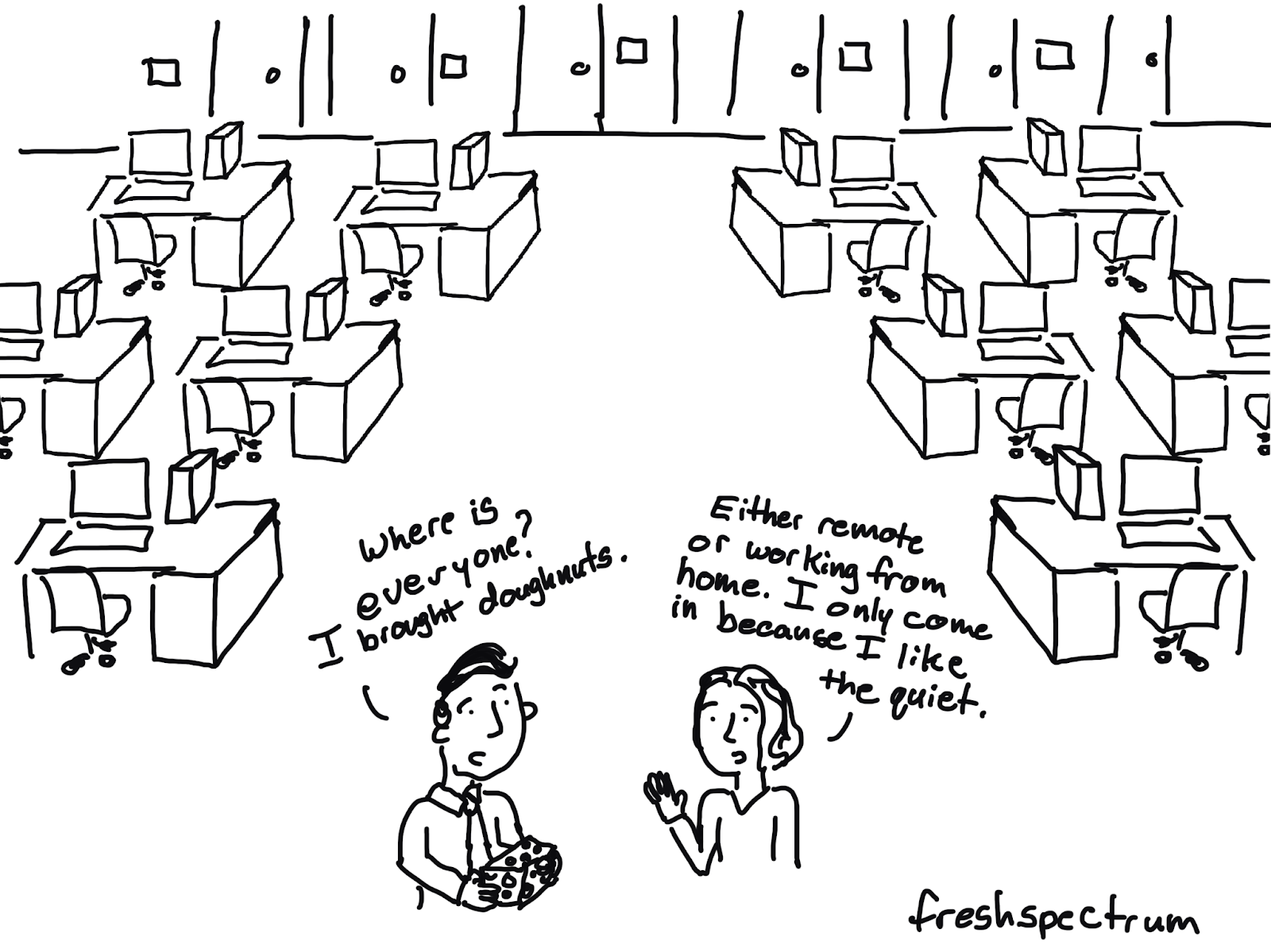
Yet for some reason we still have this image of an organization being a place where people who work together regularly come into face to face contact.
So why are your online efforts doomed to fail?
I believe we consistently underestimate how much the social environment has changed as the virtual world has grown.
- A 60 minute webinar is not the same as a 60 minute in-person brown bag.
- A virtual summit is not the same as a multi-day in-person conference.
- A 30 minute zoom chat is not the same as a cup of coffee with a colleague.
It’s similar, not necessarily better or worse, but different.
A lot of what has been written about evaluation capacity building is focused on what concepts to cover. It assumes that evaluators know how to effectively engage people at an organizational level. For the pre-virtual organization, that could mean showing up with free doughnuts in the lobby or hosting a large event in the “big conference room.”
But in order to bring the same level of change in the virtual world, we have to approach the capacity building challenge differently. Or else our efforts will be doomed to fail.
Capacity Building Requires Community Building
Most organizations are not full of vibrant virtual communities. IRL (“In Real Life”) when people get together, community happens. Not so in the digital world. People tend to know their teams (from regular Zoom calls) but they might not know anyone else outside their project bubble.
So if you want to engage a certain community of people (say project leaders or internal data people) you have to start by building that specific virtual community.
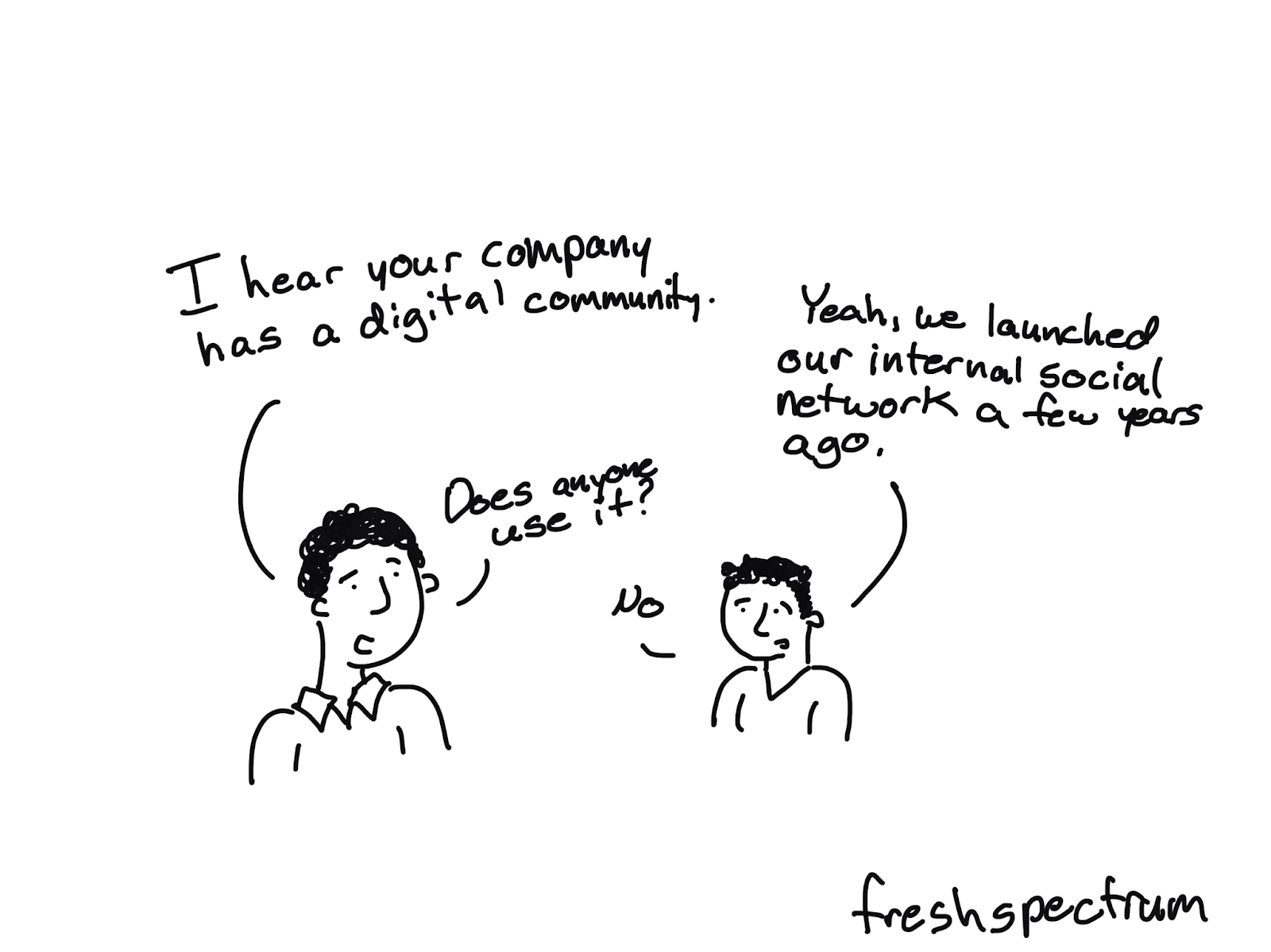
A Dead Forum is NOT a Community
Yes we all have lovely dreams of an active forum where people go to ask questions and support one another. But the reality is that good forum communities are hard to build and often require far more people than you even have in your organization.
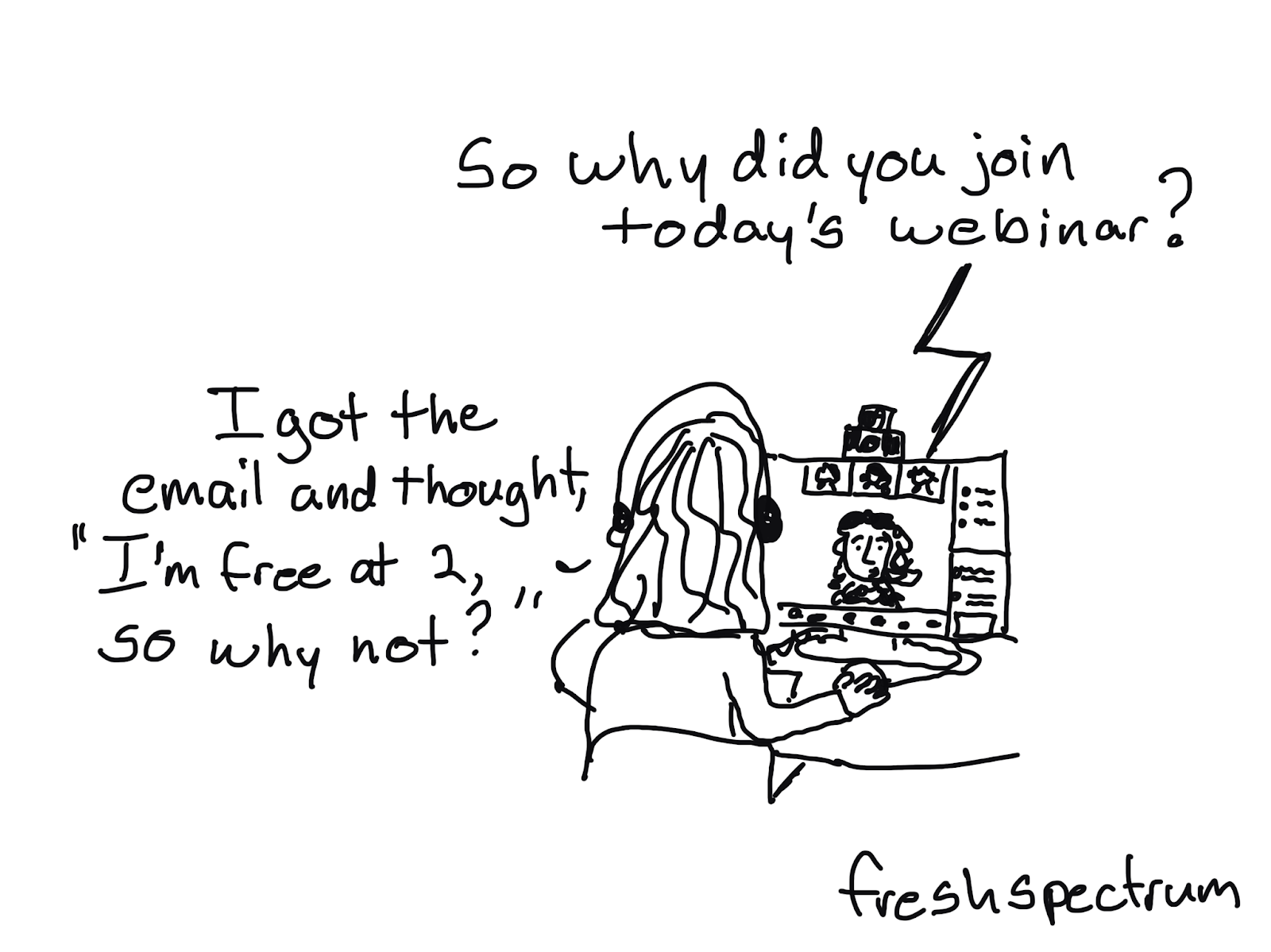
A Webinar Lecture Series is NOT a Community
Somebody wants a community. So they create a webinar lecture series with topics of interest for that specific community. That might work for community building IRL but it doesn’t work the same online. Do this instead.
- Hold webinar conversations, not lectures.
- Source presenters from inside the prospective community.
- Hold panel webinars to distribute the content responsibility and increase exposure to peers.
- People need to see/hear people to connect, so encourage cameras/headsets (just don’t require them!).
An Email Newsletter is a Good Place to Start
It’s easy to create and just shows up in their email inbox (no need for them to visit a specific site or remember any kind of password/username). You can source newsletter content from the community and it pairs really well with a conversational webinar strategy.
Want more guidance?
I created a short practical guide.
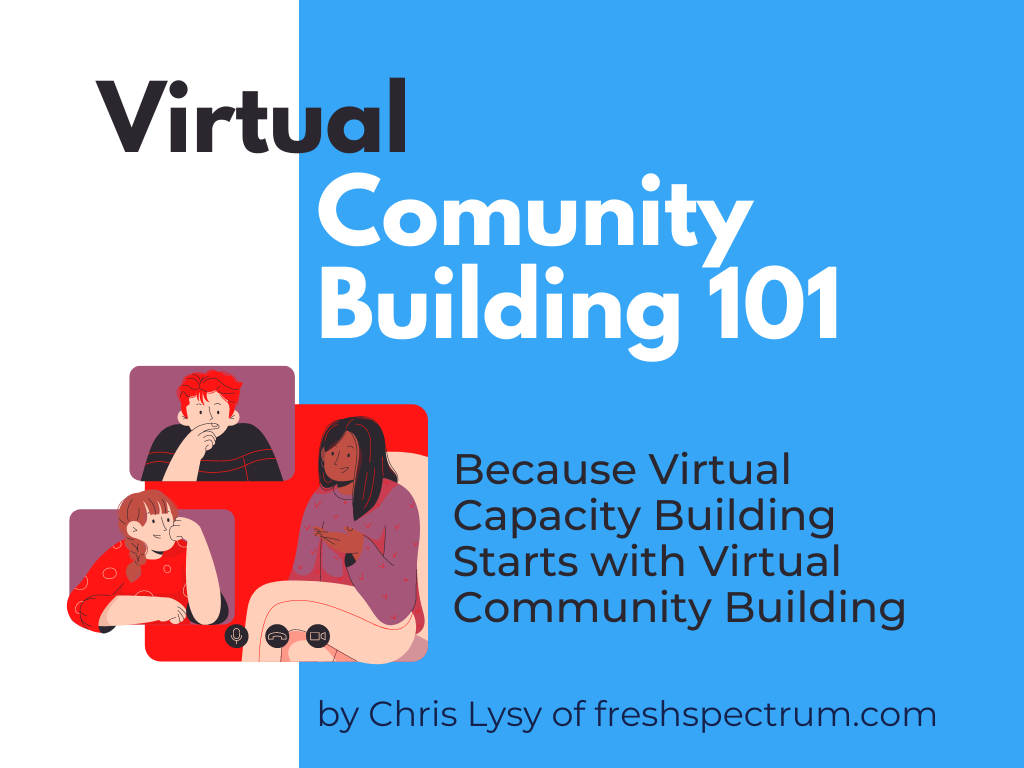
You can download it here: Virtual Community Building 101
 English
 Afrikaans
 Shqip
Shqip አማርኛ
አማርኛ العربية
 Հայերեն
 Azərbaycan dili
 Euskara
 Беларуская мова
 বাংলা
বাংলা Bosanski
 Български
 Català
 Cebuano
 Chichewa
 简体中文
简体中文 繁體中文
繁體中文 Corsu
Corsu Hrvatski
 Čeština
 Dansk
Dansk Nederlands
 Esperanto
 Eesti
Eesti Filipino
 Suomi
Suomi Français
 Frysk
Frysk Galego
 ქართული
 Deutsch
 Ελληνικά
 ગુજરાતી
 Kreyol ayisyen
 Harshen Hausa
 Ōlelo Hawaiʻi
 עִבְרִית
 हिन्दी
 Hmong
Hmong Magyar
 Íslenska
 Igbo
Igbo Bahasa Indonesia
 Gaeilge
 Italiano
 日本語
日本語 Basa Jawa
 ಕನ್ನಡ
ಕನ್ನಡ Қазақ тілі
 ភាសាខ្មែរ
 한국어
한국어 كوردی
كوردی Кыргызча
 ພາສາລາວ
 Latin
Latin Latviešu valoda
 Lietuvių kalba
 Lëtzebuergesch
 Македонски јазик
 Malagasy
 Bahasa Melayu
 മലയാളം
 Maltese
 Te Reo Māori
 मराठी
मराठी Монгол
 ဗမာစာ
ဗမာစာ नेपाली
 Norsk bokmål
 پښتو
پښتو فارسی
فارسی Polski
 Português
 ਪੰਜਾਬੀ
 Română
 Русский
 Samoan
 Gàidhlig
 Српски језик
 Sesotho
 Shona
Shona سنڌي
سنڌي සිංහල
සිංහල Slovenčina
 Slovenščina
 Afsoomaali
 Español
 Basa Sunda
 Kiswahili
 Svenska
 Тоҷикӣ
 தமிழ்
தமிழ் తెలుగు
 ไทย
ไทย Türkçe
 Українська
 اردو
اردو O‘zbekcha
 Tiếng Việt
 Cymraeg
 isiXhosa
 יידיש
יידיש Yorùbá
 Zulu
Zulu