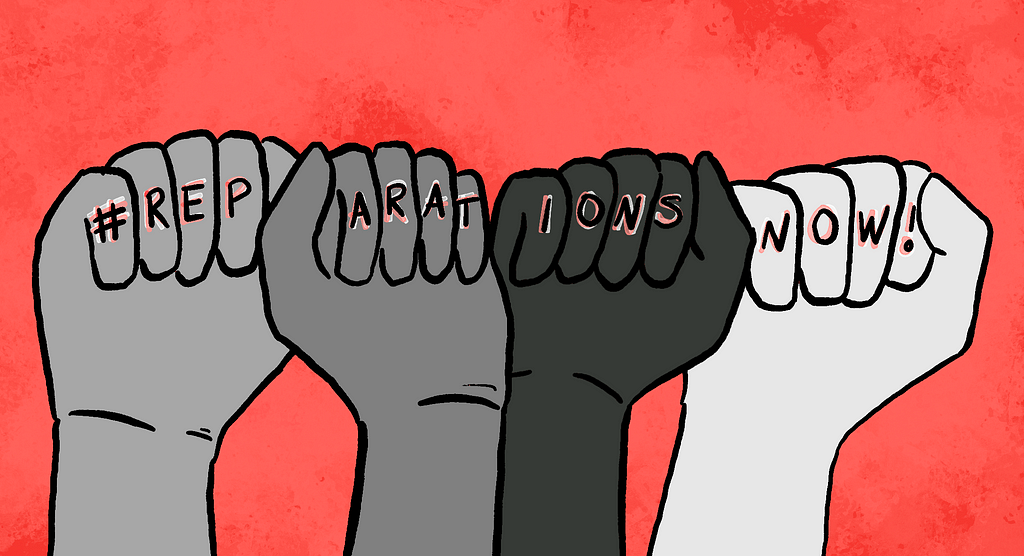
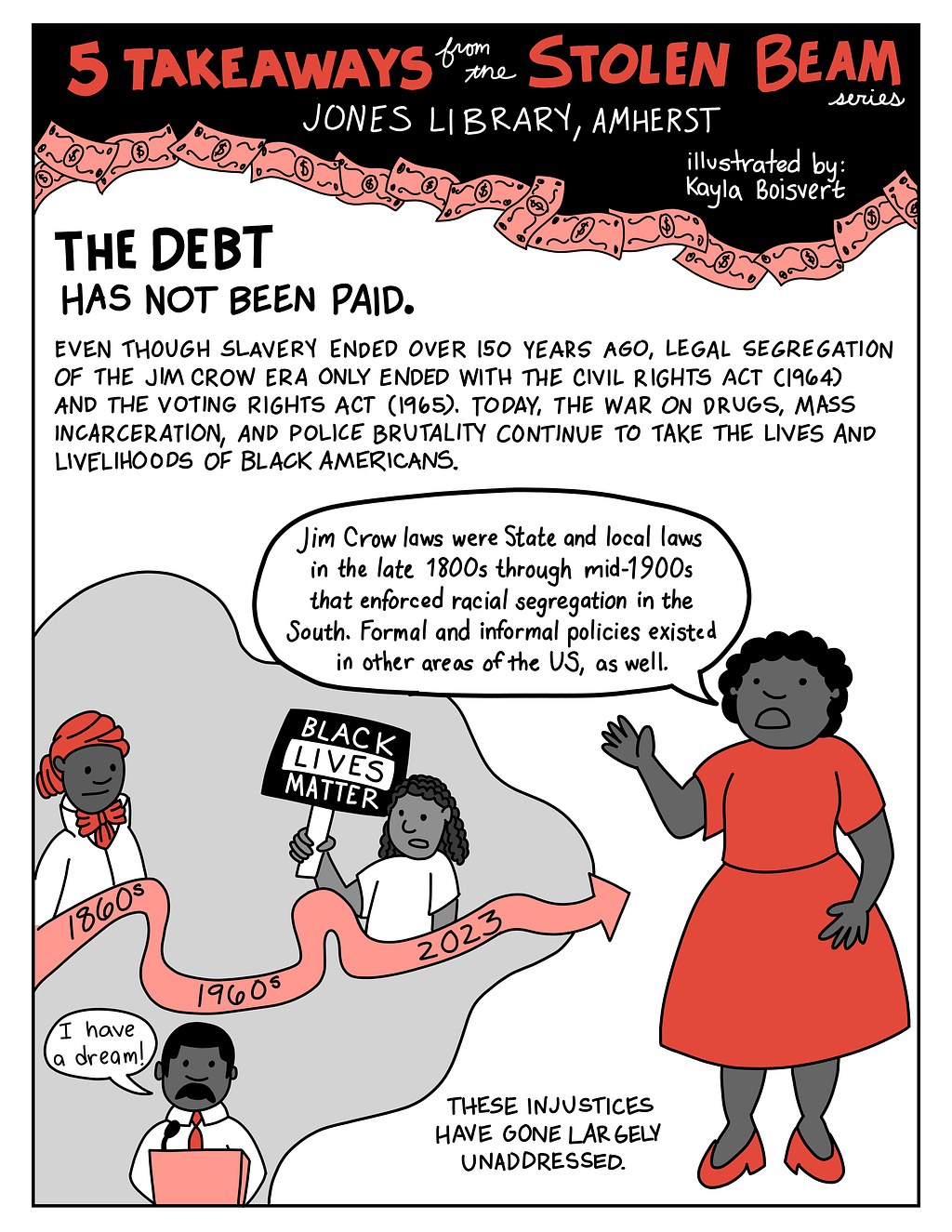
Over the past year, I’ve been diving deep into concepts around reparations — in a course I took about reparations for slavery in the US (check out my 5 Key Takeaways!), as well as in my dissertation work where I’m looking at reparations as a new way to frame international development and humanitarian aid.
In my work as an evaluator and researcher, I’ve been asking myself — what can we learn from reparations and anti-racism work that can shift our evaluation practice towards equity and justice? I’ve come up with 3 things we need to do better:
- Name and talk (and write) about race and coloniality. Too often, our work as evaluators does not meaningfully examine histories and contemporary contexts of slavery, White supremacy, and colonialism/imperialism. If we are going to contribute meaningfully to social change, we need to explore how these issues affect opportunities and outcomes for people of marginalized identities. We need to include this analysis in our presentation of findings. We need to frame our work as seeking to shift the Racial Contract.
- Critically examine the cultural, political, and economic contexts of our work. The current neoliberal capitalist system in the US and globally was built on the conquest and exploitation of Black and Brown folks. And it relies on continued injustice to survive. If we are to contribute to social change, as evaluators we need to interrogate the unjust systems — the power hierarchies, mental models, and relationships — in which the policies and practices we aim to shift are embedded.
- Problematize our own role in maintaining the status quo. We all live in a White supremacist, imperialist, capitalist society. Even if we actively work to dismantle it, our mere existence and participation in it upholds it. We are what Michael Rothberg calls ‘implicated subjects’.As evaluators, we need to continuously examine how our practices in our organizations, our work, and in relationship with communities may be contributing to injustice. We need to practice reflexivity to move towards a constructive complicity.
There are many other ways evaluators are examining their complicity in White supremacist systems. Leave a comment to share your thoughts, or follow our blog for more insights in how this shapes our evaluation work!
Kayla Boisvert is an artist and researcher for advocacy initiatives that promote social justice at Innovation Network. She lives in Western Massachusetts with her husband and silly dog-monster. She is often found running trails and climbing mountains where she lives and around the world.
What Reparations Taught Me as an Evaluator was originally published in InnovationNetwork on Medium, where people are continuing the conversation by highlighting and responding to this story.
 English
 Afrikaans
 Shqip
Shqip አማርኛ
አማርኛ العربية
 Հայերեն
 Azərbaycan dili
 Euskara
 Беларуская мова
 বাংলা
বাংলা Bosanski
 Български
 Català
 Cebuano
 Chichewa
 简体中文
简体中文 繁體中文
繁體中文 Corsu
Corsu Hrvatski
 Čeština
 Dansk
Dansk Nederlands
 Esperanto
 Eesti
Eesti Filipino
 Suomi
Suomi Français
 Frysk
Frysk Galego
 ქართული
 Deutsch
 Ελληνικά
 ગુજરાતી
 Kreyol ayisyen
 Harshen Hausa
 Ōlelo Hawaiʻi
 עִבְרִית
 हिन्दी
 Hmong
Hmong Magyar
 Íslenska
 Igbo
Igbo Bahasa Indonesia
 Gaeilge
 Italiano
 日本語
日本語 Basa Jawa
 ಕನ್ನಡ
ಕನ್ನಡ Қазақ тілі
 ភាសាខ្មែរ
 한국어
한국어 كوردی
كوردی Кыргызча
 ພາສາລາວ
 Latin
Latin Latviešu valoda
 Lietuvių kalba
 Lëtzebuergesch
 Македонски јазик
 Malagasy
 Bahasa Melayu
 മലയാളം
 Maltese
 Te Reo Māori
 मराठी
मराठी Монгол
 ဗမာစာ
ဗမာစာ नेपाली
 Norsk bokmål
 پښتو
پښتو فارسی
فارسی Polski
 Português
 ਪੰਜਾਬੀ
 Română
 Русский
 Samoan
 Gàidhlig
 Српски језик
 Sesotho
 Shona
Shona سنڌي
سنڌي සිංහල
සිංහල Slovenčina
 Slovenščina
 Afsoomaali
 Español
 Basa Sunda
 Kiswahili
 Svenska
 Тоҷикӣ
 தமிழ்
தமிழ் తెలుగు
 ไทย
ไทย Türkçe
 Українська
 اردو
اردو O‘zbekcha
 Tiếng Việt
 Cymraeg
 isiXhosa
 יידיש
יידיש Yorùbá
 Zulu
Zulu