• Skip to main content
  • Skip to footer
  • Home

The May 13 Group

the next day for evaluation

  • Get Involved
  • Our Work
  • About Us
You are here: Home / Archives for allblogs / innovationnet

innovationnet

Jun 18 2025

Adjusting Language in a Shifting Political Landscape

By Shelli Golson-Mickens and Alissa Marchant

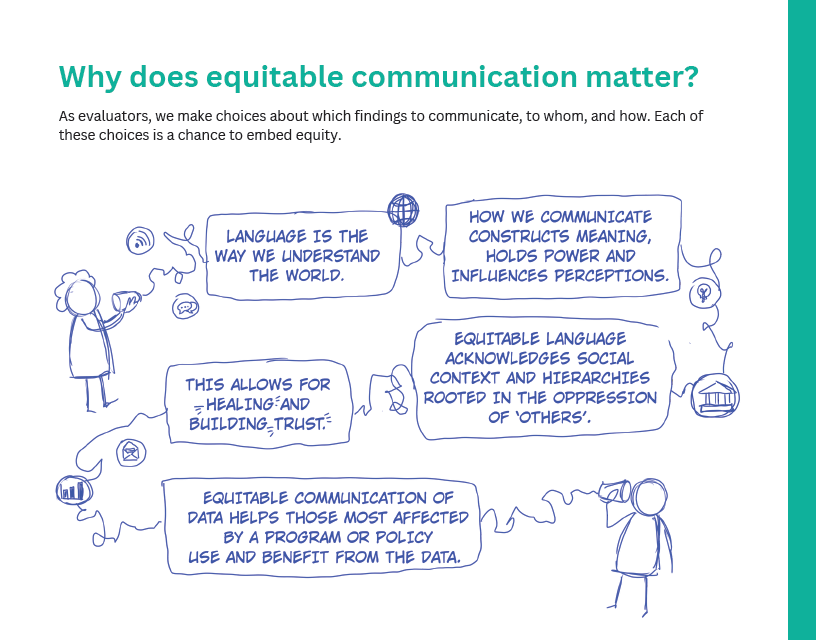
Across the country, those committed to equity are facing a chilling reality: the language and practices of diversity, equity, and inclusion are being politicized, constrained, and in many places, outright banned. Like many others, we’ve felt the worry, grief, and disorientation these shifts bring. Yet, equity work is not disappearing — it’s adapting. In this moment, we’re seeing a wave of creativity, pragmatism, and values-based innovation from leaders who find new ways to continue pushing for justice.

The context in which we work has changed so quickly since we’ve co-authored the Equitable Communications Guide with our Innovation Network colleagues in 2023! Recently, I (Shelli Golson-Mickens) have been reflecting deeply on those changes and returning to the guide — not with fresh eyes, but with refreshed ones. Eyes that are tired from my personal experience navigating resistance, yet still hopeful about the possibilities that can emerge from this challenge. And I (Alissa Marchant) have been looking for answers, in and outside of our guide, for reframing the horrifying narratives of hate that seem to dehumanize certain groups in our country. We co-authored this blog together in the collective “we” and specify who is speaking when we are sharing a unique perspective. We are both exploring what it looks like to stay committed to equity when the landscape around us is perpetually unstable. And we’re not alone — we’ve tapped into conversations others around the field are having. Here’s what we are learning.

Lessons Learned

Speak Strategically Without Losing Substance

I (Shelli) was recently inspired by Dr. Julie Sweetland, who shared the reminder, “Messaging is not about saying what’s most true, it’s about saying what’s most strategic.” In conservative contexts, this might mean choosing language that resonates with shared values — like fairness, opportunity, and local control — rather than leading with terms like “equity” or “structural racism,” which can sometimes trigger resistance. Sweetland calls this “values-forward communication,” and it’s one way equity practitioners are still doing the work — just with more intention around framing.

For example, instead of talking about “equity in data,” some advocates are discussing “complete and accurate data” or “community-informed insights,” emphasizing the practical benefits of inclusive practices without abandoning the principles behind them. Dr. Sweetland’s framework resonates deeply with me on a personal level. It reflects the lessons I received growing up in a family that emphasized using language as a tool for advancing community goals. In our conservative context, with our Black identities, moving toward justice wasn’t optional. We were taught to say what needed to be said to achieve our outcome. My parents and grandparents didn’t have a formal title for this communication, but the strategy was the same: communicate with purpose, rooted in the needs of the community.

This strategy continues to resonate. The goal is not to water down equity — it’s to keep momentum in the face of opposition.

Shift from Problem-Fixers to Community-Builders

I (Alissa) had an aha-moment when I read the recent Stanford Social Innovation Review article, “From Fixers to Builders.” I’ve known about “asset framing” for decades — lifting up stories of community visioning, mutual aid, and transformative solutions already taking root. When I was in graduate school, my program called this using a “strengths-based perspective.”

What felt new was applying asset framing to systems, and not just to people. I began to reflect on all the times I complained about the shortcomings of our government and societal issues; while there is absolutely space for improvement, these systems can also be part of our solutions. By only pointing out flaws, had I been contributing to a narrative that there was nothing worth saving about these institutions, a narrative that has recently culminated in shocking government cuts and elimination of supports for our most vulnerable by DOGE and the Trump administration? I believe that problems at scale require solutions at scale, and that asset-framing at the systems level can help us identify what those solutions can be.

Including positive framing for our institutions doesn’t mean ignoring harm. But it does mean pairing harms with successes and potential remedies. Asset-based framing can help shift public understanding of who holds knowledge and power and invite more people to imagine themselves as part of the solution.

Double Down on Community Collaboration

We are in a time of uncertainty, and like us, some organizations are reinforcing their commitment to co-creation and shared storytelling. When we look again at the lessons in the Equitable Communications Guide through the lens of today’s challenging political environment, we think most important is to:

· Involve community in crafting narratives. No one understands the risk of communicating evaluation findings (good and bad) as well as those who contributed data to our evaluations. They can tell us whether there are findings that can be weaponized by opposition, and how we can best get the information across without putting the cause at risk.

· Create space for dialogue, not just dissemination. We strive to co-learn with our partners by inviting questions and including them in interpretation. Through shared learning we build trust, foster understanding, and stay grounded in the realities of those most affected by our work.

· Protect anonymity and trust. Suddenly, data that identifies who was involved in advocacy feels sensitive. We’re rethinking data privacy and adding extra controls. This is even more urgent for data related to LGBTQ+ people, Black activists, and other groups who are being targeted in this political context.

Honor the Emotional Weight of Strategic Shifts

These adaptive strategies, while necessary, are not without cost — especially for people from marginalized communities. It can feel painful, even dehumanizing, to navigate spaces where your lived experience must be softened or strategically reframed just to be heard or supported. For many, myself (Shelli) included, the idea of avoiding explicit terms like “racism” or “equity” to gain traction can feel like erasure. This feeling is real. We want to name and honor the emotional labor involved in making these shifts. The work of narrative strategy isn’t about silencing truth, though it can feel that way — it’s about choosing how to speak truth in ways that preserve progress and keep the door open for transformative change. Those who are carrying this burden while still pushing the work forward, we see you and I feel you.

Rad Resources

1. The Equitable Communications Guide. Our guide draws from cross-disciplinary research to offer practical strategies for communicating data findings equitably. In the current political climate — this guide is more relevant than ever. It’s a reminder that equitable communication is about so much more than word choice, it’s about relationship-building, trust, and intentional framing.

2. Talking Data Equity with Julie Sweetland. In a We All Count Talking Data Equity, Dr. Julie Sweetland of the FrameWorks Institute shared values-driven guidance for communicating about equity in politically charged environments. She emphasized that messaging is not just about saying what is most accurate, but about saying what is most strategic, using “values-forward communication.”

3. From Fixers to Builders. In this SSIR article, Nayantara Sen and Sonya Renee Taylor call on social change leaders to move beyond problem-centered narratives to stories rooted in vision, agency, and possibility.


Adjusting Language in a Shifting Political Landscape was originally published in InnovationNetwork on Medium, where people are continuing the conversation by highlighting and responding to this story.

Written by cplysy · Categorized: innovationnet

May 20 2025

Beyond Illusions: Recognizing the Need to Harness Perception to Build Inclusive Narratives

By Shelli Golson-Mickens, Innovation Network Senior Associate

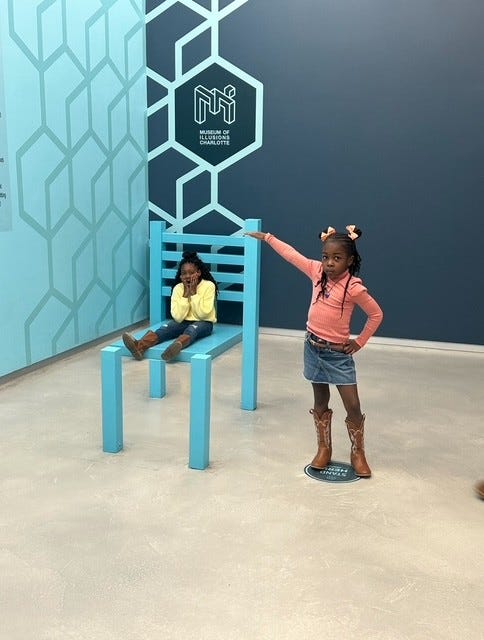
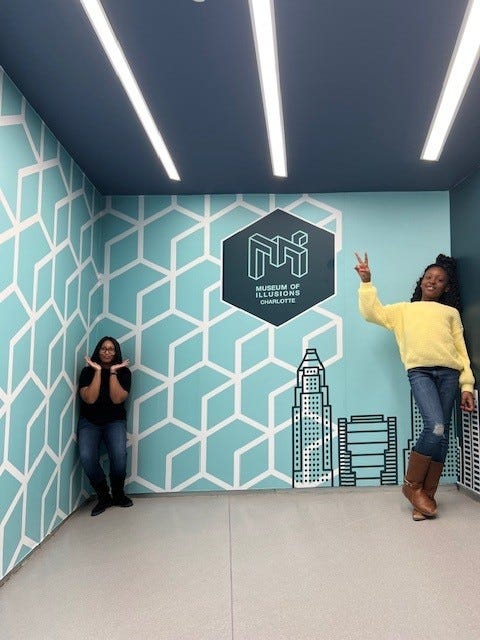
Our team at Innovation Network spends the first week of each year engaging in independent study. During this week, we engage in activities that inspire and reinvigorate us to continue our social impact work. Seeking inspiration, I visited the Museum of Illusions in Charlotte, NC — a place where reality is playfully distorted, and every exhibit invites us to see things from a fresh perspective. I explored the space with my good friend and our daughters, and the experience offered more than just visual delight. For me, it unexpectedly sparked a reflection on how our varied perceptions, whether fully accurate or not, are the building blocks for narratives that can support or harm communities.

The Power of Perception

The museum is filled with cleverly designed exhibits that manipulate light, shadow, and space, causing us to reconsider what we think we know about our surroundings. Each illusion reminded me that our perceptions are personal, fluid, and influenced by our individual viewpoints. As a parallel, I considered how perspectives are shaped in our society. They are just as fluid as the exhibits at the museum, and they (our perceptions) are used to create powerful narratives — stories that shape our communities, the way we connect with each other, and our drive to serve each other.

Perception as a Narrative Tool in Today’s Political Landscape

In today’s complex world, the narratives we create from our perceptions — real or imagined — play a significant role in how we view ourselves and our communities. In the museum, my daughter’s wonder at a seemingly shifting exhibit, a static image that appeared to rotate continuously, wasn’t just childlike awe; it was an expression of her current perspective, her brain’s reception of visual information producing a “real” experience. Similarly, every individual’s way of seeing the world contributes to a larger, collective story, or perceived reality, that can either divide or unite us.

Right now, the dividing perception is dominating. Many are investing in the narrative that dismantling initiatives to promote equity and inclusion will lead to a more productive society. Much evidence disproves this ideology, but the prevailing perception is palpable and all but eliminates the line between reality and fallacy. Challenging this narrative will involve more than vocal resistance; it requires that we work to shift these harmful perspectives. If we only express disagreement without working to change the narrative, our collective exasperation will accumulate in a void, only to be heard by those who agree with us. If we use our words while working to change perspectives, then new narratives can be built — inclusive narratives that elevate all communities.

Changing Perspectives to Support a Unified Society

With these reflections, I am considering the way that my work can support shifting perspectives in support of equitable societies. In a climate where every political stance is underpinned by personal perceptions and is integrated into our identities, I am now considering what I can do to help shift those perceptions and change the current narratives that are moving us back in time. I did not leave the museum with explicit steps to achieve such a lofty goal, but I have a renewed purpose and some guidelines to frame my exploration:

(1) Perceptions are not reality, but they build narratives that have real consequences. Considering how powerful our perceptions are, changing political perspectives cannot be considered optional. These actions are imperative to continue progressing toward an equitable and inclusive society.

(2) Harnessing the power of varied narratives means looking beyond disagreements, when we can, and engaging with the stories that drive political behavior. By understanding these underlying perspectives, we can begin the work to reshape them.

(3) Equity and inclusion work must continue, but we will have to shift the way that we engage in this work. While the need is clear, new approaches are yet to be determined. The time has arrived to rethink the way that we engage in equity work to ensure that it continues despite current attacks.

With these guidelines to frame my thinking, I seek to discover ways to harness perceptions and work to shift them in a more unified direction.

An Invitation for Reflection and Engagement

My visit to the Museum of Illusions was more than a whimsical adventure; it was a catalyst for recognizing the value of every perception in shaping our shared narrative. The playful and seemingly simple distortions in the museum reminded me that even altered realities can spark new ways of thinking. In a similar way, when we shift different perceptions into our collective story, we empower communities to challenge outdated assumptions and build more just and supportive environments.

That said, this is not a formal call to action in the traditional sense. Advocacy, particularly in the face of sustained political resistance, is demanding work — work that not everyone is always able, or willing, to undertake at every moment. The expectation that individuals must persistently defend their right to exist and be valued is itself an undue burden. Rest is necessary, and disengagement, at times, is both valid and strategic.

However, while this is not a directive for immediate action, it is an invitation for reflection and engagement. Narratives shape policy, culture, and community, and whether we acknowledge it or not, we are always contributing to the stories that define our society. If this viewpoint resonates, then perhaps that resonance is a call to join me as I continue to build narratives that harness the power of perception to uplift communities and drive meaningful equity and inclusion efforts.


Beyond Illusions: Recognizing the Need to Harness Perception to Build Inclusive Narratives was originally published in InnovationNetwork on Medium, where people are continuing the conversation by highlighting and responding to this story.

Written by cplysy · Categorized: innovationnet

Jan 27 2025

Why to Stop Saying “Mental Model”

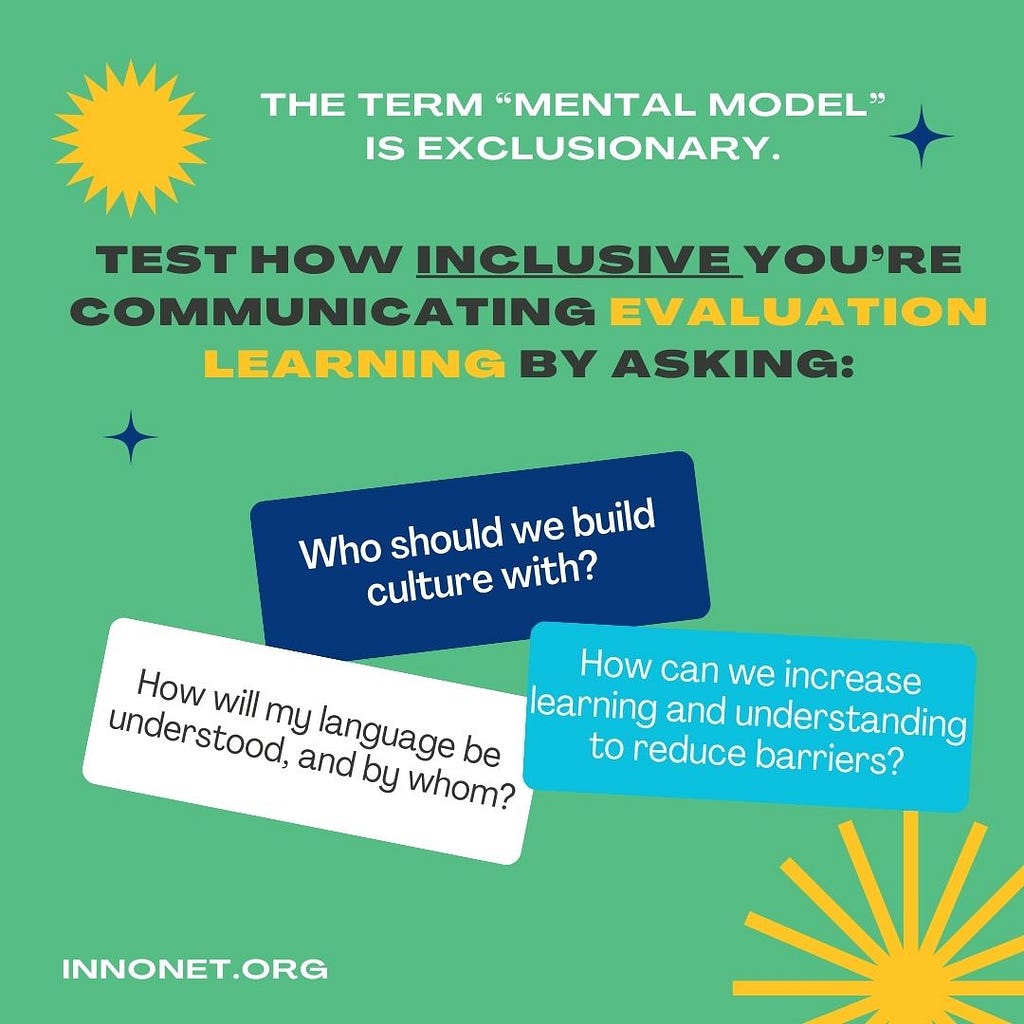
Image with the text: Test how inclusive you’re communicating evaluation learning by asking:
 — Who should we build culture with?
 — How will my language be understood, and by whom?
 — How can we increase learning and understanding and reduce barriers?

Part of our role as evaluators is to communicate learnings so that people can easily understand and translate those learnings for their own work — in many ways, we are failing in this role. As I was working on the Equitable Communications Guide (published last year), I became more aware of the ways we as evaluators are often ableist and exclusionary. It’s human nature to categorize, even other humans, creating shortcuts to determine what — or who — is familiar and safe to be around. But this natural behavior creates “in groups” and “out groups,” and leaves us unaware of the realities outside our own groups. I’ve come to believe the term “mental model” is another way we perpetuate an “in group,” and creates exclusion when we have the opportunity to be more inclusive.

I’ve come to believe the term “mental model” is another way we perpetuate an “in group,” and creates exclusion when we have the opportunity to be more inclusive.

This exclusion is not intentional of course. “Mental model” is a term that has come to mean “the internal representations of external reality that individuals use to understand, interpret, and navigate the world around them. They consist of a set of beliefs, generalizations, and assumptions that make up our worldview” [1]. It was coined by psychologist Kenneth Craik in 1943 [2], and gained traction in the 1980s when Johnson-Laird connected the idea to semantic reasoning in psychology. The term became applicable beyond psychology when Peter Senge began using the concept in the business and management context in the 1990s [3].

I’m not sure when “mental model” entered the evaluation space, but I’ve seen increasing use of it in our field, including in publications and by influential thought leaders in our field. I remember attending an AEA session in 2023 where a panelist shared her excitement upon discovering the term. “Mental model” revealed a nuance in meaning for her that other terms weren’t capturing — it was the best way to describe what she wanted to say.

Language does have an important role in the micro cultures we create, such as within the evaluation field. Edgar Schein’s framework defines the forces that govern workplace culture. He describes shared language, including stories, jargon, and sayings, as “verbal artifacts” of a culture that supports belonging and camaraderie among colleagues [4].

I don’t want to discount the benefits the term “mental model” has brought to the people who use it. But I do want to examine what we lose by using the term.

The term “mental model” creates an in group of people who know what this term means.

The term “mental model” creates an in group of people who know what this term means. And the people who know what it means are typically advanced degree professionals in evaluation and academia. For those who use it in the evaluation space, the term builds culture, connection, and a feeling of belonging with others who are interested in the same ideas. But it also creates outsiders, who are often the people who have the most to learn from our evaluative work.

It’s true that we use many terms that nonprofessional evaluators don’t understand. I would argue that many of these are necessary, but that “mental model” is not one of those. For example, some people outside of evaluation and research haven’t heard of a “theory if change,” don’t understand what a “sample” means, and could not explain data “coding.” But these words are all industry terms that name something specific and exist to create necessary language for something we do that is unique to our industry. The difference between our industry-specific terms with the term “mental model” is that it doesn’t name something new, it adds nuance to commonly used terms that are already widely understood. Nuance that may not be necessary for an audience who can benefit from our knowledge.

We are excluding people who are outside of the evaluation field who can benefit from our evaluation knowledge.

As a comparison — dentists diagnose cavities. As patients, we understand the important industry term “cavity,” but we rarely understand the nuance that is less relevant to our daily lives, like the type of cavity (smooth, fissure, or root) or what class of cavity (there are six). These classifications are vital to a dentist determining the right treatment, yet a good dentist will use “cavity” when speaking with patients and clearly describe the problem without using jargon.

When we use “mental model,” we are saying “Class VI Fissure” without using clear language, excluding people who are outside of the evaluation field who can benefit from our evaluation knowledge. We may lose nuance, but increase understanding when we choose language that more people are familiar with. “Worldview” and “perspective” are excellent alternatives to “mental model” that have broader use and acceptance.

To communicate equitably, we should strive for inclusive language with the most direct route to comprehension.

To communicate equitably, we should strive for inclusive language with the most direct route to comprehension. We should seek to build community outside of our evaluation in-group, and invite more people to the knowledge we have the privilege of gaining as evaluators. To ensure we are inclusive, we should ask:

– Who should we build culture with?

– How will my language be understood, and by whom?

– How can we increase learning and understanding and reduce barriers?

Is using the term “mental model” worth excluding people, and excluding broader understanding of our learning and insight? In my practice, the answer is no.


Why to Stop Saying “Mental Model” was originally published in InnovationNetwork on Medium, where people are continuing the conversation by highlighting and responding to this story.
Written by cplysy · Categorized: innovationnet

May 30 2024

Is A Learning Log Right For You?

By Rebecca Perlmutter and Cory Georgopoulos, Innovation Network Senior Associates

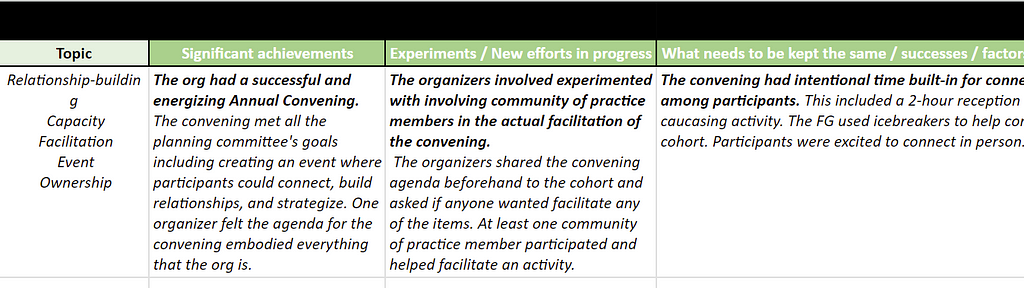
As evaluators, we’re always seeking to incorporate methods that help us collect data in comprehensive and equitable ways. In recent years, we have found learning logs to be critical tools for enhancing our evaluation work. Based on Emergent Learning principles, learning logs are used to capture insights and events in real-time by recording an initiative’s challenges, experiments, and successes (including factors of success). Learning logs allow teams to identify themes across a particular initiative or scope of work, and to better understand that project’s full trajectory. Teams can also revisit their learning log as they reflect on their work, grounding their conversations in the concrete stories and data they’ve gathered.

Sample learning log template

In October 2023, we presented our experience using learning logs for long-term feedback and short-cycle reflection at the American Evaluation Association’s annual conference. Our presentation focused on our recent evaluation work with two of our clients, whom we’ll refer to here as Project A and Project B. In both projects, we employed learning logs as an experiment and as an opportunity to collect rich qualitative data. We’ve distilled some of our key takeaways into this blog to shed more light on learning logs as a useful evaluation tool, and to share important considerations for when and how to incorporate them into your own work.

Project A

Our Project A client is a community of practice of advocates who share policy goals, build capacity, and develop a mutual commitment towards advancing racial equity within their field. Innovation Network partnered with Project A to help improve its cohort facilitation, identify how it could build shared power among its organizations, and capture the learning interests of its participants. To do so, we conducted five monthly after-action reflection meetings with Project A’s facilitation team and used a learning log to collect data from these meetings. Prior to each session, Project A’s three facilitators populated their own learning log (using the digital collaboration tool Mural) with the successes, challenges, and experiments they had experienced since the previous month. Our team would reference their Mural to calibrate our own facilitation and follow-up questions. We discussed the same set of questions with the facilitation team every month and took notes. We then pulled out significant insights and events from our notes and added them to our learning log. We were also able to use the learning log for rapid reflection with Project A’s facilitators. After each session, we summarized and distilled our learning log entries and shared them with the facilitation team. They would then revisit this summary before our next session.

Key takeaways

Our role as external evaluators added an extra layer to this project. Since we maintained the learning log and only met with the Project A facilitators monthly, there was often a lag with the data we collected. Sometimes a lot would happen between our calls — and sometimes not much would, which was a different challenge! Our process was time-intensive for Project A’s small group of facilitators, which made us realize that this approach works best with fewer people in general. Their facilitation team didn’t always have the time to pre-populate their learning log or review previous entries, and at times, it would also take our team a while to fill out the log. Additionally, because the data we collected was filtered through Project A’s facilitators for the sake of logistical ease, it was still one step removed from participants in the community of practice.

Despite these challenges, Project A’s facilitators enjoyed having these conversations because they provided a dedicated opportunity to step back and reflect on their work. We weren’t just asking them to recount their recent actions — we also wanted to know their thought processes and the conditions that influenced their decisions. Over time, we got better at interpreting what they meant, and we captured different perspectives depending on the proximity of our sessions to one of their events. Having the team’s thoughts ahead of time via their Mural board was also very useful for facilitating our sessions and allowing them time to process. By conducting these regular sessions together, we were able to build a strong relationship with Project A’s facilitators and ultimately collect comprehensive data.

Project B

Our Project B client is a national nonprofit that works with policy advocates at the state level. Project B invited Innovation Network to conduct an evaluation on their efforts to align their internal processes with their new theory of change (TOC), an effort to shift their role in the advocacy space from focusing on policy wins to creating environments that allow for larger, transformational change. We conducted our evaluation in two phases: The first focused on Project B’s experience operationalizing their new TOC, and the second (which is still ongoing) is evaluating the outcomes of this transition. We met regularly with the Project B team in “reflection moment” conversations, which were designed to capture their insights and assumptions about aligning to the TOC. Similar to our work with Project A, we had Project B staff populate a Mural with responses to our reflection questions, which we used to inform each session. Within the sessions, Project B staff reflected on how they were adapting, what they hoped to achieve, and what was and wasn’t working as they experimented with changes to become more equitable and aligned to their TOC. We captured their reflections in a learning log after each session, and shared these learnings back with their staff in summarized versions.

Key takeaways

The amount of time required to populate the learning log was a challenge in our work with Project B, just as it was with Project A. We gathered a lot of insights during our reflections, so we had to decide what was “important” to include. We also spent quite a bit of time synthesizing our findings from the learning log to create summaries for the Project B team, although they did not always have time to review these summarized versions prior to the next session.

Ultimately, the Project B team said they learned a lot through our reflection conversations, and they were able to apply their learnings to their immediate work aligning to the TOC. We also used the analysis of our learning log from Phase 1 to map the learning areas that the Project B team is interested in focusing on during Phase 2 of our evaluation, as well as to document hypotheses about the outcomes the Project B team expects to see as a result of their changes around the TOC.

Is a learning log right for you?

We hope the above examples from our work have given you better insight into the practical application of learning logs in evaluations. If you’re considering employing this tool yourself, we have some recommendations for how to effectively incorporate a learning log into your evaluation work:

Establish a clear vision

Due to the sheer amount of data you’ll collect within your evaluation, it’s important to know what you want to get out of your learning log before you start making entries. Consider asking yourself: What is the question I’m trying to answer? Determining the purpose of your learning log will help keep you on track during your sessions and inform your facilitation.

Narrow your focus

Our work with Project A demonstrated that a learning log works well for gathering a lot of detailed information on one topic. If you’re covering numerous topics — as we did in our evaluation for Project B — we recommend keeping your analysis focused on the specific areas of work. These areas will inform your reflection questions and help you facilitate conversations that speak to the question you’re trying to answer.

Allow yourself enough time

As evaluators, we recognize time is a precious resource. However, in order to elicit useful data from a learning log, it’s important to allot enough time — for both yourself and your participants. Avoid employing a learning log if you’re pressed for time within your own schedule, or if it’s difficult to establish regular meetings with your participants. In addition to contributing to your learning log, you’ll want ample time to synthesize emergent themes and share your findings with your participants along the way. Your participants will also benefit from having enough time to reflect on your questions in advance, contribute to their own learning log, and digest the learnings you share with them.

Be consistent

One of our key takeaways across both projects was understanding the importance of consistent facilitators. Assigning the same team members to maintain the learning logs and facilitate reflections meant that we were better able to keep track of salient insights, identify big-picture themes, and use our past knowledge to shape the direction of future sessions. While you may not be able to keep your reflection participants consistent, maintaining the consistency of your own evaluation team will ensure you understand the full breadth of your learning log findings.

In our work with Project B, our participants did often change from session to session. As a result, we’re curious how maintaining consistent questions across all of our reflection sessions — as we did with Project A — would have impacted the kind of data we received. It’s worth considering whether you should strive for consistency within your facilitation questions if you know your participants will change throughout the course of your evaluation.

Be adaptable

While collecting this data in your learning log will allow for significant insights, it may also be overwhelming for your participants. Be prepared to adjust your approach to accommodate their needs and maintain their buy-in throughout the process. Throughout the course of your evaluation, you may also realize that the data that emerges from your learning log is different from the assumptions you made at the beginning of the project. For example, we pre-coded the data within our Project B learning log based on our ideas about which topics would rise to the top of our conversations. Along the way, we realized these codes weren’t necessarily accurate or relevant, and we had to re-do our coding system to ensure a more thorough analysis. While it’s important to have a system in mind for how you’ll distill and summarize your learning log data, be mindful that your specific approaches may need to change based on what you learn.

Incorporate checks and balances

Using a learning log as an evaluation tool often means that, as the evaluator, you will be the one interpreting all the data you’ve collected. Throughout the process of your evaluation, consider incorporating opportunities to garner your participants’ feedback on your findings. Do they agree with your interpretation? Why or why not? Incorporating regular checks and balances to your interpretations will not only ensure your participants feel heard, it will also help your findings be as thorough and accurate as possible.

Final thoughts

Ultimately, using learning logs within our work at Innovation Network has enabled us to garner extensive data for our evaluations. By facilitating and capturing reflective discussions with our clients, we created touchpoints that allowed them to reflect on their work and stay involved in our evaluations. In this way, we were also able to establish stronger relationships with our clients, and as a result, to identify more useful themes and learnings they could then apply to their work. Learning logs may require a commitment to maintain, but the payoff is often worth it.

Have you used a learning log in your evaluations before? We’d love to learn about your experience in the comments below as we continue to incorporate this tool into our own evaluation practices. Interested in experimenting with a learning log for yourself? Download our sample template to get started.


Is A Learning Log Right For You? was originally published in InnovationNetwork on Medium, where people are continuing the conversation by highlighting and responding to this story.

Written by cplysy · Categorized: innovationnet

Mar 13 2024

A Meta Reflection on Equitable Communications: Behind-the-Scenes of Creating the Equitable…

A Meta Reflection on Equitable Communications: Behind-the-Scenes of Creating the Equitable Communications Guide

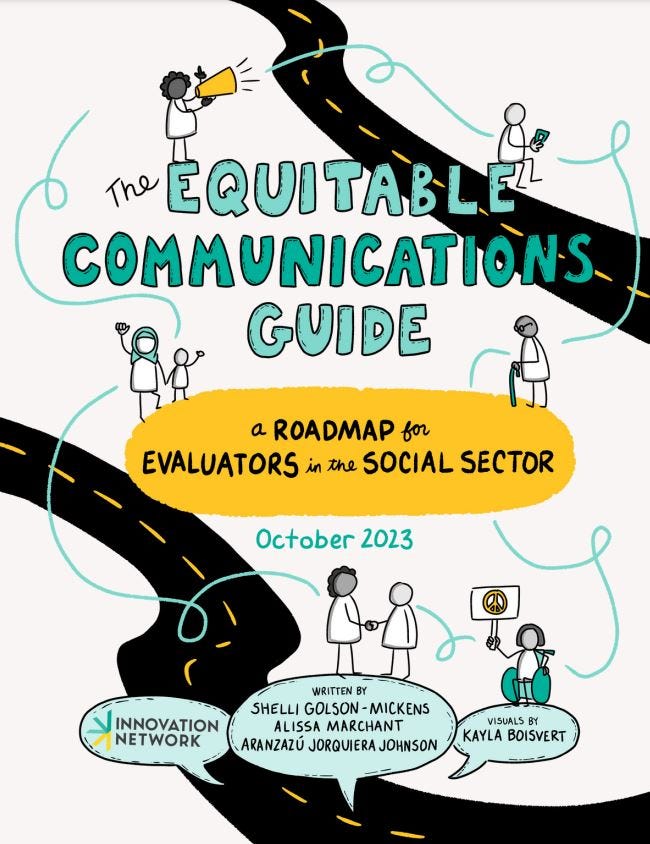
After researching ways to share our findings and reports with equity in mind, we realized there wasn’t a go-to resource for equitable communications in the evaluation field. Together, we were inspired to develop the Equitable Communications Guide. This guide is a resource designed for evaluators in the social sector, which has relevant lessons for anyone looking to improve their communications! The guide explores how to communicate equitably, center the experiences of others, and convey the meaning behind key messages.

Equitable communications refers to using evaluation reports and messages to counter dominant narratives, embrace inclusivity, and center marginalized peoples.

We are not experts in equitable communications. But some of us know what it feels like for others to speak on our behalf and misrepresent our identities and experiences. Others of us have perpetrated the same violence against others and want to do better. We decided to draw on the work and guidance of thought leaders in other sectors, along with our own experience, to write the content found in this guide.

Creating this guide was a collaborative design process among our current and former team members. We didn’t just want a guide that showed people how to communicate equitably, we wanted a guide that could model what equitable communications can look like.

This blog post is an inside look at the inspiration behind developing the guide and everything that went into the process.

Early Stages

This project began the way many projects do: with a big vision, but uncertainty with how to create it. Our efforts began when our amazing intern Aranzazu Jorquiera Johnson conducted research on equitable communications and brought in lessons from her own knowledge around diversity, equity, and inclusion. But we did not have time to come together to create a shared vision for what we wanted the final guide to look like and how it could be useful for an evaluation audience.

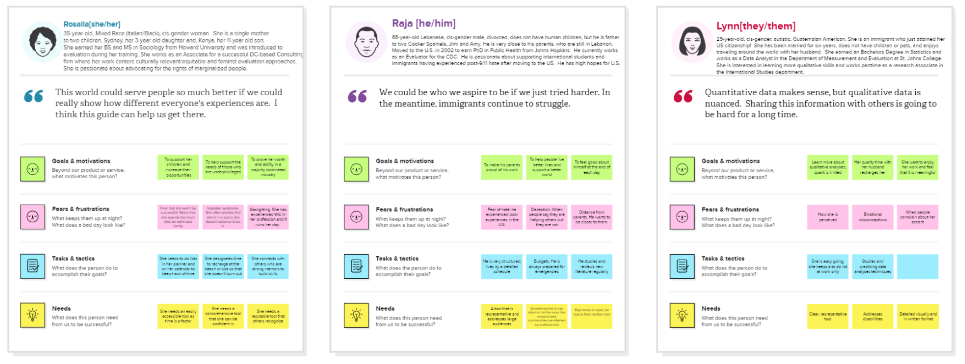
When Shelli Golson-Mickens added her leadership to the project she began by centering the audience of the guide from the start, using human-centered design processes. She led us through a journey mapping exercise that considered the many people who could read and benefit from the guide. Using this persona profile template, we created personas, identified their needs, and created ideas for how to design a guide that met them.

On reflection, we would have liked to bring these personas into our process throughout the writing stage. While we struggled with time constraints, we found that the process of creating personas allowed us to envision and create a more inclusive guide and led us to a simplified and visual structure.

Process Stage

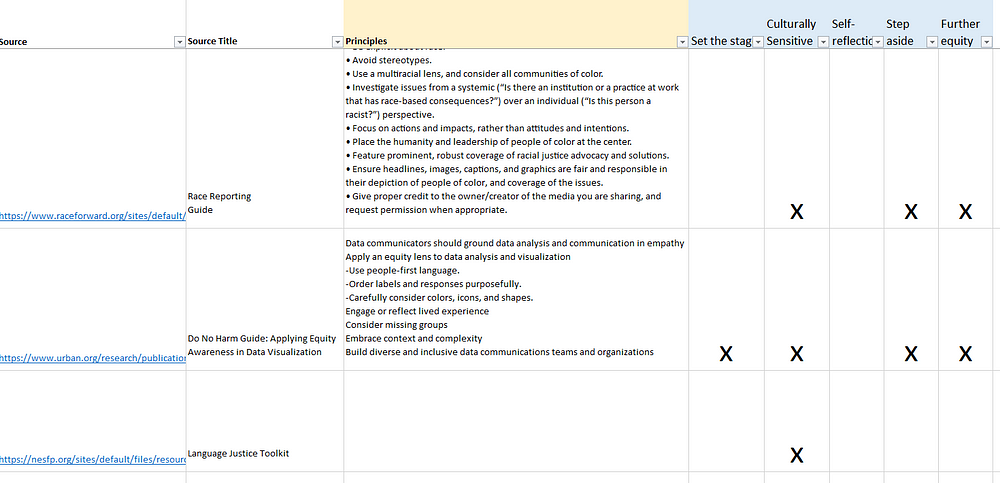
Using Aranzazu’s research and conducting some of our own, we started coding for themes we saw within resources related to equitable communications. These codes became the guideposts and strategies that are the heart of the guide.

Before we started writing, our teammate and evaluator/illustrator Kayla Boisvert helped us to envision an effective layout and design for the guide. Remembering our personas, we wanted something that would be digestible, where someone could open to the section relevant to them in the moment and get the information they need. We also knew this guide would be an aggregator of resources: not being experts ourselves, we were translating information for an evaluator audience and bringing lessons together in one place. There were wonderful deep dives into specific topics like equitable data visualization and language justice that we wanted people to find through our guide. Kayla mocked up some design options that captured the lessons we wanted to share and identified key resources for people to learn more, the design you see in our guide today.

Early sketch by Kayla Boisvert for the guide.

Once deciding on the layout, Shelli and co-author Alissa Marchant divided the writing by theme so that we could bring lessons together from across resources in several fields, including marketing, research, and advocacy. It felt like an iterative process because we found the strategies overlapped one another. We had many conversations to discuss ways to share pithy themes without repeating information. It was also hard to stay narrow: ultimately, this guide is about communicating data findings and not about how to maintain open and transparent communications throughout an evaluation (which is also important!). There was too much to say, but at the same time, we felt limited by the bounds we placed on ourselves. Ultimately, having a deadline — the Evaluation 23 conference where we were presenting our findings — obliged us to narrow our scope and workshop the language with feedback from our team, fellow evaluators who are a primary audience for the guide.

Publication

Living our values from the guide, we knew that putting our pens (and digital markers!) down was just the beginning.

Our first step was making the guide accessible to people with disabilities. As sighted people, we quickly realized how our visual approach to the guide (perfect for a sighted audience) was challenging for audiences who have limited eyesight. Kayla spent hours writing detailed alternative texts for each visual, and unfortunately we later learned that Canva (the design platform we used to design the guide) was poorly equipped to make the document ADA compliant. (Canva is improving. Shout out to Chris Lysy, who details its pitfalls and keeps us up with Canva’s capabilities in this helpful blog post.) We ultimately hired a freelancer who specializes in ADA compliance to help make a final PDF of the guide more accessible.

Since the guide was published, we have been sharing information from within the guide in various ways. We are not just relying on the written word! We also shared the guide at Evaluation 23 and a recent webinar (watch the recording here), with more workshops in the works. (If you’re reading this before March 15, please join us for Talking Data Equity!) We are grateful for the partnership of Elizabeth Grim, an independent consultant who writes about non-violent language, and Jonathan Schwabish, an author of the Do No Harm Guides, who co-presented with us. Sharing together has allowed us to continue to learn about equitable communications through our collaborations.

Takeaways

Writing this guide helped us to internalize some of the lessons within the guide in a new way. We felt a shift in our own perspective from what we should say to being curious about how other people perceive our communications and working to understand their cultural perspectives. Rather than a right or wrong answer, communications has become an opportunity to learn and better understand the people we are working with.

We understand that knowing how to communicate equitably is different from doing it well. We are just starting to practice the strategies we captured in the guide, and still learning how to communicate about the importance of equitable communications and advocate for more resources to communicate equitably in our client projects.

Although we sought to be as thorough as possible when writing this guide, we recognize that our use of language changes as society continues to evolve. And we know that what we created may miss something! We considered — and may still — develop a living document version of the guide where others can add their own insights as the world evolves and guidance changes. Until that time, please send us your thoughts and feedback on the guide in the comments here, or directly at info@innonet.org.

Thank you for learning alongside us! We look forward to your insights and continuing to learn together.


A Meta Reflection on Equitable Communications: Behind-the-Scenes of Creating the Equitable… was originally published in InnovationNetwork on Medium, where people are continuing the conversation by highlighting and responding to this story.
Written by cplysy · Categorized: innovationnet

  • Go to page 1
  • Go to page 2
  • Go to page 3
  • Interim pages omitted …
  • Go to page 5
  • Go to Next Page »

Footer

Follow our Work

The easiest way to stay connected to our work is to join our newsletter. You’ll get updates on projects, learn about new events, and hear stories from those evaluators whom the field continues to actively exclude and erase.

Get Updates

Want to take further action or join a pod? Click here to learn more.

Copyright © 2026 · The May 13 Group · Log in

en English
af Afrikaanssq Shqipam አማርኛar العربيةhy Հայերենaz Azərbaycan dilieu Euskarabe Беларуская моваbn বাংলাbs Bosanskibg Българскиca Catalàceb Cebuanony Chichewazh-CN 简体中文zh-TW 繁體中文co Corsuhr Hrvatskics Čeština‎da Dansknl Nederlandsen Englisheo Esperantoet Eestitl Filipinofi Suomifr Françaisfy Fryskgl Galegoka ქართულიde Deutschel Ελληνικάgu ગુજરાતીht Kreyol ayisyenha Harshen Hausahaw Ōlelo Hawaiʻiiw עִבְרִיתhi हिन्दीhmn Hmonghu Magyaris Íslenskaig Igboid Bahasa Indonesiaga Gaeilgeit Italianoja 日本語jw Basa Jawakn ಕನ್ನಡkk Қазақ тіліkm ភាសាខ្មែរko 한국어ku كوردی‎ky Кыргызчаlo ພາສາລາວla Latinlv Latviešu valodalt Lietuvių kalbalb Lëtzebuergeschmk Македонски јазикmg Malagasyms Bahasa Melayuml മലയാളംmt Maltesemi Te Reo Māorimr मराठीmn Монголmy ဗမာစာne नेपालीno Norsk bokmålps پښتوfa فارسیpl Polskipt Portuguêspa ਪੰਜਾਬੀro Românăru Русскийsm Samoangd Gàidhligsr Српски језикst Sesothosn Shonasd سنڌيsi සිංහලsk Slovenčinasl Slovenščinaso Afsoomaalies Españolsu Basa Sundasw Kiswahilisv Svenskatg Тоҷикӣta தமிழ்te తెలుగుth ไทยtr Türkçeuk Українськаur اردوuz O‘zbekchavi Tiếng Việtcy Cymraegxh isiXhosayi יידישyo Yorùbázu Zulu