Back in 2017 I was commissioned by the RAMESES II project (funded by *NIHR) to draw a series of cartoons on realist evaluation. They have been made available for royalty-free use at ramesesproject.org, along with a collection of other realist evaluation resources.
In this blog post I want to take you through my cartoon illustration process using this project as an example. The cartoons were created through direct collaboration with the wonderful Joanne Greenhalgh and Ana Manzano of the University of Leeds. The full RAMSES II project provided insights throughout the process.
*The RAMESES II project was funded by NIHR HS&DR 14/19/19. The views expressed are those of the author(s) and not necessarily those of the NHS, the NIHR or the Department of Health.
Starting with the Illustration Challenge
A cartoon illustration project always starts with something to illustrate. In this case it was a series of briefs on realist evaluation.
The challenge was to develop a series of cartoons inspired by the content within the briefs. To get a sense of my process, let’s focus on one of those briefs.
A realist understanding of programme fidelity [PDF].
Finding cartoon inspiration and narrowing the scope.
In any substantive piece of literature, brief, or written report there is usually a ton that could inspire a cartoon.
The challenge is to figure out the important pieces and the ones that create the best cartoons. Good illustration is about supporting the words, not replacing the words.
I find that the best cartoon illustrations usually come from the challenges, problems, and confusions. My philosophy is to illustrate the problem, and the reader will read the text in search of the solution.
To find the key challenges I turn to the experts. Through conversation I engage them in the process by finding where to focus. Ultimately we narrow the scope.
Here is one of those areas of narrow focus. This certainly helped to inspire the cartoons I have shared below.
Common confusion: illusion of control (that you can standardise programmes and control the context into which they are implemented either within an evaluation or the real world). RCTs are ardent believers in this illusion and think its possible to create at ‘closed system’ by controlling everything about context so that you can have ‘programme on’ compared to ‘programme off’ and everything else is the same except the existence of the programme. This idea has been transferred from drug trials to complex social programmes.
Sketching out the concepts.
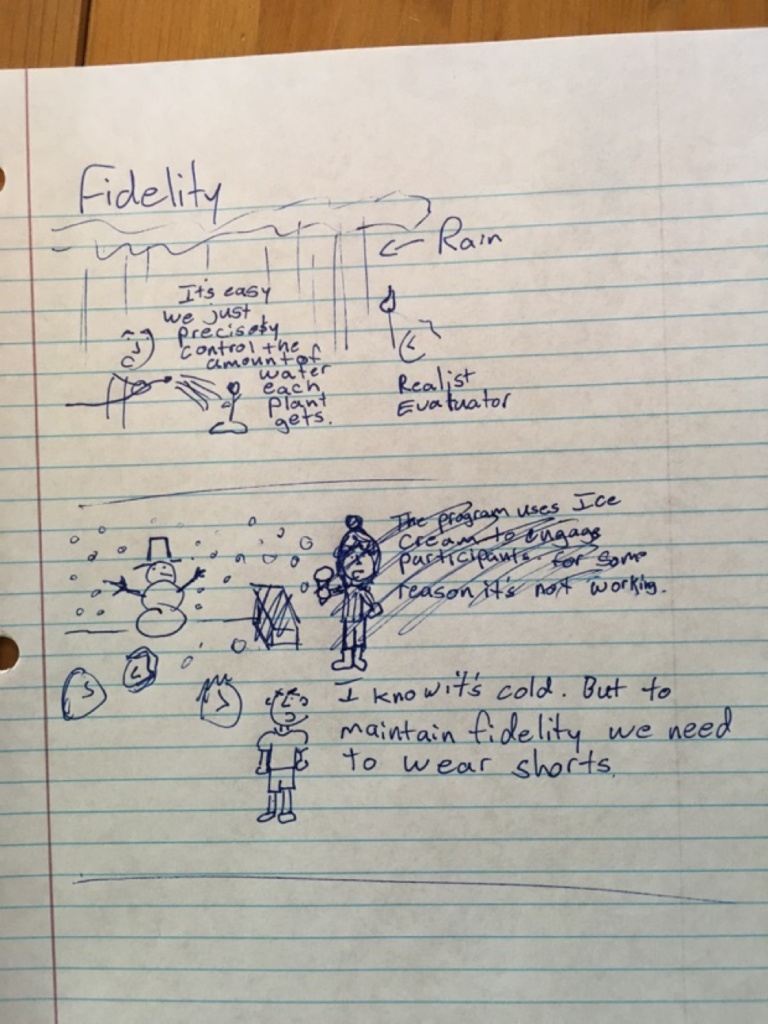
Before diving into drawing the final cartoon, I start with a pen and my notebook.
With the low tech approach I can come up with more concepts than I could if started with my iPad. And if a cartoon doesn’t work, or the client doesn’t like a certain cartoon, we can cut it here instead of putting more effort into the process.
Refining and completing.
After drawing the sketches and sharing with my client we have another conversation. This time we talk about the concepts (what do they like? what don’t they like?).
At this point we tweak and cut. And sometimes the sketches lead to more concepts. Cartoon illustration is an iterative process, but hopefully with each revision we get a better product.
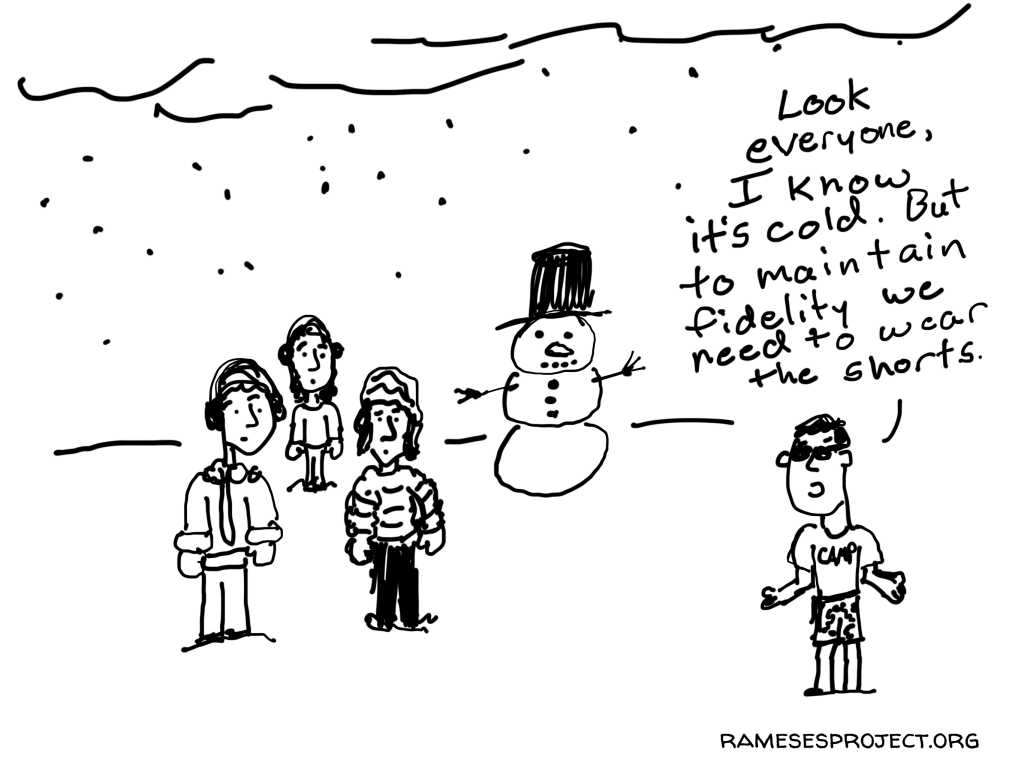
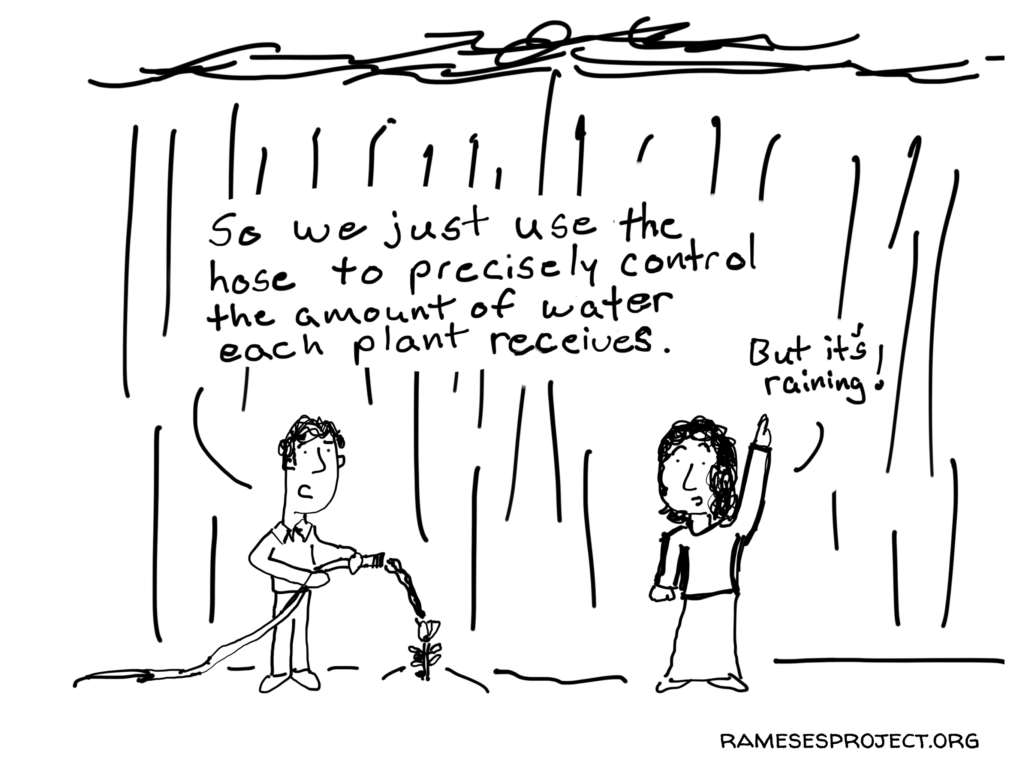
Here are a couple of the final fidelity cartoons. What do you think?
A note from Joanne
We really enjoyed working with Chris. Not only was it fun, but it challenged us to think about what we really wanted to communicate about realist methods. The idea of illustrating ideas or issues people found confusing or difficult really resonated with us, as that had been one of the main reasons for embarking on the whole project in the first place. It felt like a genuine collaboration and I’m really pleased with what we have produced.
Here are a few more of my favorite comics from the collaboration.
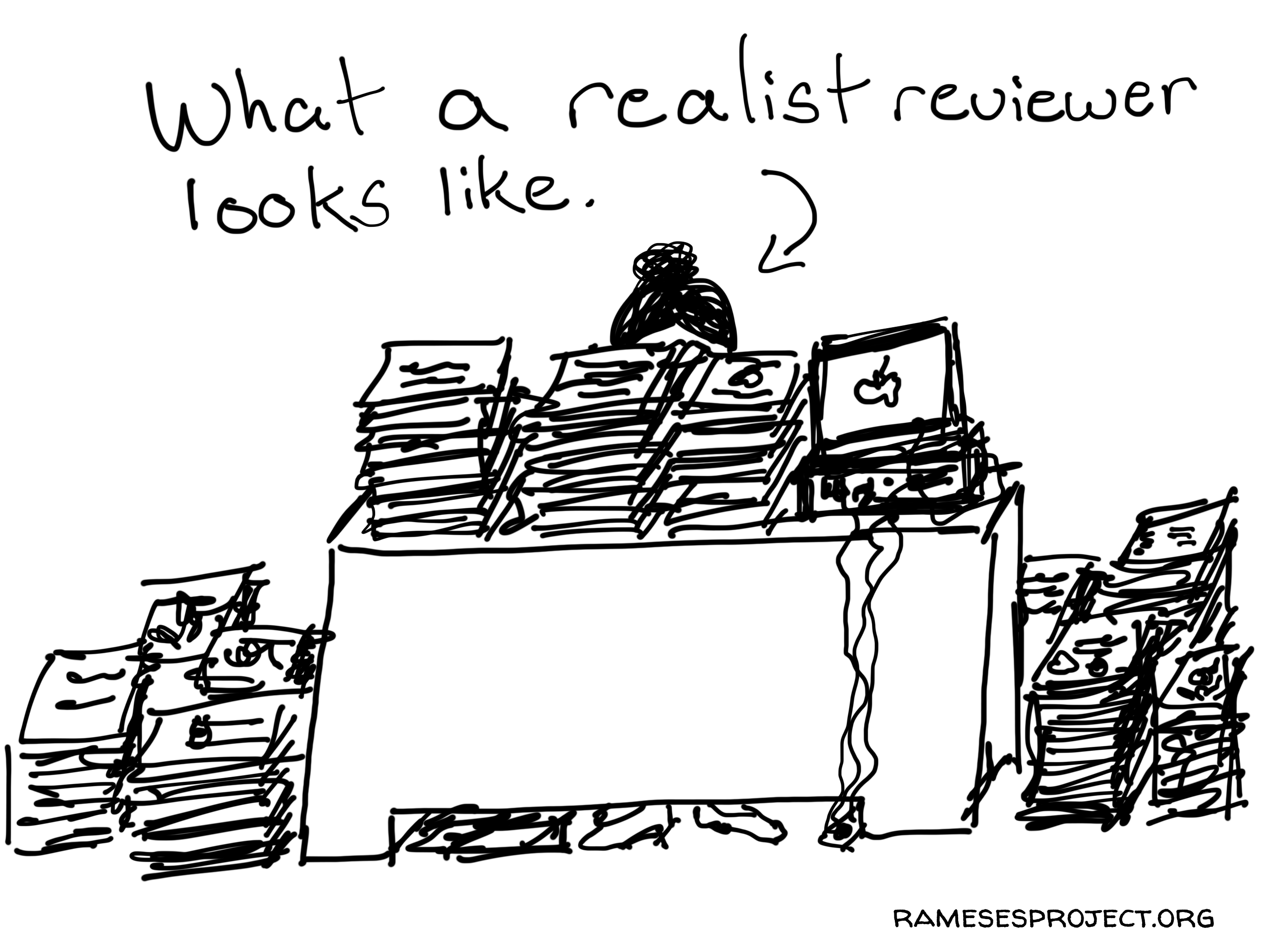
What a realist reviewer looks like.
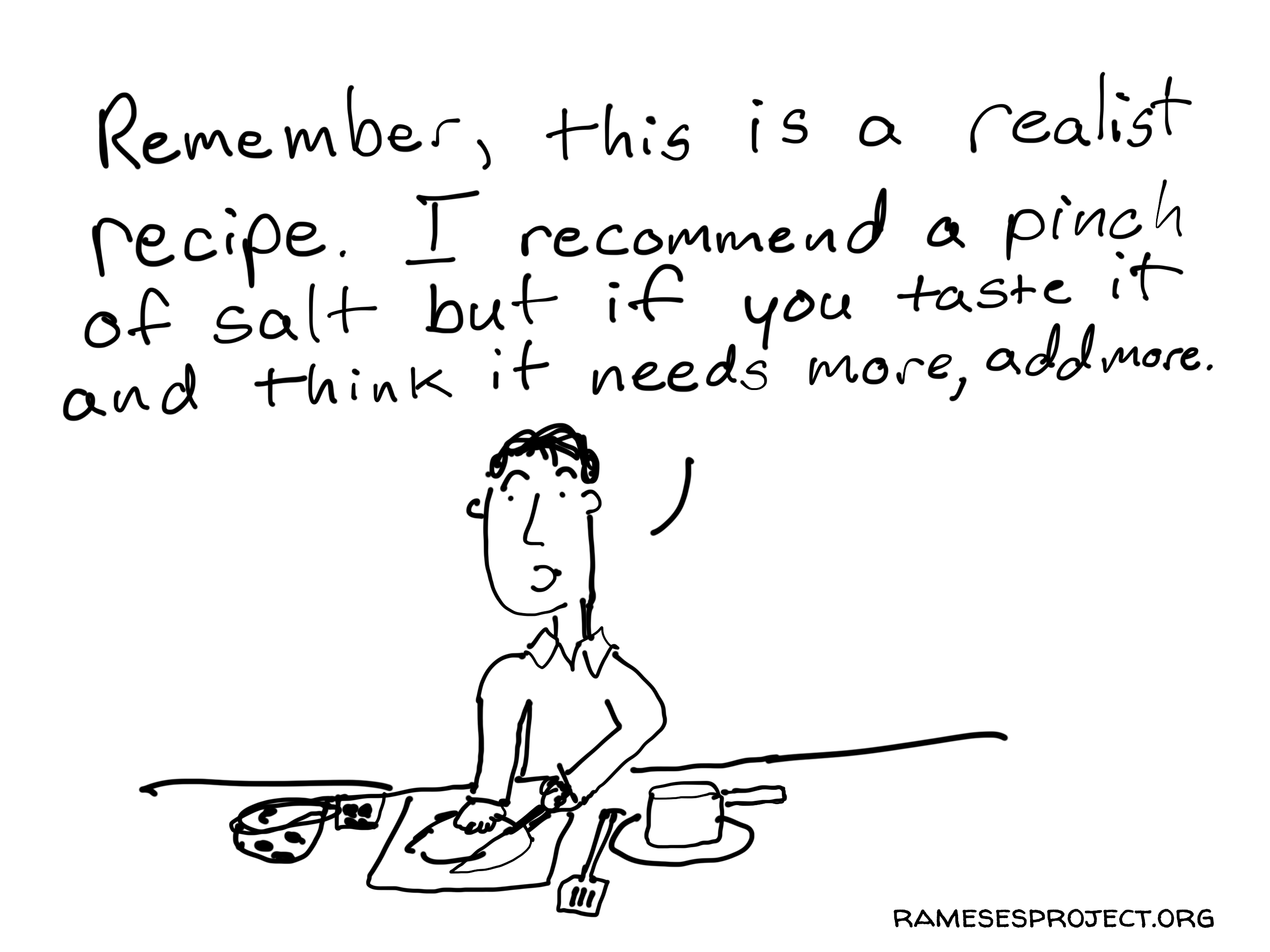
Realist recipe.
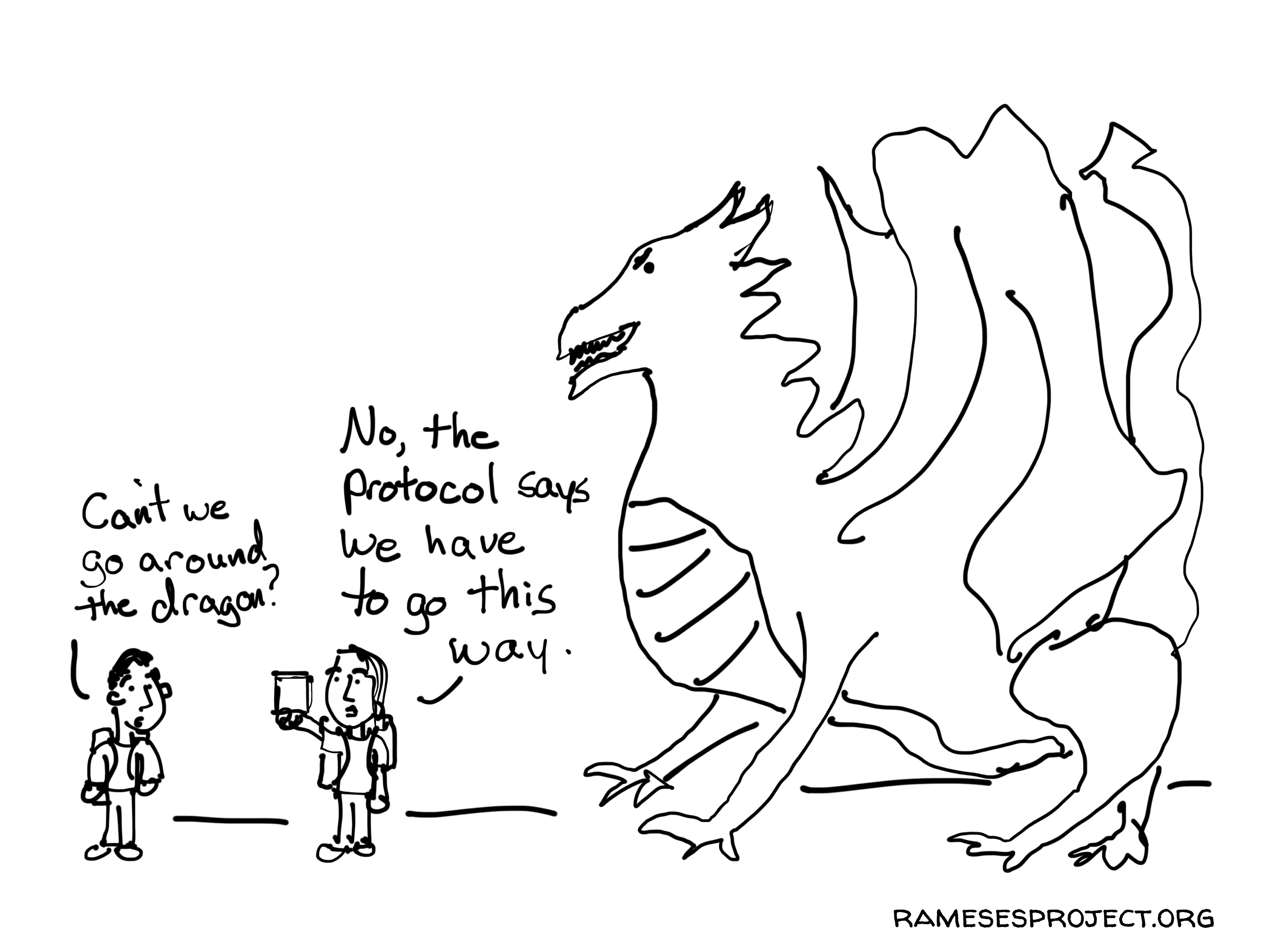
The protocol says we go this way.
 English
 Afrikaans
 Shqip
Shqip አማርኛ
አማርኛ العربية
 Հայերեն
 Azərbaycan dili
 Euskara
 Беларуская мова
 বাংলা
বাংলা Bosanski
 Български
 Català
 Cebuano
 Chichewa
 简体中文
简体中文 繁體中文
繁體中文 Corsu
Corsu Hrvatski
 Čeština
 Dansk
Dansk Nederlands
 Esperanto
 Eesti
Eesti Filipino
 Suomi
Suomi Français
 Frysk
Frysk Galego
 ქართული
 Deutsch
 Ελληνικά
 ગુજરાતી
 Kreyol ayisyen
 Harshen Hausa
 Ōlelo Hawaiʻi
 עִבְרִית
 हिन्दी
 Hmong
Hmong Magyar
 Íslenska
 Igbo
Igbo Bahasa Indonesia
 Gaeilge
 Italiano
 日本語
日本語 Basa Jawa
 ಕನ್ನಡ
ಕನ್ನಡ Қазақ тілі
 ភាសាខ្មែរ
 한국어
한국어 كوردی
كوردی Кыргызча
 ພາສາລາວ
 Latin
Latin Latviešu valoda
 Lietuvių kalba
 Lëtzebuergesch
 Македонски јазик
 Malagasy
 Bahasa Melayu
 മലയാളം
 Maltese
 Te Reo Māori
 मराठी
मराठी Монгол
 ဗမာစာ
ဗမာစာ नेपाली
 Norsk bokmål
 پښتو
پښتو فارسی
فارسی Polski
 Português
 ਪੰਜਾਬੀ
 Română
 Русский
 Samoan
 Gàidhlig
 Српски језик
 Sesotho
 Shona
Shona سنڌي
سنڌي සිංහල
සිංහල Slovenčina
 Slovenščina
 Afsoomaali
 Español
 Basa Sunda
 Kiswahili
 Svenska
 Тоҷикӣ
 தமிழ்
தமிழ் తెలుగు
 ไทย
ไทย Türkçe
 Українська
 اردو
اردو O‘zbekcha
 Tiếng Việt
 Cymraeg
 isiXhosa
 יידיש
יידיש Yorùbá
 Zulu
Zulu