• Skip to main content
  • Skip to footer
  • Home

The May 13 Group

the next day for evaluation

  • Get Involved
  • Our Work
  • About Us
You are here: Home / Archives for allblogs / betsyblock

betsyblock

Jan 16 2022

Stop confusing being data driven with doing data driven

If I see one well-intended mistake my customers make over and over again, it’s that they confuse “doing data” — having a flurry of data-related activities — with BEING data driven. The organizations that first take the time to address the culture — or being — part of the process are the ones that ultimately see the biggest shift towards a culture that thrives with open, challenging conversations with data.

To be or to do?

First, let’s get clear on the difference between doing and being.

Doing involves actions: discrete, tangible, work. In a sense, it is product-focused.

Being involves thoughts and beliefs: everything underneath how we operate.

My clients find doing/actions easier to describe, measure and achieve. Who doesn’t love a good checklist? And while they initially find being/beliefs harder to see and describe, but they ultimately feel far more capable of navigating organizational and workflow shifts once they dig into to the being.

Fellow coach Alex Carabi describes this dichotomy like an iceberg — often leaders/managers instinctively focus on the doing, the part they can easily see above the water; but those changes are only temporary. The real change, the kind of change that dictates whether an organization will fail or succeed, is far below the water line in the space where the collective beliefs of the organization are held.

Debunking your excuses for not being data driven

I hear a lot of reasons excuses for why organizations struggle with being data driven. Let’s do a quick reality check so we can talk more about why being data driven is about your organizational health.

· “We need better tools.” I know some amazing organizations that use Microsoft Excel or Google Sheets as their platform. They have cultivated a desire to create and use information from them, which is far more powerful than the tool itself.

· “I am not a data person.” We are all data people when the data is meaningful: when most of us prepare for a trip away from home, we check the weather report and pack accordingly. All of us can use a dashboard and make strategic decisions with it, and weather reports are dashboards representing complex data and analysis. This mindset shift is crucial: we are all data people; your organization already “does” data. You have to decide collectively what data will be meaningful to your work and commit to using it as fundamental to your organization’s health.

· “We have too many competing priorities” or “We don’t have time for this.” What self-limiting narrative are you telling yourself to restrict information that would help your organization serve people better? What is getting in between you and greatness? What if data was a crucial mineral in the water that nourishes your organization?

· “We have a solid command of our data and who we serve.” Often this is a saboteur or guard rail against letting information into the system that would challenge preconceived notions, inhibit willingness to innovate, and/or mask a desire to confront information that something you do isn’t working. Your experience of your clients may be supported by the data, but more often you are missing part of the story. And why wouldn’t you want the whole picture?

DOING data-driven relies on actions,

BEING data-driven requires culture change

My favorite poster, inherited from my grandfather…. Reinterpreted as the dance of doing & being: Do, Be, Do, Be, DO. photo credit: me.

Being and doing are partners. If you want to create a more data-driven culture you won’t treat them as either/or. Many organizations focus on improvements at the doing part — such as building logic models and dashboards — but then relegate those tools to a specific person or department who may not have the influence to ensure that the data gets used when critical decisions are made.

BEING data driven requires that the constellation of people recognize that data… and work together to integrate it into the organization’s culture and all its decision-making.

If your organizational system was described like your health, you couldn’t define it by any one organ or health metric. Rather, health requires each of those things to work both independently and as part of the greater whole.

And the hardest part: you already knew this

Systems-level work isn’t particularly new or even revolutionary. You know some flavor of it by another framework: team building has been around for ages, and efforts around diversity, equity, inclusion and belonging are deeply rooted in systemic efforts.

When we sit down and piece through where your organization struggles, maybe do an elucidating Five Whys exercise, you might exhale with a knowing sigh of someone who was trying to fix a symptom of a deeper underlying problem. But that’s also the good news. Once you bring these issues to light, you can do something about them. And get on with the power of BEING data driven.

Written by cplysy · Categorized: betsyblock

Jun 23 2021

Move like a jellyfish

I was really struggling with how to talk about my intention for 2021. The idea of saying out loud that I intended to “do less” didn’t sound right (but that’s where I started), even if the idea is that I need to do less and to be more. What I really wanted to communicate is that to have more impact, I will become more focused and intentional for the clients with which I have the capacity to engage.

Moving forward movement isn’t always… well… forward

When I am struggling with big ideas, one of my go-to tools is guided visualization. And as it happens, I had registered for an intention-setting workshop with an amazing trusted yogi who teaches Yoga Nidra. The first night, in my mediation, I immediately began to envision a jellyfish, and this incredibly powerful memory of the moon jellies at our regional aquarium. I could embody the movement of the jellyfish: the effortless, natural way that it expanded, how it seemed to move backwards just slightly and then propel itself forward as it expelled the water that it had just taken in. And I imagined the jellyfish to be graceful and easeful, but also intentional and powerful in its own way.

I imagine myself moving like a jellyfish: I am constantly learning and growing and expanding, taking in new information like water.

My photo of the jellyfish at the Monterey Bay Aquarium — swimming deeper

The crucial fourth step of the learning cycle

Shifting your frame on a situation can generate powerful momentum in problem solving. This idea of the jellyfish is something I took on in February, and since then have been tackling with clients: jettisoning what doesn’t serve you is a crucial part of growth, and frees your mind. And is deeply connected to the crucial step in our learning cycle: assess.

The pause before the surge

At times I wonder if I am slowing down or going backwards or taking on too much. And then I pull in, get focused and, for lack of a better word, expel what doesn’t serve me — and that is when I feel myself surging ahead.

And to own that I move like a jellyfish, aside from making me want to sing the Bubbly Toes song by Jack Johnson, leaves me joyous with this amazing felt-sense of this rhythm — the expansion-taking-in-moving-slightly-backwards, and the graceful, gliding surge ahead.

Written by cplysy · Categorized: betsyblock

May 07 2020

It’s in the cut of the cloth

photo of hot air balloons in flight against a clear blue sky
Photo credit: davide25 https://www.needpix.com/photo/download/240225

Last fall at my business retreat, I did a guided visualization. As I began drawing what I hoped my year ahead would become, I imagined my clients as hot air balloons — vibrant and taking flight — and my role of supporting their work like the blasts of hot air that help them lift. Yet something felt off about that metaphor, and not just because I didn’t relish the idea of being compared to hot air and the implication that had for team capacity building.

Awe-inspiring flight happens after construction is complete

Maybe because I’ve only ever seen hot air balloons from a distance, my memory of them leans towards vibrant orbs, sometimes illuminated, gracefully soaring in the air. I kept working through this image of the hot air balloon, and thinking about what goes into a successful flight. What came to mind was the construction of the balloon itself, how it is sewn, the importance of fabric; and that my personal mission is to be a weaver of a fabric for a stronger community.

Your most fundamental asset is your team

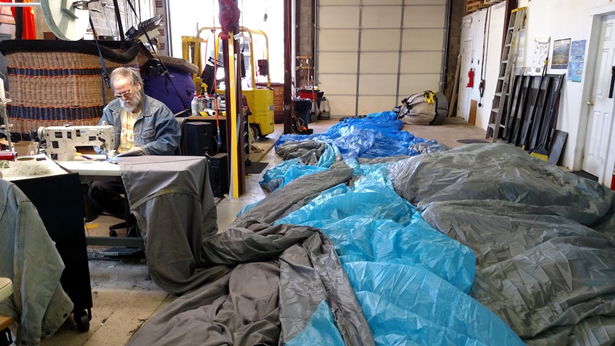
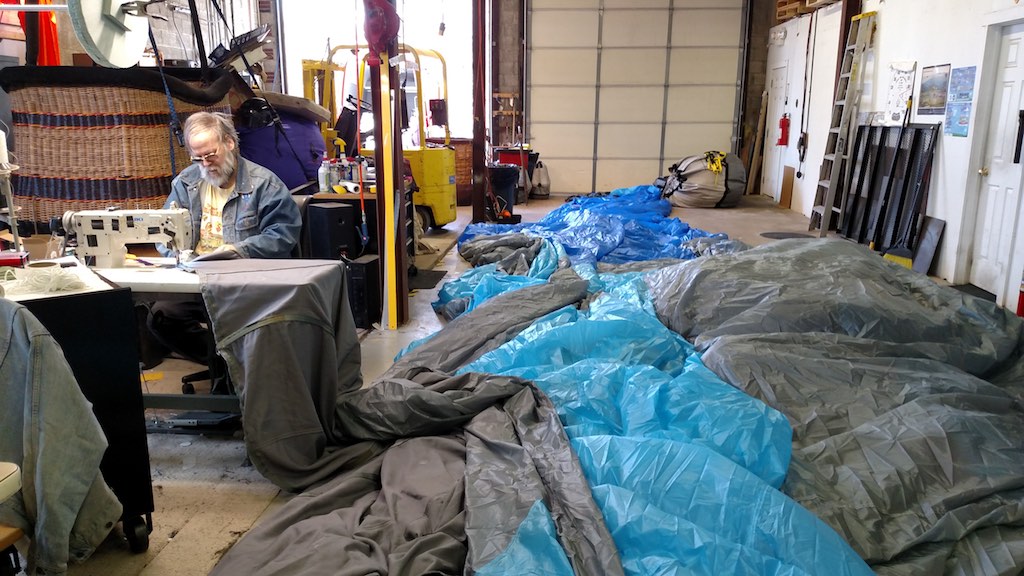
Great leaders build great teams, and consider people as their most important asset, So I went down a rabbit hole, searching the web for images of people constructing balloons (aka the envelope), and started to consider the metaphor of the team as the fabric of each amazing structure. My image of the work that I do, and capacity building in general, looks something like the image below of Keith Sproul hard at work on one of his many hand-made hot air balloons: detailed planning with carefully selected and thoughtfully trimmed sections of fabric, painstakingly arranged and sewn section by section. This vision reminded me of the effort that goes into building teams: how much red or blue or yellow; which shape or pattern; and how to connect everyone for both durability and vibrance.

Keith Sproul at a sewing machine with a large balloon, that he is sewing, laid out next to him.
Photo credit: Ali Szabo, with permission from Keith Sproul. Enjoy many photos of the construction of this balloon here. (source)

The anatomy of a great team — or balloon — is fundamental

Did you know that hot air balloons are the oldest form of flight? And despite all the changes and innovations over the years the fundamental structure of a hot air balloon — and also a team — has not changed: you have to create a thoughtful, solid structure to take flight.

Careful construction can’t be ignored: hasty sewing, ignoring plans, and the like would inevitably lead, at best, to a balloon that never takes flight; and, at worst, catastrophic results. The same is true for your team.

Consider this: When you are thinking of the goals of your project, the dream as it were, imagine the vibrancy and then let your imagination zoom in on the detail. How are you providing structure to your team so it can achieve the vibrant success you imagine?

A photo from Keith Sproul’s hot air balloon at a festival
Photo credit(source): Keith Sproul at the Red Rock Red Rock Balloon Festival Gallup, New Mexico in 2017. More pictures: http://www.skychariot.com/gallup.html

Written by cplysy · Categorized: betsyblock

Apr 23 2020

How much stress can a Lego® Bridge Handle?

https://www.flickr.com/photos/philaaronson/2463699246 licensed under CC BY 2.0

My six-year-old son currently is obsessed with the TV Show Lego Masters. Recently, the competitors had to build a bridge and test its structural integrity. The strongest bridges — of Legos®, mind you — withstood weight of 1000 pounds, and maxed out what the show would allow. The weaker ones only held 125 pounds — but they began to creak and show stressors with less than 40 pounds.

You already know where the cracks are

The teams had television-appropriate, dramatic reactions as they wondered what their bridge would support. But let’s be real: most contestants anticipated what they suspected to be true about their bridges, for better or for worse.

The memory of this episode, and specifically the clutching-at-the-heart-anticipation, came vividly back to me in a conversation with a colleague last week. The sudden switch to remote teaming was exacerbating fissures and stresses that already existed within their team, and that the manager had hoped would resolve.

You can only overlook those cracks for so long

In normal circumstances, those bridges look and often work just fine. We ignore the small fissures and keep working through them and we learn to ignore the occasional creak or crick. But the demand on teams to work under the extreme stressors like the ones we feel right now, much like adding 1000 pounds of weight to a Lego® bridge, can force the team to reckon with these potentially harmful fissures.

With reckoning comes possibility

My recent work with firms navigating this major, stressful change as their teams shift to remote working reveals unsurprising and yet equally powerfully discoveries. What’s unsurprising is the staff’s ability to acknowledge that the sudden shift is in many cases highlighting existing challenges, not introducing new ones; what’s compelling is how staff are demonstrating a willingness to step in, resolve the challenges, and make long-term changes. More than a few staff on teams have said, “This is forcing me to take steps that will ultimately serve my clients better.”

Consider this: right now is an incredibly powerful time to help your team look at its strengths and the fissures that keep them from forging ahead.

Written by cplysy · Categorized: betsyblock

Footer

Follow our Work

The easiest way to stay connected to our work is to join our newsletter. You’ll get updates on projects, learn about new events, and hear stories from those evaluators whom the field continues to actively exclude and erase.

Get Updates

Want to take further action or join a pod? Click here to learn more.

Copyright © 2026 · The May 13 Group · Log in

en English
af Afrikaanssq Shqipam አማርኛar العربيةhy Հայերենaz Azərbaycan dilieu Euskarabe Беларуская моваbn বাংলাbs Bosanskibg Българскиca Catalàceb Cebuanony Chichewazh-CN 简体中文zh-TW 繁體中文co Corsuhr Hrvatskics Čeština‎da Dansknl Nederlandsen Englisheo Esperantoet Eestitl Filipinofi Suomifr Françaisfy Fryskgl Galegoka ქართულიde Deutschel Ελληνικάgu ગુજરાતીht Kreyol ayisyenha Harshen Hausahaw Ōlelo Hawaiʻiiw עִבְרִיתhi हिन्दीhmn Hmonghu Magyaris Íslenskaig Igboid Bahasa Indonesiaga Gaeilgeit Italianoja 日本語jw Basa Jawakn ಕನ್ನಡkk Қазақ тіліkm ភាសាខ្មែរko 한국어ku كوردی‎ky Кыргызчаlo ພາສາລາວla Latinlv Latviešu valodalt Lietuvių kalbalb Lëtzebuergeschmk Македонски јазикmg Malagasyms Bahasa Melayuml മലയാളംmt Maltesemi Te Reo Māorimr मराठीmn Монголmy ဗမာစာne नेपालीno Norsk bokmålps پښتوfa فارسیpl Polskipt Portuguêspa ਪੰਜਾਬੀro Românăru Русскийsm Samoangd Gàidhligsr Српски језикst Sesothosn Shonasd سنڌيsi සිංහලsk Slovenčinasl Slovenščinaso Afsoomaalies Españolsu Basa Sundasw Kiswahilisv Svenskatg Тоҷикӣta தமிழ்te తెలుగుth ไทยtr Türkçeuk Українськаur اردوuz O‘zbekchavi Tiếng Việtcy Cymraegxh isiXhosayi יידישyo Yorùbázu Zulu