When I started getting into data visualization design, human centered design, and user experience design I had this hope that a better understanding of design methodologies would ultimately help me to become a better evaluator.
But I had the causal direction flipped.
What I have learned over a decade of being both an evaluator and a designer is that while knowing design might make you a better evaluator, having a firm understanding of evaluation will definitely make you a better designer. Whether you are trying to design a business plan, website, or software application, having an evaluation mindset can give you a unique and rare perspective into our ever changing, complicated, and confusing modern world.
This post is the first in a series that I’m dubbing the “Evaluation Mindset.”
And I’m dedicating the series to all of you who see yourselves in my cartoons, who hang them up on your office walls and quietly chuckle at the kinds of jokes that nobody else seems to get. I hope this series resonates.
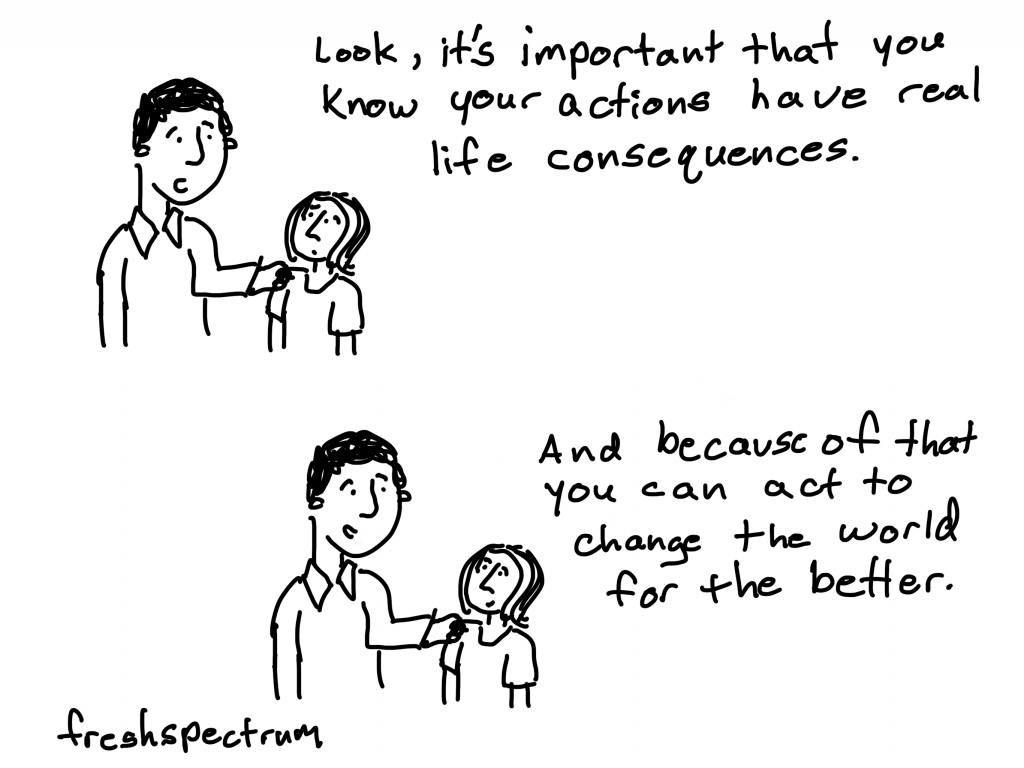
Our Actions have Consequences
It’s the kind of thing you try to teach your kids.
Often in the context of a temper tantrum or as part of a lecture following a “bad decision.”
“No, screaming and kicking your feet will not get you ice cream.”
“How do you think your little brother feels when you punch him in the arm?”
But there is also an incredible beauty to the idea that actions have consequences. If our actions did not have consequences there would be no reason to do anything. Our actions having consequences makes design possible.
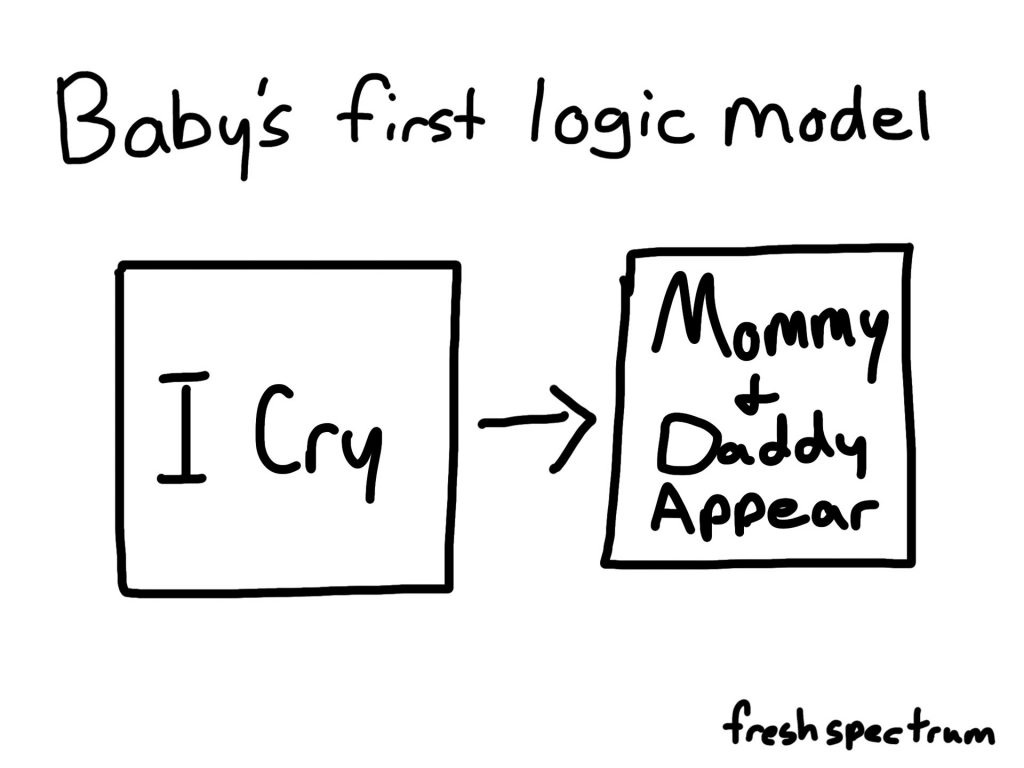
Why do babies cry?
At first crying is likely the response to an overwhelming new world. Feelings, pains, visions, thoughts.
But over time children make a connection. When they cry, a parent appears.
Amazing.
Hungry, try crying. Just filled a diaper, cry. Don’t feel like being alone in the crib at night. Cry.
It works wonders, well at least until the parents start Googling bedtime routines and the Ferber method. Then all of a sudden, crying doesn’t just bring the parent.
The action (crying) doesn’t have the consequence (parent appearing). So the baby can keep trying, give up, or come up with some kind option C (i.e. project break outta the crib).
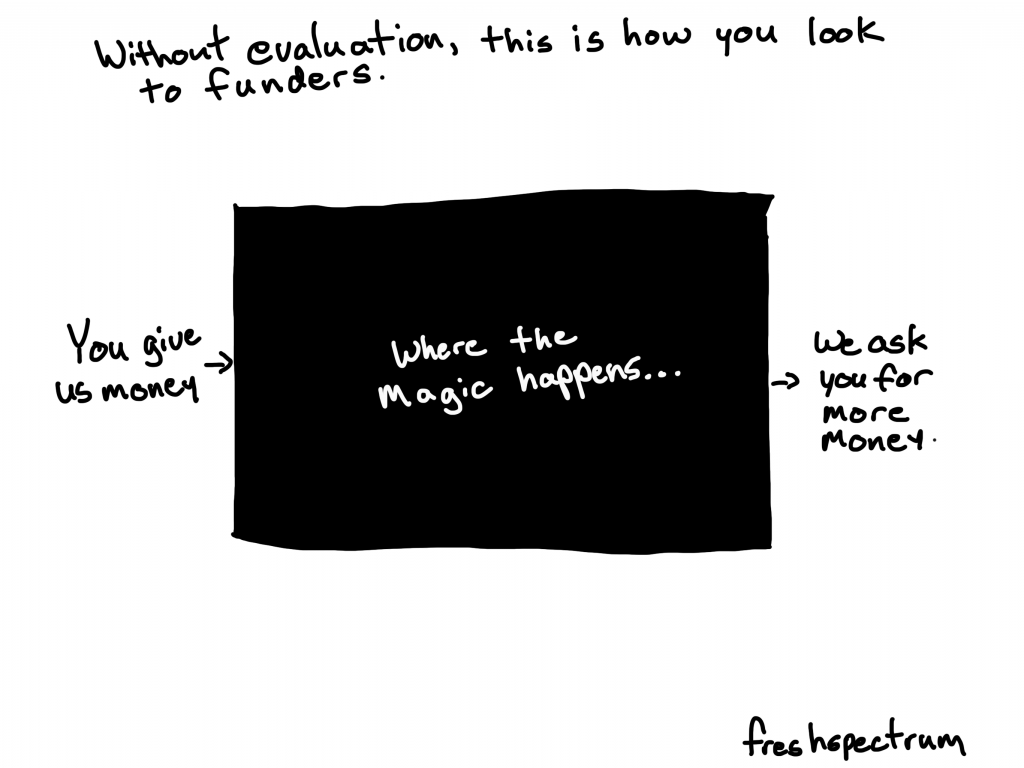
Inside the Black Box
If you have enough trust built up, or charisma, or slick marketing, or luck, or delusion, or slimy conman talk, you don’t need to connect your actions with the consequences you are trying to bring about.
Some of us though don’t really like doing things we don’t understand.
My mom had a saying she would pull out every now and again, “well, it is what it is.”
I have never believed that.
To me that’s give up talk. It’s the way we dismiss things as unchangeable. It’s the secret behind perpetuating the status quo. It’s the reason why people don’t vote, and worse, don’t run.
Embracing the idea that our actions have consequences gives us power. And being able to conceptualize the actions that lead to our ideal consequences can give us insight and put our work in context.
In evaluative terms, our actions are activities. Our consequences are outcomes. They are the impact a program’s activities can bring about.
And if you build around those ideas, you can model your design. You can collect evidence and evaluate. You can iterate your idea and make it better.
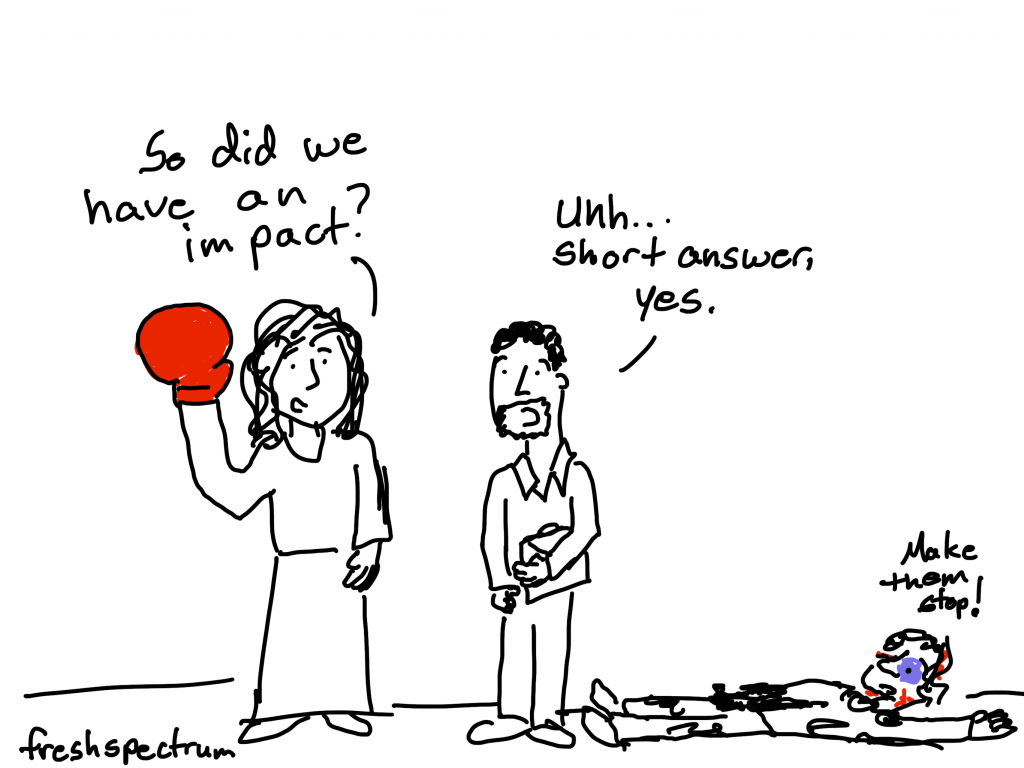
Good and Bad Impacts
Impact is a consequence.
It can be good, it can be bad, it can be both, and it can be neither.
But if actions lead to consequences, those consequences exist whether or not we recognize their existence.
Failing to measure a consequence doesn’t make it go away.
When a government program takes action to increase the availability of credit to low income neighborhoods it may bring about its intended consequence. But it also might bring about an unintended consequence, like an increase in high interest debt.
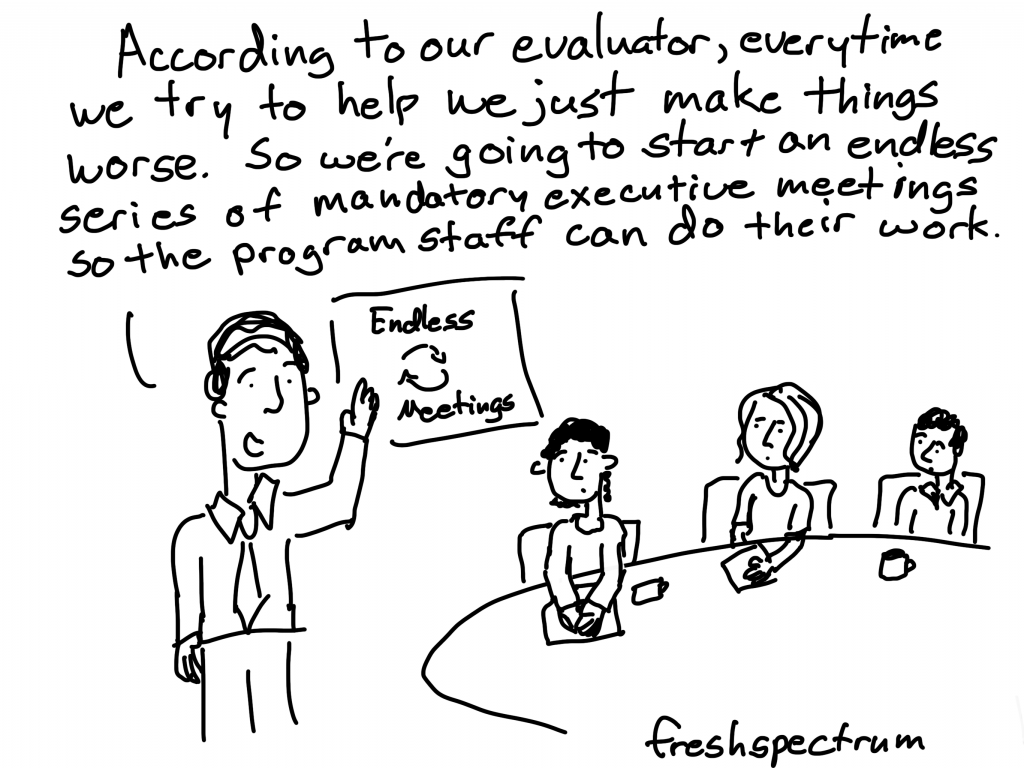
Inaction also has consequences.
You know the saying, “damned if you do, damned if you don’t.”
Inaction also has consequences. Doing nothing about climate change doesn’t make it go away. Given our pace, doing nothing is a choice in its own right.
Not voting will not make a certain president cease to exist. Quite the contrary.
Evaluation Mindset Practice
Okay, now it’s time to practice.
What are some of the actions you have taken today? What consequences have they brought about?
Is there a non-profit organization that you really respect? What actions do they take? What are the consequences of those actions?
Are there are other action/consequence pairs that come to mind? What would happen if you changed the action? What other kinds of consequences exist?
If I want people to read my blog, I have to publish posts and share them. Those are actions. I’ll consider this post successful if people read it (I’ll see that in my analytics) and then share it (Twitter @clysy) or comment on it.
So please do!
 English
 Afrikaans
 Shqip
Shqip አማርኛ
አማርኛ العربية
 Հայերեն
 Azərbaycan dili
 Euskara
 Беларуская мова
 বাংলা
বাংলা Bosanski
 Български
 Català
 Cebuano
 Chichewa
 简体中文
简体中文 繁體中文
繁體中文 Corsu
Corsu Hrvatski
 Čeština
 Dansk
Dansk Nederlands
 Esperanto
 Eesti
Eesti Filipino
 Suomi
Suomi Français
 Frysk
Frysk Galego
 ქართული
 Deutsch
 Ελληνικά
 ગુજરાતી
 Kreyol ayisyen
 Harshen Hausa
 Ōlelo Hawaiʻi
 עִבְרִית
 हिन्दी
 Hmong
Hmong Magyar
 Íslenska
 Igbo
Igbo Bahasa Indonesia
 Gaeilge
 Italiano
 日本語
日本語 Basa Jawa
 ಕನ್ನಡ
ಕನ್ನಡ Қазақ тілі
 ភាសាខ្មែរ
 한국어
한국어 كوردی
كوردی Кыргызча
 ພາສາລາວ
 Latin
Latin Latviešu valoda
 Lietuvių kalba
 Lëtzebuergesch
 Македонски јазик
 Malagasy
 Bahasa Melayu
 മലയാളം
 Maltese
 Te Reo Māori
 मराठी
मराठी Монгол
 ဗမာစာ
ဗမာစာ नेपाली
 Norsk bokmål
 پښتو
پښتو فارسی
فارسی Polski
 Português
 ਪੰਜਾਬੀ
 Română
 Русский
 Samoan
 Gàidhlig
 Српски језик
 Sesotho
 Shona
Shona سنڌي
سنڌي සිංහල
සිංහල Slovenčina
 Slovenščina
 Afsoomaali
 Español
 Basa Sunda
 Kiswahili
 Svenska
 Тоҷикӣ
 தமிழ்
தமிழ் తెలుగు
 ไทย
ไทย Türkçe
 Українська
 اردو
اردو O‘zbekcha
 Tiếng Việt
 Cymraeg
 isiXhosa
 יידיש
יידיש Yorùbá
 Zulu
Zulu
Leave a Reply