In 2018, 87 years after it was completed, Zora Neale Hurston’s Barracoon was released to the public.
Reading the book today the story of Cudjo Lewis feels completely relevant to our contemporary times. It is heartbreaking, illuminating, and honest.
In the way she writes, Hurston allows Cudjo to tell his own story. They are his words, told in his way. She is an active participant in the collection of those words, a supporting character in the telling, and a translator through her authorship.
And because of Hurston’s insistence that the book remain that way, and not adapted to meet the desires of publishers wanting the writing altered from dialect to language, the words were almost lost to time.
Poor Zora. An anthropologist, no less! A daughter of Eatonville, Florida where truth, what was real, what actually happened to somebody, mattered.
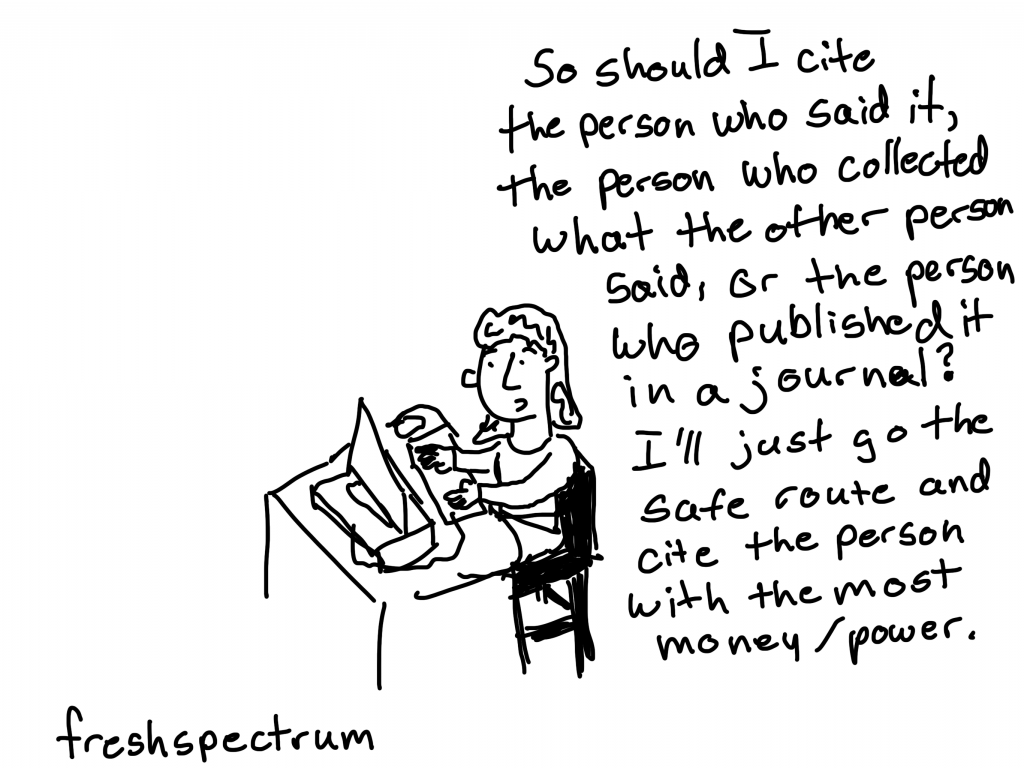
Who owns the data?
A few years ago I had the honor of attending a presentation by Stafford Hood and Nicole Bowman. And something from the Q&A has been stuck in my head ever since.
For me, it’s a no brainer…If they are saying they don’t want that data published, it’s over.
Stafford Hood – 2016 EERS Eleanor Chelimsky Forum [YouTube recording! Thanks EERS!]
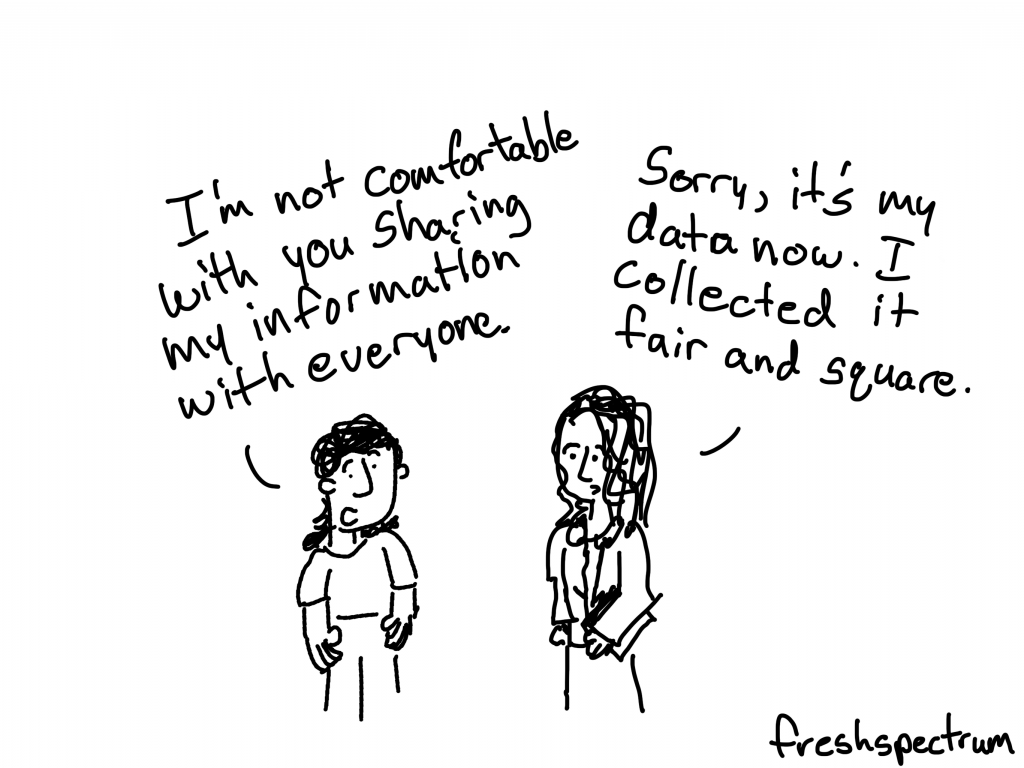
Data is too simple a word for what it represents. As if collections of characteristics, thoughts, feelings, and stories are not reflections of humanity and filled with complexity.
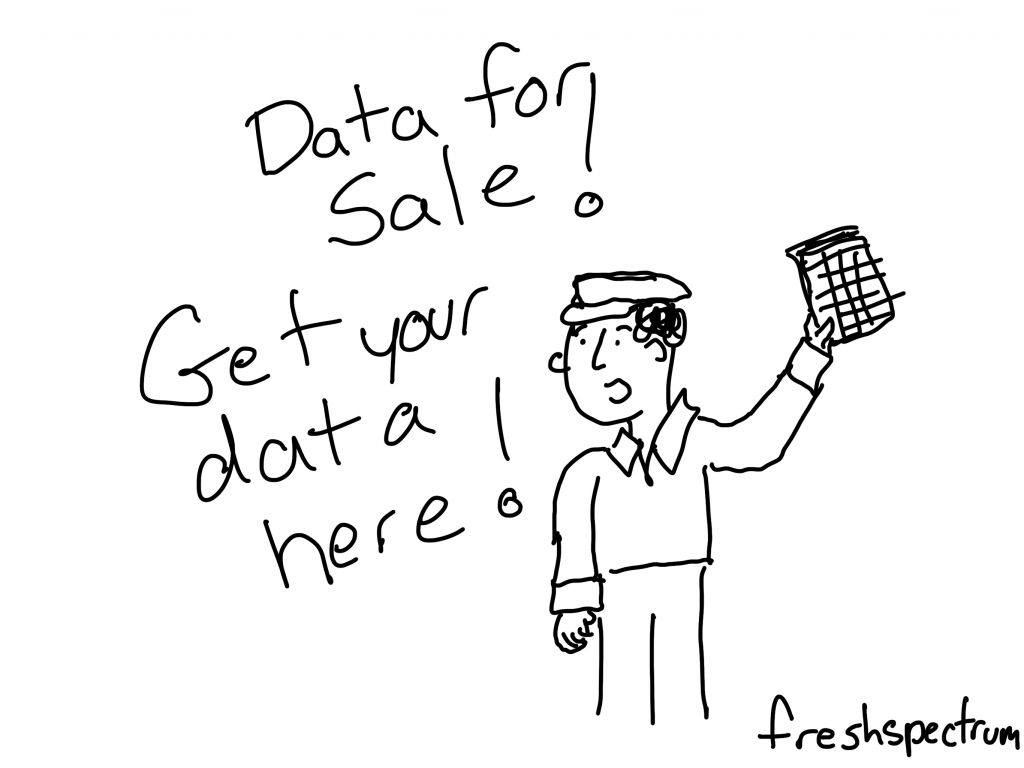
Of course simplifying something so personal allows it to become marketable. If you detach data from people, turn the observations into a series of ones and zeros few can understand, all of a sudden it’s a product that can be sold?
Disconnecting “data” from people doesn’t make it objective. It just hides the origin. Just like giving a cell a name like HeLa, and allowing it to be bought and sold, doesn’t mean it wasn’t lifted without permission from a person named Henrietta Lacks.
Putting Research before People
For long before you and I, science has been used as a justification for both ethical and unethical practices.
The human subjects protections we have today don’t exist because scientists and policymakers were forward thinking. They exist because of past atrocities and unethical studies that put the pursuits of science over the rights and well-being of people.
The men were never given adequate treatment for their disease. Even when penicillin became the drug of choice for syphilis in 1947, researchers did not offer it to the subjects.
Today’s Data Challenge
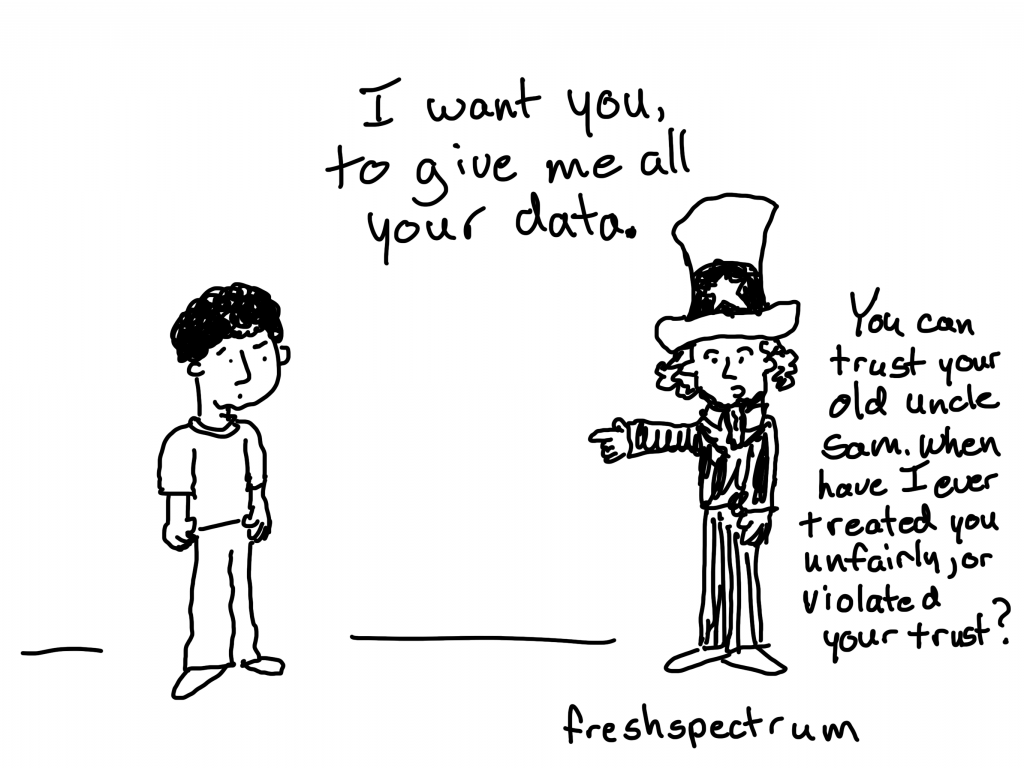
There’s a good case for using smartphone data in the COVID-19 response, but Americans deserve an explanation.
Do you want to know how to make a member of an Institutional Review Board freak out? Just show them the amount of personal data available to your run-of-the-mill online marketer.
Want to know who clicked what, when, and where, well our digital world keeps a record. And the records can be compiled together to paint a bigger picture. Ultimately you can get a story of a person who likely had little idea they were ever being followed.
Most of the time the data being collected seems harmless enough. At least until it’s not.
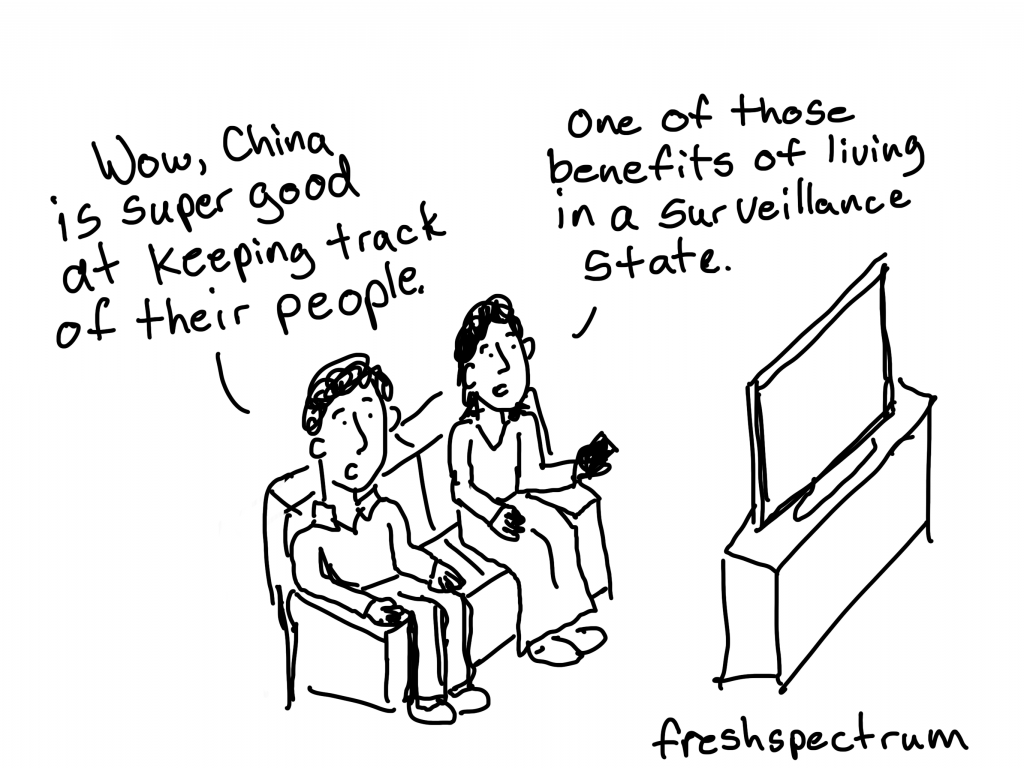
Right now the same marketing data is being engaged in efforts to combat the spread of a pandemic. Does that make the social media industry’s collection, storage, and commercialization right? Does contact tracing justify China’s development of a surveillance state?
These are open questions, and not always easy ones to answer.
Being a data steward
Evidence has value, but it also comes with a price tag (societal cost). Our values, and the values of our organizations, guide our usage.
That is, if it’s on anyone’s radar.
As an evaluator it is often not your role to choose, but it is your role to guide choice. Who does data belong to? Where did it originate? How is it being used?
These are all questions we need to help answer. Because there is no guarantee that anyone else will.
 English
 Afrikaans
 Shqip
Shqip አማርኛ
አማርኛ العربية
 Հայերեն
 Azərbaycan dili
 Euskara
 Беларуская мова
 বাংলা
বাংলা Bosanski
 Български
 Català
 Cebuano
 Chichewa
 简体中文
简体中文 繁體中文
繁體中文 Corsu
Corsu Hrvatski
 Čeština
 Dansk
Dansk Nederlands
 Esperanto
 Eesti
Eesti Filipino
 Suomi
Suomi Français
 Frysk
Frysk Galego
 ქართული
 Deutsch
 Ελληνικά
 ગુજરાતી
 Kreyol ayisyen
 Harshen Hausa
 Ōlelo Hawaiʻi
 עִבְרִית
 हिन्दी
 Hmong
Hmong Magyar
 Íslenska
 Igbo
Igbo Bahasa Indonesia
 Gaeilge
 Italiano
 日本語
日本語 Basa Jawa
 ಕನ್ನಡ
ಕನ್ನಡ Қазақ тілі
 ភាសាខ្មែរ
 한국어
한국어 كوردی
كوردی Кыргызча
 ພາສາລາວ
 Latin
Latin Latviešu valoda
 Lietuvių kalba
 Lëtzebuergesch
 Македонски јазик
 Malagasy
 Bahasa Melayu
 മലയാളം
 Maltese
 Te Reo Māori
 मराठी
मराठी Монгол
 ဗမာစာ
ဗမာစာ नेपाली
 Norsk bokmål
 پښتو
پښتو فارسی
فارسی Polski
 Português
 ਪੰਜਾਬੀ
 Română
 Русский
 Samoan
 Gàidhlig
 Српски језик
 Sesotho
 Shona
Shona سنڌي
سنڌي සිංහල
සිංහල Slovenčina
 Slovenščina
 Afsoomaali
 Español
 Basa Sunda
 Kiswahili
 Svenska
 Тоҷикӣ
 தமிழ்
தமிழ் తెలుగు
 ไทย
ไทย Türkçe
 Українська
 اردو
اردو O‘zbekcha
 Tiếng Việt
 Cymraeg
 isiXhosa
 יידיש
יידיש Yorùbá
 Zulu
Zulu
Leave a Reply