• Skip to main content
  • Skip to footer
  • Home

The May 13 Group

the next day for evaluation

  • Get Involved
  • Our Work
  • About Us
You are here: Home / Archives for allblogs

allblogs

Mar 27 2020

Meaningful Data Data your Nonprofit Actually Needs (Simple Steps)

Written by cplysy · Categorized: connectingevidence

Mar 25 2020

Who should participate in Museums Advocacy?

I wrote this blog post two weeks ago before coronavirus had changed our world so drastically.  Museums Advocacy is more essential now than ever.  Please consider how you can be an effective museum advocate, and see AAM’s resources here: https://www.aam-us.org/2020/03/19/urge-congress-to-support-museum-community-economic-relief/


“What are you doing here?”  This was the question that greeted me from a colleague prior to the welcome session for Museums Advocacy Day 2020.  I was both surprised by and prepared for this question, as I had wondered whether Museums Advocacy Day was a place for me too.

This year was the first time I had participated in Museums Advocacy Day.  I have felt particularly motivated to participate over the last few years, realizing that I wanted to learn how to ensure that good and valid studies about the impact of museums (particularly on visitors—communities, students, etc.) are on policymakers’ radars.  The theory goes that data and stories are important to policymakers.  As an authority in museum data, it seemed to make sense that I be there to share my knowledge.  Evaluators want nothing more than to ensure data is useful.  So, Museums Advocacy seemed to me to be a natural extension of our work as evaluators.  We are not just talking the talk but walking the walk by taking the data and stories about museums directly to Capitol Hill.
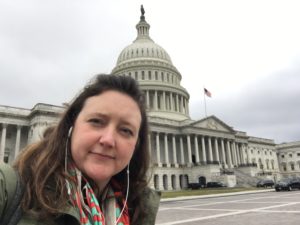
Amanda on Capitol Hill

I did have several hesitations going into Museums Advocacy Day though.  First and foremost, I do not work for a museum directly.  As an advocate, do I appear self-serving as museums and some of the grant agencies for which we are advocating sustain our business?  Additionally, we work nationwide so is it odd to advocate to my state senators (although we do work within my state currently, and I was able to share stories about students talking about a work by Ai Wei Wei and data about parent’s perceptions of digital initiatives for children)?  But moreover, is it odd to advocate to my district representative (since we don’t currently work within my district)?  Furthermore, leading up to Museums Advocacy Day, I only knew of one other evaluator like myself who attends (Elsa Bailey), and then encountered only one other evaluator while there (Monae Verbeke).  So, the nagging little voice in my head through the course of the prep day for Capitol Hill continued to chide me: what are you doing here?

After finishing the day of prep and meeting with my senators and representative on Capitol Hill, I can say I learned a ton and am very happy to have participated.  However, I don’t know that I answered the question about whether Museums Advocacy Day is a place for me.  Rather, my experience exploded the question to wonder:

  • Who should be an advocate?
  • Or, who is best able to be an effective advocate?

For example, many of the advocates from my state are students in museum programs.  Are they effective advocates as they don’t yet have the firsthand experience to speak about the impact of museums on people?  Furthermore, some advocates are not actually living within the districts for which they advocate.  Are they effective advocates?  For example, while I don’t work with any of the museums in my district, I do rely on them as a parent of student at a Title 1 public school.  Our school takes fieldtrips to and sponsor in -school assemblies from many of these museums.  Therefore, I felt confident in advocating for them through this lens, but what about those who could not rely on this intimate knowledge of a district?

I am so grateful to have participated in Museums Advocacy Day as it was a very empowering experience, and I learned so much.  However, this bigger question of who should participate in Museums Advocacy will sit with me for now.

The post Who should participate in Museums Advocacy? appeared first on RK&A.

Written by cplysy · Categorized: rka

Mar 24 2020

Advice for Early-Career Data Visualization Freelancers: Ann’s Interview with Jane Zhang

When Jane Zhang wanted to interview me for her article for
the Data Visualization Society, I agreed!

We decided to record our conversation so that even more
people could benefit from learning about the business behind my business.

This conversation might be especially helpful for early-career data visualization freelancers—or those contemplating the switch from a salaried job into a freelancing job. If that’s you, welcome to the dataviz community! And enjoy this video interview.

What’s Inside

  • How I got started six years ago
  • Whether I’d planned to work for myself from the
    beginning
  • The critical turning points in my
    decision-making process
  • What type of advice I received from mentors
    early on
  • How the work I’ve done has shifted over the past
    six years
  • All of the correct ways to make a living with
    data visualization
  • How my previous workplaces were so supportive of
    data visualization
  • Whether I think anyone can teach
  • What High Schooler Ann thought she’d be when she
    grew up—and how my career path isn’t that different from what I originally
    planned
  • How I found my earliest clients
  • How blogging for several years before going solo
    unintentionally became a solid portfolio
  • How professional volunteering on boards built my
    network and helped/helps me find projects that are a good fit for me
  • Why I always recommend that early-career dataviz
    enthusiasts start blogging
  • Where my income comes from (the percentage from
    in-person training, online training, consulting, keynotes, and other sources)
  • Why I’m trying to do even more online training
  • How I manage traveling in the U.S. and
    internationally with my family
  • How I’ve moved mountains for the right work-life
    balance
  • Why you need to niche-down for your own sanity
  • How you actually decide what to specialize in
  • What my staffing structure has looked like in
    the past, and what it looks like now
  • Why I’ll never, ever hire full-time employees
  • How I learned how to run a business
  • Why so many people hesitate to run their own
    business
  • How little I understand about my own visibility
    and presence
  • What I’m really aiming for during my training—which
    is often much different than the workshop objectives written out on paper
  • Why it’s critical to give yourself a Dabbling
    Year(s) when you’re first starting out
  • What Jane’s currently working on

Listen to Our Convo

Resources Mentioned

Jane’s article on quitting her salaried job to pursue freelancing.

This book about running a lean, minimalist business.

This book about setting your rates as an independent consultant.

This scheduling tool that keeps me sane.

This Data Vizard t-shirt.

Connect with Jane Zhang

Connect with Jane:

  • Jane’s blog: janezhang.ca/
  • Jane’s articles on Medium
  • Twitter: @janezhgw
  • Instagram: @janezhgw
  • The project she posted on Instagram and her first-ever client saw it: https://janezhang.ca/posts/designto-2019/
  • The travel guide post that helped Jane land her second client: https://janezhang.ca/posts/toronto-summer-guide/

Your Turn

Did anything surprise you about our conversation?

What additional questions do you have for me?

What additional tips do you have for early-career dataviz
freelancers?

Comment and let us know!

Bonus: Read the Full Article

Jane’s full article just got published! Read about her interviews with RJ Andrews, Alli Torban, Matt Baker and I: https://medium.com/nightingale/how-self-employed-data-visualization-designers-make-a-living-23dc00ea5264

Written by cplysy · Categorized: depictdatastudio

Mar 24 2020

The Evaluation Mindset: Methods and Frameworks

Methods and frameworks are how we turn our professional actions and philosophies into practical strategies.

Once formed, they can be shared and shaped by other hands. They can evolve and grow. They can sometimes take on a life of their own.

Methods and frameworks are two different things. I have a tendency of bundling them together when speaking of our tools. But thanks to the amazing Jara Dean-Coffey, I’m going to try harder to keep the two separate via my communications.

This is great. Point of clarification… @equitableeval is a framework that shifts axiology (purpose) and this affects methods.

Jara Dean-Coffey via Twitter in reply to last week’s post

It might seem pedantic (ivory towery) but it’s useful. Because all sorts of methods and frameworks can be used in parallel. Not even just that, they can build off of one another.

Just like Batman doesn’t have to choose between his utility belt and his bat-mobile, we don’t have to choose between developmental evaluation and the equitable evaluation framework.

But like all the things I like to talk about, let’s leave the nuanced terminology behind for the moment. Instead, let’s talk about these three things.

  • What we do.
  • How we do.
  • How we see.

Before we jump in though, let’s take one short pandemic related tangent.

Back to normal…

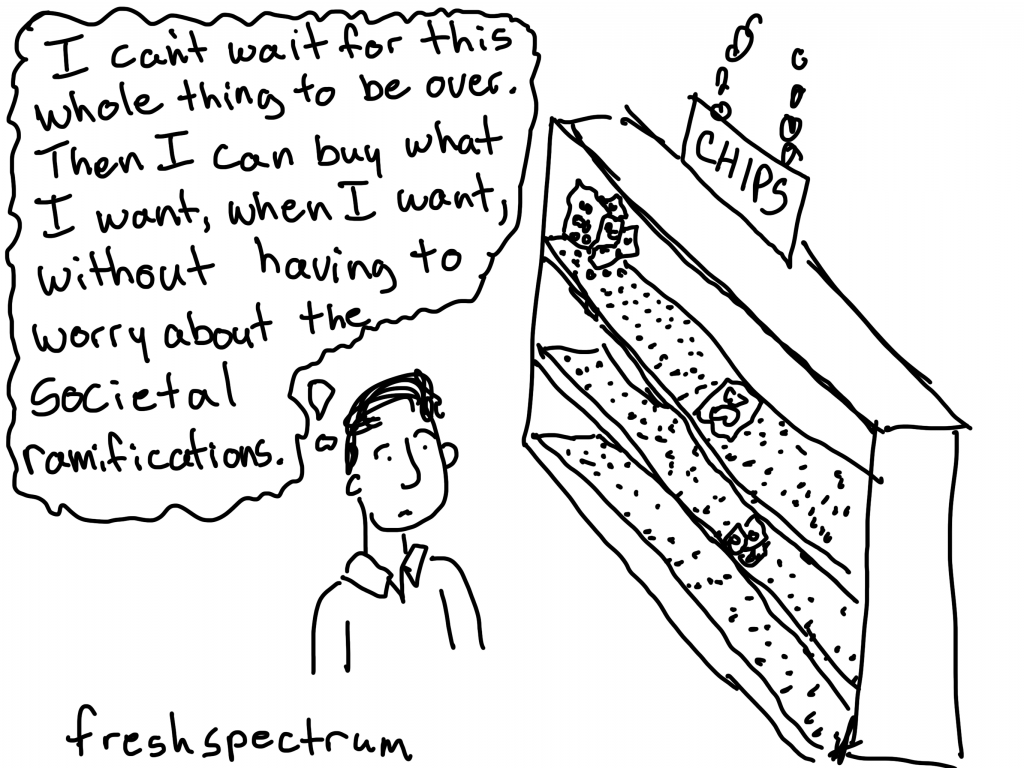
When all sorts of things are changing rapidly, it’s natural to ask yourself, “when will things get back to normal?”

But is normal what we really want? Or does it just feel safer?

Our normal is fueling global warming. Our normal is not looking out for the well-being of our neighbors. Our normal is unsustainable consumption. Our normal is the continued strengthening of structures that enable global inequality. Our normal is divisive and sometimes violent.

A global pandemic is not the societal shock that anybody would choose. It is catastrophic and will have the greatest impact on the people who are already the most vulnerable.

But it is a shock.

There is very little doubt that our society will change in response to this crisis. That this will change us.

But whether that change is towards a better future, or not, that is on us to mold and shape.

It is certain, in any case, that ignorance, allied with power, is the most ferocious enemy justice can have.

James Baldwin from No Name in the Street

What we do.

Understanding our actions is important.

What we do is the action that leads to our desired consequence. Sending out a survey. Holding a focus group. Analyzing a dataset. We usually call these methods.

Most of the time we group strings of methods together in a series of steps. Then we might call this an approach.

Or we create a collection of methods and approaches designed so you can adapt to the needs of your evaluation. This might be called a toolkit.

Approaches (on this site) refer to an integrated package of options (methods or processes). For example, ‘Randomized Controlled Trials’ (RCTs) use a combination of the options random sampling, control group and standardised indicators and measures.

How Better Evaluation defines an approach.

How we do.

How we do our methods is also important.

The methods can be evidence-based and deployed systematically with fidelity (a.k.a. by the book). But that won’t necessarily build the trust required to convince the people who will feel the consequences.

How we do things is inextricably tied to who we are.

In some circles and professions, subjective is thrown around as if it were an insult. As if history and perspective are things we should ignore and pretend don’t matter. But subjectivity is purely a reality of the human condition.

The values we hold, the skills we have, the trust we’ve built, our failures, our successes, our connections, our culture, our mental lapses, our history, and the future we perceive, all shape the way we do our work.

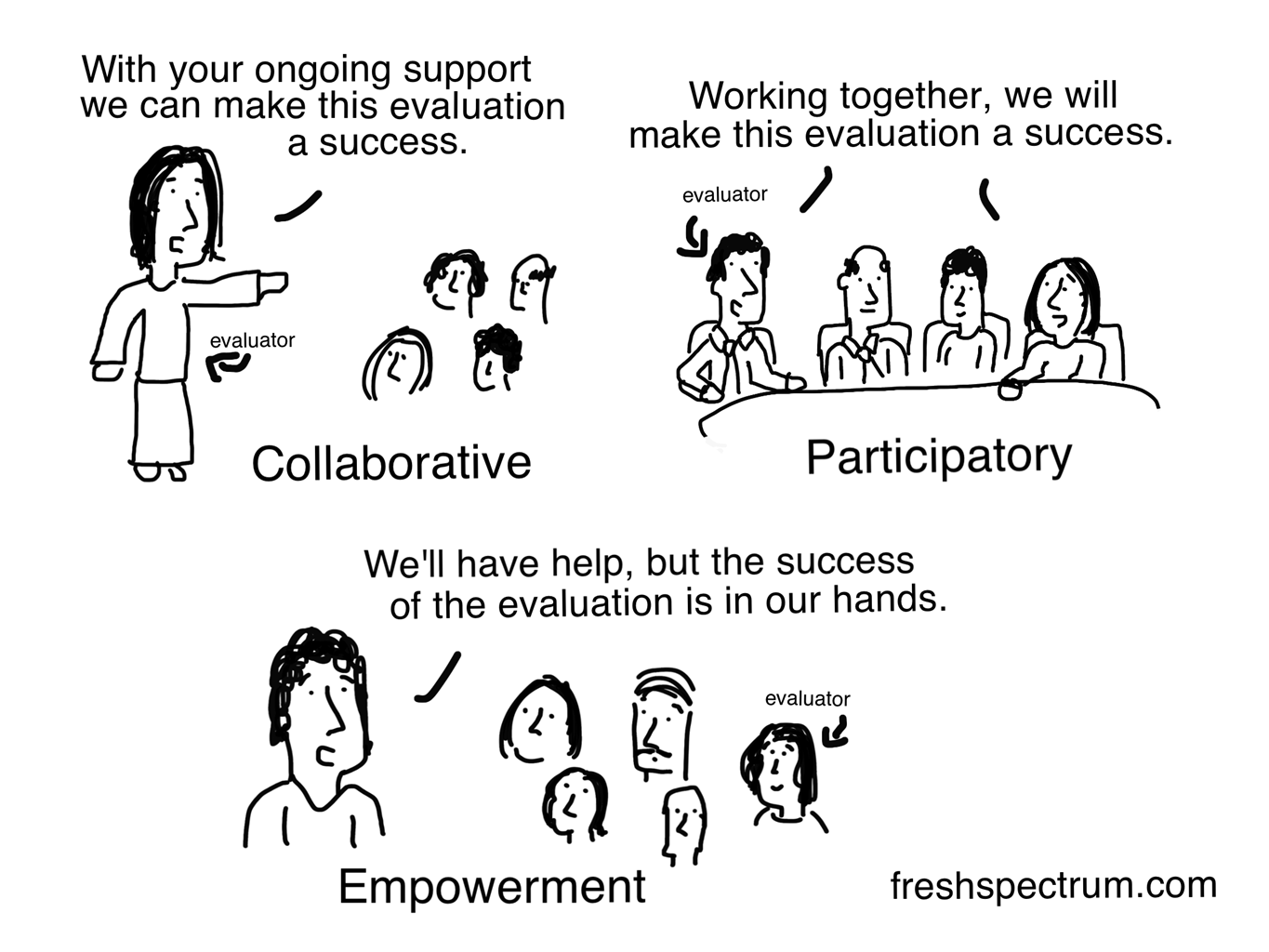
There are a number of evaluation approaches designed to mitigate this natural challenge by focusing on the role and placement of the evaluator. They are usually compatible with all sorts of methods (what we do) and fit within broader frameworks (how we see).

Empowerment evaluation is a stakeholder involvement approach designed to provide groups with the tools and knowledge they need to monitor and evaluate their own performance and accomplish their goals.

Better Evaluation page on Empowerment Evaluation, written by David Fetterman

When I think about Indigenous evaluation (or in my case Kaupapa Maori evaluation), it is about evaluation by Indigenous, for Indigenous, with Indigenous, and as Indigenous; and where there is no assumed role for non-Indigenous people, unless by invitation.

Nan Wehipeihana from Increasing Cultural Competence in Support of Indigenous-Led Evaluation: A Necessary Step toward Indigenous-Led Evaluation

How we see.

Some people see the glass half full.

Other people see the glass half empty.

The evaluator considers how this evidence will inform policy.

The researcher objectively measures 8 ounces of water in a 16 ounce glass. They write down their observation and share it with an exclusive group of their researcher friends.

Critical thinking without hope is cynicism. Hope without critical thinking is naïveté.

Maria Popova – Brainpickings

The way in which we see the world changes what we see.

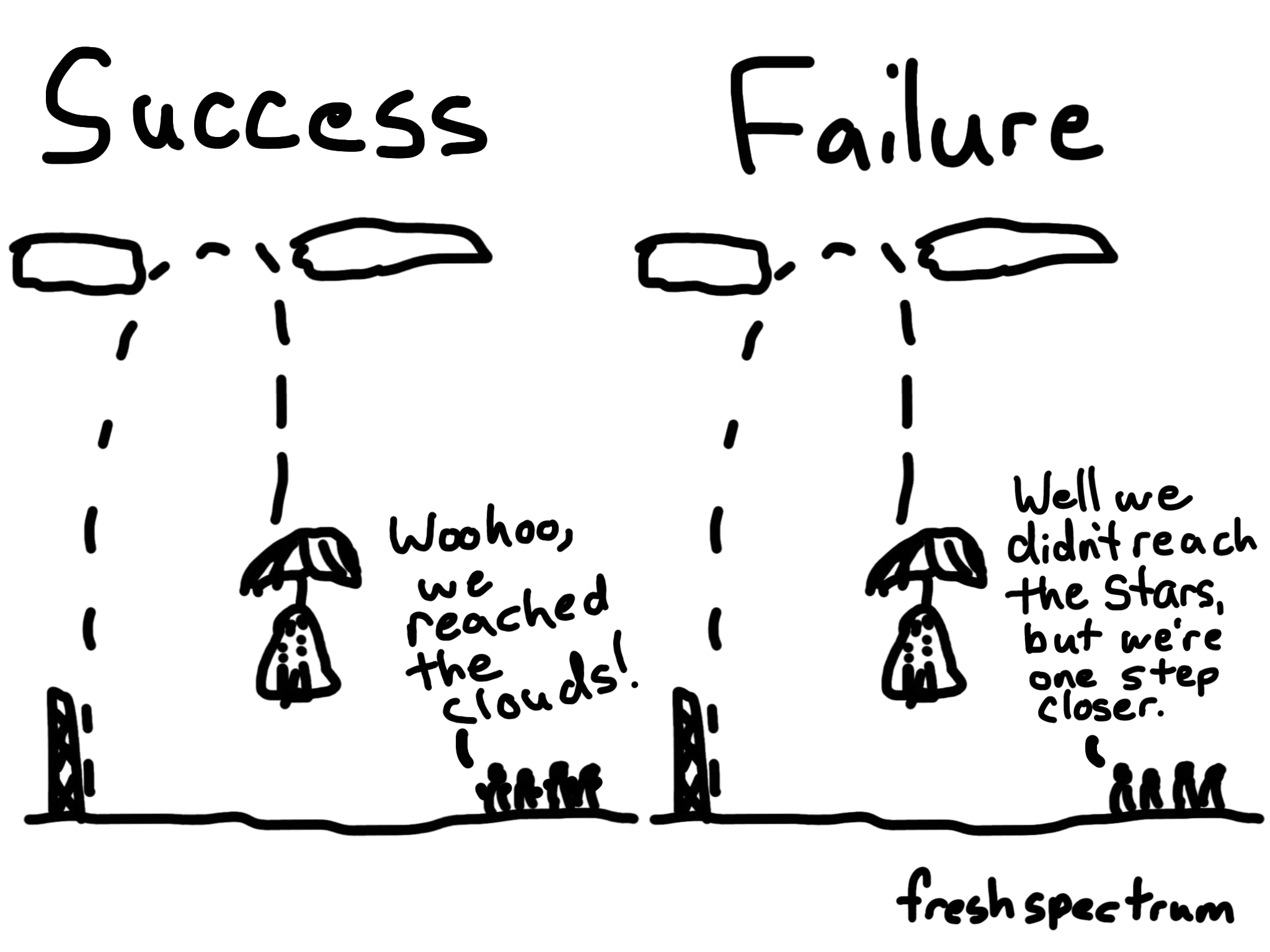
One organization’s view of success is another organization’s view of failure.

If you believe that we have influence over climate change, and that it is essential we exercise that influence to reduce global warming, then that view will likely influence how you act.

If you see the coronavirus pandemic as a sham, no more than the flu but hyped up by the fake news left to try to take down the president, the likelihood that you are social distancing (action/method) right now is probably fairly low.

How we see the world, changes what we see, and subsequently what we do.

Adopting a framework that aligns with your values can provide the foundation you need to select appropriate methods and approaches.

Our premise is that evaluators have a moral imperative to contribute to equity. Evaluators who work with foundation and nonprofits who are working on equity have a special obligation to ensure that their evaluation practices don’t reinforce or even exacerbate the inequities that efforts seek to address.

The Equitable Evaluation Framing Paper

The Eval Central UnWebinar for March 25, 2020 at 10AM Eastern US Time

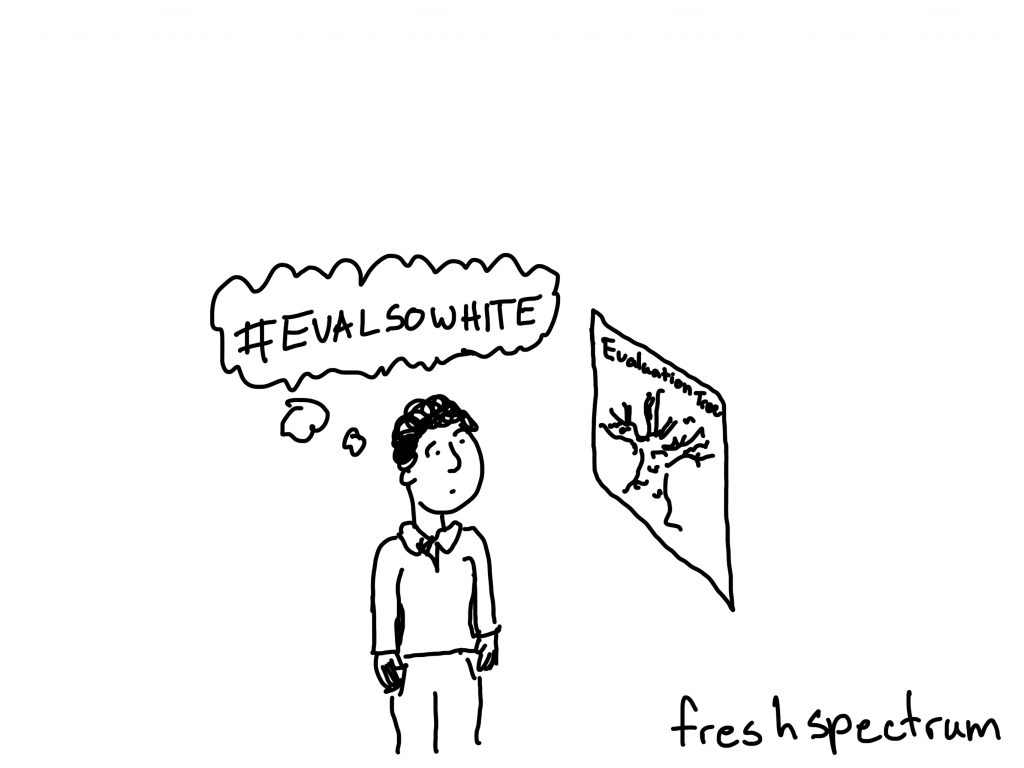
I’m sometimes asked, “Why are there so few people of color in evaluation?” I flip the question: “Why is evaluation so white?” And answer: “Because our labor is actively erased.”

Vidhya Shanker from her AEA365 blog post: The Invisible Labor of Women of Color and Indigenous Women in Evaluation

Join us on March 25 for only our second ever Eval Central UnWebinar.

Hook up your web cam, put on your headset, and bring your expertise.

Each week we’ll facilitate a conversation. Starting with a seed topic, then allowing the conversation to evolve naturally.

Vidhya Shanker will be this week’s special guest. The seed topic: The Invisible Labor of Women of Color and Indigenous Women in Evaluation. Want to prep your mind before the call, I suggest starting with Vidhya’s AEA365 post.

Written by cplysy · Categorized: freshspectrum

Mar 23 2020

Vulnerability (in the Workplace) in the Time of a Pandemic

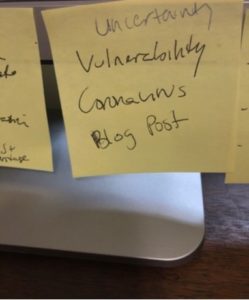
In mid-February, I made a note to myself – a yellow post-it stuck to the bottom of my computer monitor – to write a blog post about vulnerability as it applies to our professional lives in the world of museums.  Vulnerability is something I strive for in my personal life because I know it can lead to better, more authentic relationships.  For that reason, I believe it has resonance for our professional lives in museum work too.

A yellow post-it note stuck to the bottom of a computer monitor. The post-it note lists four terms: "uncertainty, vulnerability, coronavirus, blog post."
Stephanie’s post-it note

You don’t hear a lot about vulnerability in the workplace though.  Vulnerability is often wrongly associated with weakness, and let’s face it, who wants to appear weak in our professional lives?  Reconciling the two—vulnerability in my personal life and my professional life—is still something I am not sure about.  So that post-it note with the words “vulnerability” and “blog post” sat the bottom of my computer monitor, both tempting and repelling me.

Of course, I had no idea what was coming when I wrote the post-it note.  In early March, as the COVID-19 pandemic grew, particularly encroaching on my home near New York City, I added the words “uncertainty” and “coronavirus” to my post-it note, and it beckoned me more strongly.  Now two weeks later—with museums and schools closed— my uncertainty, and that of my team and clients, has only intensified.

Pre-pandemic, I had been thinking about how vulnerability in my professional life is wrapped up in how we learn.  At the end of 2019, I wrote a blog post about the discomfort that comes with learning as we enter the space between not knowing something and knowing something.  If we allow ourselves to be vulnerable and admit that we are uncertain or don’t know something, we can also access our curiosity, which can lead to creativity and problem solving and serve as a bridge between not knowing and knowing.

When I wrote that, however, I was referring to everyday run-of-the-mill uncertainty—not this gut-wrenching uncertainty about the futures we are all facing right now in the midst of COVID-19.  I suspect our workplaces will never be the same again.  The way we think about our work and our colleagues in this moment—this fear and anticipation—may linger with us.  I am still grappling with what vulnerability means for our professional world.  But at least in this moment, I hope allowing for vulnerability will enable us to face these very real feelings in our workplace and open us up to one another with compassion, kindness, and curiosity.

The post Vulnerability (in the Workplace) in the Time of a Pandemic appeared first on RK&A.

Written by cplysy · Categorized: rka

  • « Go to Previous Page
  • Go to page 1
  • Interim pages omitted …
  • Go to page 279
  • Go to page 280
  • Go to page 281
  • Go to page 282
  • Go to page 283
  • Interim pages omitted …
  • Go to page 310
  • Go to Next Page »

Footer

Follow our Work

The easiest way to stay connected to our work is to join our newsletter. You’ll get updates on projects, learn about new events, and hear stories from those evaluators whom the field continues to actively exclude and erase.

Get Updates

Want to take further action or join a pod? Click here to learn more.

Copyright © 2026 · The May 13 Group · Log in

en English
af Afrikaanssq Shqipam አማርኛar العربيةhy Հայերենaz Azərbaycan dilieu Euskarabe Беларуская моваbn বাংলাbs Bosanskibg Българскиca Catalàceb Cebuanony Chichewazh-CN 简体中文zh-TW 繁體中文co Corsuhr Hrvatskics Čeština‎da Dansknl Nederlandsen Englisheo Esperantoet Eestitl Filipinofi Suomifr Françaisfy Fryskgl Galegoka ქართულიde Deutschel Ελληνικάgu ગુજરાતીht Kreyol ayisyenha Harshen Hausahaw Ōlelo Hawaiʻiiw עִבְרִיתhi हिन्दीhmn Hmonghu Magyaris Íslenskaig Igboid Bahasa Indonesiaga Gaeilgeit Italianoja 日本語jw Basa Jawakn ಕನ್ನಡkk Қазақ тіліkm ភាសាខ្មែរko 한국어ku كوردی‎ky Кыргызчаlo ພາສາລາວla Latinlv Latviešu valodalt Lietuvių kalbalb Lëtzebuergeschmk Македонски јазикmg Malagasyms Bahasa Melayuml മലയാളംmt Maltesemi Te Reo Māorimr मराठीmn Монголmy ဗမာစာne नेपालीno Norsk bokmålps پښتوfa فارسیpl Polskipt Portuguêspa ਪੰਜਾਬੀro Românăru Русскийsm Samoangd Gàidhligsr Српски језикst Sesothosn Shonasd سنڌيsi සිංහලsk Slovenčinasl Slovenščinaso Afsoomaalies Españolsu Basa Sundasw Kiswahilisv Svenskatg Тоҷикӣta தமிழ்te తెలుగుth ไทยtr Türkçeuk Українськаur اردوuz O‘zbekchavi Tiếng Việtcy Cymraegxh isiXhosayi יידישyo Yorùbázu Zulu