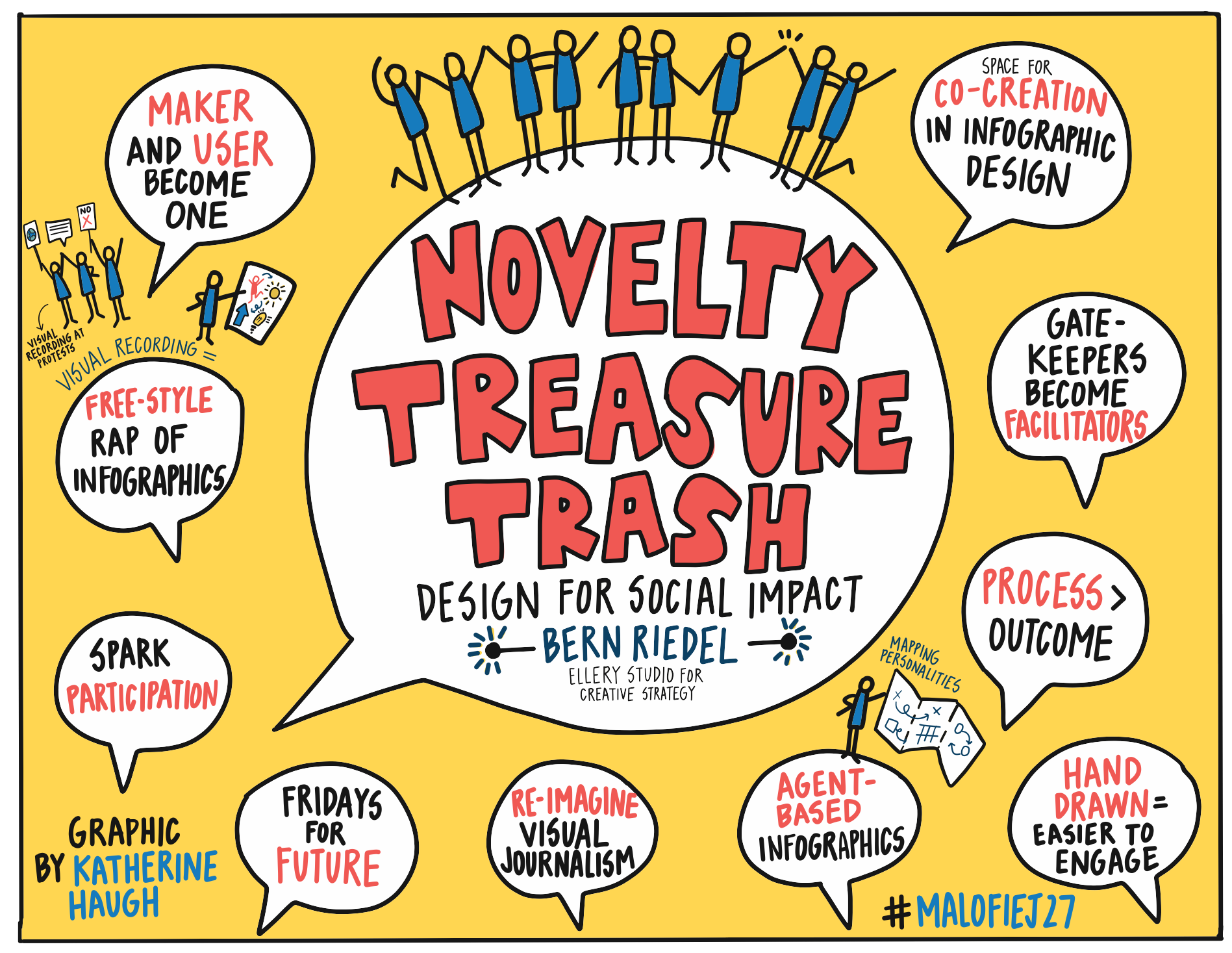
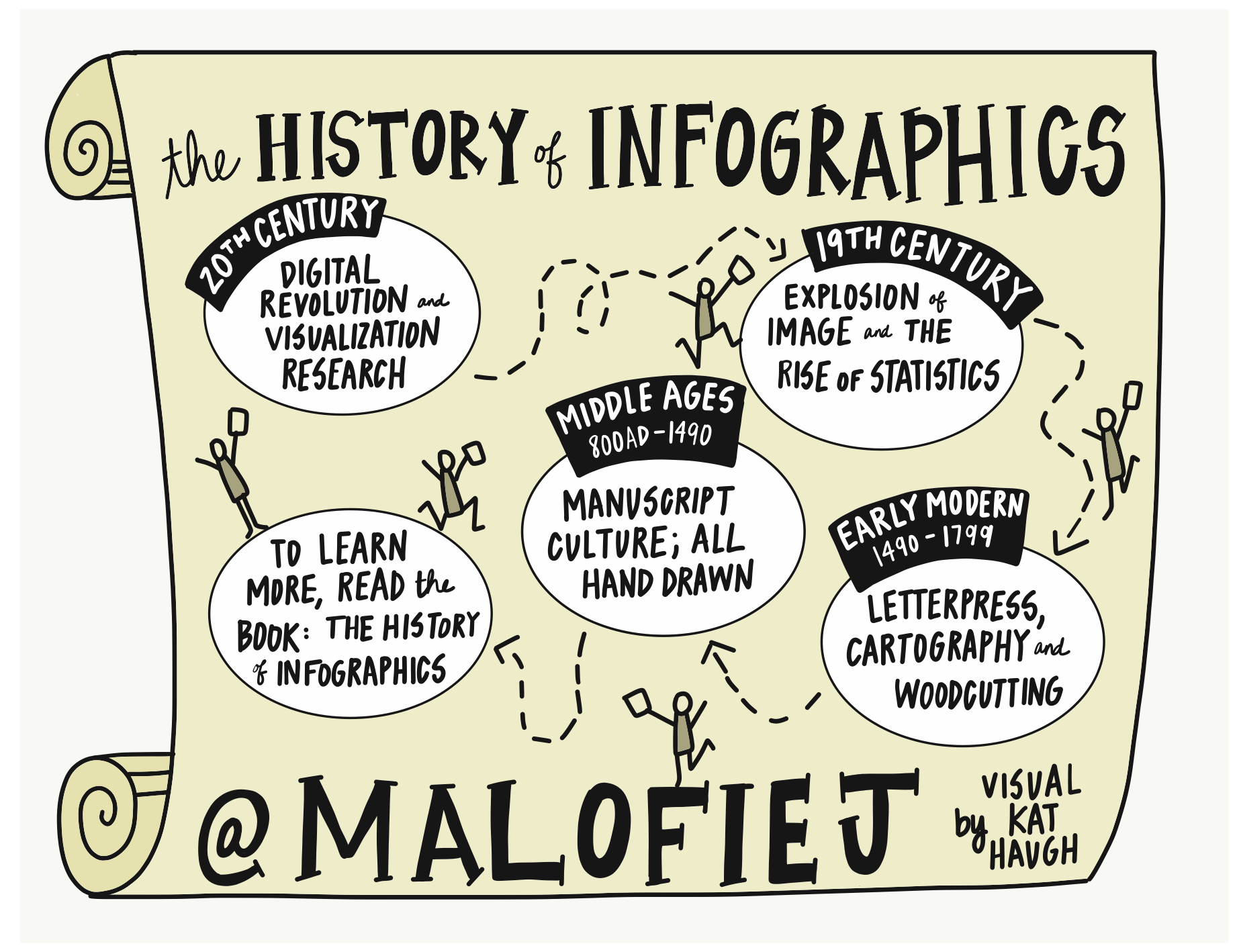
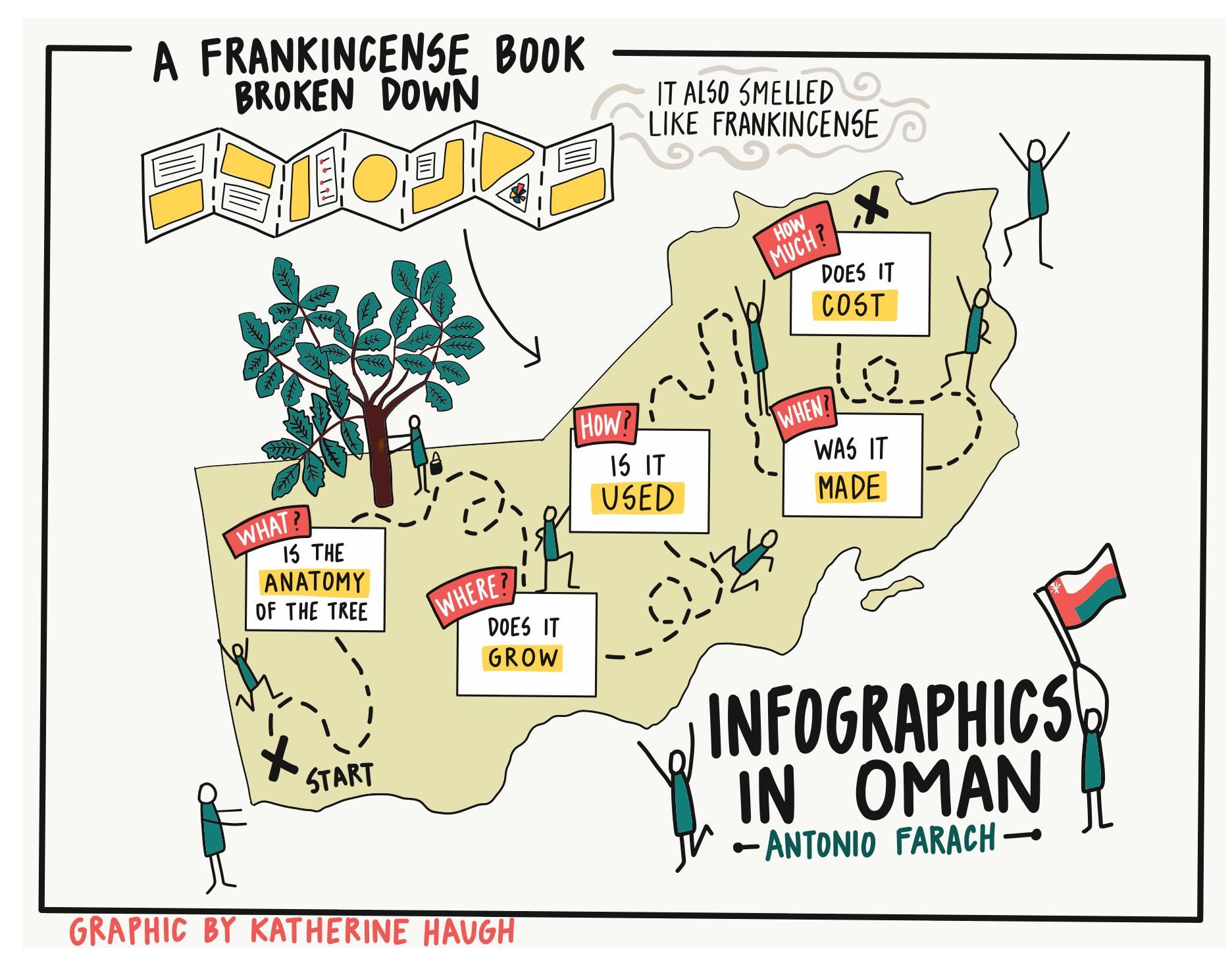
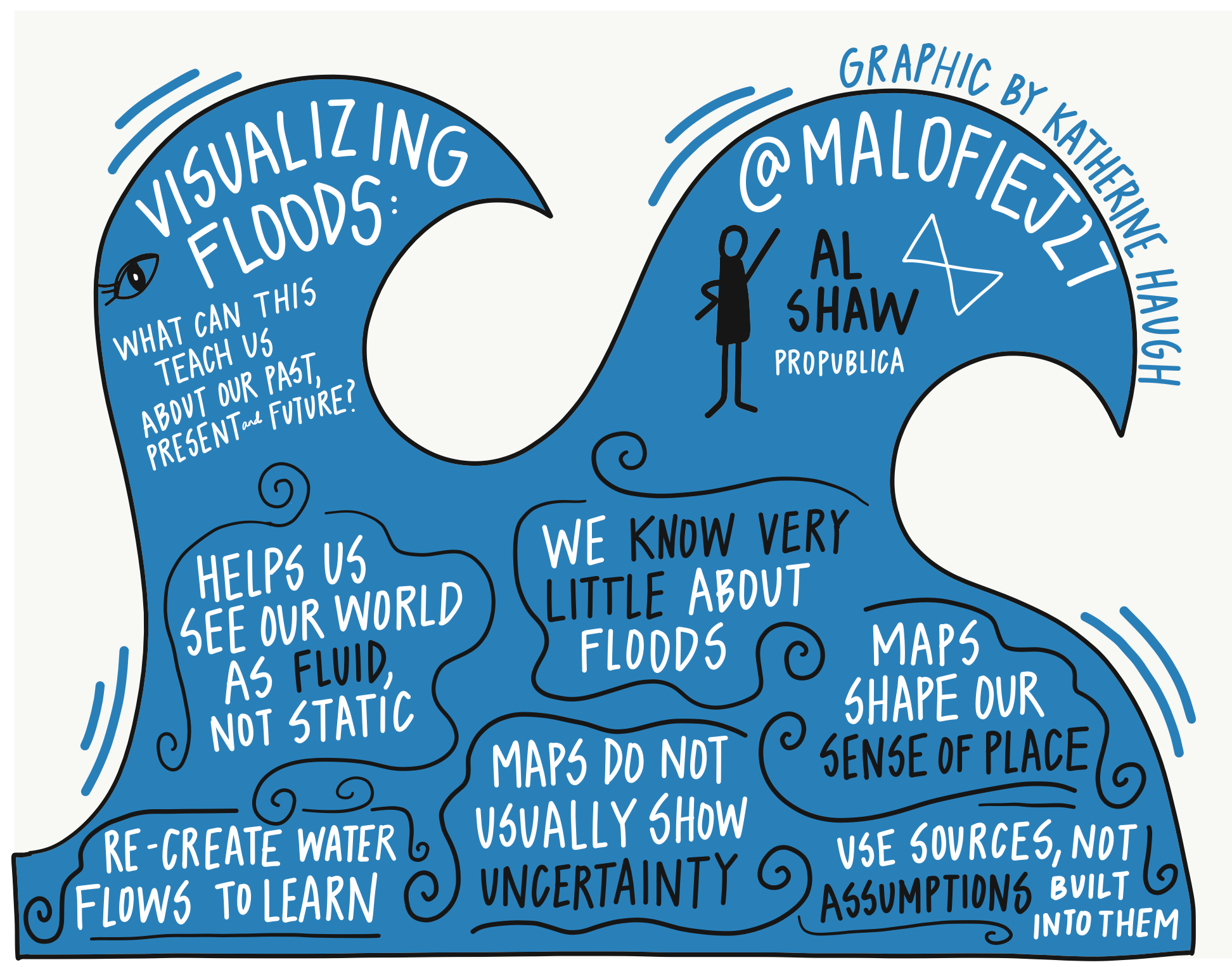
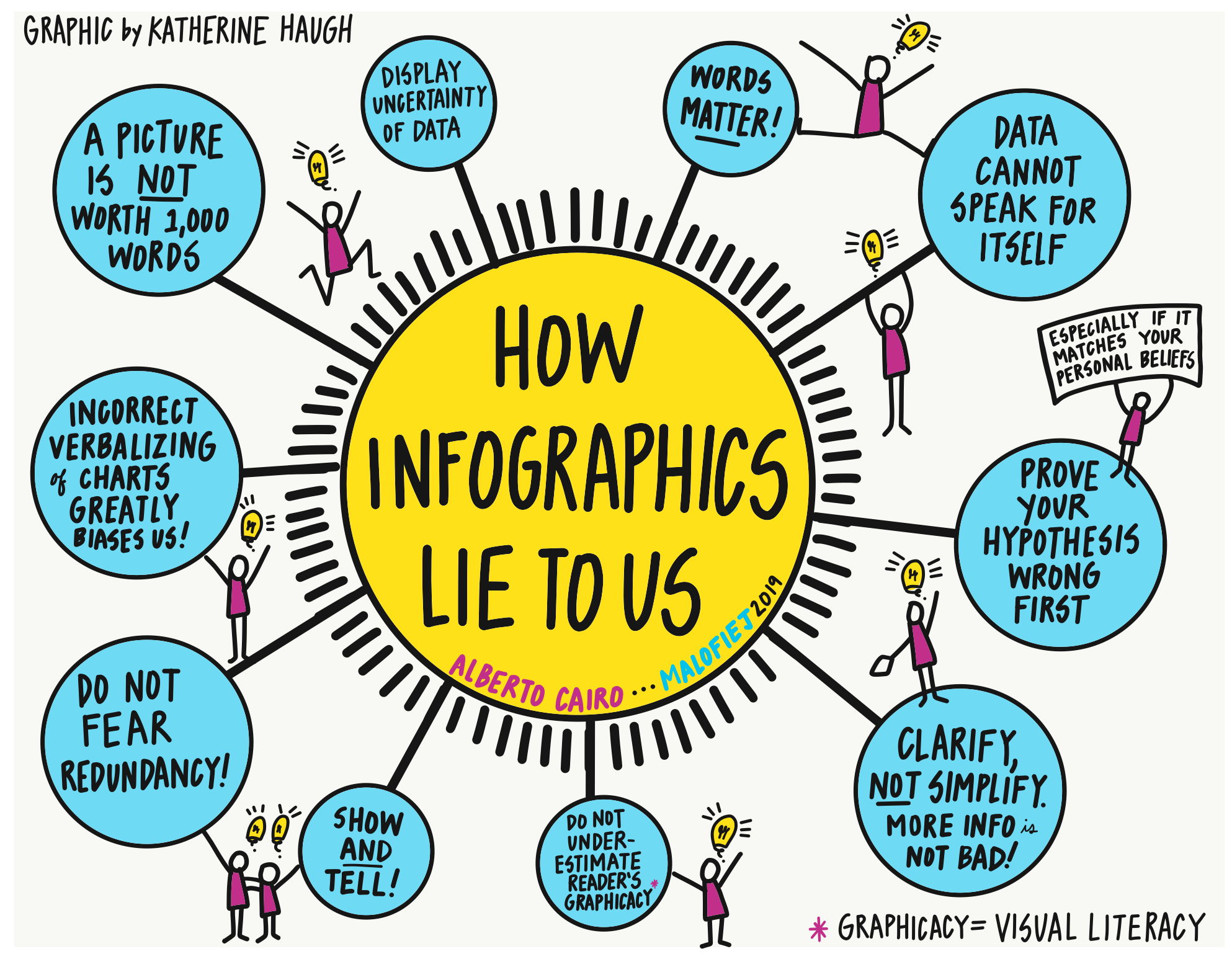
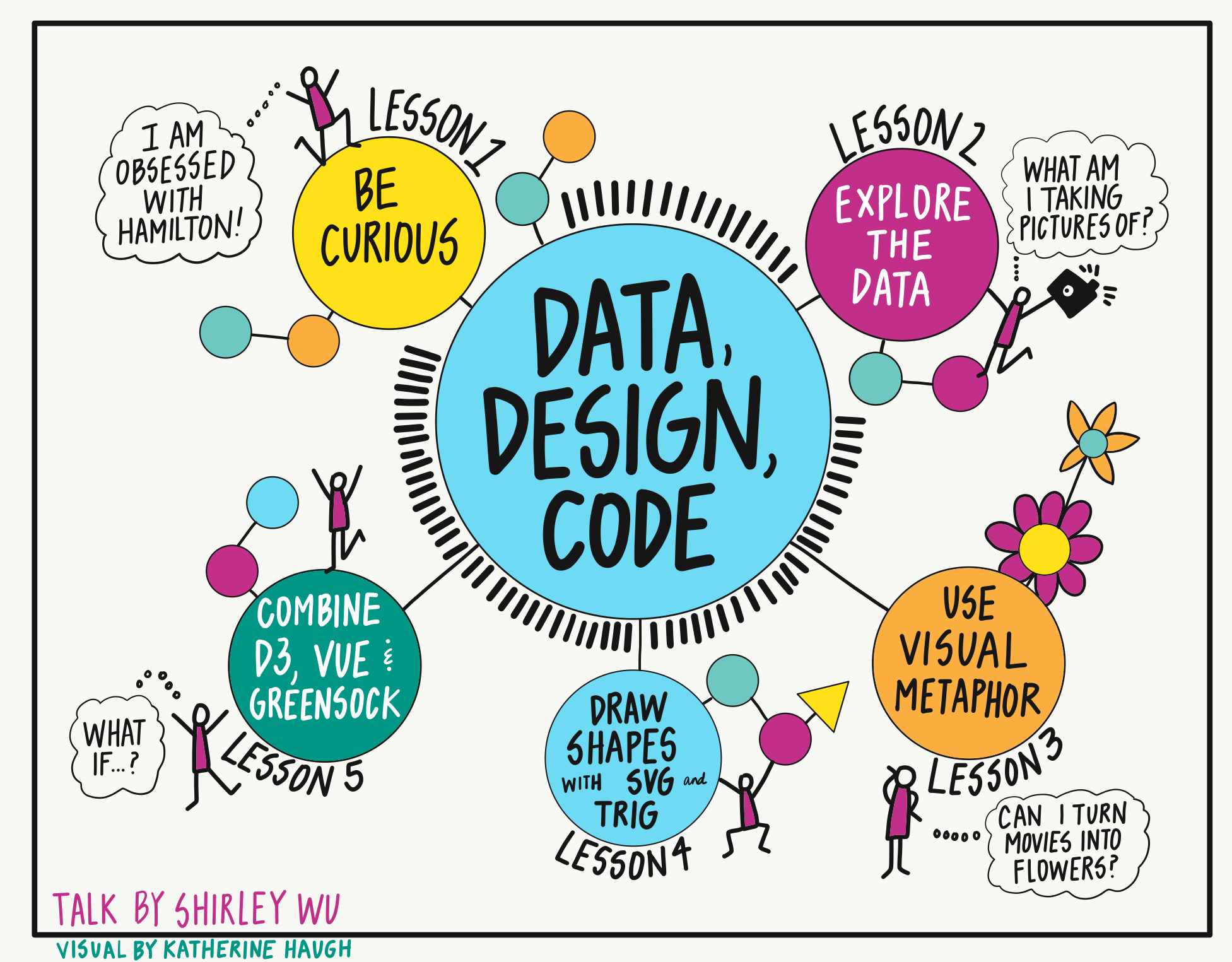
Hi friends! I spent this past week in Pamplona, Spain at Malofiej 2019, an annual gathering of illustrators, journalists, and data scientists. I’m leaving the conference feeling inspired by all of the incredibly kind and incredibly talented people I met. Some of my overarching take-aways include: 1) start with your curiosities and develop the skills needed to answer them, not the other way around 2) the communication of a single message is more important than precision and 3) the more sensory, the more memorable. I’m inspired to engage more senses in my illustration and data visualization work. Take a look at the visual summaries I created of the conference below. 
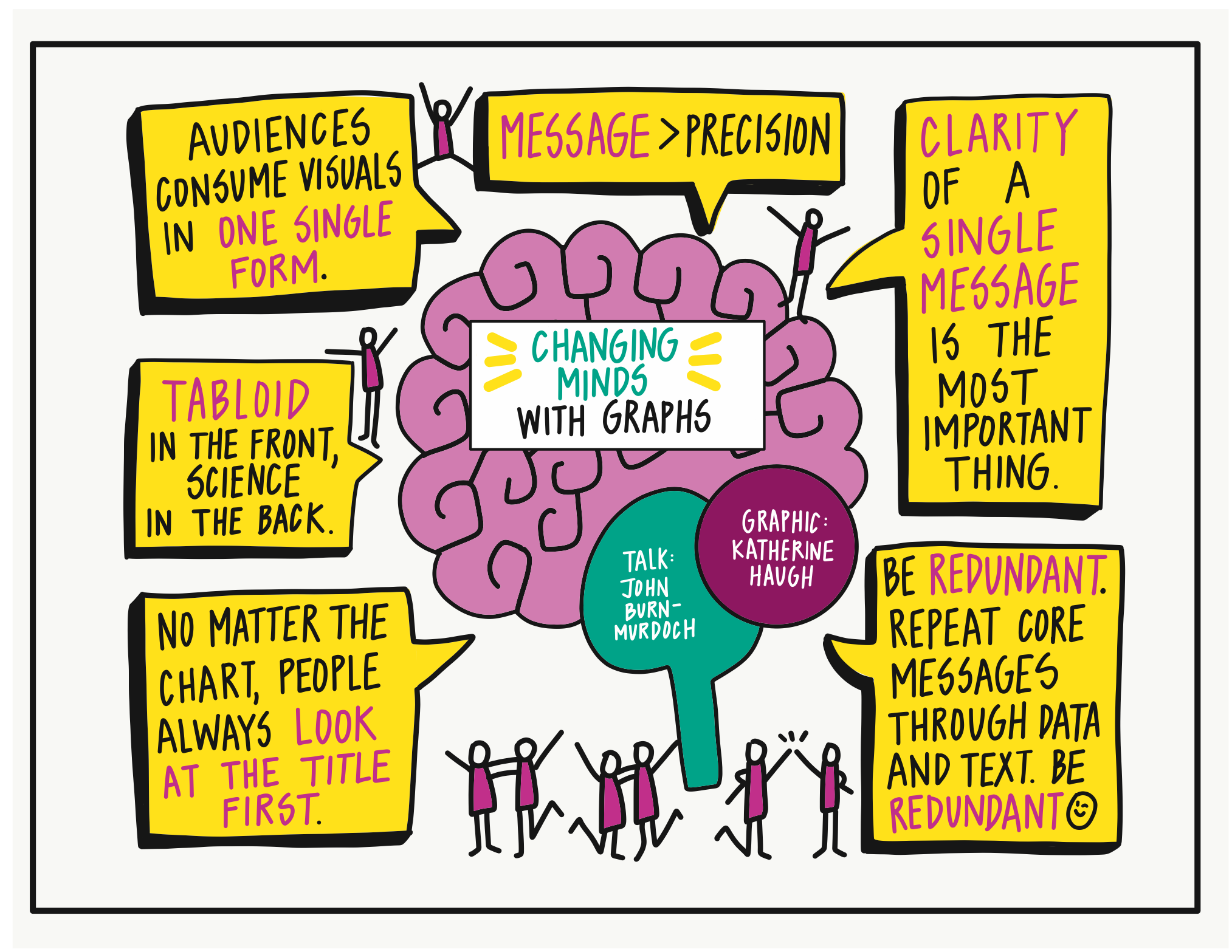
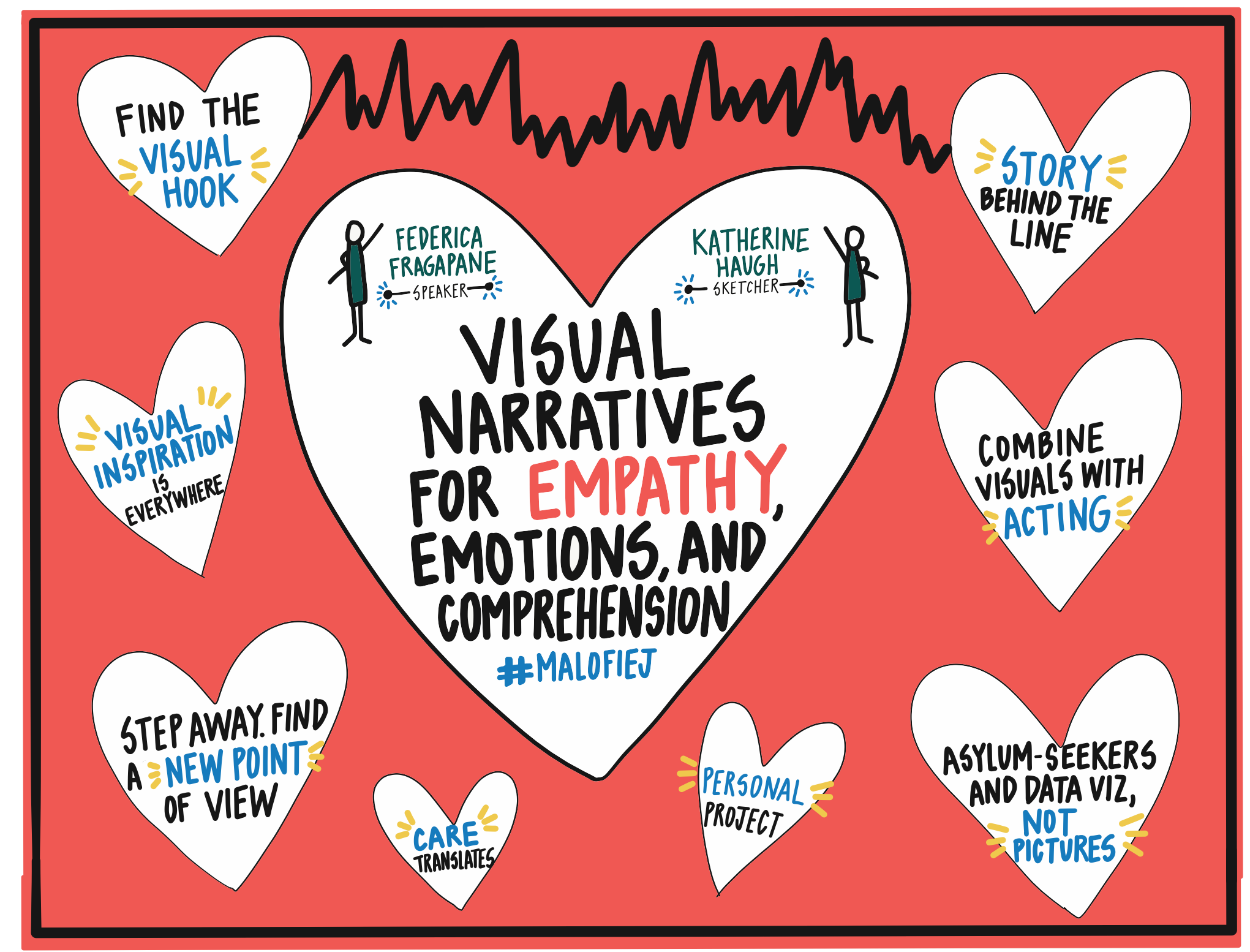
allblogs
Evaluation Is A Gift
Blogging is hard. I’m not sure why I find it such a struggle, though I know I’m not the only one who does. I marvel at the folks who seem to be able to write quickly, eloquently, and insightfully (I can usually manage 1-2 at a time but rarely all three). But I’m choosing to assume that blogging ability is a learnable skill so I keep practicing and looking for ways to make it easier on myself.
One thing I’m trying is to look for synergies between blogging and other creative work that I find easier, to see if I can borrow some of that momentum and inspiration. In this case, that’s the podcast I’ve been producing with my good friend and co-conspirator Brian Hoessler (of Strong Roots Consulting) for the last couple of years. (If you haven’t checked it out yet, the podcast is called Eval Cafe and it’s semi-regular series of casual conversations about things we find interesting in evaluation, frequently with guests! To quasi-quote our introduction, “it’s the kind of thing you might overhear in your local coffee shop if your local coffee shop were frequented by evaluators”.)
(Here is some fun tangential trivia about me and Brian: we have no idea how we met each other. It was definitely in Saskatoon and probably circa 2012-2013, but other than that, neither of us can remember a specific point in time of meeting. We just appeared in each other’s lives as buddies, and the rest is history! There was a coffee shop hang-out early on though.)
Working on a podcast is all kinds of fun and delightful and it gives me a really good excuse to randomly reach out to interesting people who are doing and saying cool things and invite them onto the show. A perfect example of that is back in January I read an AMAZING article on Better Evaluation LINK, called, “What does it mean to ‘un-box’ evaluation?”, by Jade Maloney, an Australia-based consultant doing evaluation and design work in the disability sector. The article is part of the lead-up for the 2019 Australian Evaluation Society conference and it explores their conference theme of ‘Evaluation Un-boxed’, which is officially my favourite conference theme ever (and there have been some good ones lately!). I loved the article so much that Brian and I reached out to Jade right away and recorded a fabulous episode where we all dug into that theme even more.
Definitely go and check out the article as well as the write-up of the theme on conference website and our podcast episode, ‘What’s in the mystery box?’, while you’re at it (don’t forget to scroll down to see what we link in the show notes as well). And also the follow-up article that Jade wrote after we recorded the episode!
We covered a lot of ground in that conversation, but there was one part that I’ve really wanted to go back to because it spoke to something that’s been on my mind quite a lot lately, which is the idea that evaluation is (or can be) a gift.
Here’s what Jade wrote in her first article:
As evaluators, we see evaluation as a gift. We see evaluation’s potential to support effective policy and program design, guide ongoing program development, provide insight into on-the-ground practice, and identify whether intended (and any unintended) outcomes are being realised. We see how evaluation can support better public policy and, thereby, better individual, social and environmental outcomes.
I was so excited to see Jade writing about this, because a few weeks earlier I’d scribbled some notes in my reflection journal along the same lines and was glad to see I wasn’t alone in thinking about it. This is what I wrote and shared again on the podcast:
If I believe evaluation expertise is a gift that can be given, that has three implications for my practice: 1) I have something of value to give. Thinking of something as a gift means assuming it is not worthless. 2) Good gifts are thoughtful and personalized. They are selected and given based on a judgement call that they will be meaningful, useful, and valuable to the recipient. They are also presented in a way that emphasizes the assumption of their value. Bad gifts are generic, impersonal, and presented without thought or attention to how they will be received. 3) While you can prepare a gift to be received well, you cannot assume control over what happens with it once given. It is up to the recipient to decide what it means to them and what they will do with it.
It was that last thought there that really caught me—this recognition that while we might try to influence it, we can’t control how people receive what we do and that’s the way it’s supposed to be. I may work really hard for an evaluation (design or process or deliverable) to be good and take a lot of pride and satisfaction in doing what I do well, and I might do everything I can for it to be useful and used well, but gifts are meant to be given, and giving something means letting go of it. I don’t know that I felt especially possessive of my evaluation work or projects before now, but I definitely didn’t think of them with that degree of… I’m grasping for a word here and the closest one to me at the moment is “liberation”.
There’s an ephemerality in doing evaluation work as an external consultant, which I’d noticed but hadn’t thought through all the implications of. Paying attention to it now is shifting my thinking in subtle ways. It makes me feel even more strongly about the centrality of relationships and collaboration in the work. It nudges my thinking about responsibility, what I am responsible and not responsible for, and reminds me that the people I’m working with are partners who share the responsibility for how evaluation is used, rather than it being my burden to carry alone. It moves me further away from that expert-driven model. It also reinforces the importance of asking, “Who will be using these findings? And how?”, to make sure the gift is given widely and to those who will use it well and be generous themselves. Acknowledging that I don’t control what is done with a gift doesn’t erase my responsibilities in giving it. If anything it heightens them.
Giving the gift of evaluation. Photo by Annie Spratt on Unsplash
I can’t control how evaluation is used, but I can make damn sure that if I give a gift, I’m giving it well, giving it in a way that reflects the value it’s meant to have. If bad gifts are generic, impersonal and presented thoughtlessly, then good gifts are meaningful, personalized, and presented with care and attention. That doesn’t always mean fanfare and fireworks and big glitzy reports that are designed up the wazoo. Some of the best gifts I’ve received have been ones that were just handed to me, a book with a special inscription inside that made it clear it was chosen for me with love and intention or a something small given with warmth and a smile. The key is that it’s a gift that you know is meant for you with thought to what will make it meaningful and useful for you, in what it is and how it’s given. In evaluation we already know that this is important. It’s the reason we care about utilization-focused evaluation and have embraced data visualization and effective reporting strategies. This is just a further reminder for me to keep it personal and personalized. Heck, somebody out there might even want and need the 400-page wordy tome of a report (after all, some of us like socks for Christmas!), though I’m probably not the person to give that particular gift.
So if evaluation can be a gift, if it can be given in a way that is meaningful and useful to someone, then that means it has value and it’s okay to think of it that way. I worry about that sometimes. I ask myself, “Do I really have something to offer here? Is this helpful? Is it doing anything good?” Sometimes evaluation feels like a burden, a challenge, a distraction, a threat, a shadow, or just a very tall mountain to climb. And it can be all of those things too, but it’s still a gift. It’s the gift of permission, time, space, and a way to ask just those kinds of questions—“Is this helping? Is this good?”—and learn something about that.
Just writing this and thinking about evaluation as a valuable gift that deserves to be treated that way in how we do it brings me right back around again to that question of, “Who gets given this gift? Who is it for? Personalized and thoughtfully chosen and presented for whom?” Any time there is distribution of a valuable resource, it becomes important to ask about and examine the equity of that distribution, and these are questions I’m pushing myself to always ask.
I’m happy to report that this is one of the faster blog posts I’ve written. Yay for building on podcast inspiration! And with 19-going-on-20 episodes posted, maybe I’ll even make a regular blogger out of myself yet. (Do not hold me to this.)
Speaking of podcasts (and gifts), here are some of the ones I’m finding the most enlivening and enlightening right now, and maybe you’ll enjoy them too!
-
MEDIA INDIGENA – Rick Harp leads a vibrant weekly roundtable on current affairs from Indigenous perspectives
-
Secret Feminist Agenda – Hannah McGregor furthers a nefarious feminist agenda with a host of fabulous guests
-
The Good Ancestor Podcast – Layla Saad connects with culture-shapers and change-makers to find out what makes a good ancestor
-
Living Myth – Michael Meade draws links between current affairs in troubling times with timeless, mythic stories
sensitizing (dis)comfort
There’s a really great device that Michael Quinn Patton offers for use in developmental evaluation called ‘sensitizing concepts’. He’s borrowed it from qualitative research methods as a way of providing guidance to inquiry in complexity. Here’s a definition he gives in his qualitative methods book that came out a few years ago:
“Sensitizing concepts are terms, phrases, labels, and constructs that invite inquiry into what they mean to people in the setting(s) being studied. … Qualitative inquiry using sensitizing concepts leaves terms purposefully undefined to find out what they mean to people in a setting. Sensitizing concepts are windows into a group’s worldview.”
Elsewhere he elaborates:
“The observer moves between the sensitizing concept and the real world of social experience, giving shape and substance to the concept and elaborating the conceptual framework with varied manifestations of the concept. Such an approach recognizes that although the specific manifestations of social phenomena vary by time, space, and circumstance, the sensitizing concept is a container for capturing, holding, and examining these manifestations to better understand patterns and implications.” (from “Process Use as a Usefulism”, in New Directions for Evaluation, issue 116, 2007)
So if I was studying evaluation or evaluators with this technique in mind, some of the sensitizing concepts I might unearth could be “use”, “accountability”, “learning”, and “stakeholders”. These are all terms and concepts that evaluators use a lot in shaping and describing our work, but we don’t always define them or agree on definitions of them and the act of exploring our definitions and what they mean to us in a given context can be very enlightening as to our underlying assumptions and values. The point of a sensitizing concept is not to nail down exactly what it means but to use it as a jumping-off point for inquiry, a flexible container to give some shape and direction to our learning process. A sensitizing concepts points to something and says, “Whoa, hey, there’s something going on here. This is important to the people involved in this. Watch this space.”
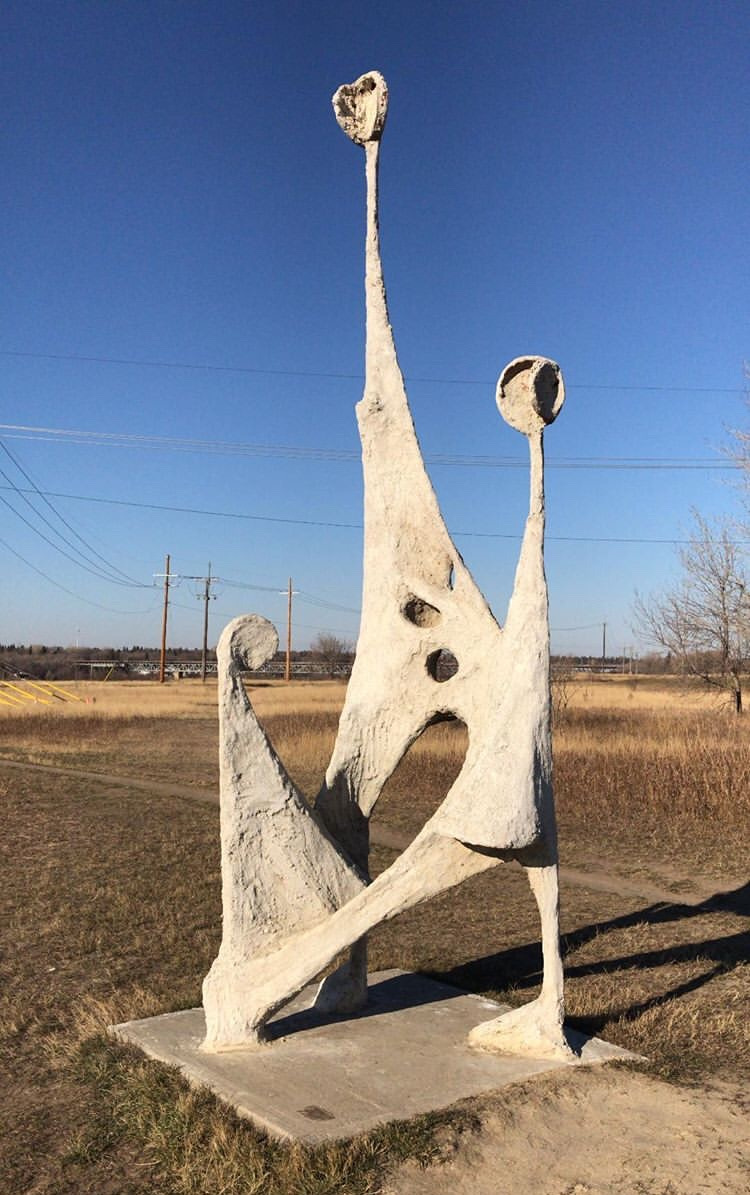
This discomfiting sculpture (which is hiding behind the Education Building at the University of Saskatchewan in an unmarked sculpture garden) is another thing I can’t stop thinking about.
(Another similar device I’ve come across is Arnold Mindell’s “quantum flirts”, or signals and insights thrown at us by the universe as something we should pay attention to, described here by Kate Sutherland. I gravitate a little more toward the sensitizing concepts framing, but it’s useful to have different ways of engaging with and thinking about this idea.)
True to form, I can’t resist applying sensitizing concepts in my own life. I’ve been noticing all those words, terms, ideas, and concepts that keep popping up in my conversations and my field of awareness, like the non-musical equivalent of an earworm. Lately I’ve taken to putting them on post-its as I notice them so that I can spend more time in active reflection with them. Some of the ones on my wall right now are “gifts”, “boundaries”, “habits”, “abundance”, and “comfort/discomfort”.
That last one has been on my mind a lot lately. I started noticing it well over a year ago, coming out of an evaluation I was working on where some curiously-contrasting findings were emerging. One set of findings was about how much the participants (English-language learning older adults) valued how the program was relaxing and low stress to be in. The other set of findings was about how some of the actual outcomes of the program (social connections, language learning) were occurring really strongly around one of the most stressful and un-relaxing parts of the program (public performances). These findings weren’t in conflict though. There wasn’t a split among the participants themselves and it wasn’t a case of participants wanting one thing and the program implementation pushing something else. Rather the facilitators were creating classroom experiences that were comfortable, low stress, and welcoming while also providing opportunities for participants to take on different levels of challenge at their own pace. The participants, while enjoying the relaxed atmosphere where nobody had to be an expert, would then often set their own standards for achievement, asking for more practices and rehearsals and setting challenges for themselves like memorizing their scripts. The performances were still stressful, but rehearsing and overcoming the difficulty together helped the participants bond and gain confidence in their ability to speak without being perfect. The comfortable and uncomfortable aspects of the program worked together.
Not an earth-shattering conclusion, actually! It seems obvious in retrospect and in keeping with theory around group cohesion and principles of adult learning. It’s also a good example of emergent program design, since we never set out to make performances part of the program nor would we have likely induced the same people to participate by advertising it that way. And a great reminder of the power of moving from questions like, “How do we create X outcome?” to ones like, “What conditions tend to support the emergence of X outcome and why?”, since an answer such as, “Have people do public performances to enhance social bonds and language learning”, speaks to what you’re trying to do but, “Create environments where people feel comfortable and safe and then give them opportunities to step into discomfort and challenge on their own terms”, tells you how to get there (since what mattered was not the performances themselves so much as how they were experienced).
It also speaks to the flexibility and utility of a principle over a rule, which Michael Quinn Patton distinguishes between in his Principles-Focused Evaluation, where a rule tells you exactly what to do in a specific situation while a principle gives you less specific but still guiding advice that can be adapted across many different contexts and situations. It’s this quality of a principle that I’ve found with the comfort/discomfort concept and the way it keeps popping up to guide my practice and self-learning. I’ve started seeing it everywhere, this use of comfort/discomfort as a managed experience for learning and change, either by creating a space that has proportional elements of both or an iterative process of moving between comfort and discomfort cyclically as part of the learning process. I see it in any theory that talks about “optimal zones” for learning/performing, like the inverted-U of the Yerkes-Dodson theory or Vygotsky’s zone of proximal development. I see it in eco-cycle planning and the chaordic path. There was a conversation on the Art of Hosting listserv about cognitive load theory in instructional design and it came up there as well in reference to comfort zones and balancing cognitive load. I noticed it in my own guiding principles of “be kind” and “be curious” (where kindness tells me to get comfortable and curiosity tells me to get uncomfortable by leaving the known in order to open up to the unknown). It turns up in a somewhat different way in activist spheres through ideas like, “Art should comfort the disturbed and disturb the comfortable” (which can be attributed to activist and poet Cesar A. Cruz and not Banksy, though Cruz was also possibly riffing off the original satirical version about newspapers).
Having tuned into comfort/discomfort as a generative conceptual space for me with regard to learning and change, I can use it intentionally as a way to explore that deeper. I can ask myself questions around it, both in planning (“how can I use this concept in the design of learning experiences for myself and others?”) and in reflection (“what am I learning about this concept through interacting with it?”).
When it comes to my own learning process, I can ask myself:
Am I comfortable or uncomfortable? What am I comfortable with? What am I uncomfortable with? What does “comfort” look like for me? And “discomfort”? What’s the relative balance of these two experiences in my life? Do I need more comfort? What would help me feel more comfortable? What opportunities can I give myself to be uncomfortable? In what ways am I moving between states of comfort and discomfort? What is shaping and directing this movement? How is this impacting the quality of my learning experiences?
And when am I working with others, I can think about:
Who is comfortable? Who is uncomfortable? Why? What are they comfortable (or uncomfortable) with? What might lend itself to more comfort? What opportunities are available for them to be uncomfortable? What opportunities can I offer for people to engage with discomfort? How can I create spaces where people can manage their own comfort levels? In what ways are people moving between comfort and discomfort, and to what ends? How is that interacting with the learning experience?
As I spend more time playing with this idea, my understanding of it will get deeper and more sophisticated (at least, that’s the hope) and it gives me a way of organizing a lot of incoming data I’m receiving, a way to focus in on “How are these things connecting or not connecting with this sensitizing concept? What are the patterns and themes? What doesn’t hang on this concept entirely or at all and needs something else?” Or I may move beyond it entirely (stop being “sensitized” by it) as I encounter more useful and engaging concepts that take my learning to another level.
(And if you’re wondering, “But, Carolyn, how do you avoid getting so caught up in these ideas that you force them onto situations where they don’t fit or see patterns and connections that aren’t really there? How do you know it’s not just all in your head?”, then I applaud your critical questioning and offer that this is why working in collaborative, interdependent ways is so important because by doing things like bringing these ideas up in conversation, like putting them in a blog post where other people can interact with them, ask questions, and offer their own insights, they can be tested and built on and strengthened and discarded through discussion. So in a more formal evaluative process, these concepts would be identified and explored within the group of people engaged in the evaluation, not by one person alone.)
I have a complex relationship with my back

Photo by Charles 🇵🇭 on Unsplash.
I hurt my back last week.
This is not news. I’ve been hurting my back since 2013.
About six months after I finished grad school, toward the end of my work-day, I noticed that my lower back was feeling sore. I hadn’t done anything in particular to it and I assumed that when I got home I’d put some heat on it, rest, and feel better the next day, the way I always had before. Except that it didn’t feel better the next day. If anything it felt worse.
It was a couple of months of constant pain and stiffness before I accepted that resting and heat and gentle stretching on my own was not going to fix the problem. I sought out a massage therapist (made it worse at the time) and then a chiropractor (made it better) and finally a physiotherapist who assessed my whole body and how it moved and gently broke it to me that nothing was working the way it was meant to. All the parts that should be strong and hold me up were weak and shaky. All the parts that should be supple and flexible had become rigid and stiff to compensate. I’d spent my entire life up to that point working my body into a pattern of habits that was unsustainable, culminating in two-and-a-half years of grad school where I poured every waking hour into my studies and research, often sitting in the same chair without moving for hours at a time, working ten- to twelve-hour days and six or seven-day weeks, with the occasional exhausted flop of curling up in bed for a couple weeks in between major deadlines.
Oops.
So last week, when I started to feel a nagging stiffness and ache in my lower back as I tried to move around the house and get my day going, I thought I knew exactly what to do. I popped my ibuprofen, grabbed both a heat pad and an ice pack to see which worked best, tried to improve my posture throughout the day, and got in to see my RMT and chiro as soon as possible. I’ve been coping with this for over six years now (making incremental strides toward fewer and less severe flare-ups as I go) so I’ve been getting to be quite the expert in the way my body is now. What I’m not an expert in is the way I’d like my body to be.
Every time I hurt my back like this, I worry that this time it’ll be permanent. That the pain won’t gradually fade away and function return. And every time I get injured, it’s a little bit different. The things that worked the time before don’t work the same. At one point, a couple of quick adjustments from the chiropractor would bring immense relief. All I needed was to get a seized-up joint to release. This time it seemed to be an inflamed disc, something that massage and chiro can’t really touch, except to try to get the rest of my body to calm down while the disc sorts itself out.
After a couple of days of waking up in pain and struggling to stand first thing in the morning (the chiro tells me that the disc fills with fluid overnight, making it most painful in the morning and better throughout the day as I get blood flow through the area), I make a decision. I decide to accept this moment as a gift. The universe is once again offering me both opportunity and motivation to make a significant change in my life, and I’m going to take it.
I’ve been playing with the idea of evaluating my progress to recovery since the first twinge of pain. It’s impossible to avoid. I’m in a novel situation (new iteration of back pain) and I need to adapt. Therefore, I must evaluate. While I go about my day, I take stock of my physical experience, identifying indicators, running experiments, and assessing my progress toward restored well-being. The indicators are easy: how much pain do I feel, what type, and in association with which attempts to function? Walking around is fine and sitting isn’t too bad (until I try to stand up again), but reaching forward, bending down, and getting up and down are where it really hurts. After each of the interventions I try (heat, ice, lying flat on a hard surface, stretches, etc.), I go through a repertoire of movements and classify each experience under ‘worse’, ‘better’, or ‘no change’.
What I learn from this is that I can’t tell what’s really helping and what’s not. It keeps changing. One day ice is better than heat. The next day heat is better and ice is terrible. About midweek, I go grocery shopping (a few blocks of walking away) and by the time I come back, the pain is almost completely gone (though it reappears by the evening after I’ve been sitting for too long again). I’d been out on a walk the day before without so much relief and, when I wake up the next day in the same amount of pain as before, the walk I take that day doesn’t help nearly as much. Was it something about slowly pushing the grocery cart around while I picked up arugula and milk with Sarah McLachlan playing softly in the background that was the real solution? Who knows. There were too many variables to pin it down. My body is a complex system with pain as an emergent property.
At this point, I’ve tried the obvious things. I’ve consulted the experts. Now it’s time to change the way I’m thinking about what’s happening.
Since the first time I found myself wincing through a familiar movement, my strategy has been the same: identify the source of problem, intervene, return the system to previous state of comfort and function. Then, after the desired equilibrium has been restored, identify root causes of problem and implement preventative procedures (honestly, get a gym membership already, Carolyn). I’ve been pursuing that strategy for six years. I’ve had some modest successes in terms of reducing the overall number of days and hours per year I spend in debilitating physical agony (now there’s a metric), so I could chalk that up as a sign of success with room for improvement and continue to pursue the original strategy, placing renewed emphasis on the prevention component, which, despite six years of intention, I’ve barely moved the needle on. Or I could try something different, since I’m getting bored with fruitlessly nagging myself toward self-improvement while living under the threat of inevitable future pain.
There are several problems with trying to restore the system of my body to its previous state. For one, it’s impossible. If I accept my body as a complex, fluid system, then I’m not driving back down a road to correct a missed turn, I’m steering through rapids on a kayak. I can’t go back. Also, even if I could, my previous state was a precursor to my current state, with all its flaws already present if not actively raging. Better to keep moving forward. In this case, the entire strategy of intervene-stabilize-prevent is suspect. Not to mention ineffective, since I’ve demonstrated time and again that when I do return to “normal” (a new normal, at least), I’m terrible at the prevention side of things, shifting the pattern that put me here in the first place. And, no wonder, because at that point I’ve killed off the feedback loop (pain) that was giving me insight into the progress I was making, leaving nothing in its place to inform the next stage, and my only option then is to follow prescriptive advice about what I ought to be doing with my body and hope it takes. (It hasn’t. Still no gym membership.)
So instead of investing the bulk of my effort into restoring myself to a pain-free state, I have accepted pain as my indicator, not my outcome. My goal is not to be pain-free, my goal is to change my physical habits. Aside from a minimum of pain management tactics to keep myself functional enough to get by, I stopped experimenting with ways to make my back stop hurting and began experimenting with ways to introduce sustainable changes of habit in my daily life, trying to live the way I would want to be as if I were already pain-free. (The indicators for this are harder to come by and still emerging.)
This opened up a whole new horizon of opportunities. And since I’m already in a state of general disruption, interrupting old habits and substituting new ones has never been easier. I literally can’t sit the way that I normally would sink into without thinking, so I get to practice a new way of sitting (informed by my newly-renewed Alexander Technique practice, which is all about shifting sensorimotor habits). I can’t get up in the morning and go straight into emails for the next hour or more, so it’s a chance to stretch out while listening to a podcast or walk up to the pool for a swim instead. These are all things I’ve tried to implement before, with variable success and always as a struggle and a chore to remember and keep on top of myself to do it. The difference in what this feels like is subtle to measure and there are still too many factors to pin anything down with absolute certainty. That my back pain substantially subsided as of this morning could be a total coincidence and is most likely a partial one. It’s only been a week (less since I made this shift), I’m not going to claim miracle breakthroughs. It remains to be seen if new patterns settle or old ones re-emerge like acid reflux after midnight.
But, if nothing else, I’m enjoying the freedom of the cognitive shift. To have stopped waiting until I got better in order to get well, to have moved right on to the good stuff, the place where change happens.
UPDATE: I shared this post with my Alexander Technique instructor, Mark Vasak, and he was inspired to write his own commentary on it! I’m appreciating the feedback both as an extension on how I can think about my body and its movement as well as reinforcement for the analogy I see between what I am experiencing on an individual physical and psychological level, and how change works on a systems level. It’s fractal.
Also, pleased to report that my back is doing much better.
Winter Doldrums and the New Year
Not sure what the weather is like where you are, but here in Georgia, its raining. AGAIN! I think it has been raining for 6 weeks straight. We are on track to have the second rainiest season Georgia has ever had so I may not be exaggerating all that much.
Many years ago, my husband and I visited on of my sisters in Oregon. It was a rare week there; it was sunny and mild and oh-so green. Dan was just about to pack up and head to out west when my sister said, “Dan, there is a reason it is so green.” That is so true right? We cannot have green grass and healthy crops without rain and everyone knows that Oregon gets a lot of it.
Last year at this time I wrote about Seasons. So much in my personal life was changing. I had big decisions to make about the business too. No doubt, the same will be true in 2019. That is just the nature of life.
When I look at my vision board from last year (and no, you can’t see it), there are just a few major goals I realized. There is so much more I want to accomplish, both personally and professionally and the time seems to pass more quickly each day. Can you relate?
There is so much good work that needs to be done in the world.
So, I resolve to get to work to make a difference. I hope to be kinder and healthier; to laugh more and take more time off. I hope to add more joy and less stress to any situation I am in. I want to help you and others do good work, the kind that really changes communities. Here are CES we are recommitting to our tag line, Partnering for Social Change. Won’t you join us?