• Skip to main content
  • Skip to footer
  • Home

The May 13 Group

the next day for evaluation

  • Get Involved
  • Our Work
  • About Us
You are here: Home / Archives for cplysy

cplysy

Apr 28 2021

What are Social Objects? [Behind the Cartoon Podcast]

So I decided to try out podcasting. Today’s first ever episode is about Social Objects. Why? Because it basically covers the theory behind my cartooning.

Show Notes:

  • Just in case the embed above is not working, you can find the podcast by clicking here.
  • Social Objects: Everything You Ever Wanted to Know! (2007 blog post on gapingvoid.com, updated in 2017)
  • Why some social network services work and others don’t — Or: the case for object-centered sociality (a 2005 blog post by Jyri Engeström who was the inspiration for Hugh McLeod)

Related Cartoons
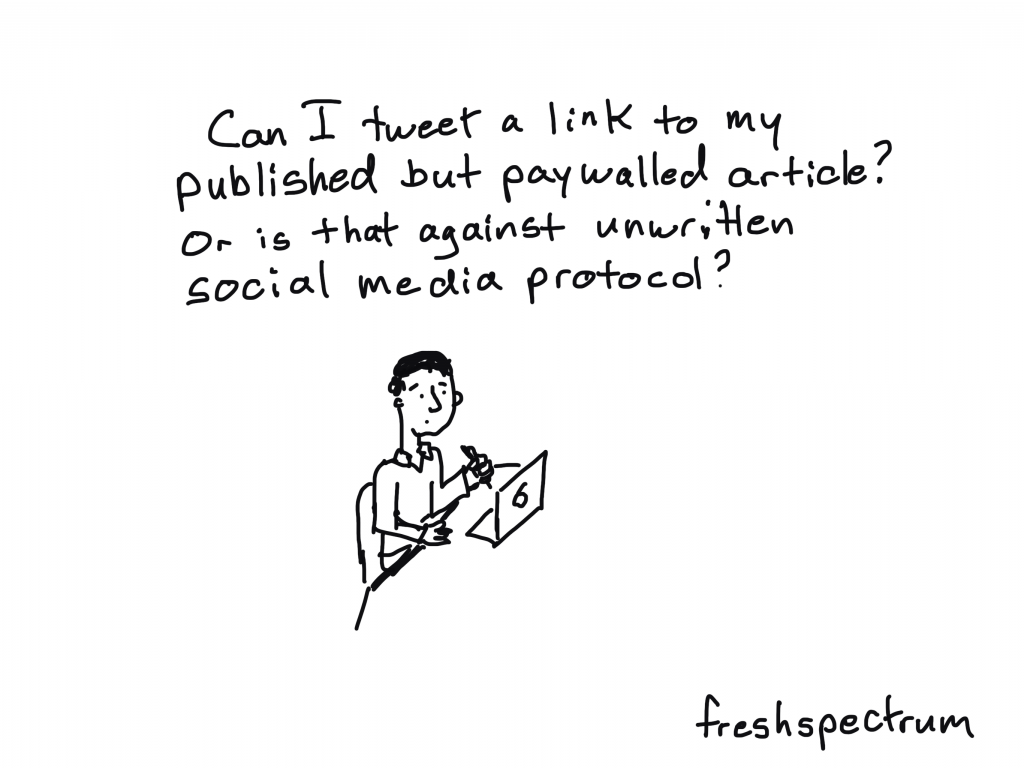
freshspectrum cartoon by Chris Lysy. "Can I tweet a link to my published but paywalled article? Or is that against unwritten social media protocol?"
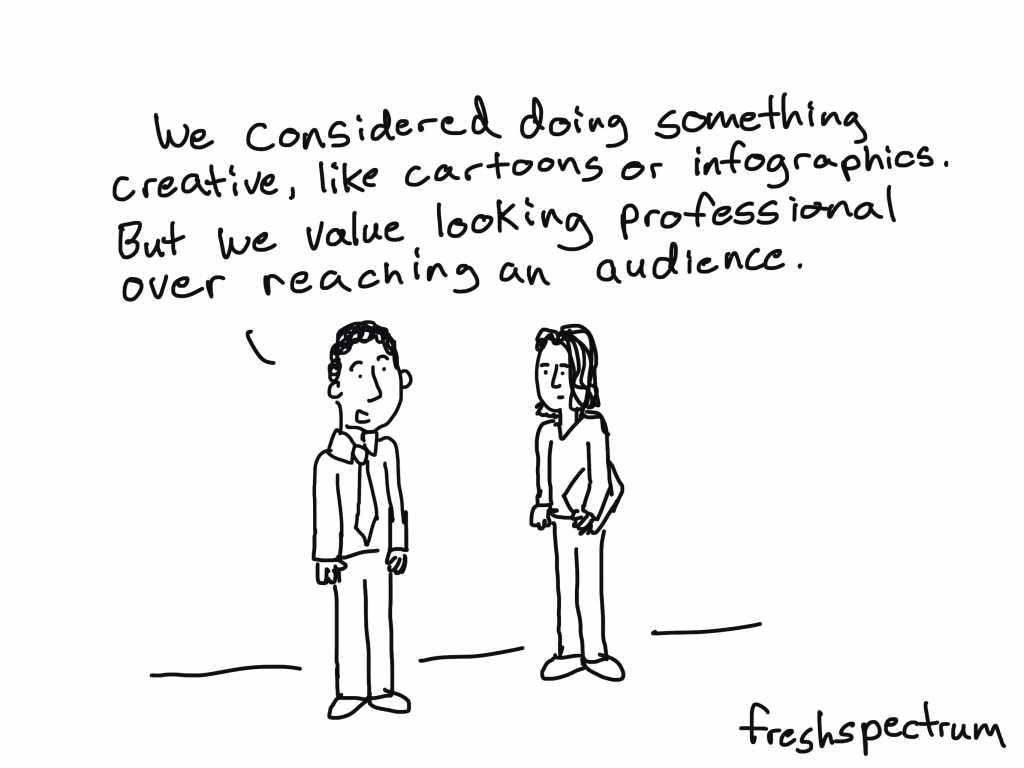
freshspectrum cartoon by Chris Lysy. "We considered doing something creative, like cartoons or infographics. But we value looking professional over reaching an audience."
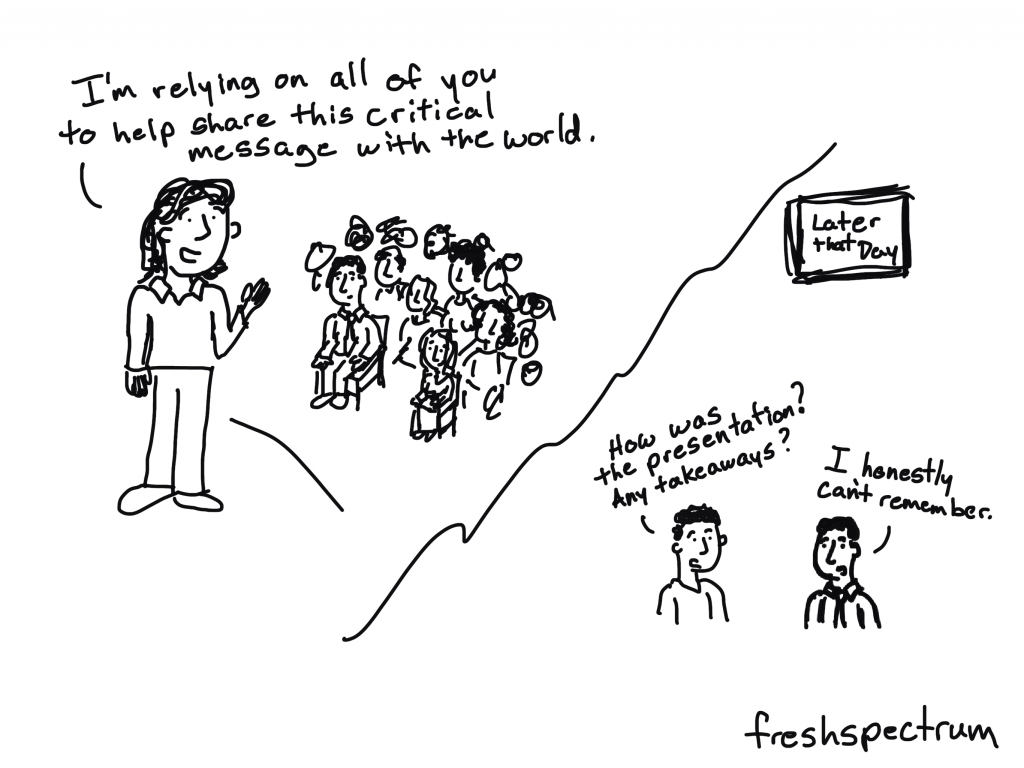
freshspectrum cartoon by Chris Lysy. "I'm relying on all of you to help share this critical message with the world."
Later that Day
"How was the presentation?  Any takeaways?"
"I honestly can't remember."
freshspectrum cartoon by Chris Lysy.
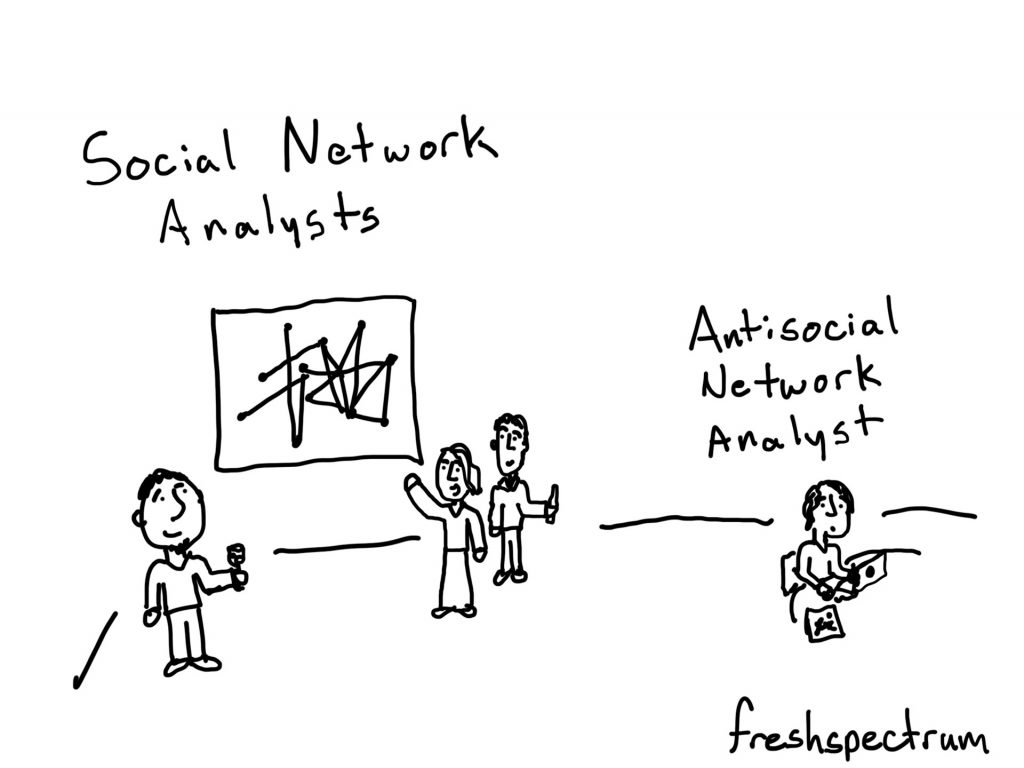
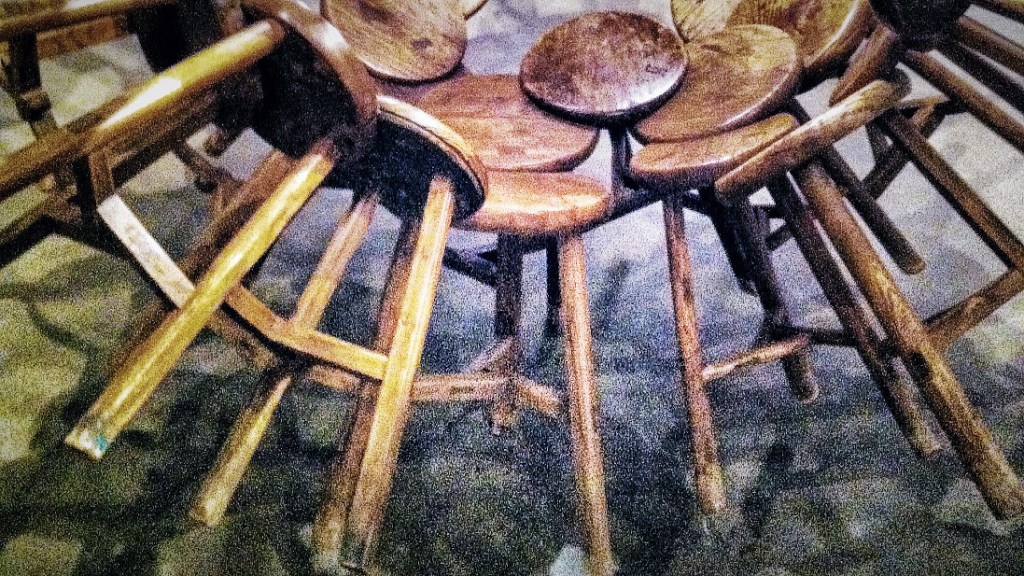
Social network analysts (3 people hanging out by an SNA diagram). 
Antisocial Network Analyst (1 person sitting alone at their computer).

Welcome to behind the cartoon. 

This is a podcast about the people and ideas that have inspired the cartoons that I draw on my blog at freshspectrum.com.

My name is Chris Lysy. 

Today’s question.  What are Social Objects?

***

When you think about social networks, what pops into your mind?

You probably see one of those little diagrams with little dots or nodes and connecting lines.  Or maybe even little people icons with lines drawn between them.

Usually we think about these networks as people connecting to other people.

But what this vision misses is the way in which people also connect to objects.  

Often, it’s their connection with those objects that connect them to other people.

Think about it.

Let’s say you have a group of friends you met when you joined a softball league.  The people on the team all became part of your friend network.  But it was the team, and the league, that facilitated the network’s creation.

There are lots of interesting people with interesting ideas.  But it takes a person putting those ideas into some type of object before most other people will discover them.  Books, journal articles, podcasts, blogs, and presentations are all different types of social objects.

And yes, my cartoons are most certainly designed to be social objects.

I learned about the concept from a cartoonist by the name of Hugh Mcleod who goes into a good bit of detail on his blog at gapingvoid.com.  I’ll share one of his blog posts in the show notes.

Hugh applied the idea of social objects to his own cartooning process, focused mostly around business topics.  

And that’s also what I try to do, but with academic topics and concepts.

Most academic fields and subjects are, in my opinion, under illustrated.  When most work is shared behind closed doors in conference presentations and through journal articles, illustration is only really quasi-important.

But on the web, things are different.  The digital world is a visual world.  The inability to depict complex or complicated subjects is problematic, because it limits the spread of ideas.  Often incredibly important ideas.

So I draw cartoons, attempting to illustrate important ideas.  And as a cartoon, that idea spreads much further than it would without the cartoon.  When a cartoon works, you find it in social media posts, blog posts, and presentations.  It becomes an object with an orbit and connects people in a way that no journal article ever will.

Now that’s just what I’m doing with the concept.

There are all sorts of social objects you can create to spread your ideas.  Infographics, podcasts, and webinars all travel pretty well digitally.

What kind of object can you create to help your ideas spread further?

***

Thanks for listening.  Before you go about your day, check out the description for a link to today’s show notes.  In addition to links that include more info on social objects, you’ll also find a few new cartoons inspired by this topic.

Please enjoy and share.  And if this episode inspires you to create your own social object, leave me a comment, I would love to see what you created.
Written by cplysy · Categorized: freshspectrum

Apr 27 2021

How to Organize Your PowerPoint Slides by Adding Sections

Want to organize your PowerPoint slides a little better? There’s a behind-the-scenes trick that I love using in my own presentations: Sections!

In March 2021, I was speaking with GEDIs about dataviz tricks for presentations. (The GEDI program is the Graduate Education Diversity Internship within the American Evaluation Association.)

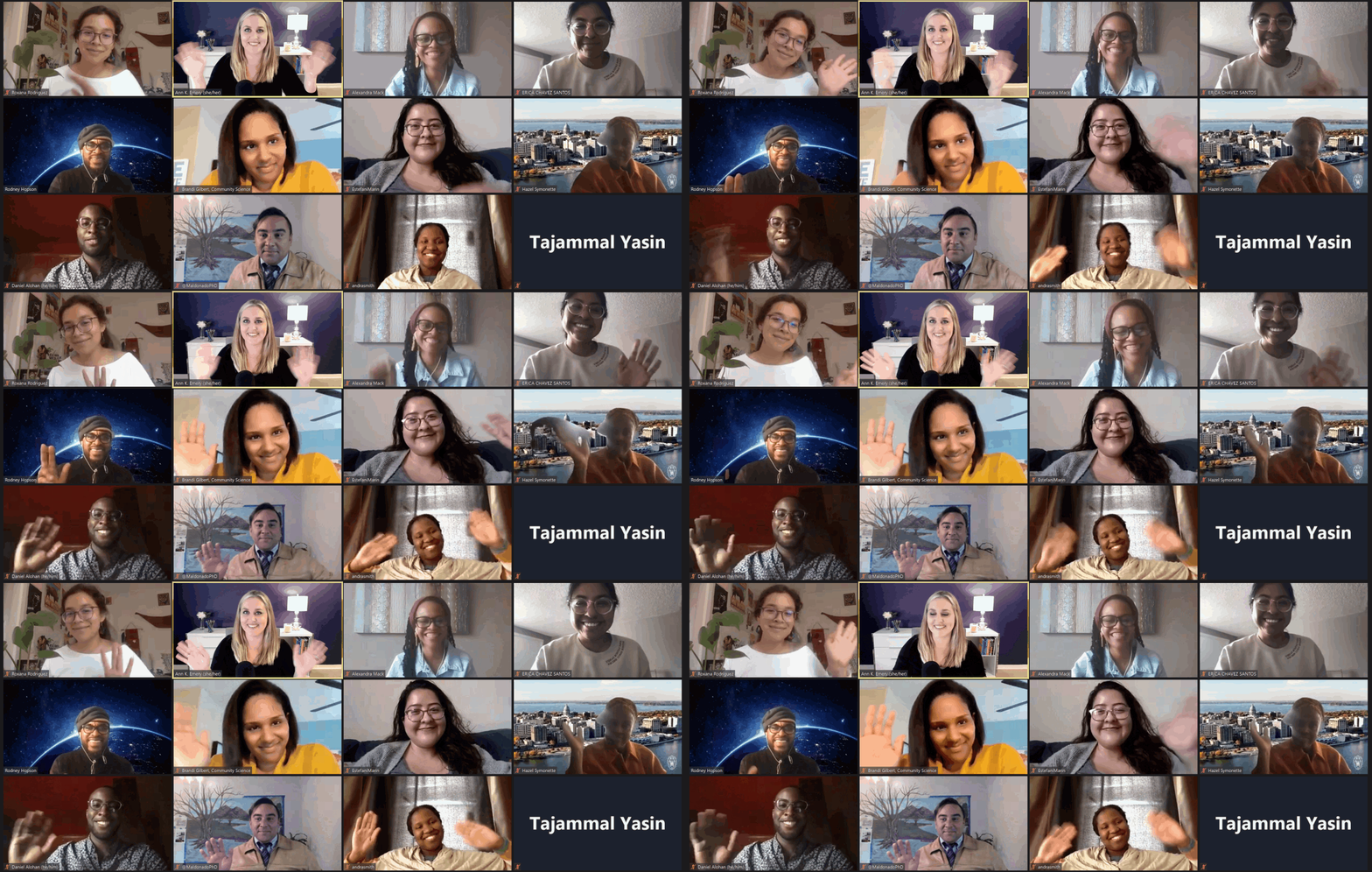
In March 2021, Ann Emery spoke to participants in the Graduate Education Diversity Internship program within the American Evaluation Association.

I was scrolling through my slides, and someone asked how I created these “sections” to organize my content.

Adding sections to PowerPoint has been a gamechanger for me personally. They help me stay organized behind the scenes, which helps my audience, too. An organized presenter = an organized presentation = a happy audience that can learn from us headache-free.

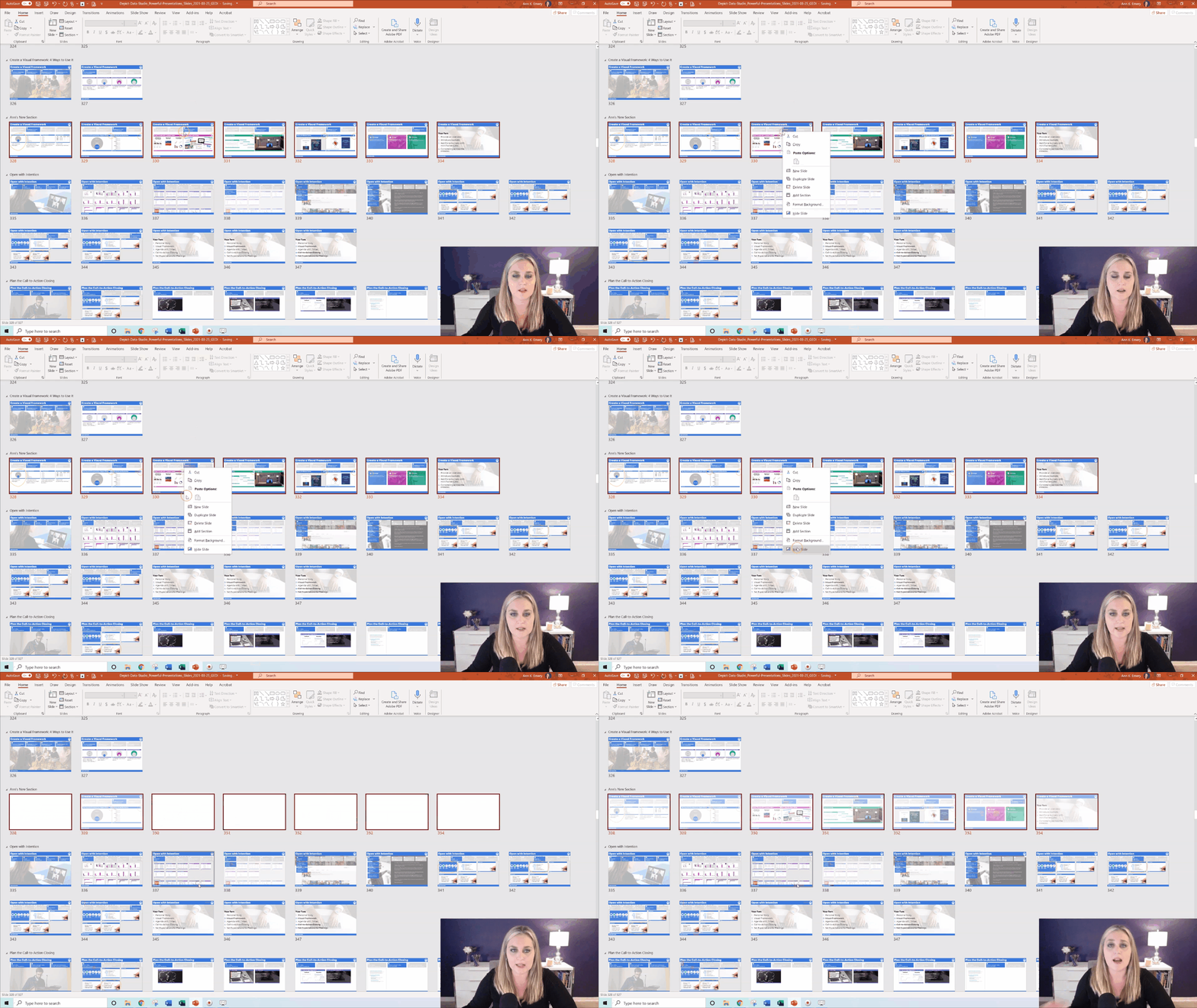
Watch the 7-Minute Tutorial on Sections

I started to write a blog post with screenshots about sections… but that felt impossible. I wanted to show you how sections work, so I recorded you a tutorial.

What’s inside:

  1. A demo of what sections are
  2. How to add them
  3. How I use them to hide topics
  4. How I use them to re-order topics

What Are PowerPoint Sections?

Sections help us organize our slides into meaningful groups, categories, chunks, buckets, or chapters of a presentation.

In the video, you’ll see what they look like.

Can you spot the words above some of the slides?

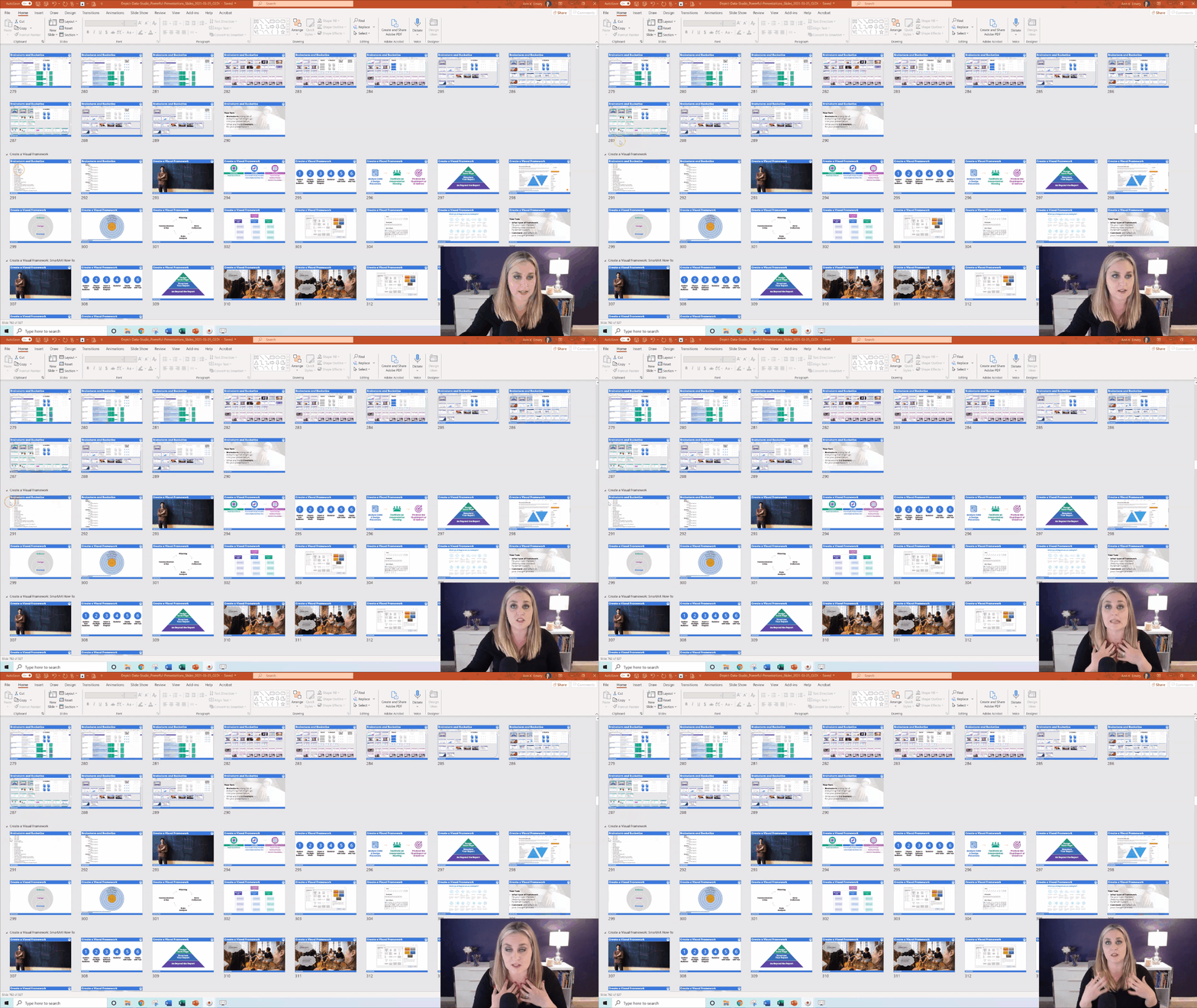
Sections help us organize our slides into meaningful groups, categories, chunks, buckets, or chapters of a presentation. The audience won't see them, they're just for us presenters.

Our audience won’t see the sections. They’re for us, the presenters.

How to Add Sections

It’s easy to add new sections to a presentation.

Here’s how:

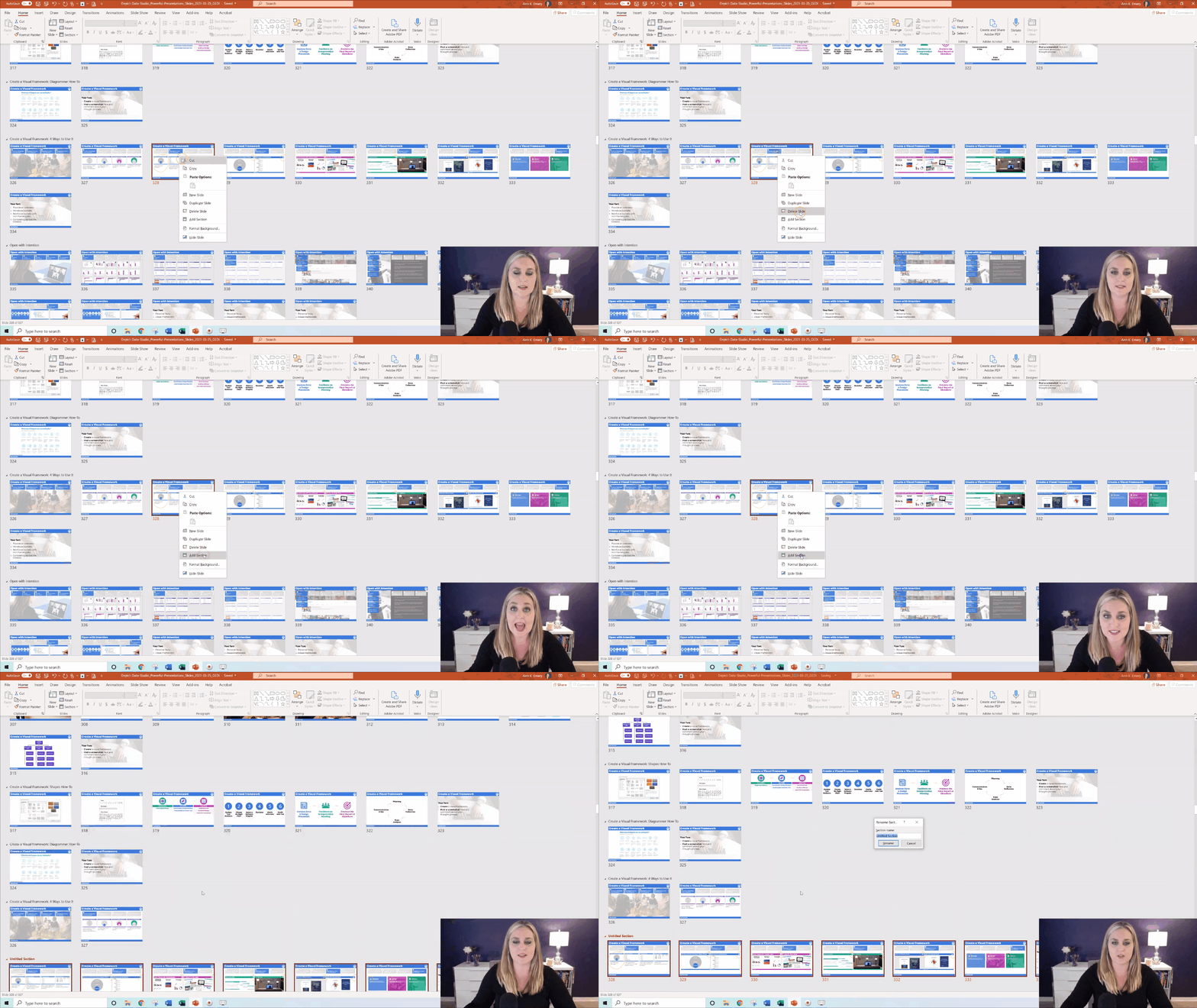
  • I like to be in Slide Sorter view first. (The birds-eye-view of the presentation where you can view all the miniature slides.)
  • Decide which slide is going to start the new section. Click on that slide to activate it.
  • Right-click and Add Section.
  • In the pop-up window, give your section a name. I use names like Introduction, Case Study, Conclusion, etc.

That’s it!!!

Adding sections is easy. Decide which slide is going to start the new section, click on that slide, right-click and Add Section.

How to Use Sections to Hide Topics

I like to keep all my slides for a given workshop within a single file.

While prepping for upcoming talks, I go through the full file – all 900+ slides! – and choose which sections I’ll talk about.

I might cover Sections A, B, and C for one group.

I might cover Sections A, D, and E for another group.

I might add Sections F, G, and H as brand new topics for another group.

(For private trainings, I review the group’s materials ahead of time and hold some planning calls to figure out which sections are going to be the best use of our time together.)

As I’m deciding which sections to include, I simply hide and unhide the slides. In the video, you’ll learn how to hide and unhide slides.

While prepping for upcoming talks, I go through the full file – all 900+ slides! – and choose which sections I’ll talk about by simply hiding and unhiding sections.

(Yes, you can hide and unhide slides without having any sections. I personally like using sections so I can think about an entire category of slides that should be shown or hidden.)

How to Use Sections to Re-Order Topics

I definitely recommend outlining your presentation in a document or spreadsheet before making all your slides.

Our outlines don’t need to be 100% finished before we make our slides. I almost always make changes along the way.

One common change is re-ordering topics. I might envision covering topics A, B, and C, in that order. But later, as I’m designing the slides, I might decide to cover topics A, C, and B.

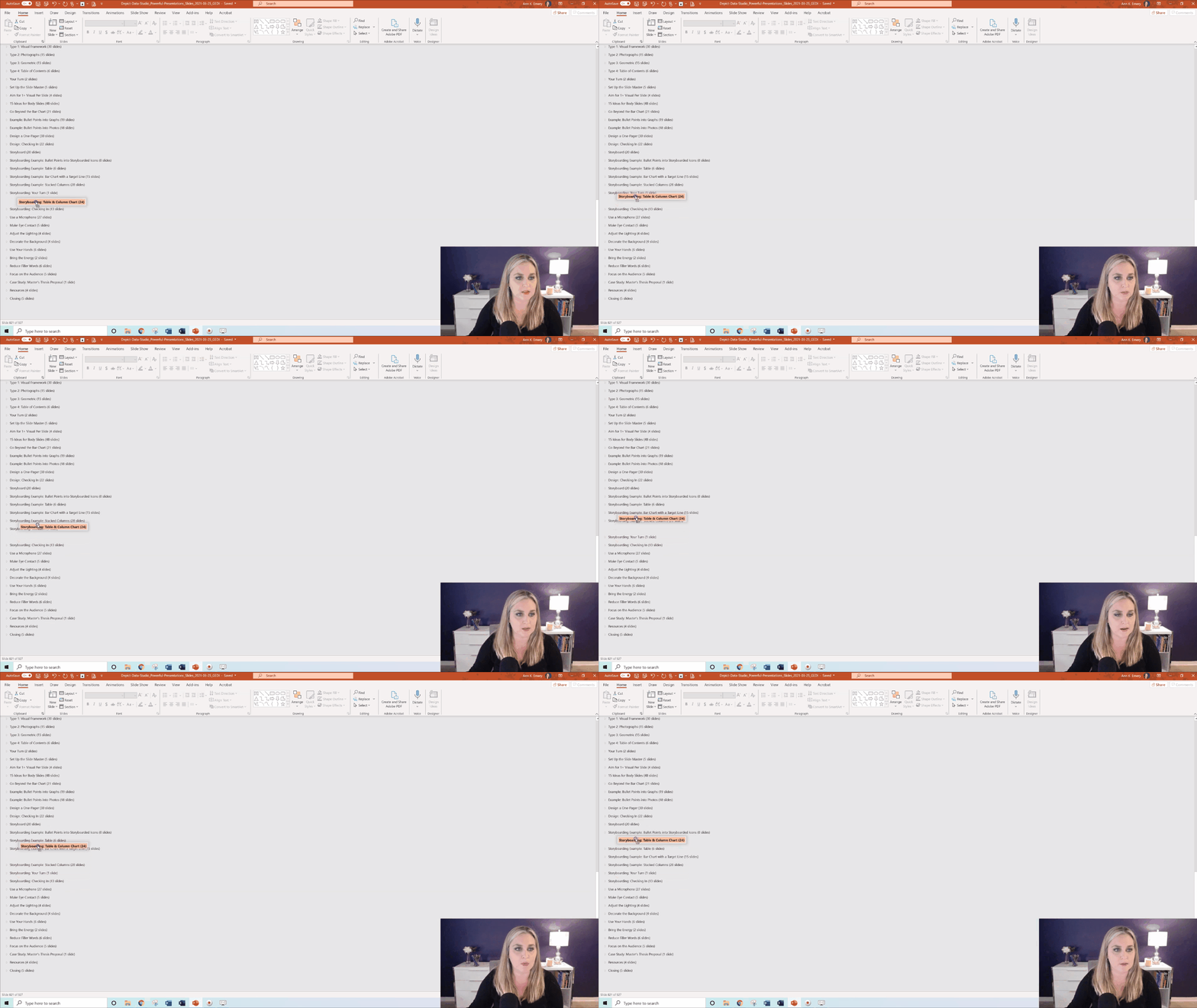
In the video, you’ll learn how to drag and drop entire sections to re-order them.

I definitely recommend outlining your presentation in a document or spreadsheet before making all your slides. You can then drag and drop them to re-order.

Your Turn

Let me know how you’ve used sections to keep your content organized!

Written by cplysy · Categorized: depictdatastudio

Apr 27 2021

Bundles and Stacks

Two powerful approaches to creating healthy habits are to bundle or stack behaviours together, by design. If we can learn to connect what we do in small ways to other things we can make big changes more easily.

For innovators seeking and making change, these two approaches can help break down a big goal into small, manageable actions.

Bundles

A bundle is a way of tying together two behaviours that don’t normally go together for positive benefit. It takes something you dislike and pairing it with something you like. For example, imagine doing uncomfortable rehab exercises while watching your favourite TV show. Maybe listen to your favourite music while doing your taxes.

There are many activities in our work that are tedious, unpleasant, or undesirable to do. By bundling those with something you do enjoy it can make those unpleasant tasks easier to do.

Consider the barriers to your service that might be unavoidable: how can you bundle those with something positive? How can you make the worst, but necessary, aspects of what you offer, better?

By considering a bundle, we can design for positive outcomes in spite of issues we cannot design around. This is particularly relevant for healthcare (e.g., dental visits, medication taking) or activities requiring paperwork or queuing.

Stacks

A stack is pairing small activities together to produce a larger effect. For example, consider listening to podcasts or e-books while running. This allows you to learn and exercise at the same time.

Another example is drinking a glass of water every time you check your email. This one accomplishes the goal of keeping you hydrated while ensuring you don’t check your email too often (preventing frequent trips to the bathroom).

We can design our ‘stacks’. Practically, this means creating an inventory of jobs to be done and pairing them together when possible. By simply knowing what has to be done we can create stacks that get tasks done together.

Design Considerations

The key to both activities is to break down what has to be done and mapping it out. This can be done using simple paper, sticky notes, a whiteboard, or tools like Miro or Mural. This activity has the added benefit of articulating what has to be done. It is a useful awareness-building exercise to reveal all the tasks and subtasks involved in our work.

Once completed, consider pairing tasks and activities together. What pairs might work? What systems can we put in place to help make things easier?

After pairing, the next step is to prototype and evaluate Try things out. If you wish to drink water with email, consider setting a glass or your favourite mug beside your computer. Create the prompts to remind you to try things out. These are new behaviours so it may take some time to get it right. If, after many attempts, the behaviour hasn’t changed (the bundle didn’t take, the stack didn’t work), try a different one.

The key is to keep trying. Whether this is for individuals or organizations, the key is to keep trying and learning. The more attempts you make, the more you will learn and the more likely you will succeed.

This behavioural strategy is both simple and easy to try and test even if changes are often difficult. If you need help in making these changes and designing for them, contact us – this is what we do.

The post Bundles and Stacks appeared first on Cense.

Written by cplysy · Categorized: cameronnorman

Apr 26 2021

Join us for the Saint Louis Art Museum’s Virtual Summit on Diversity

RK&A was honored to work with the Saint Louis Art Museum in 2019 to evaluate their longstanding Romare Bearden Graduate Museum Fellowship, which prepares outstanding museum professionals from historically underrepresented groups (particularly people of color) to become leaders in the field.  The Bearden Fellowship was one of the first diversity-focused fellowships in the museum world—established long before the recent wave of diversity, equity, access, and inclusion (DEAI) in museums—and ours was the first formal evaluation of the fellowship since it began in 1991. Our evaluation focused on learning from Bearden fellows’ and SLAM staffs’ experiences to not only measure the impact of the Bearden Fellowship, but also to develop a case study with insights and considerations for other museums interested in starting and sustaining a diversity-focused fellowship program.

On May 6, the Saint Louis Art Museum is hosting a free Virtual Summit on Diversity that will convene emerging and established arts professionals from across the country (including many past Bearden Fellows) to discuss ways to diversify the pipeline of museum professionals.  RK&A’s Director Stephanie Downey and SLAM’s Chief Diversity Officer and fellowship supervisor Renée Brummell Franklin will discuss the case study we developed with SLAM in the session “Change from Within: A Case Study of the Romare Bearden Graduate Museum Fellowship.”  Please register in advance if you would like to attend!

The case study—Advancing Change: A Case Study of the Romare Bearden Graduate Museum Fellowship—will be available free for download immediately following the summit. We are proud to contribute to ongoing dialogue, learning, and action toward creating a more diverse, equitable, and inclusive museum workforce.  

Stay tuned for a link to download Advancing Change: A Case Study of the Romare Bearden Graduate Museum Fellowship as soon as it is available!

The post Join us for the Saint Louis Art Museum’s Virtual Summit on Diversity appeared first on RK&A.

Written by cplysy · Categorized: rka

Apr 24 2021

Control de calidad de las evaluaciones durante el desarrollo (o adaptativas)

La Oficina de Evaluación de UNFPA ha desarrollado un nuevo y relevante “Marco de Garantía de calidad y valoración de las evaluaciones durante el desarrollo (o adaptativas) en UNFPA” para ayudar a la Oficina de evaluación y a terceros a valorar la calidad de las evaluaciones durante el desarrollo (o evaluaciones adaptativas) ejecutadas por/para la agencia. En este informe se señalan algunas tensiones que hay que afrontar para garantizar la calidad de las evaluaciones durante el desarrollo (o adaptativas)

Varias tensiones son inevitables en la aplicación de los principios de la evaluación durante el desarrollo en las evaluaciones gestionadas por organizaciones y afectarán la calidad de la evaluación. Estas tensiones no pueden (re) resolverse; más bien, deben abordarse como desafíos de diseño y gestionarse de forma creativa.

Grandes tensiones: Existen tres tensiones principales para garantizar la calidad en las evaluaciones de desarrollo gestionadas por las organizaciones. Se relacionan con (a) propósito, (b) relaciones y (c) gestión y/o administración.

1 Tensiones relacionadas con el propósito

La tensión de propósito principal es (a) entre la evaluación durante el desarrollo como un proceso interno para apoyar el desarrollo y (b) la adaptación de una intervención y el uso más tradicional de la evaluación como un mecanismo para informar y rendir cuentas a un organismo superior o externo.

(1) Por un lado, el objetivo de la evaluación durante desarrollo es (a) proporcionar a las partes interesadas de la iniciativa retroalimentación en tiempo real sobre los resultados de sus esfuerzos, (b) generar nuevos aprendizajes sobre los desafíos que están tratando de abordar, identificar y (c) reflexionar críticamente sobre las fortalezas y debilidades en su trabajo y (d) para permitir adaptaciones basadas en datos a sus objetivos y enfoque general. Esto incluye la necesidad de que (e) los usuarios principales de la evaluación utilicen conjuntamente los hallazgos, las implicaciones y las opciones que surgieron en el proceso para tomar decisiones sobre dónde y cómo desarrollar la intervención, en lugar de confiar en las recomendaciones del equipo de evaluación.

(2) Por otro lado, las prácticas y la cultura de evaluación de las organizaciones suelen girar en torno a un enfoque de evaluación formativo y sumativo más tradicional, y adoptan el principio de informar públicamente los hallazgos y resultados de la evaluación, generalmente a los altos responsables de la toma de decisiones y / o organismos externos, señalando conclusiones concretas y recomendaciones. Esta orientación tradicional puede dificultar que los participantes y evaluadores durante el desarrollo adopten la autorreflexión crítica, fundamental para el éxito de la evaluación del desarrollo.

El desafío de diseño para las partes interesadas involucradas en las evaluaciones durante el desarrollo organizacional es el siguiente: ¿Cómo se pueden gestionar las evaluaciones durante el desarrollo organizacional (a) de una manera que mantenga un enfoque interno en el desarrollo y la adaptación de una intervención, (b) mientras se opera en un entorno institucional diseñado para una evaluación orientada de forma más tradicional, informado públicamente, externamente ?

2 Tensiones en las relaciones de los evaluadores

Los evaluadores involucrados en contextos de desarrollo deben navegar por la tensión entre varios principios de calidad clave relacionados con las relaciones entre los evaluadores y los usuarios principales: cocreación, imparcialidad e independencia.

(1) Por un lado, la evaluación durante el desarrollo, orientada a la utilidad, requiere que los evaluadores co-creen el diseño de la evaluación con los usuarios principales. Esto significa (a) seleccionar fuentes de datos y métodos que reflejen las preferencias “filosóficas y organizativas” de los usuarios, (b) empleando procesos facilitados para la comprensión compartida de los hallazgos y (a menudo) facilitado o co-desarrollo de las implicaciones para el desarrollo posterior de la intervención (p. Ej. puntos de apalancamiento, opciones, escenarios, preguntas adicionales).

(2) Por otro lado, los evaluadores deben poder operar sin la influencia indebida de las partes interesadas de la evaluación (por ejemplo, usuarios principales, comisionados, beneficiarios), incluso en la elección de los métodos de evaluación para la recopilación y el análisis de datos, la discusión de los hallazgos y la preparación de conclusiones y camino a seguir.

El desafío de diseño para las partes interesadas involucradas en las evaluaciones durante el desarrollo es: ¿Cómo pueden los “evaluadores durante desarrollo” (a) crear conjuntamente diseños de evaluación de manera significativa e involucrar a los usuarios de la evaluación en otras prácticas centradas en la utilización, (b) al tiempo que garantizan su propia independencia e imparcialidad continuas en el proceso?

3 Tensiones en la gestión y/o administración

La Oficina de Evaluación de la Organización y los evaluadores durante el desarrollo contratados deben lidiar con las tensiones en la gestión, adquisición y administración de las actividades de evaluación durante el desarrollo.

(1) Por un lado, para que sean útiles, los diseños de evaluación del desarrollo deben poder adaptarse para reflejar los objetivos, las preguntas y el contexto en evolución de las partes interesadas de la iniciativa. De lo contrario, se establece el “rigor-mortis”, lo que reduce la utilidad del diseño. En estos casos, las partes interesadas de la iniciativa  (i) ignoran por completo los resultados de la evaluación o, en algunos casos, (ii) socavan el esfuerzo de desarrollo al presionar a las partes interesadas para que adopten un diseño de evaluación que ya no es relevante.

(2) Por otro lado, las evaluaciones organizacionales se guían por políticas, directrices y prácticas para encargar evaluaciones que requieren que los contratos de evaluación identifiquen cuidadosamente las actividades de evaluación y los entregables, los plazos clave para su finalización y los calendarios de desembolsos que se organizan en torno a la presentación y aprobación de los resultados clave de la evaluación o productos (por ejemplo, informes).

El desafío de diseño para la evaluación durante el desarrollo organizacional es el siguiente: ¿Cómo pueden la Oficina de Evaluación de la Organización y los evaluadores desarrollar un diseño de evaluación preliminar (a) que sea lo suficientemente completo como para finalizar la financiación y un contrato de evaluación, pero (b) que sea lo suficientemente flexible como para adaptarse en tiempo real para reflejar (i) la evolución de las partes interesadas y (ii) las necesidades de evaluación en evolución?

Más herramientas van surgiendo para operacionalizar y aterrizar las evaluaciones durante el desarrollo: Positivo para apoyar los procesos de desarrollo, entre sus políticas, su “economía política” y las singularidades de cada uno sus procesos. La procesión va por dentro…

Written by cplysy · Categorized: TripleAD

  • « Go to Previous Page
  • Go to page 1
  • Interim pages omitted …
  • Go to page 187
  • Go to page 188
  • Go to page 189
  • Go to page 190
  • Go to page 191
  • Interim pages omitted …
  • Go to page 304
  • Go to Next Page »

Footer

Follow our Work

The easiest way to stay connected to our work is to join our newsletter. You’ll get updates on projects, learn about new events, and hear stories from those evaluators whom the field continues to actively exclude and erase.

Get Updates

Want to take further action or join a pod? Click here to learn more.

Copyright © 2026 · The May 13 Group · Log in

en English
af Afrikaanssq Shqipam አማርኛar العربيةhy Հայերենaz Azərbaycan dilieu Euskarabe Беларуская моваbn বাংলাbs Bosanskibg Българскиca Catalàceb Cebuanony Chichewazh-CN 简体中文zh-TW 繁體中文co Corsuhr Hrvatskics Čeština‎da Dansknl Nederlandsen Englisheo Esperantoet Eestitl Filipinofi Suomifr Françaisfy Fryskgl Galegoka ქართულიde Deutschel Ελληνικάgu ગુજરાતીht Kreyol ayisyenha Harshen Hausahaw Ōlelo Hawaiʻiiw עִבְרִיתhi हिन्दीhmn Hmonghu Magyaris Íslenskaig Igboid Bahasa Indonesiaga Gaeilgeit Italianoja 日本語jw Basa Jawakn ಕನ್ನಡkk Қазақ тіліkm ភាសាខ្មែរko 한국어ku كوردی‎ky Кыргызчаlo ພາສາລາວla Latinlv Latviešu valodalt Lietuvių kalbalb Lëtzebuergeschmk Македонски јазикmg Malagasyms Bahasa Melayuml മലയാളംmt Maltesemi Te Reo Māorimr मराठीmn Монголmy ဗမာစာne नेपालीno Norsk bokmålps پښتوfa فارسیpl Polskipt Portuguêspa ਪੰਜਾਬੀro Românăru Русскийsm Samoangd Gàidhligsr Српски језикst Sesothosn Shonasd سنڌيsi සිංහලsk Slovenčinasl Slovenščinaso Afsoomaalies Españolsu Basa Sundasw Kiswahilisv Svenskatg Тоҷикӣta தமிழ்te తెలుగుth ไทยtr Türkçeuk Українськаur اردوuz O‘zbekchavi Tiếng Việtcy Cymraegxh isiXhosayi יידישyo Yorùbázu Zulu