• Skip to main content
  • Skip to footer
  • Home

The May 13 Group

the next day for evaluation

  • Get Involved
  • Our Work
  • About Us
You are here: Home / Archives for cplysy

cplysy

Feb 05 2025

Don’t panic! Just draw more cartoons.

Don’t Panic.

When I was a kid, I remember really enjoying The Hitchhiker’s Guide to the Galaxy. It was my kind of weird and short enough that kid me actually read the whole thing.

In many of the more relaxed civilizations on the Outer Eastern Rim of the Galaxy, the Hitch-Hiker’s Guide has already supplanted the great Encyclopaedia Galactica as the standard repository of all knowledge and wisdom, for though it has many omissions and contains much that is apocryphal, or at least wildly inaccurate, it scores over the older, more pedestrian work in two important respects. First, it is slightly cheaper; and secondly it has the words DON’T PANIC inscribed in large friendly letters on its cover.

Don’t panic also appeared as advice at the end of an email I received last week from one of my bigger clients. The problem is that it’s hard not to panic. And it’s even harder not to panic when someone tells you not to panic.
Uncertainty and Shock

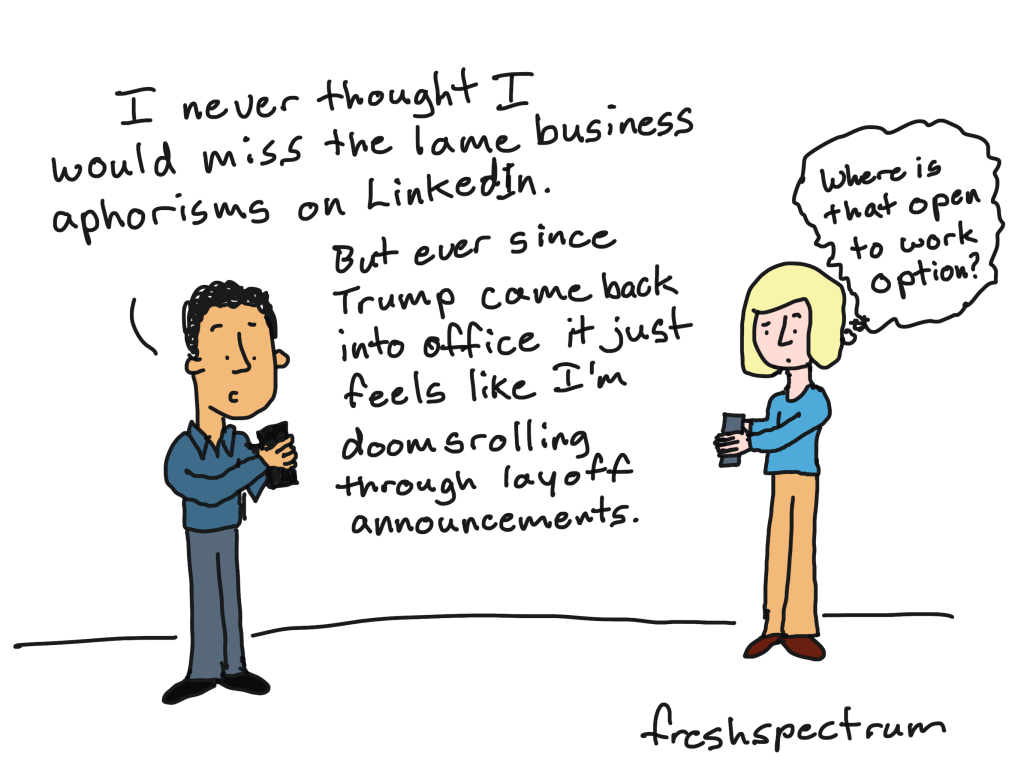
Last night the US president proudly announced his support of ethnic cleansing, and his willingness to use troops to accomplish that cleansing…for real estate reasons. A couple of days ago we heard about El Salvador’s offer to hold any incarcerated individual sent from the US in their prisons. Meanwhile, the president’s unelected, unconfirmed, billionaire buddy is doing everything he can to shut down federal agencies he doesn’t like. I could on and on as everyday brings new crises.

As an evaluator and designer I work with a wide range of clients. Most of my paid contracts are related to public health, global development, and non-profits. All of these areas are directly implicated by this shock.

I’m happy to say that at the moment, as far as I know, I am still funded. And even if I lose all my contracts I should be okay financially for a bit.

But I am worried about my peers, especially the ones who have lost their positions over these last few weeks. And I’m worried about the future of program evaluation, as this administration actively spurns evidence. And I’m worried about the world my 15 year old is going to get when she becomes an adult.

Cartoons and my Happy Place

When I’m at home and my anxiety goes up, I go to the kitchen. Cooking, baking, and even doing dishes puts me into a kind of trance that calms my nerves. And at the end, we have a meal, a batch of scones, or a clean kitchen to enjoy.

When I’m at work and my anxiety goes up, I pull out my iPad. Cartooning calms my nerves. It helps me process the overwhelming world we live in. And at the end, I have single-panel comics to share.

A couple of years ago I got overwhelmed. One of the ways I responded was by leaving Patreon. But today in early 2025, I’m happy to say that I’m back.

Patreon gives me a space that’s just about my comics. But this time I’m not setting up any special offerings for the people who provide me with more financial support. Everyone who follows me on Patreon will get to see all the comics I share, even if you just click the Join for Free button!

FreshSpectrum the blog is mostly about data design. It’s become more and more specialized over time. But FreshSpectrum the Comics can be about anything that inspires me to draw. And with Patreon, I have a space to share all of those comics (even if they have nothing to do with data design).
How are you holding up?

Let me know in the comments and know that I always read every single one!
Written by cplysy · Categorized: freshspectrum

Feb 05 2025

Ask Nicole: How Can I Make My Grant Application Stand Out to Funders?

Applying for funding doesn’t have to be overwhelming.

The post Ask Nicole: How Can I Make My Grant Application Stand Out to Funders? appeared first on Nicole Clark Consulting.

Written by cplysy · Categorized: nicoleclark

Feb 02 2025

Aprendiendo a Cultivar una Mentalidad Positiva

El libro Pensamiento Positivo de Gill Hasson (2015) es una guía práctica y accesible que busca ayudar a los lectores a desarrollar una mentalidad positiva y resiliente.

1. Resumen general

Pensamiento Positivo de Gill Hasson es un libro que sugiere cómo adoptar una mentalidad positiva para mejorar nuestra vida personal y profesional. El objetivo principal del libro es proporcionar herramientas y técnicas para transformar pensamientos negativos en positivos, lo que a su vez puede llevar a una mayor felicidad y éxito en la vida.

2. Análisis de capítulos

  • Introducción: Presenta la importancia del pensamiento positivo y cómo puede cambiar tu vida.
  • Capítulo 1: Pensamiento Positivo y Acción Positiva: Explica la relación entre pensamiento positivo y acción positiva.
  • Capítulo 2: Superar el Pensamiento Negativo: Ofrece estrategias para reconocer y reemplazar pensamientos negativos.
  • Capítulo 3: Tomar Acción Positiva: Detalla cómo combinar pensamiento positivo con acciones concretas para alcanzar metas.
  • Capítulo 4: Desarrollar y Mantener el Pensamiento Positivo: Proporciona técnicas para mantener una mentalidad positiva a largo plazo.
  • Capítulo 5: Crear una Mentalidad Positiva: Enseña cómo cultivar una mentalidad positiva en la vida diaria.
  • Capítulo 6: Construir tu Autoestima y Confianza: Ayuda a mejorar la autoestima y la confianza personal.
  • Capítulo 7: Pensamiento Positivo para Situaciones Difíciles: Aborda cómo aplicar el pensamiento positivo en situaciones difíciles.
  • Capítulo 8: Manejar el Miedo al Fracaso y el Perfeccionismo: Ofrece consejos para manejar el miedo al fracaso y el perfeccionismo.
  • Conclusión: Resume los puntos clave y motiva a los lectores a aplicar lo aprendido.

3. Temas y mensajes principales

Los temas principales del libro incluyen la importancia del pensamiento positivo, la resiliencia, la autoaceptación y la acción proactiva. Gill Hasson transmite el mensaje de que, aunque no podemos controlar todas las circunstancias de nuestra vida, sí podemos controlar nuestra actitud y respuesta hacia ellas. El libro se centra en cómo desarrollar una mentalidad positiva y resiliente para transformar la vida:

Ideas Centrales

  1. Importancia del Pensamiento Positivo: El libro destaca cómo una mentalidad positiva puede mejorar tanto la vida personal como profesional.
  2. Transformación de Pensamientos Negativos: Proporciona herramientas para convertir pensamientos negativos en positivos, lo que puede llevar a una mayor felicidad y éxito.
  3. Resiliencia y Autoaceptación: Enfatiza la importancia de ser resiliente y aceptarse a uno mismo para enfrentar los desafíos de la vida.

Estrategias Principales

  1. Reconocer y Reemplazar Pensamientos Negativos: Identificar pensamientos negativos y sustituirlos por positivos.
  2. Acción Positiva: Combinar el pensamiento positivo con acciones concretas para alcanzar metas.
  3. Mantener una Mentalidad Positiva: Técnicas para mantener una actitud positiva a largo plazo.
  4. Mejorar la Autoestima y Confianza: Estrategias para fortalecer la autoestima y la confianza personal.
  5. Aplicar el Pensamiento Positivo en Situaciones Difíciles: Cómo utilizar el pensamiento positivo para manejar situaciones complicadas.
  6. Manejar el Miedo al Fracaso y el Perfeccionismo: Consejos para superar el miedo al fracaso y el perfeccionismo.

Retos a Afrontar

  1. Persistencia: Mantener una mentalidad positiva requiere esfuerzo y constancia.
  2. Autodisciplina: Es necesario ser disciplinado para aplicar las técnicas y estrategias
  3. Adaptación a Situaciones Difíciles: Aplicar el pensamiento positivo en momentos de adversidad puede ser desafiante.

4. Innovación, valor añadido y utilidad

Lo que hace innovador a Pensamiento Positivo de Gill Hasson es su enfoque práctico y accesible. A diferencia de otros libros sobre el mismo tema, Hasson proporciona ejercicios concretos y ejemplos reales que los lectores pueden aplicar fácilmente en su vida diaria.

Utilidad práctica: La información de Pensamiento Positivo se puede aplicar en la vida diaria y en el trabajo mediante técnicas como la reestructuración cognitiva, la visualización positiva y la práctica de la gratitud. El libro ofrece consejos prácticos para superar obstáculos y mantener una actitud positiva incluso en situaciones difíciles.

Críticas y opiniones: Pensamiento Positivo ha recibido críticas positivas por su enfoque práctico y accesible. Los lectores aprecian la claridad con la que Hasson explica conceptos complejos y la utilidad de los ejercicios propuestos. 

Comparación con otras obras: este libro se centra más en la transformación de la mentalidad y menos en habilidades específicas como la comunicación o la gestión del tiempo.

5. Recomendaciones personalizadas

Si te gusta este libro, te podrían interesar otros libros como Mindfulness y Emotional Intelligence de la misma autora. También podrías disfrutar de El Poder del Pensamiento Positivo de Norman Vincent Peale y La Ventaja de la Felicidad de Shawn Achor.

6. Pequeña biografía de la autora

Gill Hasson es una autora y educadora especializada en desarrollo personal. Ha escrito varios libros sobre temas como la inteligencia emocional, la atención plena y la gestión de personas difíciles. Su trabajo se centra en ayudar a las personas a realizar cambios positivos en su vida y a desarrollar habilidades para el bienestar emocional.

Referencias

  • Achor, S. (2010). La ventaja de la felicidad: Los siete principios de la psicología positiva que alimentan el éxito y el rendimiento en el trabajo. Crown Business.
  • Hasson, G. (2013). Mindfulness: Be mindful. Live in the moment. Capstone.
  • Hasson, G. (2014). Emotional Intelligence: Managing emotions to make a positive impact on your life and career. Capstone.
  • Hasson, G. (2015). Pensamiento Positivo. Capstone.
  • Peale, N. V. (2017). El poder del pensamiento positivo. Océano

Written by cplysy · Categorized: TripleAD

Jan 31 2025

Beyond Orientation: Build a Well-Trained Team for Your Program

A well-trained team makes your program stronger and more impactful.

The post Beyond Orientation: Build a Well-Trained Team for Your Program appeared first on Nicole Clark Consulting.

Written by cplysy · Categorized: nicoleclark

Jan 28 2025

You should build an audience, before you write your report.

Time for another report design mindset change.

At the most basic level successful communication requires a sender, a message, and a receiver.  You, as the report designer, are the sender. The report carries the message.  So who is the receiver?

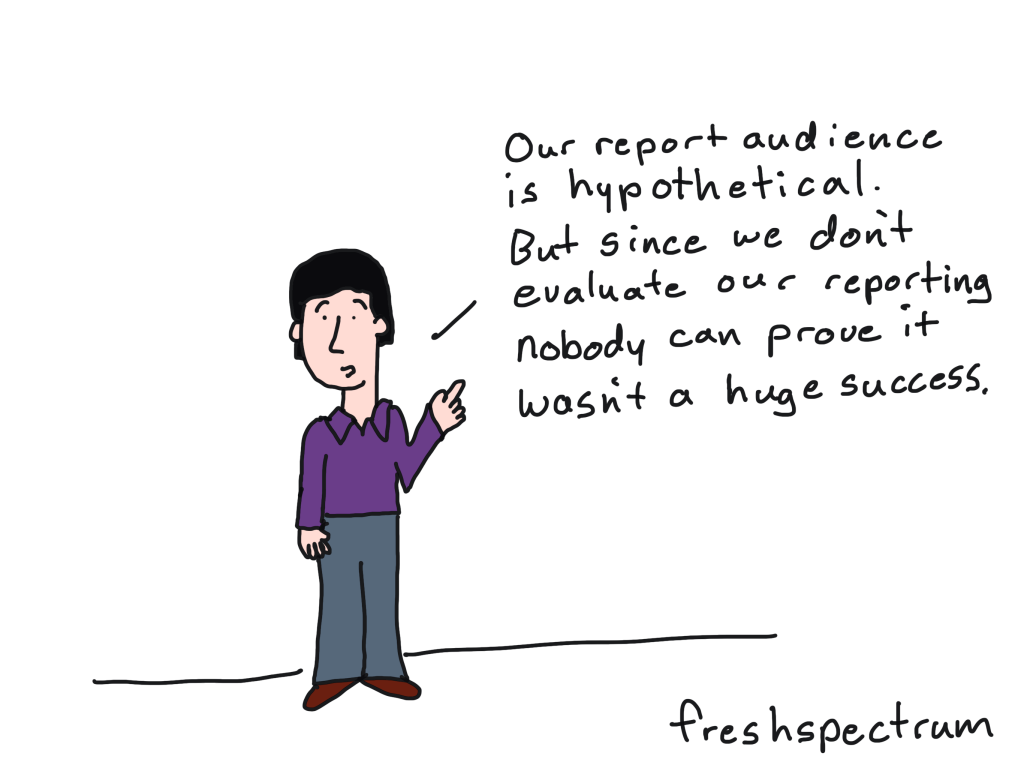
For a lot of organizations the receiver is hypothetical.  At least for those wishing to reach outside of their immediate stakeholder groups towards a broader audience. But even when defined, this broader audience is often just a hodgepodge of different personas, not actual people.

As any person with an online business will tell you, reaching an audience isn’t as simple as posting to social media. To be successful, you need to put in work to actually build your audience.

And if you actually want your report to successfully reach a broader audience, you need to do the same.

Email beats social media.

When organizations do put in effort to build an audience, they usually start with social media.  Like us on Facebook. Connect with us on LinkedIn. Follow us on Twitter.

But social media is unreliable for a few reasons.

1. Very few of your posts will likely be seen by your followers. 

This has become increasingly true over time as what we see is guided by algorithms.  These companies can control these algorithms and even shadow ban your content without your knowledge.

2. Most social media companies are for profit. 

They prioritize money making over information sharing.  This has become worse over the years, forcing many to feel the need to pay for attention even if they have established social media audiences.

3. Social media audiences do not carry over to other platforms. 

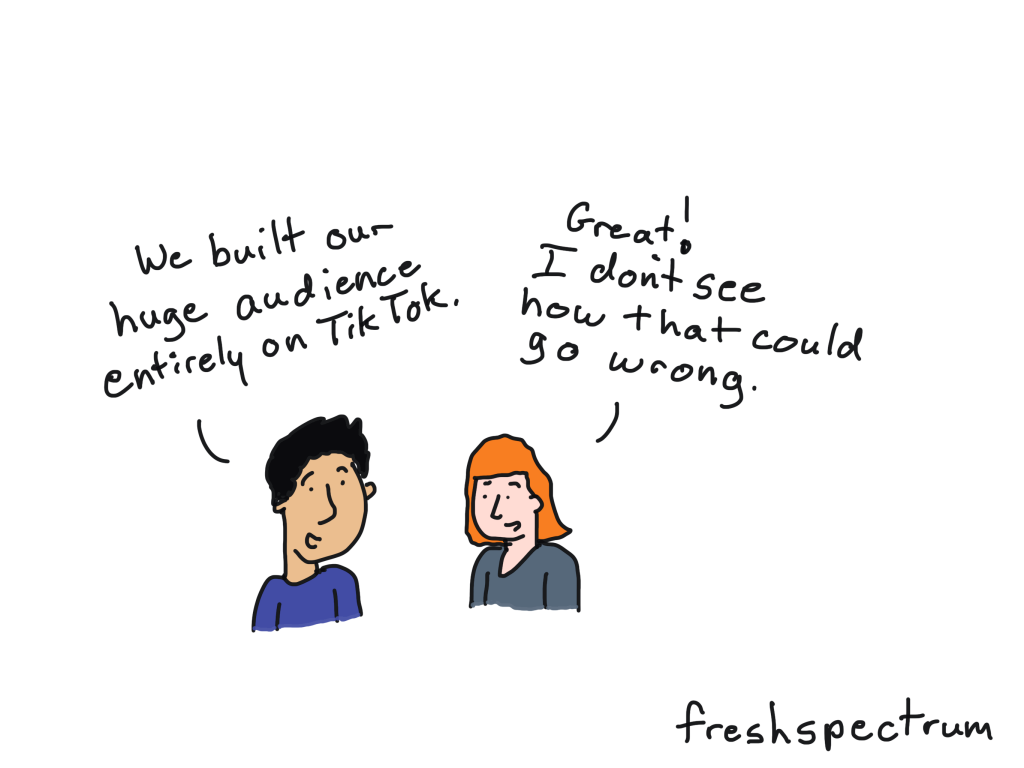
So if you build a following on TikTok, and TikTok goes down, your following is gone.  If your account gets hacked, and then suspended by the social media company, your following is gone.  If your social media channel of choice gets purchased by an egomaniac who turns it into some kind of right wing propaganda tool, your following is gone.

But if you start building an email list, a higher percentage of your audience will see your messages when you send them.  You can choose your email platform.  You can also change your email platform and bring your audience with you.

Email beats search.

Search engines like Google, can deliver report audiences to your report.  But it’s also pretty unreliable.

1. Search engine algorithms are a constantly changing blackbox.

Small changes can lead to a large disruption in your ability to reach audiences.

2. Most search engines are for profit. 

Just like social media, they put advertising ahead of information sharing.

3. AI is completely changing the way search works. 

AI search interprets your reporting in ways that could easily distort your messages.  It can even outright lie about your findings or suggest false sources.

Email gives you the ability to reach an audience with your messaging in a way that gives you some level of control otherwise impossible through search.

How to build an audience for your reports.

Unfortunately, building an audience isn’t exactly easy.  It takes work, usually through the implementation of a content strategy.  It also takes some preparedness, as you should work towards building your audience well before sharing your report.

There are multiple ways to start collecting emails for the people with an interest in your reporting.  Here are a few simple strategies you can use.

1. Setup a landing page with a direct invitation for those interested in following your reporting. 

This landing page should ask for their contact information (email address). 

Tip: this is an opportunity for audience input and feedback through the fields on the form.

2. Hold webinars. 

Give presentations on your models, methods, or preliminary findings. People are used to registering for webinars and are willing to provide their email addresses.  They are also often willing to opt-in to future updates on your reporting.

Tip: this is also an opportunity for direct audience input and feedback.

3. Write monthly updates in the form of blog posts. 

This still requires a landing page to get email addresses but consistent updates can help you to cultivate and serve your reporting audience.

Tip: and yes, this is also an opportunity for audience input and feedback through comments.

Final thoughts.

I know very few evaluation teams that are actually putting in the work to build their report audiences.  In larger organizations they might assume their comms team will already have access to these audiences.  But this is a pretty big assumption.

The audiences organizations build through their communications strategy are not necessarily the same ones you would want to reach with your reports.  Comms teams also often rely heavily on social media.

Are you building the audience for your reporting?  If yes, please share in the comments and let us know how.

Written by cplysy · Categorized: freshspectrum

  • « Go to Previous Page
  • Go to page 1
  • Interim pages omitted …
  • Go to page 22
  • Go to page 23
  • Go to page 24
  • Go to page 25
  • Go to page 26
  • Interim pages omitted …
  • Go to page 304
  • Go to Next Page »

Footer

Follow our Work

The easiest way to stay connected to our work is to join our newsletter. You’ll get updates on projects, learn about new events, and hear stories from those evaluators whom the field continues to actively exclude and erase.

Get Updates

Want to take further action or join a pod? Click here to learn more.

Copyright © 2026 · The May 13 Group · Log in

en English
af Afrikaanssq Shqipam አማርኛar العربيةhy Հայերենaz Azərbaycan dilieu Euskarabe Беларуская моваbn বাংলাbs Bosanskibg Българскиca Catalàceb Cebuanony Chichewazh-CN 简体中文zh-TW 繁體中文co Corsuhr Hrvatskics Čeština‎da Dansknl Nederlandsen Englisheo Esperantoet Eestitl Filipinofi Suomifr Françaisfy Fryskgl Galegoka ქართულიde Deutschel Ελληνικάgu ગુજરાતીht Kreyol ayisyenha Harshen Hausahaw Ōlelo Hawaiʻiiw עִבְרִיתhi हिन्दीhmn Hmonghu Magyaris Íslenskaig Igboid Bahasa Indonesiaga Gaeilgeit Italianoja 日本語jw Basa Jawakn ಕನ್ನಡkk Қазақ тіліkm ភាសាខ្មែរko 한국어ku كوردی‎ky Кыргызчаlo ພາສາລາວla Latinlv Latviešu valodalt Lietuvių kalbalb Lëtzebuergeschmk Македонски јазикmg Malagasyms Bahasa Melayuml മലയാളംmt Maltesemi Te Reo Māorimr मराठीmn Монголmy ဗမာစာne नेपालीno Norsk bokmålps پښتوfa فارسیpl Polskipt Portuguêspa ਪੰਜਾਬੀro Românăru Русскийsm Samoangd Gàidhligsr Српски језикst Sesothosn Shonasd سنڌيsi සිංහලsk Slovenčinasl Slovenščinaso Afsoomaalies Españolsu Basa Sundasw Kiswahilisv Svenskatg Тоҷикӣta தமிழ்te తెలుగుth ไทยtr Türkçeuk Українськаur اردوuz O‘zbekchavi Tiếng Việtcy Cymraegxh isiXhosayi יידישyo Yorùbázu Zulu