Right!
drbethsnow
Evaluator Competencies Series: Taking a Short Break!
It’s that busy time in the semester when the marking for the courses that I’m teaching is piling up and I am also working furiously on a couple of online courses (in addition to my day job). So I’ve decided that I’m going to take a wee break from writing my (nearly) weekly blog series on evaluator competencies until I get through this backlog of other work.
Recognizing our limitations and being about to prioritize are important competencies for an evaluator, right?
Comment on Evaluator Competencies Series: Program Theory by Sandra S
Another stellar reflection, Dr. Beth. Thanks for the introduction to Dylomo, too. I have had fun trying it out.
Evaluator Competencies Series: Program Theory
2.3 Clarifies the program theory.
I really like helping programs figure out what their theory of change is. Early in my career as an evaluator, I was surprised how often I would work with a program that had no idea what its theory was. Like, you’d sit down with them and ask questions about what they were trying to achieve and how what they thought what they were doing was going to help them achieve it – and they didn’t know. They had never really thought about it. The program was the way it was by some combination of it having been started by someone in some way at some time for some reason and then it had been adapted over the years in response to funding cuts/new funding opportunities/new leadership/new research/[enter all sort of other possible factors here]. While talking about this with my class this weekend (I’m teaching a Program Planning & Evaluation course in a Masters of Health Administration program), one student described the programs that she’s worked on as having been MacGyvered and I absolutely love that description!
Perhaps way back when a program started there had been an idea of a program theory – or possibly not – but it’s been MacGyvered over the years and often there us no record of any original program theory. And so I discovered that an important part of work as an evaluator is often to help the program make explicit the theory of why they think the program will result in changes to achieve whatever it is trying to achieve. Because even if a program doesn’t have an explicit program theory, there is some implicit theory underneath.

And there are many benefits about making your program ‘s theory of change explicit. As an evaluator, I want to know what the program’s theory is so I can design an evaluation to test the theory. But it can also be quite helpful to the program itself – helping them to get everyone on the same page about what the program is actually trying to achieve and getting them to think about whether what their program does is likely to get them there. Also, sometimes mapping out a program theory helps a program to identify that it is doing activities that are not likely to help them achieve their goals. It’s surprising how often programs do things because “we’ve always done these things”, even though they may no longer be needed or relevant. Working through a program theory can help identify those things.
Oftentimes, I work with those involved in the program to clarify the theory by developing a logic model together. There is a debate about whether a logic model is or is not a program’s theory of change. According to Michael Quinn Patton (2012), a logic model is simply a description of a logical sequence, but “specifying the causal mechanisms transforms a logic model into a theory of change”, i.e., you need to “explicitly add the change mechanism” to make it a theory of change. I like this explanation because it reminds us that a logic model on its own isn’t quite enough to be a “theory of change” so we need to think about what is the actual mechanism that is believed to lead to the change.
Thinking about how I do the work of clarifying program theory, I think my tips would be:
- however you choose to clarify a program’s theory of change, do it collaboratively with as many people who have an interest in the program as possible. This is important because:
- different people bring different perspectives and thus can help us to more fully understand how the program operates and the effects it can have
- a lot of the value of clarifying a program theory comes from the process. Finding out that people aren’t on the same page as one another about what the program is doing and why, identifying gaps in your program’s logic, surfacing assumptions that people involved in the program have – all of this can lead to rich conversations and shared understanding of the program among those involved and you just don’t get that by handing someone a description of a program theory that was created by just one or two people.
- a program theory should be thought of as a living thing. You can’t just map out a program theory once and think “well, that’s done!” Programs change, contexts change, people change… and our theories of change need to change to keep up with all of that!
This topic is also a good time to plug the free online logic modelling software that my sister, her partner, and I created: Dylomo (short for DYnamic LOgic MOdels). You can sign up for free and play around with it. Apologies in advance for any bugs – we created it off the side of our desks, so haven’t had time to add all the features we would like. If you do have any issues with it – or feedback about it – do get in touch!

References
Patton, M. Q., (2012). Essentials of Utilization-Focused Evaluation. Thousand Oaks, CA: Sage.
Image Source
-
Photo of leaves was opsted on Flickr by Mehul Antani with a Creative Commons licence. Again, I couldn’t find a good free-to-use image for what I was searching for (program theory, theory of change, logic model), but while searching for “change” I found that image of leaves changing colour and thought it was beautiful.
-
Dylomo logo was designed by my amazing sister, Nancy Snow.
Evaluator Competencies Series: Program Evaluability
2.2 Assesses program evaluability.
I can’t remember exactly when or where this was, but at some point during my career as an evaluator, I saw the phrase “Evaluability Assessment” and thought “what’s that?” I know I wasn’t a brand new evaluator, as when I looked it up and learned what it was I thought, “Oh! I’ve been doing that at the start of every evaluation that I’ve done. I didn’t know there was a name for it!”
An evaluability assessment is, much like the name suggests, assessing “the extent to which an activity or project can be evaluated in a reliable and credible fashion” (OECD-DAC 2010; p.21 cited on Better Evaluation). As I learned to be an evaluator, this seemed to be a thing that I naturally needed to do.
An example would be where a client says “I want an evaluation that tells me if the program is achieving its goals”. The first question one would ask is: “What are the program goals?” because I certainty can’t tell you to what extent you are achieving your goals if you don’t have any goals. Similarly, a program may ask an evaluator to conduct an evaluation on whether the program has improved some particular thing for their program participants (e.g., their health, their knowledge of a topic, their social connectedness – whatever thing the program is trying to help its participants improve). In that case, one would naturally ask “how were the clients doing on that something before they started the program?” (i.e., do you have any baseline data we can use to compare to?). Or perhaps it’s a case where the client says “I want to know if my program is working?”, in which case I would ask “What does the program “working” mean to you?”. And that might lead to some work around developing a program theory, or figuring out if they want to know what outcomes are achieved, or if they want to know if their processes are efficient, or whether they are concerned about negative unintended consequences (or maybe all of the above). In my experience as an evaluator, when I ran into situations like this, my first course of action would be to work with the clients to figure out how to get their program into a state in which they are evaluable.
What I didn’t realize in my early years as an evalulator is that in some cases, an evaluability assessment could be a project unto itself. (Check out the Better Evaluation page on Evaluability Assessment if you want to read more about it.)
This may be due to the fact that I’ve always been an internal evaluator (or, as I think of myself on the program I’m currently working on, an external evaluator who is embedded in the program for the long term). So I’ve always had the luxury to be able to work with my “clients” to get them into an evaluable state as part of the work I do with them. Perhaps if I were an external evaluator, I may have come across stand alone evaluability assessments as potential projects.
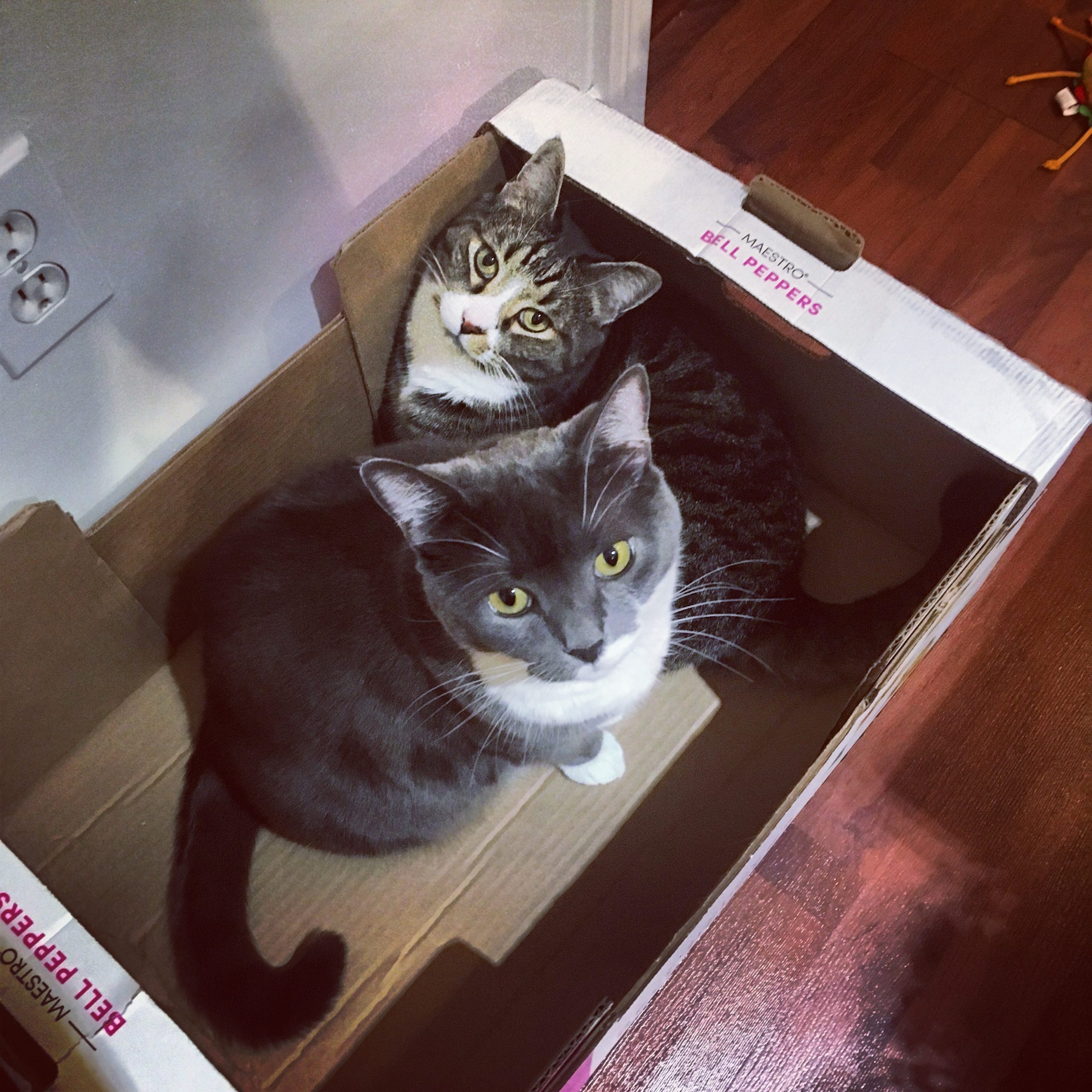
I couldn’t find any images online that I felt represented “evaluability assessment” (probably not surprising… spell check doesn’t even believe that “evaluability” is a word!). So instead I give you this picture of my cats:
 English
 Afrikaans
 Shqip
Shqip አማርኛ
አማርኛ العربية
 Հայերեն
 Azərbaycan dili
 Euskara
 Беларуская мова
 বাংলা
বাংলা Bosanski
 Български
 Català
 Cebuano
 Chichewa
 简体中文
简体中文 繁體中文
繁體中文 Corsu
Corsu Hrvatski
 Čeština
 Dansk
Dansk Nederlands
 Esperanto
 Eesti
Eesti Filipino
 Suomi
Suomi Français
 Frysk
Frysk Galego
 ქართული
 Deutsch
 Ελληνικά
 ગુજરાતી
 Kreyol ayisyen
 Harshen Hausa
 Ōlelo Hawaiʻi
 עִבְרִית
 हिन्दी
 Hmong
Hmong Magyar
 Íslenska
 Igbo
Igbo Bahasa Indonesia
 Gaeilge
 Italiano
 日本語
日本語 Basa Jawa
 ಕನ್ನಡ
ಕನ್ನಡ Қазақ тілі
 ភាសាខ្មែរ
 한국어
한국어 كوردی
كوردی Кыргызча
 ພາສາລາວ
 Latin
Latin Latviešu valoda
 Lietuvių kalba
 Lëtzebuergesch
 Македонски јазик
 Malagasy
 Bahasa Melayu
 മലയാളം
 Maltese
 Te Reo Māori
 मराठी
मराठी Монгол
 ဗမာစာ
ဗမာစာ नेपाली
 Norsk bokmål
 پښتو
پښتو فارسی
فارسی Polski
 Português
 ਪੰਜਾਬੀ
 Română
 Русский
 Samoan
 Gàidhlig
 Српски језик
 Sesotho
 Shona
Shona سنڌي
سنڌي සිංහල
සිංහල Slovenčina
 Slovenščina
 Afsoomaali
 Español
 Basa Sunda
 Kiswahili
 Svenska
 Тоҷикӣ
 தமிழ்
தமிழ் తెలుగు
 ไทย
ไทย Türkçe
 Українська
 اردو
اردو O‘zbekcha
 Tiếng Việt
 Cymraeg
 isiXhosa
 יידיש
יידיש Yorùbá
 Zulu
Zulu