• Skip to main content
  • Skip to footer
  • Home

The May 13 Group

the next day for evaluation

  • Get Involved
  • Our Work
  • About Us
You are here: Home / Archives for allblogs

allblogs

Oct 19 2021

Scope Creep: When to Indulge it, and When to Avoid it


In most evaluation plans, we try to define scope. Defining evaluation scope means putting boundaries around things like:  

  • Time – defining what timeframe of the initiative you will include in your evaluation, or how long you will be undertaking evaluation work 

  • People – deciding which clients’ or stakeholders’ perspectives will be included, and which won’t 

  • Components – clarifying which parts of a program or initiative to evaluate, and which to exclude 

The scope of your evaluation project should be clearly documented in your evaluation plan. That documentation will be important throughout the life of the evaluation project. As an example, here is a scope statement from one of our recent evaluation projects: 

The scope of this evaluation will vary between operational phases. Generally, the scope will be limited to activities related to this initiative from Red Deer and north in Alberta, although some alignment of evaluation activities with activities in southern Alberta may be incorporated. While past programs and systems inform the initiative, this evaluation will not investigate any of those previous programs or services. This evaluation plan addresses Phases II (April 2021 – September 2022) and III (October 2022 – March 2024). 

 And another:  

 All evaluation projects face limitations in resourcing and feasibility. This evaluation will include all patients and providers participating in the initiative. Data elements will include what can be reliably reported by patients and providers through surveys and through patient interviews, as well as data captured in the pharmacy information platforms. All activity between project initiation (March 2021) and project close (March 2022) is within scope for this evaluation. The perspective of others in the healthcare system, including family physicians and health authority staff, are considered out of scope for this evaluation. Patient health outcomes are not in scope for this evaluation. 

Ideally, our evaluation projects would proceed as planned. But as all project managers know, sometimes things change. Actually, most of the time, things change! 

In some situations, our evaluation approach can be modified to adapt to the changing context, but in others, we have to say no to scope creep. 


What is scope creep?

The term “scope creep” comes to us from the project management world. Definitions about, but essentially scope creep is when the project work begins to extend, or “creep,” beyond what was originally agreed.  

 Many evaluators will have received requests from clients to add in a thing or two here and there after the evaluation project is already underway – maybe another data source has surfaced, such as a survey run by a partner organization that seems relevant. Maybe they would like to add another stakeholder group to be interviewed. Or maybe they would like to include activity data from the last fiscal year, despite originally wanting to focus only on the current year. Some scope creep requests relate to reporting – an extra presentation here, a customized sub-report there.  

 Or perhaps it’s the evaluator that wants to expand the scope. You may have identified a new opportunity to strengthen your evaluation project by incorporating a new analytic approach, or early findings suggest there is merit in pursuing an additional line of questioning. There are times when expanding the original scope of an evaluation project can open up important insights that may have seemed inaccessible during the planning phase.  

 But beware! Scope creep isn’t always so obvious. It can creep up slowly, and before you know it, you’ve added a couple of survey questions, provided a third draft of a slide deck, and interviewed management staff that you hadn’t planned to.  

What to ask yourself when you discover scope creep

When you see scope creep happening, take a quick pause to reflect. You might need to say to your client or team: “Let’s just take a few minutes to see where this fits in our project scope.” Referring to the scope statement defined in your evaluation plan will support the conversation or introspection that follows. Whether you are acting as an external evaluation consultant or as an internal evaluator, there are a few questions you can ask to help make the “to scope creep or not to scope creep” decision.  

  • What is motivating this request? 

  • Are there ethical implications to this new task? 

  • Does this new request add value?  

  • Do we have access to the data source required for this request? 

  • Do we have the time to complete this extra task? 

  • Is there room in the budget? Or, can additional funds be found? 

There’s no easy algorithm for making your choice about project scope. Here are a few considerations that can help you make the best decision.  

When should you indulge in scope creep?

We can’t anticipate everything when we’re designing an evaluation plan, and there is a very real possibility that a meaningful opportunity to create a better evaluation will arise. If the option to strengthen your evaluation approach arises and:  

  • it is ethical,  

  • it doesn’t unfairly burden any individual or group, 

  • it is in alignment with the overall purpose of the evaluation,  

  • it can be done well, and  

  • it is feasible within the timelines and budget allocated… 

then go ahead and creep! Your original evaluation plan doesn’t need to restrict innovation—one of the points we’ve made about evaluation project management is that you shouldn’t live and die by the plan. 

When to avoid scope creep

On the other hand, some project expansions are best avoided. If the potential expansion appears to: 

  • be motivated by a desire to bring a more “positive” conclusion, 

  • be too far outside the original purpose, 

  • have no ready, reliable data source, 

  • place too much burden on a particular individual or group, or 

  • require more investment than it’s worth, 

then maybe you need to push back. And to be very practical, sometimes you just can’t accommodate new requests because of important deadlines or budget limitations.  

 If you indulge scope creep when any of those red flags are present, you run the risk of damaging relationships or delivering a late or sub-par evaluation product.  


If you do decide to expand your scope, make sure you document that decision (Remember the JCSEE Program Evaluation Standard on Evaluation Documentation?). Savvy project managers will have a change log to note any changes and their reasoning. You should probably update the evaluation plan, noting the date of the scope change, and share with the team. There may even be a place to include the rationale in your evaluation report, perhaps in an appendix.  

We hope these points are helpful the next time you need to make a decision about scope creep. 


Sign up for our newsletter

We’ll let you know about our new content, and curate the best new evaluation resources from around the web!


We respect your privacy.

Thank you!


Written by cplysy · Categorized: evalacademy

Oct 19 2021

Consent Part 1: What is Informed Consent


As an evaluator, a big part of our role is to collect data. Sometimes that data comes from administrative databases that require data sharing agreements, but sometimes it comes from people, who need to consent to sharing their information (or data) with you. So let’s talk about what consent is (and isn’t).

I’ll share the punch line with you up front: consent doesn’t have to be a scary, overly burdensome process. If you keep some key principles in mind, obtaining the right consent can be pretty straightforward.

There are different types of consent, many of which don’t apply in an evaluation context: consent for medical procedures, legal consent, etc. It is this legal consent, and the “signed consent form” that most people think of when they think of consent.

Consent, broadly, is giving permission for, or agreeing to, something happening. Informed consent means individuals consent with full knowledge of the nature of participation, alternative options, and potential benefits, risks, or consequences to them (more on this below!). As the evaluator, you need to respect an individual’s choice to participate in your evaluation. For an individual to participate, they need to know what those pros and cons or benefits and risks are! Finally, assent is given on by a person unable to provide their own consent (e.g., children or adults with disabilities).

As an evaluator, it is best practice to consider the consent process through an ethical lens, and then to document that process and the decision-making rationale. The documentation serves to provide evidence of the process.


What is Informed Consent?

Informed consent requires that the participant be informed of: 

  • all the known or suspected risks and benefits of participation 

  • the complete nature of participation (that is, what are they being asked to do or share) 

  • the withdrawal process (if there is one) 

  • their rights to access their own information 

  • benefits to the project 

  • what will be done with the information 

  • who will have access to their information and confidentiality will be maintained 

  • compensation or expenses 

However, writing this out in a consent form is not the end of informed consent. An important part of consent is that the participant is provided the opportunity to ask questions or clarify information. This dialogue is important to ensure the potential participant has all the information they need to make an informed decision, but also for the project lead to ensure that the participant properly understands the information.  

A review of consent literature has shown that there are major opportunities for improving the consent process! Falagas et al1 found that only 54% of consenting participants understood the study’s aim, 47% understood the voluntary nature of participation, 44% understood the right/ability to withdraw, 50% understood the associated risks, and 57% understood the benefits to participating. These results highlight the importance of an open discussion where it is the aim of the evaluator not only to inform, but to ensure understanding. You are not collecting informed consent if your participant is not informed!


Methods of Obtaining Consent

1. Consent forms (aka written consent)

The purpose of a written consent form is to provide all the information regarding participation to the participant in a clear, systematic way. The written consent, whether signed or not, can provide evidence that there was, at minimum, a presentation of information to the participant.

Reminder: Having a consent form does not necessarily mean you have informed consesnt, and informed consent does not necesarily require a consesnt form.

A systematic review by Nishimura et al2 found that an enhanced consent form or an extended discussion around consent were the most effective methods at improving participant understanding. An enhanced consent form aims to simplify consent to optimize understanding. It can include increased font size, enhanced literacy level, or additional materials including leaflets. Microsoft Word has features that can help you assess readability and literacy levels or look into an app like Hemingway.

If a paper consent form is used, it is important to draft the consent with the target audience in mind. Health Canada recommends a reading level of grades 6 – 8 for the general population3. Here’s a quick checklist for what to include in a consent form:

  • purpose for the data collection 

  • description of the complete nature of participation, which may include time    commitment 

  • risks 

  • benefits 

  • assurance of the voluntary nature and the right to withdraw 

  • use of information 

  • confidentiality 

  • contact person 

  • any appropriate legal disclaimers, or reference to research grants or ethic approvals 

Reading Level Tips: To reduce reading level, try to make sentences shorter by removing unnecessary words or breaking a long sentence into 2-3 separate sentences. Choose words with as few syllables as possible.

Try to avoid jargon and acronyms and assess the literacy level (aim for Grades 6 – 8).

It is common for the project lead to keep a copy of the consent, and also provide a duplicate copy for the participant to keep.

A word on signatures: A signature on a consent form has its roots in legal consent. A signature may act as evidence not only that the person acknowledges the information in the consent form but that they have, in fact, provided consent. However, unless you have funding, legal, or organizational policies around signatures, they are not necessary to obtain informed consent. In fact, if you are collecting data from vulnerable populations, there can be risk in keeping a record of a participant’s name, especially if it can be linked to their data. An ethical principle of evaluation is to collect the bare minimum data required, so consider carefully if you absolutely need a signature. 

2. Verbal consent

Verbal consent can be an ethically sound method of obtaining consent. Scripting a consent process will ensure that each participant is given the same information about the project. Or, a consent form may be used as an aid or resource. As in a written consent, the language used in a verbal consent process should use lay language and keep the target audience in mind. A script or consent form can act as evidence that a consent process was documented and that each participant engaged in a conversation before giving or denying consent.

3. Implied consent

Implied consent is when a participant does not explicitly express consent but consents via action or behaviour. It can also be a valid option in appropriate circumstances. 

In some evaluation projects, the project leads do not interact with participants. For example, a lead would like a survey handed out by front desk staff at a service centre to each customer. In this case, the project lead is not available to obtain consent and placing the onus of obtaining consent on the front desk staff may be inappropriate. Once a project has been deemed ethically sound, it is possible that a participant can give informed consent by action. For this to occur, the participant must have access to the same information as one would receive in a written or verbal consent process. This information may come as a detached written document or the information may be included at the start of any paper data collection (e.g., a survey). 

Example Text: By completing this survey you are consenting to have your responses used in aggregate and shared back with program staff to be used in quality improvement.

There should be a statement that indicates that by moving forward with participation (e.g., by completing this survey), that the participant understands and accepts the nature of participation and provides consent. In this case, the completed participation, along with documentation of the consenting process, would act as evidence of consent. Because capacity to consent cannot be assessed in this way, ethical review of the project is recommended.


In all cases, the project leads should have a clear, documented process for how consent will be obtained, and how (if necessary) it will be reassessed throughout the project. If you are unsure if there are any policies around how you obtain consent, check in with your local health authorities, associations/colleges, or governmental acts that may have policies around consent. 

If a consent process is used, the participant should be informed of the intended use of the data, including an intent to publish data. The intent to publish, however, does not necessitate requiring consent. Publishing data while maintaining confidentiality is ethically acceptable. 

Stay tuned for Part 2 of this discussion that dives more into how to obtain consent and a list of principles to consider! 

In the meantime, check out Eval Academy tools for some consent form templates we have for interviews and focus groups.


Sign up for our newsletter

We’ll let you know about our new content, and curate the best new evaluation resources from around the web!


We respect your privacy.

Thank you!


Written by cplysy · Categorized: evalacademy

Oct 19 2021

Creating a Powerful Presentation: 3 Easy Changes to Revamp your PowerPoint

Depict Data Studio full courses always end with a graduation ceremony where students share the progress they’ve made in the course. I’m always amazed by the transformations that take place and I can’t help but want to share their wonderful work!

Today you’ll learn from Kelsey Watterson, an evaluator at the Centerstone Research Institute. Thanks for sharing Kelsey! –Ann

—–

For the last three and a half years, I have worked for a major behavioral health provider evaluating multiple grant funded projects. I currently manage the data for two childhood trauma projects in Illinois and Indiana.

Written into nearly every one of our grant projects is an objective to disseminate the project findings: This means presentations!

I first came across Ann’s work when our company signed a few of us up for a dashboard webinar. And WOW did she have some great design tips and tricks!

So, with the impending conference season, I signed up for her Powerful Presentations course.

Let’s take a look at one of my old slidedecks and a new slidedeck incorporating three fantastic tips that can really improve your presentations.

The Before Times

Over the past few years, I have given a number of presentations across the country. I’ve learned the importance of presenting a creative topic in increase attendance rather than just “Hey, here’s my program. Let me throw some stats at you.”

But, it wasn’t until I took this course that I realized, my slides needed some quick but major changes.

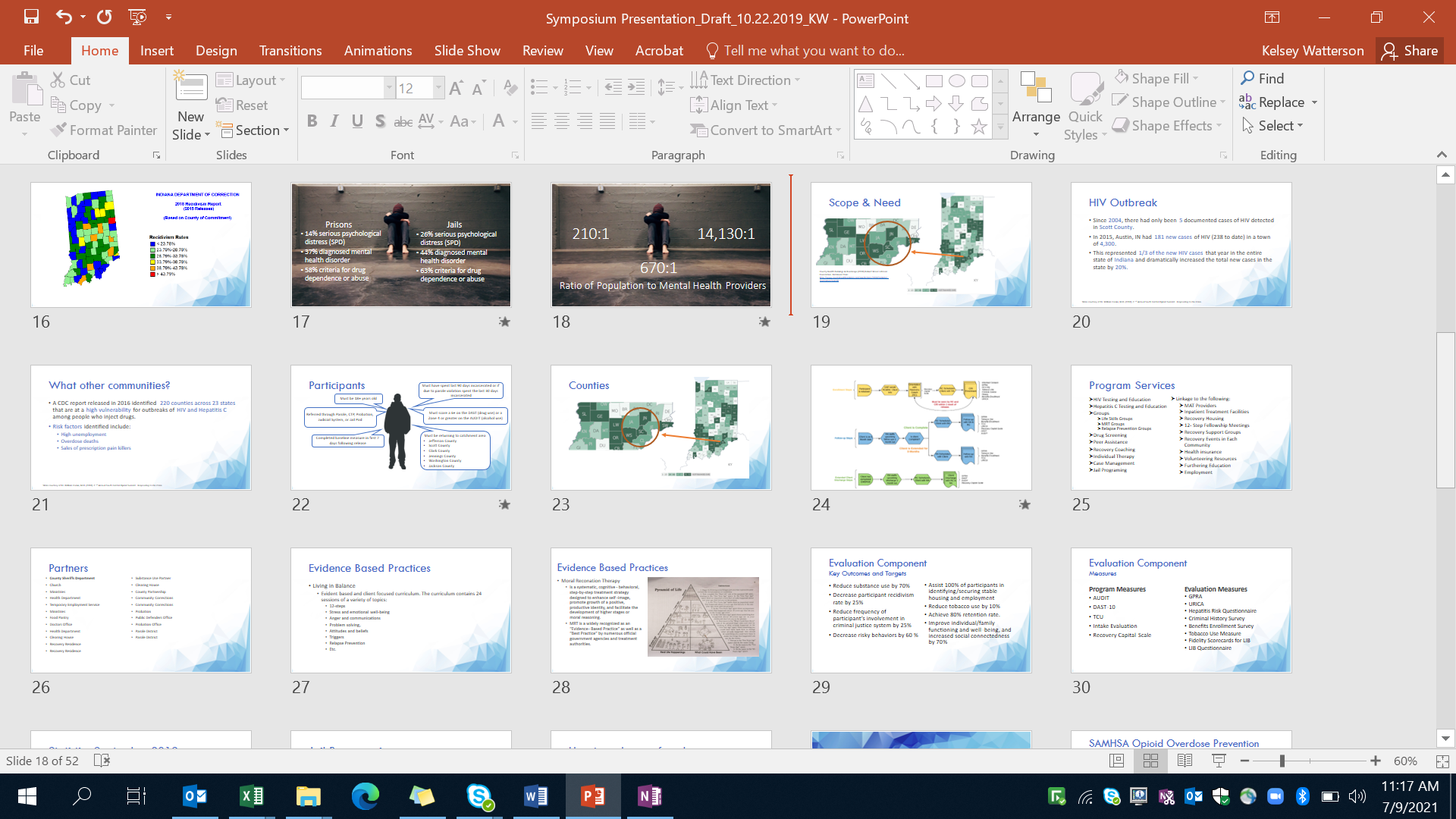
Let’s look at a presentation I did at the Indiana 10th Annual Drug Symposium in 2019 over an offender reentry grant I was evaluating.

Here's a presentation I did at the Indiana 10th Annual Drug Symposium in 2019 over an offender reentry grant I was evaluating.

Look at all of that text!

I remember being so excited about switching up the way I did PowerPoints for this one. I was trying to incorporate more graphics and be more varied in what I presented, but it just wasn’t there quite yet.

The same white and blue slide over and over, small images, bullet point after bullet point. There just was so little to keep it visually interesting.

It wasn’t horrible, but it wasn’t great either. More so the awkward middle “meh.”

Additionally, when I reported the stats for this project, I had them all on one slide with some grainy photos off the internet. Not good.

In my defense, I did use animations so that each of these stats popped up one at a time. Yet, this was still a very unappealing slide.

After a Wake-Up Call

Let’s zoom to today.

I’ve just finished the Powerful Presentations full length course, and not only have my presentation skills and setup improved, but so have my slides.

There are so many great tips and tricks I could highlight, but I will keep it to my three favorites: color coding, increasing readability, and storyboarding.

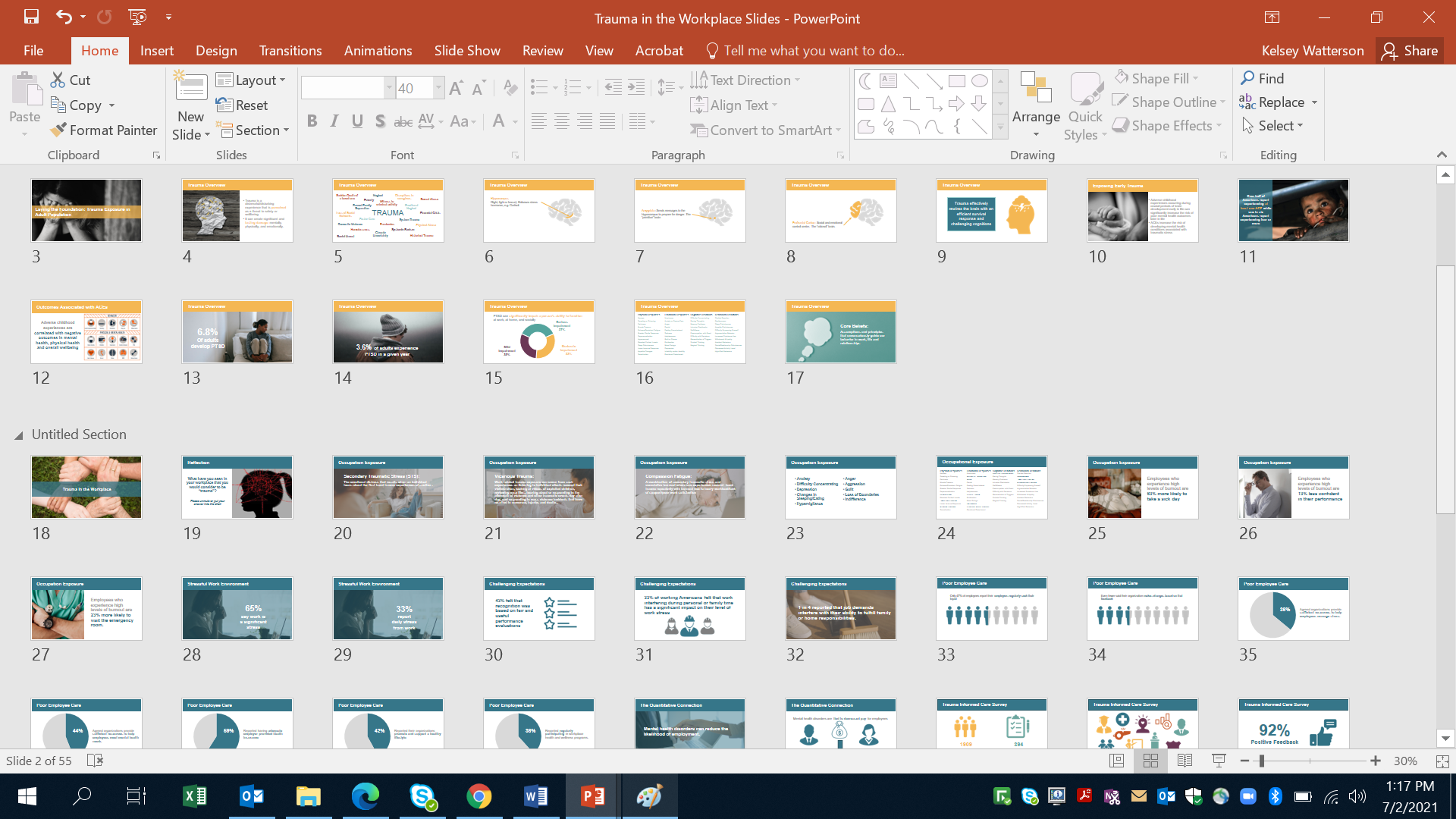
Here is a screenshot of a presentation a coworker and I put together a few weeks ago for a training:

I’ve just finished the Powerful Presentations full length course, and not only have my presentation skills and setup improved, but so have my slides.

Color Coding

First big thing…color coordination!

Each topic for the presentation is a different color. The presentation starts off with the yellow introductory section, then the blue section, and then there is a purple, and a final red section.

The text, the graphs, and most icons all use the same color as the section. These colors are intentionally our company brand colors found in a style guide put out by our marketing department. 

Color coding helps our audience to know when our topic is changing and help them to better follow along. Additionally, it’s just visually appealing: The colors are preselected to match!

Readability

The second big change is the readability of text. Slides now only have one statistic for what would previously been one of many bullet points.

I don’t know why before I felt I had to keep my presentations to a certain number of slides. Maybe something I had engrained in me back in high school when we had prompts that required a 20-slide presentation.

Now, one point per slide, maybe two MAX.

If they have more, only the important things are brought to focus. Slides 16 and 24 are repeats of each other and look to have the most text.

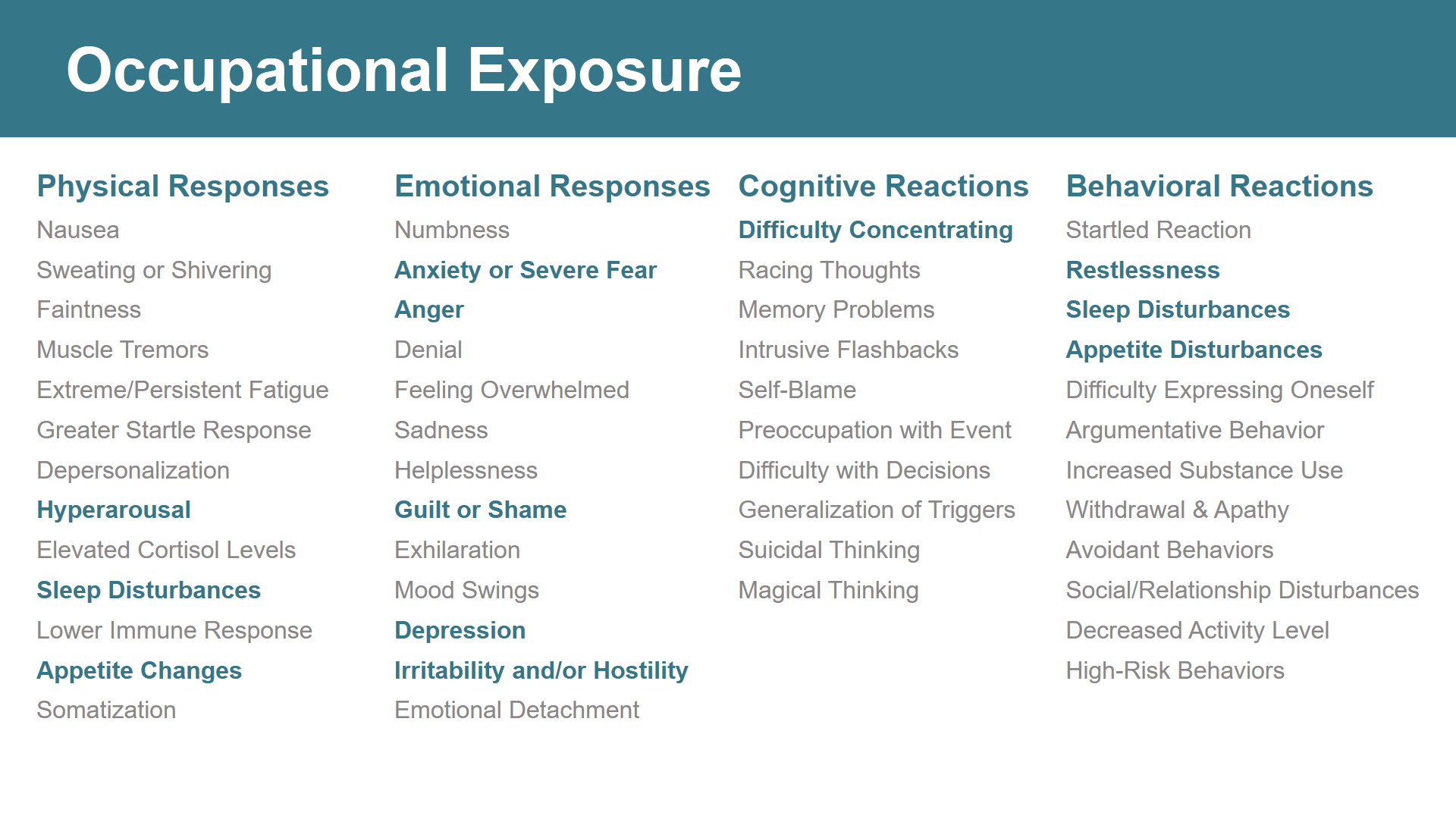
Here is slide 24 zoomed in:

Although there is a lot of text on this slide, it is broken into columns which helps to declutter and organize the information.

Although there is a lot of text on this slide, it is broken into columns which helps to declutter and organize the information.

Secondly, only the trauma responses important to the point of the slide are highlighted. These symptoms are bold and in color.

All of the other ones are greyed out. This helps the information I really want to get across to come to the front and POP!

Storyboarding

The third and final thing I want to highlight is storyboarding. This made such a difference in these slides.

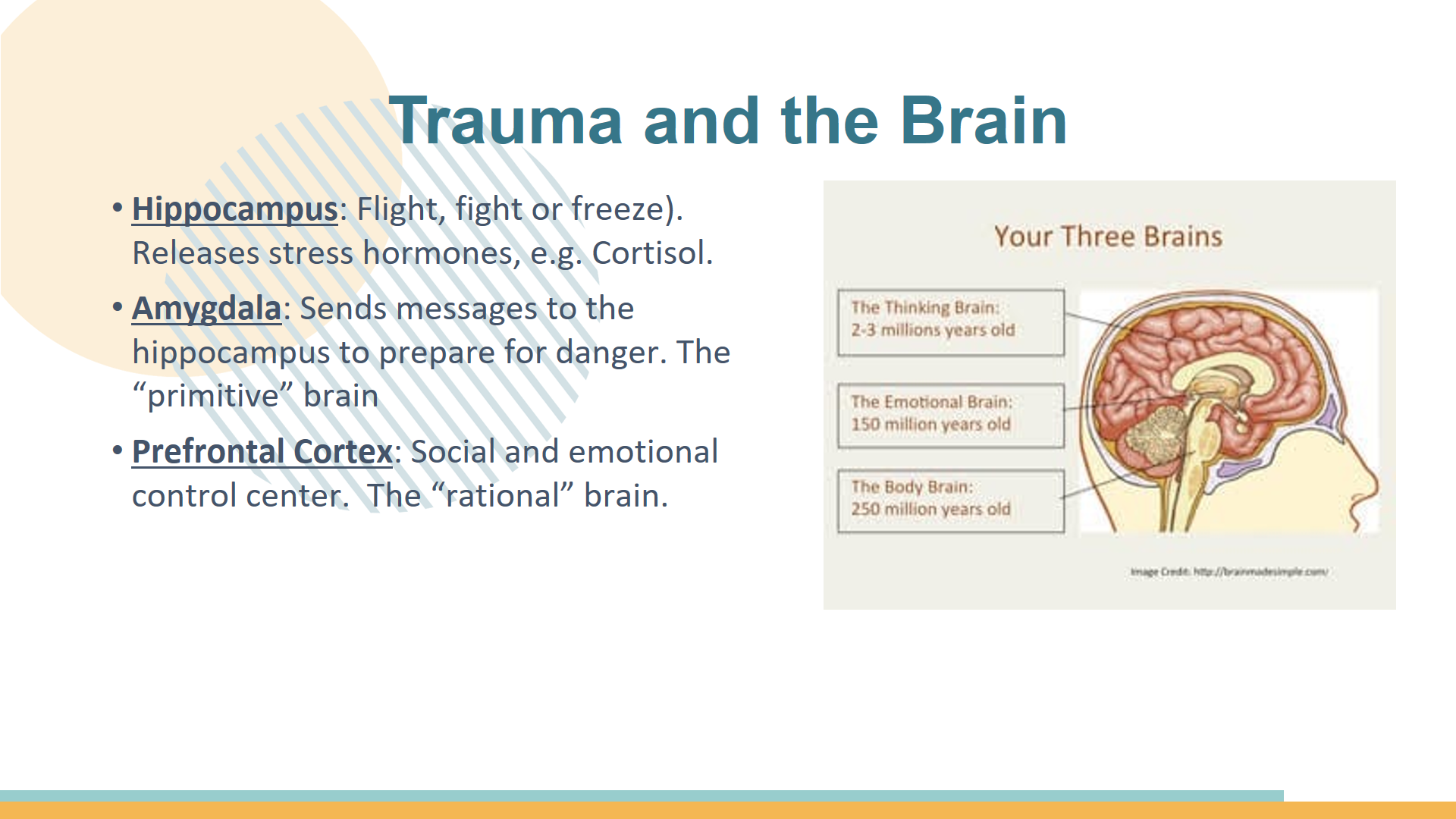
Here is a slide that I borrowed from a previous presentation and revamped for this one.

Here is a slide that I borrowed from a previous presentation and have since revamped.

I was able to really improve this slide with about 20 minutes of time and 5 simple changes.

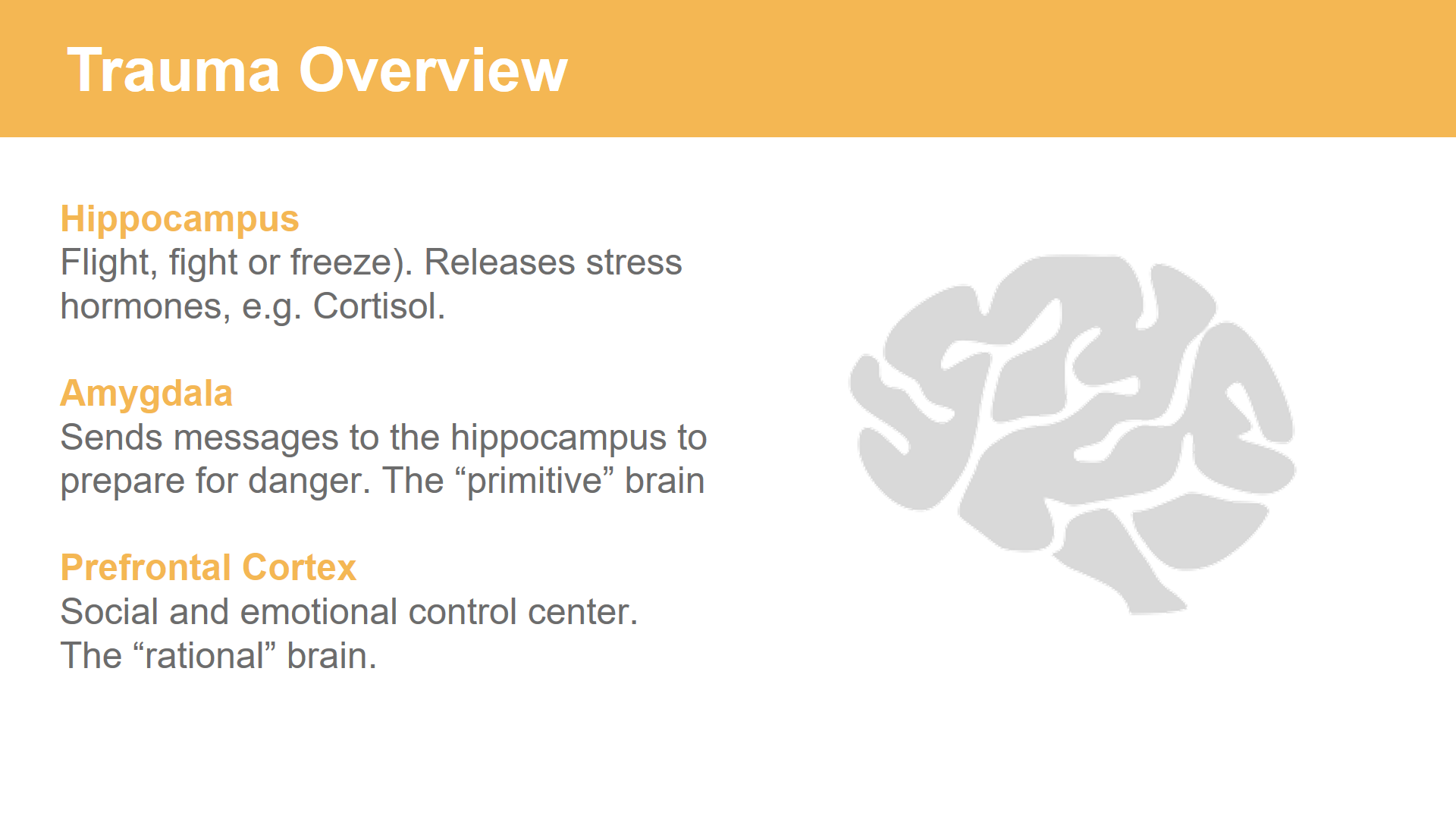
  1. I put it on a plain white background and color coded it to be part of the yellow section of the presentation.
  2. I revamped that grainy image and changed it to a grey brain icon from The Noun Project (highly recommend!).
  3. The bullet points were removed, as was the underlining.
  4. I made the definitions a dark grey and the main word bold and colored yellow.
  5. Additionally, I made the definitions on the line below each item.

Here is the slide with these changes before storyboarding. BIG DIFFERENCE!

Here is the slide with changes made. BIG DIFFERENCE!

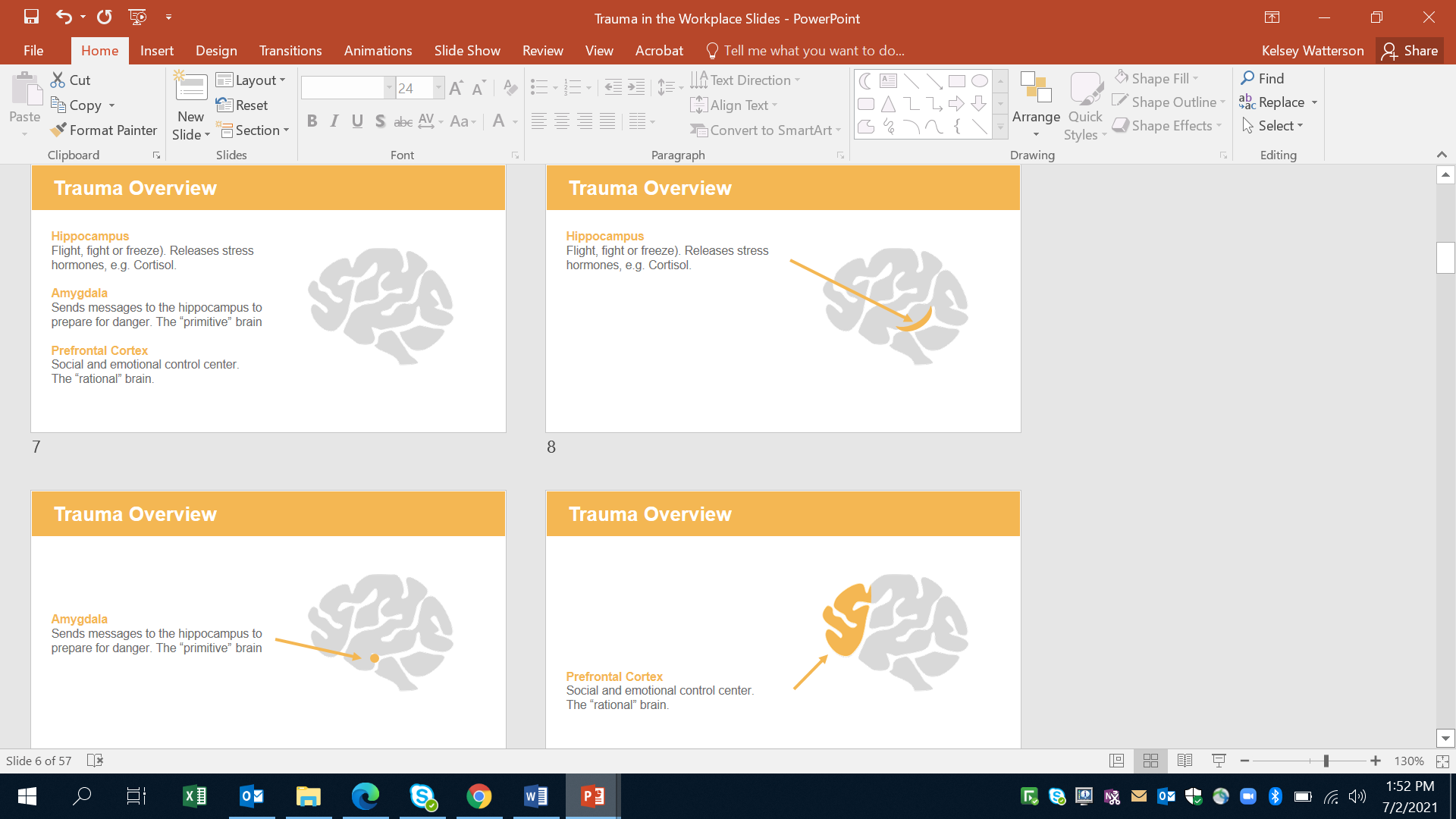
To storyboard this slide, I duplicated it two times to create a total of 3 slides.

Then, I simply changed the text to white for the definitions I wasn’t talking about on that specific slide. By doing this, nothing moved on the side, and only the point I wanted to talk about was visible.

To really vamp it up, I used yellow arrows (still color coding) to point to the location of each part of the brain. I then used shapes or a cropped version of the same brain icon to draw in that portion in yellow to highlight the location.

Here is the final story boarded version with the original slide left in for reference:

To storyboard this slide, I duplicated it two times to create a total of 3 slides.

There are more slides now, but they are organized, visually appealing, succinct, and most importantly your audience can easily follow along!

Now when these slides are presented, you have your first definition. Click.

There is your second definition. Click. There is your third definition.

Rather than having everything on one slide, you are now guiding your audience through your presentation!

Although there are so many great tips and tricks I could share, these three are probably the ones that truly transformed my presentations. The best part is, they don’t take that much extra time!

These are simple changes that take your slidedecks to a new level and allow you to really impress your audience.

Try these out and let us know how they worked for you! Happy Presenting!

Connect with Kelsey

LinkedIn: https://www.linkedin.com/in/kelsey-watterson-a79469160/

Written by cplysy · Categorized: depictdatastudio

Oct 19 2021

Concept Scenarios + Storyboards for Service Design

If you are looking to generate a sense of what your planned service looks like in practice why not draw it out?

Filmmakers know the importance of the process of storyboarding.

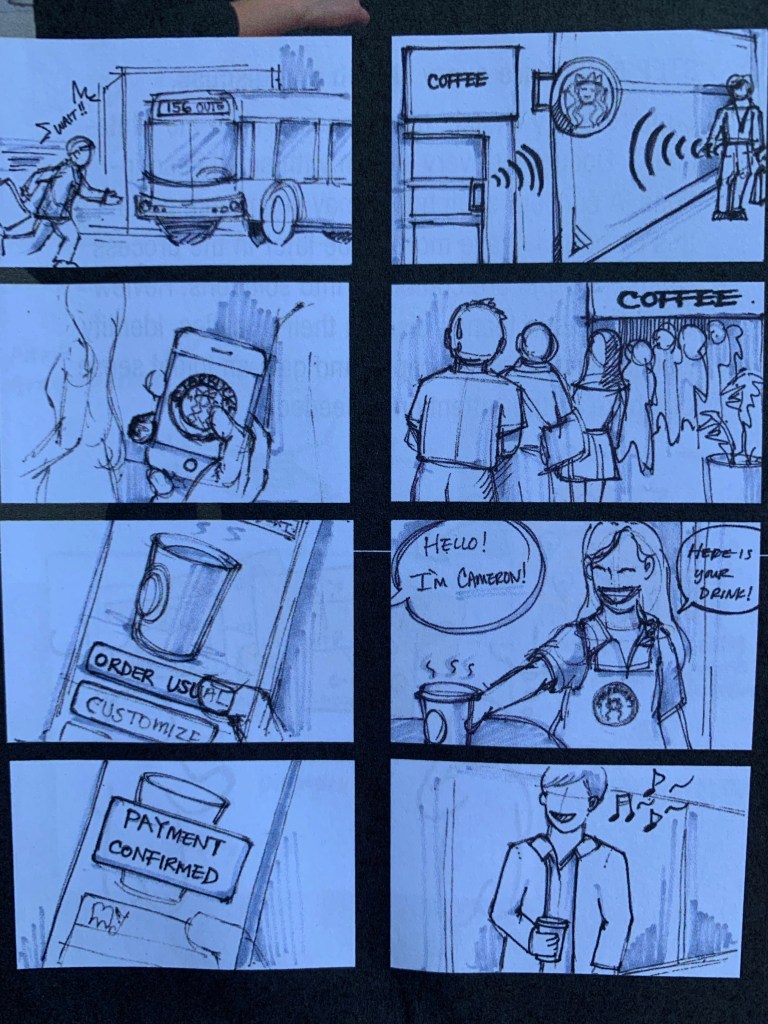
A storyboard is simply a visual representation of what you expect might happen from moment to moment in a service encounter. Storyboards allow us to ‘see’ the service before it’s made and spot potential issues tied to use, resources, interactions, and possible touch-points.

A storyboard tells the ‘story’ of your customer or client and you and your staff as you walk through the service. Storyboards require that you start to develop a vision — literally because it’s being drawn — of who you are seeking to serve.

This builds on the use of personas (which we’ve discussed before) and allows us to visualize relationships between these imaginary participants using data and how they interact with our products and services.

As we can see from the image below when we storyboard we also start to sequence steps involved in the service. For example, when we think of getting a coffee it’s easy to look at the act of ordering and receiving it, yet so much more is going on.

Kumar, V. (2013). 101 Design Methods. Hoboken, NJ: Wiley & Sons (p.239)

Concept Scenarios

A concept scenario is a form of storyboarding that begins with data collection and organizing ideas together — often through the use of a whiteboard or visual tool like Milanote. By pulling together ideas in discussion and through examination of concepts tied to your service or innovation, we develop the raw material to put it together with a narrative.

More traditional storyboarding starts with a story and pieces together the elements into a narrative and extracting concepts from it, concept scenarios are more of the inverse. Both yield storyboards. What concept scenarios do is help us to piece together concepts and identify where assumptions might need rethinking.

This method is participatory and involves a few days or weeks to fully undertake depending on the amount of detail you need, the availability of research opportunities, and the resources (human and otherwise) to come together and visualize ideas together.

Practice Notes

Concept Scenarios begin by doing background research and learning about what it is that you are looking to develop and eliciting the various concepts associated with that — asking who, what, where, when, and why. This involves research and then synthesis of this research and group-based discussion to pull concepts together.

A whiteboard or digital space to add those ideas together is a strong asset to support this work. Simple words on a sticky note can work to record concepts and allow for manipulation and movement when used on a tool like a whiteboard or tool like Miro, Mural, or Jamboard.

Next, select the concepts you are most attracted to and best fit with what you’re looking to do.

Step three is to begin imagining scenarios where you might put these concepts together. Consider the key interactions and relationships that are involved, the timing of what is to happen, and the actors involved.

The next step is to visualize these into a series of panels (see above) and illustrate the ideas in a narrative.

The last steps involve interrogating the scenarios to see how they hold up to assumptions and start asking questions about what might be missing and what else might be needed to make the scenarios more realistic or why or how they might be achieved if they are novel or innovative.

Reference: A great summary of this method can be found in the 2013 book 101 Design Methods by Vijay Kumar.

We do this work with our clients. If you want help to learn the method or to use it as part of your service design, strategy development, or evaluation contact us. We can help.

Cover photo by dix sept on Unsplash

The post Concept Scenarios + Storyboards for Service Design appeared first on Cense.

Written by cplysy · Categorized: cameronnorman

Oct 18 2021

Geological Context of Climate Change: Implications for Public Understanding and Museum Relevance

By: Emlyn Koster

With climate change and extreme weather frequently in the news and in light of the upcoming UN COP26 Conference, Emlyn taps his geological insights to point out what is often missing from society’s knowledge and which therefore warrants the museum sector’s urgent attention.

Prehistoric Climate Changes

Growing up in the UK where chatting about variable weather is a pastime, I was fascinated to learn about the alternating climates of glacial advance and interglacial retreat stages that occurred during an Ice Age from about 2.5 million years ago to about 12,000 years ago. Whether the UK’s temperate climate is part of an ongoing interglacial stage or in the aftermath of the Ice Age is, as I also learned, unknowable. It is however clear that over the tens, hundreds and thousands of millions of years in Earth history, not only has climate continuously changed, including with other ice ages, but so have the positions of, and ecosystems on, each continent. Homo sapiens are but a blink in the geological eye!     

‘The Great Acceleration’ and the ‘Anthropocene’

When I was born in 1950 the human population of 2.5 billion was a third of today’s 7.9 billion and the astronomer Fred Hoyle of Big Bang fame had just anticipated that the first photography of the Earth from space would transform perspectives about human history. How right he would turn out to be!

Cover page of the 2017 National Geographic supplement on climate change. Features a large image of the earth, with the words "National Geographic" above the earth and "7 Things You Need to Know About Climate Change Now" underneath.

In 1953 the leading climatologist Helmut Landsberg noted in Scientific American: “The big question on Earth is the influence of human activity on the atmosphere. There is some evidence that industrial life has increased the amount of carbon dioxide in the air…”. It would take almost half a century to amass and publicize evidence for human-caused climate change. However, it was only within two decades of Hoyle’s prediction that NASA’s Apollo missions enabled the first color photos of the Earth from space: these revealed the beauty—but also the potential fragility—of our wafer-thin atmosphere. In 2006, the acclaimed film ‘An Inconvenient Truth’ by the former US vice president Al Gore warned of dire consequences from global warming. In 2017, National Geographic issued a supplement with these summary points: “The world is warming… It’s because of us… We’re sure… Ice is melting fast… Weather is getting intense… Wildlife is already hurting… We can do something about it”.

With preliminary versions in 2004 and 2010, in 2015 the Future Earth network affirmed that ‘The Great Acceleration’ of 12 Earth System trends and 12 socio-economic trends began in the mid-20th century: “Human activity, principally the global economic system, is now the prime driver of change in the Earth System—the sum of our planet’s interacting physical, chemical, biological and human processes”. In turn, The Great Acceleration paved the way for the ‘Anthropocene’ which was proposed in 2002 by Nobel laureate Paul Crutzen as a guide to society. The International Science Council recently stated: “For the first time in a relationship spanning 300,000 years, instead of the planet shaping humans, humans are shaping the planet”. I describe the Anthropocene as a much-needed recognition that humanity, the world’s dominant species, has extensively detached itself in a geological nanosecond from the natural state of the Earth System (see Emlyn Koster, 2020. Anthropocene: transdisciplinary shorthand for human disruption of the Earth System. Geoscience Canada, 47:1-2, 59-64).

Climate Change and Extreme Weather

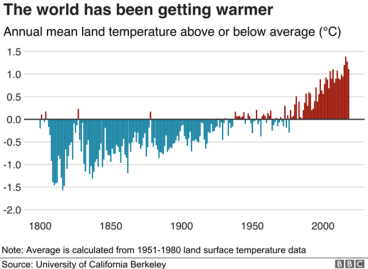
Graph entitled "The world has been getting warmer" that shows the annual mean land temperature above or below average (celcius) between 1800-2000. The graph shows a dramatic rise in annual mean land temperature after about 1950.

The UN Framework Convention on Climate Change in 2015, known as the Paris Agreement, catapulted anthropogenic warming of the atmosphere into a global anxiety. The tipping point to a perilous future, widely stated as a maximum further increase of just 1.5°C (2.7°F) by 2030, frames many profound challenges. Here are three examples. The first surrounds society grasping the massive difference between a seemingly tiny increase in average global temperature over many decades versus local daily and seasonal variations commonly 5-10 times this amount. The second is that a focus on temperature obscures the consequences of sea-level rise in planning for the future of coastal cities (see here, here, and here for examples). The third concerns communities, often poor ones, on deltas and islands where occupation is already or soon will be unfeasible, thereby creating a situation of climate refugees.

What began as the greenhouse effect, the labels for climate change have evolved―global warming, climate crisis, climate emergency, and climate justice. In my geological view, each of these has interpretative limitations. Change?: which direction and how fast? Warming?: what about wetter, stormier and drier trends? Crisis?: should the concern be upgraded to existential, meaning anxiety over the future of human existence? Emergency?: do unforeseen circumstances warrant an immediate response? Justice?: does a moral violation needs a new public policy focus? Today’s talk about climate change uses success-sounding adjectives such as addressing, combatting, fighting and overcoming. But resilience and sustainability are only buzzwords if the reality of many irreversible adverse trends is not confronted. At a recent Youth4Climate summit in Italy, Sweden’s Greta Thunberg again described the efforts of world leaders as too little and too late.

Atmospheric warming is an imperceptibly slow whole-planet process whereas record-breaking weather involves sudden local phenomena. The following examples remind us that headline-making events often lack ultimately more vital wide-angle contexts:

  • Superstorm Sandy in October 2012, mostly of sub-hurricane strength, caused an overnight 14-foot surge in New York Harbor and left $70 billion of damage. As restoration proceeded, an opportunity was missed to make known that irreversible sea-level rise by 2100 AD is estimated to be as much as 5 feet which will radically alter shorelines and where people can live and work.
  • NOAA rated the snowfall and power cut in Dallas last February as the nation’s costliest winter storm. Dalhart, 440 miles NW of Dallas, received the most snow with 8 inches. It would have been pertinent for the public to also know that Houston had 20 inches on Valentine’s Day in 1895 which was the Texas record until a 26-inch fall near Dallas on December 20-21, 1929.
  • Last summer’s drought-caused, record-breaking wildfires in California coincided with New York City’s near-normal monthly temperature averages but these were jolted by two record-breaking one-day (and also record-breaking one-hour) rainfalls: 4.45 inches (1.94 inches) from Tropical storm Henri on August 22 and 8.8 inches (3.1 inches) from Hurricane Ida on September 1.  

The Earth System

While dangerous weather grabs public attention, climate change in relation to other major changes in the Earth System is often missing from news coverage. For example, the Earth’s biosphere also functions as a virosphere in which pandemic diseases are exacerbated by climatic change. The American Journal of Managed Care recently stated: “All the negative health outcomes associated with increased heat, pollution exposure, and natural disasters call into question whether existing infrastructure—and particularly health care systems—will be equipped to handle the rising demand for care”. Other consequences of Earth System disruptions include a stunning loss of natural biodiversity and a prediction that about half of the world’s people will likely suffer from water insecurity by 2050.

I wish that, starting in the late 20th century, formal education had included the Earth System as a core subject to equip society to ecologically grasp the interconnectedness and susceptibility of the planet’s controlling forces.

Museum Sector Response

My first career stage as a geologist, and starting a decade ago also as an advocate for the Anthropocene, led to past-present-future links being a frame of reference in my second career stage as a museologist. At the Ontario Science Centre where I was preceded as its director by the renowned J. Tuzo Wilson of seafloor spreading and plate tectonics fame, this institution partnered with the Canadian Institute for Advanced Research in 1996 to convene ‘The Earth System: Geology Lessons for Our Future’ as a pioneering international conference in the public eye.

Museum literature on climate change has been relatively light. In 2015, Fiona Cameron and Brett Neilson co-edited ‘Climate Change and Museum Futures’ and in 2017, Jennifer Newell, Libby Robin and Kirsten Wehner co-edited ‘Curating the Future: Museums, Communities and Climate Change’: Australia deserves a shoutout for these initiatives. In the US, the Journal of Museum Education in March 2020 focused on ‘The Climate is Changing: Why Aren’t Museums?’ and AAM’s Exhibition journal in spring 2021 asked ‘Can Exhibitions Save the Planet?: Tackling Climate Change and Environmental Threats’. A recent issue of Museum & Society, published by the University of Leicester, included a review on Anthropocene-focused exhibitions. Noting that all but nine of the 41 it discovered were/are in art museums, the Danish authors remarked: “… most exhibitions appear to deliberately exclude significant controversies about the Anthropocene and the predicament of the world from their arenas for reflection”. A new international development is The Anthropocene Project based in Toronto.

Last spring, I contributed to the ‘Crisis and Resilience’ issue of AAM’s Exhibition journal with an article advocating for a paradigm shift to illuminate humanity’s pervasive impacts on the Earth System. In this month’s thematic issue of the Informal Learning Review about what the museum sector has learned from the pandemic, my focus is on the continued sidelining of external relevance. In particular, I am concerned that the far-reaching challenges of climate change are understated due to a scarcity of wide-lens and long-view perspectives. I therefore fervently hope that the museum sector responds to the inevitable clarion calls when the UN COP26 Climate Change Conference convenes from October 31 to November 12, 2021 in Glasgow, Scotland.

About the Author

Emlyn Koster, PhD integrates the vantage points of geology, humanism and museology for a holistic past-present-future, nature-and-culture lens. During CEO appointments at the Royal Tyrrell Museum of Paleontology, Ontario Science Centre, Liberty Science Center with The New York Times and Wall Street Journal profiling his philosophy, and the NC Museum of Natural Sciences, he was 50th anniversary board chair of the Geological Association of Canada, a member of the Committee for the Public Understanding of Science for the AAAS, and the inaugural chair of ICOM’s Anthropocene Working Group. His presentation to the UN Framework Convention on Climate Change contributed to the addition of museums as a public education agency in Article 12 of the Paris Agreement and he is involved in UNESCO’s new Language of the Anthropocene project. He welcomes comments and inquiries at koster.emlyn@gmail.com. You can read his previous blog posts for RK&A here.

The post Geological Context of Climate Change: Implications for Public Understanding and Museum Relevance appeared first on RK&A.

Written by cplysy · Categorized: rka

  • « Go to Previous Page
  • Go to page 1
  • Interim pages omitted …
  • Go to page 158
  • Go to page 159
  • Go to page 160
  • Go to page 161
  • Go to page 162
  • Interim pages omitted …
  • Go to page 310
  • Go to Next Page »

Footer

Follow our Work

The easiest way to stay connected to our work is to join our newsletter. You’ll get updates on projects, learn about new events, and hear stories from those evaluators whom the field continues to actively exclude and erase.

Get Updates

Want to take further action or join a pod? Click here to learn more.

Copyright © 2026 · The May 13 Group · Log in

en English
af Afrikaanssq Shqipam አማርኛar العربيةhy Հայերենaz Azərbaycan dilieu Euskarabe Беларуская моваbn বাংলাbs Bosanskibg Българскиca Catalàceb Cebuanony Chichewazh-CN 简体中文zh-TW 繁體中文co Corsuhr Hrvatskics Čeština‎da Dansknl Nederlandsen Englisheo Esperantoet Eestitl Filipinofi Suomifr Françaisfy Fryskgl Galegoka ქართულიde Deutschel Ελληνικάgu ગુજરાતીht Kreyol ayisyenha Harshen Hausahaw Ōlelo Hawaiʻiiw עִבְרִיתhi हिन्दीhmn Hmonghu Magyaris Íslenskaig Igboid Bahasa Indonesiaga Gaeilgeit Italianoja 日本語jw Basa Jawakn ಕನ್ನಡkk Қазақ тіліkm ភាសាខ្មែរko 한국어ku كوردی‎ky Кыргызчаlo ພາສາລາວla Latinlv Latviešu valodalt Lietuvių kalbalb Lëtzebuergeschmk Македонски јазикmg Malagasyms Bahasa Melayuml മലയാളംmt Maltesemi Te Reo Māorimr मराठीmn Монголmy ဗမာစာne नेपालीno Norsk bokmålps پښتوfa فارسیpl Polskipt Portuguêspa ਪੰਜਾਬੀro Românăru Русскийsm Samoangd Gàidhligsr Српски језикst Sesothosn Shonasd سنڌيsi සිංහලsk Slovenčinasl Slovenščinaso Afsoomaalies Españolsu Basa Sundasw Kiswahilisv Svenskatg Тоҷикӣta தமிழ்te తెలుగుth ไทยtr Türkçeuk Українськаur اردوuz O‘zbekchavi Tiếng Việtcy Cymraegxh isiXhosayi יידישyo Yorùbázu Zulu