This activity will help your staff connect the dots between data, community feedback, and a persuasive grant narrative that funders can’t ignore.
The post Try This: Making Your Case to Secure Grant Funding appeared first on Nicole Clark Consulting.
the next day for evaluation
This activity will help your staff connect the dots between data, community feedback, and a persuasive grant narrative that funders can’t ignore.
The post Try This: Making Your Case to Secure Grant Funding appeared first on Nicole Clark Consulting.
Behind-the-scenes Excel workarounds to label your x-axis juuust right.
My first piece of advice, stop using PDFs to share your reports.
Now I know that 95% of you not follow that advice. Even if PDFs are shown to be unfit for human consumption, they are still the status quo reporting tool for most organizations. (For the very few of you who will consider that advice, check out this post I wrote about creating web reports.)
So, given that you are likely to continue using PDFs to share your work, let’s talk about how those PDFs should be formatted.
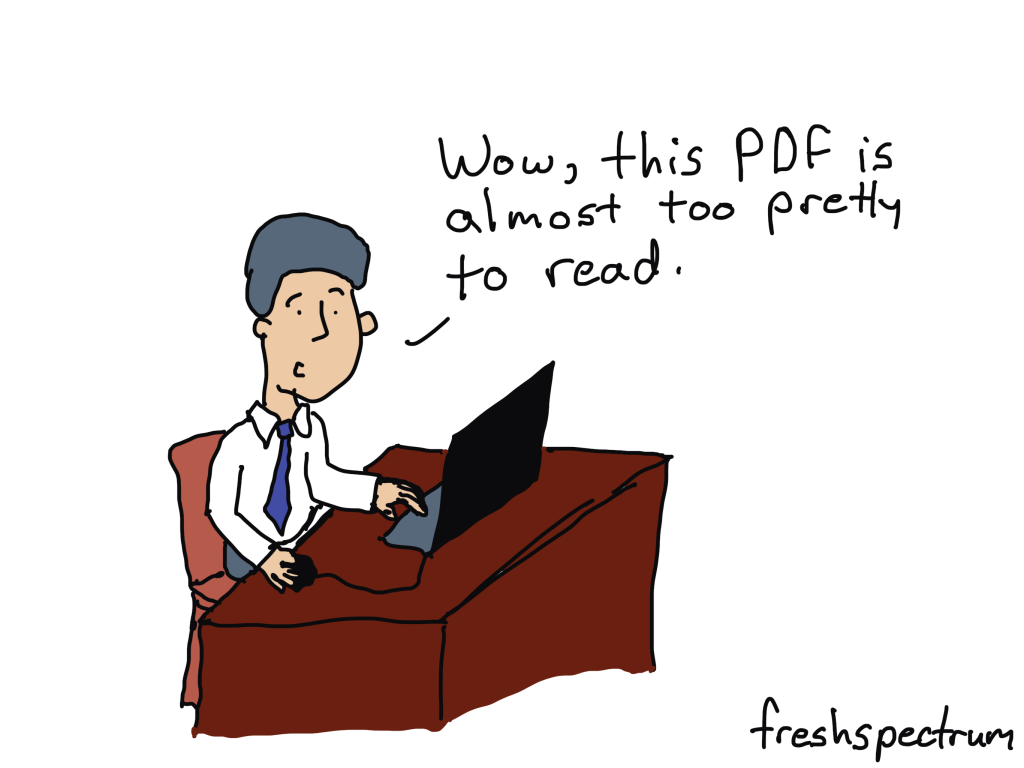
At lot of organizations stick with PDFs because you can make a PDF look really pretty. While web development has come a long way in the last decade, it’s still far easier to work within a set canvas (i.e. 8.5 x 11 inches).
But it’s also like that restaurant with the fantastic presentation but tasteless food. I went to a bakery like this, got some really beautiful looking french pastries to try out. Unfortunately the beautiful looking pastries tasted like stale bread.
Report theater is when an organization wants to deliver a report with a certain look. But whether that report is readable or useful in any way is irrelevant.
If that’s you, by all means, create in whatever format you want.
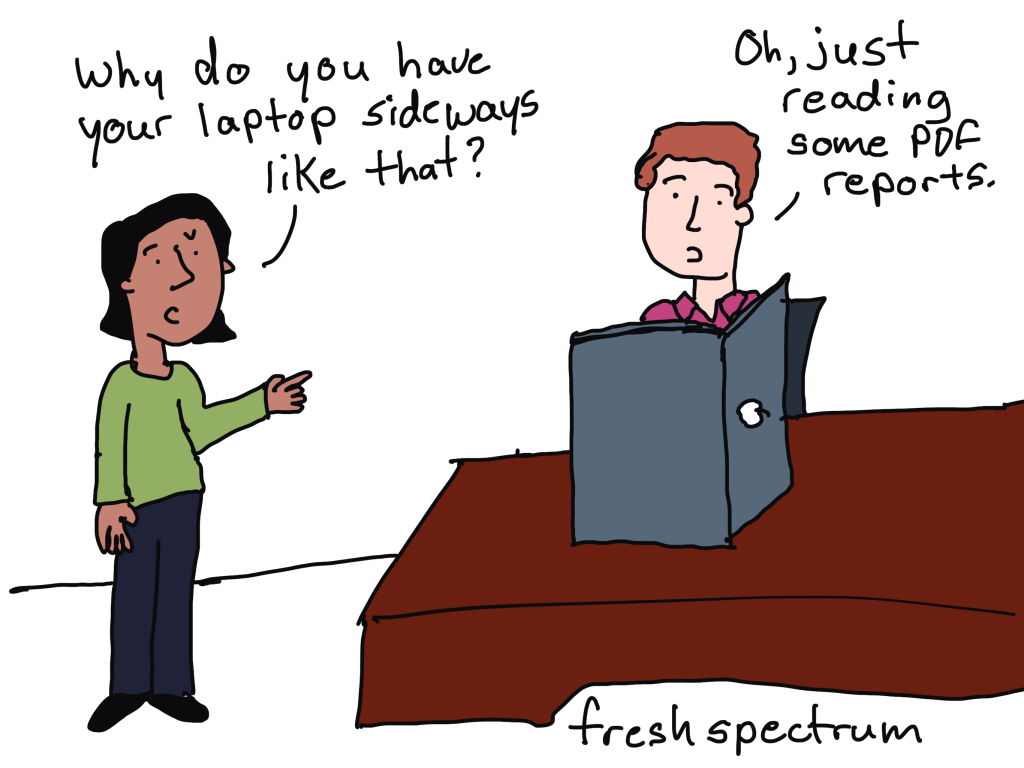
But if you are trying to create human readable reports, and must stick with PDF, then you should be creating in widescreen.
Because if someone is reading your PDF report, the vast majority of the time, they will be reading that report using a laptop or desktop computer. Meaning, they will be reading your report with a widescreen.
And if you would like direction on how to create such a report, check out this blog post I wrote on Slidedocs.
I can think of one pretty solid argument against my advice. How about you?
El artículo de Tom Aston (2024) ofrece una revisión de las tendencias emergentes en la evaluación de blogs, podcasts y webinars durante la segunda mitad de 2024. Se centra en tres temas principales: la narración de historias desde múltiples perspectivas, la sostenibilidad en medio de la ‘policrisis’ y las promesas y posibles trampas de la evaluación feminista. Además, aborda dos metatendencias relacionadas con los desafíos de establecer límites evaluativos y buscar explicaciones parsimoniosas.
Ideas Centrales:
Retos y Oportunidades:
Aspectos Recurrentes:
Conclusión: El artículo destaca la evolución de la evaluación hacia enfoques más inclusivos, participativos y sostenibles. A medida que enfrentamos desafíos globales como el cambio climático y las desigualdades de género, es crucial que las evaluaciones adopten perspectivas más holísticas y flexibles. La integración de múltiples formas de conocimiento y la consideración de la sostenibilidad y la justicia social pueden enriquecer significativamente el campo de la evaluación.
Referencias
Data isn’t just about numbers—it’s about telling the story of your impact.
The post From Data to Dollars: Using Program Evaluation to Strengthen Your Grant Application appeared first on Nicole Clark Consulting.
 English
 Afrikaans
 Shqip
Shqip አማርኛ
አማርኛ العربية
 Հայերեն
 Azərbaycan dili
 Euskara
 Беларуская мова
 বাংলা
বাংলা Bosanski
 Български
 Català
 Cebuano
 Chichewa
 简体中文
简体中文 繁體中文
繁體中文 Corsu
Corsu Hrvatski
 Čeština
 Dansk
Dansk Nederlands
 Esperanto
 Eesti
Eesti Filipino
 Suomi
Suomi Français
 Frysk
Frysk Galego
 ქართული
 Deutsch
 Ελληνικά
 ગુજરાતી
 Kreyol ayisyen
 Harshen Hausa
 Ōlelo Hawaiʻi
 עִבְרִית
 हिन्दी
 Hmong
Hmong Magyar
 Íslenska
 Igbo
Igbo Bahasa Indonesia
 Gaeilge
 Italiano
 日本語
日本語 Basa Jawa
 ಕನ್ನಡ
ಕನ್ನಡ Қазақ тілі
 ភាសាខ្មែរ
 한국어
한국어 كوردی
كوردی Кыргызча
 ພາສາລາວ
 Latin
Latin Latviešu valoda
 Lietuvių kalba
 Lëtzebuergesch
 Македонски јазик
 Malagasy
 Bahasa Melayu
 മലയാളം
 Maltese
 Te Reo Māori
 मराठी
मराठी Монгол
 ဗမာစာ
ဗမာစာ नेपाली
 Norsk bokmål
 پښتو
پښتو فارسی
فارسی Polski
 Português
 ਪੰਜਾਬੀ
 Română
 Русский
 Samoan
 Gàidhlig
 Српски језик
 Sesotho
 Shona
Shona سنڌي
سنڌي සිංහල
සිංහල Slovenčina
 Slovenščina
 Afsoomaali
 Español
 Basa Sunda
 Kiswahili
 Svenska
 Тоҷикӣ
 தமிழ்
தமிழ் తెలుగు
 ไทย
ไทย Türkçe
 Українська
 اردو
اردو O‘zbekcha
 Tiếng Việt
 Cymraeg
 isiXhosa
 יידיש
יידיש Yorùbá
 Zulu
Zulu