• Skip to main content
  • Skip to footer
  • Home

The May 13 Group

the next day for evaluation

  • Get Involved
  • Our Work
  • About Us
You are here: Home / Archives for allblogs

allblogs

Feb 12 2020

The Gig Economy Business Plan

An illustrated guide to business planning for freelancers, consultants, and other professionals hoping to trade hours for dollars. Inspired by my friend Kendra, who asked me to write down our conversation and share it with others.
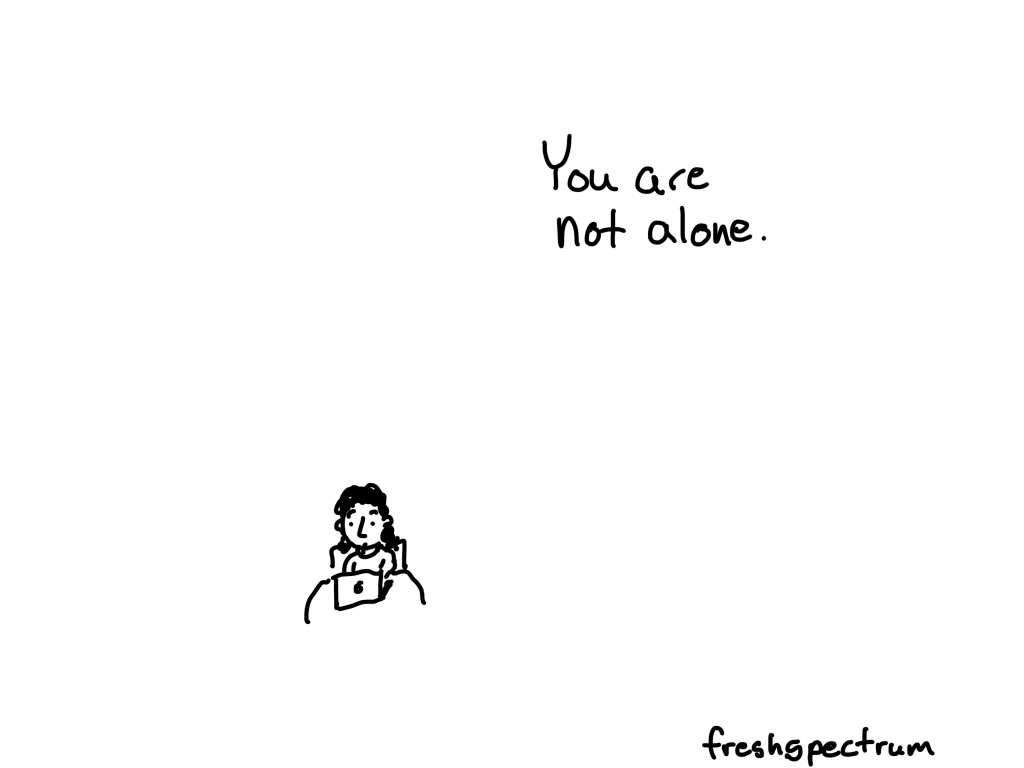
You are not alone.

Not quite a business, not quite a job.

I work in an open co-working space located in the middle of North Carolina’s research triangle. On a daily basis for the last few years I have been surrounded by people “in transition.”

It used to be easy to tell when someone was unemployed. You either had a job or you didn’t. But with the amount of short-term freelance work now available and the number of not-quite-profitable business ideas being pursued, the difference is so much murkier.

And in this space of short term roles and fuzzy answers to the common “so what do you do?” question, you can occasionally hear the phrase, “gig economy.”
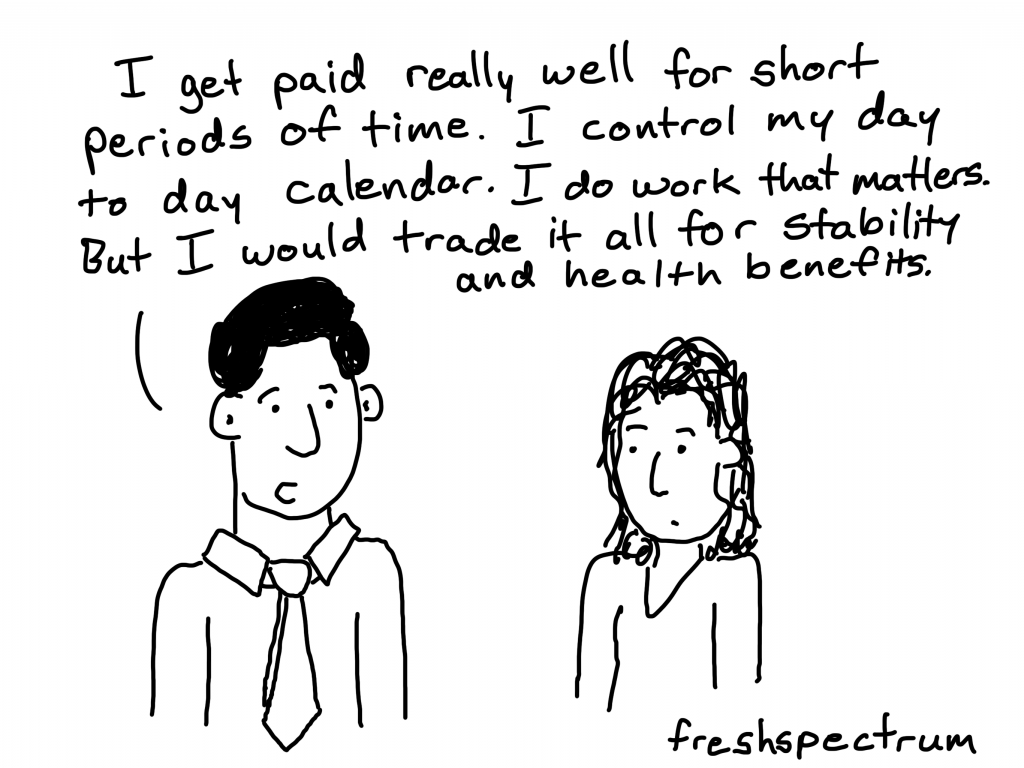
I get paid really well for short periods of time. I control my day to day calendar. I do work that matters. But I would trade it all for stability and health benefits.

Welcome to the gig economy.

In a gig economy, temporary, flexible jobs are commonplace and companies tend toward hiring independent contractors and freelancers instead of full-time employees. A gig economy undermines the traditional economy of full-time workers who rarely change positions and instead focus on a lifetime career.

Investopedia

My dad spent most of his working career with one employer. So did my father-in-law. But in modern times longterm employment like that is becoming increasingly rare.

Even big traditional slow-moving companies, the kinds that have the resources to offer comprehensive benefits packages and in-house HR teams, are opting towards short term hires brought to them by recruiting companies. The gig economy is becoming so much more than just TaskRabbit and Uber.

Not only do the recruiting companies find the people, the companies also become subcontracted employers for at least the first 6 months of a new hire’s tenure. What was once a niche industry for hard to find executives and bulk temp workers is now staffing big companies in all positions from top-to-bottom.
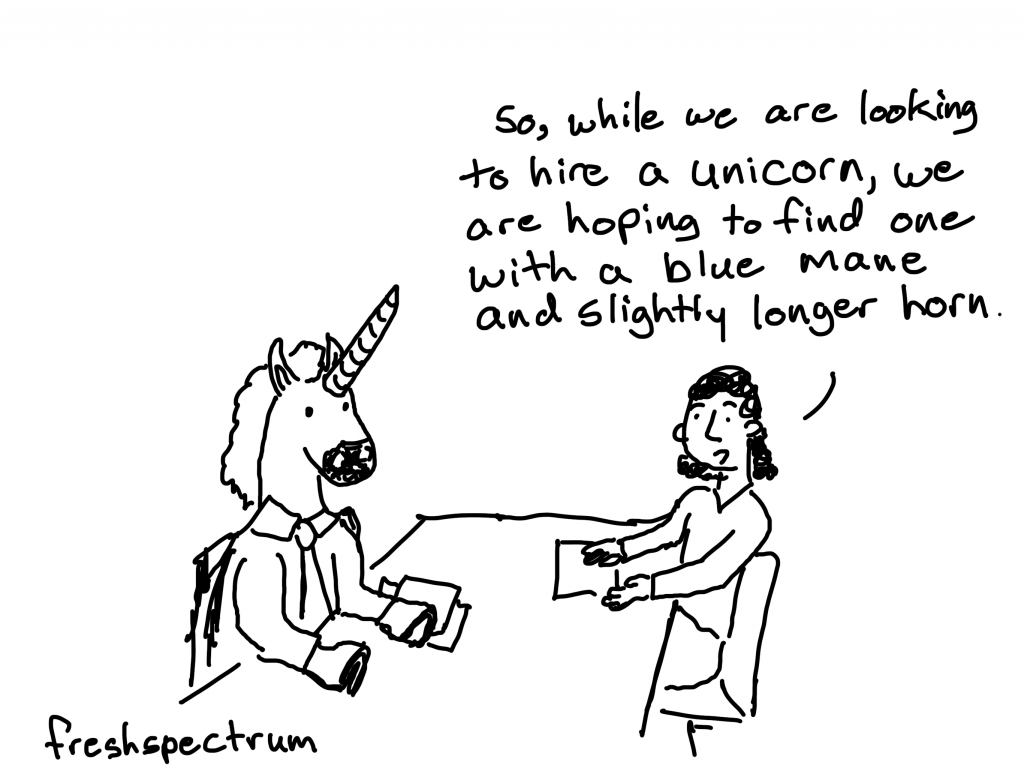
So while we are looking to hire a unicorn, we are hoping to find one with a blue mane and slightly longer horn.

Hiring managers, insulated from some of the costs of recruiting, get pickier. They are also equipped with new data systems that auto-filter away candidate resumes that don’t hit with just the right sets of criteria.

And from the candidate perspective, finding a job becomes a big pain in the @$$.

Is the big company job worth it?

So as big companies scrap their competitive advantage of stability and comprehensive benefits in exchange for short-term cost savings, the jobs they offer become less valuable.

All of a sudden the most valuable employees start to think, “I could do better on my own.” Even the ones, like yours truly, who never really started out with that entrepreneurial mindset.

And it’s for those of you out there, that I wrote this post. Because right now the people with the money are setting the terms.

But talent and experience is also an asset. I want you to leverage that asset and start to take back control of the terms.
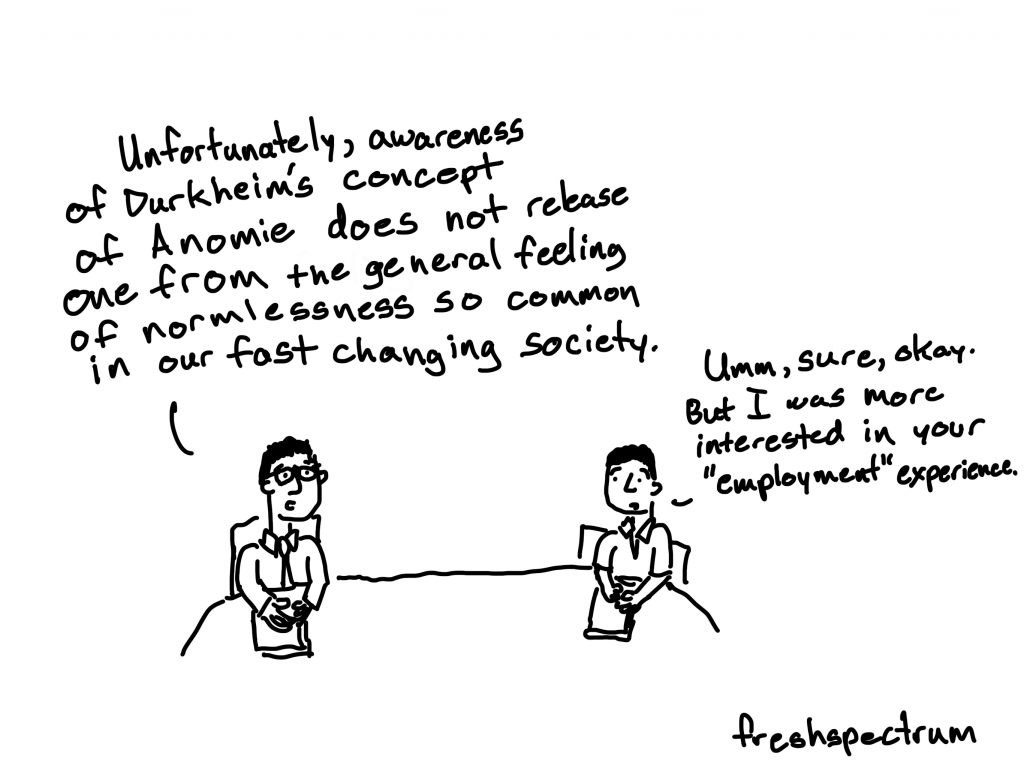
Unfortunately, awareness of Durkheim's concept of Anomie does not release one from the general feeling of normlessness so common in our fast changing society.

Umm, sure, okay. But I was more interested in your "employment" experience.

Freelancing as a Business Choice

Just to be clear, the model I am sharing is a freelancer model.

Maybe you dream of building the next Amazon or Lyft. But this is not really the right model for that.

This is about trading hours for dollars. But doing it in a way that you retain flexibility and generate a decent living.

This is a model for the people who are in business for themselves because the reality of the modern economy makes that the ideal decision. It’s for the people who would, if given the right offer, happily switch back to a salaried company job.

Freelancers get paid when they work. We’re not focused on scale… and we’re not tiny versions of real entrepreneurs. Freelancers do the work for clients who need them.

Entrepreneurs, on the other hand, are organized for growth. The job of the entrepreneur isn’t to do the work, it’s to build a company that does the work.
Seth Godin

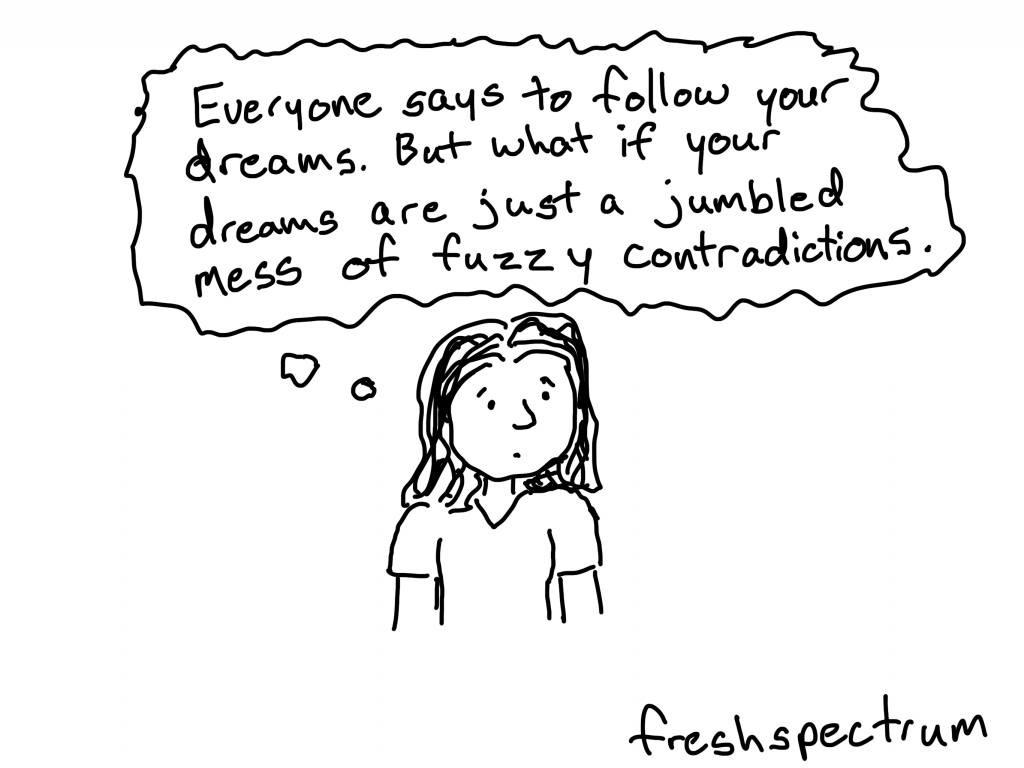
Everyone says to follow your dreams. But what if your dreams are just a jumbled mess of fuzzy contradictions.

The Standard Freelance Pricing Model

One of the biggest traps faced by those new to the freelance world results from taking a huge leap from an annual salary to a simple hourly rate.

Take my friend Zee (a fake name composite of a few friends really).

Now Zee used to make 100K/year with good benefits. But as a freelancer he dives into the world offering his time at $100/hour. He gets a few takers and earns a few thousand for bespoke on-demand projects here and there.

After a year or so he has a steady series of clients. Each time making two or three thousand dollars. Some months he has several clients, other months one, and then over the summer he spent two months with none.

In his second year, Zee ended up earning 40K without benefits. His wife wants him to head back into the workforce. Zee is convinced though that if he could just do better at marketing, the numbers would go up and he would be matching what he used to make.

But what Zee doesn’t really consider is the boom or bust nature of his model and the true cost of scale. The more customers you need, the more time/money needs to go into marketing. The more customers you acquire, the harder it is to manage. The fluctuation in commitment drives up the number of hours worked, and the marketing needs never seem to go away.
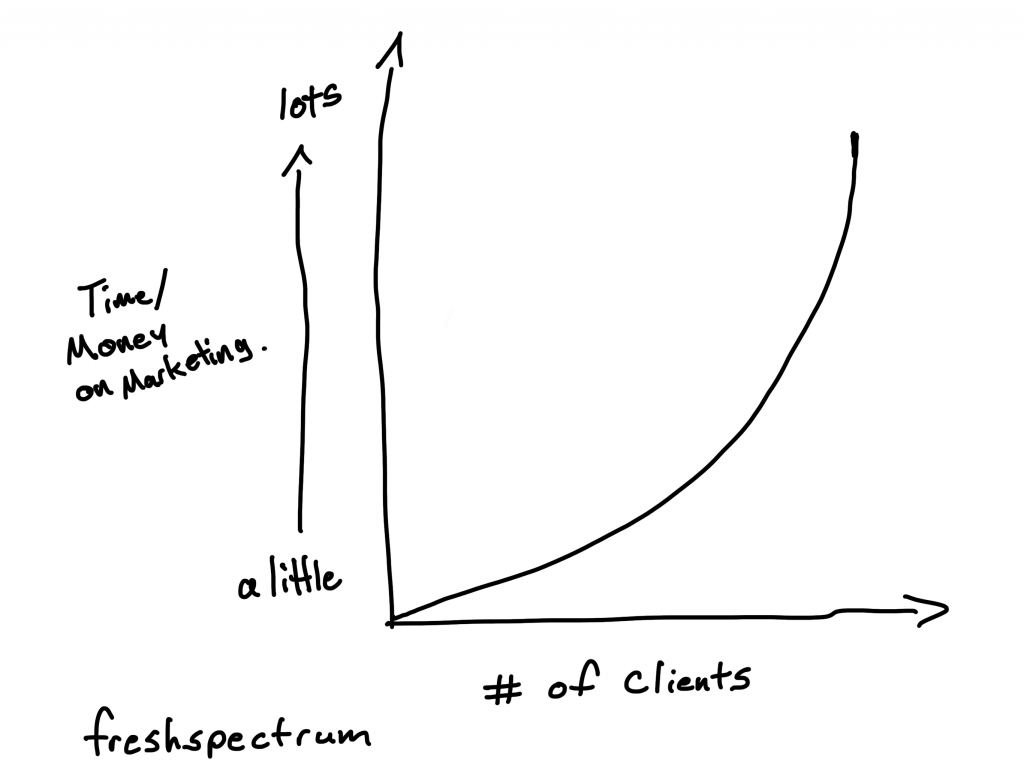
The more clients the more time and money needs to be spent on marketing.

Compare on Rate, Buy on Budget

You know what’s crazy. Rate is not usually the x factor.

Ultimately, what matters for a client is that the project is done on time on budget.

And their budget is usually not based on adding up hours. It’s based on a mix of what they can afford and what the market dictates.

If the market dictates a specific project is worth around 10K and the company has the funds to budget 10K, that’s usually how the contract gets funded.

The hourly rate for a client is just an evaluation tool. Does it pass the sniff test? Does it provide for enough hours to get the job done? How does it compare to the other people who bid for this project?

And for the freelancer. That rate is highly variable based not only on their salary, but in how much time/money they need to spend finding/managing their work.
Man staring off into nothingness.

The Gig Pricing Model

Let’s flip the freelancer pricing model.

So Zee used to make 100K+benefits each year. What if instead of jumping straight to rate, we just cut the salary in half and assume two clients.

If Zee wants to make his life easier, and he is having a hard time finding a single 100K job, all he has to do is find two 50K clients.

But that doesn’t include benefits, and it doesn’t build in any room for lag time that almost always delays payment. So if he’s going for two clients, he can sell half his time to each for 60K.

Is there a project that Zee can do for 60K/year? Or how about a project that he can complete in 6 months for 35K? Or maybe 3 months for 20K?

The goal Bigger Budgets, Fewer Clients.

Ideal salary is 1FTE, 2 gigs are .5 FTE each, 3 gigs are .33FTE each.

The lower the FTE, the higher the rate.

Tangible Offering, Fundable Need

So just what is a Gig then?

A Gig in my model is just a well-defined project. It is a structured plan with deliverables and timelines, designed to deliver something to a client.

A Gig is a tangible offering.

Now a tangible offering is not enough on its own. You have to pair your offering with a fundable need. A fundable need is something that an organization, business, or individual has the budget and inclination to address.

Many problems exist, but only so many our worth paying to solve.

But here’s the thing.

A contract position in the gig economy is both a tangible offering (position description/objectives) and a fundable need (there is a budget or else they would not have listed the position).

A salaried position in the gig economy also meets that criteria.

If a company might be willing to pay someone 100K/year to do a thing. And you can do that same thing in half the on-the-clock time for 70K. You just saved the company 30K while making more money.

Gigs exist everywhere that a position exists. If you can structure your offering, and show that it makes sense, working with you can become a no-brainer.
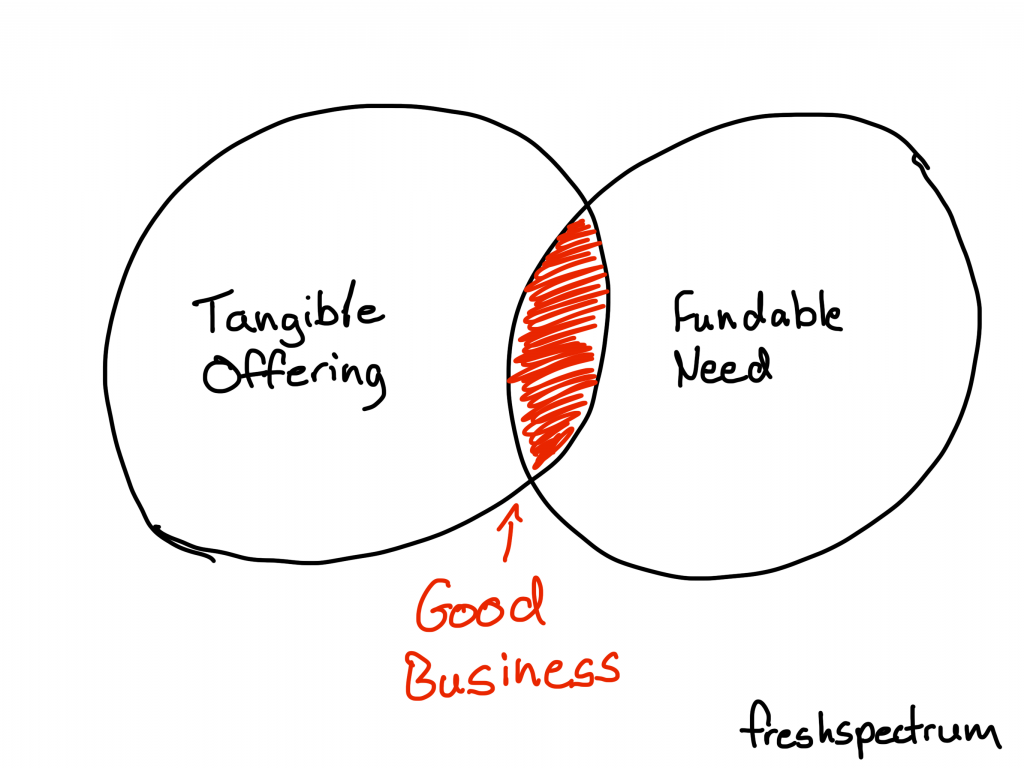
The overlap between tangible offering and fundable need is good business.

Choosing your focus.

When choosing the Gigs you hope to pursue, here is something i find helpful.

If you can find Gigs that you love to do (a dream role) with big enough budgets to pay your salary, you’re set.

Depending on your needs, dream roles with small budgets are also workable. So are larger budget boring jobs.

Just try to get away from undercharging for boring work.
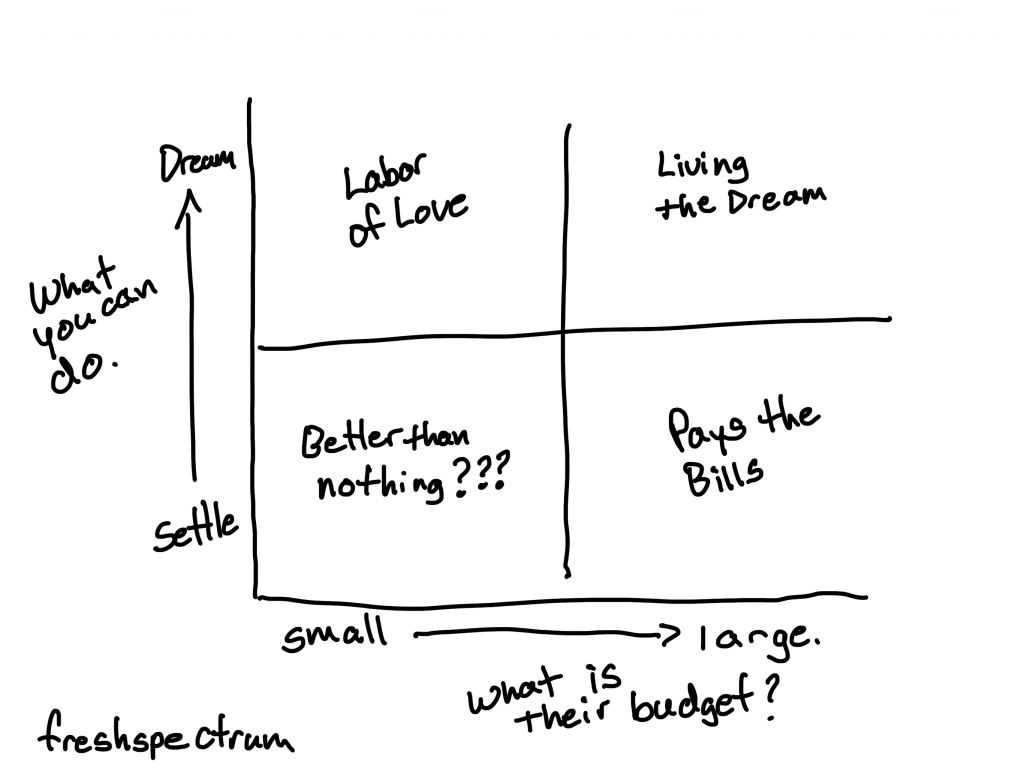
Living the dream is doing something you love for a large budget. A labor of love is doing you something you love for a small budget.

Settling for something with a large budget pays the bills.  And settling for something with a small budget is better than nothing, right?

Next Steps

Try to conceptualize what a big project you could offer would look like.

And if you’re struggling with Imposter Syndrome, think of it this way. You’re not designing a super expensive project but a well paying part time job.

Would love to hear what you think about this in the comments!
Written by cplysy · Categorized: freshspectrum

Feb 11 2020

Randi’s Keynote at the Small Museum Association Conference

Small Museum Association LogoRK&A is excited to announce that Randi Korn will be giving the Keynote Address at the Small Museum Association Conference in College Park, Maryland next week, February 17!  This year, the SMA conference theme is “Honoring the 100th Anniversary of Women’s Suffrage: Museums as Catalysts for Social Change.” In the Keynote, Randi will explain the virtues of impact-based planning and discuss the principles for intentional museum work. She will conclude the presentation with an invigorating participatory exercise that attendees will be able to replicate at their home museums.
We hope you can join Randi!

Can’t attend?  You can learn more about Intentional Practice in Randi’s book Intentional Practice for Museums: A Guide for Maximizing Impact.

The post Randi’s Keynote at the Small Museum Association Conference appeared first on RK&A.

Written by cplysy · Categorized: rka

Feb 11 2020

Resolving Data Fears in Education

I had some great conversations this week with colleagues about establishing a culture of data in organizations and training organizations who are new to evaluation and data. These conversations reminded me about one of my favorite old blog posts, that I originally wrote for the National Association for Family, School, and Community Engagement (NAFSCE) in 2017. Given this week’s discussions, it felt like a good time to bring it back into the rotation (with a few updates!). 

Don’t Be Scared of Data – How it Can Guide Family Engagement and Attendance Interventions

When I was a teacher, conversations around instructional data were baffling to me. Fresh out of policy school, I was eager to use what I had learned about data analysis to monitor how my students were performing, but as a social studies teacher, this task was more difficult than I had anticipated. I was required to keep a data binder, and administrators would periodically check to confirm that, well, it existed. However, I struggled to figure out what to put inside of it. My administrators did not help me understand how – absent standardized test data – I could track progress on specific standards outside of my grade book. It often felt like the conversation ended after the word “data” was uttered.

As I have focused my career on family engagement efforts, I have seen how conversations about using data to improve engagement are often greeted by the same blank stares I encountered as a teacher of a non-tested subject. On other days, talking about data elicits looks of panic or skepticism. At one particularly memorable training, community school coordinators were led in a debate about the utility of data. Sitting from my seat on the pro-data side of the room, I was amazed by arguments from the anti-data group. What resonated most is that these capable and talented colleagues understood data to simply be numbers on which their performance review was based, not as a tool to discover context and unlock insights about the families being served.

I think this belief system exists for a number of reasons. First, many educators are tired of increasing demands for data without sufficient training. Professionals need to understand how data can be collected, ways in which it should be analyzed, and how it can actually make their work easier. I have found that on-the-ground staff are often the last to receive the proper supports and professional development around understanding and using data. It becomes a symbol for all of the things we don’t like about accountability instead of the asset that it truly can be.

Perhaps more importantly, the work of engaging families – understanding needs, forming trusting relationships, and helping people when they are vulnerable – is incredibly difficult to quantify. Often, we know we have made progress or achieved results – not because of a spreadsheet or heat map – but because a family had enough food for the weekend or because a child stopped acting out as much in class. How do we tell those stories? How do we show our value as professionals when these important markers seem impossible to put into a spreadsheet? These are the critical questions we need to answer.

For these reasons, it is my mission to help educators and professionals realize that data does not have to be scary or intimidating. It does not require complex coding skills or mathematical know-how to track how clients are being served. If you would have been sitting across from me in the data debate, here are some tips to get you started:

  • Start with what you have. If you are trying to get more parents involved at the school, it’s helpful to know exactly who is already coming to events. Try making a spreadsheet of the information from your event sign-in sheets and see what patterns you find. For example, comparing the names on this list to a whole-school roster can help you figure out which kids have had little to no in-person parental involvement. Use this approach for other measures that you can track from the information and documents already sitting in your office.
  • Leverage the expertise around you. Everyone knows who the go-to person is at their workplace when they have a technology question. Maybe that person (or someone else) also has some knowledge of Excel or other tools. Anyone can fill in a template. See if a colleague can help you design the tracking tool you know you need but do not know how to create.
  • Do not be afraid to play around and make mistakes! The best way to learn how to manipulate and analyze data is to get your hands dirty and play around with it. Try different buttons, Google how to do things, and ask what colleagues at other schools and organizations are doing. This is why there is an “Undo” button! Of course, if you are unsure, you can always make a copy of your file so the original data is safe.

Using your organization’s qualitative and quantitative data can give you amazing insight into both the ongoing needs and continuing growth of the students and families you serve. With a little less reticence towards this approach, we can make a lot more progress in engaging families to help their children succeed.

Of course, if your organization is unsure of how to get started in this area, I’d love to be of assistance. Learn about the new Build Your Evaluation Capacity training package!

Written by cplysy · Categorized: engagewithdata

Feb 09 2020

working from the mistake

You’ll have to imagine the heady perfume of woodsmoke and cedar that permeated the afternoon.

You’ll have to imagine the heady perfume of woodsmoke and cedar that permeated the afternoon.

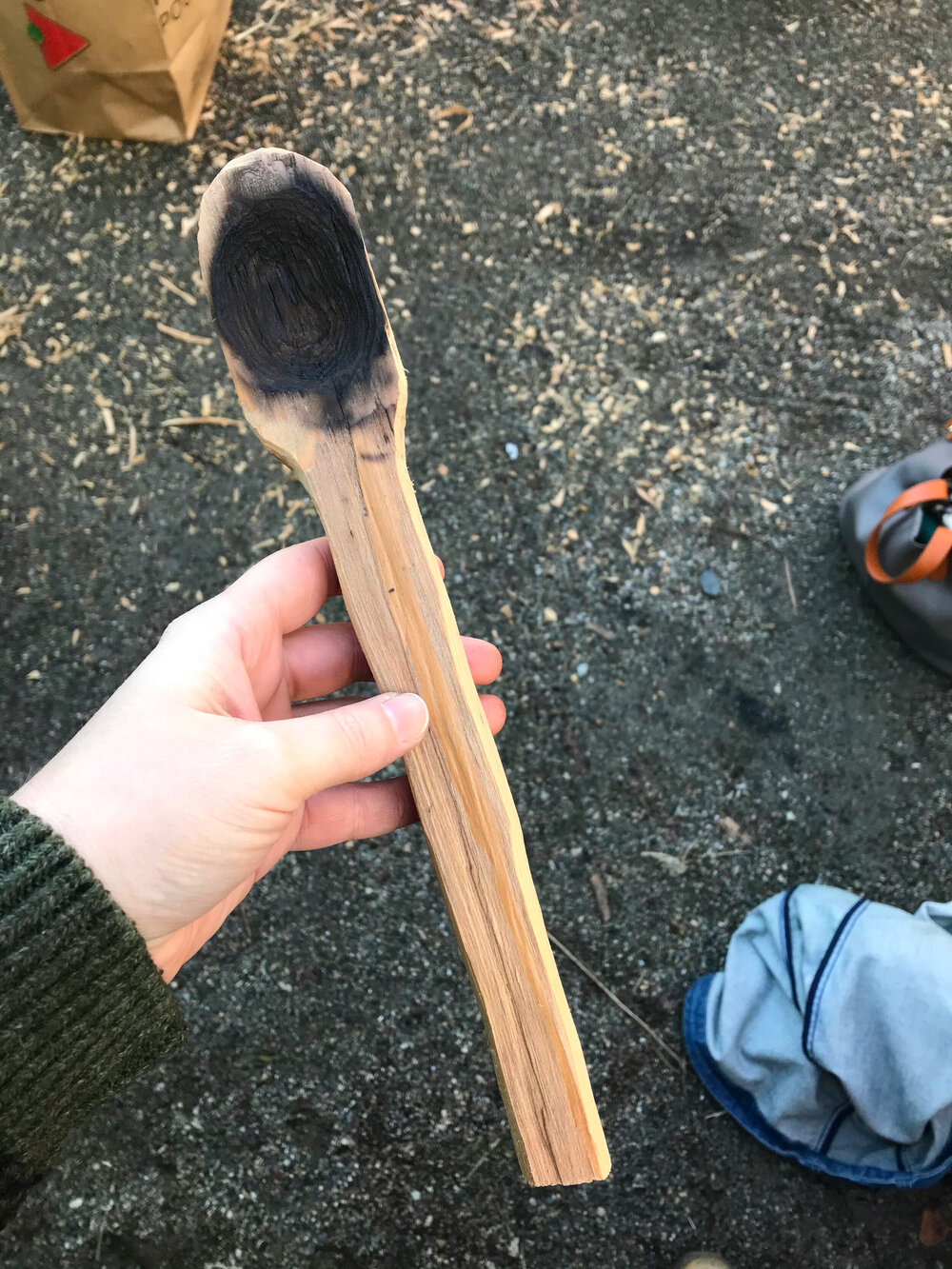
Yesterday afternoon I spent a few delightful hours in a spoon carving workshop learning how to carve a cedar spoon with a bush knife and some hot coals. (Thank you to Delmar Williams of Squamish and Lil’wat Nations for teaching us and providing all the supplies and tools, and to Sharon Kallis of EartHand Gleaners Society for organizing and getting that all-important burn permit!)

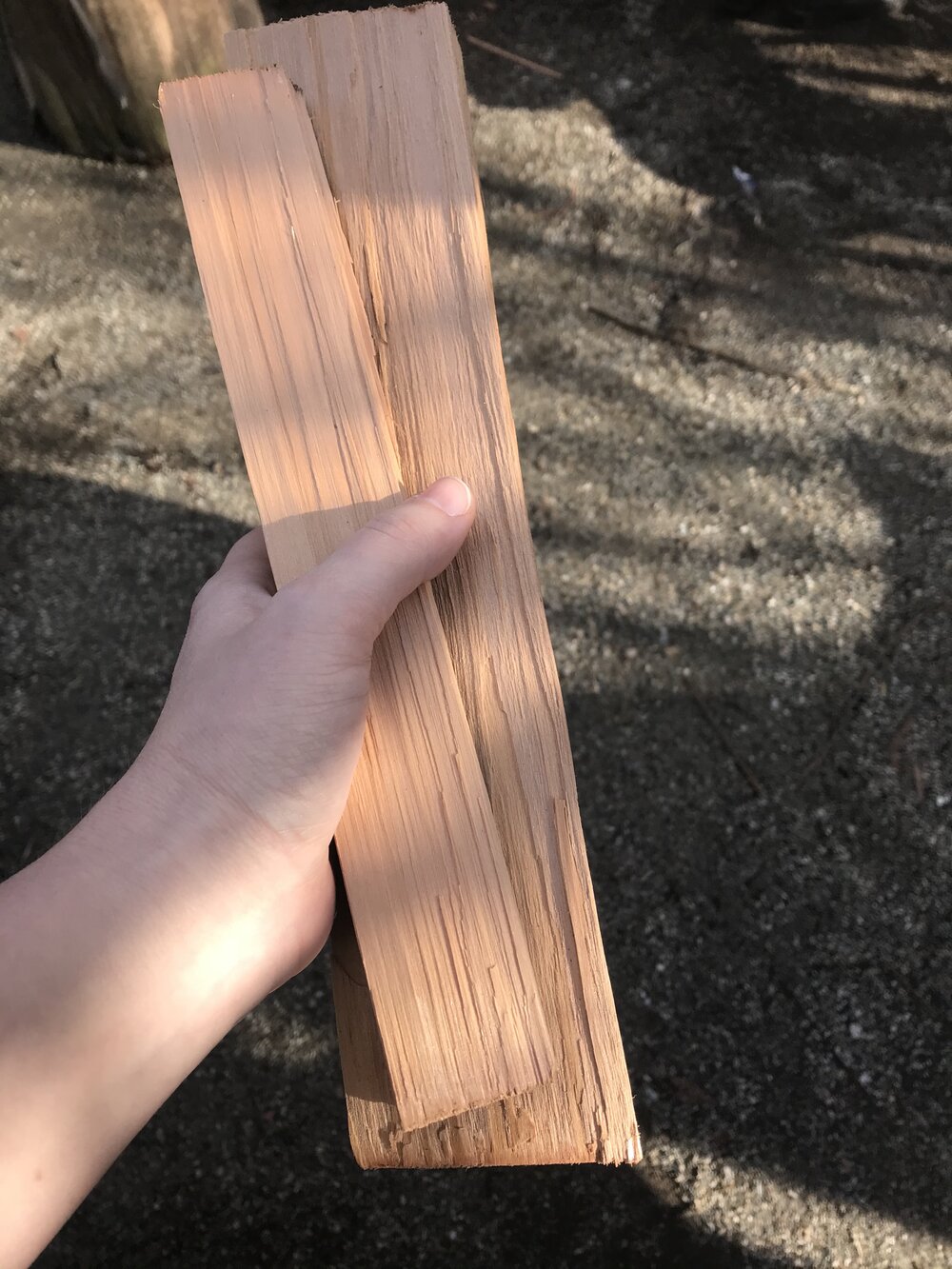
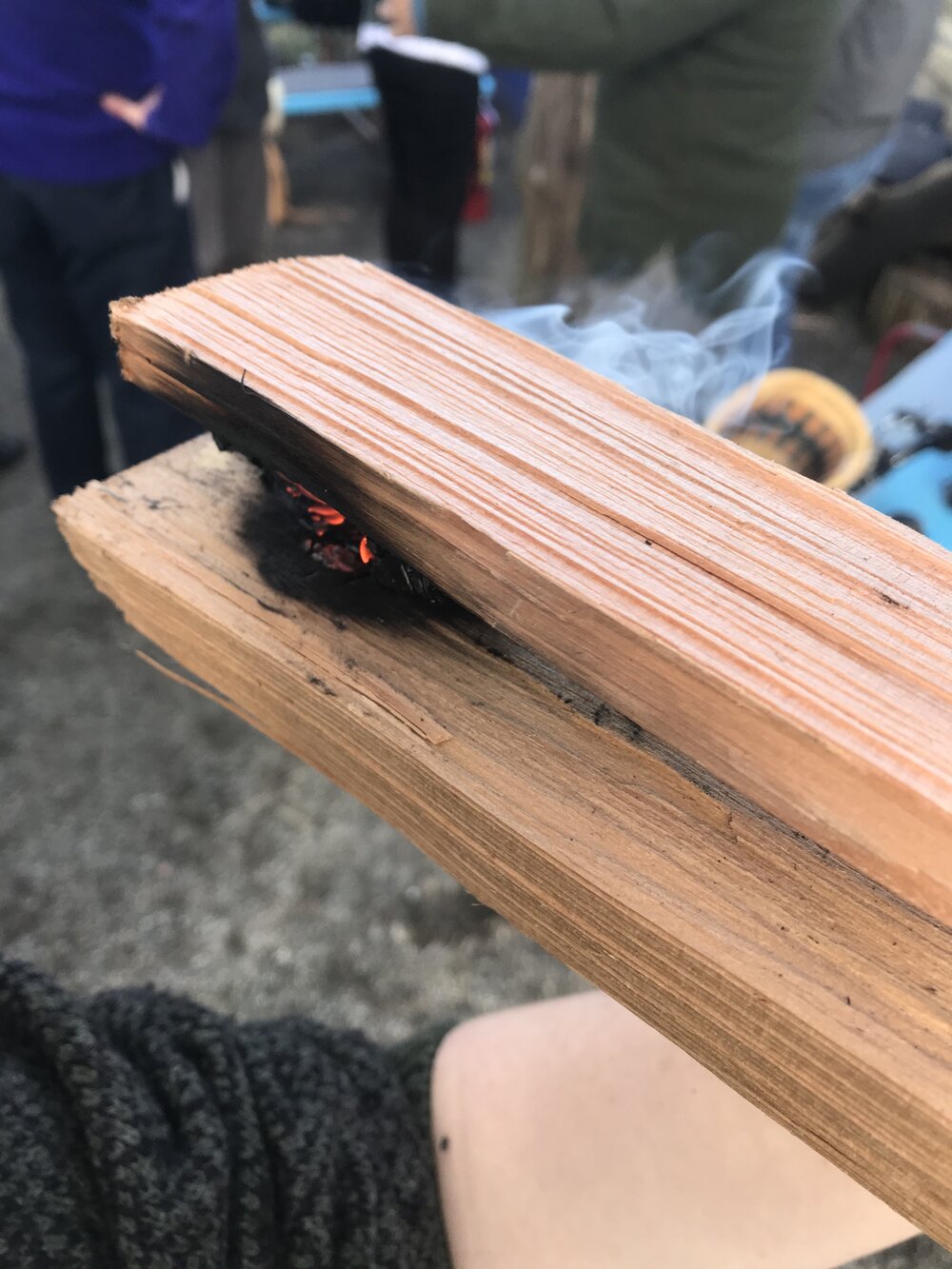
I’m new to carving, and working with both knives and fire was exciting. As Delmar explained, when he teaches kids these techniques, it’s fun because he’s the guy who gets to come in and show them how to work with all the ‘dangerous’ things they’re supposed to avoid. The methods he showed us were not complicated on the face of them, but the actual execution took patience and the slow building up of skill through practice. We started with the coal burn-out method for the bowl of the spoon, which involves holding a piece of burning coal on your block of cedar (using another smaller piece of cedar to hold the coal in place), and feeding it air with your breath—or a helpful breeze—to keep it hot until you get a nice burned-in dish.

Easier said than done. Most of us struggled to keep our coals lit and burning long enough to make a dent. I kept getting a better light on my top stick than the one that was meant to be a spoon. When I did finally get a piece of coal going, I had to figure out how to keep a consistent breath on it and learn the rhythm of breathing and how to manoeuvre the wood and my head so that I didn’t accidentally suck in a big lungful of smoke or singe my lips on the occasional flame that caught. Eventually I got a good big piece of hot coal in there, found a place to stand where I could let the wind do some of the work for me, learned how to pace my breath and also how to shift the coal around so that I could get the size and depth of burn that I wanted.

When we were finally ready to begin carving, that was also a whole new skill set. I’ve never carved anything more substantial than a ham before this, but Delmar broke it down for us. As one of the other participants noted, it was more about the knife than the spoon. Delmar explained the anatomy of the knife and took us through the stages of spoon production and the different techniques needed for each. He told us that the material teaches you and, boy, did it. My biceps were throbbing after with all the learning imparted.

The application of knife blade to wood is something that would have unnerved me once upon a time. The piece of red cedar I was working felt important and special already (Delmar had said he never gives wood to anyone, he asks them to pick the piece that speaks to them). I’d put so much time into getting the bowl right. I wanted to be respectful of the material, of the teaching, and of my own investment of time, effort, and the tears I’d shed after many face-fulls of smoke. I expected to be awkward and unskilled with the blade, to make many poor cuts. I was hoping I wouldn’t do any significant “feeding the blade” (i.e., bleeding on it). There was nothing to do but start trying and hope I got better.

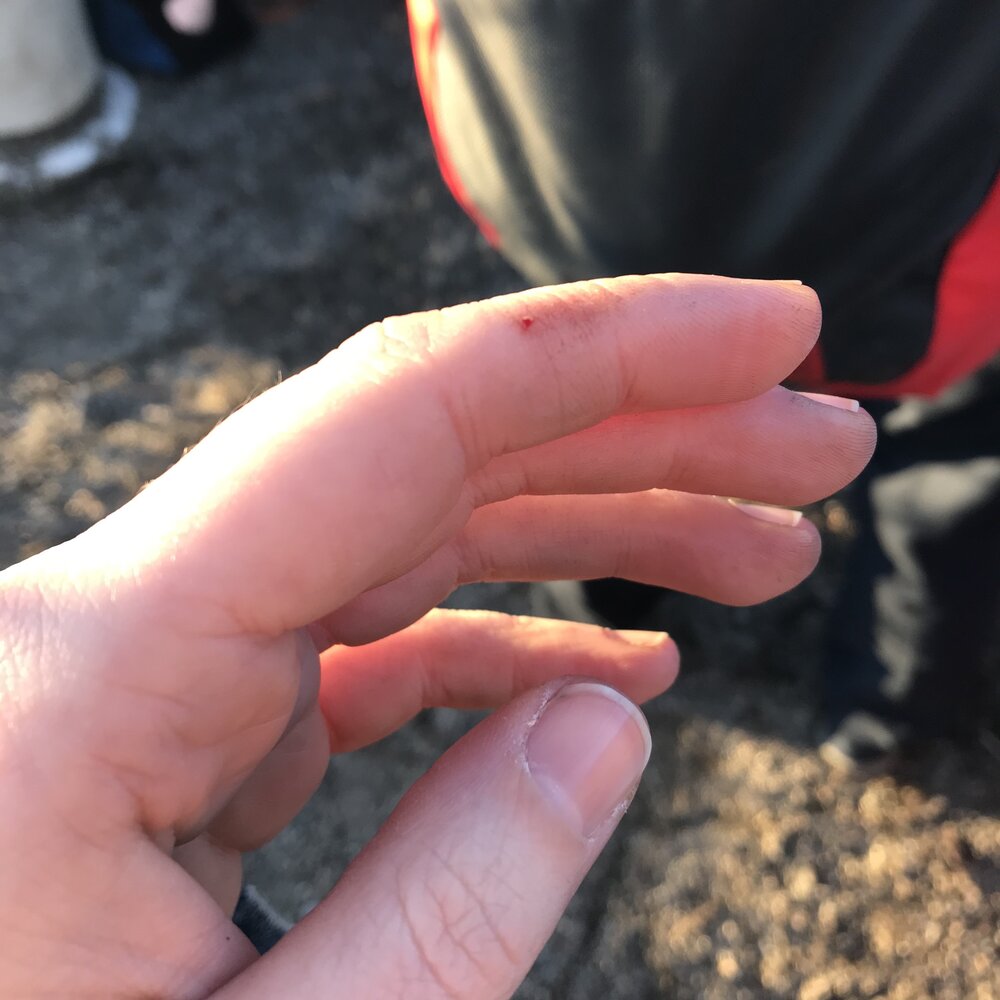
I did make many poor, awkward cuts, leaving divots as the blade skipped or caught or cracking off big pieces when I went in the wrong direction. I fed the blade just a little bit when I was working on rounding the the tip of the spoon and the knife slipped and I poked myself. As time in the afternoon got shorter, I tried not to rush, but I also wanted to make enough progress to learn all the techniques, knowing I’d need to do some finishing work on my own. I also tried to let the material teach me, both the wood and the knife. The wood was more dense in some places than others, harder to cut through, possibly because it had come from closer to the heart of the tree. Each new knife technique took time to wrap my head and my hand around, but repetition slowly eked out competence. The grain my knife strokes revealed was beautiful and I began to experiment with trying to highlight it, bringing the creativity of design along with the gradual mastery of technique. I made errors over and over and over again, sometimes setting back good work already done, but kept going.

About a year ago I was chatting with someone who had been learning to work with wood. He said found it powerfully healing because you do make mistakes and you can’t reverse them. The mistakes become part of it. You just keep going. I’ve also been taking improv classes and learning the same thing. Whatever happens, you work with it. Fix it by moving forward, not by trying to roll it back and erase it. Maybe you learn something from it, like what a better angle for the knife edge might be and how that should (or shouldn’t) feel in your hand. Maybe it’s a “happy failure”, in improv lingo, that creates an even funnier moment than the one you’d intended. You don’t barrel through oblivious to consequences (especially not when the consequence might result in stitches and not the “audience in stitches” kind), but hanging back isn’t an option because you only learn by trying, failing, learning, and trying again.

This goes for any space of uncertainty, which is most things we want to learn about. Even though carving might seem like a technical exercise with a specific tool and a set of techniques that can be learned and even (eventually) mastered, every piece of wood is different, holding different parts of the life of the tree it came from, still living and changing in moisture content as it seasons. The fire of the coal and the air that helps it burn, both breeze and breath, have their own life, and improvise with the wood to shape the bowl. Every knife cut works with the wood and the cut that came before, influencing the conditions for the cut that will come next. The hands that hold the wood and the knife, the arms that hold those hands, and the body that holds it all, are all changing, moving, getting tired as the time passes, getting stronger and more skillful too, learning from the teacher, learning from the other students, and learning from the material—knife, wood, and self.

The learning is in the doing, and the doing includes mistakes. If we aren’t making mistakes, we aren’t doing enough and we won’t be learning much either.

Blade fed. Lesson learned (and embodied).

Blade fed. Lesson learned (and embodied).


Shout-out to my cousin, Eric Mummery, who carves beautiful spoons and other kitchen utensils out of locally-sourced and found wood, which is part of what inspired me to take this workshop! Check out him out on Instagram or Facebook.


wood yearning to be a spoon!

wood yearning to be a spoon!


delicious wood-coal sandwich

delicious wood-coal sandwich


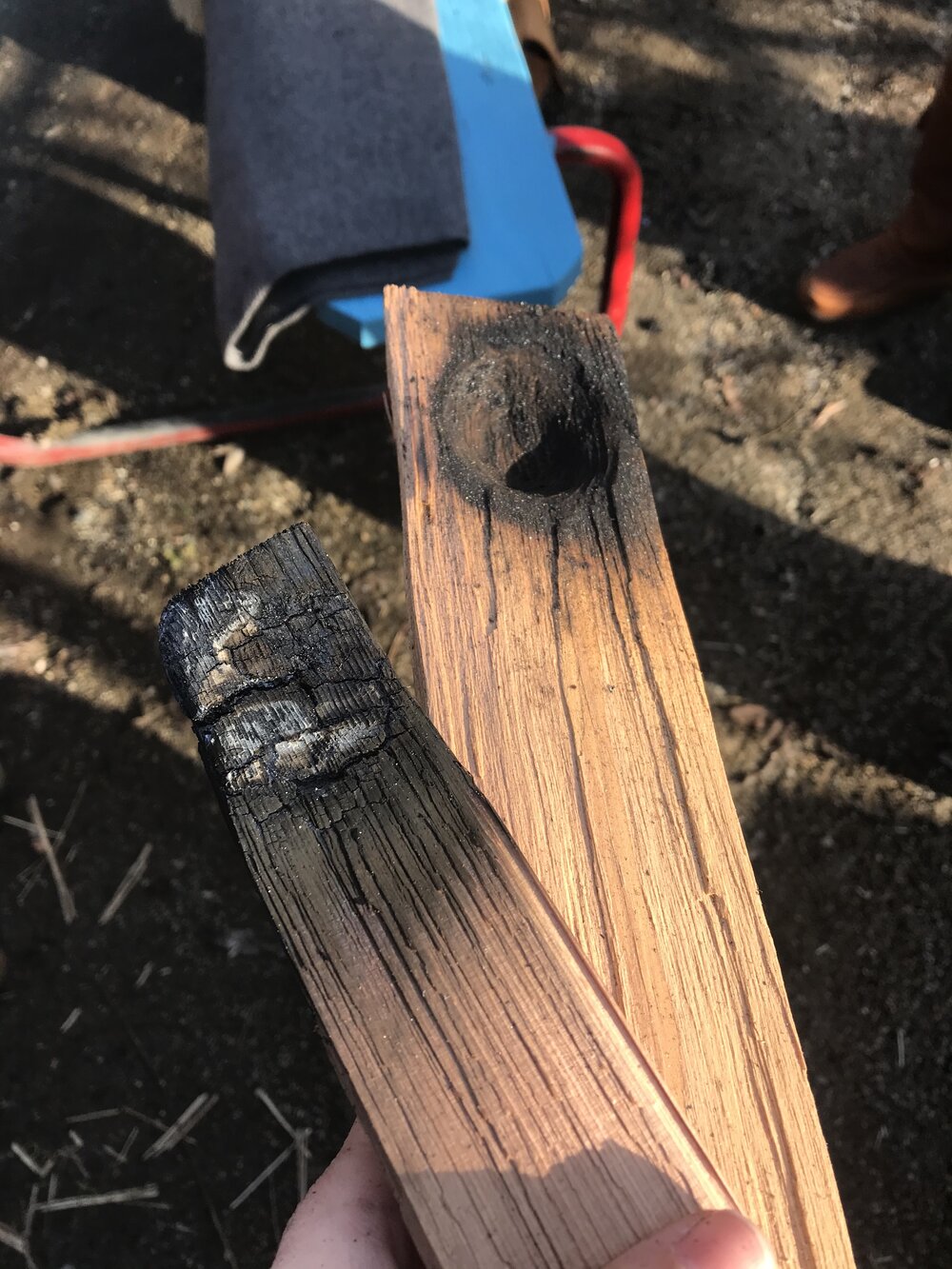
scraped-out bowl, ready for carving

scraped-out bowl, ready for carving


not quite there, but well on its way to spoon-dom

not quite there, but well on its way to spoon-dom


Subscribe

Sign up with your email address to receive news and blog updates.


We respect your privacy.

Thank you!

Written by cplysy · Categorized: carolyncamman

Feb 07 2020

Data Driven Approach for Nonprofits (Actionable Tips)

Written by cplysy · Categorized: connectingevidence

  • « Go to Previous Page
  • Go to page 1
  • Interim pages omitted …
  • Go to page 285
  • Go to page 286
  • Go to page 287
  • Go to page 288
  • Go to page 289
  • Interim pages omitted …
  • Go to page 310
  • Go to Next Page »

Footer

Follow our Work

The easiest way to stay connected to our work is to join our newsletter. You’ll get updates on projects, learn about new events, and hear stories from those evaluators whom the field continues to actively exclude and erase.

Get Updates

Want to take further action or join a pod? Click here to learn more.

Copyright © 2026 · The May 13 Group · Log in

en English
af Afrikaanssq Shqipam አማርኛar العربيةhy Հայերենaz Azərbaycan dilieu Euskarabe Беларуская моваbn বাংলাbs Bosanskibg Българскиca Catalàceb Cebuanony Chichewazh-CN 简体中文zh-TW 繁體中文co Corsuhr Hrvatskics Čeština‎da Dansknl Nederlandsen Englisheo Esperantoet Eestitl Filipinofi Suomifr Françaisfy Fryskgl Galegoka ქართულიde Deutschel Ελληνικάgu ગુજરાતીht Kreyol ayisyenha Harshen Hausahaw Ōlelo Hawaiʻiiw עִבְרִיתhi हिन्दीhmn Hmonghu Magyaris Íslenskaig Igboid Bahasa Indonesiaga Gaeilgeit Italianoja 日本語jw Basa Jawakn ಕನ್ನಡkk Қазақ тіліkm ភាសាខ្មែរko 한국어ku كوردی‎ky Кыргызчаlo ພາສາລາວla Latinlv Latviešu valodalt Lietuvių kalbalb Lëtzebuergeschmk Македонски јазикmg Malagasyms Bahasa Melayuml മലയാളംmt Maltesemi Te Reo Māorimr मराठीmn Монголmy ဗမာစာne नेपालीno Norsk bokmålps پښتوfa فارسیpl Polskipt Portuguêspa ਪੰਜਾਬੀro Românăru Русскийsm Samoangd Gàidhligsr Српски језикst Sesothosn Shonasd سنڌيsi සිංහලsk Slovenčinasl Slovenščinaso Afsoomaalies Españolsu Basa Sundasw Kiswahilisv Svenskatg Тоҷикӣta தமிழ்te తెలుగుth ไทยtr Türkçeuk Українськаur اردوuz O‘zbekchavi Tiếng Việtcy Cymraegxh isiXhosayi יידישyo Yorùbázu Zulu