• Skip to main content
  • Skip to footer
  • Home

The May 13 Group

the next day for evaluation

  • Get Involved
  • Our Work
  • About Us
You are here: Home / Archives for allblogs

allblogs

Sep 08 2019

Evaluator Competencies Series: Program Evaluability

2.2 Assesses program evaluability.

I can’t remember exactly when or where this was, but at some point during my career as an evaluator, I saw the phrase “Evaluability Assessment” and thought “what’s that?” I know I wasn’t a brand new evaluator, as when I looked it up and learned what it was I thought, “Oh! I’ve been doing that at the start of every evaluation that I’ve done. I didn’t know there was a name for it!”

An evaluability assessment is, much like the name suggests, assessing “the extent to which an activity or project can be evaluated in a reliable and credible fashion” (OECD-DAC 2010; p.21 cited on Better Evaluation). As I learned to be an evaluator, this seemed to be a thing that I naturally needed to do.

An example would be where a client says “I want an evaluation that tells me if the program is achieving its goals”. The first question one would ask is: “What are the program goals?” because I certainty can’t tell you to what extent you are achieving your goals if you don’t have any goals. Similarly, a program may ask an evaluator to conduct an evaluation on whether the program has improved some particular thing for their program participants (e.g., their health, their knowledge of a topic, their social connectedness – whatever thing the program is trying to help its participants improve). In that case, one would naturally ask “how were the clients doing on that something before they started the program?” (i.e., do you have any baseline data we can use to compare to?). Or perhaps it’s a case where the client says “I want to know if my program is working?”, in which case I would ask “What does the program “working” mean to you?”. And that might lead to some work around developing a program theory, or figuring out if they want to know what outcomes are achieved, or if they want to know if their processes are efficient, or whether they are concerned about negative unintended consequences (or maybe all of the above). In my experience as an evaluator, when I ran into situations like this, my first course of action would be to work with the clients to figure out how to get their program into a state in which they are evaluable.

What I didn’t realize in my early years as an evalulator is that in some cases, an evaluability assessment could be a project unto itself. (Check out the Better Evaluation page on Evaluability Assessment if you want to read more about it.)

This may be due to the fact that I’ve always been an internal evaluator (or, as I think of myself on the program I’m currently working on, an external evaluator who is embedded in the program for the long term). So I’ve always had the luxury to be able to work with my “clients” to get them into an evaluable state as part of the work I do with them. Perhaps if I were an external evaluator, I may have come across stand alone evaluability assessments as potential projects.

I couldn’t find any images online that I felt represented “evaluability assessment” (probably not surprising… spell check doesn’t even believe that “evaluability” is a word!). So instead I give you this picture of my cats:
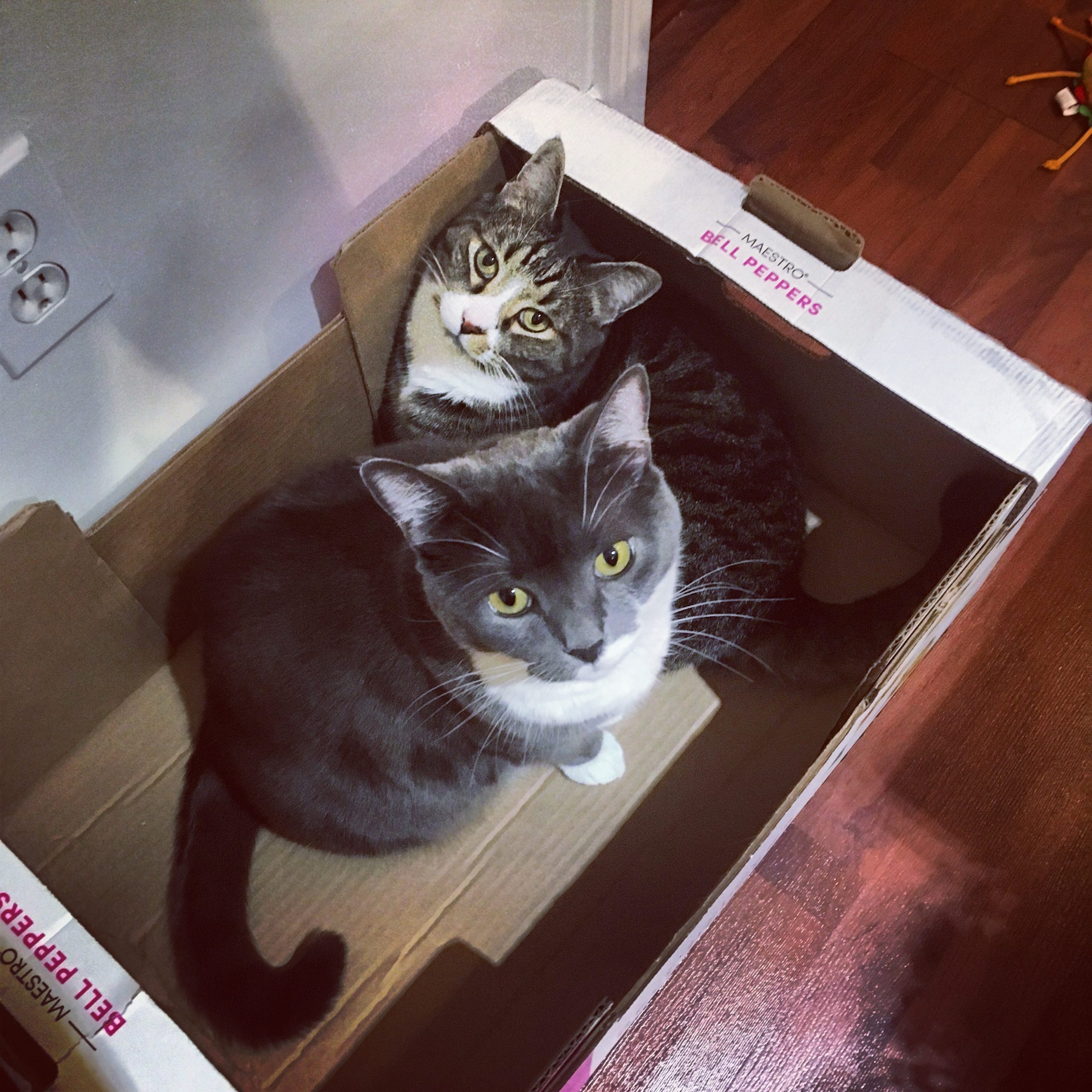

Watson & Crick in a Costco box
Watson (the tabby) and Crick (the grey and white cat).

Written by cplysy · Categorized: drbethsnow

Sep 03 2019

Evaluator Competencies Series: Clarifying Purpose and Scope

The next domain of competence is technical practice.

2. Technical Practice competencies focus on the strategic, methodological, and interpretive decisions required to conduct an evaluation.

And the first competency in this domain is:

2.1 Clarifies the purpose and scope of the evaluation.

Let’s begin at the beginning. That may seem trite, but I think it’s such a common saying because so often, people want to start somewhere other than the beginning. I cannot tell you how many times I’ve been consulted about an evaluation and the person seeking my advice starts with something like:

  • I have a set of indicators and I need to do an evaluation using them.
  • I want to do an evaluation of my program but I can’t figure out how to make it into a randomized controlled trial (RCT) because the program is already run.
  • I need your help to create a survey to evaluate my program.
  • I need to do a developmental evaluation [or whatever the latest trend in evaluation is at the time] of my program.

These are all examples of not beginning at the beginning. Many people seem to think that an evaluation requires a specific method (e.g., a survey) or a specific design (e.g., an RCT). Or they think that whatever the latest trend in evaluation must be the best approach, because it’s new. Or they have data already and they want to use it 1I just noticed that I‘ve written about this before, more than 4 years ago! Past Beth would be sad to hear that I’m still experiencing this!. But where an evaluation needs to start is with its purpose. Why, exactly, do you want an evaluation? What will you use the findings of the evaluation for? These are the types of questions that I will ask (usually preceded by me saying “Let’s back up a second!”). Because the purpose of the evaluation will guide the choice of approach, design, and methods. For example, if you are interested in an evaluation that will help you to determine to what extent you’ve achieved your goals, and none of your current indicators relate to your goals, then starting with “I have a set of indicators and I need to do an evaluation using them” is not going to get you where you want to be. Similarly, if you want an evaluation that will help surface unanticipated consequences (and I tend to think that evaluations should usually be on the look out for them), then having a set of pre-defined indicators is not going to be what you need (after all, to create an indicator, you have to have been anticipating that it might be affected by the program!). If the purpose of your evaluation is not a developmental one, then developmental evaluation might not be the best approach for you. So clarifying the purpose (or purposes) of an evaluation is something that I do at the start of every evaluation – and something that I check in on during the evaluation, both to see if what we are doing in the evaluation is helping to meet its purpose and to see if the purpose changes (or new purposes emerge) along the way.


Clarifying the scope of an evaluation is also really important, and something that I struggle with. I’m am an infinitely curious person and I want to know all the things! But there just isn’t enough time and resources to look at every possible thing in any given evaluation, so it’s important to be able to clarify what the scope of any given project is. Like purpose, it’s important to clarify the scope of the evaluation with your client at the start, and to keep tabs on it throughout the evaluation. If you don’t have a clear scope, it’s very easy to fall into the trap of the dreaded “scope creep” – where extra things get added to the project that weren’t initially agreed to and then either the costs go up – or the timeline gets extended. It’s not to say that the scope can’t change during an evaluation, but just that any changes to scope should be done mindfully and in agreement between the client and the evaluator.

Working in a large organization like I do, I also find it useful to understand the scope of other departments that do similar work to evaluation (like quality improvement and performance management). This is helpful in ensuring that we aren’t duplicating efforts of other teams, and also that we aren’t stepping on anyone else’s toes. Also, I’ve had the experience of taking on work that really should have been done by another team (i.e., the dreaded scope creep!) and had we not figured this out by clarifying scope, it would have really impaired our ability to deliver on the work that we needed to deliver on.

My team and I have done some work on clarifying what the scope of evaluation is relative to these other groups and I was about to say “and that’s a topic for another blog posting”, but then I remembered that I’m presenting a webinar (based on a conference presentation I gave last year) on that in a couple of weeks! So here’s my shameless plug: if you want to hear me pontificate on the similarities, differences, and overlaps between evaluation and other related approaches to assessing programs and services, register for my webinar, hosted by the Canadian Evaluation Society’s BC Chapter on Friday, September 13 (that’s right, Friday the 13th!) at 12 pm Pacific Time.

Footnotes   [ + ]

1. ↑ I just noticed that I‘ve written about this before, more than 4 years ago! Past Beth would be sad to hear that I’m still experiencing this!

Written by cplysy · Categorized: drbethsnow

Aug 29 2019

Creating Design Pathways for Learning

Capturing learning requires a focus on the journey, not end. Thinking like a designer can shape what we learn and how.

Learning is both a journey and a destination and it’s through recognizing this that we can better facilitate intentional, deliberative learning to support innovation and development. By approaching this journey through the lens of service design — as a design-driven evaluation — we can better design the data and insights that come from it to support learning.

What is learning?

Learning comes from perception, experience, feedback, and reflection. You first encounter something and perceive it with our senses (e.g., read, observe, hear, feel), experience something (e.g., movement, action, tension, emotion), which gives you feedback about the perception and experience that is synthesized through reflection (e.g., memory, comparison with related things, contemplation).

Evaluation is principally a tool for learning because it focuses our perception on things, monitors the experience, provides the feedback and can support reflection through offering a systematic, structured means to makes sense of what’s happened.

Evaluation is simply the means of answering the question “what happened?” in a systematic manner.

For those developing an innovation, looking to change, or seeking to improve the sustainability of our systems, answering ‘what happened?’ is the difference between real impact and nothing.

Mapping the journey with data

A journey map is a tool that is used in service design to help understand how service users (e.g., clients, customers, patients, students) might encounter the service and system to achieve a particular goal. These can be displayed visually with great artistry (see here for a beautiful example of the Indigenous cancer patient journey in BC) or simply with boxes and arrows.

It is one of many types of maps that can be created to illustrate the ways in which a user might navigate or approach a service, decision, or pathway to learning.

For innovators and evaluators, these tools present an opportunity to create touchpoints for data collection and deeper understanding of the service throughout. Too often, evaluation is focused on the endpoint or an overall assessment of the process without considering ways to embed opportunities to learn and support learning throughout a journey.

We feel this is a lost opportunity.

Without the opportunity to perceive, gain feedback, and reflect on what happens we are left with experience only, which isn’t a great teacher on its own and filled with many biases that can shift focus away from some of the causes and consequences associated with what’s happening. This is not to say that there isn’t bias in evaluation, yet what makes it different is that it is systematic and accounts for the biases in the design.

Service design meets evaluation

Design-driven evaluation is about integrating evaluation into the design of a program to create the means for developing systematic, structured feedback to support learning along a service journey. One of the simplest ways to do this is to build a layer of evaluation on the service journey map.

Consider a detailed service journey map like the one illustrating the patient journey map cited above. Along this windy, lengthy journey from pre-diagnosis to the end, there are many points where we can learn from the patient, providers, system administrators, and others associated with the health-seeking person that can inform our understanding of the program or system they are in.

By embedding structured (not rigid) data collection into the system we can better learn what’s happening — in both process and effects. Taking this approach offers us the following:

  • Identify activities and behaviours that take place throughout the journey.
  • Provides a lens on service through the perspective of a user. The same service could be modelled using a different perspective (e.g., caregiver, healthcare professional, health administrator).
  • Identifies the systems, processes, people, and relationships that a person goes through on the way through, by, or in spite of a service
  • Allows us to identify how data can fit into a larger narrative of a program or service and be used to support the delivery of that service.
  • Anchors potential data collection points to service transitions and activities to help identify areas of improvement, development, or unnecessary features.
  • Provides a visual means of mapping the structural, behavioural and social processes that underpin the program to test out the theory of change or logic model (does it hold up?).
  • Offers opportunities to explore alternative futures without changing the program (what happens if we did X instead of Y — how would that change the pathway?).

These are some of the ways in which taking a design-driven approach and using common methods from service design can improve or enhance our understanding of a program. Not a bad list, right? That’s just a start.

Try this out. Service design tools and thinking models coupled with evaluation can provide access to the enormous wealth of learning opportunities that exist within your programs. It helps you to uncover the real impact of your programs and innovation value hidden in plain sight.

To learn more about this approach to evaluation, innovation, and service design contact us. We’d love to help you improve what you do and get more value from all your hard work.

Photo by Lili Popper on Unsplash , Billy Pasco on Unsplash and  Startaê Team on Unsplash . Thank you to these artists for making their work available for use.

Written by cplysy · Categorized: cameronnorman

Aug 28 2019

Comment on Happy 5th Workiversary To Me! by Sandra Sellick

Congratulations, Beth!

Written by cplysy · Categorized: drbethsnow

Aug 27 2019

Comment on Happy 5th Workiversary To Me! by Happy 5th Workiversary To Me! | Not To Be Trusted With Knives

[…] Cross posted on my other blog. […]

Written by cplysy · Categorized: drbethsnow

  • « Go to Previous Page
  • Go to page 1
  • Interim pages omitted …
  • Go to page 295
  • Go to page 296
  • Go to page 297
  • Go to page 298
  • Go to page 299
  • Interim pages omitted …
  • Go to page 310
  • Go to Next Page »

Footer

Follow our Work

The easiest way to stay connected to our work is to join our newsletter. You’ll get updates on projects, learn about new events, and hear stories from those evaluators whom the field continues to actively exclude and erase.

Get Updates

Want to take further action or join a pod? Click here to learn more.

Copyright © 2026 · The May 13 Group · Log in

en English
af Afrikaanssq Shqipam አማርኛar العربيةhy Հայերենaz Azərbaycan dilieu Euskarabe Беларуская моваbn বাংলাbs Bosanskibg Българскиca Catalàceb Cebuanony Chichewazh-CN 简体中文zh-TW 繁體中文co Corsuhr Hrvatskics Čeština‎da Dansknl Nederlandsen Englisheo Esperantoet Eestitl Filipinofi Suomifr Françaisfy Fryskgl Galegoka ქართულიde Deutschel Ελληνικάgu ગુજરાતીht Kreyol ayisyenha Harshen Hausahaw Ōlelo Hawaiʻiiw עִבְרִיתhi हिन्दीhmn Hmonghu Magyaris Íslenskaig Igboid Bahasa Indonesiaga Gaeilgeit Italianoja 日本語jw Basa Jawakn ಕನ್ನಡkk Қазақ тіліkm ភាសាខ្មែរko 한국어ku كوردی‎ky Кыргызчаlo ພາສາລາວla Latinlv Latviešu valodalt Lietuvių kalbalb Lëtzebuergeschmk Македонски јазикmg Malagasyms Bahasa Melayuml മലയാളംmt Maltesemi Te Reo Māorimr मराठीmn Монголmy ဗမာစာne नेपालीno Norsk bokmålps پښتوfa فارسیpl Polskipt Portuguêspa ਪੰਜਾਬੀro Românăru Русскийsm Samoangd Gàidhligsr Српски језикst Sesothosn Shonasd سنڌيsi සිංහලsk Slovenčinasl Slovenščinaso Afsoomaalies Españolsu Basa Sundasw Kiswahilisv Svenskatg Тоҷикӣta தமிழ்te తెలుగుth ไทยtr Türkçeuk Українськаur اردوuz O‘zbekchavi Tiếng Việtcy Cymraegxh isiXhosayi יידישyo Yorùbázu Zulu