• Skip to main content
  • Skip to footer
  • Home

The May 13 Group

the next day for evaluation

  • Get Involved
  • Our Work
  • About Us
You are here: Home / Archives for allblogs / rka

rka

Apr 23 2020

Repost: Intentional Practice as Self-Care [During Coronavirus]

Updated April 23, 2020: I wrote and shared the following blog post about self-care almost two months ago in late February.  Coronavirus was in Seattle at the time, but I’m in New York, and the virus did not feel like a major threat to me or my work.  What a difference a couple of weeks would make, when on March 13 my world came to a grinding halt.  The allegory I shared in this post two months ago (about riding on an out-of-control horse) no longer feels relevant.  As many have already pointed out, Groundhog Day is a more apt story for the time we live in now.  On top of that, the threat of the pandemic to the museum profession (not to mention to our health and our social wellbeing) presents a new challenge, different from the wild horse, but similarly distressing.  My suggestion before for using Intentional Practice as a form of self-care feels just as, if not more, relevant now. 

If you only have a moment, read the bolded statement and items #1-3 below.  I think we will all have to find ways to ground and focus our work in ways that are less complicated and more purposeful than we were before coronavirus.  Riding a wild horse is not even an option now. 
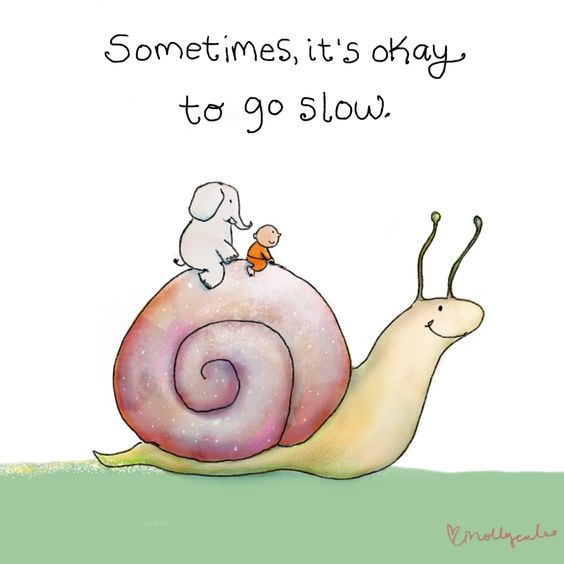
Sometimes its okay to go slow
Credit: Mollycules


In recent years, self-care has emerged as a compelling idea among museum practitioners.  The sentiment is that, like so many in the not-for-profit world, museum workers are deeply passionate about the work they do and too often, they are overworked and feel underappreciated (and underpaid).  Burnout is high, and the need to take care of oneself—physically, mentally, and spiritually—is imperative, even though doing so may feel out-of-reach.  As a consultant who meets and interacts with many museum professionals across a variety of settings, I can attest to the truth of this. All the time I see museum practitioners who are so busy “doing, doing, doing” that they intermittently and inadvertently lose touch with the spark that drove them to museums in the first place.

I recently read a brief allegory that reminded me of this phenomenon. It goes like this: “I once saw a person riding very fast on a horse. As they rode by me, I yelled, “Where are you going?” The rider turned toward me and yelled, “I don’t know, ask the horse!”   The pace at which museum professionals are often expected to do their work, the number of different audiences they are asked to serve, and the amount of programming they are tasked with creating and providing can leave them feeling like a person riding that wild horse.

What if I told you that your museum work could focus on accomplishing one pursuit, and that one pursuit is something you are passionate about and excel at, and that by doing this work, you would make a positive difference in the lives of the audiences you serve?  This is the essence of Intentional Practice. 

Intentional Practice means that all staff—from up and down and across the organization—take specific actions with the sole purpose of achieving a shared vision of intended impact on the audiences they serve. Transitioning an organization from the status quo to Intentional Practice is slow, as there are many moving parts and often unexpected distractions (insert wrench).  But, the beauty of Intentional Practice is its elegant simplicity, so while it is designed for organizations, individuals can also apply Intentional Practice concepts to their personal museum practice.

To return to the title of this post and the bolded statement above, I want to suggest three ways individual museum professionals can use Intentional Practice as a strategy of self-care.

  1. Prioritize your work to serve two or three audiences (one is even better if you can do that) rather than trying to be all things to all people. Then, focus in on the one specific impact you want to have on those audiences, with “impact” meaning the positive difference you make in the quality of their lives.  Write it all down—the audiences and the impact. Post it on the wall across from your desk.  Use it to continually remind yourself why you are there and to make decisions about where to put your energies and resources.
  2. To help you choose the audiences to prioritize and the particular difference you want to make in their lives, ask yourself “Why is working in this museum important to me?”—then ask, “Why is that important?” again, and again. You can do this alone or with a colleague.  The idea is to dig deep into what drives and excites you, what you care deeply about, and what gives you joy.  Use your passion to make decisions about #1, including helping you say “no” to tasks that move you off course.
  3. Ask yourself, “What am I really good at? What can I offer in my work that no one else can?”—be honest with yourself; do not respond with what you perceive as the “right answer.” Once you have identified what makes you unique in the workplace, draw from that to make decisions about how to serve your prioritized audiences in ways that make a positive difference in their lives.

Maybe this sounds like a pipe dream, like an impossibility.   And I’m not here to tell you it’s easy, especially trying to do it within an organization that has specific ways of functioning and operating.  As a first step, simply allow yourself to imagine a world where these three steps I’ve described can be your reality.  Make it your intention to return to this aspiration often (remember, post it on the wall to stare at as a reminder) and make decisions based on this aspiration.  In this way, you will be practicing self-care, which in turn will bring joy and renewed purpose to your work.

The post Repost: Intentional Practice as Self-Care [During Coronavirus] appeared first on RK&A.
Written by cplysy · Categorized: rka

Apr 14 2020

The Virus Makes the Timeline

A few weeks ago, we heard from Dr. Anthony Fauci: “You’ve got to understand that you don’t make the timeline, the virus makes the timeline.”  Fauci’s words ring ever-more true to me today than when he first spoke them.  Today marks the one-month anniversary of my daughter’s school closing, which has now extended through the end of the year.

The lack of control on the timeline for a return to relative normalcy post-coronavirus is certainly frustrating for everyone.  But, I realized my experience as an evaluator has prepped me for being on someone else’s (or in this case a virus’s) timeline.  In particular, it recalls my experiences working with Institutional Review Boards and schools district reviews for research protocols, which I wrote about several years ago.  The review protocols are often tedious and time-consuming, and I am ultimately on the timeline of these reviewing bodies.  There are some lessons that I have learned in working with IRBs and school districts that apply to our current situation:

Preparation: I cannot control review schedules, but I can plan for them as best as possible. In the current working world, I can keep tabs on evolving situations with museum operations and have rough plans in mind for if, how, and when evaluation activities may resume.  The landscape is ever-changing, but having a pulse on events is necessary for adaptability.

Communication: It is tempting to stop communicating when things are out of your control, and you have no tangible updates, but it is at these times that communication is even more important.  This tip loops back into preparation.  Staying in touch with the changing landscape helps us stay prepared for a time when we can take back control of the timeline.

Empathy: Uncertainty is challenging for everyone.  As has been said many times of late, “we are all in this together.”  While this is true, it is also important to keep in mind that we may each be affected by COVID-19 in different ways (physical illness, financial insecurity, food insecurity, etc.) as well as cope with uncertainty in different ways.  Stephanie wrote a blog post a few weeks ago about vulnerability, which can help us facilitate empathy and understanding among individuals.

The post The Virus Makes the Timeline appeared first on RK&A.

Written by cplysy · Categorized: rka

Apr 06 2020

Finding Inspiration through Designers-in-Training

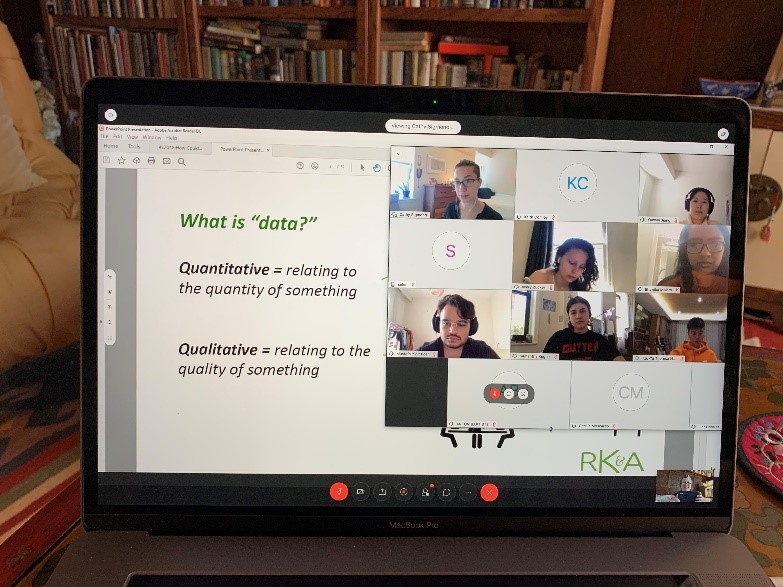
For the past few years, I’ve traveled to New York City every spring to do a guest lecture for a class of graduate students who are part of the Fashion Institute of Technology’s (FIT) Exhibition and Experience Design program. For obvious reasons, I couldn’t go in person this year, but luckily we were still able to connect remotely through WebEx.  The students called in from their homes around the world—some in New York but others as far as Turkey, Taiwan, and India!

Since these are exhibition designers in training, I focus my talk each year on how evaluation fits into exhibition design.  What does evaluation look like in this context?  As designers, what might you want to test, when, and how? I always try to find a balance between talking about evaluation theory (the big picture stuff) and sharing a mix of practical examples from RK&A’s diverse portfolio of work.  Using real examples from our front-end, formative, and summative exhibition evaluations helps students get a sense of what exhibition evaluation really looks like.

Screenshot of virtual lecture with powerpoint slide and participants' webcams.
Cathy and the FIT students talk about evaluation through WebEx


I’m usually excited for this lecture because it’s a chance to talk about an area of evaluation I’m very passionate about.  This year, however, I was also somewhat nervous going into it because of the precarious state of the world and museums right now.  Would students be able to see the value of evaluation to their work as budding designers or would they feel too distracted by our global circumstances to find meaning in these ideas (which, frankly, would be completely understandable)?  I was also nervous about whether I could accurately convey the field of evaluation to these students when it—just like everything else—feels like it is changing so fast under these new stay-at-home circumstances. Would examples of past exhibition evaluation projects, many of which involved testing onsite with museum visitors, feel irrelevant in this time of uncertainty for the museum field?

Luckily, my worries were for nothing. The students showed up with a tenacious curiosity and infectious energy (which was especially impressive given that we were all in different time zones!), and we had a lively conversation about how evaluation can help designers move forward confidently in their work.  When they asked about sampling methods (how many, how do you recruit people, etc.), I was able to answer honestly that while the answer is always and will always be “it depends,” this principle is more true now than ever.   Although I momentarily worried this answer would disappoint students (even if it’s true), they surprised me and instead seemed invigorated by the idea of adaptable, flexible evaluation studies, since this aligns so well with the notion of experimentation and iteration that permeates their design training.  Their enthusiasm gave me confidence to embrace flexibility in our evaluation projects (more on that soon!).  As Amanda said, now is the time to put on our creative thinking hats. I’m grateful to the FIT class for the invitation to speak and for being so cheerfully open-minded in times like this.

The post Finding Inspiration through Designers-in-Training appeared first on RK&A.

Written by cplysy · Categorized: rka

Mar 30 2020

Using Incentives for Data Collection

After a bit of a hiatus, we are back with a new post to our Evaluation Design series!  This post explores the use of incentives for data collection: What are they? When might you need to use them? And why are they important?  This topic is especially relevant considering the current COVID-19 pandemic because, as Amanda noted in her recent blog post, many of us are looking for creative solutions to keep our work moving forward. As we explore alternatives to in-person data collection methods, incentives can be particularly important for securing participation using online recruitment methods (more on that below).
 

What is an incentive?

Incentives are a token—typically a small gift or cash—given to a respondent in exchange for or appreciation of their participation in a study.  They can be as small as a free pencil or bookmark from the museum’s gift shop or as large as a substantial gift card or cash.  Museums can also get creative with the incentives they offer by providing free admission to a fee-based program or a ticket to a show in their theater—experiences that may come at little cost to the museum.

When might you need an incentive?

We often encourage museums to provide a small incentive to visitors for participating in a study (e.g., taking a survey or participating in a short interview) as a gesture of appreciation for the time visitors have taken out of their visit to provide their feedback to the museum.  Incentives take on additional importance in the following scenarios:

  • The time invested by the respondent is significant (e.g., participating in a focus group)
  • Responses are needed over a long period of time (e.g., interviews or surveys taking place several months after participating in a program)
  • Respondents are difficult to secure (e.g., the desired respondent characteristics require targeted recruitment or respondents are difficult to reach because of logistical barriers)

If we can identify the possibility of the above scenarios during the planning phase of a project, we can work to build the cost of incentives into the budget to prevent any surprises later.

Why are incentives important right now?

As we move toward more remote data collection to keep ourselves and our communities as safe as possible through social distancing, we are reminded of the importance of incentives as related to the third bullet point above.  While we would often recruit visitors in a museum to participate in an interview or survey, museum closures are making respondents more difficult to reach.  Incentives are becoming increasingly important as we turn to online recruitment methods because we are asking for participation from people who may have no prior relationship with the museum (i.e., they are not already in the museum for a visit), and we do not have the benefit of building trust and rapport before respondents agree to participate like we do during in-person recruitment.  Incentives can provide a sense of legitimacy to the study, encourage commitment to finish the interview or survey, and show genuine appreciation for the time invested by the respondent.


The post Using Incentives for Data Collection appeared first on RK&A.

Written by cplysy · Categorized: rka

Mar 25 2020

Who should participate in Museums Advocacy?

I wrote this blog post two weeks ago before coronavirus had changed our world so drastically.  Museums Advocacy is more essential now than ever.  Please consider how you can be an effective museum advocate, and see AAM’s resources here: https://www.aam-us.org/2020/03/19/urge-congress-to-support-museum-community-economic-relief/


“What are you doing here?”  This was the question that greeted me from a colleague prior to the welcome session for Museums Advocacy Day 2020.  I was both surprised by and prepared for this question, as I had wondered whether Museums Advocacy Day was a place for me too.

This year was the first time I had participated in Museums Advocacy Day.  I have felt particularly motivated to participate over the last few years, realizing that I wanted to learn how to ensure that good and valid studies about the impact of museums (particularly on visitors—communities, students, etc.) are on policymakers’ radars.  The theory goes that data and stories are important to policymakers.  As an authority in museum data, it seemed to make sense that I be there to share my knowledge.  Evaluators want nothing more than to ensure data is useful.  So, Museums Advocacy seemed to me to be a natural extension of our work as evaluators.  We are not just talking the talk but walking the walk by taking the data and stories about museums directly to Capitol Hill.

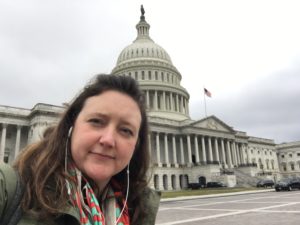
Amanda on Capitol Hill

I did have several hesitations going into Museums Advocacy Day though.  First and foremost, I do not work for a museum directly.  As an advocate, do I appear self-serving as museums and some of the grant agencies for which we are advocating sustain our business?  Additionally, we work nationwide so is it odd to advocate to my state senators (although we do work within my state currently, and I was able to share stories about students talking about a work by Ai Wei Wei and data about parent’s perceptions of digital initiatives for children)?  But moreover, is it odd to advocate to my district representative (since we don’t currently work within my district)?  Furthermore, leading up to Museums Advocacy Day, I only knew of one other evaluator like myself who attends (Elsa Bailey), and then encountered only one other evaluator while there (Monae Verbeke).  So, the nagging little voice in my head through the course of the prep day for Capitol Hill continued to chide me: what are you doing here?

After finishing the day of prep and meeting with my senators and representative on Capitol Hill, I can say I learned a ton and am very happy to have participated.  However, I don’t know that I answered the question about whether Museums Advocacy Day is a place for me.  Rather, my experience exploded the question to wonder:

  • Who should be an advocate?
  • Or, who is best able to be an effective advocate?

For example, many of the advocates from my state are students in museum programs.  Are they effective advocates as they don’t yet have the firsthand experience to speak about the impact of museums on people?  Furthermore, some advocates are not actually living within the districts for which they advocate.  Are they effective advocates?  For example, while I don’t work with any of the museums in my district, I do rely on them as a parent of student at a Title 1 public school.  Our school takes fieldtrips to and sponsor in -school assemblies from many of these museums.  Therefore, I felt confident in advocating for them through this lens, but what about those who could not rely on this intimate knowledge of a district?

I am so grateful to have participated in Museums Advocacy Day as it was a very empowering experience, and I learned so much.  However, this bigger question of who should participate in Museums Advocacy will sit with me for now.

The post Who should participate in Museums Advocacy? appeared first on RK&A.

Written by cplysy · Categorized: rka

  • « Go to Previous Page
  • Go to page 1
  • Interim pages omitted …
  • Go to page 12
  • Go to page 13
  • Go to page 14
  • Go to page 15
  • Go to Next Page »

Footer

Follow our Work

The easiest way to stay connected to our work is to join our newsletter. You’ll get updates on projects, learn about new events, and hear stories from those evaluators whom the field continues to actively exclude and erase.

Get Updates

Want to take further action or join a pod? Click here to learn more.

Copyright © 2026 · The May 13 Group · Log in

en English
af Afrikaanssq Shqipam አማርኛar العربيةhy Հայերենaz Azərbaycan dilieu Euskarabe Беларуская моваbn বাংলাbs Bosanskibg Българскиca Catalàceb Cebuanony Chichewazh-CN 简体中文zh-TW 繁體中文co Corsuhr Hrvatskics Čeština‎da Dansknl Nederlandsen Englisheo Esperantoet Eestitl Filipinofi Suomifr Françaisfy Fryskgl Galegoka ქართულიde Deutschel Ελληνικάgu ગુજરાતીht Kreyol ayisyenha Harshen Hausahaw Ōlelo Hawaiʻiiw עִבְרִיתhi हिन्दीhmn Hmonghu Magyaris Íslenskaig Igboid Bahasa Indonesiaga Gaeilgeit Italianoja 日本語jw Basa Jawakn ಕನ್ನಡkk Қазақ тіліkm ភាសាខ្មែរko 한국어ku كوردی‎ky Кыргызчаlo ພາສາລາວla Latinlv Latviešu valodalt Lietuvių kalbalb Lëtzebuergeschmk Македонски јазикmg Malagasyms Bahasa Melayuml മലയാളംmt Maltesemi Te Reo Māorimr मराठीmn Монголmy ဗမာစာne नेपालीno Norsk bokmålps پښتوfa فارسیpl Polskipt Portuguêspa ਪੰਜਾਬੀro Românăru Русскийsm Samoangd Gàidhligsr Српски језикst Sesothosn Shonasd سنڌيsi සිංහලsk Slovenčinasl Slovenščinaso Afsoomaalies Españolsu Basa Sundasw Kiswahilisv Svenskatg Тоҷикӣta தமிழ்te తెలుగుth ไทยtr Türkçeuk Українськаur اردوuz O‘zbekchavi Tiếng Việtcy Cymraegxh isiXhosayi יידישyo Yorùbázu Zulu