• Skip to main content
  • Skip to footer
  • Home

The May 13 Group

the next day for evaluation

  • Get Involved
  • Our Work
  • About Us
You are here: Home / Archives for allblogs / rka

rka

Mar 23 2020

Vulnerability (in the Workplace) in the Time of a Pandemic

In mid-February, I made a note to myself – a yellow post-it stuck to the bottom of my computer monitor – to write a blog post about vulnerability as it applies to our professional lives in the world of museums.  Vulnerability is something I strive for in my personal life because I know it can lead to better, more authentic relationships.  For that reason, I believe it has resonance for our professional lives in museum work too.
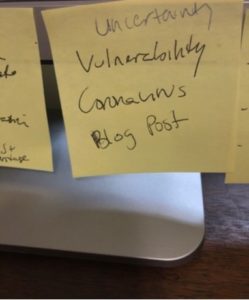
A yellow post-it note stuck to the bottom of a computer monitor. The post-it note lists four terms: "uncertainty, vulnerability, coronavirus, blog post."
Stephanie’s post-it note

You don’t hear a lot about vulnerability in the workplace though.  Vulnerability is often wrongly associated with weakness, and let’s face it, who wants to appear weak in our professional lives?  Reconciling the two—vulnerability in my personal life and my professional life—is still something I am not sure about.  So that post-it note with the words “vulnerability” and “blog post” sat the bottom of my computer monitor, both tempting and repelling me.

Of course, I had no idea what was coming when I wrote the post-it note.  In early March, as the COVID-19 pandemic grew, particularly encroaching on my home near New York City, I added the words “uncertainty” and “coronavirus” to my post-it note, and it beckoned me more strongly.  Now two weeks later—with museums and schools closed— my uncertainty, and that of my team and clients, has only intensified.

Pre-pandemic, I had been thinking about how vulnerability in my professional life is wrapped up in how we learn.  At the end of 2019, I wrote a blog post about the discomfort that comes with learning as we enter the space between not knowing something and knowing something.  If we allow ourselves to be vulnerable and admit that we are uncertain or don’t know something, we can also access our curiosity, which can lead to creativity and problem solving and serve as a bridge between not knowing and knowing.

When I wrote that, however, I was referring to everyday run-of-the-mill uncertainty—not this gut-wrenching uncertainty about the futures we are all facing right now in the midst of COVID-19.  I suspect our workplaces will never be the same again.  The way we think about our work and our colleagues in this moment—this fear and anticipation—may linger with us.  I am still grappling with what vulnerability means for our professional world.  But at least in this moment, I hope allowing for vulnerability will enable us to face these very real feelings in our workplace and open us up to one another with compassion, kindness, and curiosity.

The post Vulnerability (in the Workplace) in the Time of a Pandemic appeared first on RK&A.
Written by cplysy · Categorized: rka

Mar 19 2020

Being Launched from the Comfort Zone

The last week has been a wild ride for many of us in the United States and abroad.  A wrench was thrown into my normal (although never regular) schedule of museum visits, research design, and conference attendance.  All of a sudden, I became a substitute classroom teacher to a first grader, all the while practicing social distancing and trying to adapt to my new working situation.

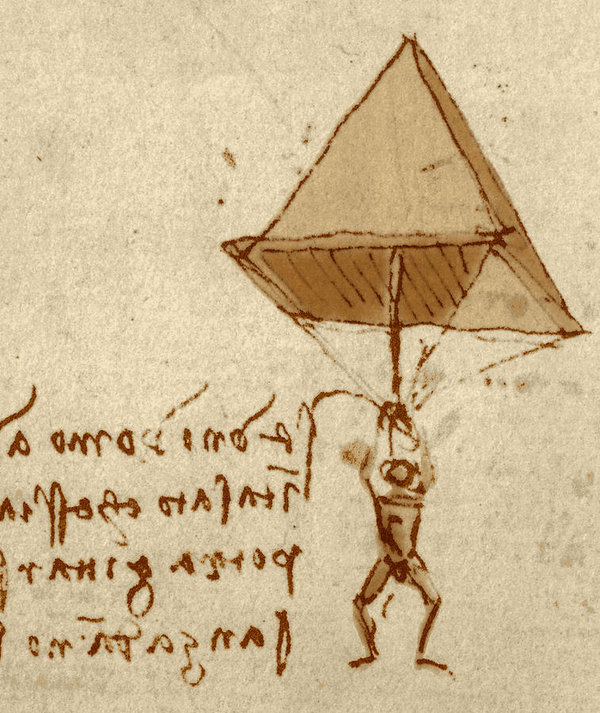
But as the news began unfolding rapidly last week and our lives changed in pace with developments in information, I did find some Zen.  Radical interruptions like we are experiencing provide great opportunities.  At RK&A, we often utilize the visualization of the learning zone, nestled between the comfort and panic zones.  We are currently being forcibly pushed out of our comfort zones.  “Pushed” may even be a little too gentle to describe what is happening.  More accurately, the little cartoon in my head shows us being shot from a cannon out of the comfort zone.  While the panic zone may seem to be a likely landing place, I am opting to open my parachute of creativity and land in the learning zone.  History tells us that important innovation arises from challenging times.  As Stephanie wrote on New Year’s Eve 2019, almost as a harbinger of what was to come in 2020, static can be comfortable but dull and uninspiring.  So, strap on your parachute, and let’s get creative and learn together to get through this!

Leonardo da Vinci’s parachute drawing
Image credit: https://fineartamerica.com/featured/2-da-vinci-parachute-1485-science-source.html?product=art-print

The post Being Launched from the Comfort Zone appeared first on RK&A.

Written by cplysy · Categorized: rka

Feb 27 2020

Three Ways Intentional Practice Can Support Self-Care

In recent years, self-care has emerged as a compelling idea among museum practitioners.  The sentiment is that, like so many in the not-for-profit world, museum workers are deeply passionate about the work they do and too often, they are overworked and feel underappreciated (and underpaid).  Burnout is high, and the need to take care of oneself—physically, mentally, and spiritually—is imperative, even though doing so may feel out-of-reach.  As a consultant who meets and interacts with many museum professionals across a variety of settings, I can attest to the truth of this. All the time I see museum practitioners who are so busy “doing, doing, doing” that they intermittently and inadvertently lose touch with the spark that drove them to museums in the first place.

I recently read a brief allegory that reminded me of this phenomenon. It goes like this: “I once saw a person riding very fast on a horse. As they rode by me, I yelled, “Where are you going?” The rider turned toward me and yelled, “I don’t know, ask the horse!”   The pace at which museum professionals are often expected to do their work, the number of different audiences they are asked to serve, and the amount of programming they are tasked with creating and providing can leave them feeling like a person riding that wild horse.

What if I told you that your museum work could focus on accomplishing one pursuit, and that one pursuit is something you are passionate about and excel at, and that by doing this work, you would make a positive difference in the lives of the audiences you serve.  This is the essence of Intentional Practice. 

Intentional Practice means that all staff—from up and down and across the organization—take specific actions with the sole purpose of achieving a shared vision of intended impact on the audiences they serve. Transitioning an organization from the status quo to intentional practice is slow, as there are many moving parts and often unexpected distractions (insert wrench).  But, the beauty of intentional practice is its elegant simplicity, so while it is designed for organizations, individuals can also apply Intentional Practice concepts to their personal museum practice.

To return to the title of this post and the bolded statement above, I want to suggest three ways individual museum professionals can use intentional practice as a strategy of self-care.

  1. Prioritize your work to serve two or three audiences (one is even better if you can do that) rather than trying to be all things to all people. Then, focus in on the one specific impact you want to have on those audiences, with “impact” meaning the positive difference you make in the quality of their lives.  Write it all down—the audiences and the impact. Post it on the wall across from your desk.  Use it to continually remind yourself why you are there and to make decisions about where to put your energies and resources.
  2. To help you choose the audiences to prioritize and the particular difference you want to make in their lives, ask yourself “Why is working in this museum important to me?”—then ask, “Why is that important?” again, and again. You can do this alone or with a colleague.  The idea is to dig deep into what drives and excites you, what you care deeply about, and what gives you joy.  Use your passion to make decisions about #1, including helping you say “no” to tasks that move you off course.
  3. Ask yourself, “What am I really good at? What can I offer in my work that no one else can?”—be honest with yourself; do not respond with what you perceive as the “right answer.” Once you have identified what makes you unique in the workplace, draw from that to make decisions about how to serve your prioritized audiences in ways that make a positive difference in their lives.
horseback rider silhouette riding on beach at sunset
Photo by Alex Wigan on Unsplash

Maybe this sounds like a pipe dream, like an impossibility.   And I’m not here to tell you it’s not hard, especially trying to do it within an organization that has specific ways of functioning and operating.  As a first step, simply allow yourself to imagine a world where these three steps I’ve described can be your reality.  Make it your intention to return to this aspiration often (remember, post it on the wall you stare at it as a reminder) and make decisions based on this aspiration.  In this way, you will be practicing self-care, which in turn will bring joy and renewed purpose to your work.

The post Three Ways Intentional Practice Can Support Self-Care appeared first on RK&A.

Written by cplysy · Categorized: rka

Feb 14 2020

I ❤️ Less is More

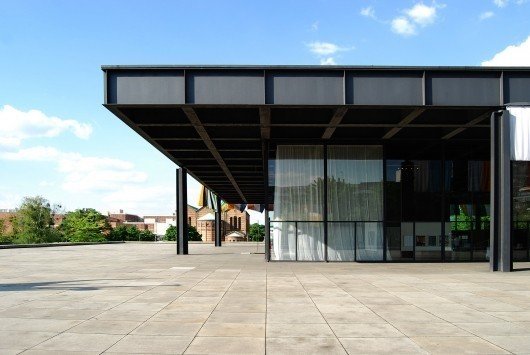
Happy Valentine’s Day!  As many of you know, the idiom “Less is More” is attributed to minimalist architect Ludwig Mies van der Rohe.

The Neue Nationalgalerie (New National Gallery)
The New Gallery, Berlin. https://www.dwell.com/article/ludwig-mies-van-der-rohe-architect-19dd30ba

I am grateful to him for coining the phrase and inspiring me to adopt it into my Intentional Practice.  Intentional Practice has two important guiding beliefs, both of which are hard to practice. Despite their difficulty, I ❤ them anyway because of the conceptual and behavioral challenges they present.  I am not one to shy away from pursuing difficult tasks; in fact, they inspire me to learn new ways of thinking, which in turn may push me towards new actions.  I will save the other belief for another post (for the curious-minded—it is “Museums can’t be all things to all people”); today, the three simple words noted above—Less is More—are particularly important.
Simple words, only three of them, and all with so few letters, echo the point. Here are two ways that Less is More supports Intentional Practice thinking (I’ll try to be brief):

1. Intentional practice planning and evaluation activities support achieving impact. As such, to achieve and measure impact through supporting outcomes among visitors, visitors will have had to experience the essence of the museum so they can consider and process it and then know it. For example, if a museum’s impact statement is “People deepen their connection to nature and consider their role in sustaining their natural world for future generations,”[1] visitors may not be able to make sense of the experiences if exhibits and programming cover too much or different territory—conceptually.  If programs and exhibitions focus on ideas that support the museum’s core concept, as expressed in that the impact statement, and go deep with the concept, there is a greater chance that visitors will experience more.

One core concept—not two or three—one. One concept presented in a multitude of ways through a variety of mediums reinforces the concept that supports the museum’s intended impact.  From a planning perspective, the impact statement serves as a guidepost for disciplined, and sometimes ruthless, decision making.  From an evaluation perspective, visitors will be better able to process their experience because there are fewer ideas for them to manage; in turn, they will be experiencing the essence of the museum deeply, and as such, the evaluation process will have a better chance of detecting the effect of their experience and the ways in which the museum is achieving impact.

2. Less is More is also meaningful because it suggests that numbers may not equal success. For too long, museums’ focus on attendance suggests that high numbers are an indicator of quality.  A number is a number.  If numbers were important, I am compelled to ask, “What number is enough”?  What if success were measured by the quality of the visitor experience?  What if “More” came to mean quality of experience whereby visitors were describing the ways in which the museum did (or did not) help them understand the ramifications of climate change (for example)?  Let’s connect the visitor experience to point #1: what if “Less” was presented, thereby creating physical and conceptual space for the idea to sink in, and in doing so, the experience became “More”?  The “Less” part of the phrase invites depth, and experiences become “More.”

 
[1] Courtesy of The Wild Center, Tupper Lake, NY

The post I ❤️ Less is More appeared first on RK&A.

Written by cplysy · Categorized: rka

Feb 11 2020

Randi’s Keynote at the Small Museum Association Conference

Small Museum Association LogoRK&A is excited to announce that Randi Korn will be giving the Keynote Address at the Small Museum Association Conference in College Park, Maryland next week, February 17!  This year, the SMA conference theme is “Honoring the 100th Anniversary of Women’s Suffrage: Museums as Catalysts for Social Change.” In the Keynote, Randi will explain the virtues of impact-based planning and discuss the principles for intentional museum work. She will conclude the presentation with an invigorating participatory exercise that attendees will be able to replicate at their home museums.

We hope you can join Randi!

Can’t attend?  You can learn more about Intentional Practice in Randi’s book Intentional Practice for Museums: A Guide for Maximizing Impact.

The post Randi’s Keynote at the Small Museum Association Conference appeared first on RK&A.

Written by cplysy · Categorized: rka

  • « Go to Previous Page
  • Go to page 1
  • Interim pages omitted …
  • Go to page 13
  • Go to page 14
  • Go to page 15

Footer

Follow our Work

The easiest way to stay connected to our work is to join our newsletter. You’ll get updates on projects, learn about new events, and hear stories from those evaluators whom the field continues to actively exclude and erase.

Get Updates

Want to take further action or join a pod? Click here to learn more.

Copyright © 2026 · The May 13 Group · Log in

en English
af Afrikaanssq Shqipam አማርኛar العربيةhy Հայերենaz Azərbaycan dilieu Euskarabe Беларуская моваbn বাংলাbs Bosanskibg Българскиca Catalàceb Cebuanony Chichewazh-CN 简体中文zh-TW 繁體中文co Corsuhr Hrvatskics Čeština‎da Dansknl Nederlandsen Englisheo Esperantoet Eestitl Filipinofi Suomifr Françaisfy Fryskgl Galegoka ქართულიde Deutschel Ελληνικάgu ગુજરાતીht Kreyol ayisyenha Harshen Hausahaw Ōlelo Hawaiʻiiw עִבְרִיתhi हिन्दीhmn Hmonghu Magyaris Íslenskaig Igboid Bahasa Indonesiaga Gaeilgeit Italianoja 日本語jw Basa Jawakn ಕನ್ನಡkk Қазақ тіліkm ភាសាខ្មែរko 한국어ku كوردی‎ky Кыргызчаlo ພາສາລາວla Latinlv Latviešu valodalt Lietuvių kalbalb Lëtzebuergeschmk Македонски јазикmg Malagasyms Bahasa Melayuml മലയാളംmt Maltesemi Te Reo Māorimr मराठीmn Монголmy ဗမာစာne नेपालीno Norsk bokmålps پښتوfa فارسیpl Polskipt Portuguêspa ਪੰਜਾਬੀro Românăru Русскийsm Samoangd Gàidhligsr Српски језикst Sesothosn Shonasd سنڌيsi සිංහලsk Slovenčinasl Slovenščinaso Afsoomaalies Españolsu Basa Sundasw Kiswahilisv Svenskatg Тоҷикӣta தமிழ்te తెలుగుth ไทยtr Türkçeuk Українськаur اردوuz O‘zbekchavi Tiếng Việtcy Cymraegxh isiXhosayi יידישyo Yorùbázu Zulu