Do you remember the early days of social media?
Back then there were a lot of bloggers, marketers, and other digital communicators talking about how social media platforms were conversational. Less broadcasting, more back and forth.
For whatever reason, in the research and evaluation reporting world, that message never really stuck. We still broadcast our reports way more than start conversations. I think we can do better.
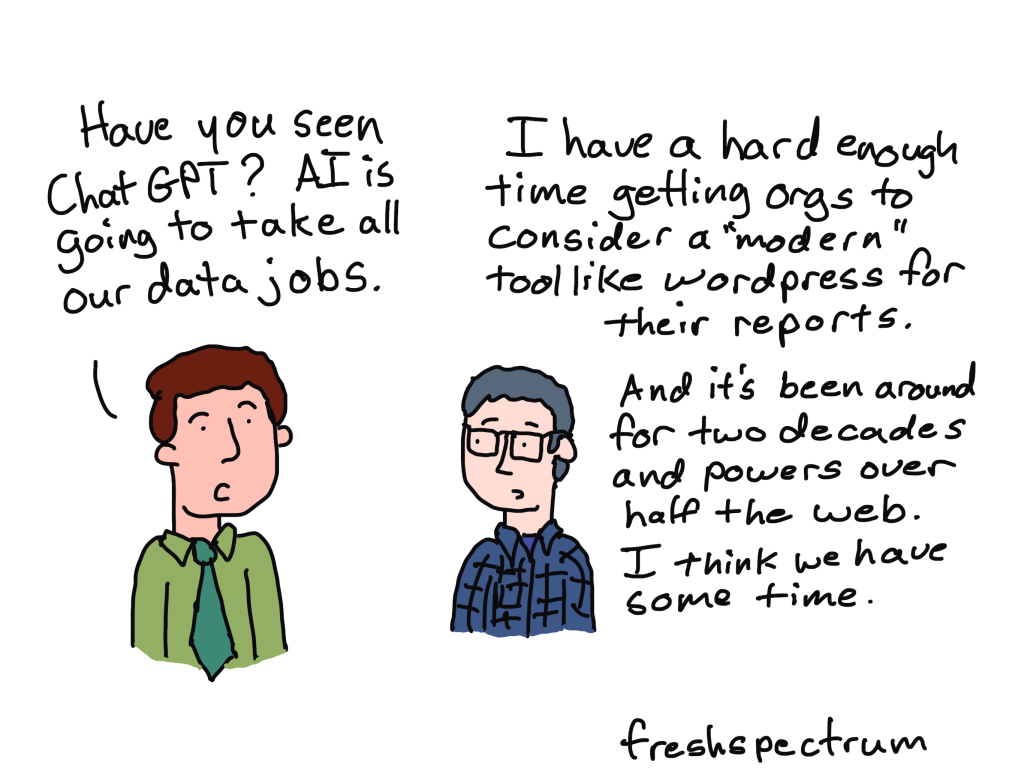
Digital media channels are conversation platforms.
Every time I publish a blog post I send an email out to those who signed up here on this site.
If I were mass mailing a paper newsletter, I would not expect to receive a response. But with an email newsletter a follower can just click reply in their email program and give their thoughts. Or they can go to my blog and leave a comment. Or they can visit the LinkedIn post which also goes along with my blog and hit the reply button there.
This is something I totally encourage. I try my hardest to reply to every single blog comment, LinkedIn reply, or email. I love when a blog post sparks a conversation, even if it’s just a little one.
But when was the last time you wrote a report in a way that attempts to elicit an actual response? And if you’ve never tried to elicit a response with a report, why not?
We have access to far more information than we can possibly share.
No single report is ever going to tell the full story.
As evaluators and researchers we have access to lots of information. Some of it is collected as part of our work. Other potentially useful information exists within, or just beyond, our reach.
There is no way to communicate everything. And trying to communicate everything is both way too much work and incredibly ineffective.
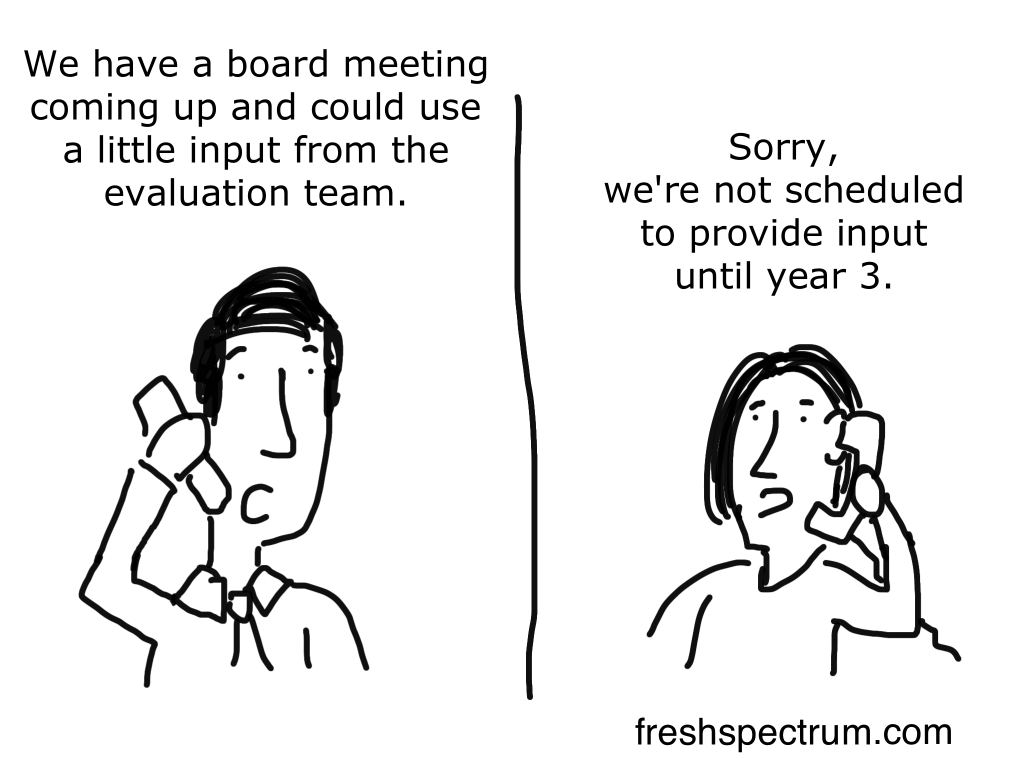
Good conversations require making choices.
I used to say that we should switch to the verb form of report instead of the noun. The noun report is that boring long pdf nobody will ever actually read. The verb form is about ongoing action.
But I think it might be more useful to say that reporting is a conversation. Because a conversation requires at least two people, and thinking of reporting like a conversation makes you think about that other person.
Do you show up and dinner parties and spend long periods of time talking about methods then drone on about initial findings without adding any interesting context? If yes, you probably don’t get invited to too many dinner parties.
A good conversation is always tailored to the audience we’re speaking with at the time. You try to make things interesting for your conversation partner, based on what you know about that person. It means making choices.
A good modern report will do the same thing.
Holistic reporting strategy.
I’ve been thinking a lot about reporting lately. Which, for anyone who follows this blog regularly, is totally obvious.
I think we make things too hard on ourselves. Modern reporting shouldn’t take more time than traditional reporting. Even if you’re producing more reports.
We just need to approach it differently.
How, you may ask? I call my way a holistic reporting strategy.
But to go into more depth, that’s going to take a longer blog post. Stay tuned.
 English
 Afrikaans
 Shqip
Shqip አማርኛ
አማርኛ العربية
 Հայերեն
 Azərbaycan dili
 Euskara
 Беларуская мова
 বাংলা
বাংলা Bosanski
 Български
 Català
 Cebuano
 Chichewa
 简体中文
简体中文 繁體中文
繁體中文 Corsu
Corsu Hrvatski
 Čeština
 Dansk
Dansk Nederlands
 Esperanto
 Eesti
Eesti Filipino
 Suomi
Suomi Français
 Frysk
Frysk Galego
 ქართული
 Deutsch
 Ελληνικά
 ગુજરાતી
 Kreyol ayisyen
 Harshen Hausa
 Ōlelo Hawaiʻi
 עִבְרִית
 हिन्दी
 Hmong
Hmong Magyar
 Íslenska
 Igbo
Igbo Bahasa Indonesia
 Gaeilge
 Italiano
 日本語
日本語 Basa Jawa
 ಕನ್ನಡ
ಕನ್ನಡ Қазақ тілі
 ភាសាខ្មែរ
 한국어
한국어 كوردی
كوردی Кыргызча
 ພາສາລາວ
 Latin
Latin Latviešu valoda
 Lietuvių kalba
 Lëtzebuergesch
 Македонски јазик
 Malagasy
 Bahasa Melayu
 മലയാളം
 Maltese
 Te Reo Māori
 मराठी
मराठी Монгол
 ဗမာစာ
ဗမာစာ नेपाली
 Norsk bokmål
 پښتو
پښتو فارسی
فارسی Polski
 Português
 ਪੰਜਾਬੀ
 Română
 Русский
 Samoan
 Gàidhlig
 Српски језик
 Sesotho
 Shona
Shona سنڌي
سنڌي සිංහල
සිංහල Slovenčina
 Slovenščina
 Afsoomaali
 Español
 Basa Sunda
 Kiswahili
 Svenska
 Тоҷикӣ
 தமிழ்
தமிழ் తెలుగు
 ไทย
ไทย Türkçe
 Українська
 اردو
اردو O‘zbekcha
 Tiếng Việt
 Cymraeg
 isiXhosa
 יידיש
יידיש Yorùbá
 Zulu
Zulu