• Skip to main content
  • Skip to footer
  • Home

The May 13 Group

the next day for evaluation

  • Get Involved
  • Our Work
  • About Us
You are here: Home / Archives for allblogs / depictdatastudio

depictdatastudio

Sep 17 2024

How to Add Checkboxes to Microsoft Excel **New Feature!**

Did you know… that Excel now has checkboxes?!?

In this video, you’ll learn:

  • how to add checkboxes to your spreadsheet,
  • how much better they look than the “old” way of doing it, and
  • what types of details we can edit (like the checkbox size and color).

What’s Inside

  • 0:00 Welcome
  • 0:21 Dataviz On The Go
  • 0:32 How to Add Checkboxes to Microsoft Excel
  • 0:59 The Old Way: Adding Icons (Image Files) One by One, Not Clickable, Yuck
  • 1:36 Another Old Way: Webdings g’s and c’s (Filled Squares and Empty Squares)
  • 2:26 Your Editing Power: Delete, Size, Color, Use in Formulas (“true” = filled in, “false” = empty)
  • 3:21 Conditional Color (e.g., everything is gray, turns green when filled in)
  • 5:34 Colorblind-Friendly & Grayscale-Friendly, hooray!!
  • 7:28 DON’T Transfer to Word/PowerPoint, darn. NO GRAINY SCREENSHOTS!!! Keep ’em in Excel and just PDF your Excel file directly.
  • 8:32 Don’t Forget to Like, Subscribe, and Share

Resources Mentioned

Colorblindness simulation tool: https://www.color-blindness.com/coblis-color-blindness-simulator/

Transcript

Ann K. Emery: [00:00:00] So today I’m here with Do you want to say your name? This is Isla, and she just got home from kindergarten, and you want to make a video together?

Alright, we’re going to show you how to make checkboxes in Excel. They’re pretty new, so you might not have seen them before. Today is the day.

Isla, should we tell them that they’re watching Dataviz on the Go?

And we make YouTube videos for them? To help them with their job and help them save time. Yeah.

So let me show you how you make these because they’re pretty easy. So what you’re going to do is you click on the empty cell where you want to add them. And then you go to insert and they’re there. They’re right there.

So you click on the checkbox box. It adds an empty one and you just drag them down and then you fill them in. Look, when you click on the square, do you know what happens? You get a little check mark like that.

What I used to do [00:01:00] is you would click on the cell, you go to insert, you go to icons. Do you see the little duck I love right there?

And then you’d have to scroll through the whole menu. Uh, if it loads, right? And do you see all these pictures in here? And you could pick one like this that’s kind of similar, right? That one has a circle. And you could add it and you could, this is a new ish feature too, you could place it in the cell, which is kind of nice.

But then you can’t click on it, you know, you get the same end result, but you don’t have the process, the clickable process in it. So that’s all right. That’s kind of the old way.

Um, what I used to do is, Isla, do you know what letter this is? Do you recognize that one? It makes the guh sound. That’s a “g.” I used to do like this, and then do you know that one?

That’s a “c.” Yeah, we were looking, that makes a kuh sound, right, like cat? We were looking at that in your Bob books last night. Okay, what I used to do is I would do g’s and c’s, uh, G for good, [00:02:00] C for, for crappy. We probably shouldn’t say that word out loud though. Um, and then you change them to webdings, if I can type with one hand, webdings, and you sort of, sort of get the same appearance, right?

Do you see how that’s not quite a checkbox? It’s like a filled in square and an empty square. So it’s. Not, not quite as cute. Yeah, it doesn’t have a check. That’s why I like these. They look like checks.

I also like them because, look, you can delete them if you change your mind. You just hit the delete key on your keyboard.

And you can change the size. You can make them like hugely huge. Whoa, too big. Probably we just want them the same size as the font though.

You can change the color. What color should we pick? Like, purple? Green. Green. We can make them green.

And we can also count them up. How many checks are filled in right here? Two. Yeah, exactly. And let’s say you had a really long list and you didn’t want to count [00:03:00] them all because it would just take forever. You could do this formula. You could do COUNTIF. And you could say, I’m going to count this list and I’m going to count the trues. True means filled in, false means not filled in, right? And then you get two to save yourself a little bit of time, right? And make sure you don’t make typos.

I also really like these because they have not just regular color, but conditional color. Conditional color means, you know, you could make them all black, you could make them all green, you could make them all red. But let me, um, let me show you, let me copy and paste these, right? I’m gonna make them all red, right? They’re all just red font. And then I’m going to make it so that when the check is checked, they’re green, right?

Stoplight, red, green. Do you know when we’re driving and we see the stoplight on the street and it’s like, red means, [00:04:00] red means stop. Yeah, you’re right. Um, so red means like, whoa, caution, bad. Everybody kind of understands that in the data world too. Uh, let’s see. Conditional formatting here. Let’s go to. New rule, and let’s say a, which one do we want?

Format cells that contain. And we want it to be a specific text, and if it is a true, then we will set that one to Is it gonna load? Is it gonna load? Let’s try it again. Format. Uh, we want the font color to be green. Okay, so you Yeah, we made it all red, except if it’s checked, it’s green. And then click OK a couple times, and you get the stoplight coding, which is possible, but I think it looks really ugly.

I don’t know. I think that’s like too colorful almost. What do you think? It is Christmas colored, you’re [00:05:00] right. Um, you could also do, you could make it all gray, and that everything’s checked in, then is green. I like this one better, it’s not quite so busy. What do you think? With the gray? You like the first one better?

You like a lot of colors, right? Mommy more likes plain stuff, I guess. We could focus on the checks. We could also focus on the boxes. Which we would do that with, um, I can’t remember. It doesn’t matter. It would be the opposite of what we just did in conditional formatting.

Alright, um, and then another reason I like checkboxes like this is that they are colorblind friendly and they are grayscale friendly.

Even technically this one with reds and greens is colorblind friendly. Um, Isla, do you know what colorblind means? Have you heard of that before? No. I bet some kids in your class may be colorblind. It’s pretty common. It’s like, um, 1 in 12 boys, they don’t see red and [00:06:00] green. Did you know that? They see it as yellow.

I’m going to show you what it looks like if you were colorblind. I’m going to take a little picture of the screen and we’ll put it here. So people wouldn’t see my red and green. No, they wouldn’t see red and green. I’m going to show you what it would look like for maybe, maybe some of the boys in your class, since it’s pretty common.

Let’s go to color- blindness. com. We clicked on color tools, CVD simulator, and we’re going to choose that screenshot that I just put on the desktop. Here it is. Color blind test. And this is what it looks like for me and you, right? We can see like the Christmas colors right here. But if somebody had red green color blindness, they wouldn’t see red and green.

They would see a bunch of yellows. But even though this looks like a bunch of yellows, it’s okay, they can still see [00:07:00] the checks versus the empty. So, so we’re good. They can see, they can see like the, the colored in part, right? Which is nice. Or if you printed this out, does your teacher, your teacher has printouts and worksheets at school, right?

Um, your teacher, to save ink, might print in grayscale sometimes, and this is what it would look like in grayscale. So it’s super colorblind friendly and grayscale friendly. So it gets Ann Approval.

Alright, the only downside to checkboxes is they do not transfer well to Word or PowerPoint. Can you, you want to see what happens if you try to put them into this thing called Word, Isla?

It’s not, it’s not good. It’s not good. They are not gonna show up as well. They’re gonna look like, um, gonna look like much, they’re gonna look like funny little, like, machine rectangles. They are gonna look like, let’s grab, I don’t know, like this one? Let’s say you wanted to copy [00:08:00] it, and you wanted to paste it, and it just looks like trues and falses, which isn’t, that’s not good, right?

That doesn’t look like checkboxes. Or, if you, even if you paste special and you do, like, a picture, um, it just looks, it looks funny. That doesn’t look good, right? And it does the same thing in PowerPoint, it’s just not very good.

So these are really meant to live inside of Excel, okay? Or you can PDF your Excel screen, and then you can share the PDF with your audience that way.

What do you think about checkboxes? Good? Thumbs up?

Do you want to tell them, um, anything at the end of the video? If I can move the mic closer to you? What do you want to do?

All right. Don’t forget to like, subscribe, and share! Bye!

You did great! What do you think of your first video? [00:09:00] Good.
Written by cplysy · Categorized: depictdatastudio

Sep 03 2024

How to Label Only the Min and Max on the Excel Graph

By default, Excel will label TONS of increments along our y-axis scale.

And if we’ve already got the exact values within the graph itself, the y-axis can become even more cluttered.

In this video, you’ll learn how to adjust your graph’s vertical scale so that it only shows the minimum and maximum value. You’ll adjust the min and max “bounds” and the “units.”

You’ll also get bonus tips for setting up this chart type, the columns with a target/goal line. This is a “combo chart” in Excel. You’ll need to set up the table in a very specific format to get this chart to display correctly.

What’s Inside

  • 0:00 Overview
  • 0:24 Welcome to Dataviz On The Go
  • 0:32 Setting Up the Table for the “Combo Chart”
  • 1:54 The Edited Chart (Dataviz Best Practices)
  • 2:16 How to Only Label the Min and Max
  • 4:11 Download the Spreadsheet
  • 4:20 Don’t Forget to Like, Subscribe, and Share

Download the Spreadsheet

It’s here: https://depictdatastudio.ck.page/onlylabelminandmax

Read the Transcript

Ann K. Emery: [00:00:00] In this video, you’re going to learn how to only label the min and the max on your scale. Like this. Instead of putting the labels on the columns and the scale, we only need the min and the max on the scale. Otherwise, it would be redundant. If this seems like it might be relevant to you and your workplace, stick around, I’ll give you some context, and then I’ll get into the how tos.

It’s Ann Emery. You’re watching Dataviz on the Go, the series where I make quick tutorials as I’m racing around between my meetings and my workshops. All right, let’s get into the context and then the how to’s. This is how you’d have to set up your table for this style of graph. You would list out your fictional project names in this example, the actual number that you want to appear in your columns or a percentage or a currency, and then you’d repeat the target

over and over and over in the third column, you’re going to arrange them least to greatest so that you get that [00:01:00] order in your chart least to greatest. You’re going to add an intentional gap in your table. That’s on purpose because guess what? Yep. You guessed it. It creates an intentional gap in your chart.

And then the final thing you need to know here is you’re going to have this target appear one extra time at the end. Okay. Because that’s what helps the line extend a little bit beyond the columns so that you can add a nice direct label right here. Okay. That’s the gist of how you need to set up your table for this style chart, which is the columns with the target line or the goal line.

It’s going to be a combo chart. So you’re going to highlight your table. You’re going to insert a combo chart. You’re going to get this mess. Which isn’t helpful and doesn’t tell us everything. And also has the super redundant, super detailed scale right here as well. The edited version is going to look mostly like this grouping by color, a nice dark light contrast here.

You’re [00:02:00] going to gray out the target line because that’s the sidekick. That’s not the main character. You’re going to add some words. You’re going to add a little bit of math. You’re going to add some icons. Okay. It’s pretty much done. It’s pretty much done with the exception of the overly labeled scale like this.

So the how to’s, let me copy and paste this chart. So as usual, we can admire them side by side, and here’s where you’re going to click. You’re going to click on the. The numbers on the scale. You have to be really careful here. Don’t click on the white space between the numbers, click on the actual number, click on the numeral on the actual font color here, not in the white space.

Okay. You click there. You see the rectangle appear around the outside of the numbers. You do a right click, you go to the bottom of your list right here. Format axis, and it pulls up this sidebar for us. You can see the min and the max. That’s pretty easy to follow, right? If the biggest number is a [00:03:00] 951, let’s make it extend to a thousand.

Nice, even round number, a little bit bigger than the biggest number. This is the part you have to adjust right here. The units, the units mean how often do you want a demarcation. Excel guesses. It’s gonna guess too much. It’s gonna guess too often. It guessed right here. It said, how about every hundred? And I’m like, nope, because why?

Why? Right? If you already have the exact values on the columns, you don’t need the numbers to estimate the values because there’s no estimation needed. They already have the exact values. You could do something like I don’t do this. I’m just going to show you what this does. If you insert a 250 here, then you get a demarcation every 250.

So if you only want to label the min and the max, then whatever your max value is, that’s what’s going to go in this box. Got it? If your scale goes from zero to a thousand, then you want a demarcation [00:04:00] every Thousand units. You press enter, it shows you every thousand. Now it’s perfect. We’ve got the min and the max on the scale, plus the exact values on the columns.

If you wanna download this spreadsheet and dig around and explore and see how I set everything up, look below this video and there’s a link to download it. Don’t forget to like, subscribe and share.

Written by cplysy · Categorized: depictdatastudio

Aug 27 2024

How to Move Lines to Front or Back of the Chart in Excel

Do you have a line chart with tons of lines?

Sometimes, the line you want to highlight… is stuck all the way in the back. Nobody can see that line, because it’s all covered up. Oops!

In this video, you’ll learn how to rearrange the line chart so that the line you want your audience to see isn’t covered up.

Watch the Tutorial

What’s Inside

  • 0:00 The Problem: Excel Graphs with Covered-Up Lines
  • 0:23 Welcome to Dataviz On The Go
  • 0:31 The Dataset
  • 0:47 Another Problem: The Spaghetti Line Chart
  • 1:10 3 Fixes for Spaghetti Line Charts
  • 1:37 The Edited Graph – But Average Line Hiding and Covered Up
  • 2:06 The Solution & Where to Click in Excel
  • 2:50 Bottom of the List… Front of the Graph
  • 3:04 Download the Spreadsheet
  • 3:11 Don’t Forget to Like, Subscribe, and Share

Download the Spreadsheet

Want to download the Excel file and follow along ?Download the file here: https://depictdatastudio.ck.page/products/moving-lines-to-the-front-or-back

Read the Transcript

Ann K. Emery: [00:00:00] In this video, you’re going to learn how to bring the average line to the front of your graph. So instead of covered up and hiding, it’s just going to be in the front so people can actually see it. If this sounds like something that might be relevant to you and your workplace, stick around. I’ll give you some context about this graph, and then I’ll teach you how to fix it right inside of good old Excel.

Hi, I’m Ann Emery, you’re watching Dataviz On The Go, the series where I make jet speed tutorials as I’m racing around between my workshops and meetings. And speaking of workshops, this is the real life, sort of, table that I was working on in a workshop recently. These aren’t the real state names. These aren’t the real timeframes or the real numbers, but the graph looked more or less like this.

What happened was, when we highlighted the table and we Inserted the graph. We were left with Ann Emery’s least favorite chart of all time, the spaghetti graph. This happens all the time in real projects. So if you get a spaghetti [00:01:00] graph, don’t worry. There are some common fixes and just to make it super duper clear what we’re not doing.

Let me just make it really, we’re just, we’re not doing this. Okay. Are we in agreement? We’re not doing this. Common fixes. Common fixes, uh, you could either gray everything out, highlight one, one line at a time, that’s what we’re going to do here. Another fix, you could do small multiples, or another fix is interactivity.

Okay, those are the three common fixes for really busy, really dense graphs. In this case, we wanted to gray everything out and highlight one line at a time so people could see the average. They could see the big picture. Here’s, on average, how all of our states are doing, but then a split second later, They could look a little bit further and they could see all the gray lines.

One star of the show, lots of sidekicks. But then the problem we ran [00:02:00] into is like, the average line is missing, or, not missing, but it’s hiding. It’s really hard. You can’t see it. Where’s our main character? So let me copy paste this one so we can admire them side by side. I’ll show you what to click on. You’re going to click on…

The middle of the graph. Not the side, not the top, not the bottom. Okay, the middle. You’re going to right click. You’re going to go to Select Data. I have a love- hate relationship with this menu. I think there’s a little bit of a learning curve. All you need to know is: the thing you want to be in the front of your graph needs to go on the bottom of the list.

I’ve clicked on the average here. I’m going to tap down, tap, tap, tap, tap, tap with the arrows. Is that at the bottom? Yeah. The thing that’s on the bottom of the list is going to be on the front of your graph. Bottom of the list, front of the graph. Super counterintuitive. You would have thought that Microsoft would do it the other way around, but they didn’t.

Okay. I put the average on the bottom of that list. [00:03:00] Therefore, it’s on the front of the graph so people can actually see it. If you want to download this and click around and explore some more, check below the video. I’ve got a link where you can grab it for free.

Don’t forget to like, subscribe, and share.

Written by cplysy · Categorized: depictdatastudio

Aug 20 2024

Style Guides vs. Dataviz Style Guides vs. Templates

Style guides, dataviz style guides, and templates, oh my!

In this video, you’ll learn about the differences between each one, and see some quick examples, too.

https://www.youtube.com/watch?v=npGR0ND8Vf4

What’s Inside

0:00 Welcome

0:28 Ann’s Diagram re: Your Branding Resources

0:47 Variations by Company/Organization

1:27 Style Guides: What’s Typically Inside

2:07 Dataviz Style Guides: What’s Typically Inside

2:34 Templates for Slidedecks, Reports, and More

2:59 Branding Resources – Designed for YOU

3:16 What Do You Want to Learn More About?

3:31 Don’t Forget to Like, Subscribe, and Share

Transcript

Style guides, dataviz style guides, templates. That is a lot of jargon. In this video, I’m going to break it down for you. I’m going to tell you what’s what, what should ideally go inside each of these. Hi, I’m Ann Emery. Welcome back to Dataviz On The Go, the series where I make jet speed tutorials for you as I’m racing around between workshops.

And speaking of workshops, I gave a half day workshop just last week about dataviz style guides. And one of the things we covered was this diagram, which you know me, it’s made in good old Excel of all places. And I made it to show how all of these things fit together. Okay. So here is the universe, right,

of all of your branding resources that you would ideally have at your workplace. In practice, not every group has all of these. Some of them have really basic guides and templates. Some of them have really elite, really advanced guides and templates. I have seen a little bit of everything. I see about 50 to a [00:01:00] hundred style guides and dataviz style guides every year as part of my private workshop process.

So during the prep, I’ll say, “Send me your this, and send me your that, and send me your style guide and or dataviz style guide in whatever format it’s in. If it’s, you know, beginner, if it’s advanced, just show me what you’ve got and we’ll take it to the next level.” So here’s what I typically see, right.

It’s like a little bit of a few of these things. So out of all of your branding resources, you would ideally have your organization’s style guide. Now, what typically goes in inside there, it’s going to be logo guidance, your colors, your fonts. You might have some photos. You might have some writing tips.

Like, do you capitalize the F in federal government or not? Do you spell out numbers at the beginning of a sentence or not? It might have writing tips like that. It’s going to live in usually a PDF. It might be short. It might be long, depending on how big your organization is, or it might live [00:02:00] online. I see that a lot with universities.

They’ll have a few pages on their website with all of their branding resources, very public facing. Within there, ideally, if you’re a data organization, if you make graphs for any part of your work, you would ideally have a dataviz style guide with sample charts and maps and tables. And, um, And, fingers crossed, in a perfect world, you’d have data specific tips.

“We use color in this way to make sure it’s accessible. We pay attention to color contrast this way. Here’s what we do for binary, sequential, diverging variables,” and so on. Templates are a little bit different. Okay. If you make a lot of presentations, you’re going to need a slide deck template. If you make a lot of reports, you’re going to need a report template.

You’re going to need all the templates. They might live inside Excel, PowerPoint, Canva, Power BI, Tableau. They’re going to live inside that software program. It’s not just a PDF with screenshots. It should be an actual editable template that staff can type in because, after all, all of these [00:03:00] branding resources are designed for you to save you time and help you look professional so that staff aren’t just like creating everything from scratch all the time.

That would be really, uh, really messy. That would be really time consuming, right? Who wants to waste time like that? Alright, you tell me, comment below the video, what would you like to learn more about? Do you want to see sample style guides, sample dataviz style guides? I’ve got templates and rubrics for all of these things to help you take your resources to the next level.

Happy to share, happy to help.

Don’t forget to subscribe and share!

Written by cplysy · Categorized: depictdatastudio

Aug 13 2024

Private Data Visualization Workshops: What’s Inside?

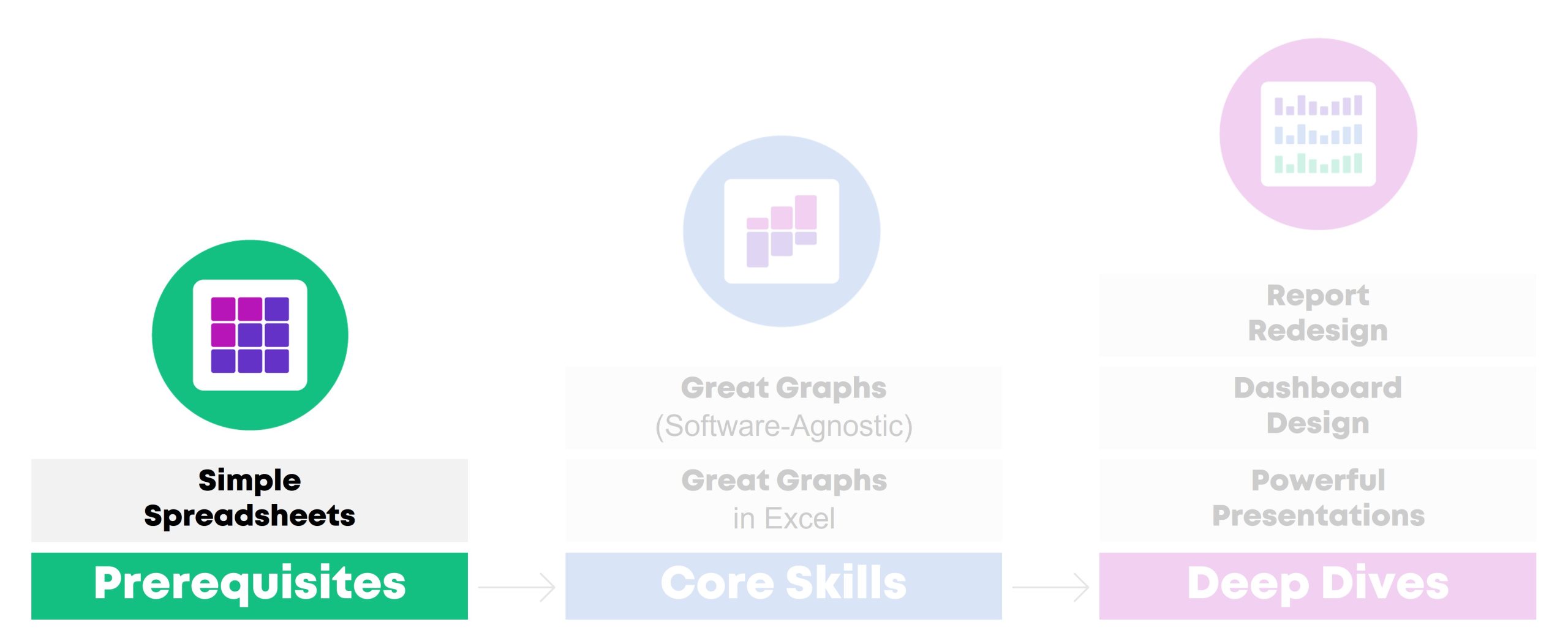
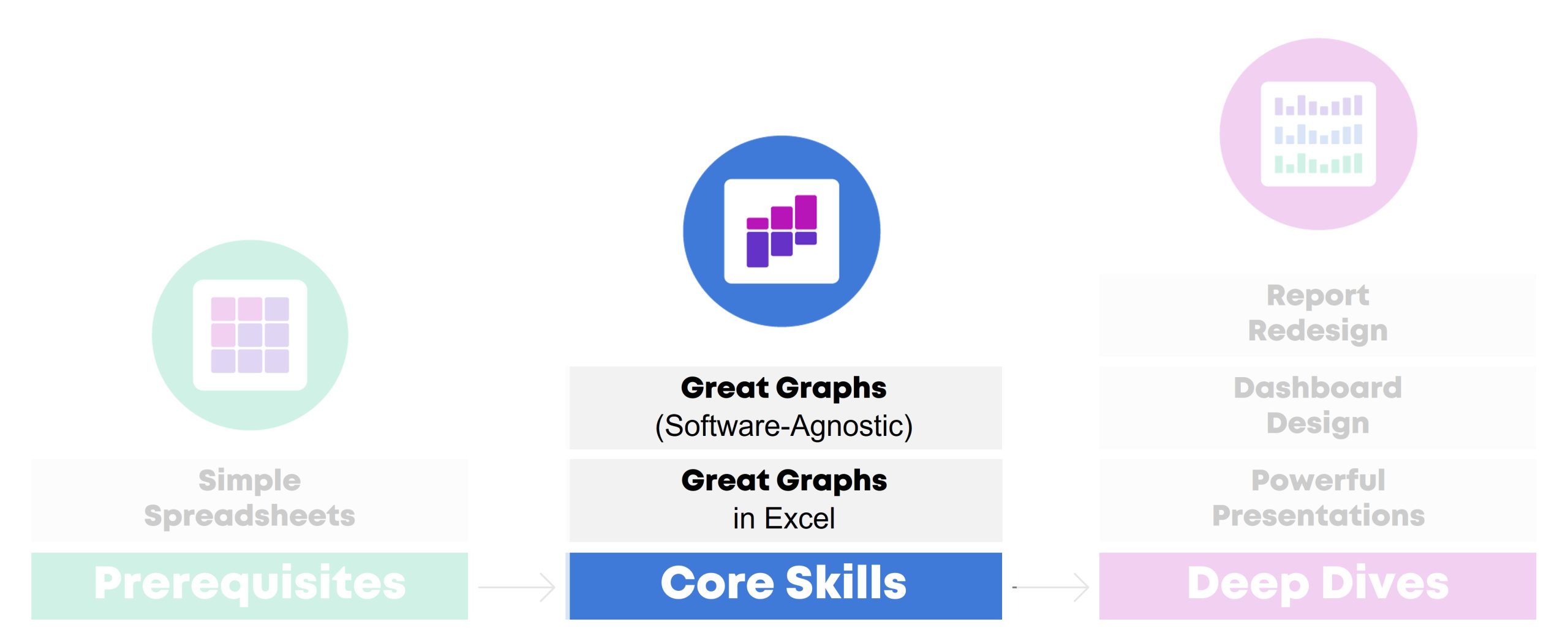
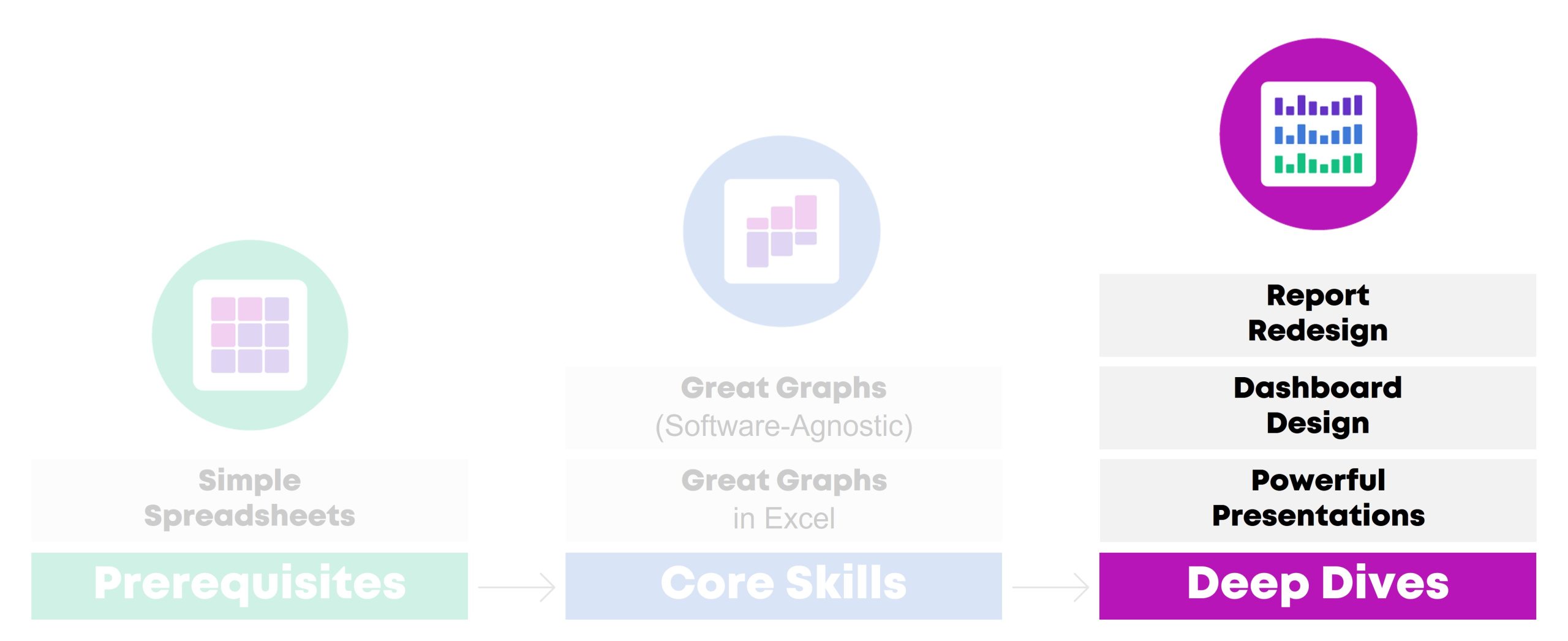
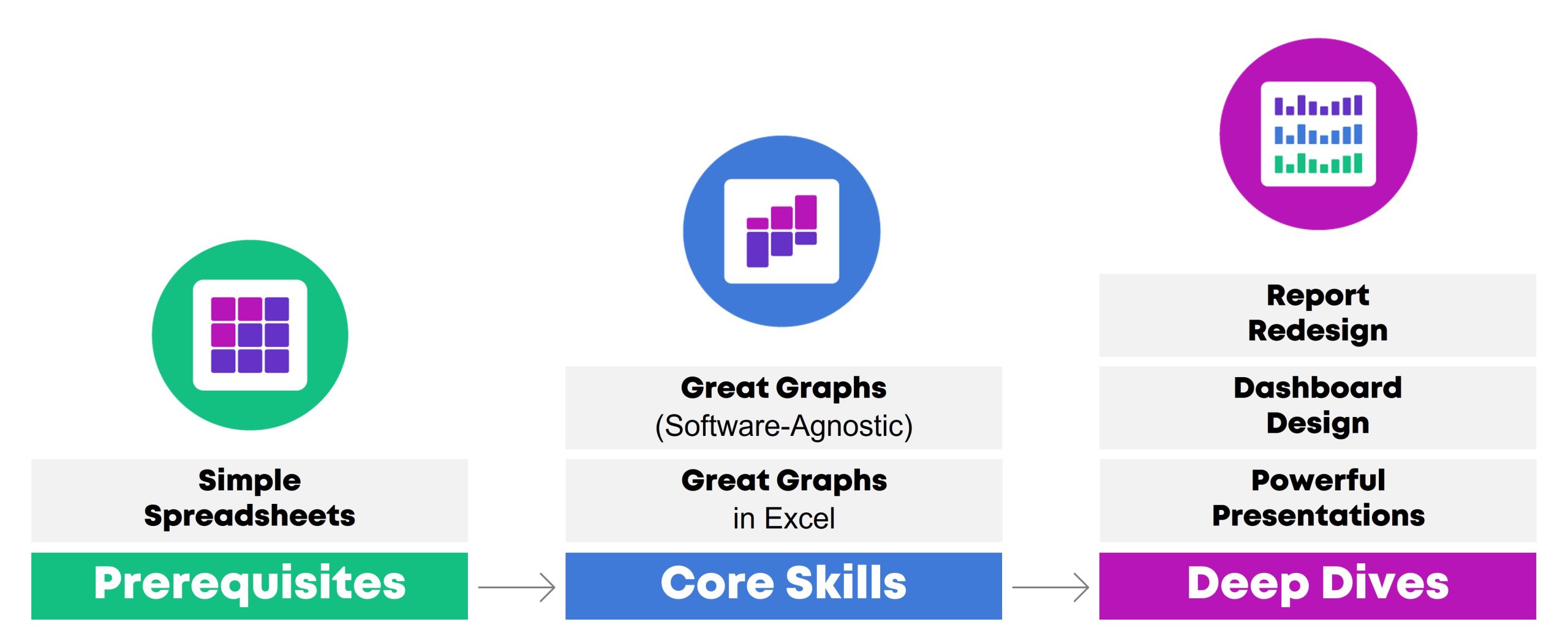
I offer full-day workshops on 6 different topics. All of these classes fall under the broad data communications umbrella.

You can choose from these 6 classes:

  • Simple Spreadsheets
  • Great Graphs
  • Great Graphs in Excel
  • Report Redesign
  • Dashboard Design
  • Powerful Presentations

One class focuses on data analysis (cleaning and tabulating our raw datasets to get them ready for graphs).

Two classes focus on core data visualization skills (translating technical information for non-technical audiences; making sure we don’t just have bar charts; and using colors and fonts that are branded, accessible, and intuitive).

Three classes are advanced, sort of. I call them deep dives because they focus just on reports, or dashboards, or presentations. You’ll need to have your graphs created and edited first (skills taught in previous classes) so they can feed into those reports, dashboards, and presentations.

In this article, you’ll learn more about each of the classes.

Simple Spreadsheets

How to Analyze Data from Start to Finish in Excel

Need to make sense of spreadsheets? Not sure where to start? Chances are, there’s a faster and easier way to get it done.

In this class, you’ll practice a step-by-step process for exploring, cleaning, analyzing, and tabulating your dataset. These spreadsheet skills will save your time, energy, and sanity.

You’ll learn how to:

  1. organize your brand new datasets by adding filters, freezing panes, and keeping raw data separate from clean data;
  2. merge disparate spreadsheets together with lookup formulas;
  3. clean and recode messy data (by checking for missing data and duplicates, and by transforming variables);
  4. run descriptive statistics and frequencies; and
  5. explore data more fully through pivot tables.

This workshop is highly interactive. Each section begins with a demonstration followed by a break for hands-on practice. For example, in the Analyze Data with Pivot Tables module, the instructor will show how to insert a pivot table and drag-and-drop variables. Then, you’ll practice right away, and you’ll be expected to ask questions whenever you get stuck.

Learning Objectives

After the one-day workshop, participants will be able to:

  • merge data from multiple sheets into a single master dataset;
  • organize spreadsheets by adding filters and freezing panes;
  • check for duplicates and missing data;
  • clean and recode messy data to get it ready for analysis;
  • run basic descriptive statistics and frequencies; and
  • explore data more fully through pivot tables.

Target Audience

Researchers, evaluators, scientists, graphic designers/communications staff, and admin staff who need to use Excel spreadsheets as part of their job–and it’s not your favorite part of your job.

If you already teach Excel at conferences or in seminars, you don’t need this class. It’s for those of us who didn’t take graduate courses specifically on Excel formulas.

If formulas and pivot tables have always been easy for you, you don’t need this course. It’s for those of us who feel like we’re missing something; that “I don’t know what I don’t know” feeling.

If you’re looking for a dataviz course, this isn’t it. Simple Spreadsheets is about: You’re opening a brand new dataset for the first time. Now what?! You’ll tabulate nominal, ordinal, interval, and ratio variables with the right formulas (you’ll need different formulas based on the type of variable/dataset). You’ll learn the in’s and out’s of pivot tables — and when to use formulas vs. pivot tables. These are the skills that precede graphs, dashboards, reports, and slideshows.

Level

Beginner/intermediate.

Prerequisites

None.

(But this course is a suggested prerequisite for all the other classes.)

Equipment Needed

A desktop or laptop computer (not a tablet or phone).

PCs preferred over Macs.

Webcams suggested for virtual classes so that staff can fully participate.

Software Programs Used

Excel is required.

Newest version preferred (called “Microsoft 365”).

Materials Included

  • 1 day of live instruction (e.g., 9-4 on-site, or 9-12:30 two days in a row virtually)
  • Access to recordings for 1 year so you can re-watch anything you’d like
  • Excel files with step-by-step instructions and hands-on activities

What Participants Are Saying

“As a 20+ year Excel user I can not BELIEVE the things I didn’t know, and that I learned to master in moments from Ann’s brilliant and engaging teaching. This course is by far the most well prepared and executed online course I have ever taken… The course materials are actual Excel files embedded with the skills, tricks and formulas… As far as who this course is best suited to, I think it could help Excel users of all levels, from beginners to advanced (which is what I would have called myself before taking this course and realizing my knowledge gaps!). For beginners it would be a one-stop shop of all you need to know to excel at Excel. For long-time users it will provide short-cuts, helpful formulas and other tricks you might not have known were hiding in this program. I truly can’t say enough about it, and have already recommended it to research colleagues, data/social indicator experts and policy folks.” – Lynn Davey, Ph.D, Davey Strategies

“I am a university researcher and have a lot of familiarity with data collection and statistical analysis programs/platforms (e.g. SPSS, SAS, etc.), but needed a low-cost, widely-used data collection and analysis tool I could recommend and teach to the community partners with whom I conduct research. I have known for a long time that Excel was likely the solution to my problem, but could never find time to learn to use it, except in the most basic ways (sort, sum). Last summer, I took Ann Emery’s Simple Spreadsheets course and dramatically improved my Excel acuity. *Plus* the course was fun, straightforward, and immediately useful… This course was more than worth the time and money I put into it, and I continue to learn and benefit from it (almost a year later). I highly recommend this course!” – Sarah V. Suiter, Vanderbilt University

Case Studies from Past Participants

You can view participants’ before-after transformations here:

  • 6 Data Cleaning Steps to Save You Millions by Hudson Kelley, HOPE International

Great Graphs

A Software-Agnostic Introduction to Accessible Data Visualization

Are your takeaway findings getting lost? Busy graphs can slow down the viewer’s comprehension, increase cognitive load, and fail to inform decision-making processes. With intentional editing, we can design graphs that inform and inspire.

During this class, you’ll walk through a step-by-step process that you can apply to your own projects.

You’ll learn how to:

  1. customize your visualizations for each of your audiences (technical vs. non-technical, internal vs. external, etc.);
  2. choose the right chart type for your dataset (hex maps vs. choropleth maps, donuts vs. waffles, spaghetti lines vs. small multiples, etc.);
  3. select an appropriate software program for your needs;
  4. declutter your visuals so that viewers’ attention is focused on the data; and
  5. use colors and fonts that are branded, accessible, and intuitive.

Learn More

Sample Agenda

In-person workshops typically last a full day (e.g., 9 – 4, with a 1-hour lunch break). Virtual workshops can be a single full day (9-4) or two half days (e.g., 9-12, two days in a row).

Here’s a sample agenda:

  • 9 – 9:50: Welcome & Logistics; Understand Our Audiences
  • 9:50 – 10: Break
  • 10 – 10:40: Choose the Right Chart
  • 10:40 – 10:50: Select a Software Program
  • 10:50 – 11: Break
  • 11 – 11:15: Declutter
  • 11:15 – 12: Color
  • 12 – 1: Lunch
  • 1 – 1:30: Text
  • 1:30 – 1:50: Case Studies
  • 1:50 – 2: Break
  • 2 – 2:50: Case Studies
  • 2:50 – 3: Break
  • 3 – 3:30: Case Studies
  • 3:30 – 4: Satisfaction Surveys; Next Steps
Sample Activities

We might:

  • Use the Audience Analysis Crosswalk to map out your various audiences’ needs and preferences (to make sure your visualizations are customized perfectly for them);
  • Talk through discussion-starter questions in a small group (for example, to decide which audiences prefer data storytelling approaches, or not);
  • Set up branding presets (“Theme Colors” and “Theme Fonts”) inside Excel (to look professional and save time);
  • Test our graphs for accessibility features, like color contrast, colorblindness, and grayscale printing, using government-approved websites;
  • Sketch out 3-5 chart options for a given dataset (to practice weighing the pros and cons of different graphics); and/or
  • Discuss or sketch out before-after makeovers from your real workplace.
Learning Objectives

After the one-day workshop, participants will be able to:

  • write graph text (titles, annotations, tooltips, etc.) that is branded, accessible, and intuitive).
  • explain when they would use traditional graphs vs. storytelling graphs;
  • weigh the pros and cons of presenting data through various chart types (e.g., clustered bar charts vs. dot plots, and choropleth maps vs. hex maps);
  • explain how to declutter visuals to make sure the viewers’ attention is focused on the key patterns (e.g., by removing redundant text);
  • select graph colors that are branded, accessible, and intuitive; and
  • write graph text (titles, annotations, tooltips, etc.) that is branded, accessible, and intuitive).
Target Audience

Researchers, evaluators, scientists, graphic designers/communications staff, and admin staff who need to share data with others through accessible graphs.

Level

Beginner/intermediate.

Prerequisites

None.

(But this course is a suggested prerequisite for Great Graphs in Excel, Report Redesign, Dashboard Design, and Powerful Presentations.)

Equipment Needed

A desktop/laptop computer (not a tablet or phone).

PCs preferred over Macs.

Webcams suggested for virtual classes so that staff can fully participate.

Software Programs Used

The Microsoft suite (Excel, PowerPoint, Word).

This workshop focuses on software-agnostic best practices that can be applied to any software program you might be using, from Excel to Tableau to R.

Most of us are using everyday software – Excel, PowerPoint, and Word – for at least some part of our workflow. For example, we might make maps in ArcGIS… and transfer them into PowerPoint to share with colleagues.

We’ll have a few hands-on activities using Microsoft programs.

Materials Included
  • 1 day of live instruction (e.g., 9-4 on-site, or 9-12:30 two days in a row virtually)
  • Access to recordings for 1 year so you can re-watch anything you’d like
  • Handout
  • Ebook
  • PDF’d slides

What Participants Are Saying

“I would often see charts, graphs, and other data visuals in journal articles, and think to myself, ‘Wow, this is horrible; I have no idea what I am supposed to learn from this!” But I had no idea how to make it better or offer constructive suggestions.  After Great Graphs, I learned about how to select the best type of graph and how to make it visually appealing to the intended audience.  My own publications and posters have also benefitted—no more hard-to-read charts filled with clutter!” – John R. Heberger, Epidemiologist, Centers for Disease Control and Prevention

Case Studies from Past Participants​

You can view participants’ before-after transformations here:

  • A Before-After One-Pager Makeover by Lillian Haley, Haley Evaluation & Research Services

Great Graphs in Excel

How to Make Beginner, Intermediate, and Advanced Graphs from Start to Finish

You’re familiar with all the research-based dataviz best practices. Now, let’s get down to business and make those graphs in Excel!

During this class, you’ll make beginner, intermediate, and advanced graphs in Excel.

You’ll walk through three levels of Excel vizardry:

  1. First, in Level 1, learn the in’s and out’s of overused native charts (bar charts, pie charts, line charts, and more).
  2. In Level 2, you’ll make underused native charts, like tree maps, sunburst diagrams, and geographic maps.
  3. Finally, in Level 3, you’ll make non-native charts–charts that require sophisticated workarounds to produce in Excel, like dot plots, b’arc charts, small multiples bar charts, population pyramids, waffle charts, and more.

Learning Objectives

After the one-day workshop, participants will be able to:

  • create and edit a few classic chart types (bars, lines, pies, etc.) to make sure they’re Big A Accessible (508-compliant) and little a accessible (intuitive);
  • practice creating a few newer chart types that are now available in Excel, like geographic maps and tree maps; and
  • transform a few Regular Tables into Magic Tables to fully harness Excel’s power and make dot plots, population pyramids, and more.

Target Audience

Researchers, evaluators, scientists, graphic designers/communications staff, and admin staff who need to share data with others through accessible graphs.

Level

Intermediate.

Prerequisites

You should complete a one-day data visualization best practices class first (like Great Graphs).

You should already have strong spreadsheet skills (being able to transform your raw data into clean, tabulated data (skills covered in Simple Spreadsheets).

Equipment Needed

A desktop/laptop computer (not a tablet or phone).

PCs preferred over Macs.

Webcams suggested for virtual classes so that staff can fully participate.

Software Programs Used

Excel is required.

Newest version preferred (called “Microsoft 365”).

Materials Included

  • 1 day of live instruction (e.g., 9-4 on-site, or 9-12:30 two days in a row virtually)
  • Access to recordings for 1 year so you can re-watch anything you’d like
  • 25+ Excel files with step-by-step instructions and templates for making beginner, intermediate, and advanced graphs
  • 2-page Chart Chooser
  • 1-page cheat sheet on Transferring Graphs from Excel into Word or PowerPoint
  • Instructions for setting up Theme Colors & Theme Fonts

What Participants Are Saying

“Before the course, I presented numbers narrated by text…yawn. Now, I present numbers as a story with visuals, sometimes as simple as sparklines, which engages staff and invites their insights! The Great Graphs in Excel course helped me see and share what story our data is telling. This course is best for people who learn through interaction, not just watching videos and reading tutorials. Ann K Emery responds to students’ questions and specific data scenarios, has us try the solutions real-time, and engages and encourages her students (probably the most impactful part of the course…) I especially appreciate her walking us through her thought process as she demonstrates the procedures she’s developed. It’s like having an officemate who’s both a whiz and mentor, which helps make me a better analyst.” – Ellen Shepherd, Program analyst at a nonprofit

“This course helped me to see Excel as a flexible tool for a wide range of data management and analysis tasks… Much more than just tables and calculations!” – Bob Coulter, Missouri Botanical Garden

“My trend is definitely upward in this course. I’m learning EVERYTHING about graphs and #dataviz. Even the first couple lessons taught me so much useful formatting information about Excel that are already saving me so much time and ensuring my #professionalbranding consistency. And I’m looking forward to making graphs and charts that can convey complex information in an effective way!” – Sue Griffey, Founder, SueMentors

“Enrolling in courses at Depict Data Studio is one of the best professional developments I have ever made… After eight months with Ann, I was able to turn my blah capabilities statement into something I am happy to share! I could go on and on about the many design and data visualization lessons I’ve learned from Ann. Instead, I’ll end by saying that books and blogs are excellent resources. I have several books and subscribed to many blogs. However, they do not compare to live and on-demand instruction of Depict Data Studio.” – Lillian Haley Ph.D., MSW, ChFC®, President and Owner, Haley Evaluation & Research Services (HERS)

Case Studies from Past Participants​

You can view participants’ before-after transformations here:

  • 3 Simple Steps that Took My Graph from Good to Great by Maia Werner-Avidon, evaluator

Report Redesign

How to Transform Text-Heavy Technical Reports into Visual, Skimmable Reports

Were you trained to write lengthy technical reports with methodological details? Technical reports are a great fit for technical audiences, like our peers working in public health. But what about our non-technical audiences, like policymakers or the general public?

In this class, you’ll learn how to translate technical data for non-technical audiences. You’ll walk through 3 layers of the Report Redesign pyramid.

Here’s what you’ll learn and practice:

  • In Level 1: Go Beyond the Report, you’ll learn how to add a variety of dissemination formats to your project (not just reports) in order to meet a variety of audiences’ needs. You’ll also learn about the 30-3-1 Approach to Reporting, visual appendices, and the 8 ingredients for designing one-pagers.
  • In Level 2: Structure Your Report, you’ll learn how to design a 20-minute cover. Then you’ll visually chunk your data with color-coded chapters. These are the big-picture, structural edits that make data-dense reports easier to skim and navigate.
  • Finally, in Level 3: Design Each Page, you’ll fine-tune the graphs and paragraphs included on each page. You’ll see a checklist of 15 Ideas for Visuals, and then practice adding more visuals to each page. You’ll also edit your writing to ensure that it’s accessible and inclusive.

Learning Objectives

After the one-day workshop, participants will be able to:

  • name a few dissemination formats (beyond technical reports) that would be ideal for non-technical audiences;
  • describe the 30-3-1 Approach to Reporting;
  • name 8 ingredients that should be included in one-pagers;
  • create a 20-minute report cover in Word;
  • create color-coded divider pages in Word; and
  • transform one text-heavy page into a visual, skimmable page.

Target Audience

Researchers, evaluators, and scientists who are preparing technical reports (peer-reviewed articles, etc.) and need to translate those scientific details for non-technical audiences.

Or, graphic designers/communications staff and admin staff who are helping scientists prepare those non-technical reports or infographics.

Level

Intermediate/advanced.

This training is ideal for staff who regularly work on reports of any type or length, and who might already be thinking about adding one-pagers or infographics to their project.

In other words, you’ll gain the most from this session if you can bring your own draft reports to work on. It’ll be harder to participate if you don’t have any documents to work on during the hands-on portions.

Suggested Prerequisites

This course is about designing reports and one-pagers for non-technical audiences. It’s not a data visualization course. We suggest that you complete a half-day or full-day data visualization class first. Then, those well-designed graphs and maps can go into the reports that you’ll fine-tune during this course.

Equipment Needed

A desktop/laptop computer (not a tablet or phone).

PCs preferred over Macs.

Webcams suggested for virtual classes so that staff can fully participate.

Software Programs Used

You’ll learn both reporting best practices and Word how-to’s.

Materials Included

  • 1 day of live instruction (e.g., 9-4 on-site, or 9-12:30 two days in a row virtually)
  • Access to recordings for 1 year so you can re-watch anything you’d like
  • Ebook
  • PDF’d slides

What Participants Are Saying

“Investing in the Report Redesign course from Depict Data Studio was one of the best decisions I have made in my career. Before the course, I was writing long, wordy reports that I thought were visually appealing because I included tables and bar charts; I had no idea the options I had within software I already had access to. Now, I create impactful one-pagers and reports that are visually appealing and even more importantly, get read by my colleagues. I know that there are more than 15 types of visuals to include in reports, how to utilize my company’s brand to my advantage, and more. I have been complimented on the new look of my reports by coworkers and external stakeholders, and continue to have “aha” moments of how I can continue to apply Ann’s advice as access to the course never expires. I cannot recommend this course enough. Thanks Ann and Depict Data Studio!” – Olivia Power, Data and Reporting Specialist, National FFA Organization

Case Studies from Past Participants

You can view participants’ before-after transformations here:​

  • Upping Your Reporting Game–with PowerPoint! by Ann Webb Price, Community Evaluation Services
  • Three Ways Intentional Data Viz Has Elevated My Work by Kathy Dowell, The Evaluation Group

Dashboard Design

How to Design Static and Interactive Dashboards in Excel

Why wait until the end of the year to write a lengthy report when you can share data early and often with dashboards? Your organization’s leaders have more important things to do than read lengthy reports. Dashboards get to the point so that leaders can understand the numbers and take action.

During this class, you’ll make both static and interactive dashboards in Excel.

First, you’ll see sample dashboards from a dozen organizations like yours. You’ll hear share the story behind each dashboard so that you can learn about each dashboard’s audience and goals. For example, some of the dashboards were designed to track progress towards goals. Other dashboards were designed to help organizations compare their different program areas. You can decide which elements of each dashboard would be most applicable to your own work.

Then, you’ll design a few static dashboards in Excel. You’ll create sparklines and uncover some of Excel’s best kept secrets, like Conditional Formatting. These dashboards will live inside of Excel and get shared with stakeholders as PDFs through email or as printed handouts during meetings. Static dashboards are a great fit for non-technical audiences who only have time to skim a one-page email attachment.

Finally, you’ll design an interactive dashboard in Excel. You’ll turn your regular table into an Excel Table; you’ll tabulate your dataset with pivot tables; you’ll design pivot charts to showcase your key findings; and you’ll link everything together with slicers. Interactive dashboards are a great fit for technical audiences who have time to explore the data themselves.

Learning Objectives

After the one-day workshop, participants will be able to:

  • describe when static vs. interactive dashboards are most useful (e.g., for technical vs. non-technical audiences);
  • create sparklines, data bars, and heat tables;
  • adjust their dashboard to be printer- and PDF-ready to create static dashboards; and
  • insert Excel Tables, pivot tables, pivot charts, and slicers to create interactive dashboards.

Target Audience

Researchers, evaluators, and scientists who want to create monthly, quarterly, or annual dashboards inside no-code software you already have, like Excel.

Level

Intermediate/advanced.

Suggested Prerequisites

You’ll gain the most from this course if you’ve already taken two other courses from this instructor: (1) Simple Spreadsheets (to start practicing formulas and pivot tables) and (2) Great Graphs (to start practicing data visualization skills, like chart-choosing, branding, and accessibility).

Equipment Needed

A desktop/laptop computer (not a tablet or phone).

PCs preferred over Macs.

Webcams suggested for virtual classes so that staff can fully participate.

Software Programs Used

Excel is required.

Newest version preferred (called “Microsoft 365”).

Materials Included

  • 1 day of live instruction (e.g., 9-4 on-site, or 9-12:30 two days in a row virtually)
  • Access to recordings for 1 year so you can re-watch anything you’d like
  • Ebook
  • PDF’d slides
  • ~10 templates with step-by-step instructions for making static and interactive dashboards in Excel

What Participants Are Saying

“This course helped me to design a visually engaging and easy to interpret surveillance report for our State Health Department. This course offers so many great Excel tips and techniques in such an organized way. The skills I learned from this course were extremely easy to apply to an actual project. Furthermore, the course examples provided me with so many ideas and inspiration for future projects.” – Melissa Lurie, MPH, Epidemiologist/Research Scientist, New York State Department of Health

“When I started my position, I was tasked with developing a better way to track performance data across multiple programs. With this course, I was able to transform the old system into a dashboard that is efficient, makes good use of a single page, and looks great. We now get lots of compliments on our dashboard, thanks to this course.” – Shawna Rohrman, Associate Director, Cuyahoga County Office of Early Childhood

Case Studies from Past Participants

You can view participants’ before-after transformations here:

  • Creating Reports for Grant Deliverables Using Excel Dashboards by Josephine Engels, Mental Health America of Greater Houston
  • Better Storytelling with the Same Data: Upgrade that Board Packet! by Kristen Summers, Saint Luke’s Foundation

Powerful Presentations

How to Design and Deliver Presentations for Maximum Impact

Do you need to give presentations, either in-person or online? You might need to design slides for public health conferences. Or, you might need to give updates at your staff meetings.

In this class, you’ll learn how to avoid Death by PowerPoint–those slides with Text Walls, grainy images, and run-on content. Our audiences are busier than ever, and they’re relying on us to communicate our data clearly and concisely.

You’ll gain presentation best practices and practical how-to’s in PowerPoint.

First, in the Slidedecks vs. Slidedocs module, you’ll learn the five graphic design features that make presentations stand out from reports. You’ll see examples of slidedecks and slidedocs from real CDC projects, and we’ll pause to make sure you know whether you need slidedecks and/or slidedocs for your own projects.

Second, in the Message module, you’ll design a Visual Framework to help organize your presentation into manageable chunks of information. You’ll also write the takeaway tweets for your presentation in advance to make sure it’s concise and actionable.

Third, in the Design module, you’ll swap out your bullet points and bar charts for a variety of visuals. You’ll receive our Chart Chooser and our checklist of 15 Ideas for Visuals, and we’ll practice adding visuals to some of your real slides.

Fourth, in the Delivery module, you’ll learn how to storyboard you slides, which is a technique for breaking up dense data over multiple slides and explaining it piecemeal to our non-technical audiences. You’ll also learn about public speaking skills, body language, and tech set-up for virtual presentations.

Learning Objectives

After the one-day workshop, participants will be able to:

  • name five characteristics that should differentiate slidedocs (handouts made in PowerPoint) from slidedecks (presentation slides made in PowerPoint);
  • narrow down a presentation’s content to just 3-5 “buckets” of information;
  • draft a Visual Framework (a diagram) that shows how those 3-5 buckets are related (e.g., a venn diagram, step-by-step process, or repeating cycle);
  • write a 1-2 sentence “takeaway tweet” that summarizes the main message from the presentation;
  • re-design one text-heavy slide so that it includes accessible, skimmable visuals; and
  • storyboard one graph (break up the graph over multiple slides to match your speaking points and keep the audience engaged).

Target Audience

Researchers, evaluators, and scientists who are preparing their own slides/handouts for upcoming presentations.

Or, graphic designers/communications staff and admin staff who are preparing slides/handouts that their supervisors will be presenting.

Level

Intermediate/advanced.

This class is designed for staff who are already giving presentations (informal staff meetings, or formal conference presentations) and want to take their slides and public speaking skills to the next level.

In other words, you’ll gain the most from this session if you can bring your own draft slides to work on. It’ll be harder to participate if you don’t have any slides or upcoming presentations to work on during the hands-on portions.

Suggested Prerequisites

This course is about presentations, slide design, and public speaking skills. It’s not a data visualization course.

We suggest that you complete a half-day or full-day data visualization class first (like Great Graphs). Then, those well-designed graphs and maps can go into the presentations you’ll design in this course.

Equipment Needed

A desktop/laptop computer (not a tablet or phone).

PCs preferred over Macs.

Webcams suggested for virtual classes so that staff can fully participate.

Software Programs Used

You’ll learn both presentation best practices and PowerPoint how-to’s.

Materials Included

  • 1 day of live instruction (e.g., 9-4 on-site, or 9-12:30 two days in a row virtually)
  • Access to recordings for 1 year so you can re-watch anything you’d like
  • Ebook
  • PDF’d slides

What Participants Are Saying

“Not only have my presentation skills and setup improved, but so have my slides. There are so many great tips and tricks I could highlight, but I will keep it to my three favorites: color coding, increasing readability, and storyboarding. The best part is, they don’t take that much extra time! These are simple changes that take your slidedecks to a new level and allow you to really impress your audience.” – Kelsey Waterson, Evaluator, Centerstone Research Institute

“A client asked me to report the results at their meeting and I used so many of your suggestions in the slidedeck, it was the most impressive PowerPoint I have ever made. But as the meeting progressed, they were running out of time, [but] luckily, I had also created a slidedoc and was able to share that document. I have never been so grateful that I had signed up for your class!” – Kristin Wright

Case Studies from Past Participants

You can view participants’ before-after transformations here:

  • A Tip, a Trick, and a Thing to Try in Your Next Presentation by Elizabeth Dove, University of Montana
  • Creating a Powerful Presentation: 3 Easy Changes to Revamp Your PowerPoint by Kelsey Watterson, Centerstone Research Institute

Learn More

If you’d like to explore private training options, you can learn more here.

Smaller teams may prefer group rates for online courses.

Written by cplysy · Categorized: depictdatastudio

  • « Go to Previous Page
  • Go to page 1
  • Interim pages omitted …
  • Go to page 7
  • Go to page 8
  • Go to page 9
  • Go to page 10
  • Go to page 11
  • Interim pages omitted …
  • Go to page 37
  • Go to Next Page »

Footer

Follow our Work

The easiest way to stay connected to our work is to join our newsletter. You’ll get updates on projects, learn about new events, and hear stories from those evaluators whom the field continues to actively exclude and erase.

Get Updates

Want to take further action or join a pod? Click here to learn more.

Copyright © 2026 · The May 13 Group · Log in

en English
af Afrikaanssq Shqipam አማርኛar العربيةhy Հայերենaz Azərbaycan dilieu Euskarabe Беларуская моваbn বাংলাbs Bosanskibg Българскиca Catalàceb Cebuanony Chichewazh-CN 简体中文zh-TW 繁體中文co Corsuhr Hrvatskics Čeština‎da Dansknl Nederlandsen Englisheo Esperantoet Eestitl Filipinofi Suomifr Françaisfy Fryskgl Galegoka ქართულიde Deutschel Ελληνικάgu ગુજરાતીht Kreyol ayisyenha Harshen Hausahaw Ōlelo Hawaiʻiiw עִבְרִיתhi हिन्दीhmn Hmonghu Magyaris Íslenskaig Igboid Bahasa Indonesiaga Gaeilgeit Italianoja 日本語jw Basa Jawakn ಕನ್ನಡkk Қазақ тіліkm ភាសាខ្មែរko 한국어ku كوردی‎ky Кыргызчаlo ພາສາລາວla Latinlv Latviešu valodalt Lietuvių kalbalb Lëtzebuergeschmk Македонски јазикmg Malagasyms Bahasa Melayuml മലയാളംmt Maltesemi Te Reo Māorimr मराठीmn Монголmy ဗမာစာne नेपालीno Norsk bokmålps پښتوfa فارسیpl Polskipt Portuguêspa ਪੰਜਾਬੀro Românăru Русскийsm Samoangd Gàidhligsr Српски језикst Sesothosn Shonasd سنڌيsi සිංහලsk Slovenčinasl Slovenščinaso Afsoomaalies Españolsu Basa Sundasw Kiswahilisv Svenskatg Тоҷикӣta தமிழ்te తెలుగుth ไทยtr Türkçeuk Українськаur اردوuz O‘zbekchavi Tiếng Việtcy Cymraegxh isiXhosayi יידישyo Yorùbázu Zulu