• Skip to main content
  • Skip to footer
  • Home

The May 13 Group

the next day for evaluation

  • Get Involved
  • Our Work
  • About Us
You are here: Home / Archives for allblogs / freshspectrum

freshspectrum

May 07 2020

111 Evaluation Cartoons for Presentations and Blog Posts

Looking for an evaluation related cartoon for your next presentation or blog post? Well, over the last decade I’ve drawn hundreds.

In this post, I’m sharing 111 of my evaluation cartoons, including a lot of community favorites. Please feel free to save to your computer, add to your presentations, and share them on the web.

What about licenses?

So if you’re giving a presentation or writing a blog post, I consider these non-commercial uses. The only attribution I require is keeping the signature in the cartoon (most often freshspectrum, but sometimes clysy). You can add more (always appreciate links back to this site) but I do not require this.

I hate filling out paperwork. Filling out paperwork is making me do work so that you can use my stuff. I charge for this, because, well, I hate paperwork. So I’m just using the Creative Commons language, because I also dislike writing legal-ease kinds of stuff.

All that said, if you like my stuff, consider becoming a Patron of mine. This helps compensate for the costs of sharing my stuff publicly (mainly web hosting). $5/month would be awesome but $1/month is also very much appreciated.

My Creative Commons License

Attribution-NonCommercial (CC BY-NC)

image

This license lets others remix, tweak, and build upon your work non-commercially, and although their new works must also acknowledge you and be non-commercial, they don’t have to license their derivative works on the same terms.

View License Deed | View Legal Code

What about Commercial Uses?

I’m still usually okay with these types of uses. Especially if I don’t have to do any paperwork and my cartoons are secondary to the overall product you are offering. But reaching out and asking (chris @ freshspectrum .com) is encouraged.

I’ll probably just say go for it, and encourage you to become a $5 or $10 patron.

On to the Cartoons

You’ll find others out in the world, but here is a pretty big set that includes most of the community favorites. I’ve also decided to scatter in some comments to add a little additional context.
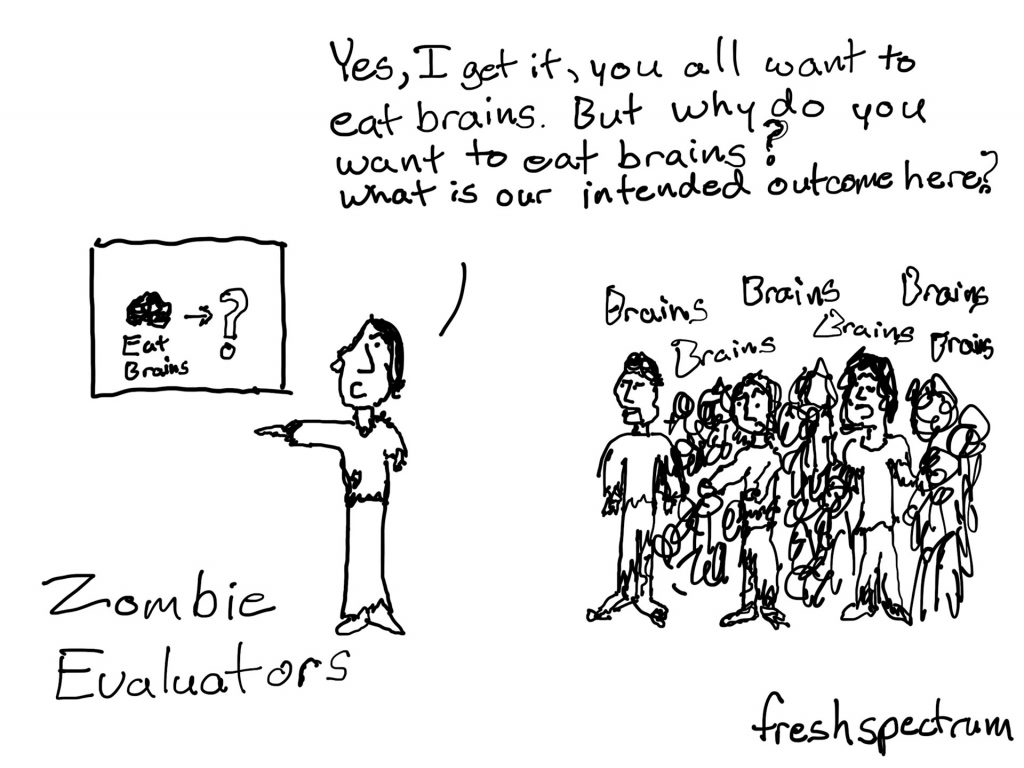
I drew this Zombie evaluator cartoon for a halloween. But it’s definitely become on of my favorites for anytime use. I have been asked how the evaluator draws on the whiteboard without hands.

My tongue in cheek response is usually, “maybe she had them when she was drawing it on the board in the first place.”
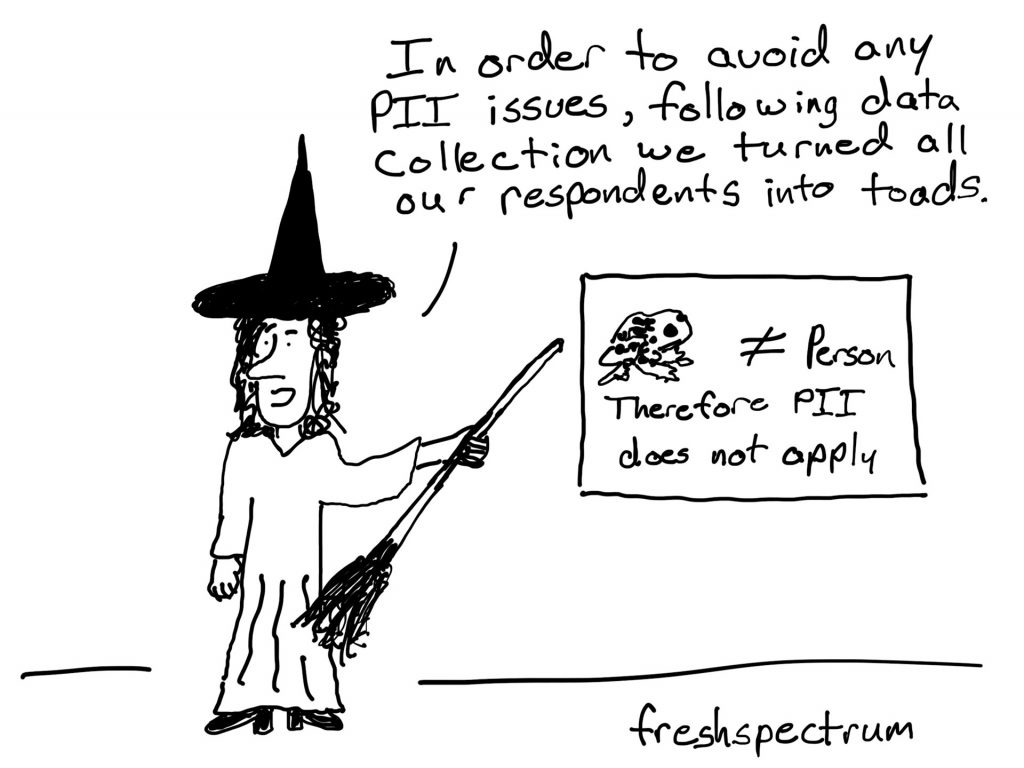
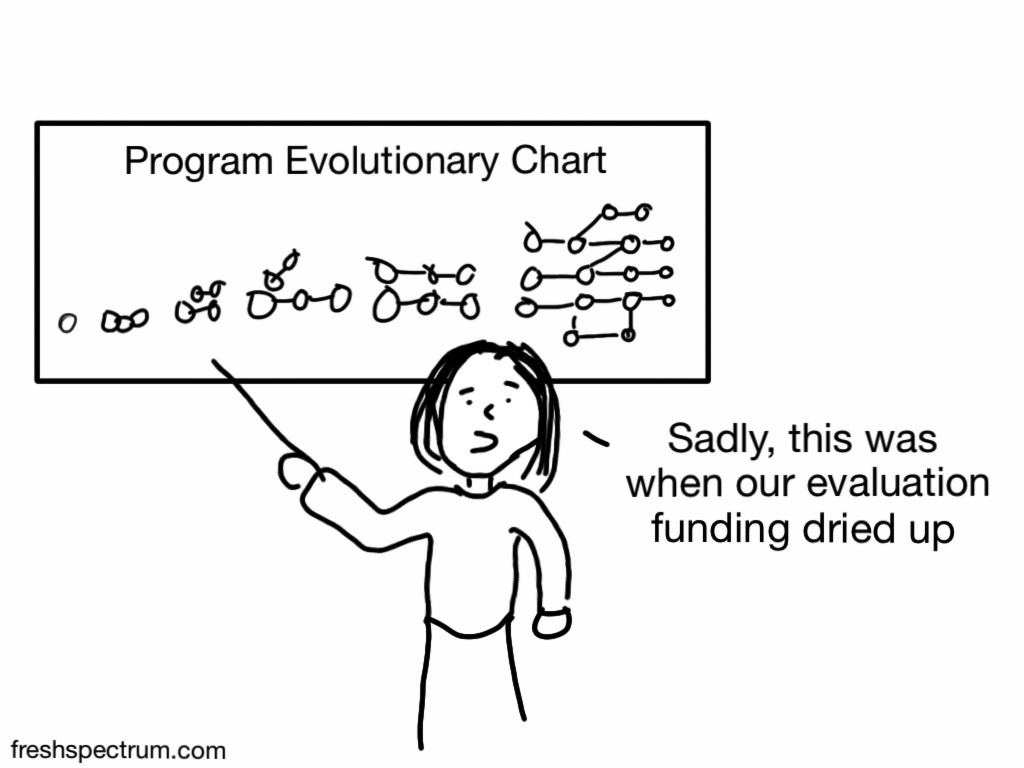
I drew this program evaluation evolution cartoon at the request of another evaluator. Not sure if they ever used it, but I think there is a pretty common sentiment here.
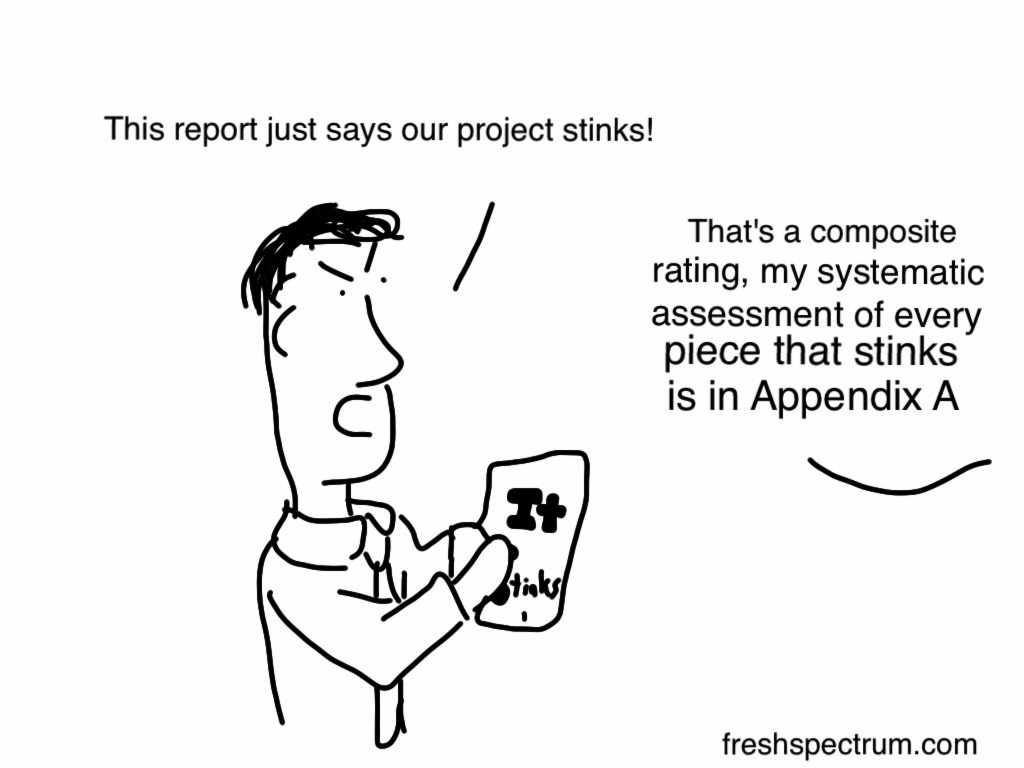
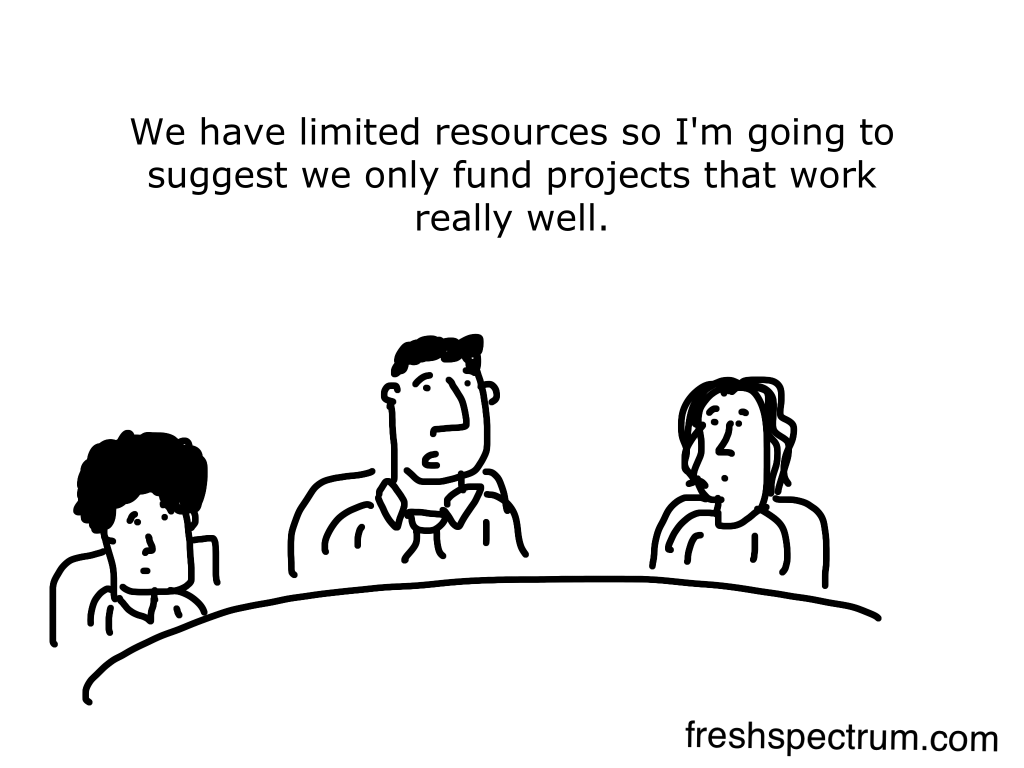
The logic behind doing “what works” often gets applied to newly forming programs. But taking the time to evaluate the past to find what did work, or applying the lessons of past evaluations, is something that few organizations actually take the time to understand.
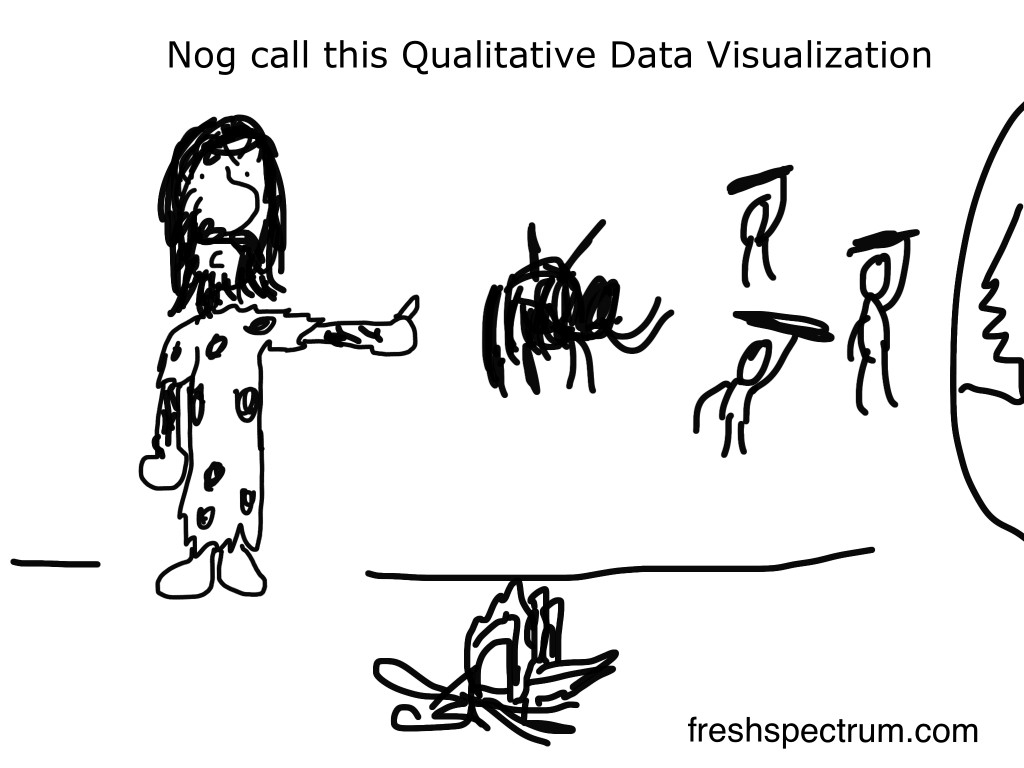
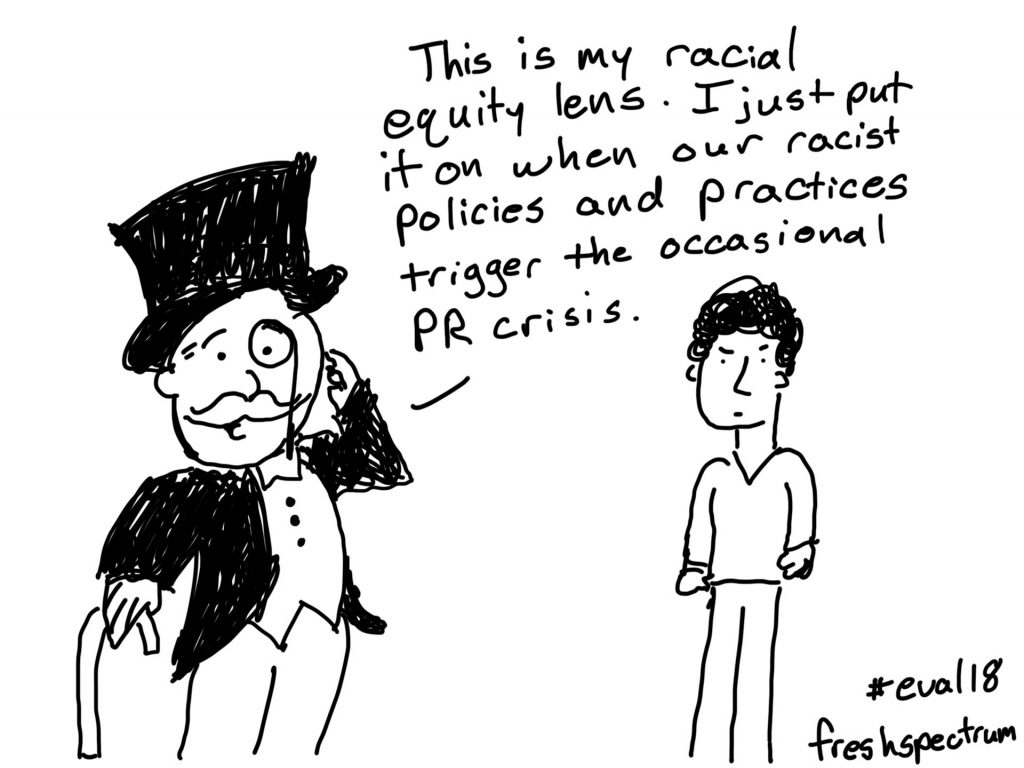
I like mixing puns with sad social realities…

It’s much easier to say things about racial equity than do things about racial equity. It’s also much easier to do things about racial equity than do enough of the right things in the right way to make significant progress on issues of racial equity.

There is a quote from Michael Scriven that comes from his evaluation thesaurus.

Causation: The relation between mosquitos and mosquito bites. Easily understood by both parties but never satisfactorily defined by philosophers or scientists.
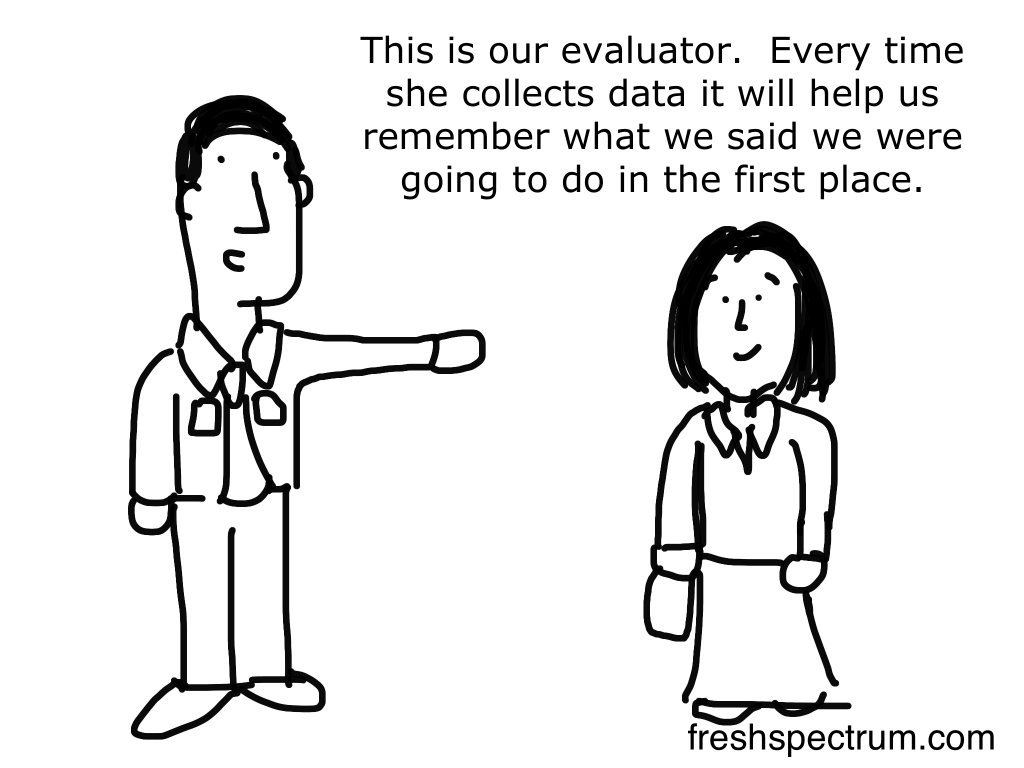
Michael Scriven

Good evaluators carry a set of ethics with them as they pursue their profession. Evaluation can be really important, for good or for bad, and really political.
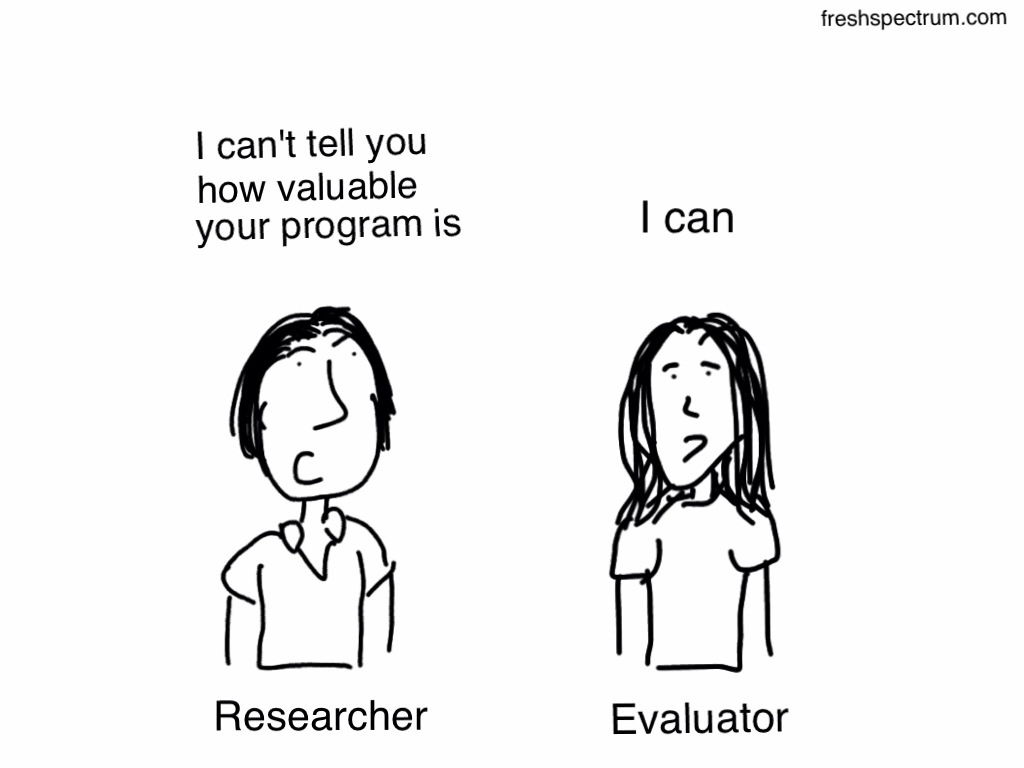
This researcher vs evaluator cartoon has been a perennial favorite. I find it on a lot of bulletin boards and in presentations. I think there is a hunger for many in the evaluation community to describe their work simply.
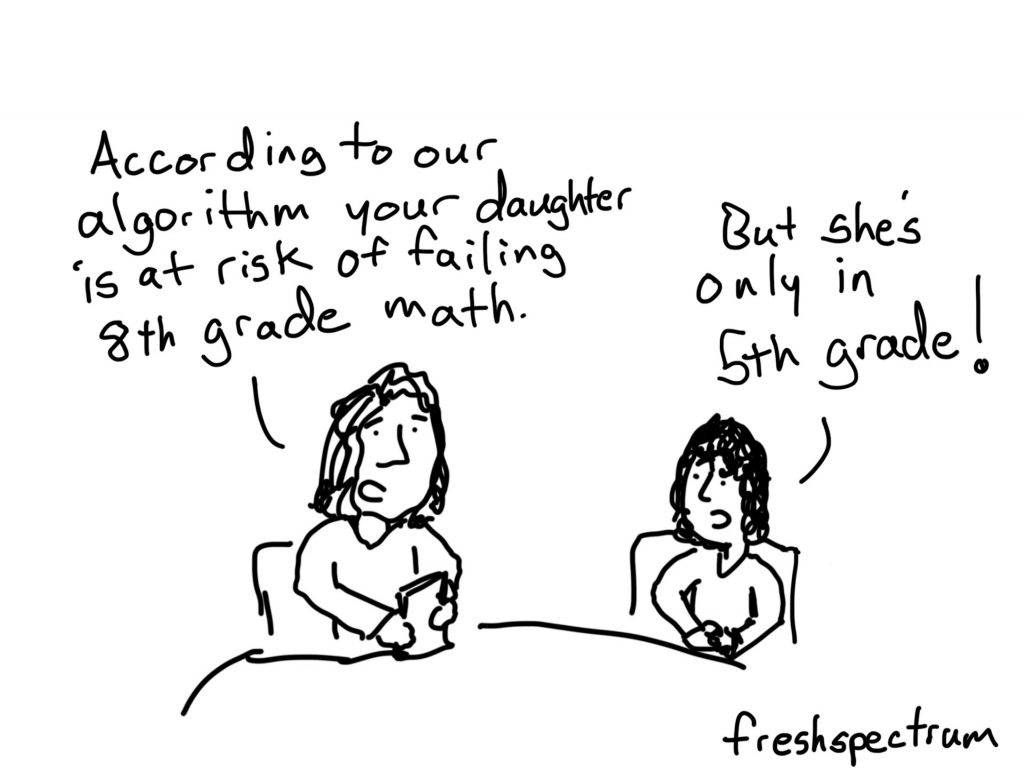
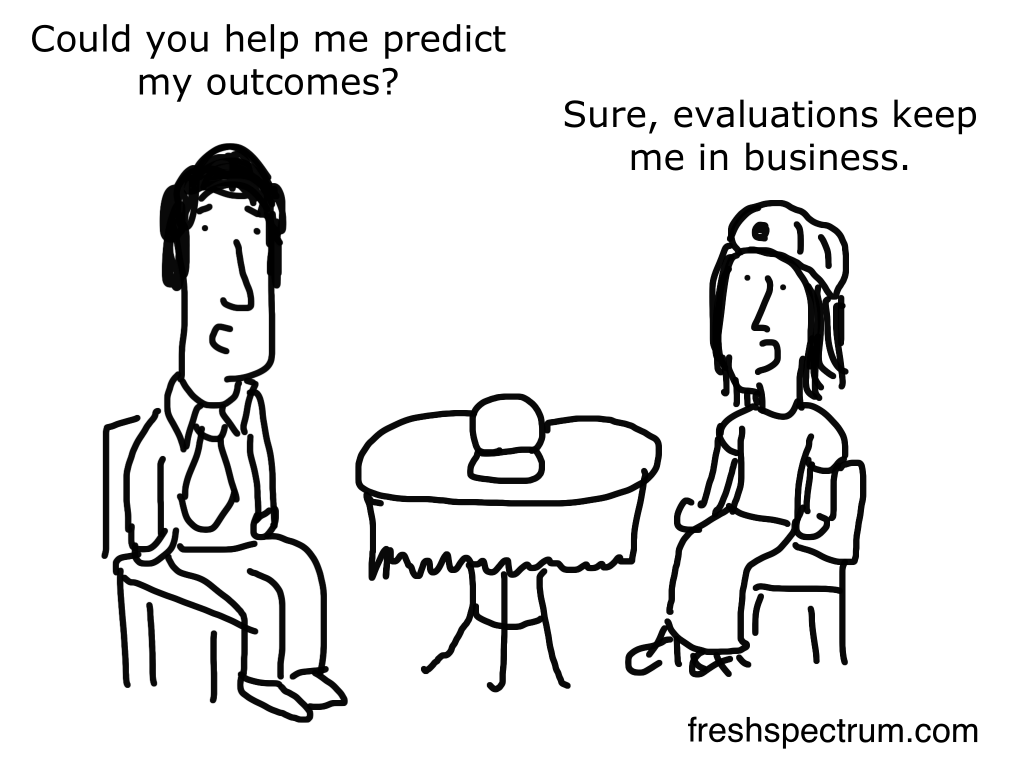
I am not against data science and predictive analytics, but maybe sometimes we take it a bit too far.
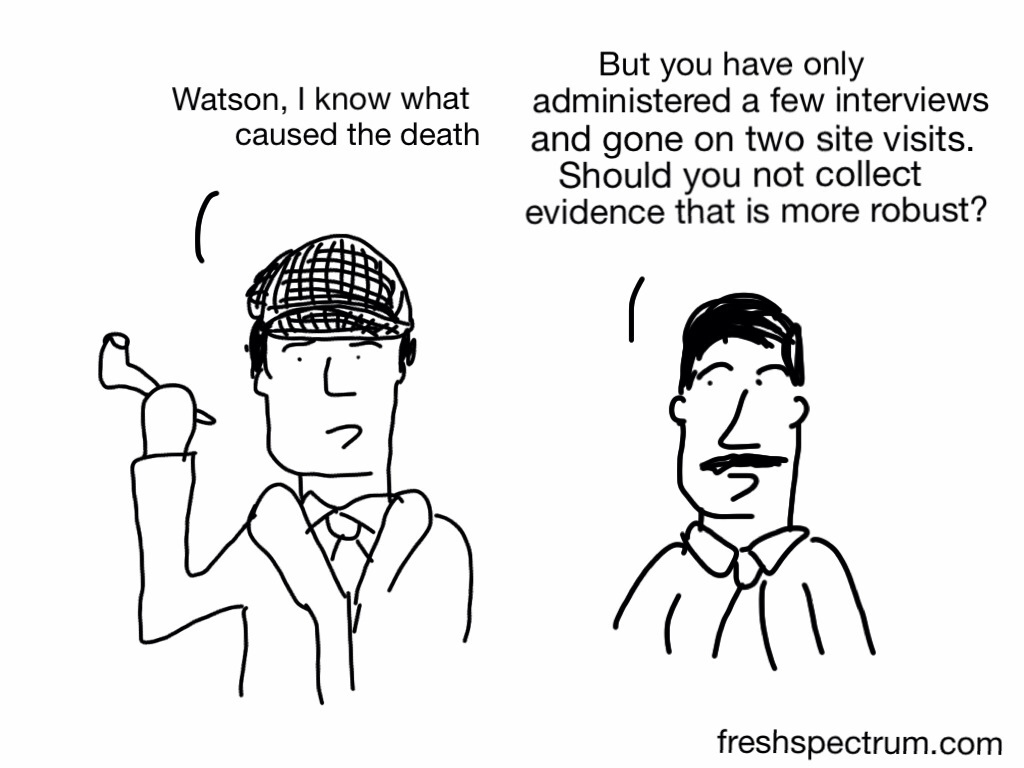
This Sherlock cartoon is really just an attempt to show detective work as a form of qualitative evaluation. I edited it at the request of Michael Quinn Patton for use in one of his books, but this is the original and I like it better.
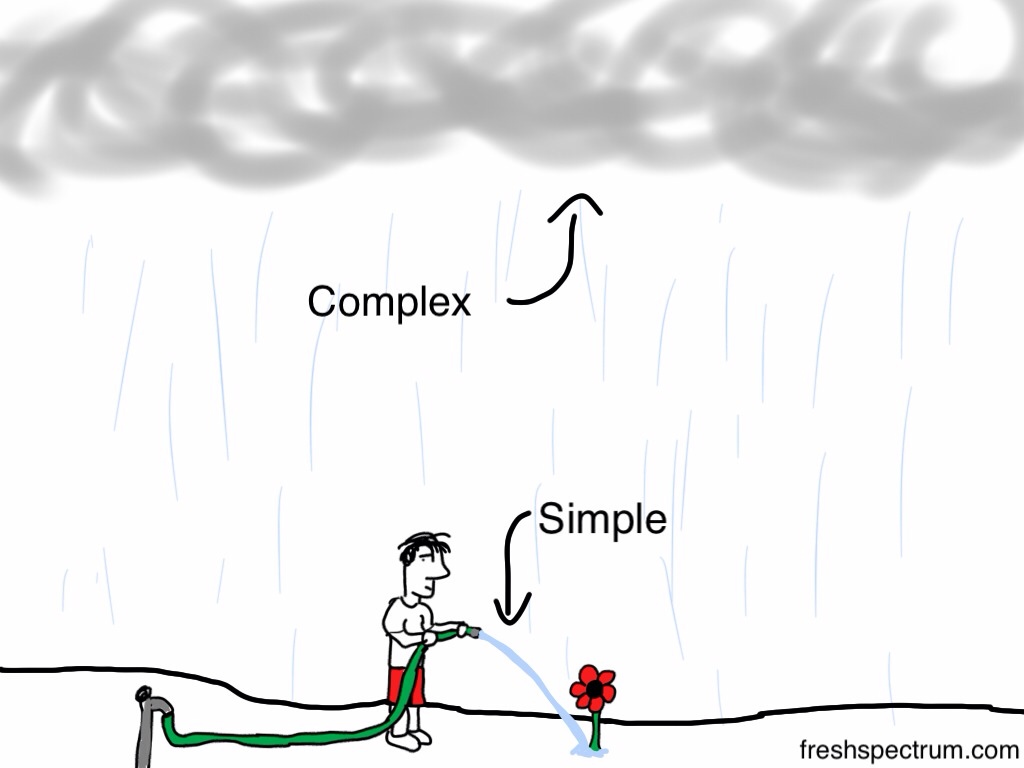
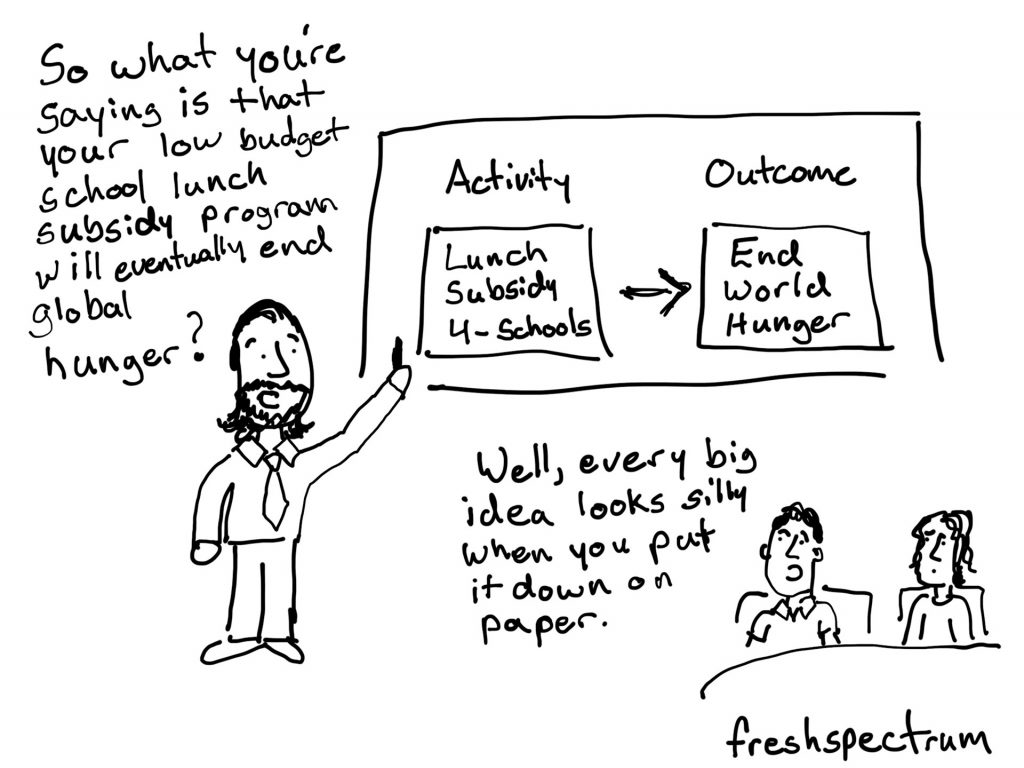
Most of the crowd favorite cartoons tend to be short and a little over the top. This is definitely one of them.
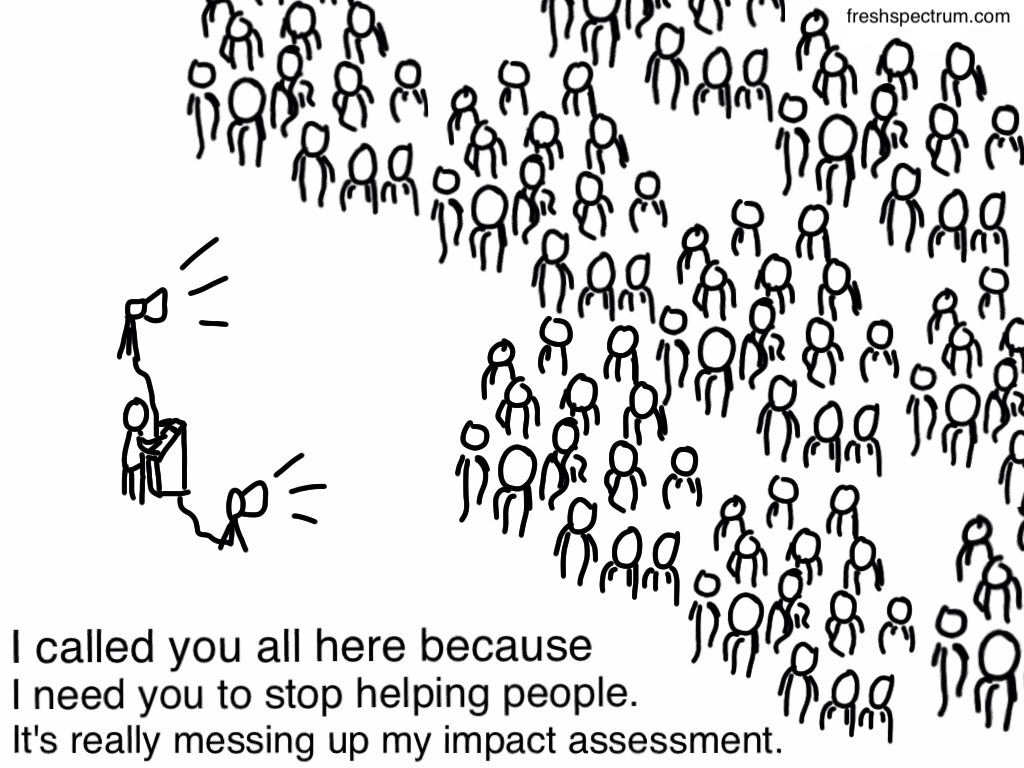
I drew this one while pondering the differences between attribution and contribution.
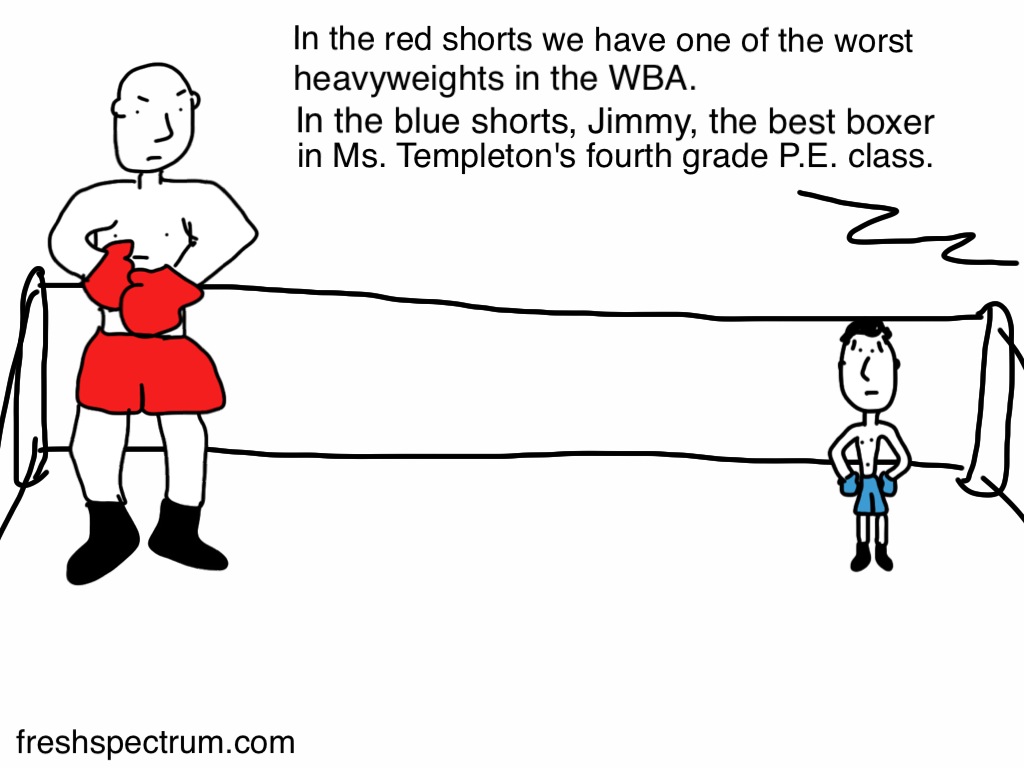
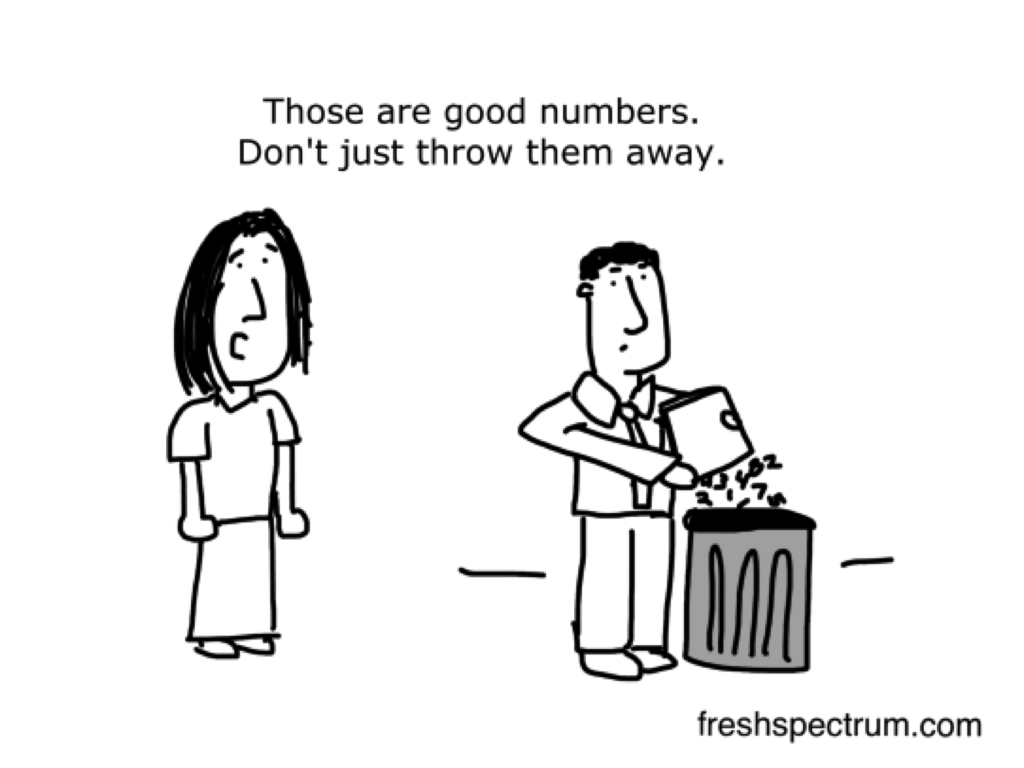
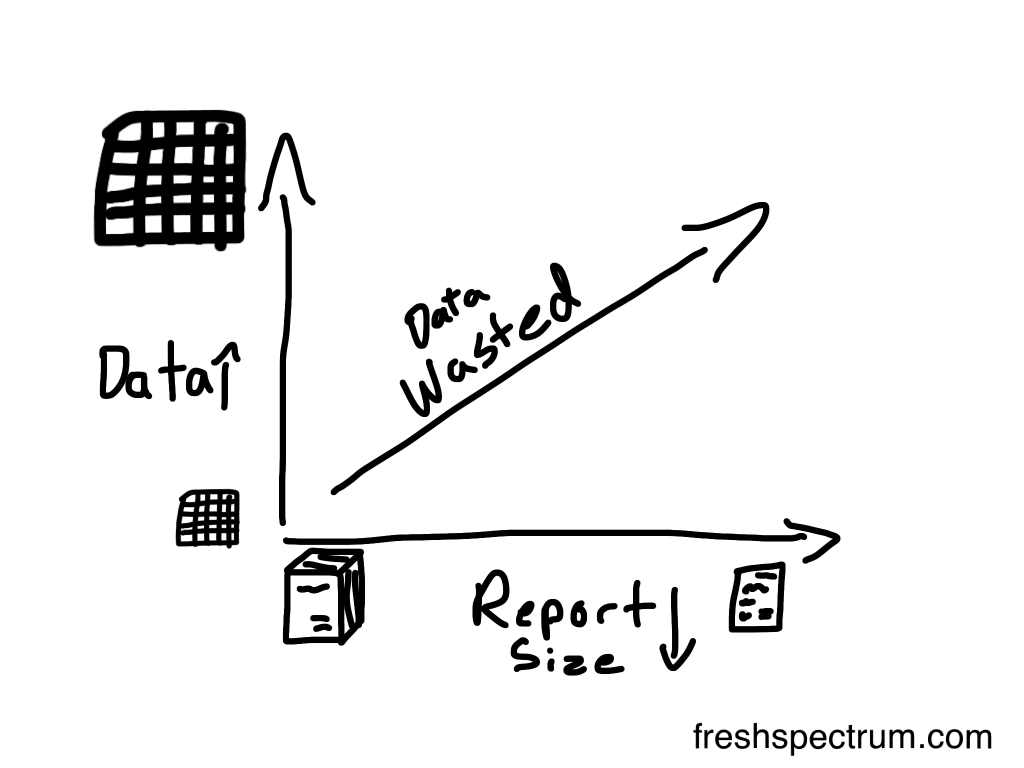
One of the reasons I started becoming disillusioned with contract evaluation was the amount of money that gets put into data collection/analysis. But by the time the contract gets around to dissemination, it’s almost like an afterthought. What a waste.
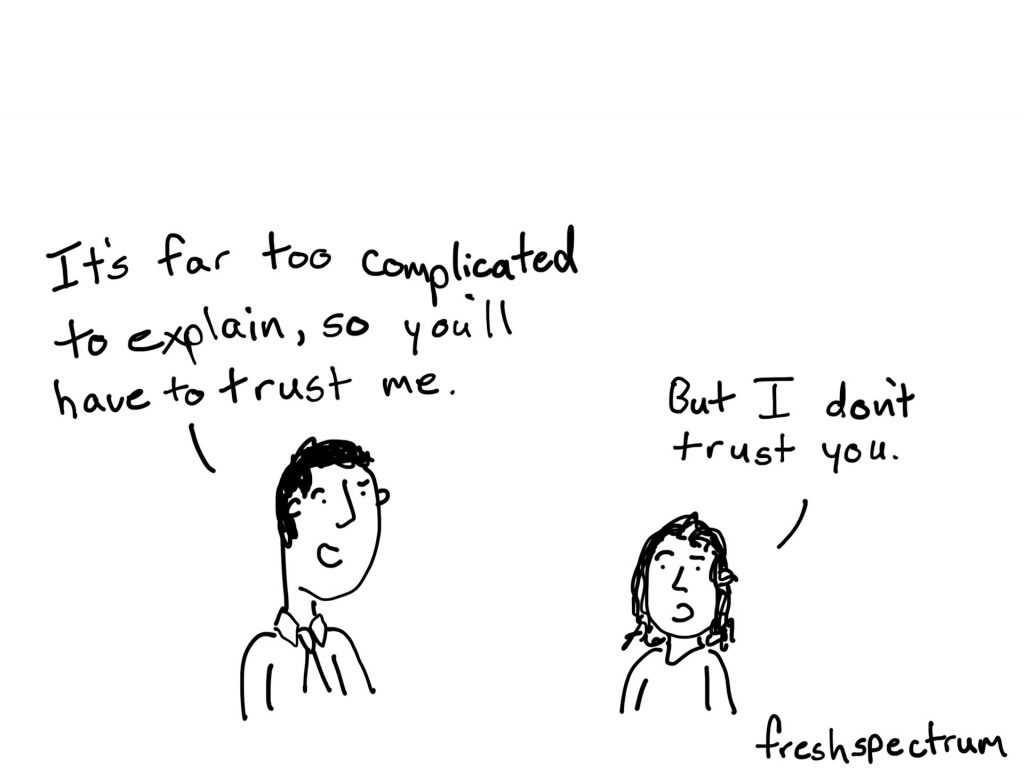
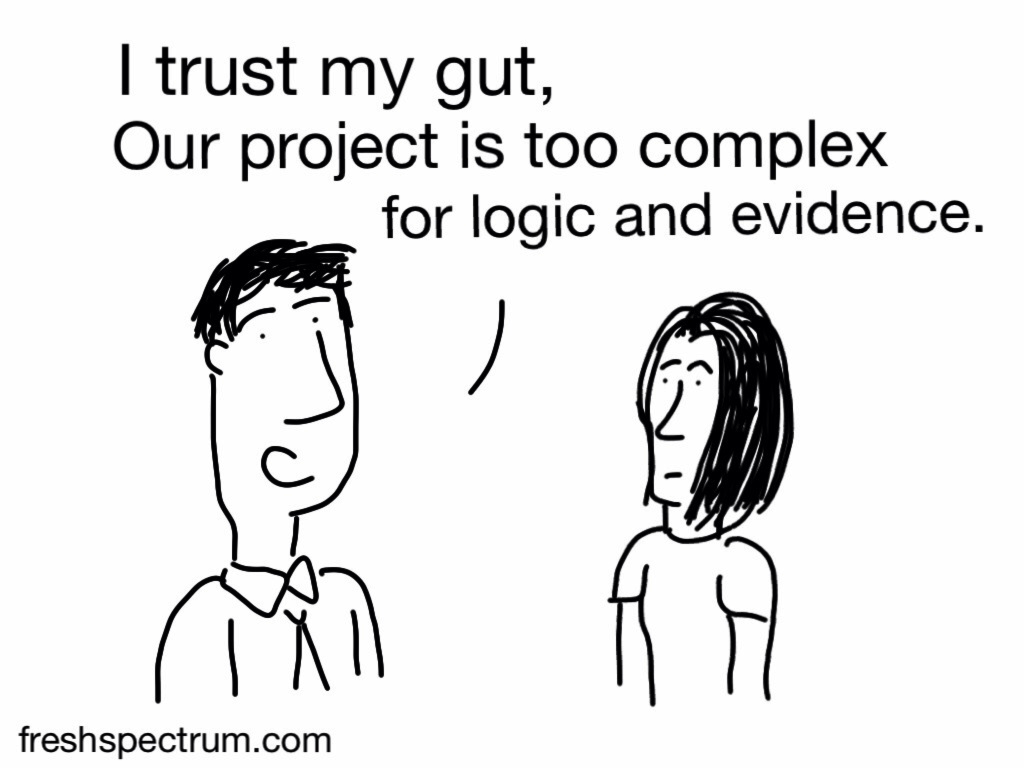
Seen this on a few bulletin boards too. There are lots of things that are complex, but that’s no excuse to not use data. In fact, quite the opposite.
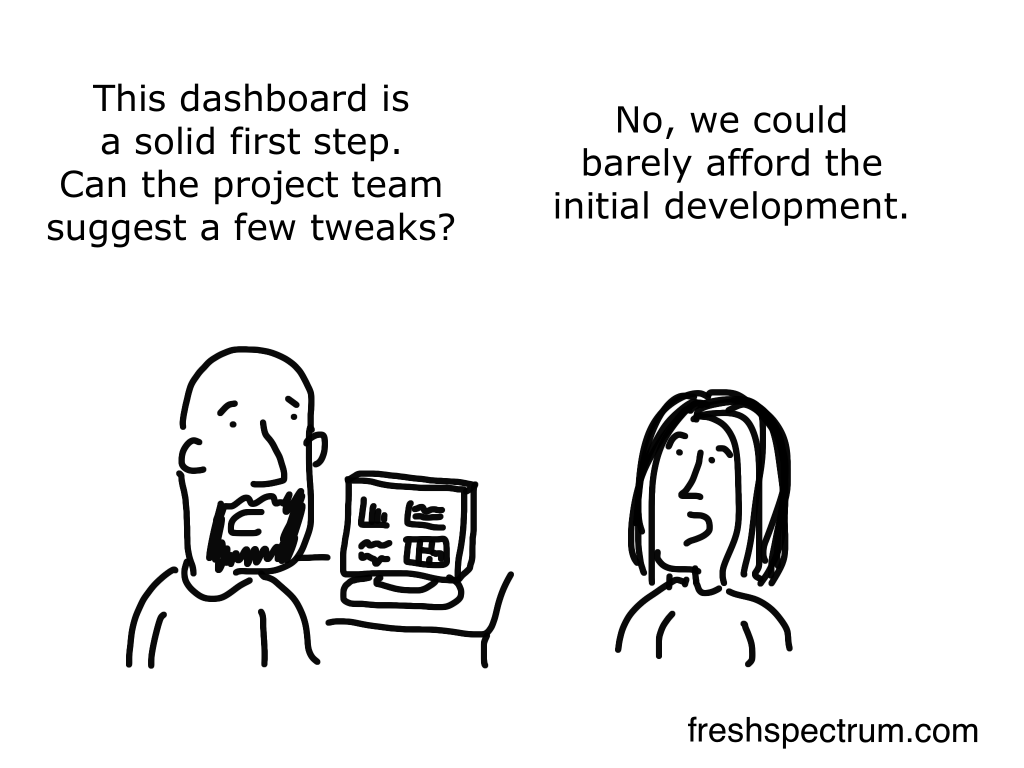
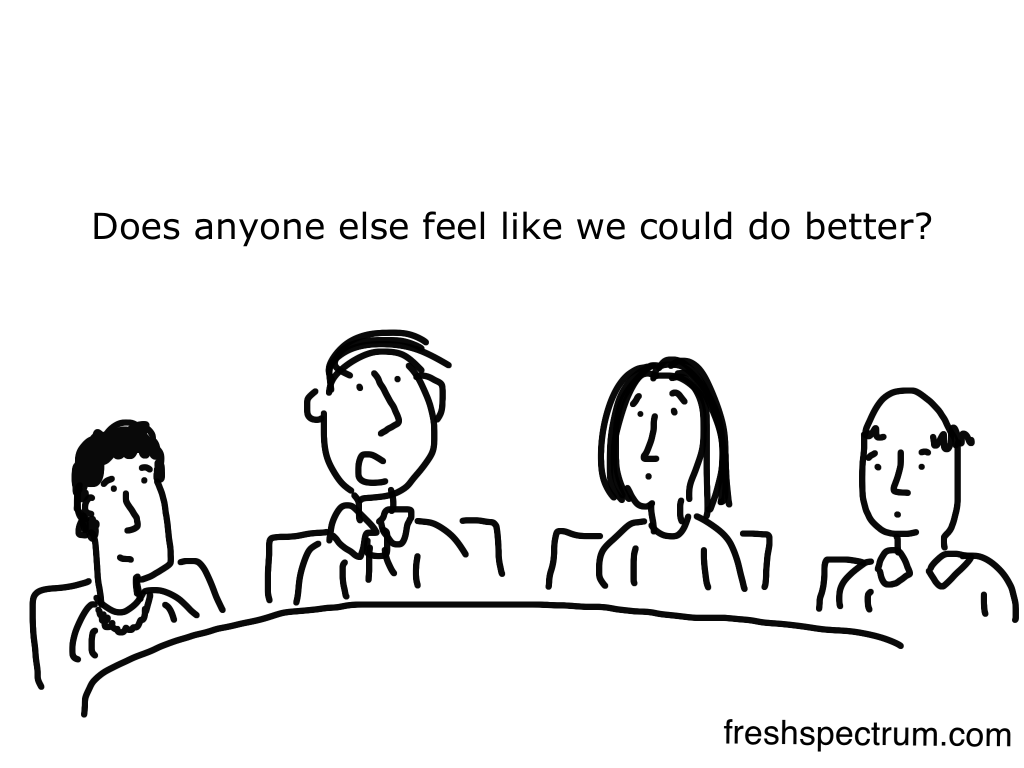
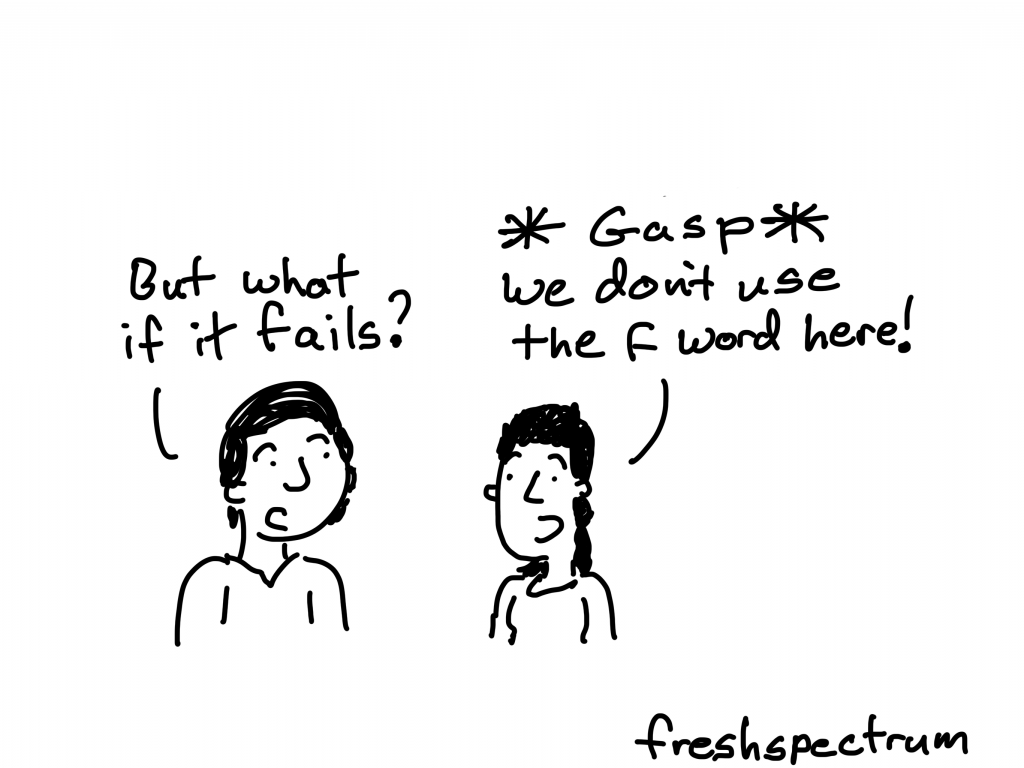
The word failure can be stigmatized in organizational settings. It’s an easy target for a cartoon, but honestly I’m not sure it’s the kind of word that should get glorified either. Doing something wrong could be someone’s “failure” but it could also be someone else’s “lesson learned.”
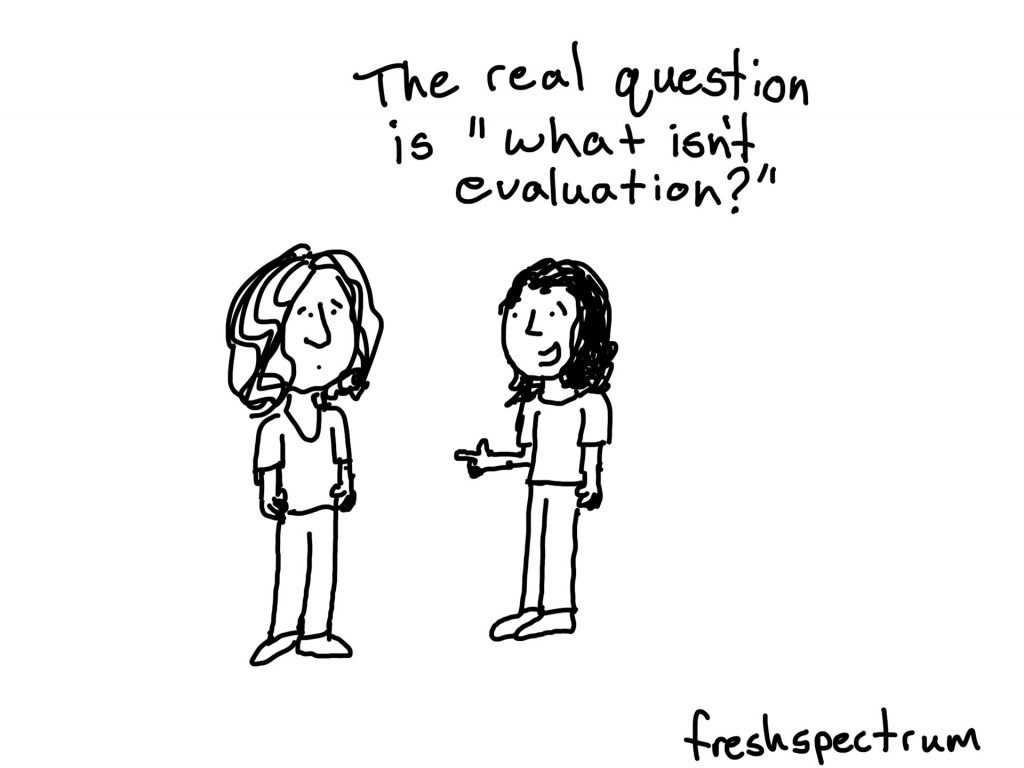
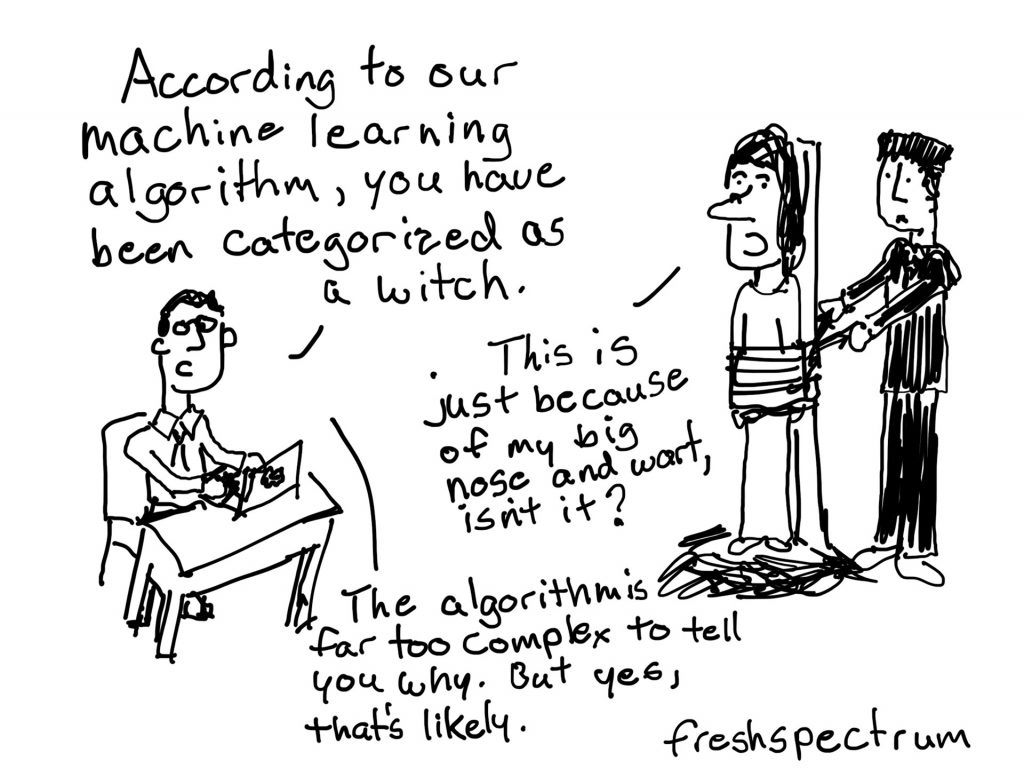
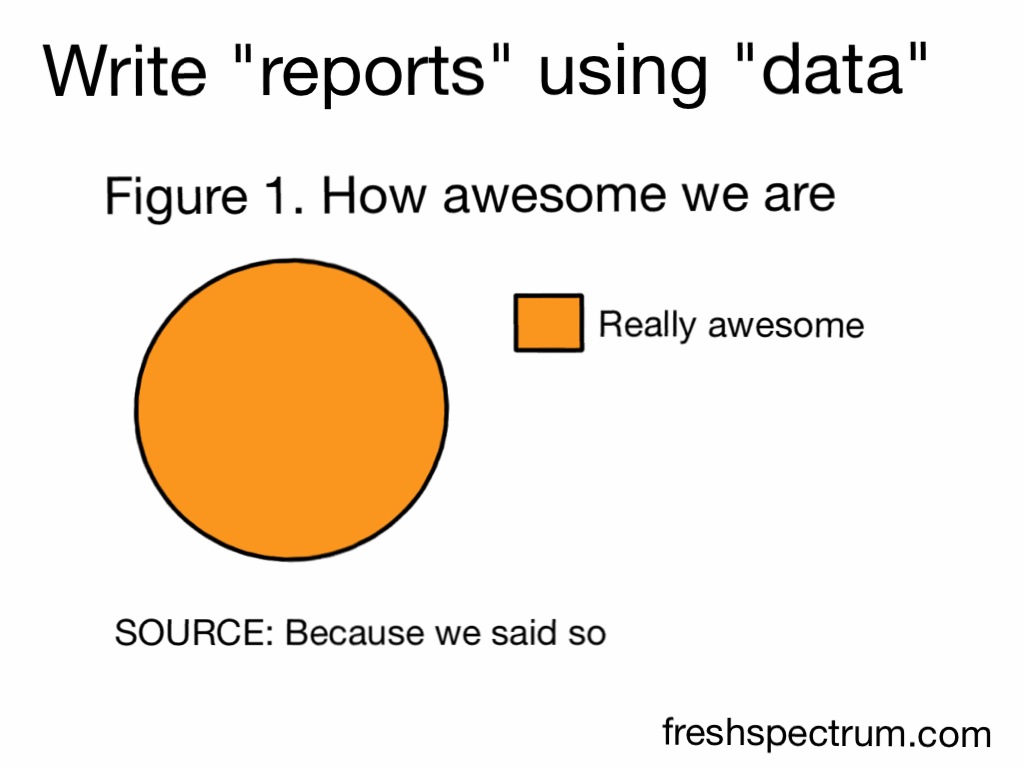
Charts and jargon can really obscure ridiculous assumptions and sources. Sometimes it’s fun to just vastly oversimplify.
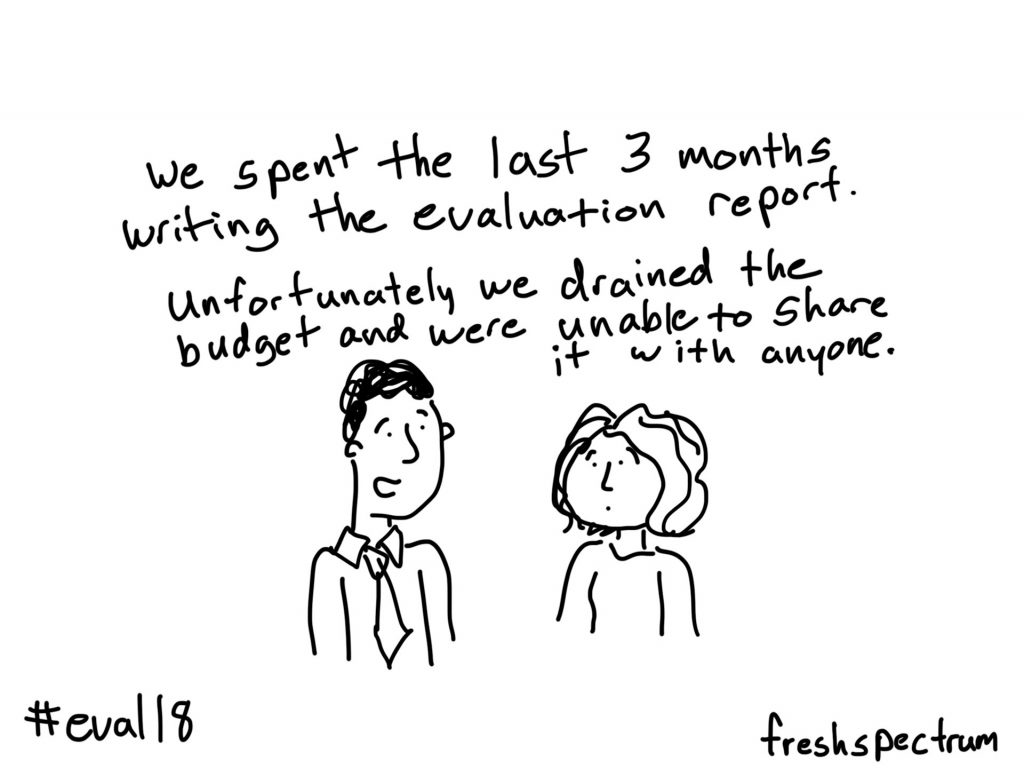
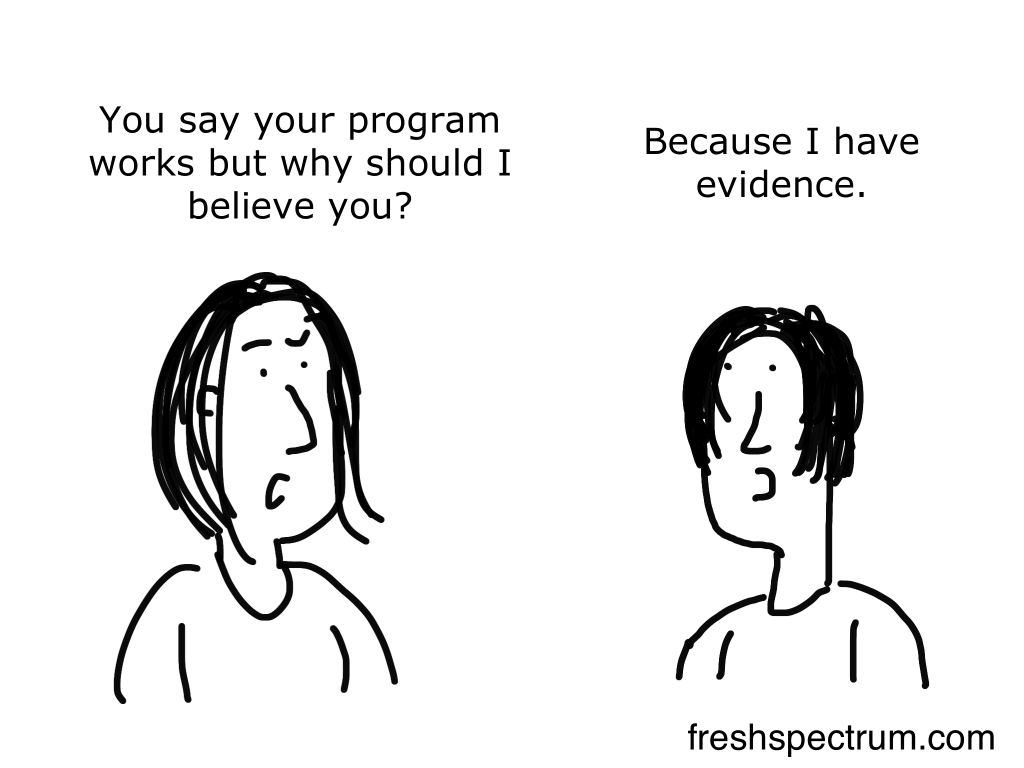
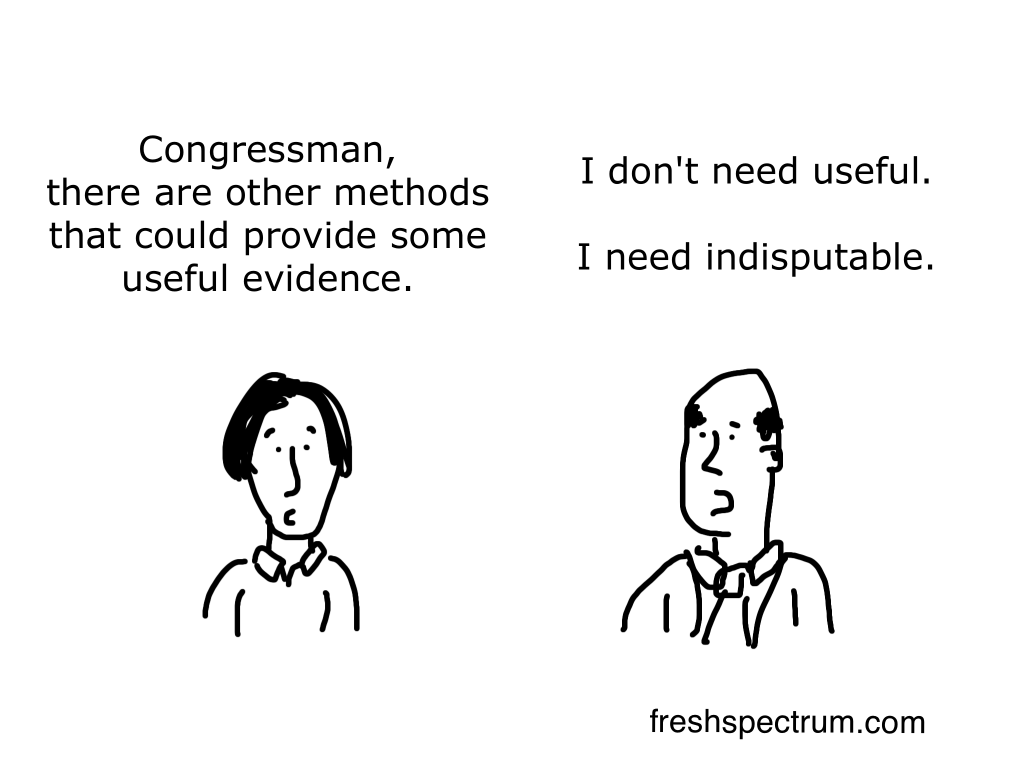
This is one of those cartoons that I rarely see anyone use, but I think it’s a really important concept. I think the idea of something being “indisputable” is a real driving force behind the perpetual rhetoric that drives methodological choice.
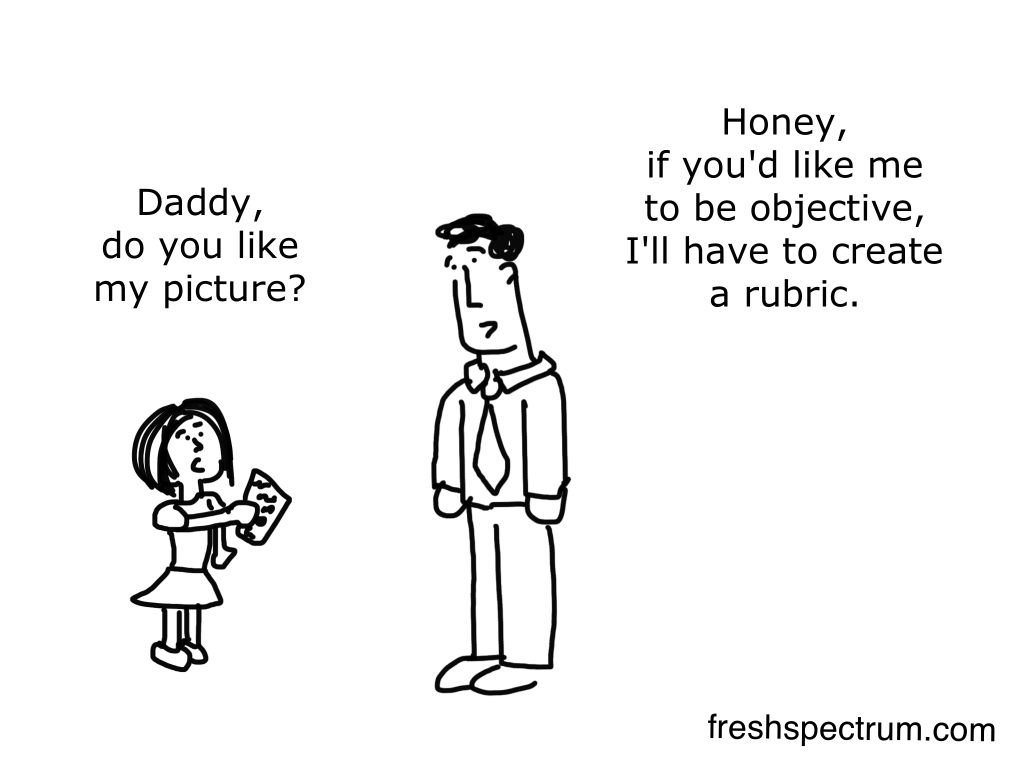
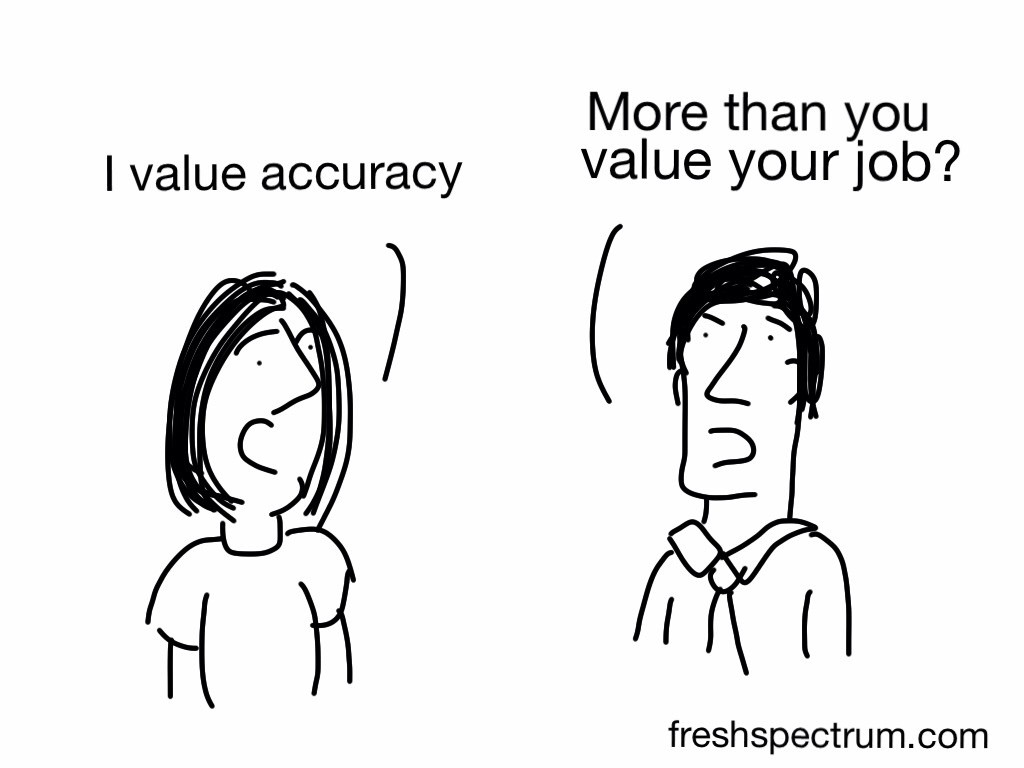
If you read enough of my cartoons you’ll see a lot of repeating ideas. I kind of look at it like taking photographs. Sometimes you need to take them at different angles to see which works the best.
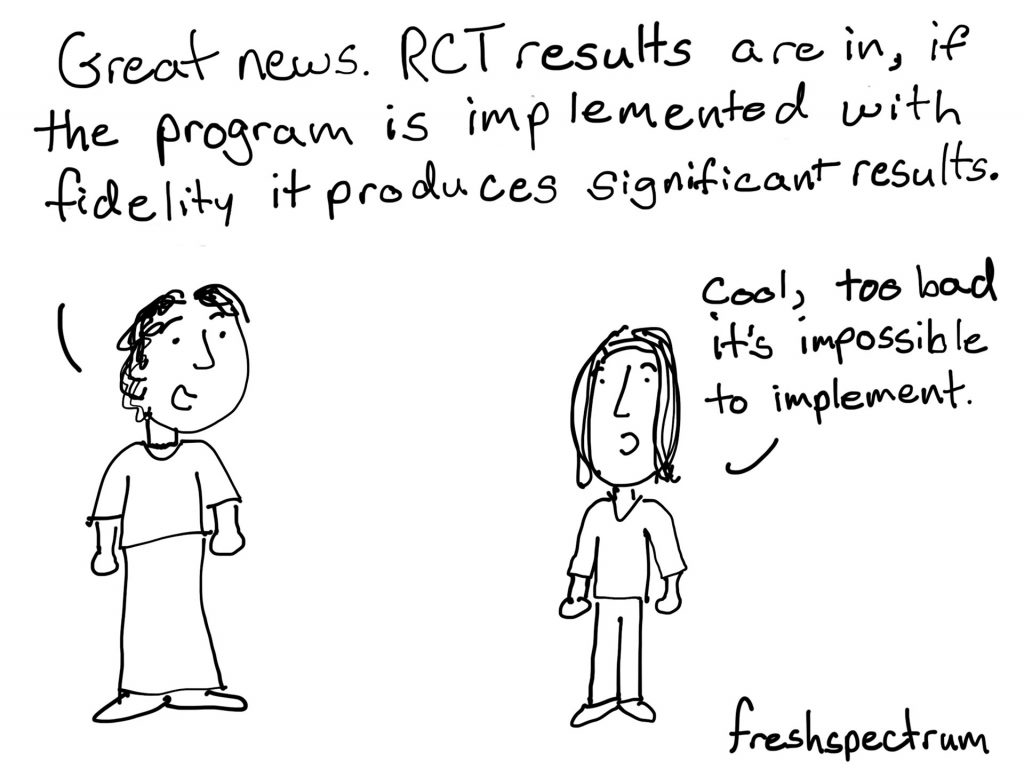
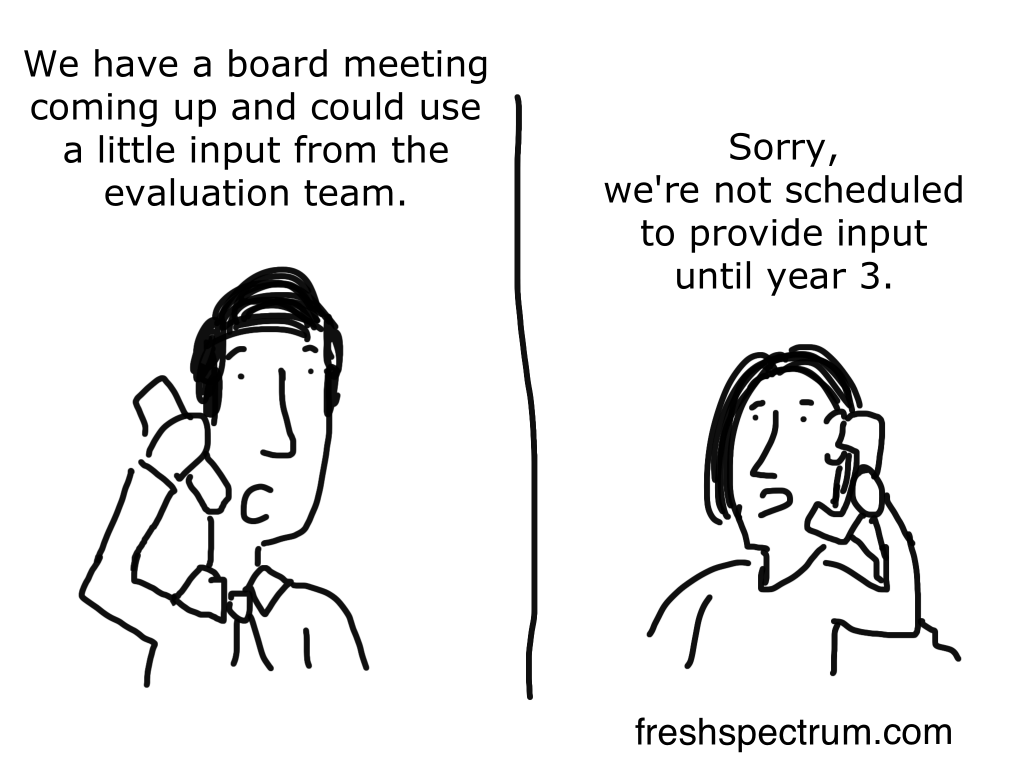
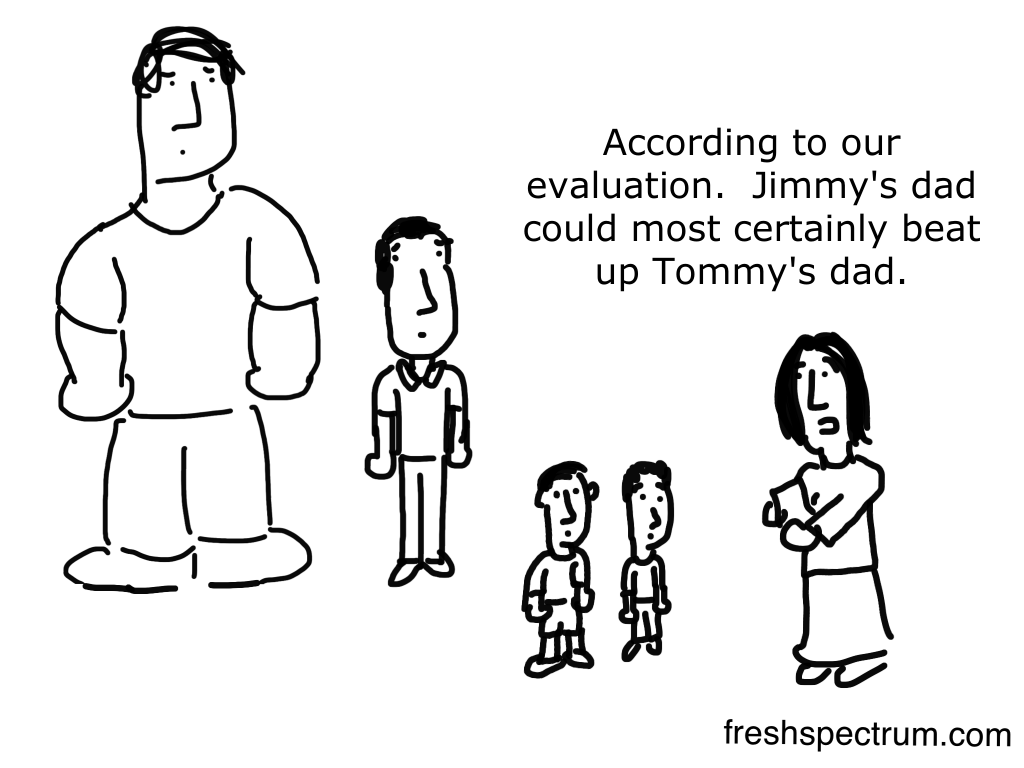
This is the “my dad could beat up your dad” playground argument with an evaluator involved.
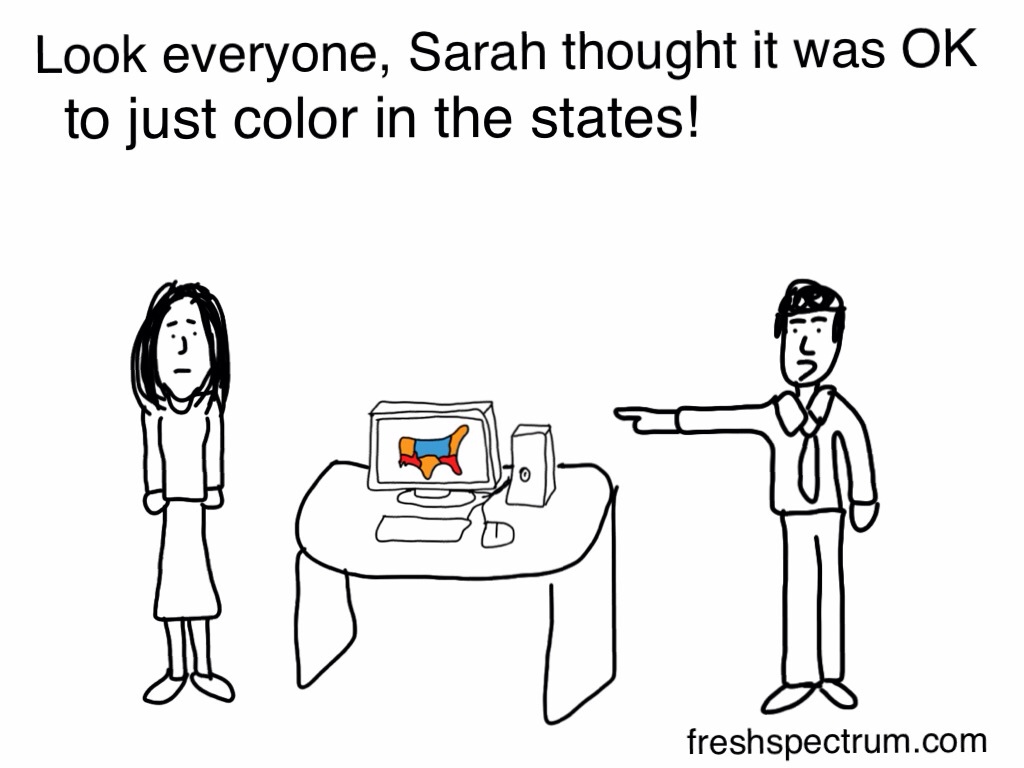
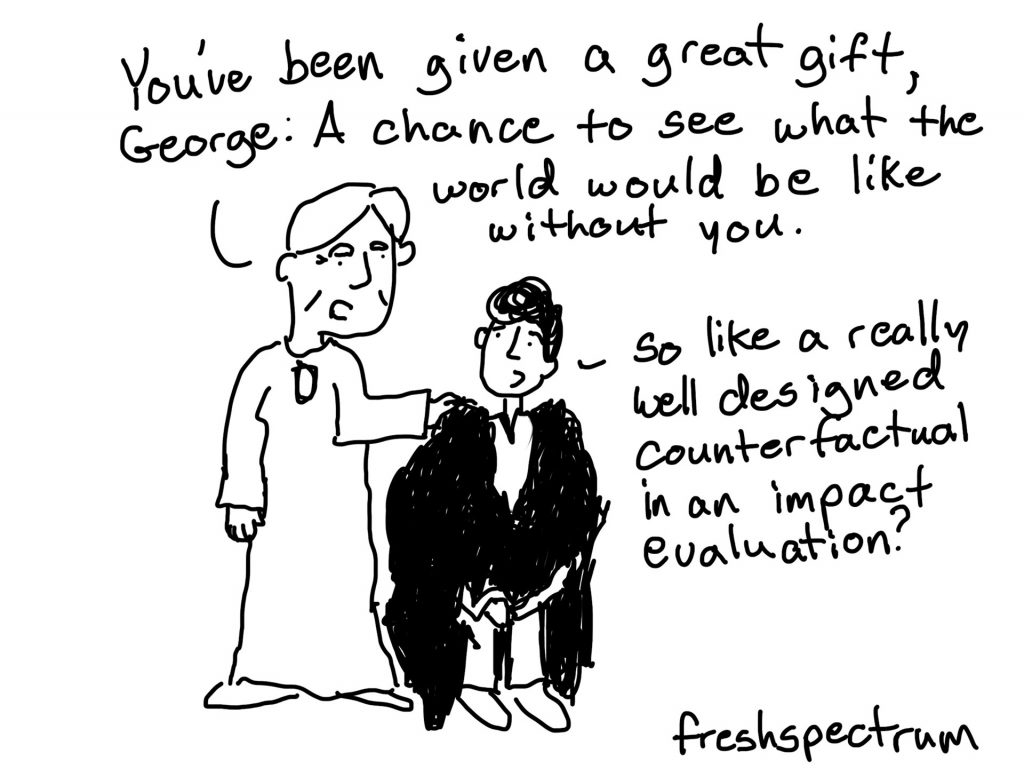
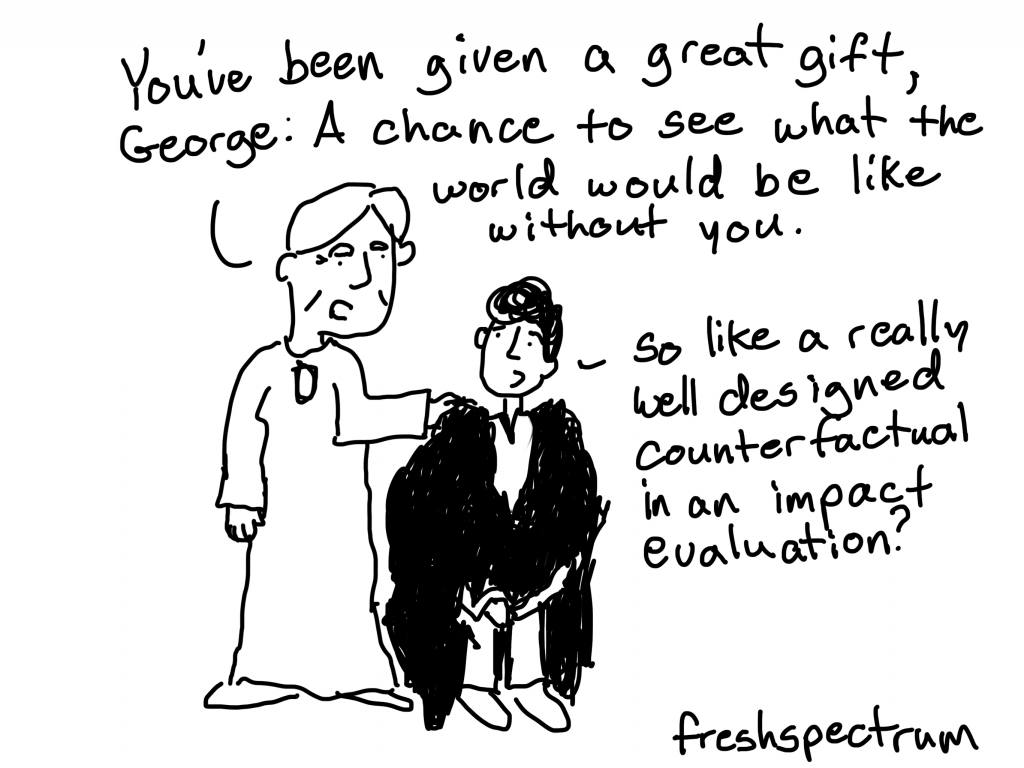
Designed this one for Christmas time, but It’s a Wonderful Life is really a true evaluation story.
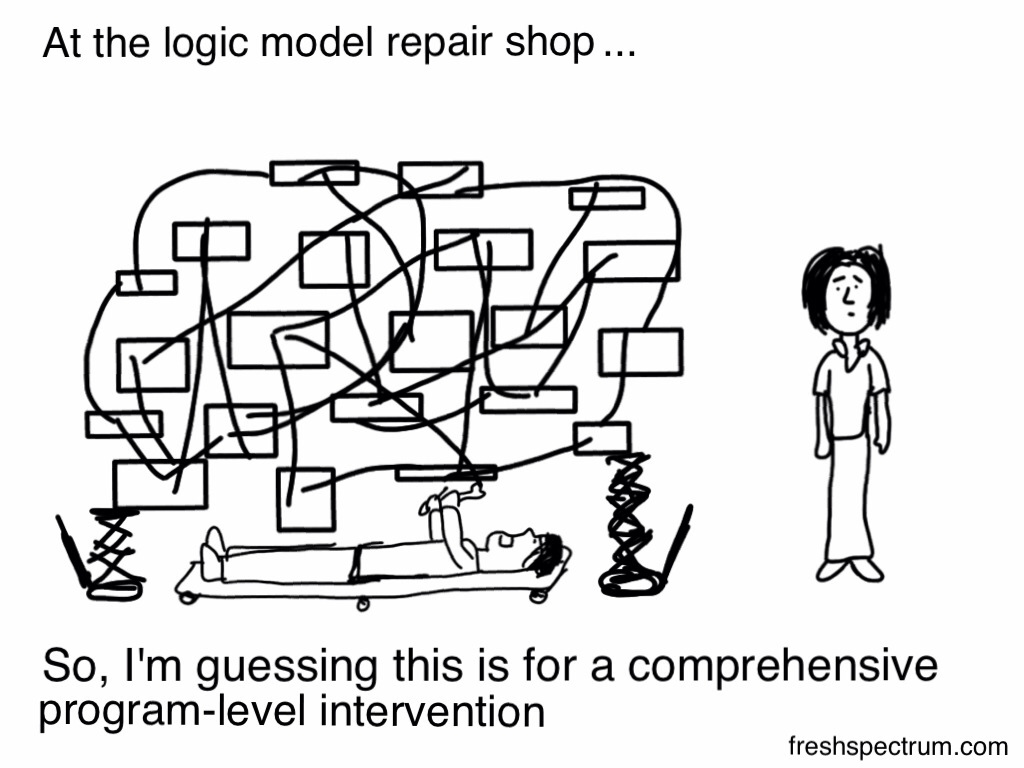
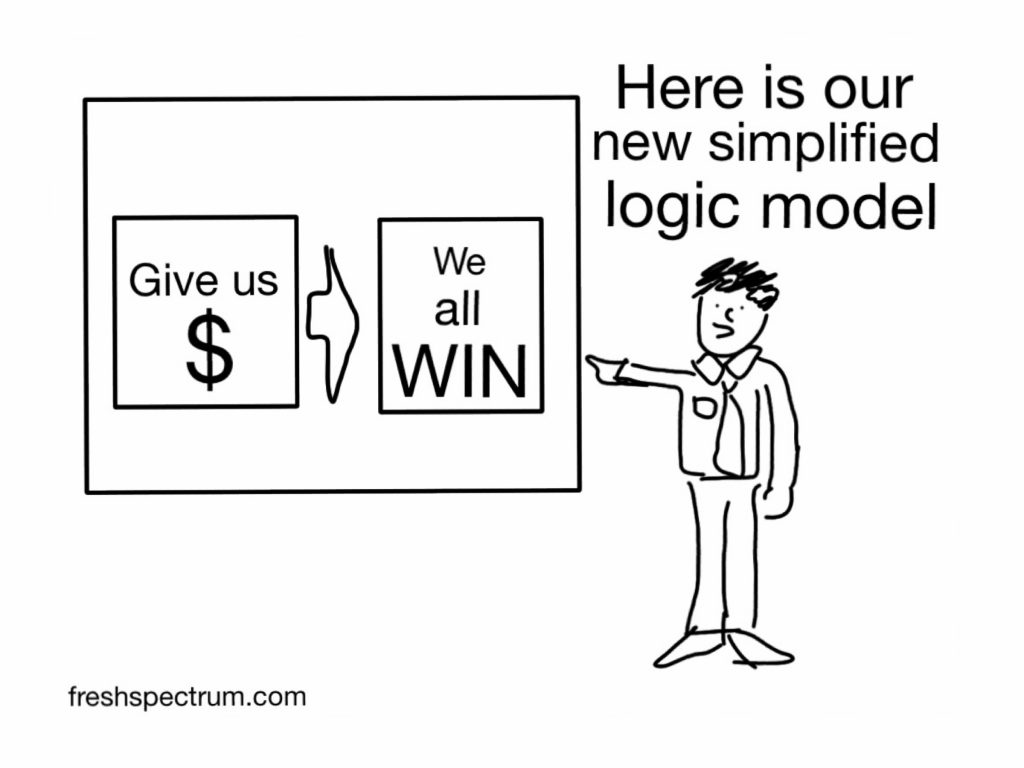
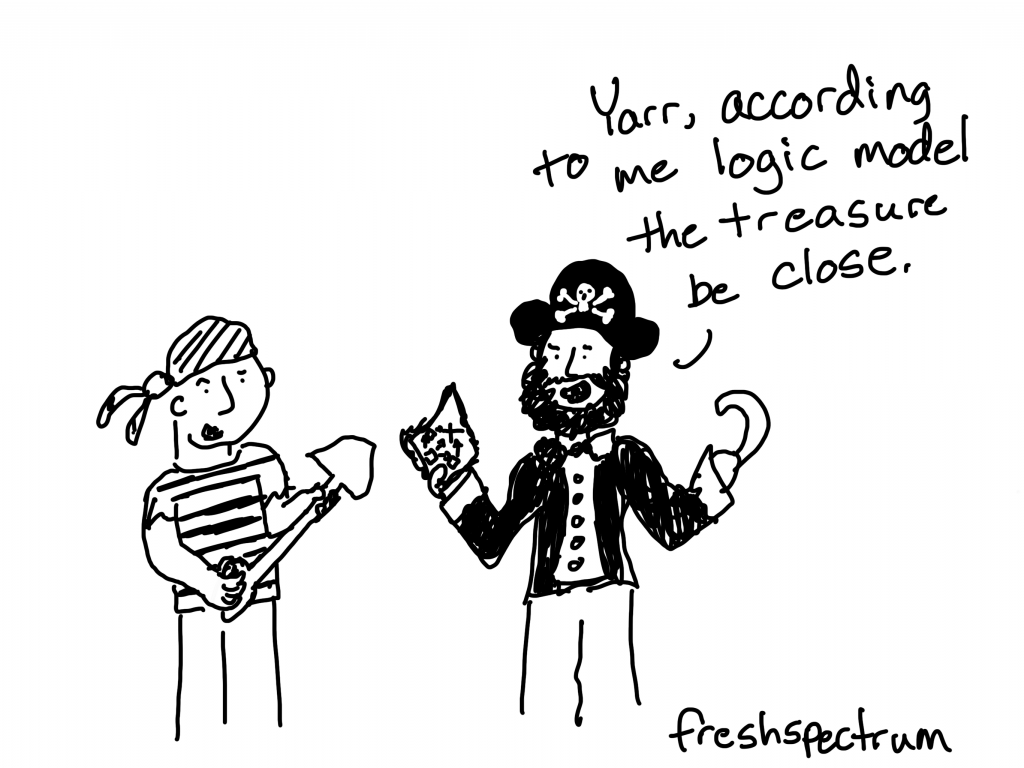
Another crowd favorite. I learned early that if I wanted a popular cartoon in the evaluation world, it should include a logic model or theory of change.
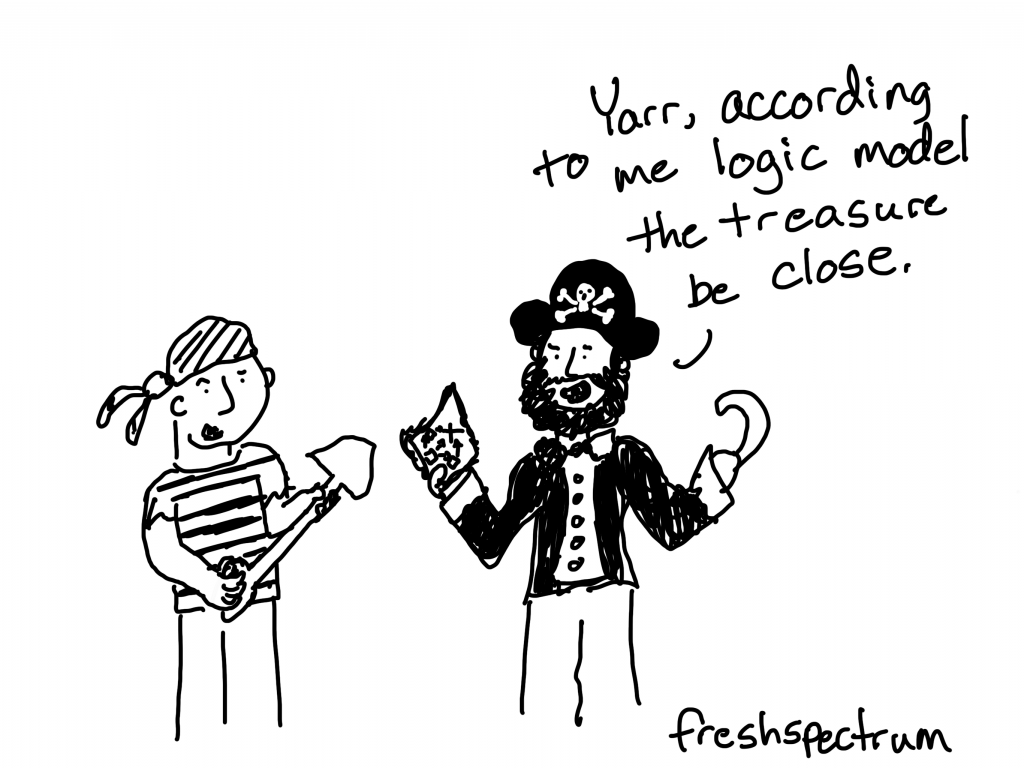
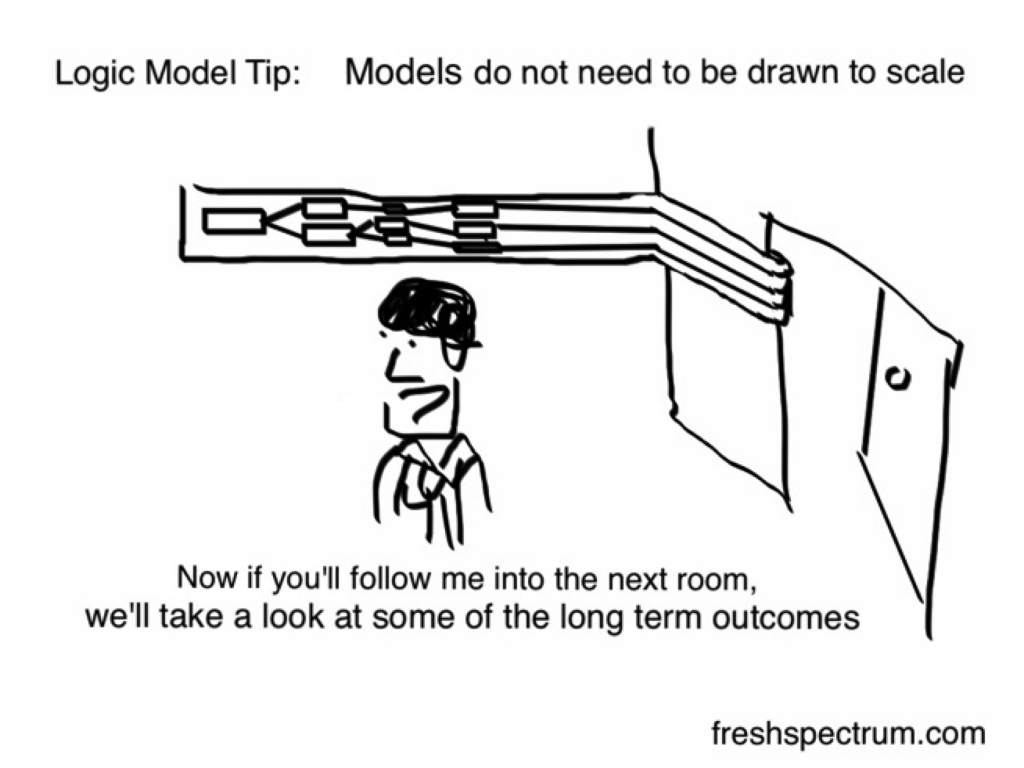
Can you tell that this is one of my earliest cartoons? Now-a-days, I would take out the tip part at the top. Honestly, I think it would be really cool to draw a logic model to scale.
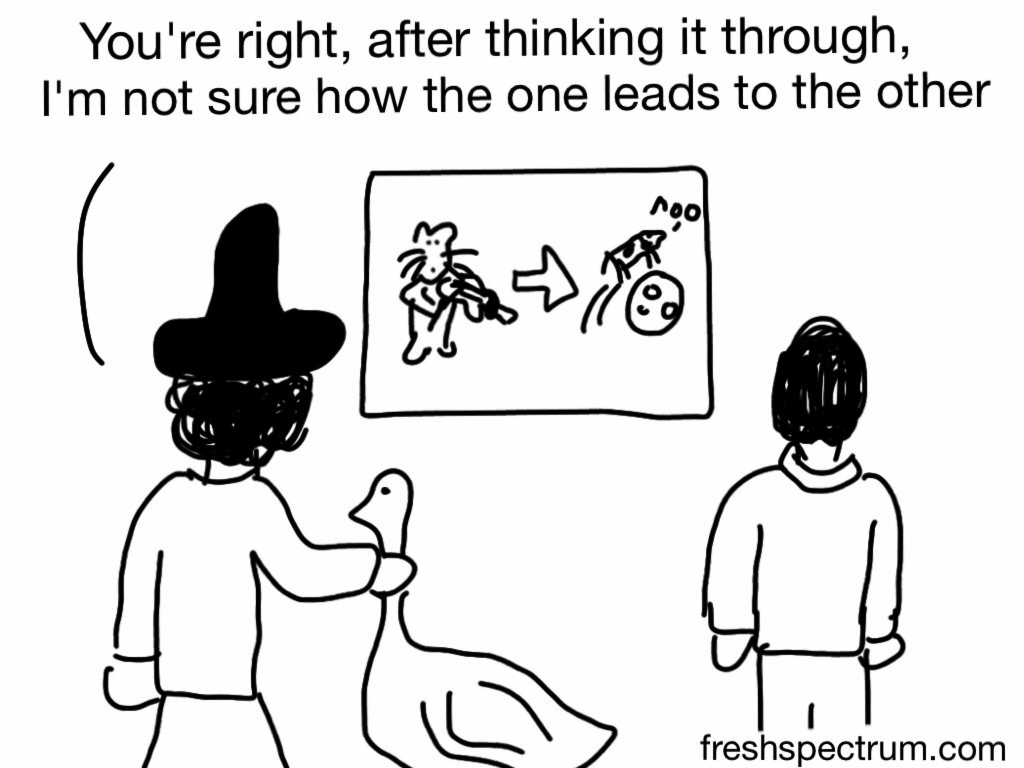
I really wanted to drive home that this is mother goose. So I added a goose. This sparked the comment, “why is she strangling that goose?”

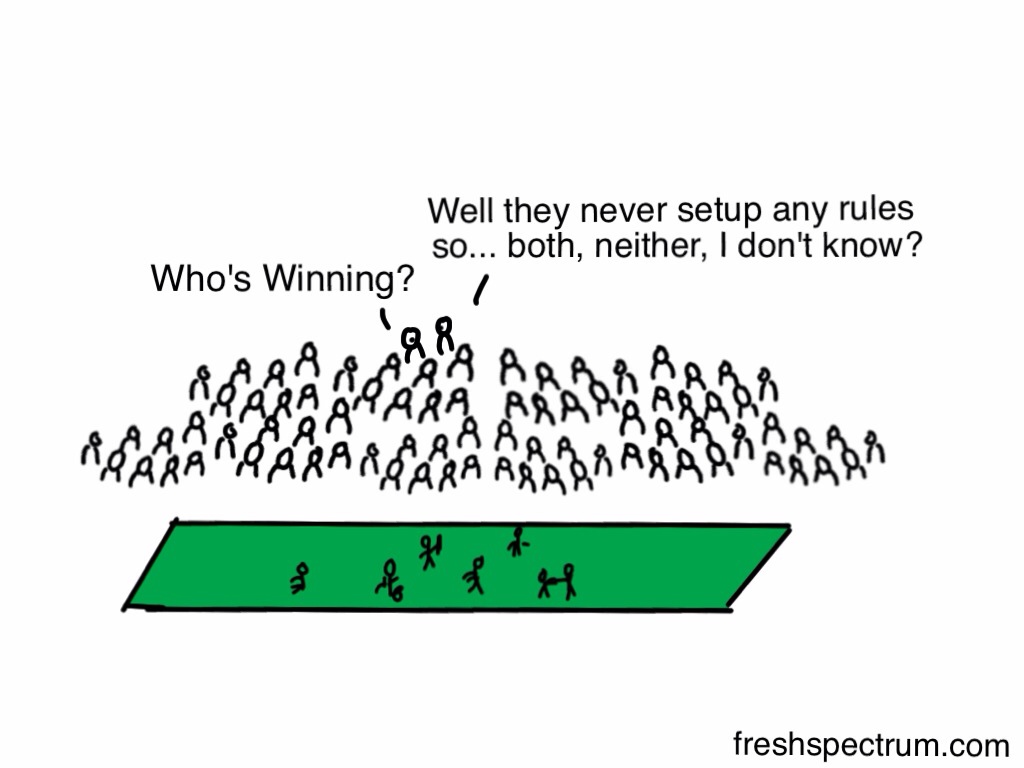
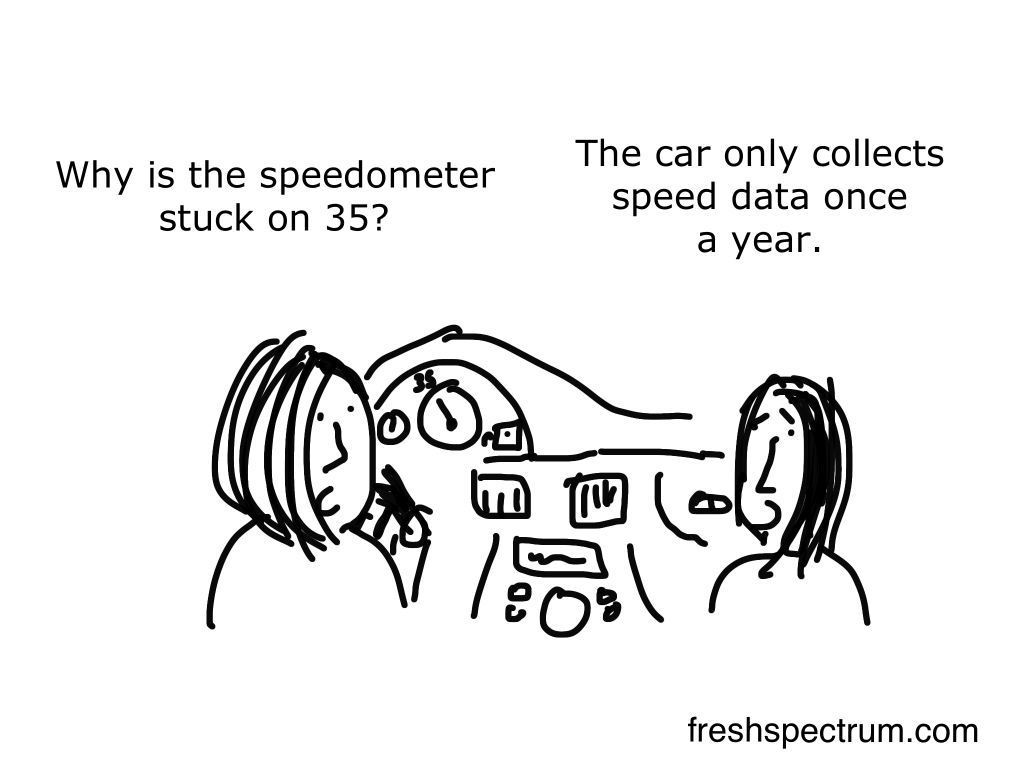
So many data dashboards I kept seeing were really annual reports carrying a car dashboard metaphor too far. I think it’s funnier to think about cars with annual reporting systems.
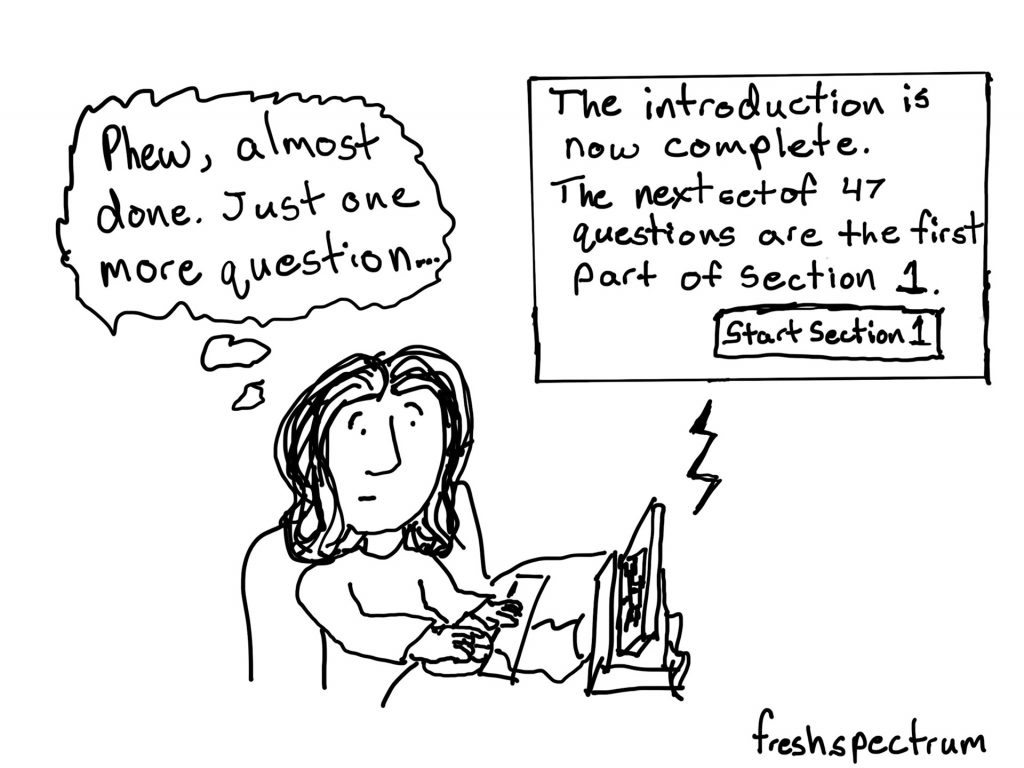
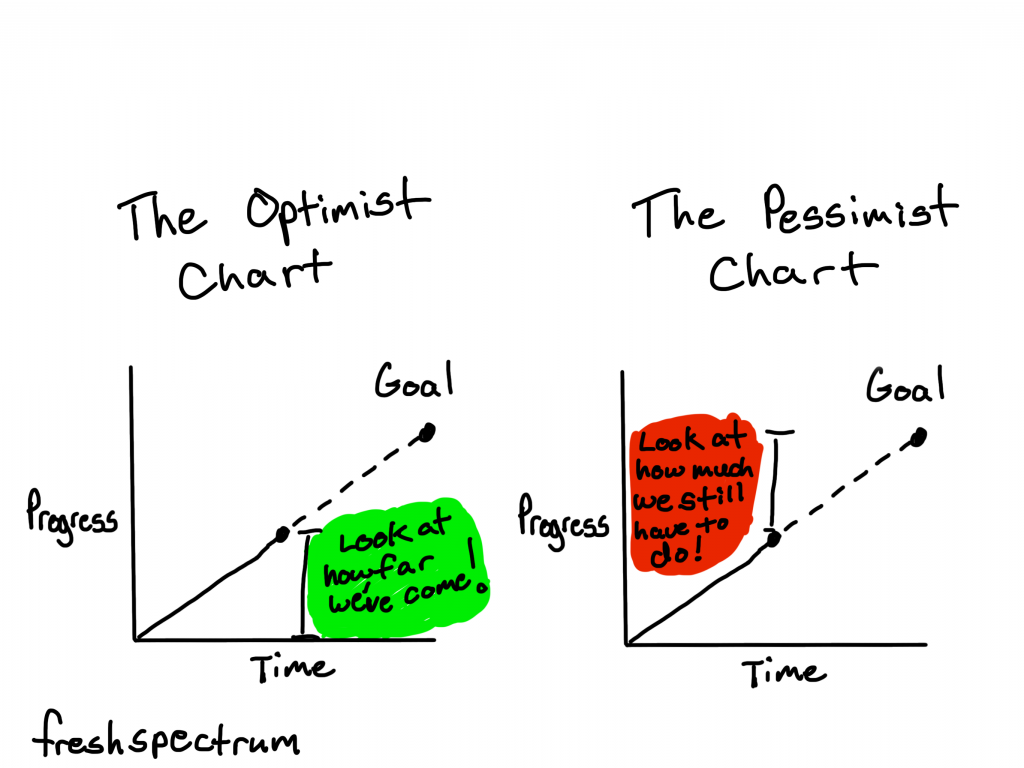
Charts are always about perspective. With some annotation and a little bit of color you can make them say all sorts of things.
Every once and awhile when I write on paper, or sketch in a little notebook, I’ll want to undo something I just wrote. So I’ll tap the paper with a couple of fingers just like I would do when using procreate on my iPad. It never works.
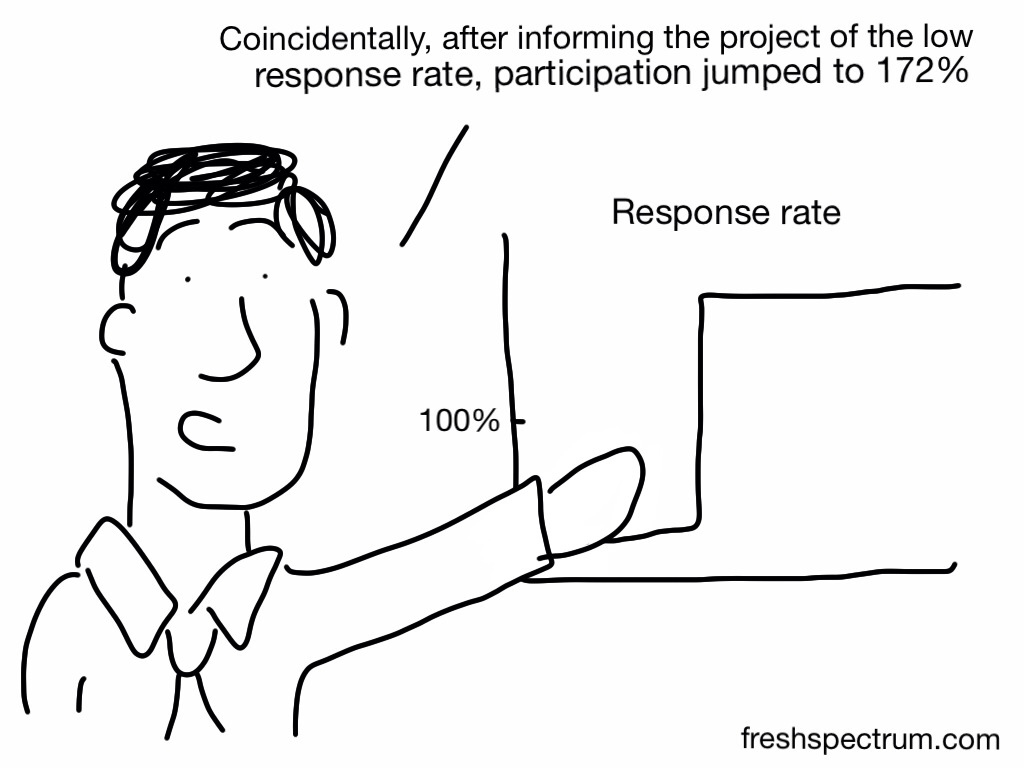
This cartoon came out of a post talking about everyday ethical challenges. The story goes, the survey has a low response rate so the program is informed. Then all of a sudden way too many people respond for it to be actual participants.

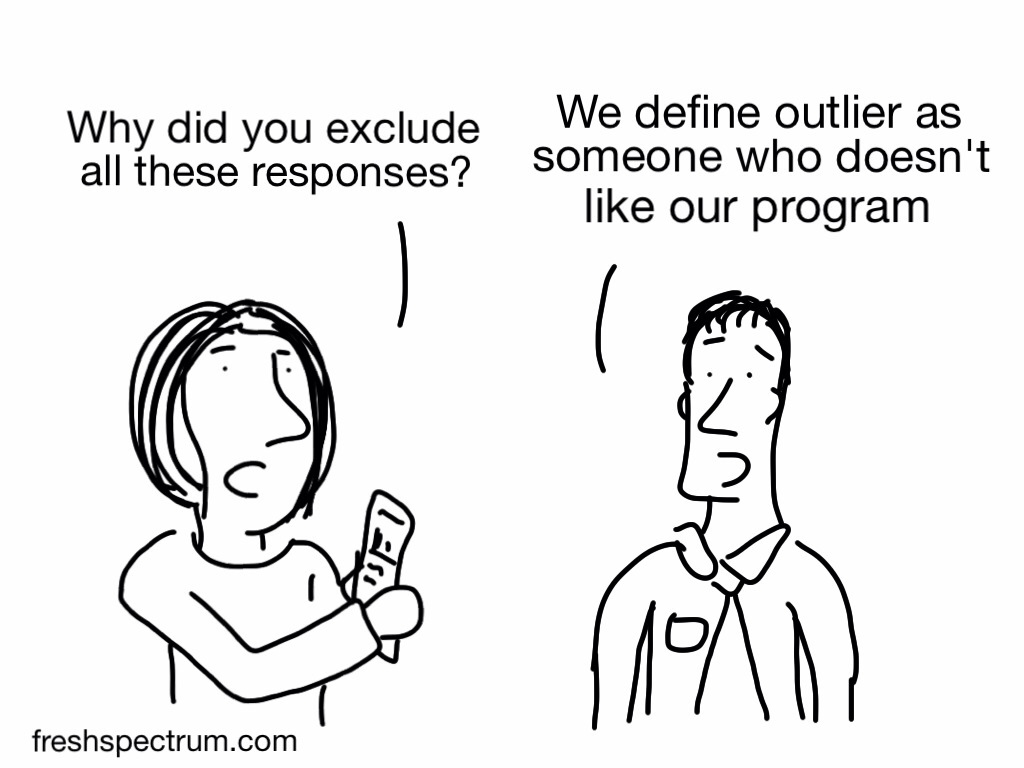
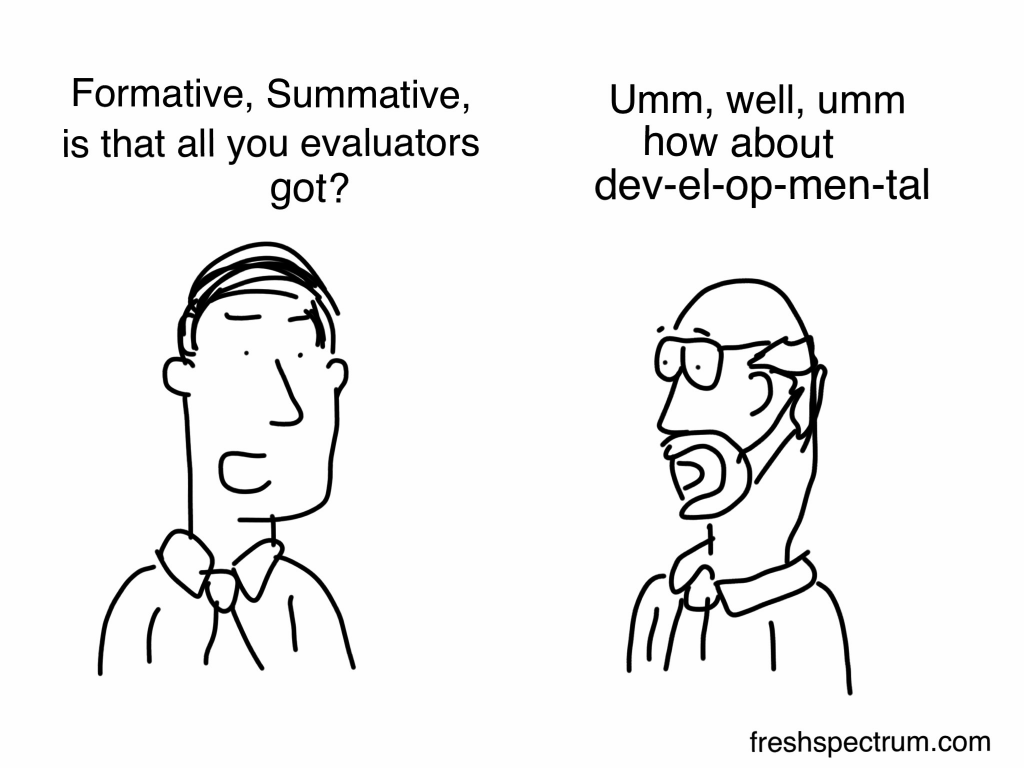
This cartoon was inspired during a Michael Quinn Patton presentation. It’s the story he uses when talking about coming up with the idea of developmental evaluation.
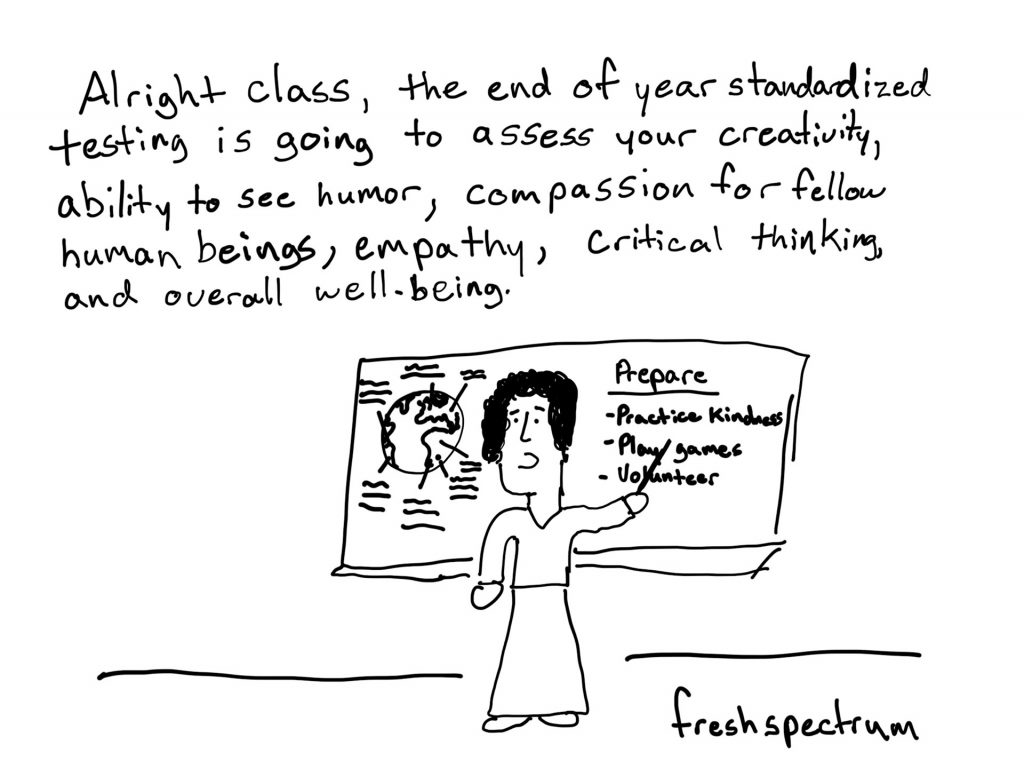
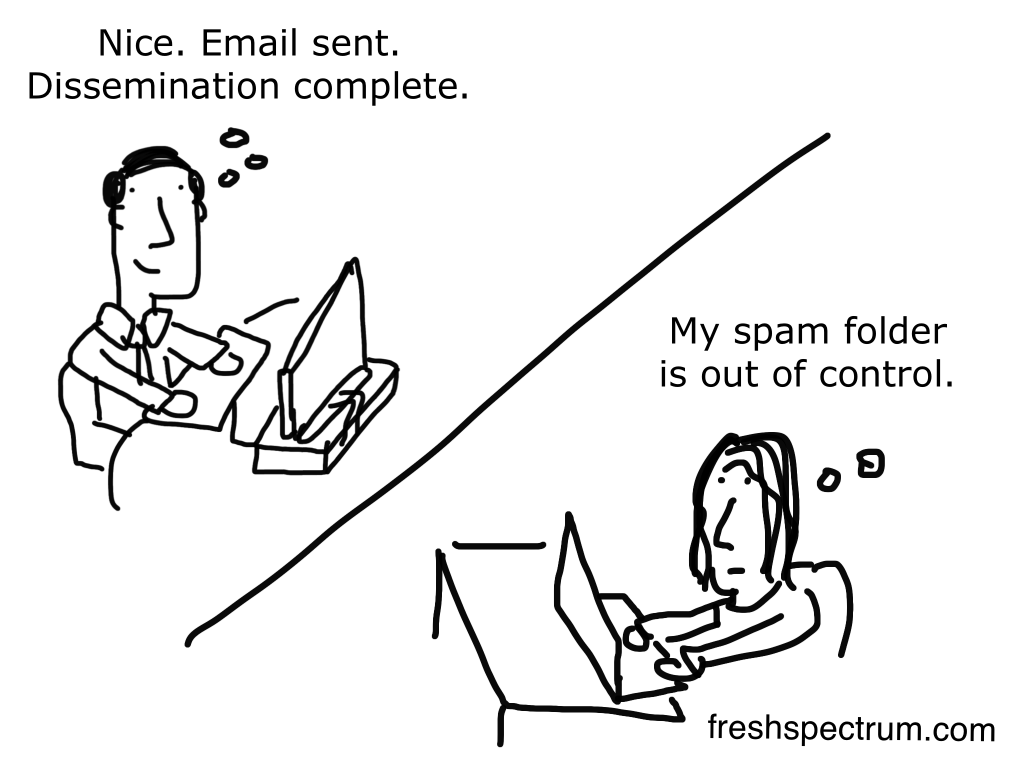
Open and click rates for emails that people actually look forward to read are usually pretty low. Often <30% of people will open a group’s newsletter and <5% will actually click on anything in that email. Now think about what happens when someone gets an email that includes a link to a long pdf report.
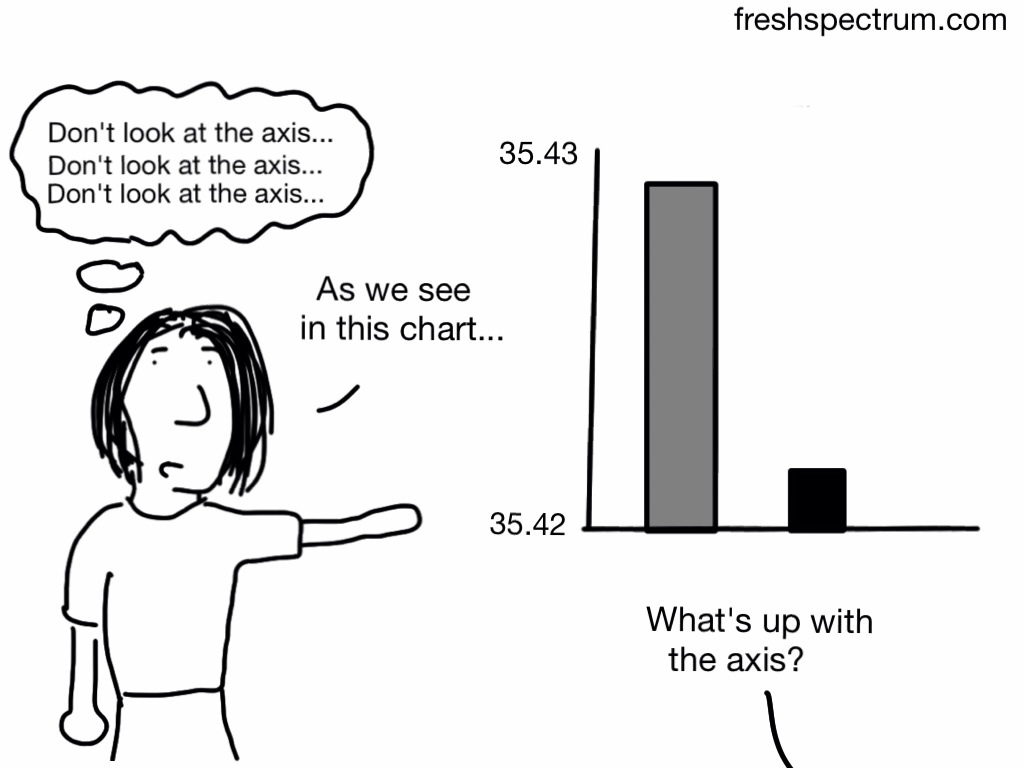
Drew this one for a friend who had just earned her PhD. I know it sounds a bit mean-spirited but honestly, most research and evaluation reports end up in a pit. If you want people to use your work, you might have to spend as much time (or more) advocating, presenting, and sharing. For most work, once it gets to a published state, we move end up moving on.
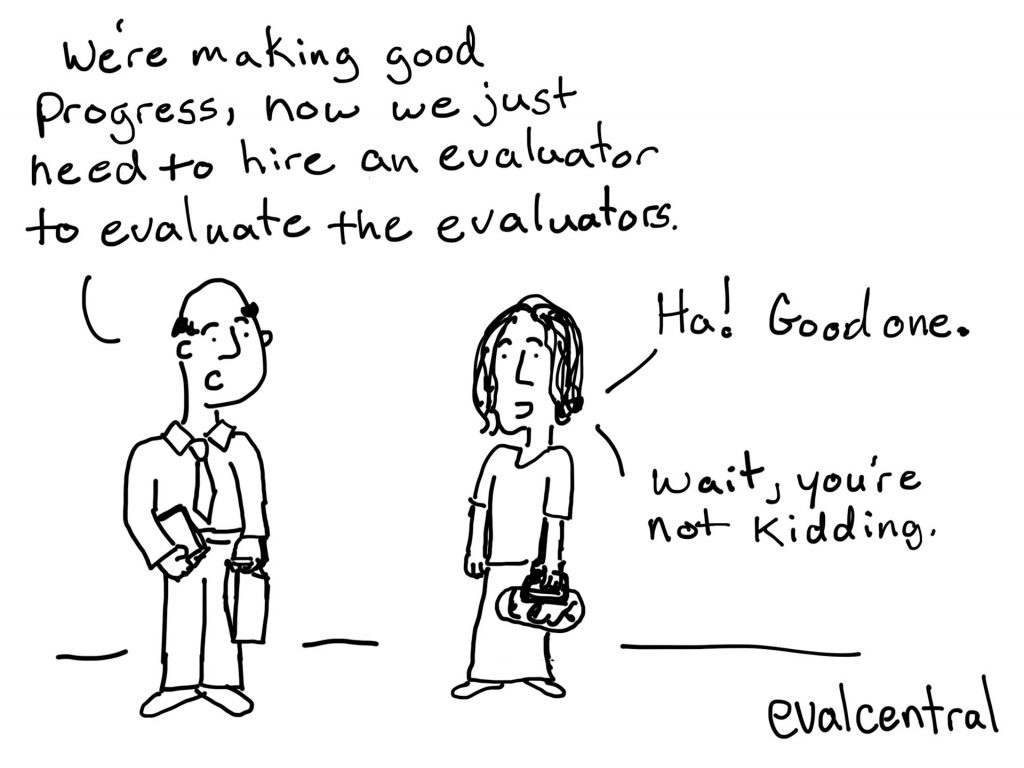
Of course evaluations can be evaluated. Like wouldn’t it be good if we regularly evaluated peer review? But sometimes it is hard enough getting a decent evaluation budget, asking for an evaluating the evaluation budget seems like a stretch.
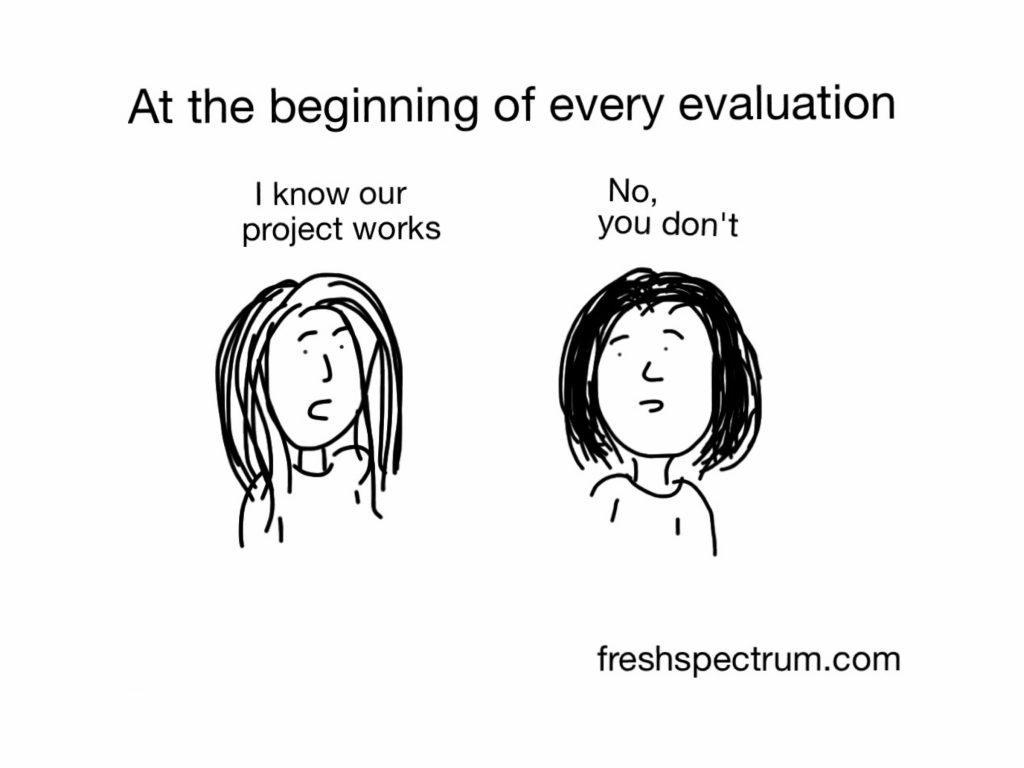
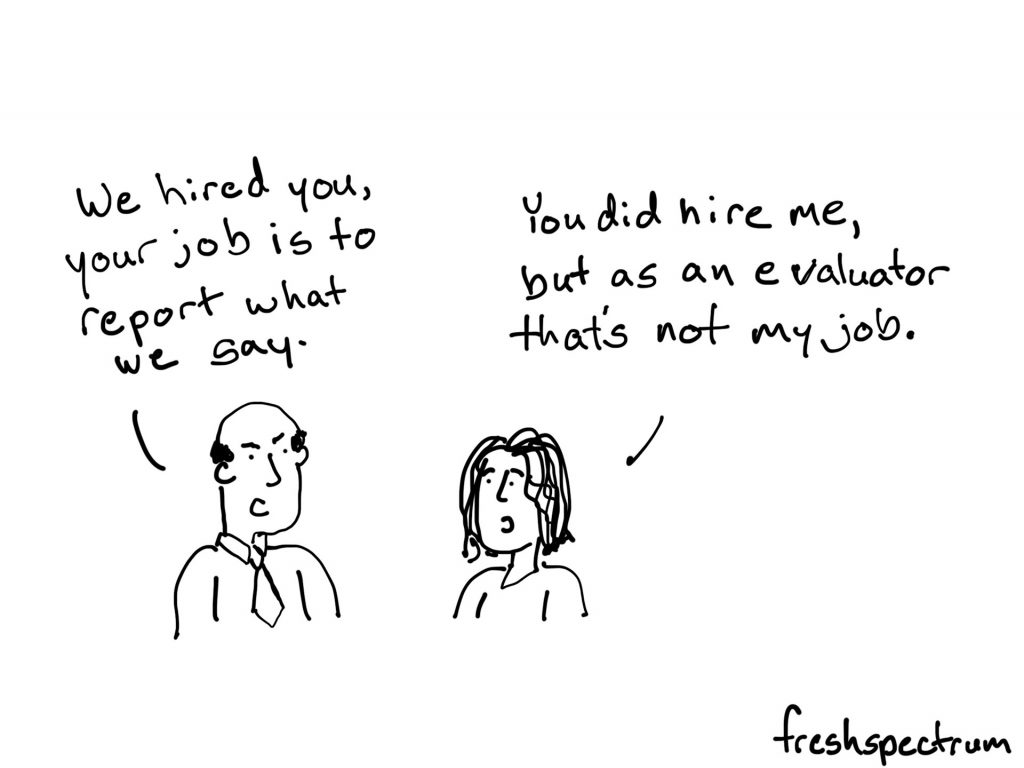
Funny thing about this cartoon. If an evaluator reads it, they think it comes across as mean. Like the evaluator is just being too honest.

When a project person reads it they have the opposite reaction. They think, what nerve does this evaluator have coming in and saying they know best.

Seriously, share this cartoon with friends who are evaluators and friends who are program people. Ask them what they think when they read it.
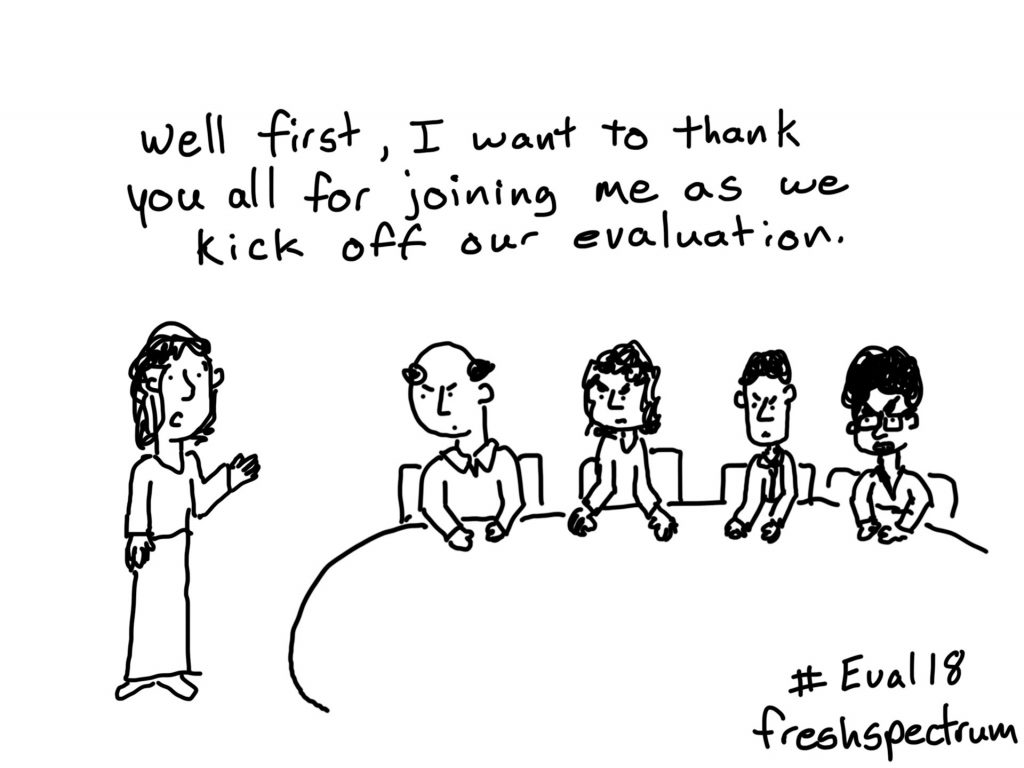
This one was inspired by someone’s story of leading a commissioned evaluation for a program that was not included in making that decision. This happens more often than any evaluator would like, and it can really set things off on the wrong foot. I had to make sure the table of people looked mad enough to make this whole scene feel appropriately uncomfortable.

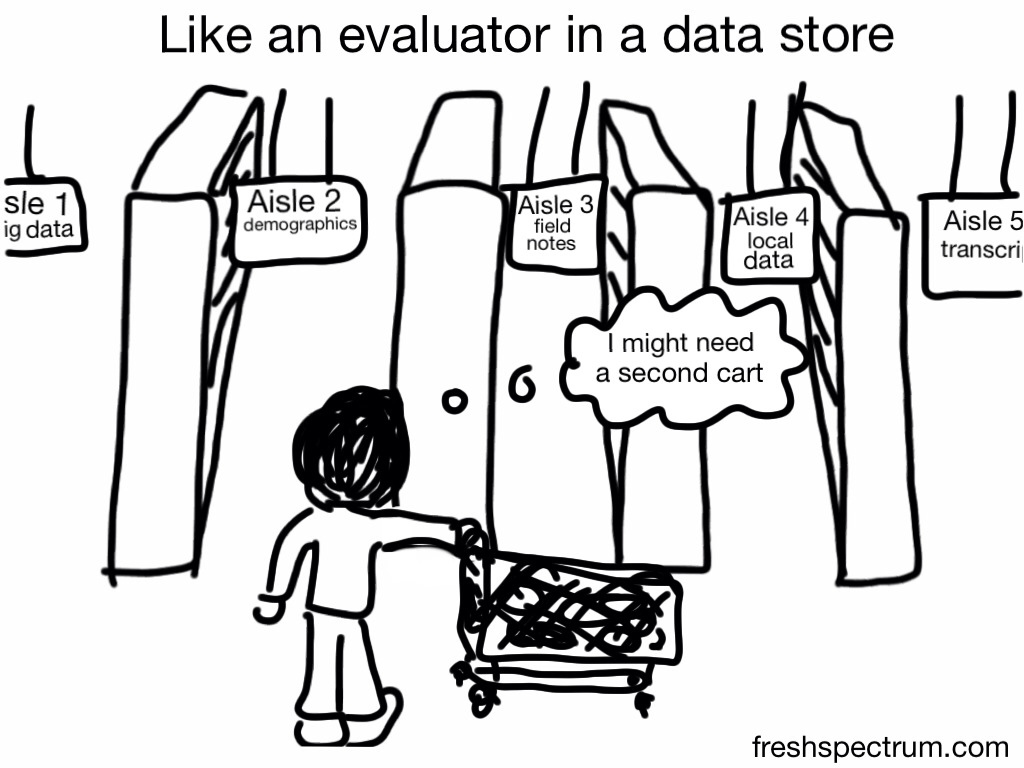
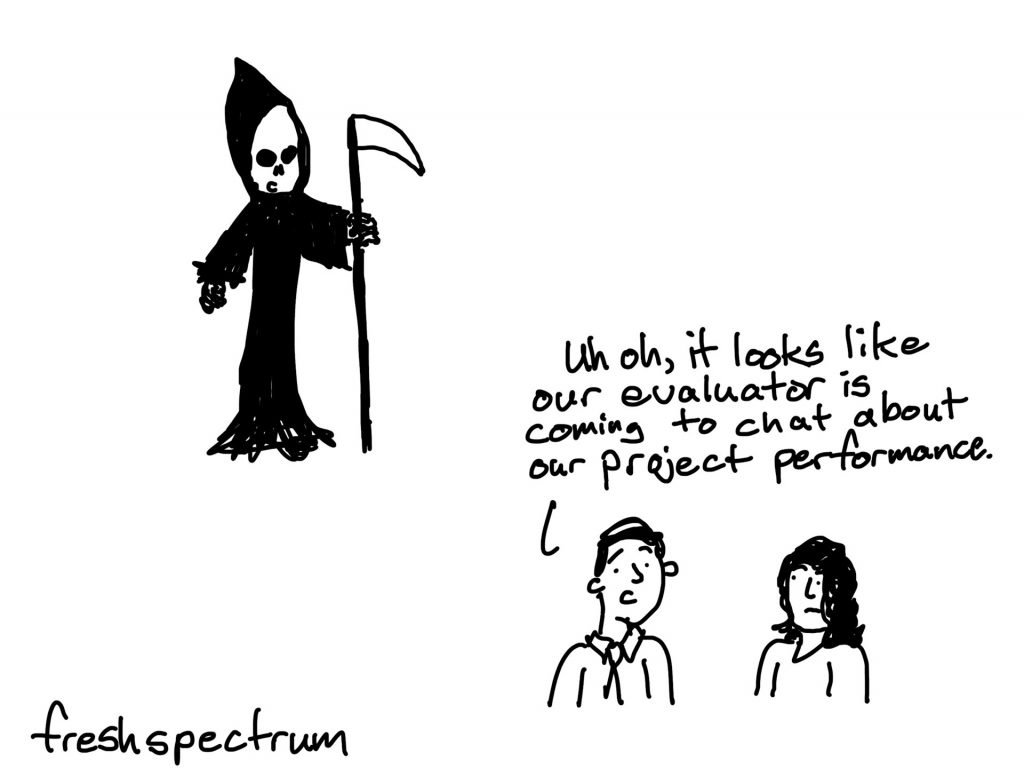
It’s hard to be the harbinger of a project’s demise, but somebody’s got to do it. I know most evaluators don’t want to see their work this way. But if we work in a world with limited funds and unlimited problems to solve, deciding what programs are not effective enough to be worth the money is a critical role.
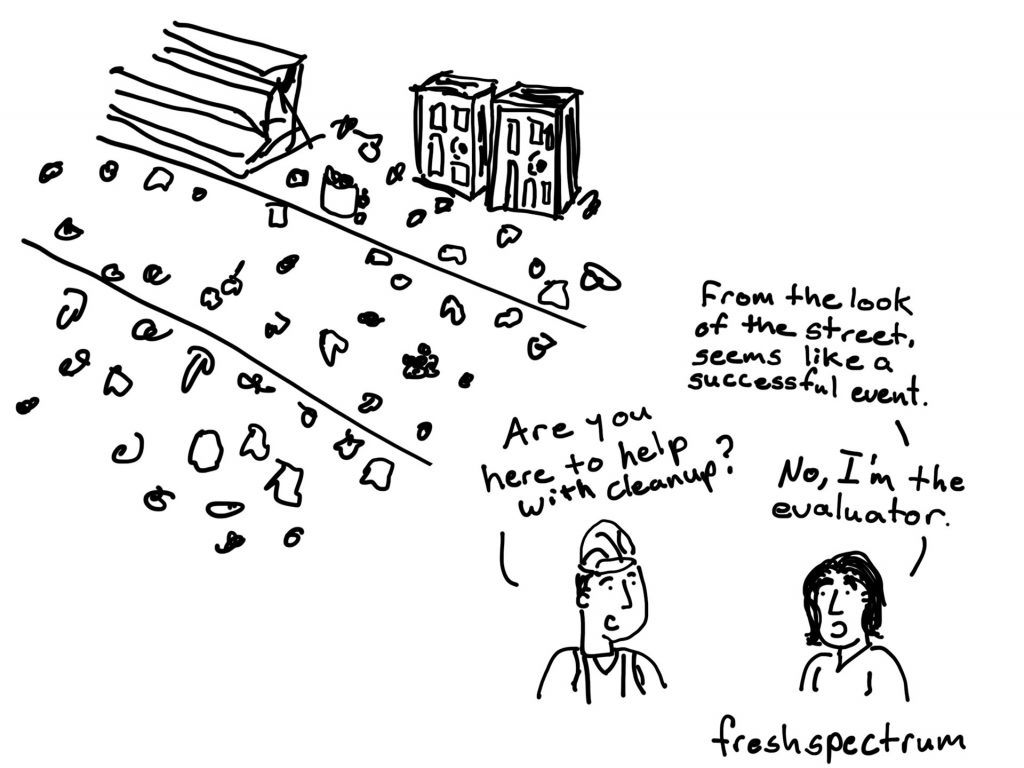
Another crowd favorite. I believe it was originally inspired by Jane Davidson talking about causation. Not everything needs a control group or 100% certainty.
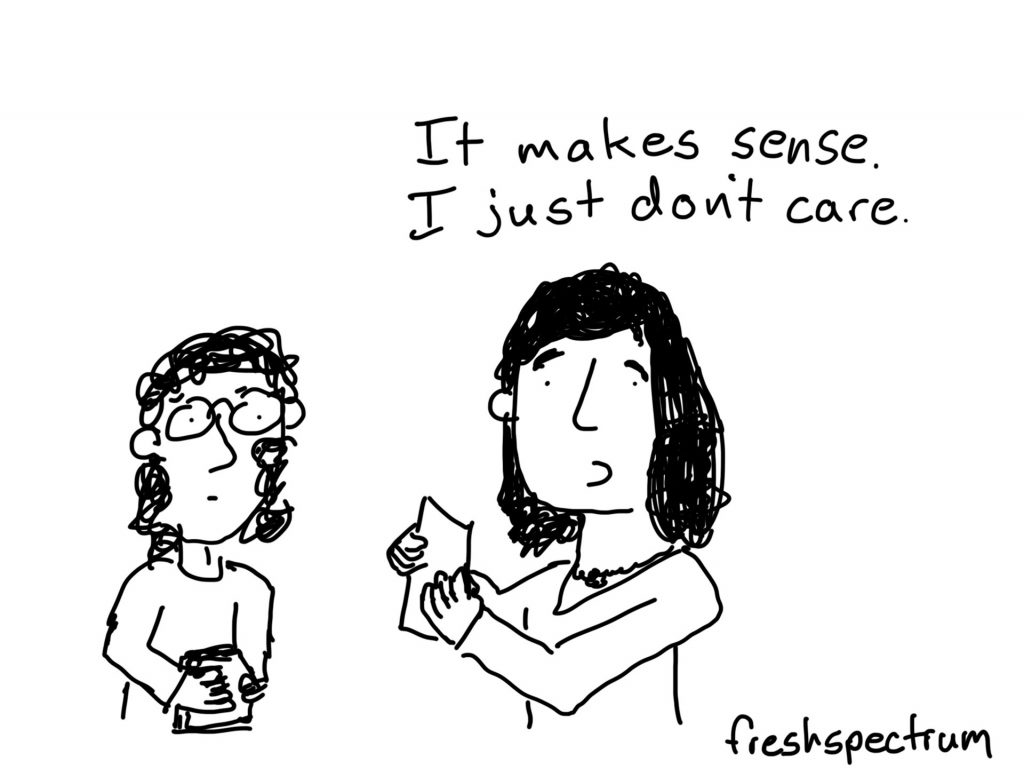
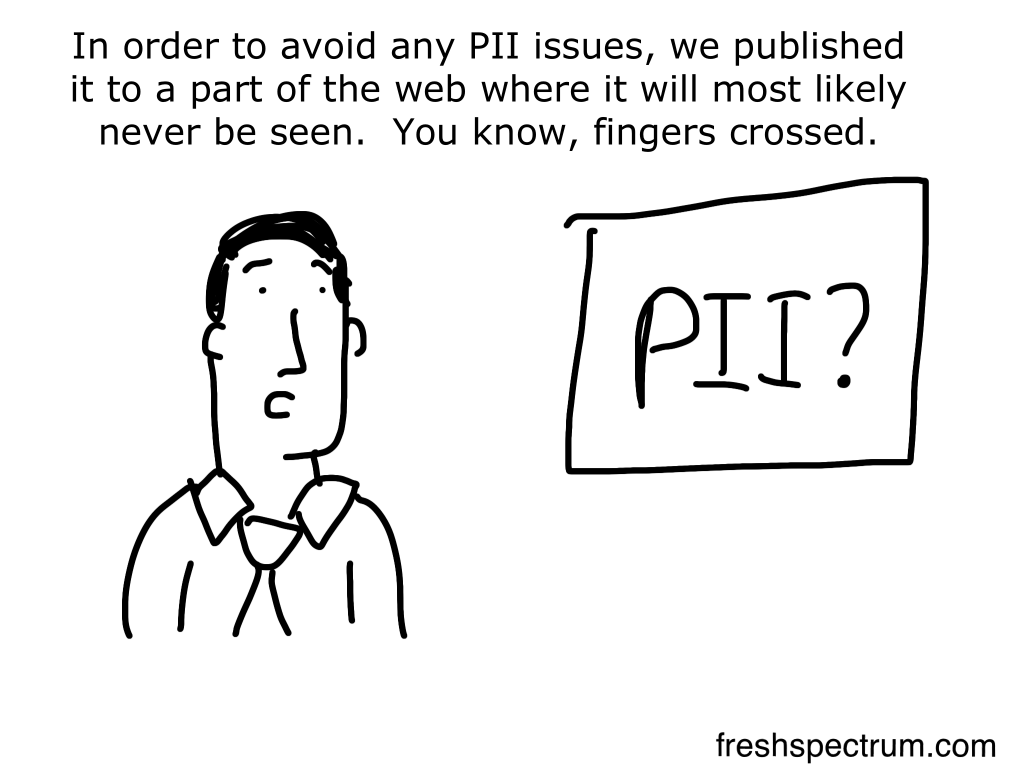
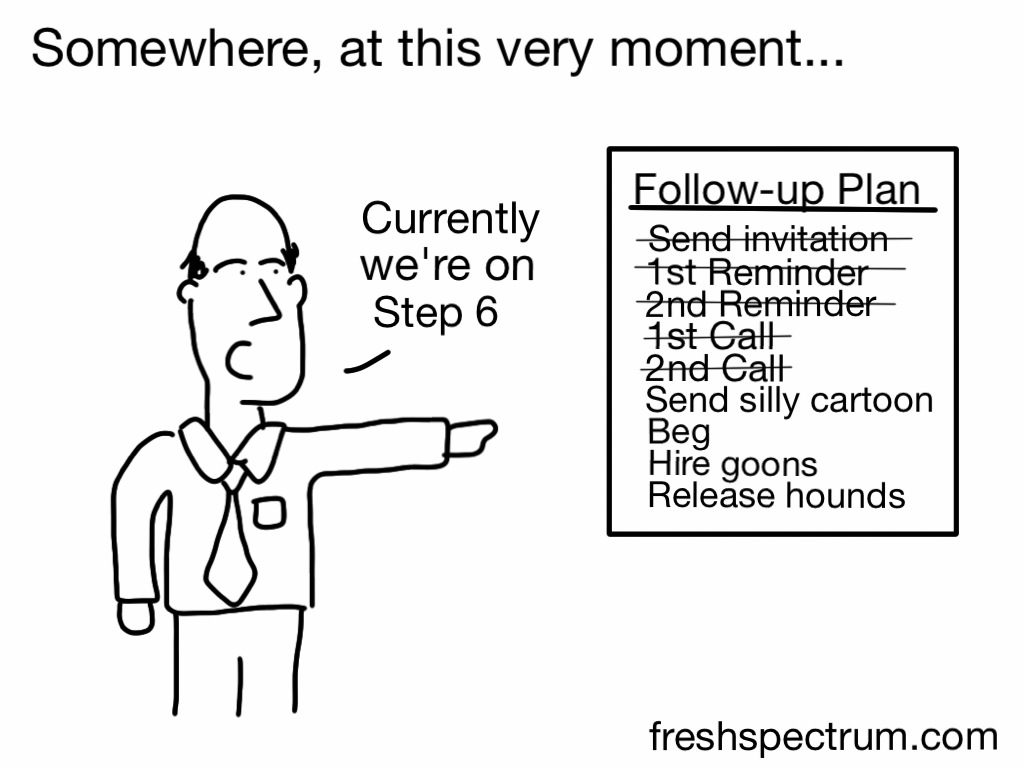
I spent a number of years doing data collection grunt work. It basically meant continuing to follow-up with people until they completed a survey. That’s really the secret to high response rates, perseverance (and goons).
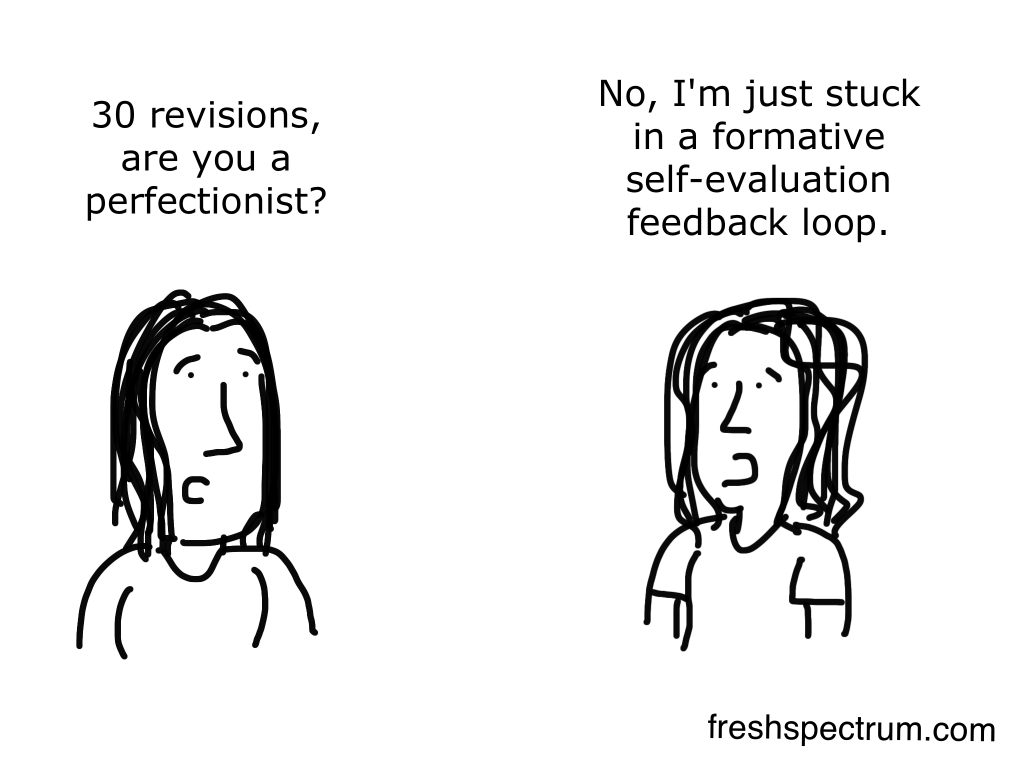
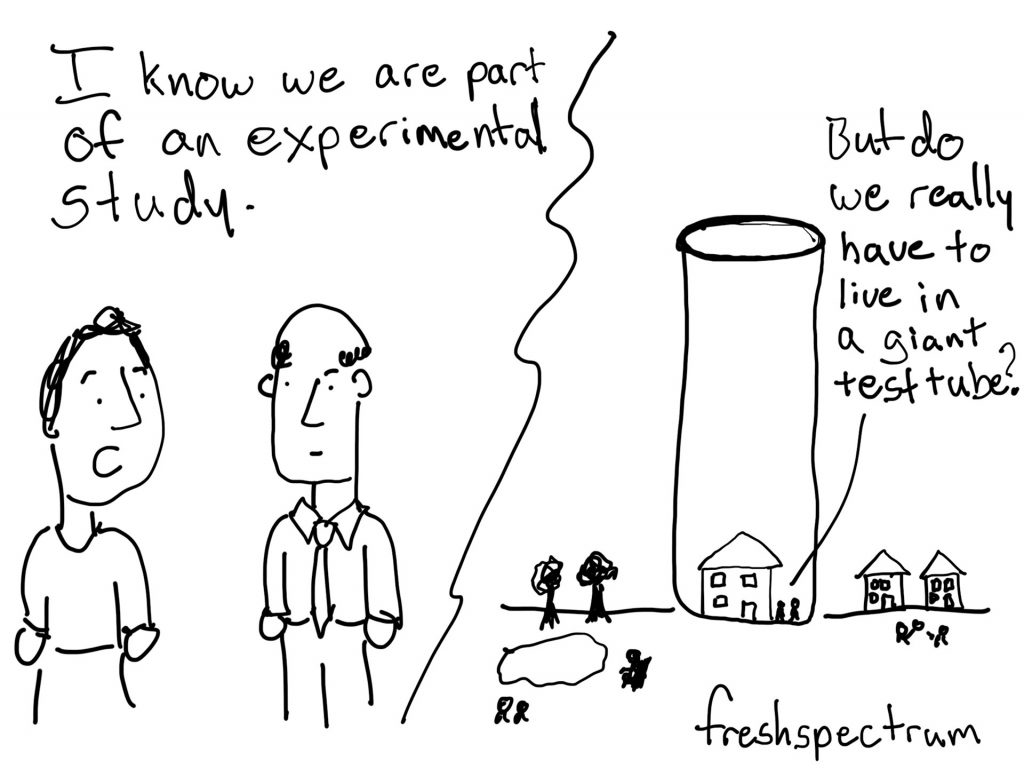
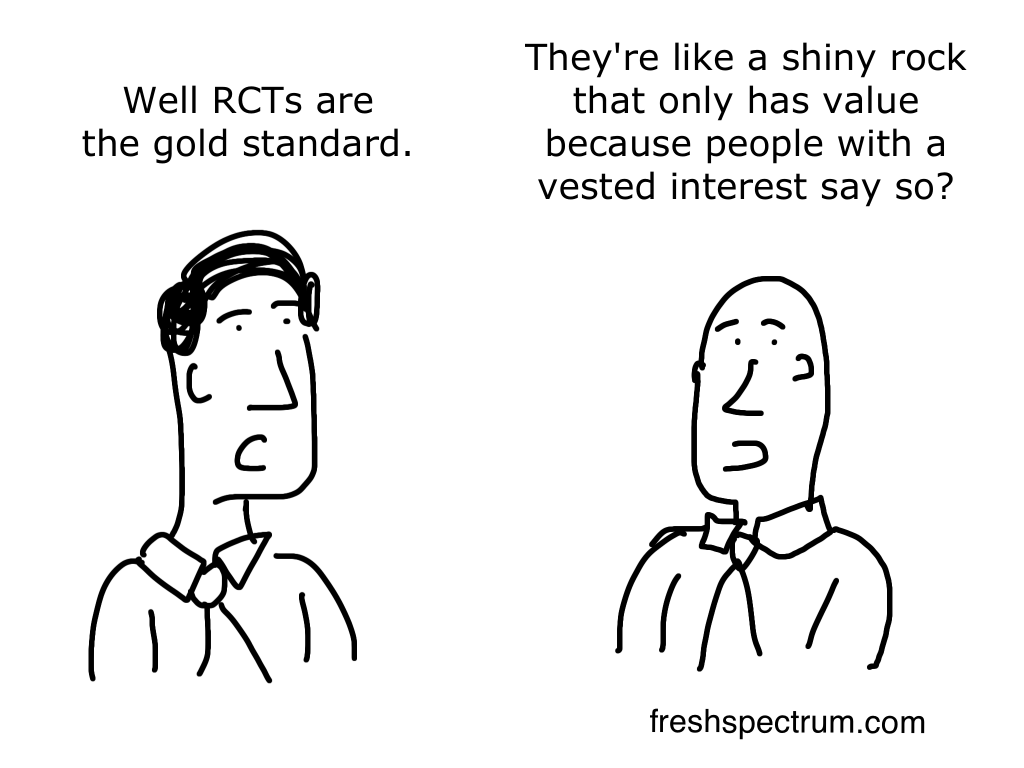
Just to make sure we are all on the same page. I am not against RCTs as a method. I am just against the idea that any particular method is superior to all the other methods. The RCT Gold Standard is pretty much a meme that predates the internet..
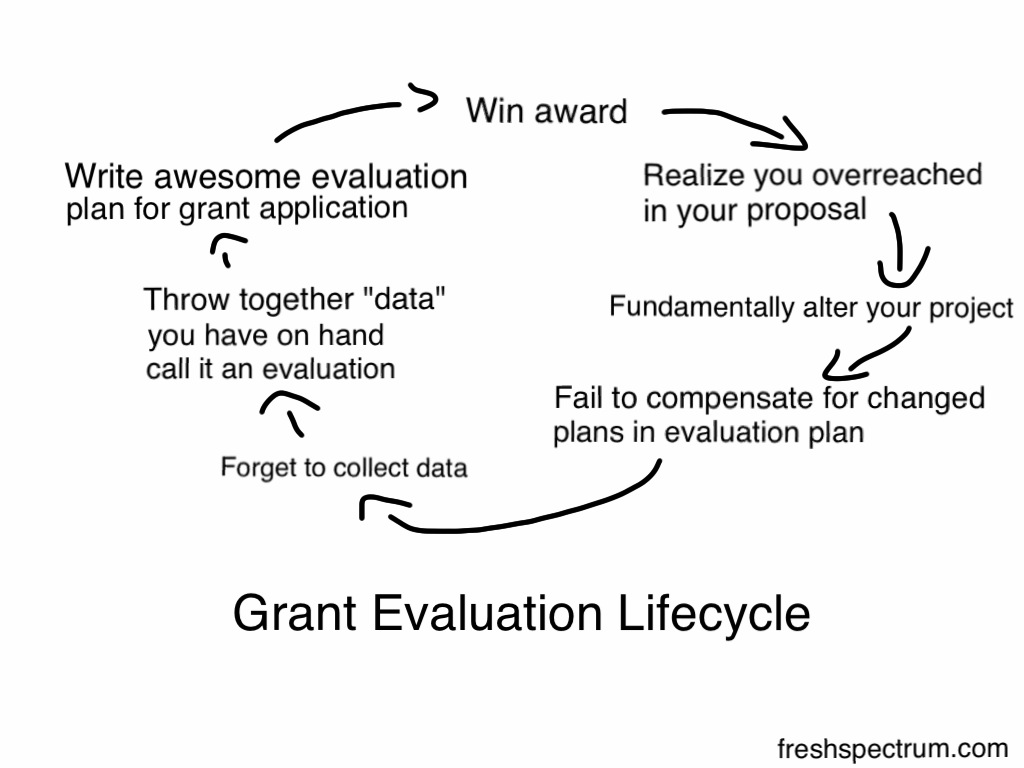
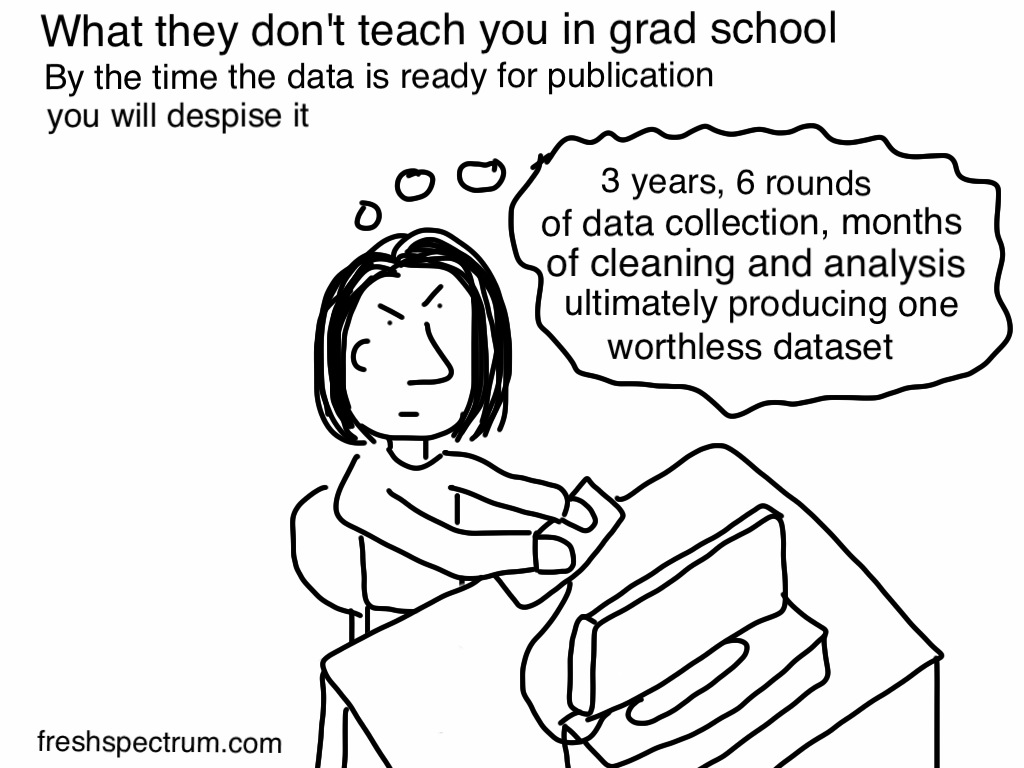
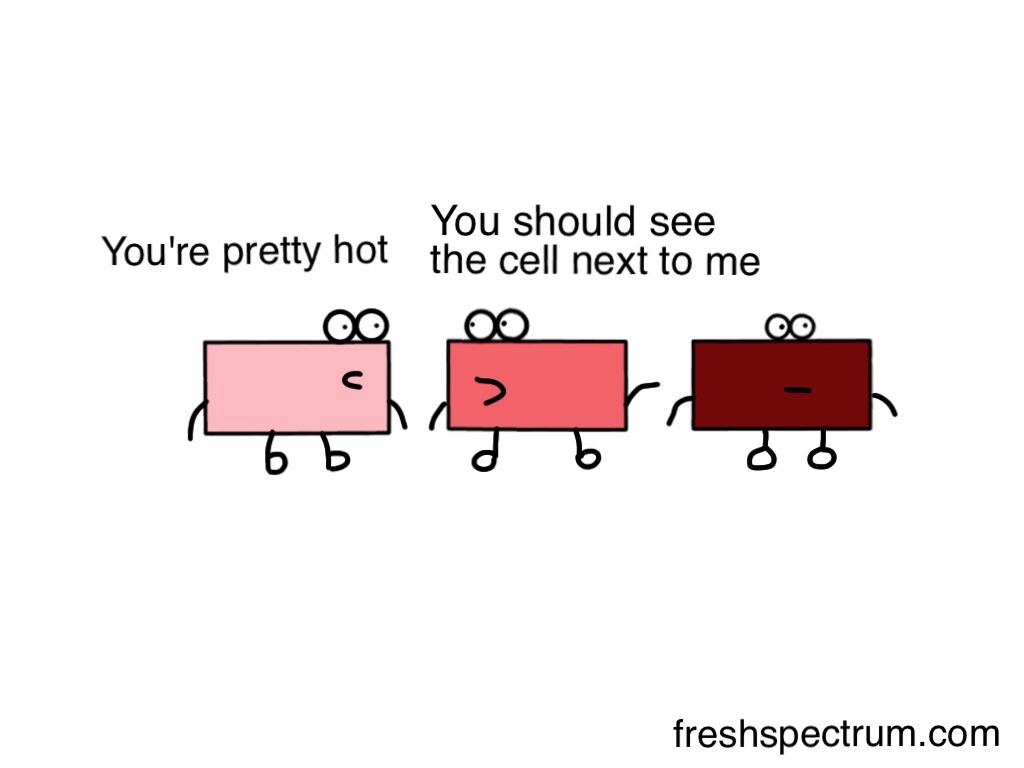
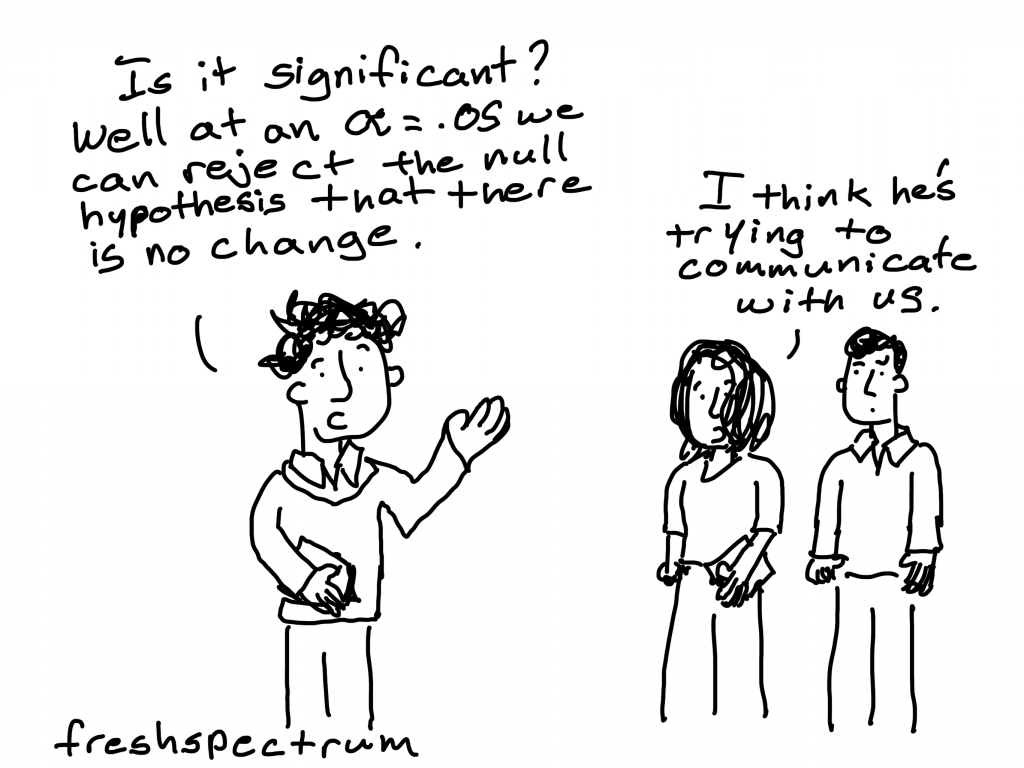
This cartoon always made me giggle. But if someone doesn’t already know what a heat map is, it would fly right over their head. This is a good lesson for using cartoons. Just because you think something is funny doesn’t mean your audience will.

Lots of jokes are audience dependent. Be prepared that something you think is funny could easily go over like a lead balloon.
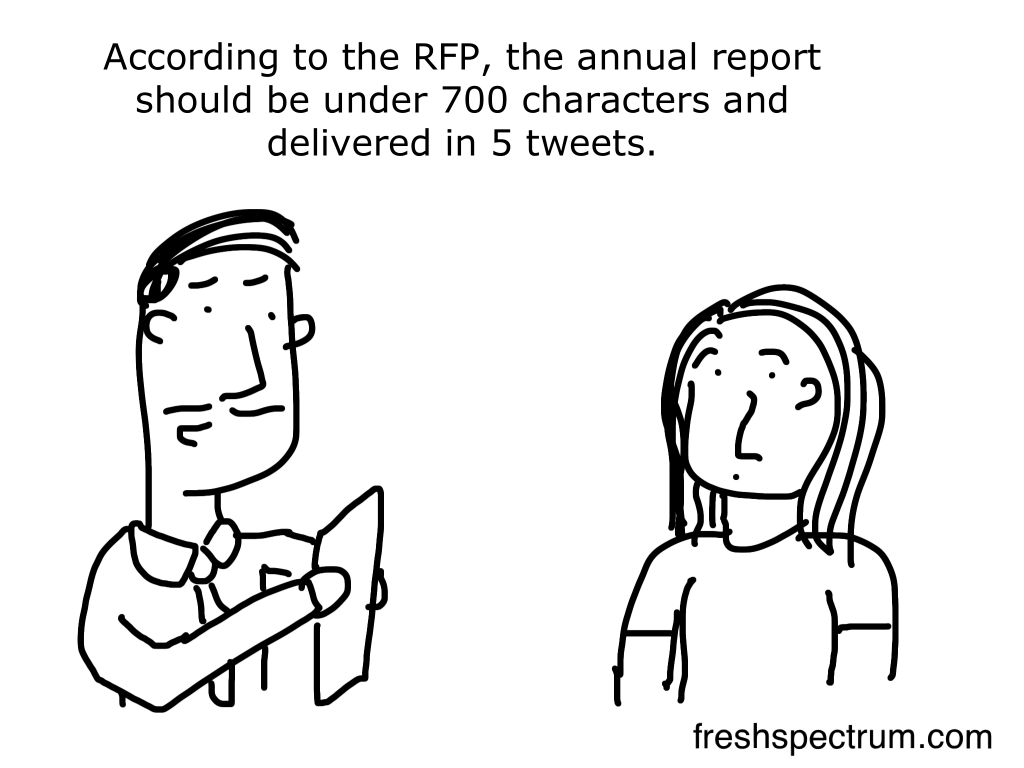
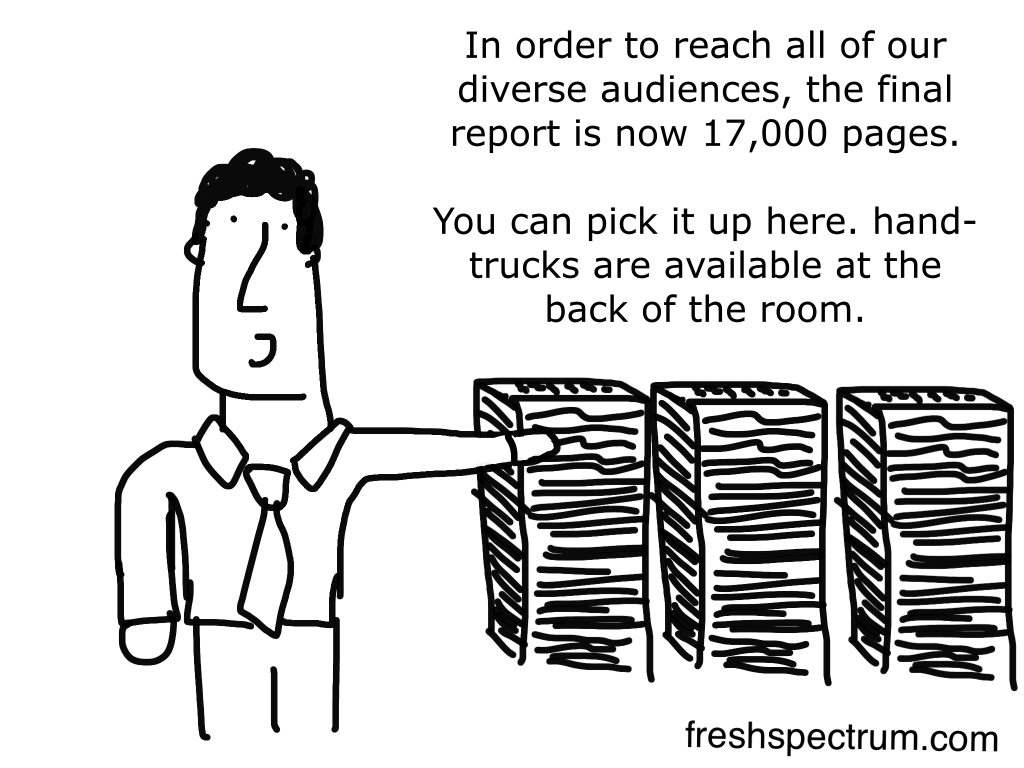
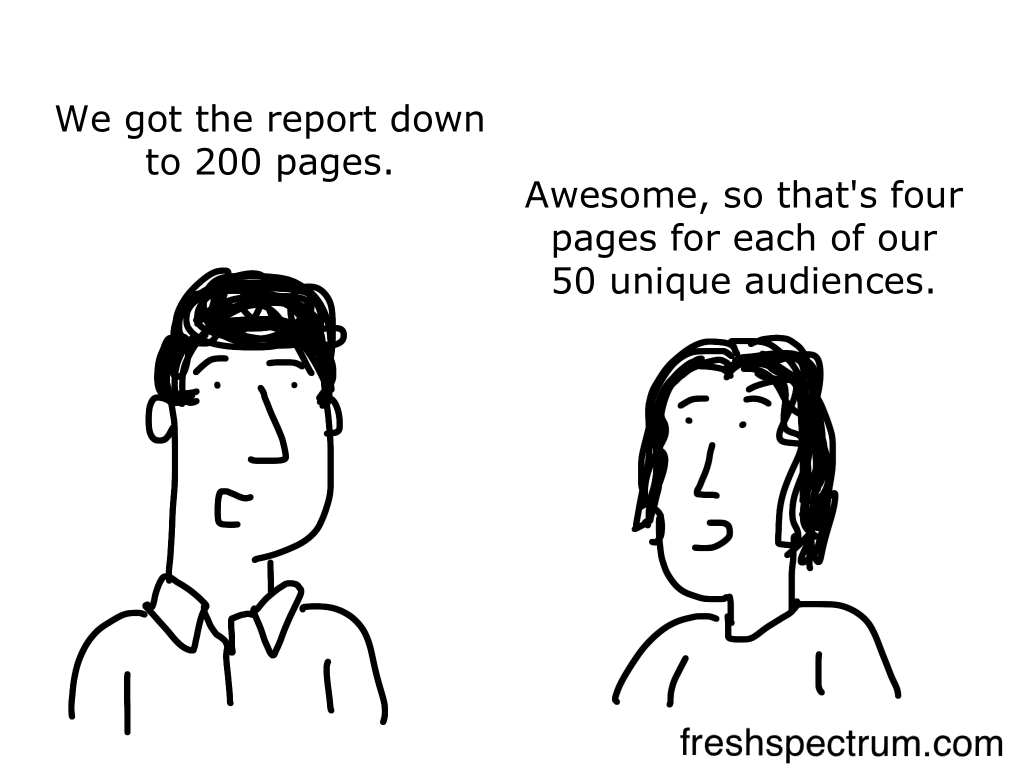
Long reports often get a bad name. But if you really want to reach a bunch of different audiences you are not going to do it in one short report.
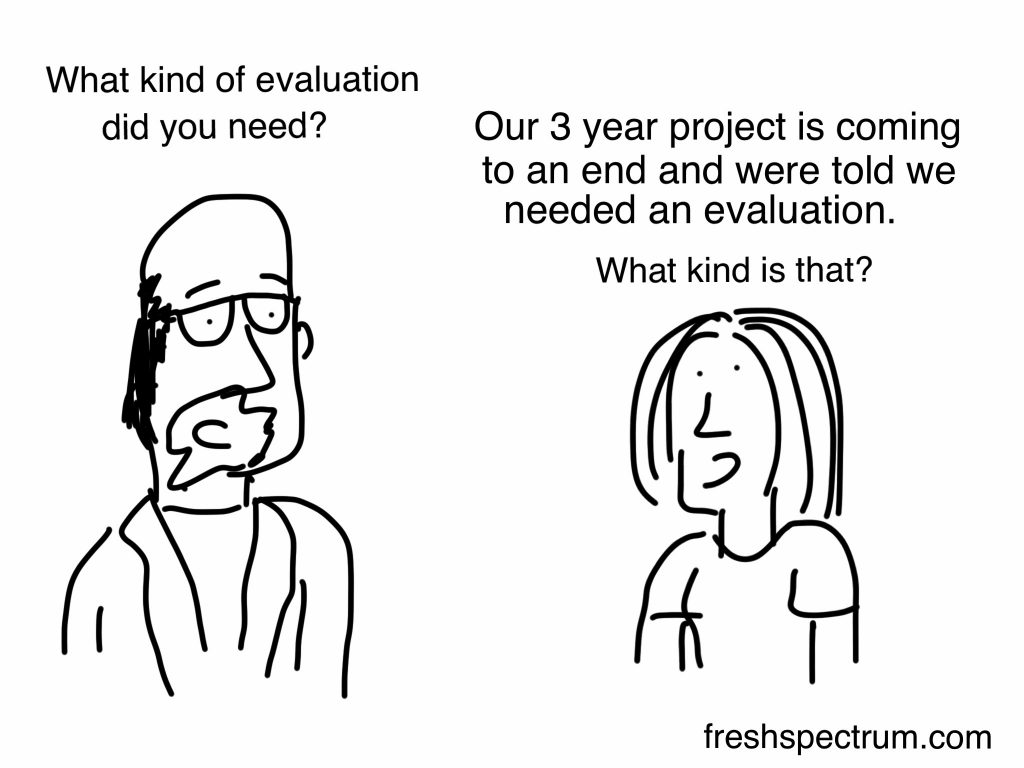
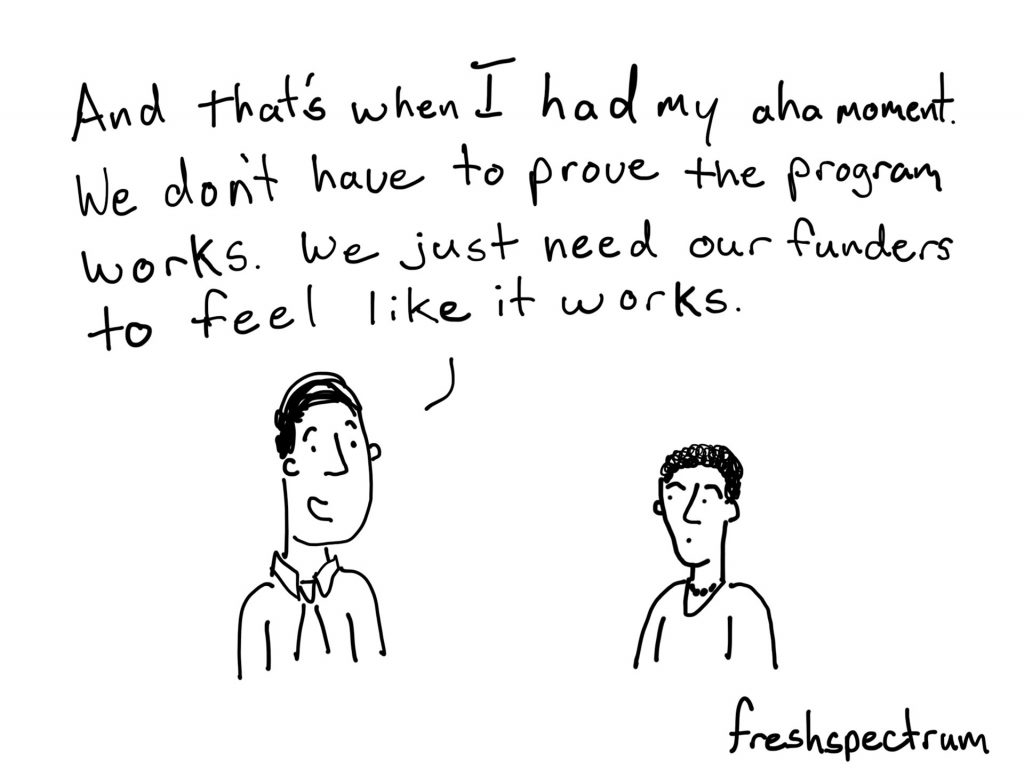
There is definitely a difference between effectiveness and perceived effectiveness. Unfortunately the one that should matter the most, often doesn’t.
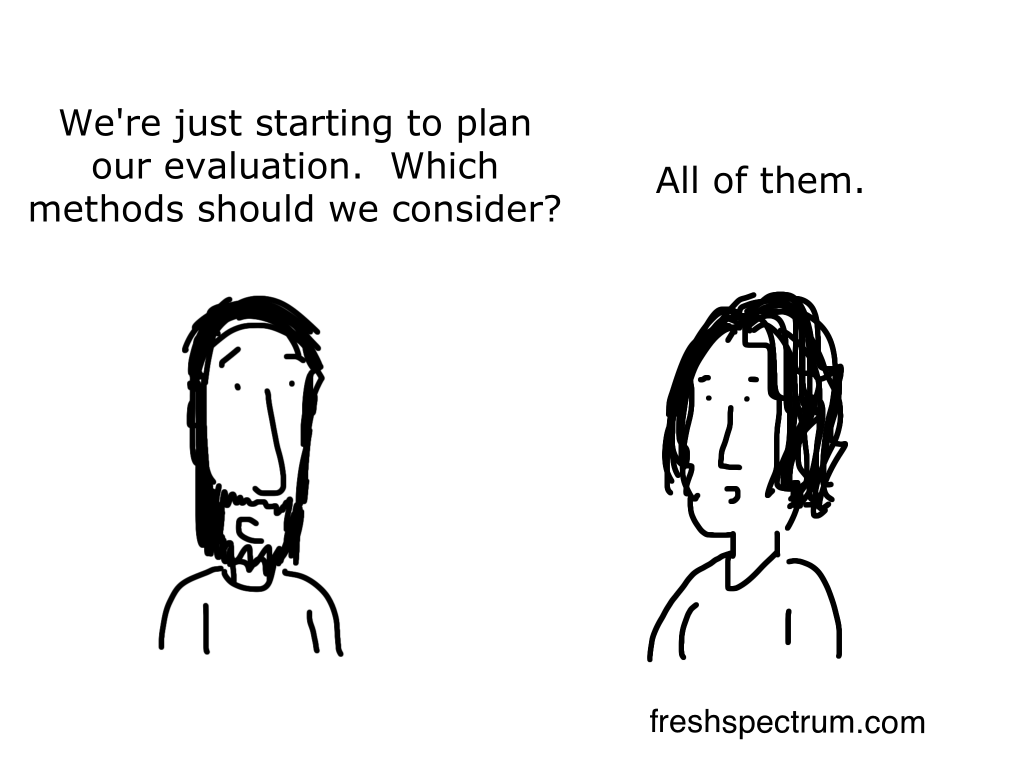
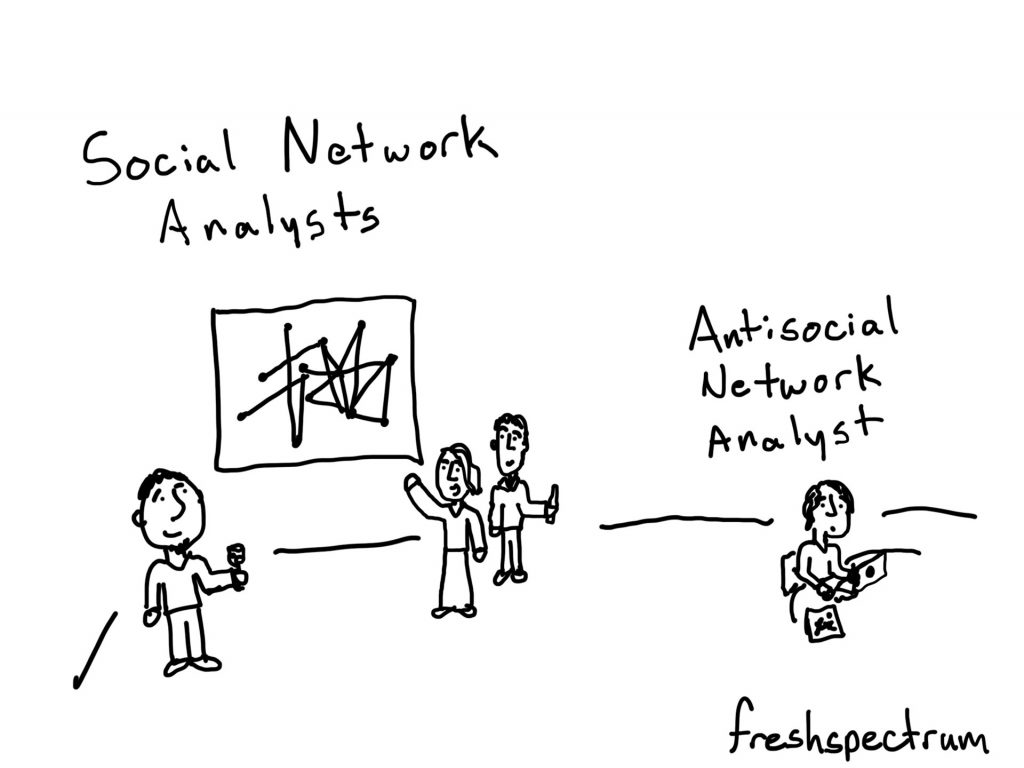
Given the amount of code often required to do a network analysis, and the reputation held by people who know a lot of code, I wonder how accurate this cartoon might be.
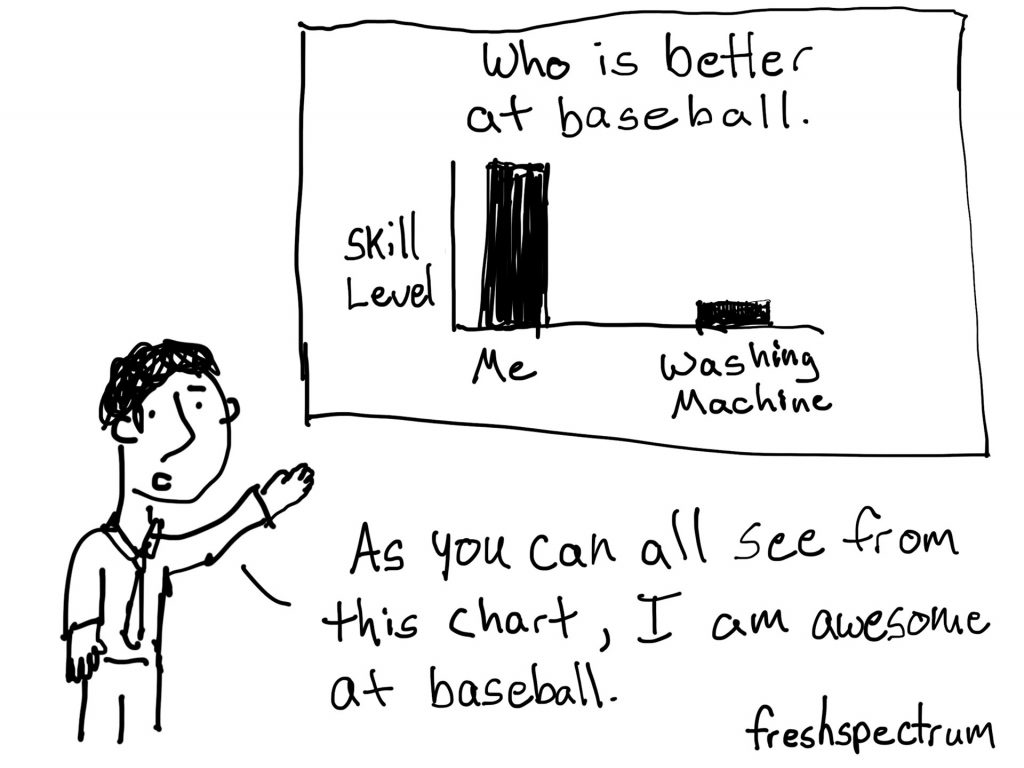
There was this chart on the side of a Lipton tea box that I always found fascinating. It compared flavonoid content of tea versus a couple of juices and coffee. But it also included broccoli. It was so completely random and inspired this cartoon.

Sounds silly I know. But honestly, if someone takes the time to bedazzle all of their charts, I would probably take a closer look.
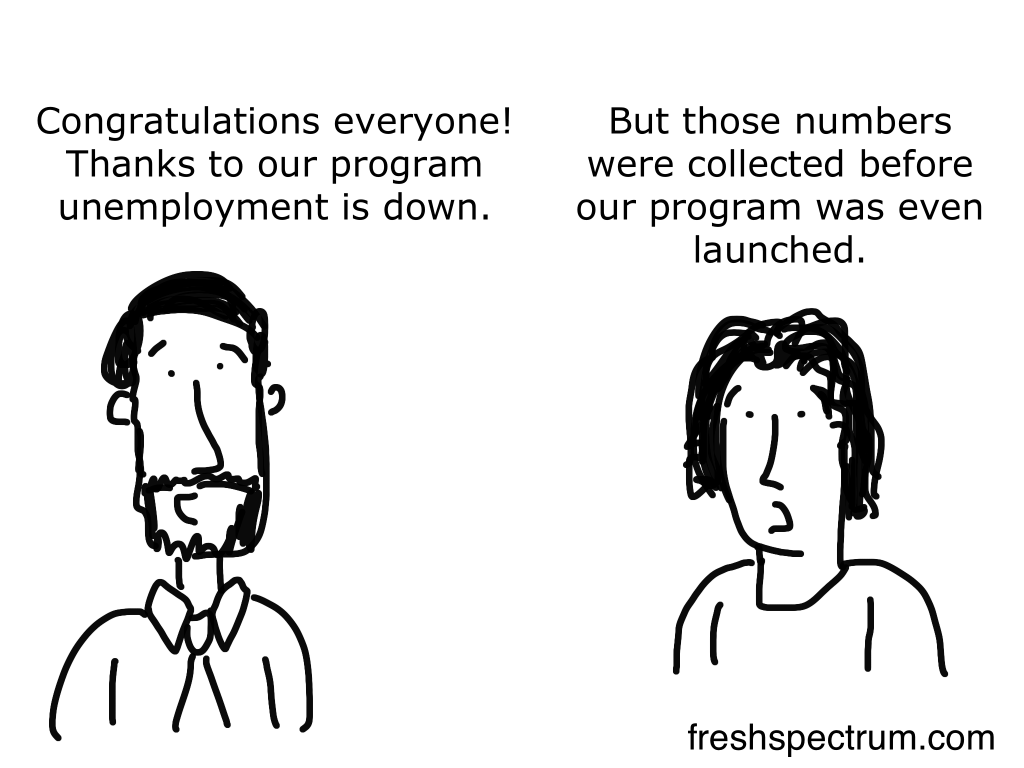
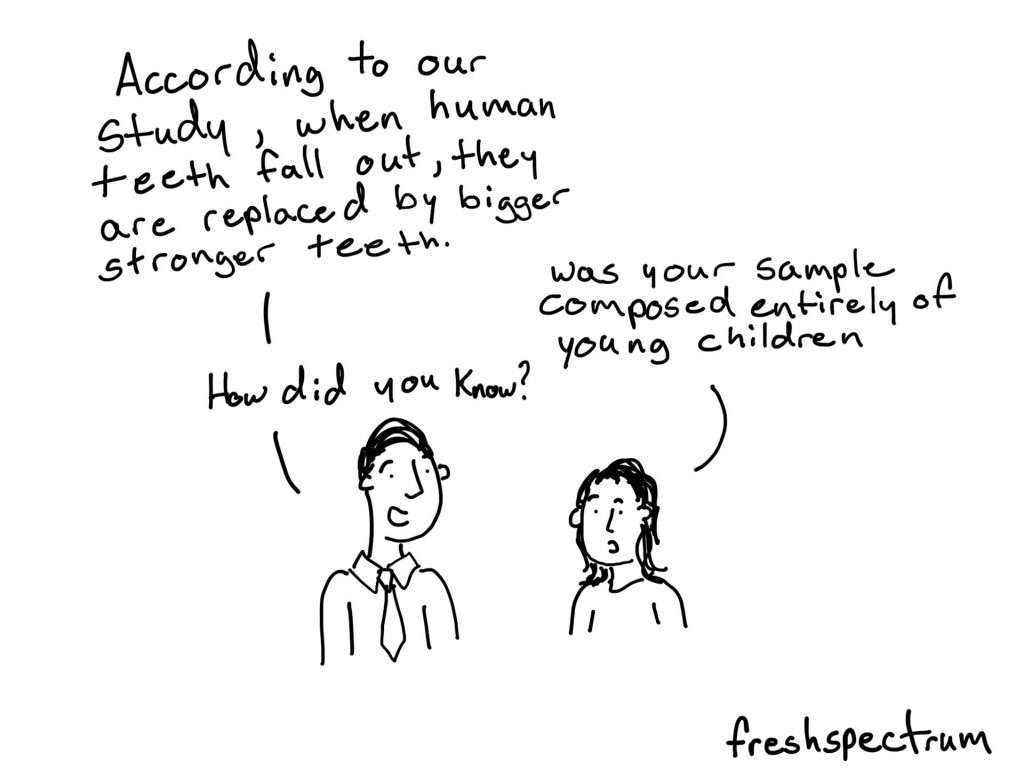
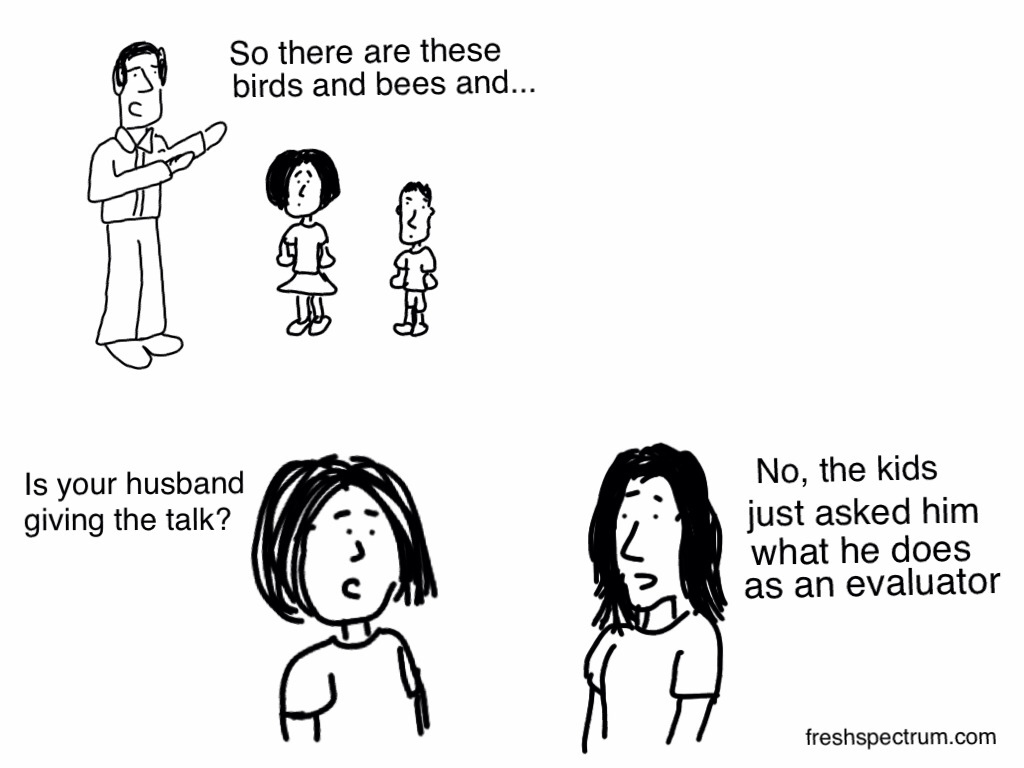
If you ask an evaluator to describe what they do to non-evaluation audiences a lot will struggle. Or they’ll just dive into a string of metaphors comparing evaluation to other professions.
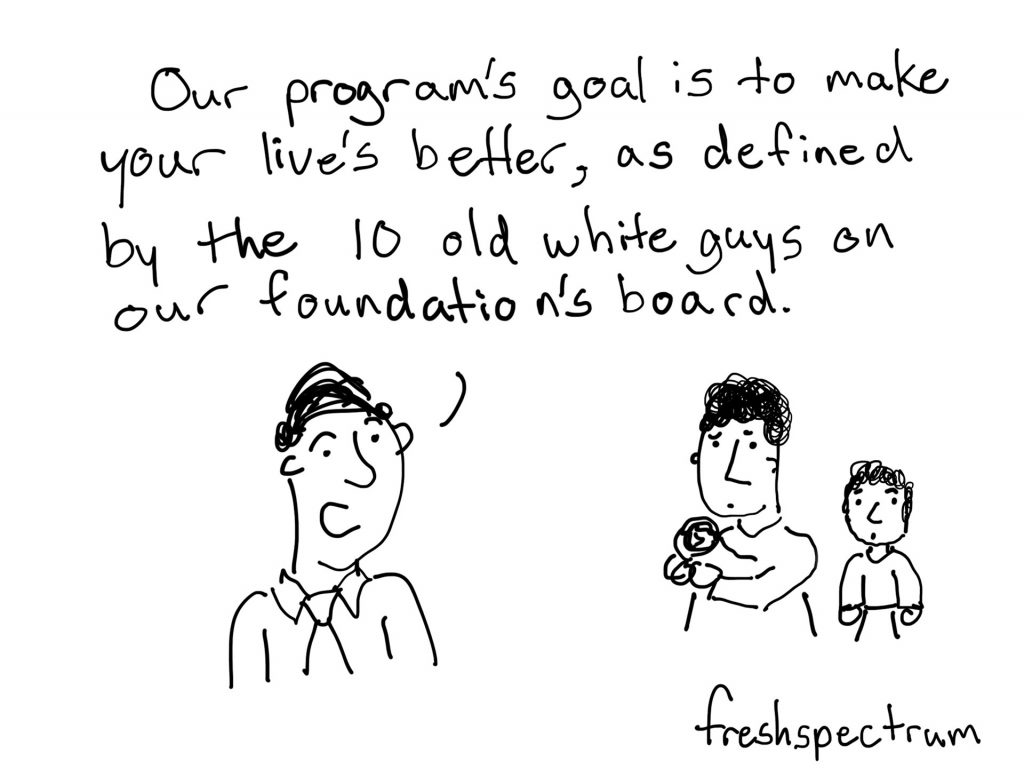
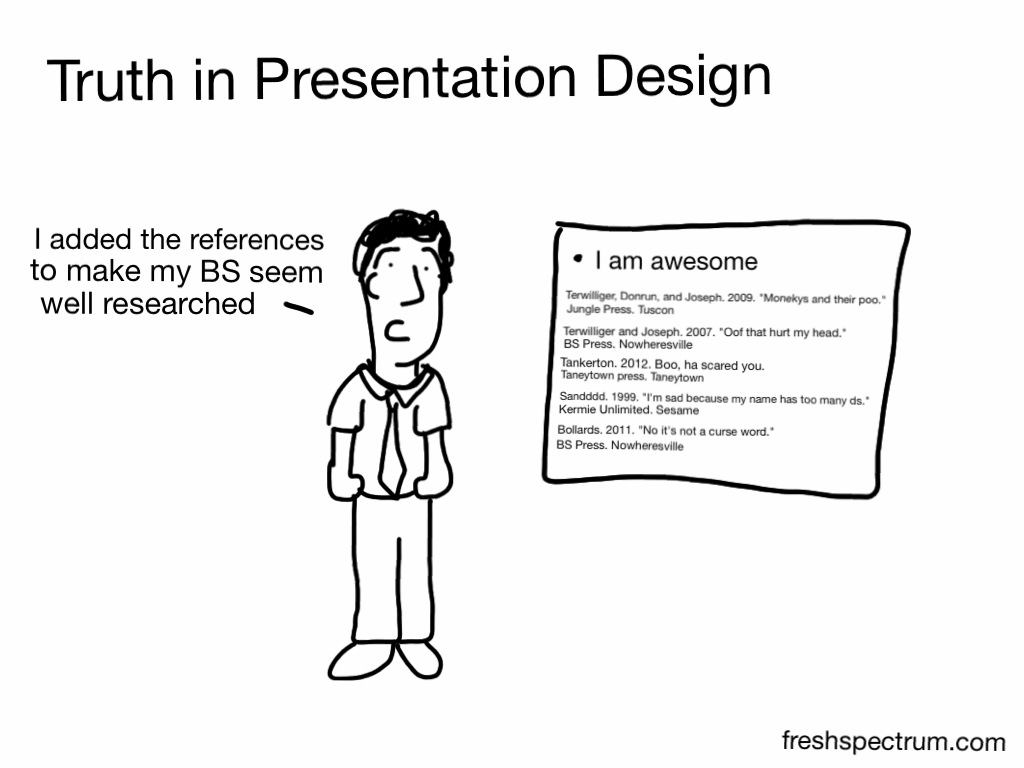
This also works for blog posts. Just add a bunch of random resources at the end using citations and not including links.
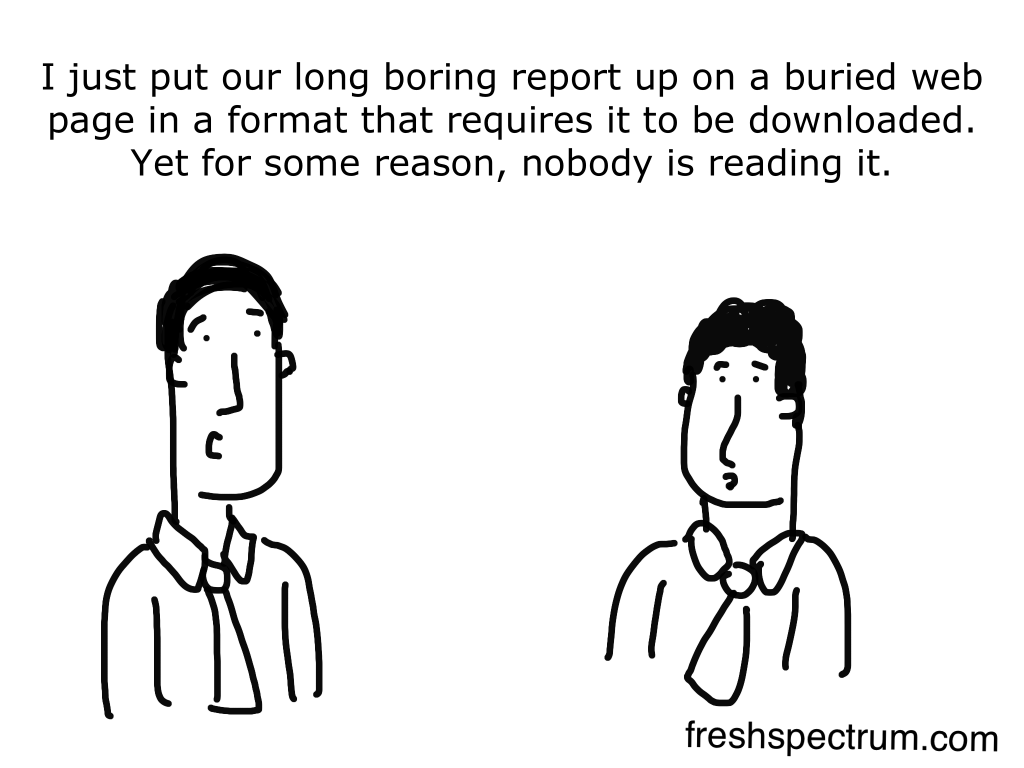
It’s not just what you report but how you report that matters. You could create a brilliantly accessible report but if it gets buried on a boring/confusing/poorly designed website nobody will read it.
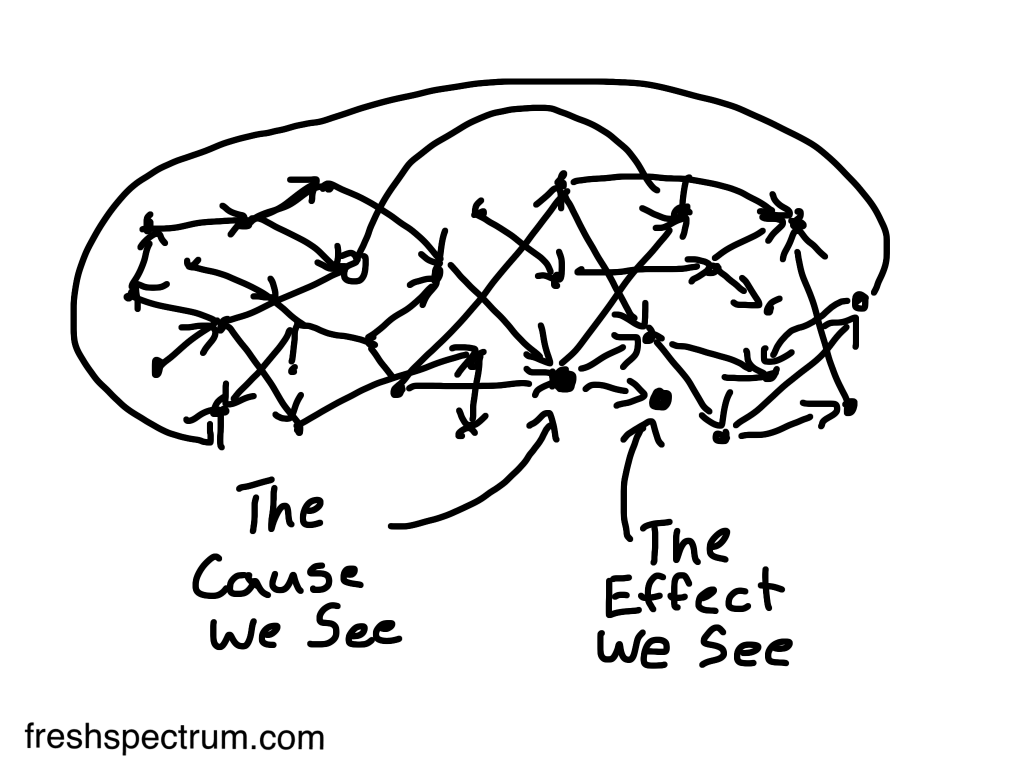
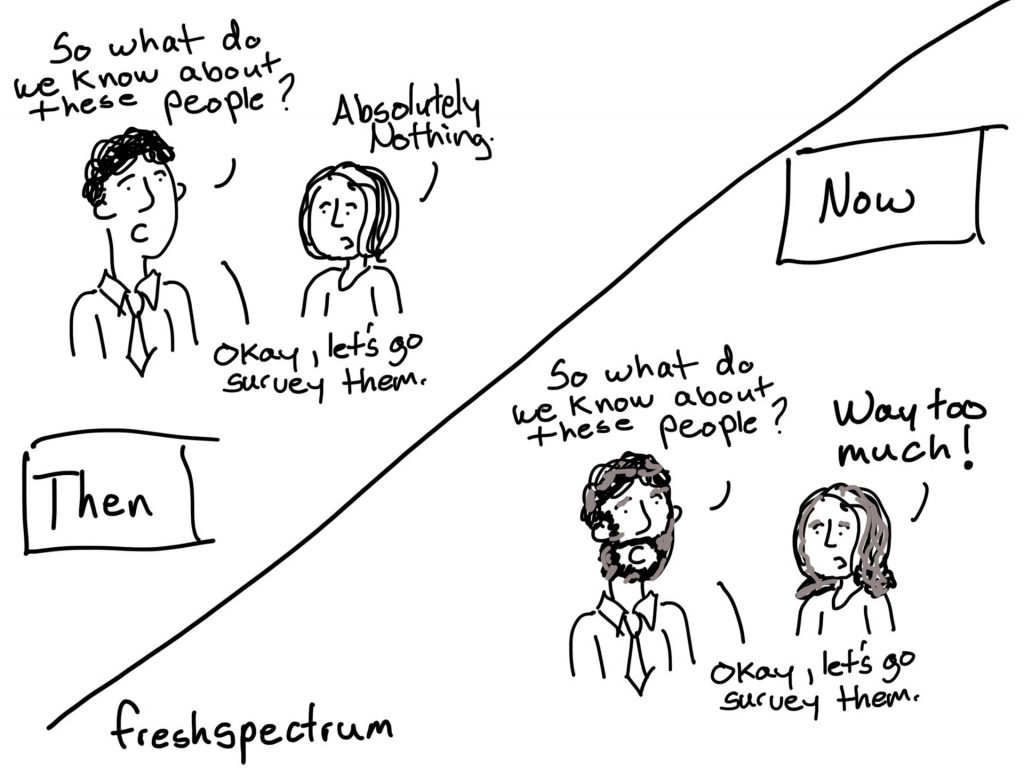
What we see and what actually happened are two different things. This is what makes true attribution so hard. It’s also what makes cultural responsiveness and stakeholder engagement so critical as the negative side effects of an intervention can easily outweigh the benefits. Yes, you don’t know what you don’t know. But you’ll never know if you don’t even try.
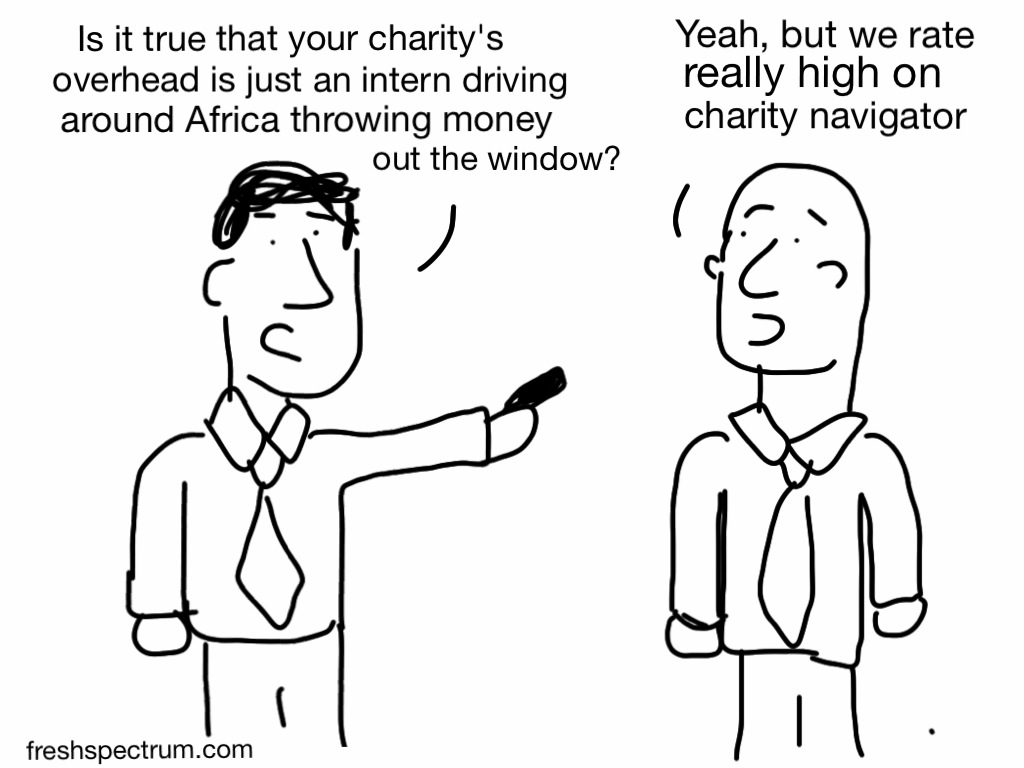
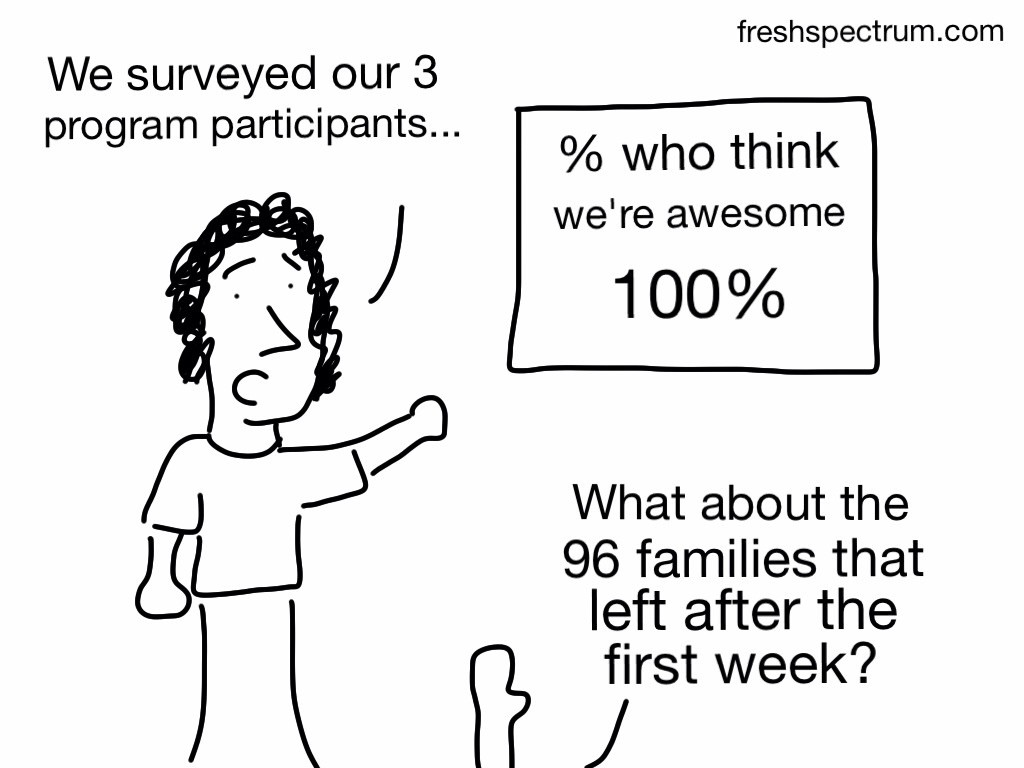
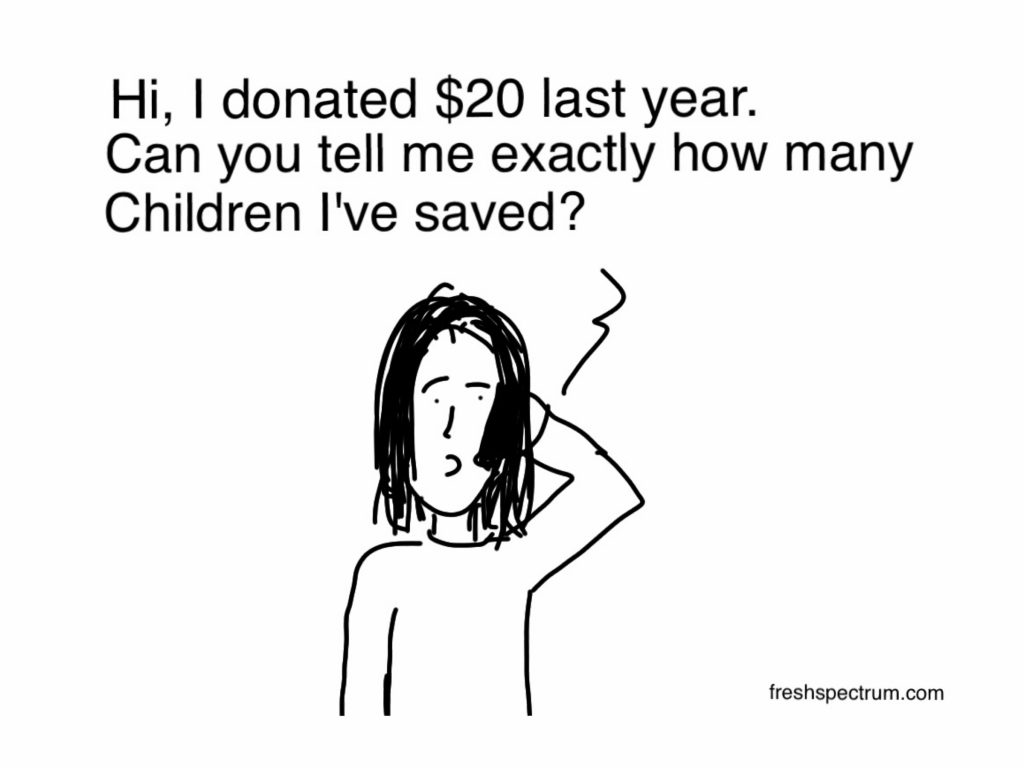
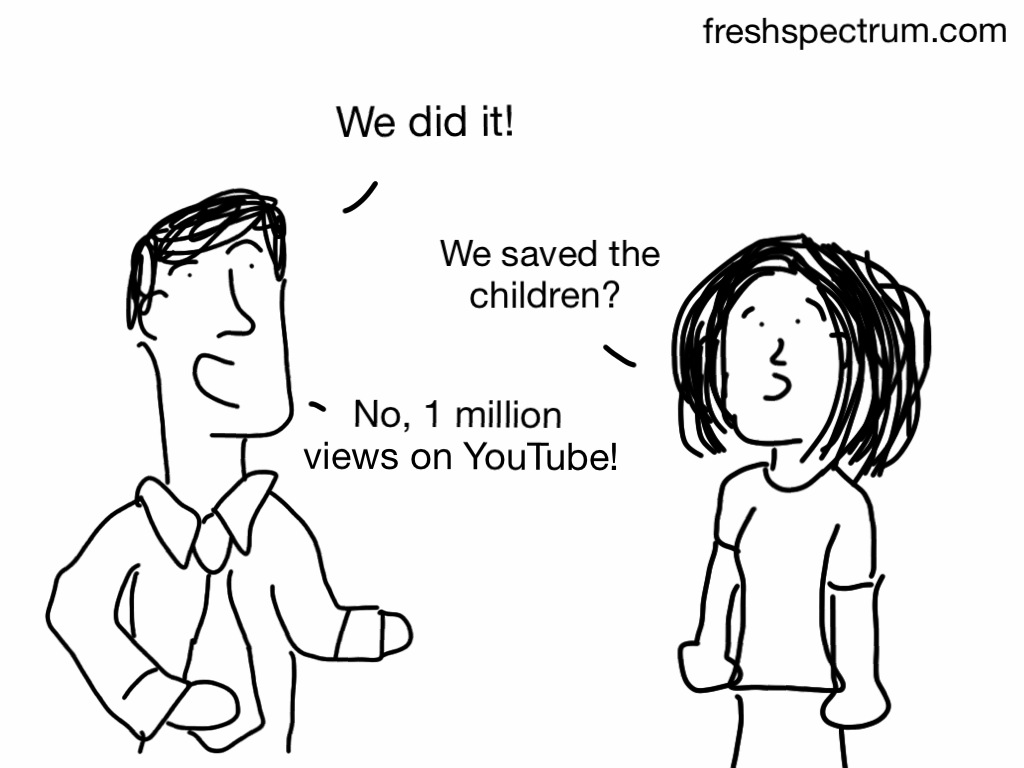
That’s why we donate to things right? We want to know our money is going to actually helping solve a problem we believe needs to be solved. If the charity gets back to you and says, “no, but it helped us buy paper towels for the break room,” I’m not sure that would go over well.
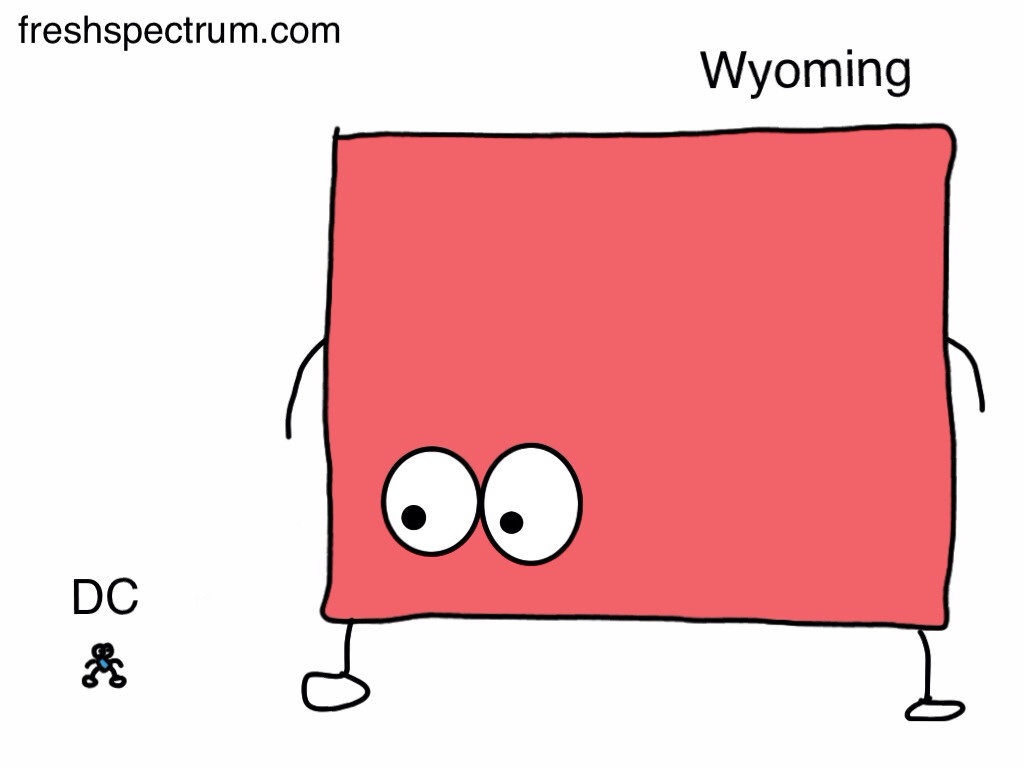
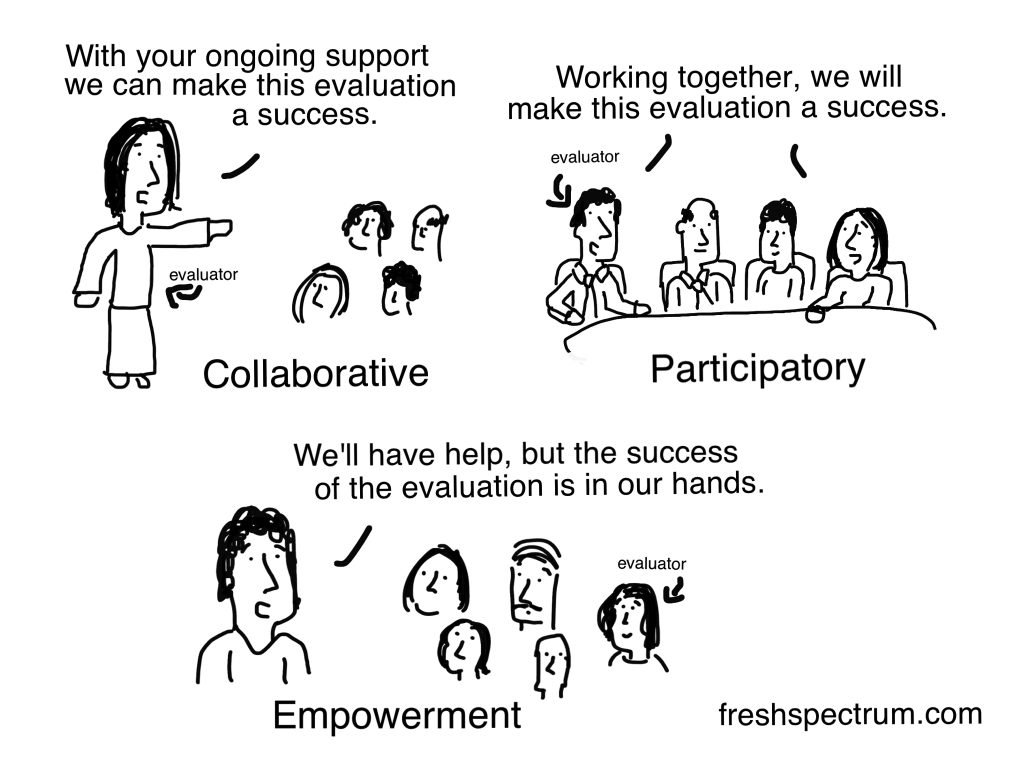
Drew this one for David Fetterman. There are all sorts of methods, approaches, and frameworks in evaluation that overlap or appear similar. The difference between collaborative, participatory, and empowerment evaluation at the most basic level is the role of the evaluator, which is what I tried to share with this cartoon.
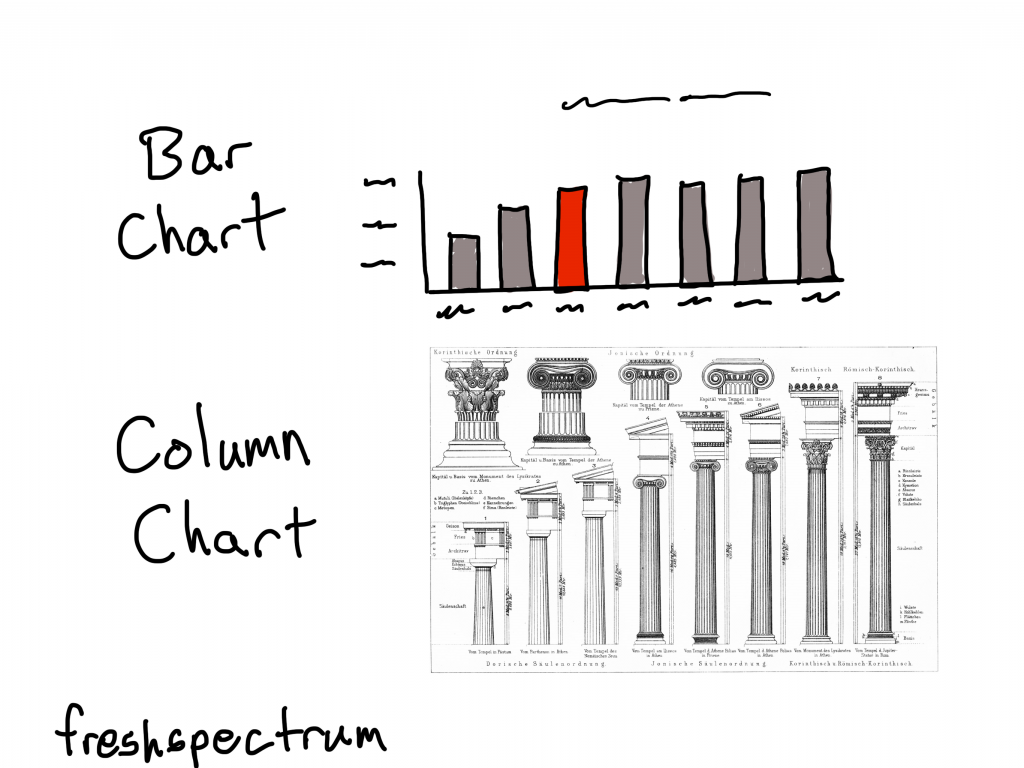
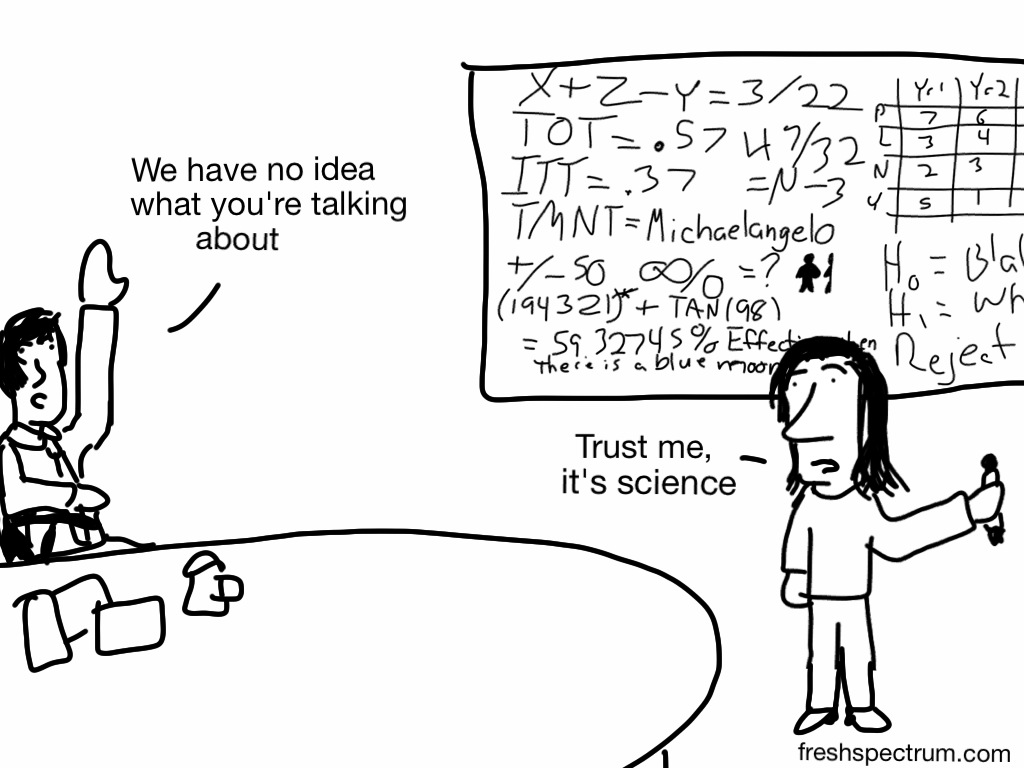
“What I cannot create, I do not understand.”

It’s a Feynman quote that I think we can expand upon.

“What I cannot communicate, I can not help you to understand.”
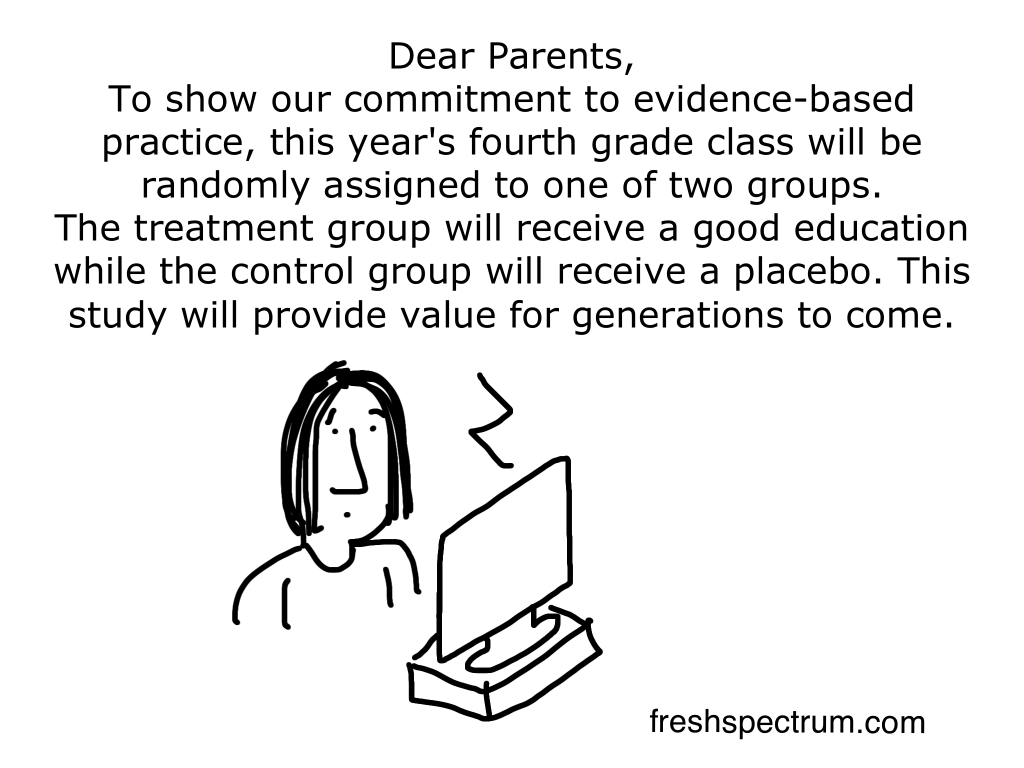
In the time of COVID-19, I fear that we maybe be running this experiment. But the two groups are not being assigned randomly.
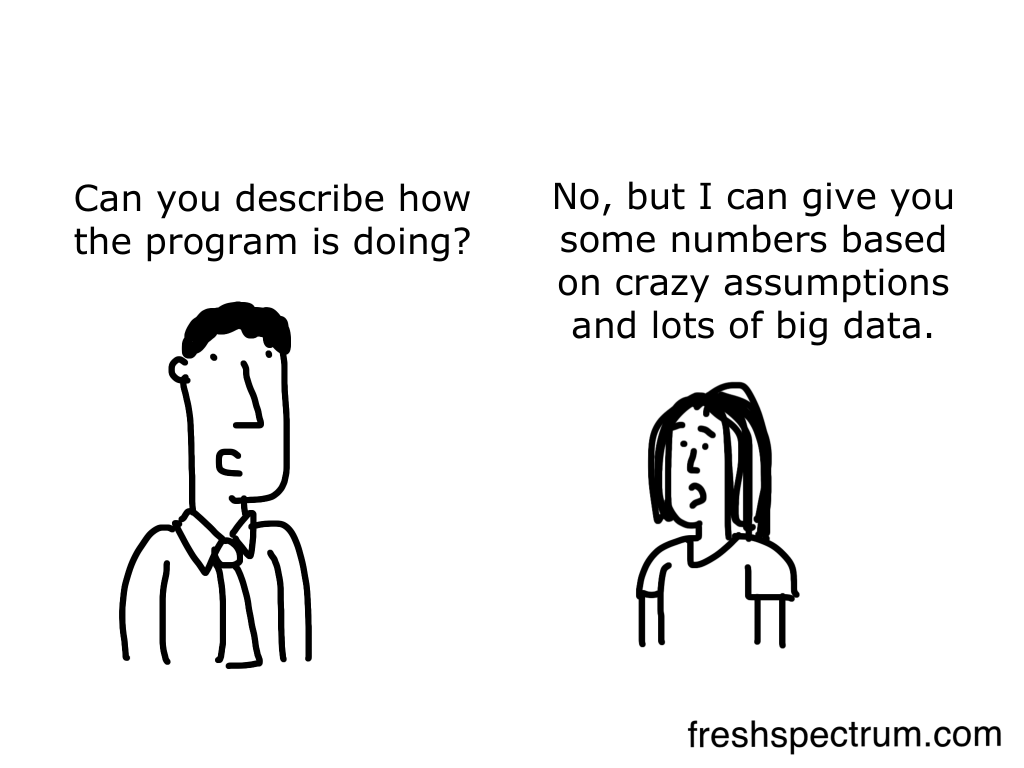
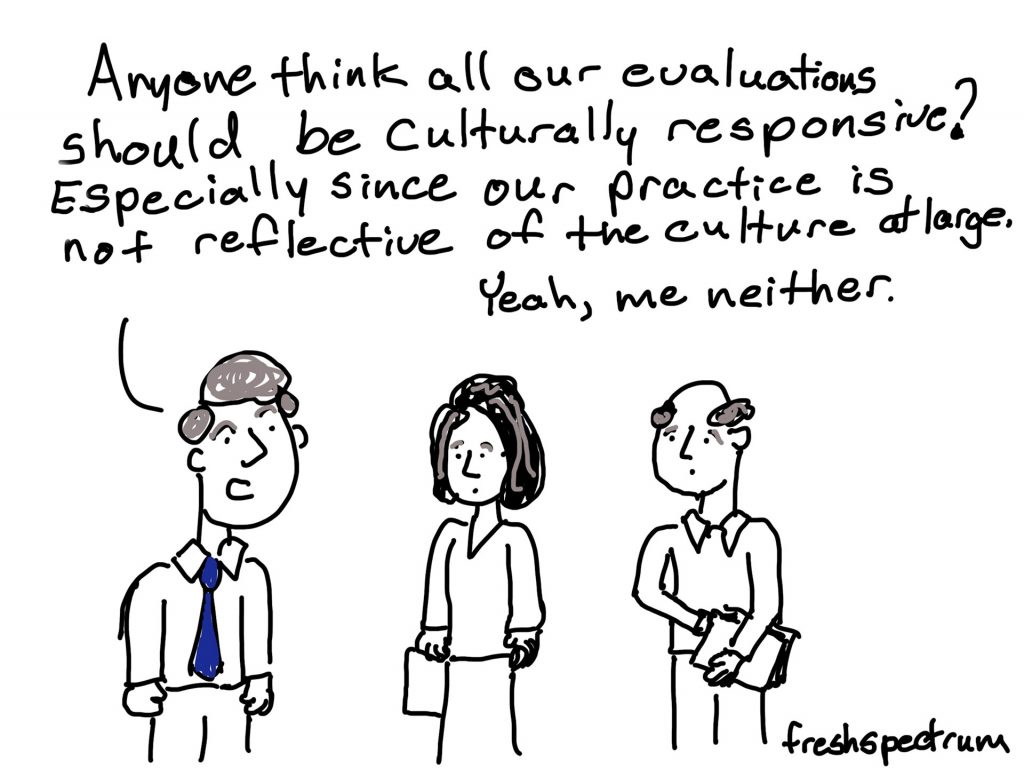
TATMWPIAP (There Are Too Many White People In Authority Positions). I note the irony in saying this as a white person who sometimes finds himself in authority positions.
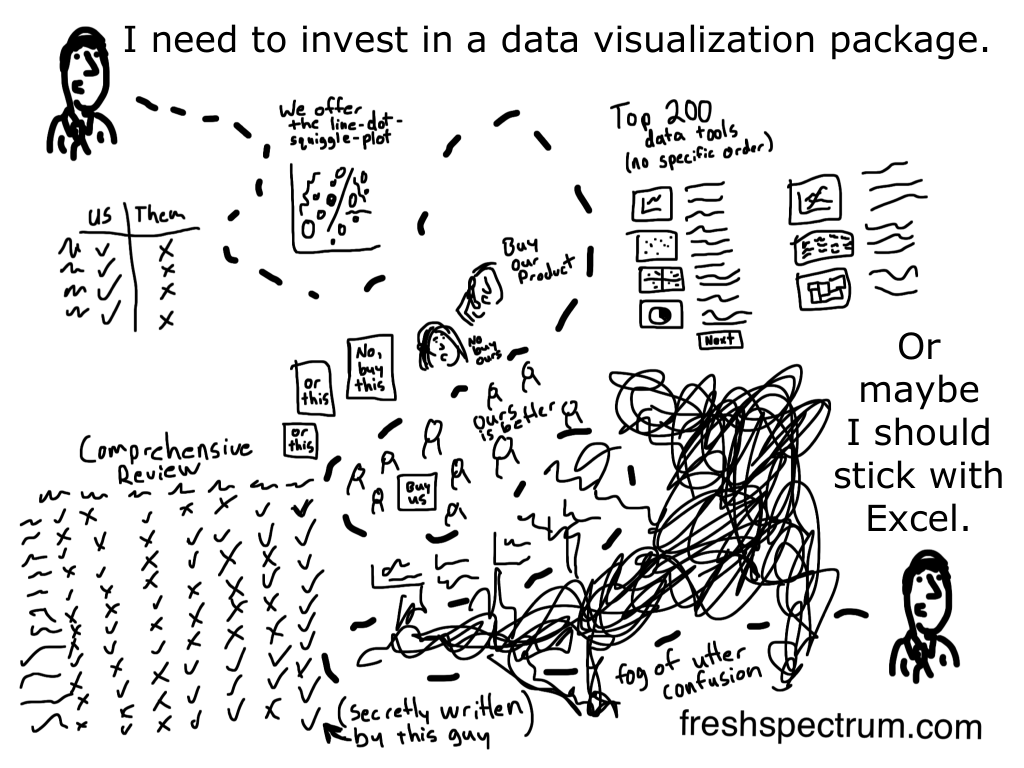
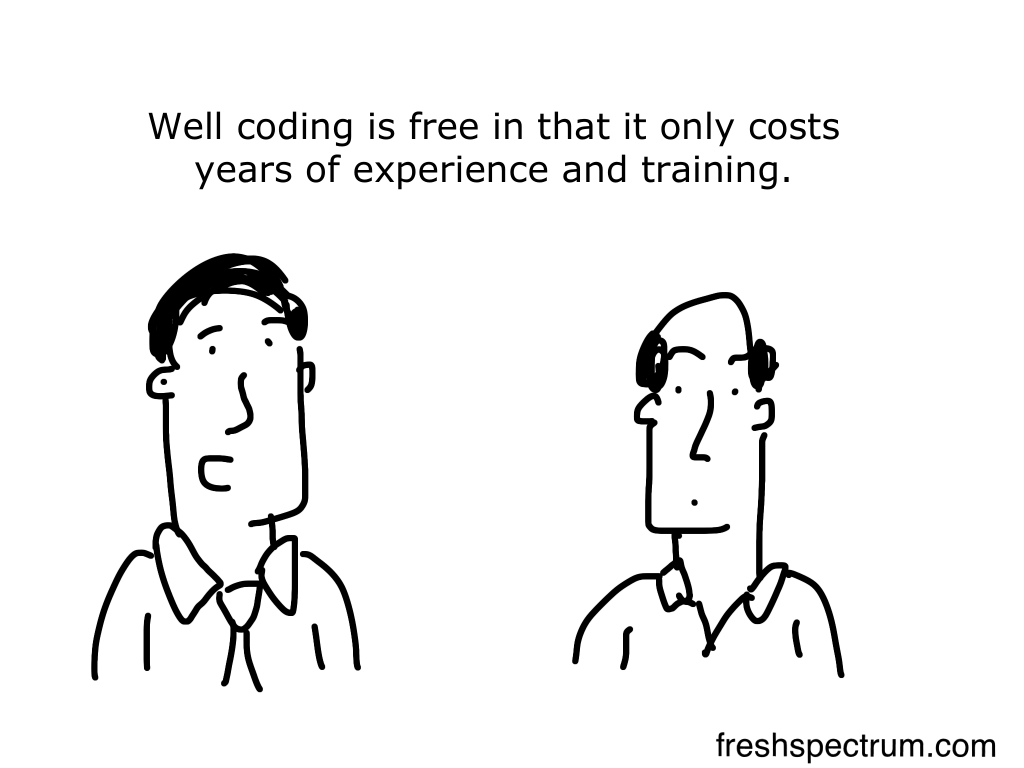
I don’t think it’s too surprising that many of the evaluators who teach data visualization design do so using common tools like Excel and Power Point.

I love tech, and there are some really cool pieces of software out in the world, but if it’s a much shorter distance to teach someone to design using tools they already know. It’s a pragmatic starting point, and most evaluators are nothing if not pragmatic.

So what cartoon is your favorite?

Do you have any favorite evaluation cartoons from this list? Do you have any favorites from outside this list?

Also, if you use any of my cartoons in presentations or on bulletin boards, would you take a selfie with them? You can share it with me here in the comments, on twitter, or on LinkedIn.

I love seeing the cartoons in the wild!
Written by cplysy · Categorized: freshspectrum

Apr 28 2020

Post or Perish

So I received a little constructive feedback after last week’s post.

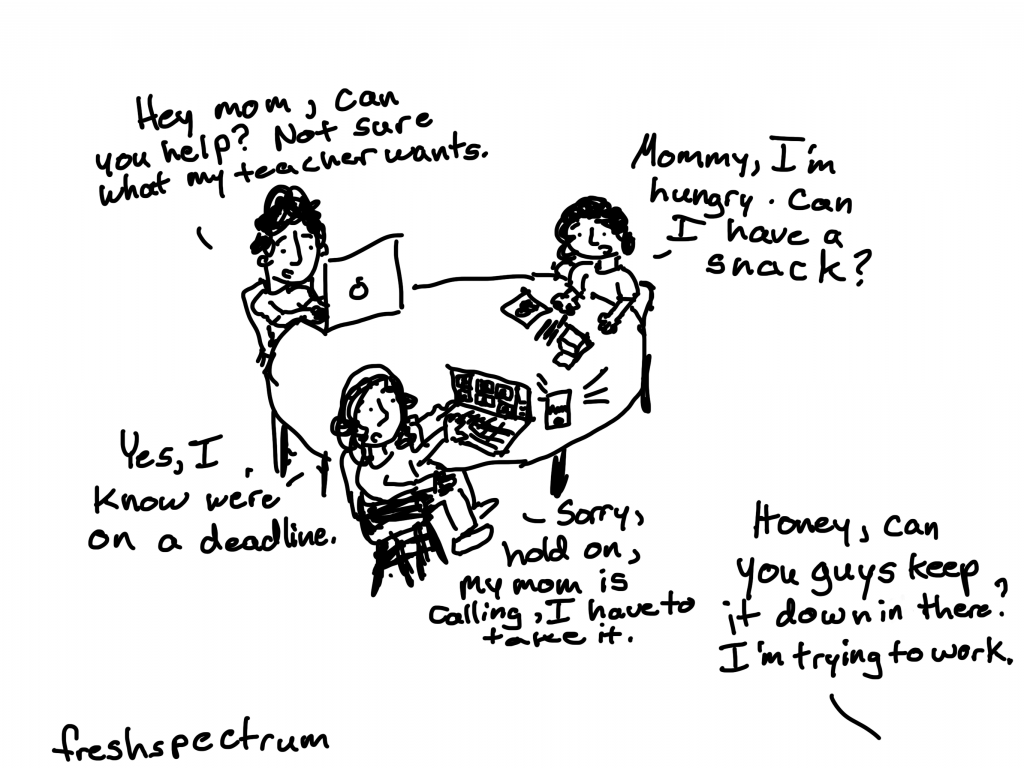
Just be mindful of the voices you aren’t hearing. For some with ill family members, homeschooling small children, navigating aging parents in place, on top of maintaining stable income — finding time to write is a bridge too far… and I speak from a privileged place.

Betsy Baum Block on Twitter

I’m in that group re: little ones at home (1 yr old). Trying to balance ongoing work demands with childcare is difficult. Working moms will likely be less heard.

Christina P. Gorga on Twitter

Being a working parent is tough enough under normal circumstances, and these are not normal circumstances.

So first things first.

It’s okay if you can’t post, publish, or present right now.

If it’s hard enough to get through the day, work through your must-do list, and get your family fed. Don’t worry about blogging.

Through an email conversation with Betsy, I think we came up with a lower burden alternative. Something that might not be as good as building your own digital empire, but could at least keep you visible.

Professional Visibility.

Chris told me to blog in 2011. I didn’t listen until 2012.
Since taking Chris’ advice:

50 to 50,000 views a month
Started my own company
Added team
Spoke in ~30 states & ~10 countries
Partnered w/ dream orgs
Got reports off Dusty Shelves

… & it started w/ a blog.

Ann K Emery on Twitter

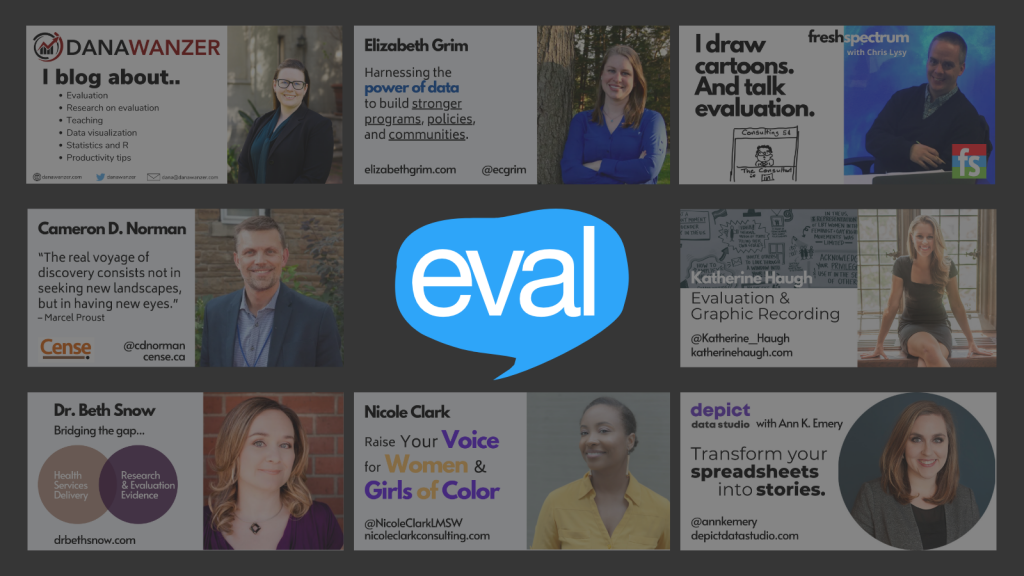
Before Ann was leading workshops around the world, she was blogging.

Before Stephanie wrote her first book, she was blogging.

Before Shiela and Kim coauthored their book, they were collaborating through their blog posts.

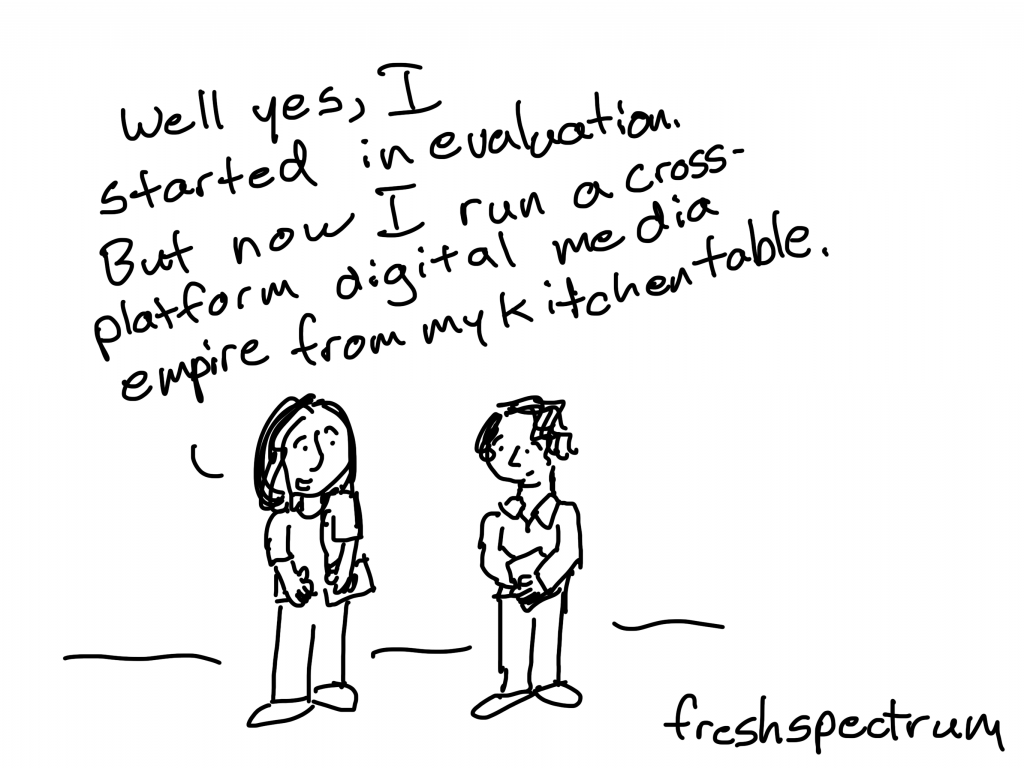
I stand by the advice I have given to individual evaluators for years. If you can blog, you should blog. It’s one of the clearest paths towards professional visibility that I know.

And the world needs to see more evaluators.

A different kind of publish or perish?

But not everyone can blog. At least not right now, maybe later, and maybe not later.

So therein lies a problem.

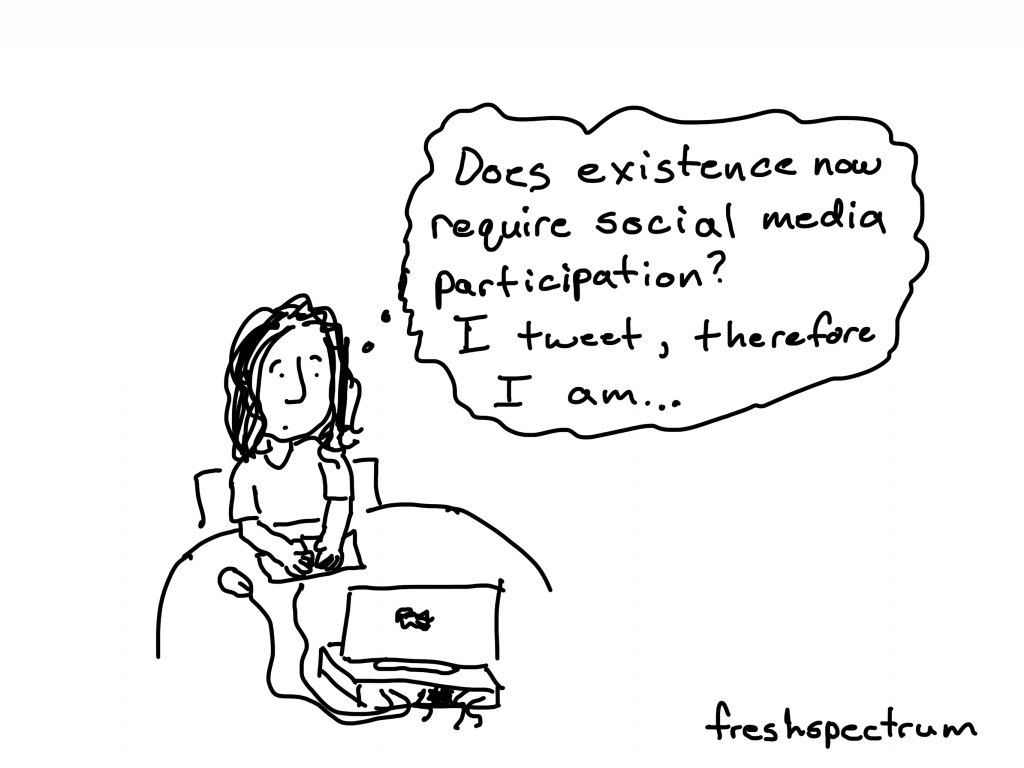
In our digital world, if you stop posting and participating, you risk disappearing from view. The digital world craves content. So much so that it gives a boost to people like me who have the advantage of a couple steady contracts, lots of practice, and a spouse committed to homeschooling our daughter.

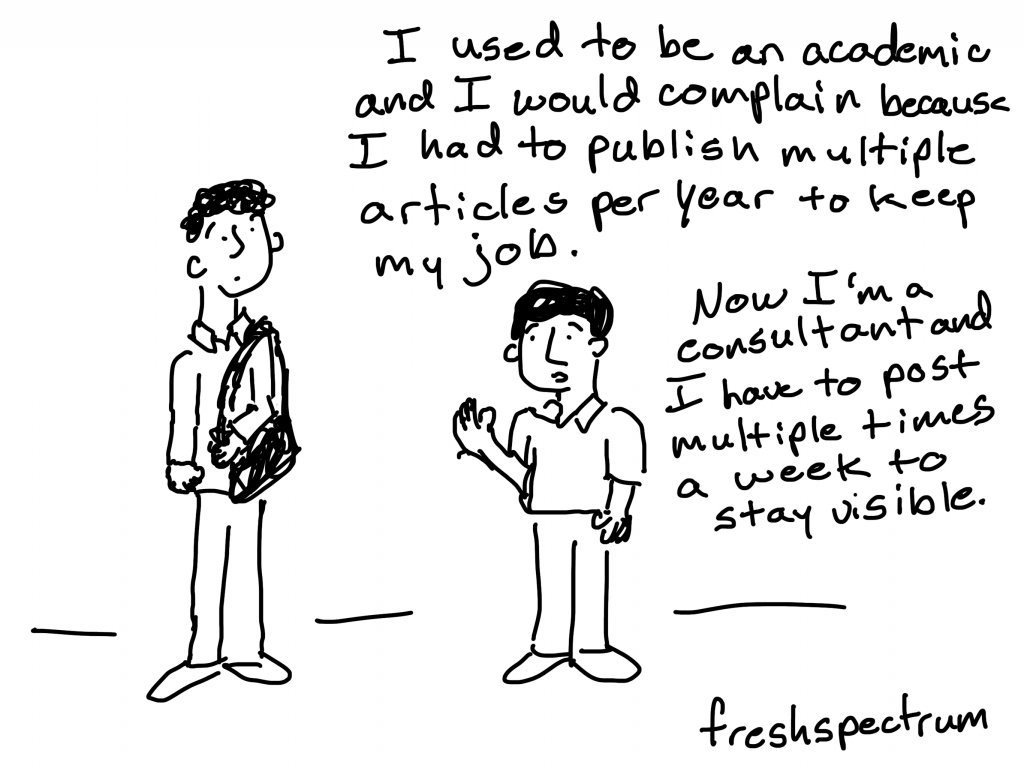
It’s publish or perish, but instead of academic administrators calling the shots, they’re being called by social media platform algorithms.

Today I wouldn’t get an academic job. It’s as simple as that. I don’t think I would be regarded as productive enough.

Peter W. Higgs

Announcing the FreshSpectrum Panel of Experts

Want to contribute to the web, but life experiences make you short on time?

Back in 2013 I wrote what I now call a panel post. And for a long time after, it was one of my top blog posts. I asked 22 bloggers a couple of questions, then compiled their answers into a single post.

It’s super simple, but it’s also incredibly effective.

Consider joining my panel of experts.

I’ll ask you a question a couple of times a month. You answer the question providing expertise from your unique point of view. If you can’t answer a particular question, for time reasons or just not feeling the question, that’s okay.

If you do answer, I’ll post your response in a cartoon illustrated panel post. I’ll reference your name and include a link back to your website (or wherever you want me to send traffic).

I’ll then share the post on social & email. It will also go out via Eval Central.

My hope, to spark increased digital participation from a wide group of evaluation experts. The experts who for all sorts of reasons, cannot spend enough time on social to reap the rewards.

So if you are interested, please join.

Join Ann K Emery on our next Eval Central UnWebinar

On Wednesday, April 29 at 1PM EDT/10AM PDT, we’ll be having our next Eval Central UnWebinar.

This week’s guest conversation facilitator: Ann K Emery

This week’s seed topic: Blogging as an Evaluator

Hope you can join!

Written by cplysy · Categorized: freshspectrum

Apr 21 2020

Dear evaluators, it’s time to blog!

This post is my plea to you. Please start blogging.

As conferences cancel…

It doesn’t take too many clicks to see that COVID-19 is impacting our field’s ability to communicate with one another. All you really have to do is visit Better Evaluation’s events page and start clicking to see all that is now postponed or cancelled.

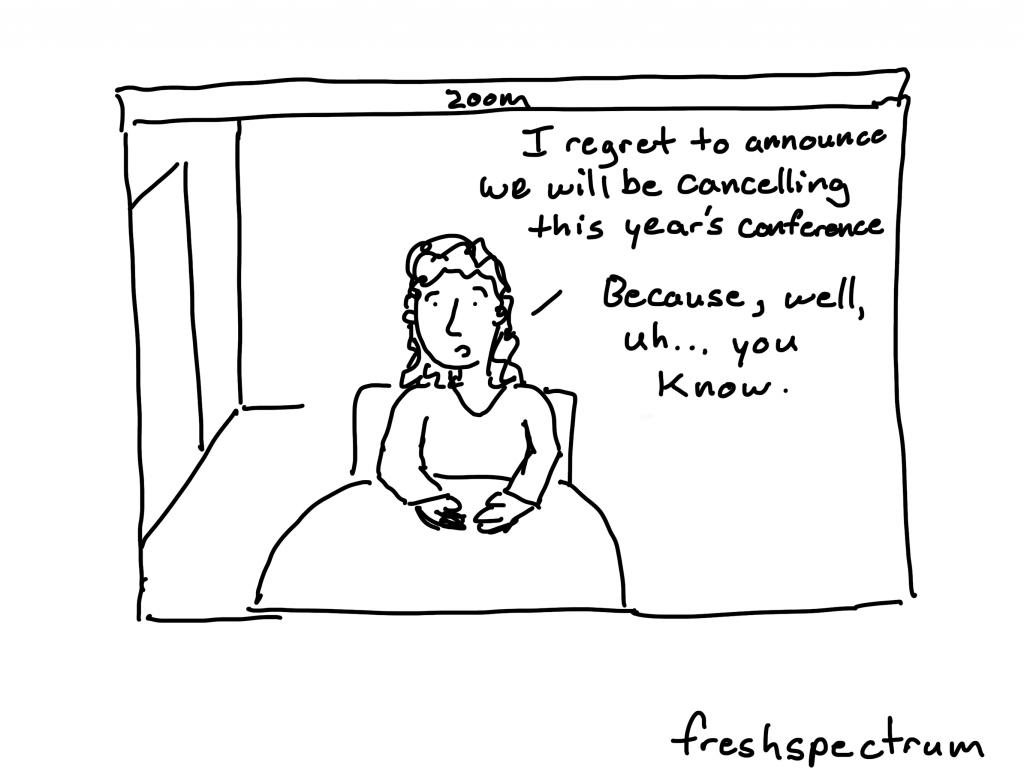
The EERS board regrets to announce that it is necessary to cancel what would have been our 43rd annual conference.

http://eers.org/

UK Evaluation Society Annual Conference 2020
*** regrettably cancelled due to Coronovirus ***

https://www.evaluation.org.uk/event/annual-conference-2020/

Considering the very important public health issues at hand, the CES has decided to act prudently and to postpone the deployment of its 2020 conference initially planned for June 13-17, 2020. C2020 will become C2021!

https://c2020.evaluationcanada.ca/

It is with regret that in order to protect our ANZEA wh?nau, and given the extraordinary volatility of the current environment, the ANZEA Board has taken the decision to postpone the ANZEA conference scheduled for July.

https://www.anzea.org.nz/anzea-conference-2020/

aes20 conference postponed due to COVID-19 pandemic
This year’s conference has been postponed and will now be held at the Brisbane Convention Centre from 27 September to 1 October 2021.

https://conference2020.aes.asn.au/

Of course it’s the right decision. Anything in the near future involving travel and crowds needs to be nixed for everyone’s health and safety.

As for why they don’t just go digital? Here’s a secret, if you don’t know how to organize, structure, and produce large digital events, it can be really hard and really expensive.

And for the last decade most associations have been approaching digital as a nice to have or added bonus, not an essential backup. In other words, the heavyweights are just not prepared to go all in on digital.

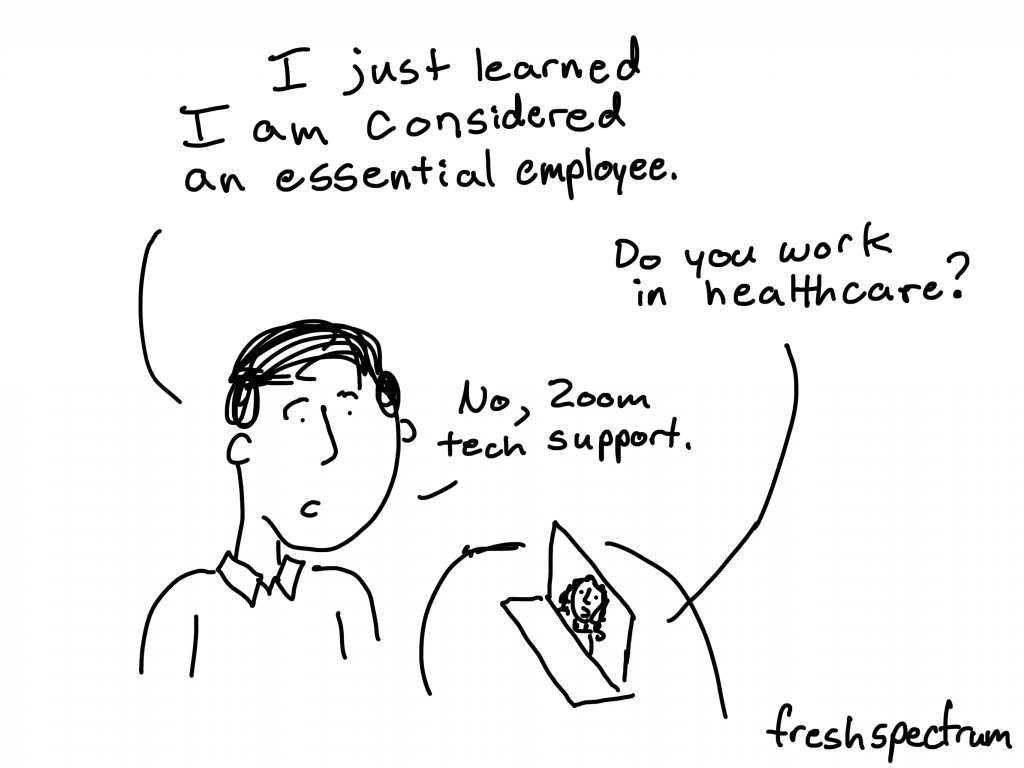
Is the field of evaluation non-essential?

I don’t think so.

It’s like education. It gets put on pause for a minute before we start to realize that hey, this is really important.

The world is changing before our eyes and far more rapidly than most would like. And the return to quasi-normalcy still doesn’t seem imminent. When times are tough, many of the programs we support with our expertise and methods are likely to become endangered.

In an uncertain world, giving sometimes turns into hoarding and defunding. Effective interventions get put on the back burner. And sometimes they go away entirely.

There is a harsh reality that underwrites our profession.

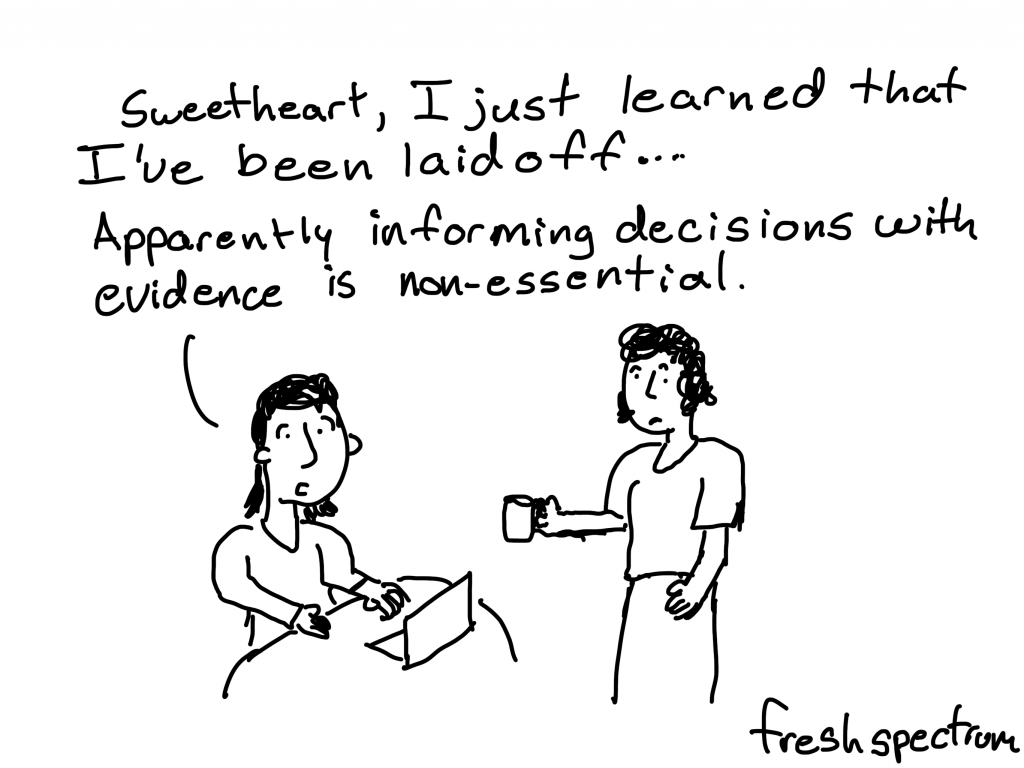
Like it or not, funding and attention is finite. Hard decisions will be made. And effectively using evidence to influence those decisions is one of our primary roles.

As a profession this is not the time to stop connecting with one another.

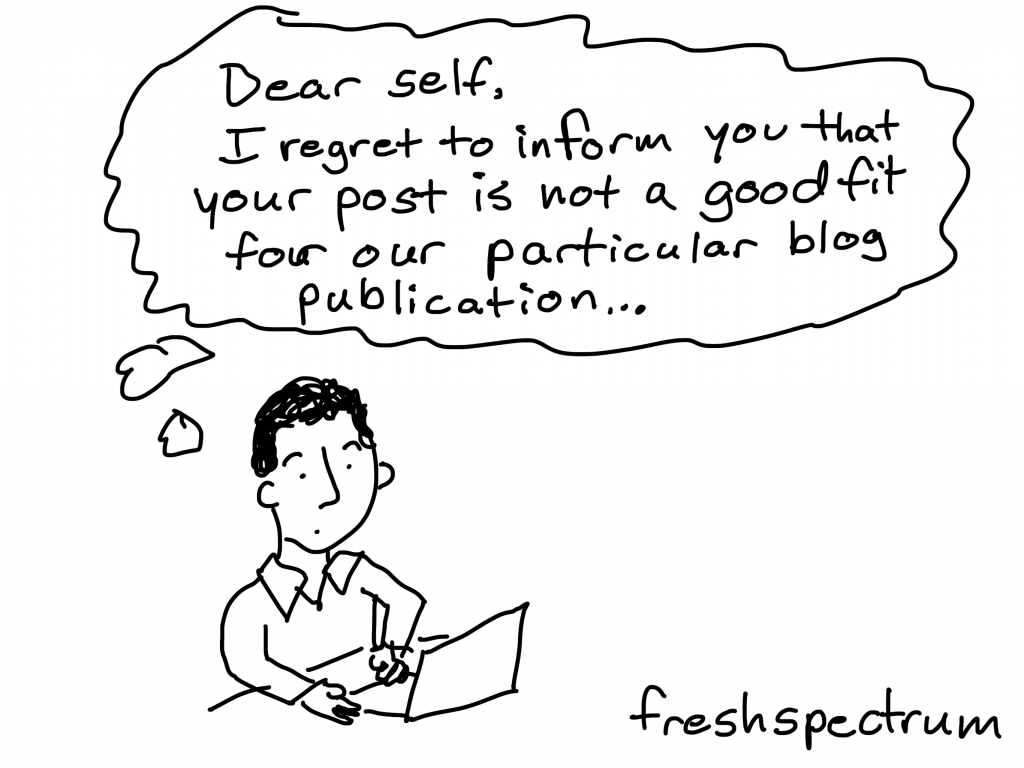
Blogging is a form of presentation.

Blogs are not like mini-journals.

They’re more like mini-presentation rooms. Room that don’t require a physical space and scheduled time to exist.

Blogging is presenting.

And in a field as practical as our own, presentations matter.

Just think about your last presentation. Could you turn into a blog post? Or maybe a few blog posts?

What about that presentation you were planning to give at a now cancelled conference? In your head, has that presentation idea been cancelled that too?

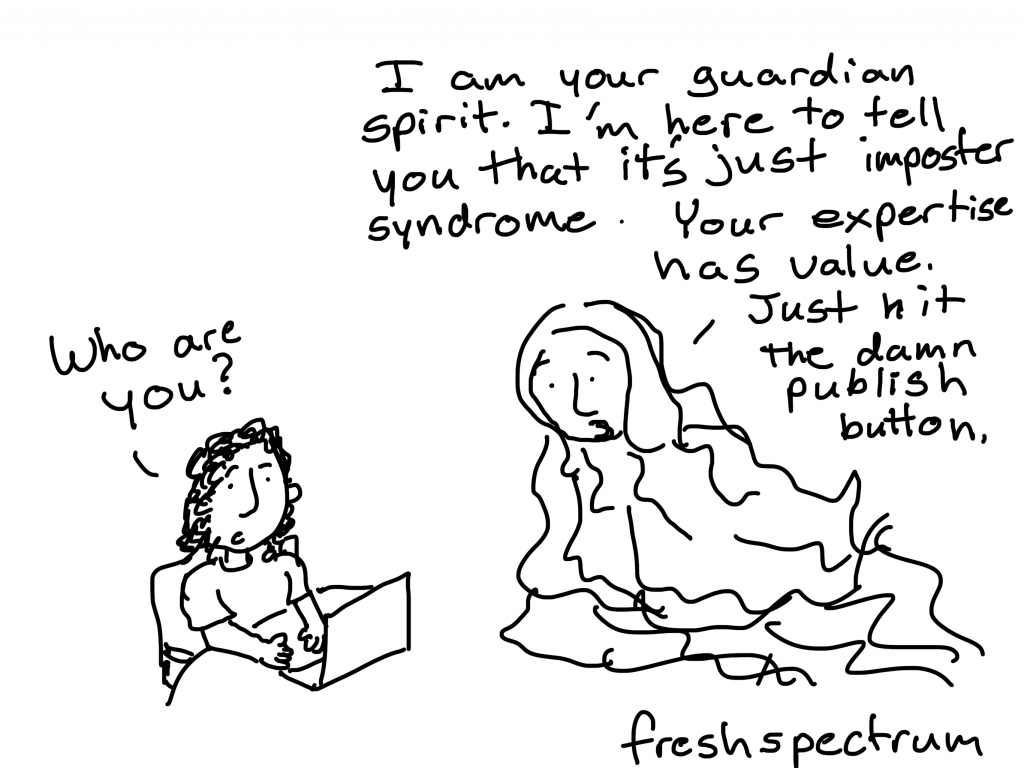
Your expertise has value, it can still be shared. Our field still needs you to share.

Creating your own presentation room.

This part is super simple.

Don’t over think it. Seriously, don’t over think it.

Go to wordpress.com, click “start your website,” and follow the prompts.

The design doesn’t matter right now. You can change it at any time, I change my designs all the time. You can just use your name for the blog title. The about page also doesn’t matter. Write something simple.

Your goal. Setup the basics so you can write a post and hit publish.

Blogging is actively presenting.

You just need to do it.

Amplifying your reach.

Once you have a presentation, then you need an audience.

Blogging is not like a webinar or any other kind of live presentation. You don’t need the audience before you give the presentation.

Easiest way to reach people is to just reach out to friends/colleagues. Share the link for your new post. Then hit social media.

I always encourage evaluators to use twitter, because a lot of evaluation bloggers use twitter. And evaluation bloggers like helping other evaluation bloggers reach audiences.

Your blog here?

Relaunching the Eval Central Blog of Blogs

Over a decade ago I started eval central as a blog of blogs. For the last few years I’ve experimented with new formats.

The forum is cool and so is the series of unwebinars I started. But the more I have reflected the more it has become clear to me that we need the blog of blogs.

This is how we amplify indie presenters.

By connecting a bunch of evaluators who blog into a single megablog we can leverage the shared audience it creates. This creates a platform we can then use to amplify new voices.

After I auto connect the blogs, I auto connect the evalcentral twitter account. Now whenever anyone in the network blogs, it then gets tweeted to evalcentral’s over 4,000 followers.

So here it is, the brand new Eval Central Blog of Blogs: blog.evalcentral.com.

I’ve started bringing together some established indie evaluation bloggers. Now I just need you. You’ll find a link to submit your blog on the site.

Support Me?

This blog, the cartoons, the evalcentral forum, the evalcentral unwebinars, and the evalcentral megablog are my ongoing professional contribution to the evaluation field I love.

But ultimately it’s not cheap and I am just an indie evaluator/designer. So if you like my work, please consider becoming a Patron.

Written by cplysy · Categorized: freshspectrum

Apr 14 2020

The Evaluation Mindset: When Nobody Listens

If only we had known we were vastly underprepared for a global pandemic…

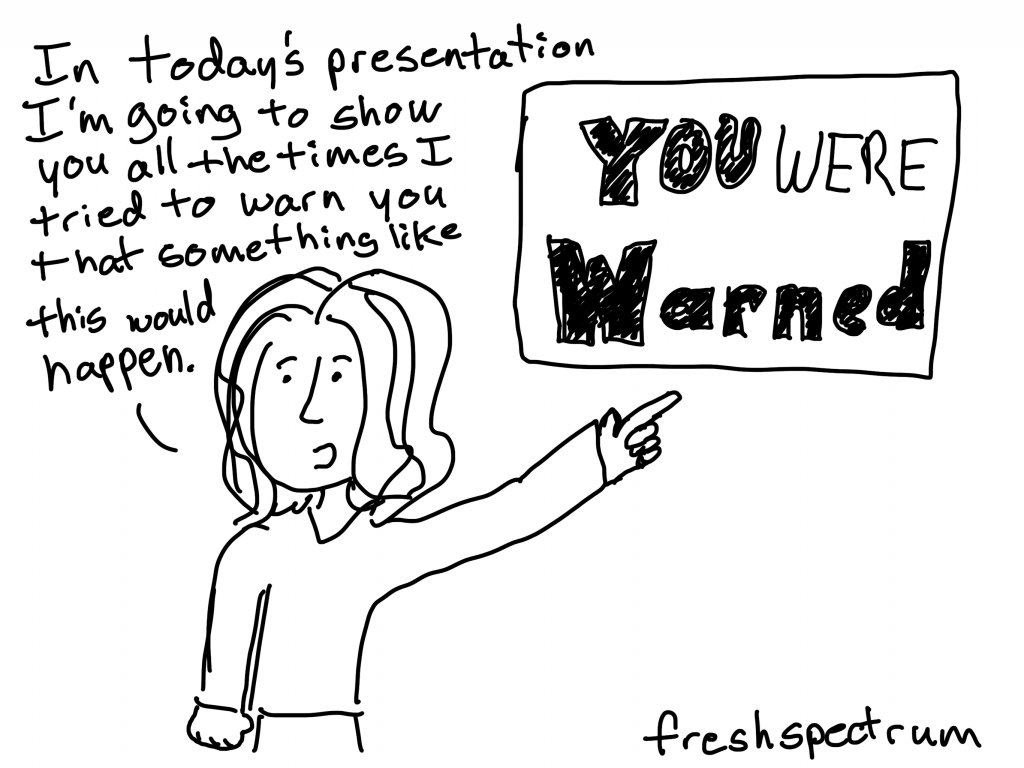
I say that tongue-in-cheek. Of course we knew. President after president was briefed with data and evidence showing the potential devastation a pandemic could have on our global society.

In advance of a pandemic, anything you say sounds alarmist,” Leavitt explained. “After a pandemic starts, everything you’ve done is inadequate.

Inside America’s 2-Decade Failure to Prepare for Coronavirus

I would also guess that across the world, epidemiologists, doctors, and health department staff are thinking, “I kept saying this would happen. But nobody would listen!”

As anyone in working in the realm of evidence knows, this kind of thing happens all the time with all sorts of problems.

The reality behind informed decision making is that while having the knowledge is necessary, it is never sufficient.

The curse of Cassandra

Imagine an oracle from a book or movie, say Professor Trelawney from Harry Potter. Quite a bit eccentric but offers important insight, by way of a prophecy, that is clouded in riddles.

Our focus is then on the hero who is tasked with disentangling the riddle. The oracle’s role in modern storytelling is usually just to deliver the riddle and then disappear.

The origin of the character type can be traced to Cassandra from Greek mythology. In that story Cassandra was given the gift to know the future. Subsequently she was cursed so that nobody would ever believe her prophecies.

She had the power to know, but not be believed.

It is a curse that unfortunately hits close to home for far too many evaluators. Knowing is only half the battle.

If they don’t get it, they won’t use it.

Evaluators love their methods. So much so that they often stick them at the front of the report.

How else is everyone going to know the precise steps we went through to come up with the answers and advice we plan to share?

The knee jerk reaction to nobody listening or caring about your methods is to skip to the conclusions and recommendations. Give the audience what they want! Put them up front, then leave the methods in the back for anyone who wants to go deeper.

But here’s the thing. That’s not enough.

The problem isn’t that the methods section is boring (well it might be, but that’s not the biggest problem).

The biggest problem is that in sharing your work and the eventual solutions, you forgot to show your audience why they should care. Maybe you assumed they already knew the problem, or they don’t care, so you skipped diving deeper.

But that could be a big mistake.

The best way to start anything, whether it’s an evaluation report, presentation, blog post, or cartoon set, is to start where you started. What is the essential problem or challenge? Why should anyone care?

Because if they don’t get why they should care, they’ll never listen.

When the HiPPO rules.

Do you know the HiPPO?

It’s an acronym for the Highest Paid Person’s Opinion. Unfortunately, so many design decisions are driven not by the evidence but by the HiPPO.

If you’re lucky, maybe the HiPPO is the most informed and should be driving the decisions. But I wouldn’t necessarily count on that, even when it seems true.

Here are some tips to change the situation.

  • It’s never a good idea to make it you versus them. Yes, speak up every once and awhile, but remember there is a power imbalance.
  • Bring in a third party. UX and Human Centered Design feature lots of user testing. It’s so much more effective to have a user tester indirectly tell a HiPPO their idea stinks.
  • Fall back on data and evidence. If you are truly using evidence to inform your perspective you shouldn’t need to cherry pick. “While that could be true, the evidence does not support moving in that direction.”
  • Data parties and placemats. In other words, have stakeholders analyze the data together. Sure you can do it yourself, but if you include stakeholders in the analysis they will be more likely to follow the recommendations.

Also, if you can’t identify the HiPPO on a project team, maybe it’s you.

Deliver a better presentation.

A better presentation isn’t just about making the data and evidence easier to understand. Remember, knowing is only half the battle.

A better presentation connects with the audience. And unless the audience is super hungry for the information, it doesn’t just show the data.

Show them why they should care.

And if they shouldn’t care…why are you presenting?

April 15, 3:30 PM Eastern/12:30 PM Pacific

Come join us for tomorrow’s unwebinar, our guest facilitator will be Dana Wanzer. The seed topic, The Integration of Research and Practice in Evaluation.

You can register here > https://www.crowdcast.io/e/evalcentral/

Topic inspiration: ROE TIG Week: Research on Evaluation – A Glance Towards Integrative Evaluation Science 

If you haven’t attended one, these sessions have been a blast.

The audience is growing and might even push me to have to pay for the bigger Crowdcast account sooner than later.

Lil Help?

So between Eval Central and Fresh Spectrum my tech expenses are increasing.

I’m just an indie consultant, so my technical overhead all comes out of pocket. So if you appreciate my work would you consider becoming a Patron?

Written by cplysy · Categorized: freshspectrum

Apr 07 2020

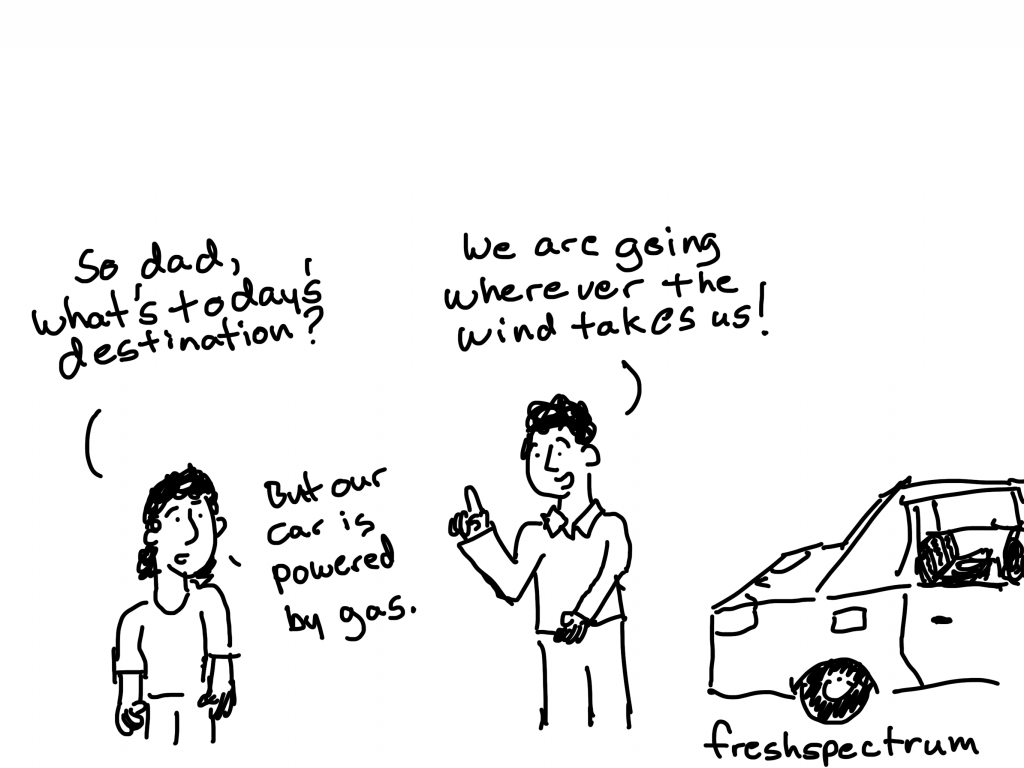
Evaluation Mindset: Imagining a Destination

There are all sorts of purposeful goal-driven people and organizations. Intent on following a path towards a destination that is clear in their minds. They might have even put the destination down on paper, charting the course and knowing the way forward.

But that is not all organizations, and certainly not all people.

We don’t need the expensive tools to navigate our way through the modern world. We just need the discipline to see the evidence, understand our origin, imagine our destination, and plot our course.

The Evaluation Mindset: The Role of the Evaluator

So what happens when the destination is not so clear?

When you only have a problem in need of a solution? Or when the problem is far too complex for any single intervention or initiative to resolve? Or when changing circumstances change the problem, and the tools you used in the past are clearly not the tools you will use in the future?

How do you even start?

After falling down the rabbit hole.

“Would you tell me, please, which way I ought to go from here?”
“That depends a good deal on where you want to get to,” said the Cat.
“I don’t much care where —–” said Alice.
“Then it doesn’t matter which way you go,” said the Cat.
“—— so long as I get somewhere,” Alice added as an explanation.
“Oh, you’re sure enough to do that,” said the Cat, “if you only walk long enough.”

Alice’s Adventures in Wonderland

I love that quote.

At that moment, the Cheshire Cat is simultaneously 100% correct and totally unhelpful.

Alice, for her part, isn’t really one to be told where to go. She followed her curiosity down the rabbit hole and, lost as she was, didn’t have a destination. She wasn’t longing for home, just kind of wandering forward.

Most evaluators are at least part Cheshire Cat. But pointing out that a project has no clear direction is not always helpful, even if it’s true.

All sorts of projects, initiatives, programs, and non-profits don’t have a clear direction. That’s not a flaw, it’s a feature. It also doesn’t mean that they don’t need help from evaluators, or that we don’t have a role until they find their direction.

Having direction is not the starting point.

Problems/opportunities, not actions, are the prerequisites for evaluation.

Most projects are reactions to societal problems.

Poverty, homelessness, hunger, domestic violence, illiteracy, joblessness, drug abuse, climate change, inequity, conflict, and countless other societal problems trigger the need for solutions.

Some other projects leverage opportunities. Such as a pot of money left behind by a wealthy industrialist or soon-to-be college seniors on summer break in desperate need of quality work experience.

Just like how questions precede answers, problems and opportunities precede solutions.

In an earlier post I talked about how our actions have consequences. And in a traditional summative or formative evaluation, how our actions lead to desired consequences is most certainly the focus.

But until we can imagine our destination, taking action is just wandering forward like Alice, lost and directionless.

Brainstorming your desired consequences.

Every project is an attempt to change the world, from a tiny localized change to huge sweeping global change. Being honest about the level of change you hope to bring at the front of the project can reduce a lot of headaches later.

What we want to get away from at the start is the “just do some stuff and hope for the best” mentality. Playing it safe while hoping for a huge win. It makes failure impossible, but it puts limits on success.

You start with just a simple brainstorming question.

What would the world look like if you were successful?

  • Write it down on in the middle of a piece a paper and start jotting down ideas.
  • Send it in an email to all of your colleagues.
  • Put it up on a whiteboard during your next staff meeting.
  • Create a slide with that question and screen share it during your next Zoom call.

Keep it simple at first, then start to add some “what if” qualifiers.

  • What if we had to do our project on a shoestring budget?
  • What if we were given a 1 million dollar grant for this project alone?
  • What if a big company decided to partner with us?
  • What if we had 3 new hires that could be dedicated to this project?
  • What if we put a central focus on increasing equity?
  • What if we increased our scope?
  • What if we reduced our scope?
  • What if we only had 3 months to see results?
  • What if we had 5 years to see results?
  • What if the entire world was told to stay and work from home for months?
  • What if we could only meet digitally?

Painting the picture of your imagined destination using rubrics.

As you start processing the brainstorm, it’s helpful to develop a tangible product to help organize your thoughts. Rubrics are a really nice way to paint the picture of your imagined destination and make it measurable.

At this point you’ll be tempted to dive into the actions and consequences that will be necessary to help you change the world. But I would encourage creating a rubric of your destination first. You can always change it, but having a sense of where you are going can give you the guidance necessary to set your course.

Let’s take our brainstorming question and split it into a sequence of statements.

  • This is how the world will look if we are successful.
  • This is how the world will look if we are somewhat successful.
  • This is how the world will look if we are not at all successful.

You’ll need a timeframe, base this is on your project. How long until you expect to see some results? How long until you think your project can be judged as a success or failure?

Now write a short paragraph under each statement using information gathered during the brainstorming activities. Try to find ways to describe your new world that would be measurable.

The evidence you use should ideally use a mix of methods, both qualitative and quantitative. It should also be realistic that you can obtain the evidence. Rubrics are practical tools.

Want to dive deeper?

  • Create similar kinds of rubrics for waypoints along your journey, what types of evidence should you start to see to know you are heading in the right direction?
  • Subdivide your rubric into mini rubrics, taking on different aspects of your project. This can make charting a course easier helping you connect your destination with your actions.
  • Create short term or super long term rubrics. Be honest about the level of change you believe you can bring.
  • Finally, use these rubrics, and allow them to evolve over time as your thinking evolves. Rubrics are really great formative evaluation tools as well as summative tools for measuring impact.

Upcoming UnWebinar with Carolyn Camman.

Register now for Eval Central’s event on Crowdcast, scheduled to go live on Wednesday, April 08, 2020 at 3:00 pm EDT.

Click here to register for the series> crowdcast.io/e/evalcentral

This coming week we have a special guest: Carolyn Camman

This week’s seed topic: What does it mean to put Developmental Evaluation into Practice?

Topic inspiration: Carolyn’s lastest blog post: Complexity and Equity 

Upcoming Doing Nothing Webinar

On Friday, April 10 I’ll be spending an hour doing nothing starting at 11 AM Eastern time.

Want to join me? You can register to do so here: https://www.crowdcast.io/e/doingnothing

Written by cplysy · Categorized: freshspectrum

  • « Go to Previous Page
  • Go to page 1
  • Interim pages omitted …
  • Go to page 50
  • Go to page 51
  • Go to page 52
  • Go to page 53
  • Go to page 54
  • Go to Next Page »

Footer

Follow our Work

The easiest way to stay connected to our work is to join our newsletter. You’ll get updates on projects, learn about new events, and hear stories from those evaluators whom the field continues to actively exclude and erase.

Get Updates

Want to take further action or join a pod? Click here to learn more.

Copyright © 2026 · The May 13 Group · Log in

en English
af Afrikaanssq Shqipam አማርኛar العربيةhy Հայերենaz Azərbaycan dilieu Euskarabe Беларуская моваbn বাংলাbs Bosanskibg Българскиca Catalàceb Cebuanony Chichewazh-CN 简体中文zh-TW 繁體中文co Corsuhr Hrvatskics Čeština‎da Dansknl Nederlandsen Englisheo Esperantoet Eestitl Filipinofi Suomifr Françaisfy Fryskgl Galegoka ქართულიde Deutschel Ελληνικάgu ગુજરાતીht Kreyol ayisyenha Harshen Hausahaw Ōlelo Hawaiʻiiw עִבְרִיתhi हिन्दीhmn Hmonghu Magyaris Íslenskaig Igboid Bahasa Indonesiaga Gaeilgeit Italianoja 日本語jw Basa Jawakn ಕನ್ನಡkk Қазақ тіліkm ភាសាខ្មែរko 한국어ku كوردی‎ky Кыргызчаlo ພາສາລາວla Latinlv Latviešu valodalt Lietuvių kalbalb Lëtzebuergeschmk Македонски јазикmg Malagasyms Bahasa Melayuml മലയാളംmt Maltesemi Te Reo Māorimr मराठीmn Монголmy ဗမာစာne नेपालीno Norsk bokmålps پښتوfa فارسیpl Polskipt Portuguêspa ਪੰਜਾਬੀro Românăru Русскийsm Samoangd Gàidhligsr Српски језикst Sesothosn Shonasd سنڌيsi සිංහලsk Slovenčinasl Slovenščinaso Afsoomaalies Españolsu Basa Sundasw Kiswahilisv Svenskatg Тоҷикӣta தமிழ்te తెలుగుth ไทยtr Türkçeuk Українськаur اردوuz O‘zbekchavi Tiếng Việtcy Cymraegxh isiXhosayi יידישyo Yorùbázu Zulu