• Skip to main content
  • Skip to footer
  • Home

The May 13 Group

the next day for evaluation

  • Get Involved
  • Our Work
  • About Us
You are here: Home / Archives for allblogs / freshspectrum

freshspectrum

Feb 25 2020

The Evaluation Mindset: Actions and Consequences

When I started getting into data visualization design, human centered design, and user experience design I had this hope that a better understanding of design methodologies would ultimately help me to become a better evaluator.

But I had the causal direction flipped.

What I have learned over a decade of being both an evaluator and a designer is that while knowing design might make you a better evaluator, having a firm understanding of evaluation will definitely make you a better designer. Whether you are trying to design a business plan, website, or software application, having an evaluation mindset can give you a unique and rare perspective into our ever changing, complicated, and confusing modern world.

This post is the first in a series that I’m dubbing the “Evaluation Mindset.”

And I’m dedicating the series to all of you who see yourselves in my cartoons, who hang them up on your office walls and quietly chuckle at the kinds of jokes that nobody else seems to get. I hope this series resonates.
Our Actions have Consequences

It’s the kind of thing you try to teach your kids.

Often in the context of a temper tantrum or as part of a lecture following a “bad decision.”

“No, screaming and kicking your feet will not get you ice cream.”

“How do you think your little brother feels when you punch him in the arm?”

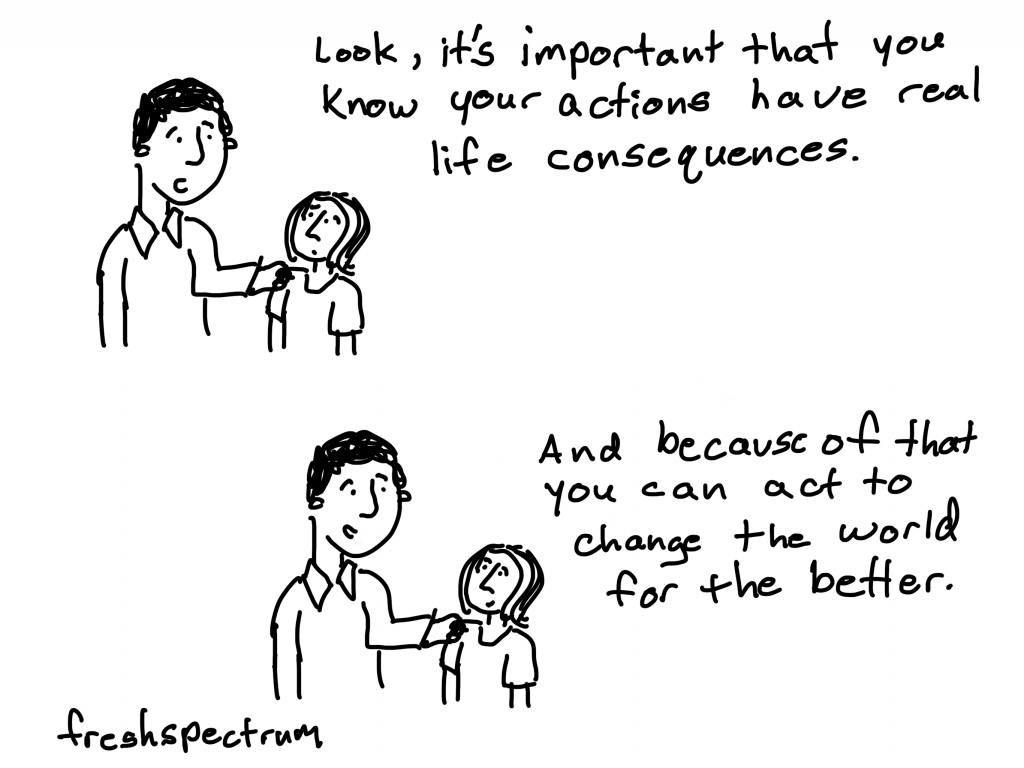
But there is also an incredible beauty to the idea that actions have consequences. If our actions did not have consequences there would be no reason to do anything. Our actions having consequences makes design possible.
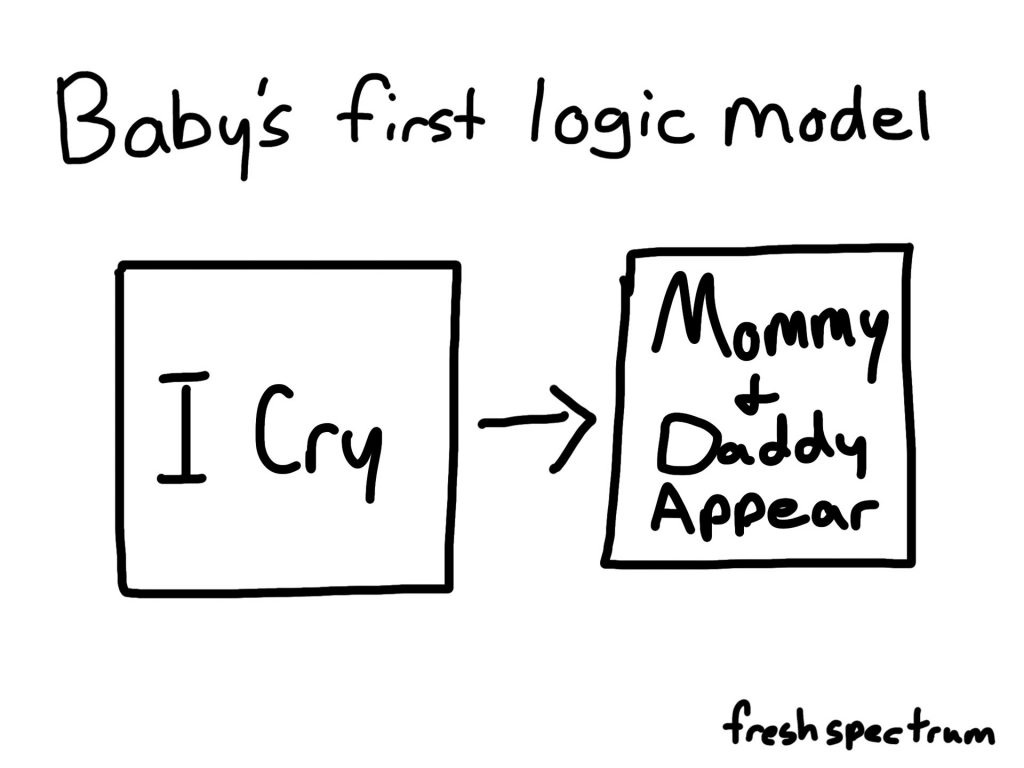
Why do babies cry?

At first crying is likely the response to an overwhelming new world. Feelings, pains, visions, thoughts.

But over time children make a connection. When they cry, a parent appears.

Amazing.

Hungry, try crying. Just filled a diaper, cry. Don’t feel like being alone in the crib at night. Cry.

It works wonders, well at least until the parents start Googling bedtime routines and the Ferber method. Then all of a sudden, crying doesn’t just bring the parent.

The action (crying) doesn’t have the consequence (parent appearing). So the baby can keep trying, give up, or come up with some kind option C (i.e. project break outta the crib).
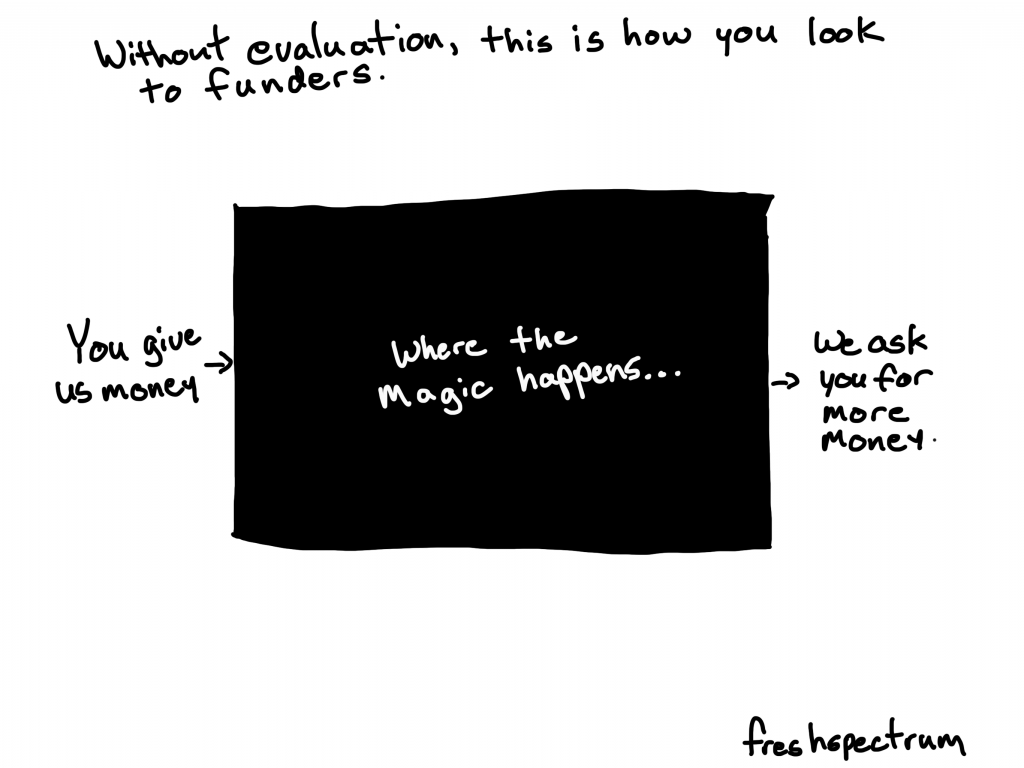
Inside the Black Box

If you have enough trust built up, or charisma, or slick marketing, or luck, or delusion, or slimy conman talk, you don’t need to connect your actions with the consequences you are trying to bring about.

Some of us though don’t really like doing things we don’t understand.

My mom had a saying she would pull out every now and again, “well, it is what it is.”

I have never believed that.

To me that’s give up talk. It’s the way we dismiss things as unchangeable. It’s the secret behind perpetuating the status quo. It’s the reason why people don’t vote, and worse, don’t run.

Embracing the idea that our actions have consequences gives us power. And being able to conceptualize the actions that lead to our ideal consequences can give us insight and put our work in context.

In evaluative terms, our actions are activities. Our consequences are outcomes. They are the impact a program’s activities can bring about.

And if you build around those ideas, you can model your design. You can collect evidence and evaluate. You can iterate your idea and make it better.
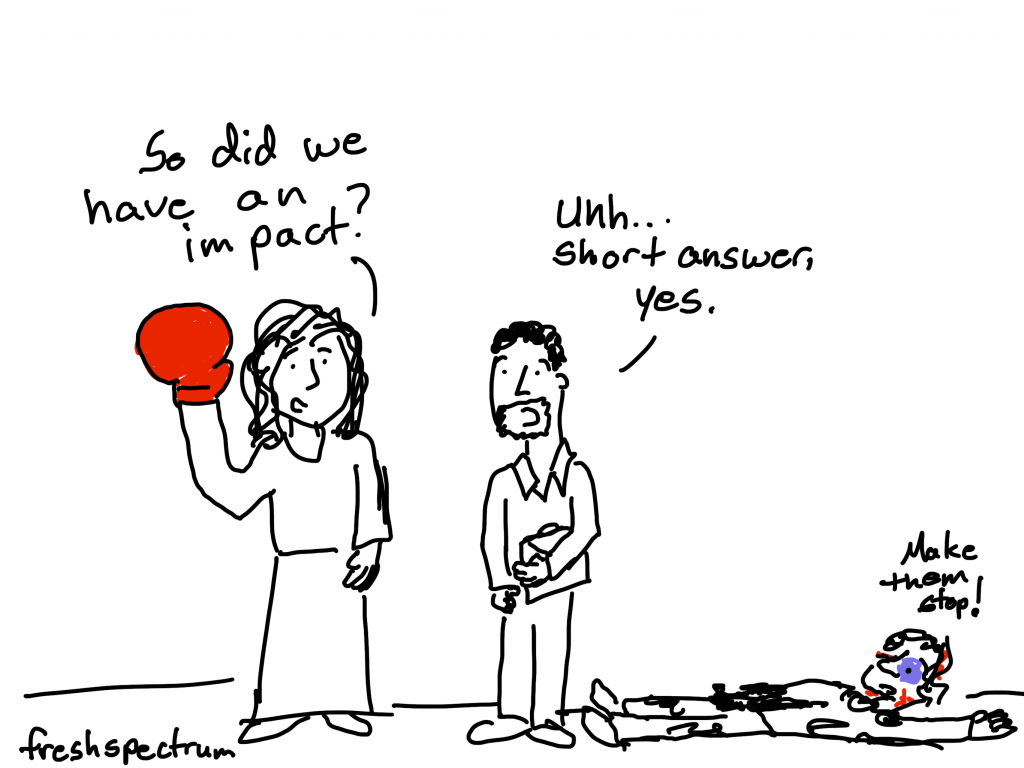
Good and Bad Impacts

Impact is a consequence.

It can be good, it can be bad, it can be both, and it can be neither.

But if actions lead to consequences, those consequences exist whether or not we recognize their existence.

Failing to measure a consequence doesn’t make it go away.

When a government program takes action to increase the availability of credit to low income neighborhoods it may bring about its intended consequence. But it also might bring about an unintended consequence, like an increase in high interest debt.
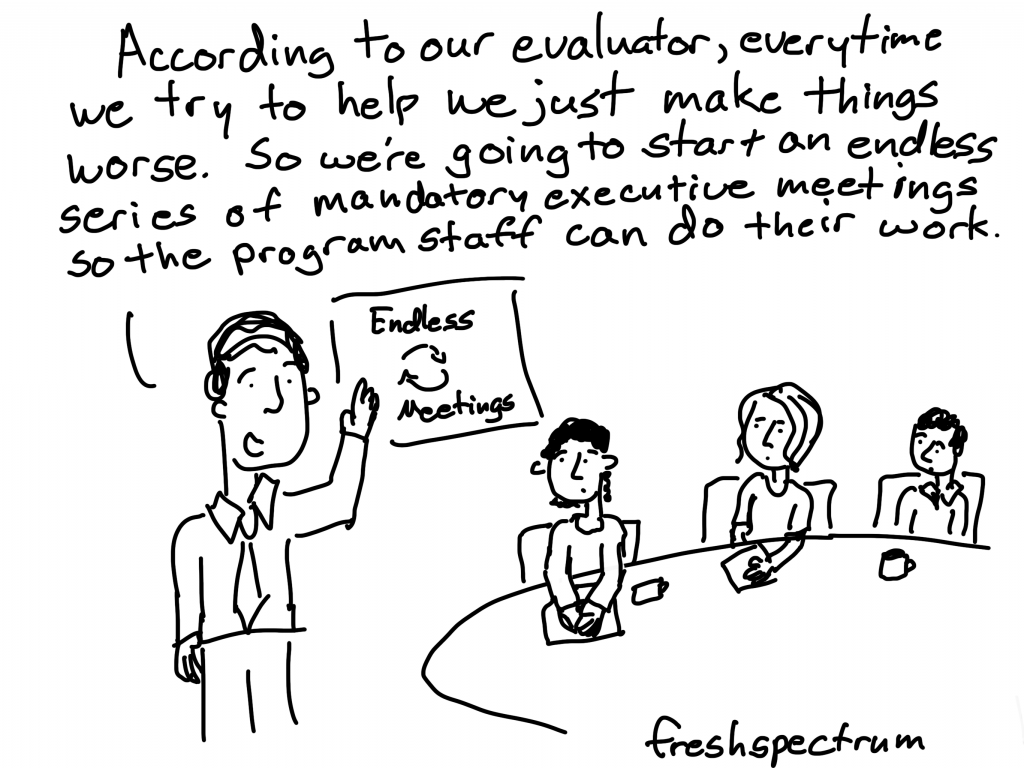
Inaction also has consequences.

You know the saying, “damned if you do, damned if you don’t.”

Inaction also has consequences. Doing nothing about climate change doesn’t make it go away. Given our pace, doing nothing is a choice in its own right.

Not voting will not make a certain president cease to exist. Quite the contrary.

Evaluation Mindset Practice

Okay, now it’s time to practice.

What are some of the actions you have taken today? What consequences have they brought about?

Is there a non-profit organization that you really respect? What actions do they take? What are the consequences of those actions?

Are there are other action/consequence pairs that come to mind? What would happen if you changed the action? What other kinds of consequences exist?

If I want people to read my blog, I have to publish posts and share them. Those are actions. I’ll consider this post successful if people read it (I’ll see that in my analytics) and then share it (Twitter @clysy) or comment on it.

So please do!

Written by cplysy · Categorized: freshspectrum

Feb 12 2020

The Gig Economy Business Plan

An illustrated guide to business planning for freelancers, consultants, and other professionals hoping to trade hours for dollars. Inspired by my friend Kendra, who asked me to write down our conversation and share it with others.

You are not alone.

Not quite a business, not quite a job.

I work in an open co-working space located in the middle of North Carolina’s research triangle. On a daily basis for the last few years I have been surrounded by people “in transition.”

It used to be easy to tell when someone was unemployed. You either had a job or you didn’t. But with the amount of short-term freelance work now available and the number of not-quite-profitable business ideas being pursued, the difference is so much murkier.

And in this space of short term roles and fuzzy answers to the common “so what do you do?” question, you can occasionally hear the phrase, “gig economy.”

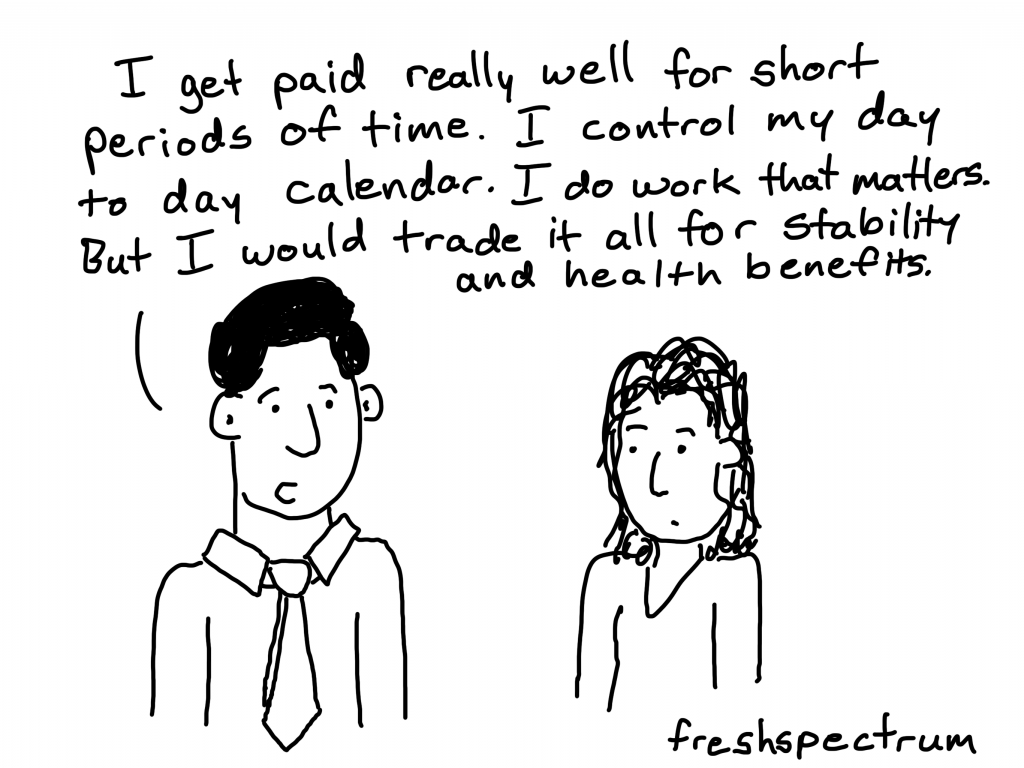
I get paid really well for short periods of time. I control my day to day calendar. I do work that matters. But I would trade it all for stability and health benefits.

Welcome to the gig economy.

In a gig economy, temporary, flexible jobs are commonplace and companies tend toward hiring independent contractors and freelancers instead of full-time employees. A gig economy undermines the traditional economy of full-time workers who rarely change positions and instead focus on a lifetime career.

Investopedia

My dad spent most of his working career with one employer. So did my father-in-law. But in modern times longterm employment like that is becoming increasingly rare.

Even big traditional slow-moving companies, the kinds that have the resources to offer comprehensive benefits packages and in-house HR teams, are opting towards short term hires brought to them by recruiting companies. The gig economy is becoming so much more than just TaskRabbit and Uber.

Not only do the recruiting companies find the people, the companies also become subcontracted employers for at least the first 6 months of a new hire’s tenure. What was once a niche industry for hard to find executives and bulk temp workers is now staffing big companies in all positions from top-to-bottom.

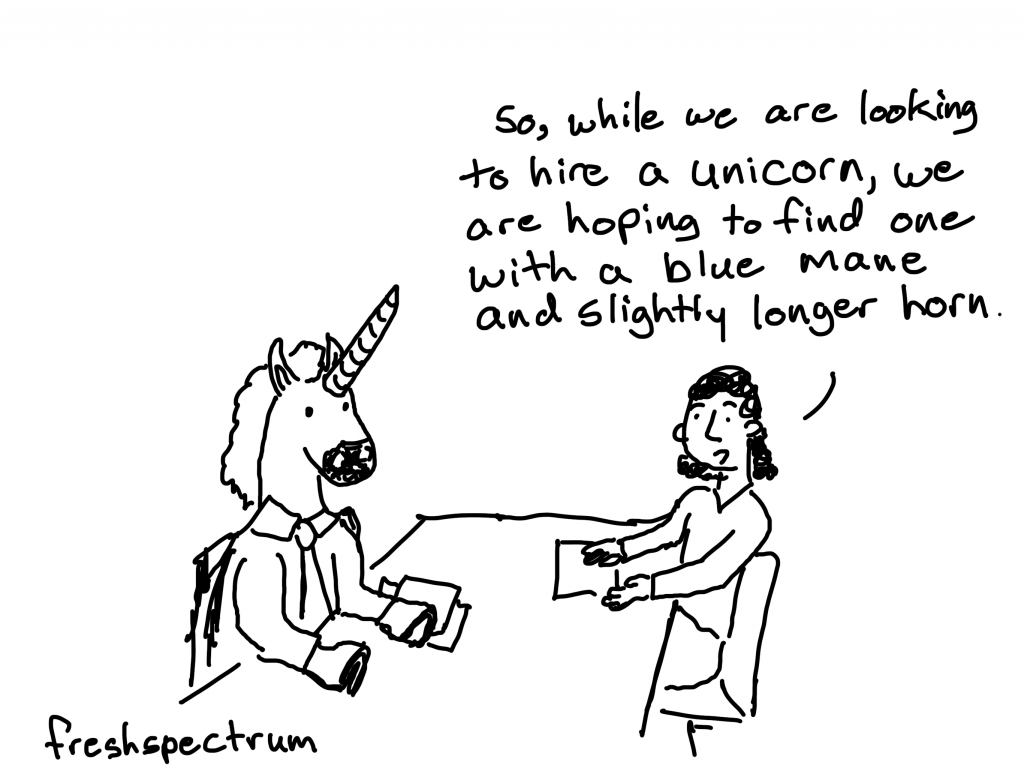
So while we are looking to hire a unicorn, we are hoping to find one with a blue mane and slightly longer horn.

Hiring managers, insulated from some of the costs of recruiting, get pickier. They are also equipped with new data systems that auto-filter away candidate resumes that don’t hit with just the right sets of criteria.

And from the candidate perspective, finding a job becomes a big pain in the @$$.

Is the big company job worth it?

So as big companies scrap their competitive advantage of stability and comprehensive benefits in exchange for short-term cost savings, the jobs they offer become less valuable.

All of a sudden the most valuable employees start to think, “I could do better on my own.” Even the ones, like yours truly, who never really started out with that entrepreneurial mindset.

And it’s for those of you out there, that I wrote this post. Because right now the people with the money are setting the terms.

But talent and experience is also an asset. I want you to leverage that asset and start to take back control of the terms.

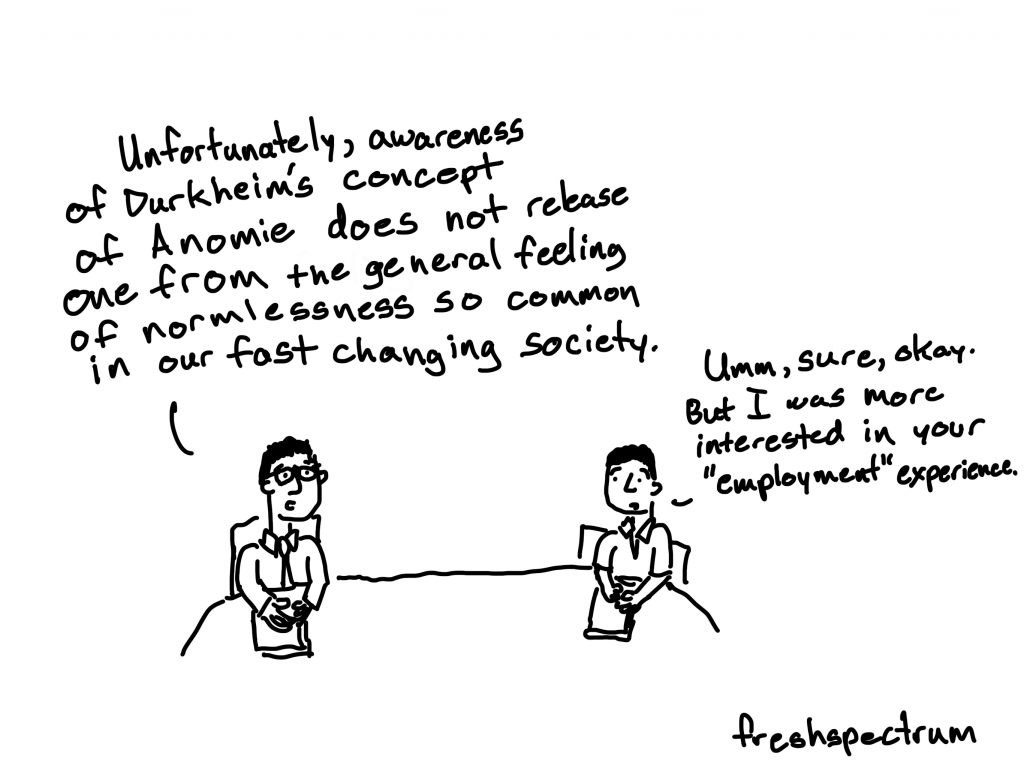
Unfortunately, awareness of Durkheim's concept of Anomie does not release one from the general feeling of normlessness so common in our fast changing society.

Umm, sure, okay. But I was more interested in your "employment" experience.

Freelancing as a Business Choice

Just to be clear, the model I am sharing is a freelancer model.

Maybe you dream of building the next Amazon or Lyft. But this is not really the right model for that.

This is about trading hours for dollars. But doing it in a way that you retain flexibility and generate a decent living.

This is a model for the people who are in business for themselves because the reality of the modern economy makes that the ideal decision. It’s for the people who would, if given the right offer, happily switch back to a salaried company job.

Freelancers get paid when they work. We’re not focused on scale… and we’re not tiny versions of real entrepreneurs. Freelancers do the work for clients who need them.

Entrepreneurs, on the other hand, are organized for growth. The job of the entrepreneur isn’t to do the work, it’s to build a company that does the work.

Seth Godin

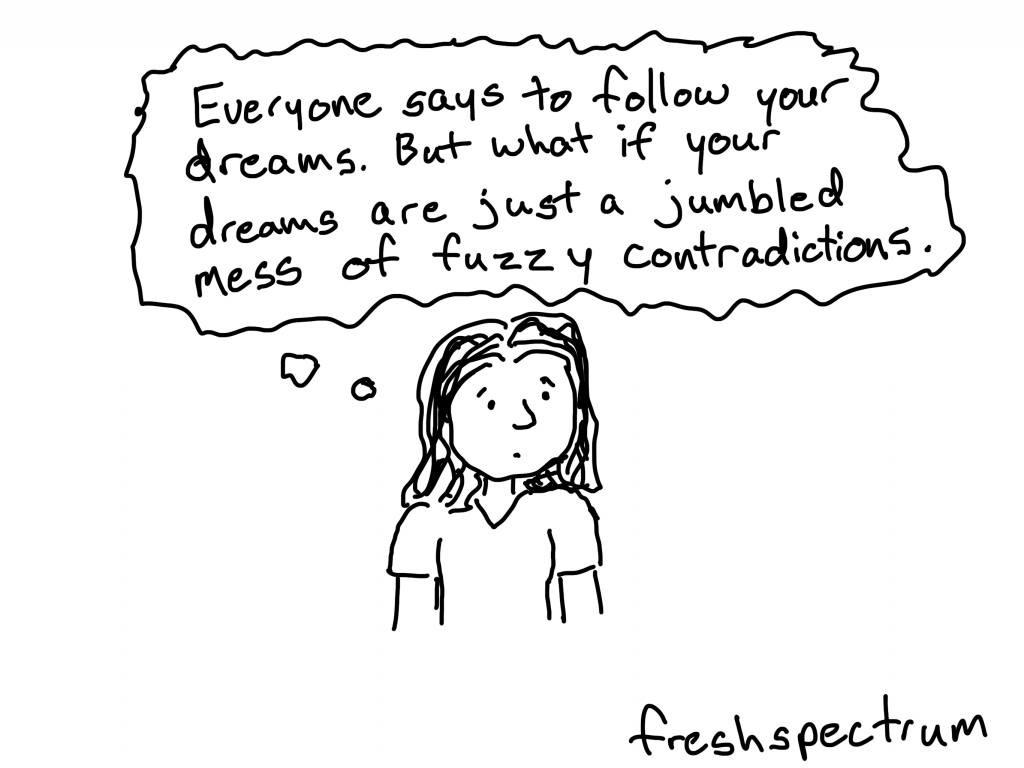
Everyone says to follow your dreams. But what if your dreams are just a jumbled mess of fuzzy contradictions.

The Standard Freelance Pricing Model

One of the biggest traps faced by those new to the freelance world results from taking a huge leap from an annual salary to a simple hourly rate.

Take my friend Zee (a fake name composite of a few friends really).

Now Zee used to make 100K/year with good benefits. But as a freelancer he dives into the world offering his time at $100/hour. He gets a few takers and earns a few thousand for bespoke on-demand projects here and there.

After a year or so he has a steady series of clients. Each time making two or three thousand dollars. Some months he has several clients, other months one, and then over the summer he spent two months with none.

In his second year, Zee ended up earning 40K without benefits. His wife wants him to head back into the workforce. Zee is convinced though that if he could just do better at marketing, the numbers would go up and he would be matching what he used to make.

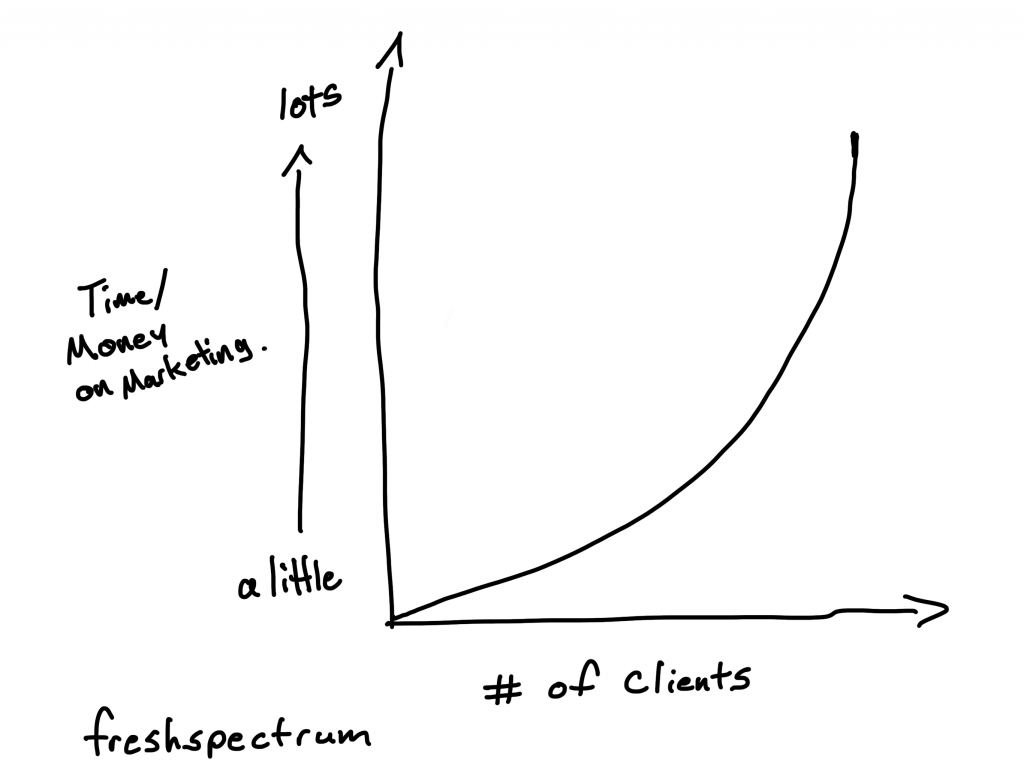
But what Zee doesn’t really consider is the boom or bust nature of his model and the true cost of scale. The more customers you need, the more time/money needs to go into marketing. The more customers you acquire, the harder it is to manage. The fluctuation in commitment drives up the number of hours worked, and the marketing needs never seem to go away.

The more clients the more time and money needs to be spent on marketing.

Compare on Rate, Buy on Budget

You know what’s crazy. Rate is not usually the x factor.

Ultimately, what matters for a client is that the project is done on time on budget.

And their budget is usually not based on adding up hours. It’s based on a mix of what they can afford and what the market dictates.

If the market dictates a specific project is worth around 10K and the company has the funds to budget 10K, that’s usually how the contract gets funded.

The hourly rate for a client is just an evaluation tool. Does it pass the sniff test? Does it provide for enough hours to get the job done? How does it compare to the other people who bid for this project?

And for the freelancer. That rate is highly variable based not only on their salary, but in how much time/money they need to spend finding/managing their work.

Man staring off into nothingness.

The Gig Pricing Model

Let’s flip the freelancer pricing model.

So Zee used to make 100K+benefits each year. What if instead of jumping straight to rate, we just cut the salary in half and assume two clients.

If Zee wants to make his life easier, and he is having a hard time finding a single 100K job, all he has to do is find two 50K clients.

But that doesn’t include benefits, and it doesn’t build in any room for lag time that almost always delays payment. So if he’s going for two clients, he can sell half his time to each for 60K.

Is there a project that Zee can do for 60K/year? Or how about a project that he can complete in 6 months for 35K? Or maybe 3 months for 20K?

The goal Bigger Budgets, Fewer Clients.

Ideal salary is 1FTE, 2 gigs are .5 FTE each, 3 gigs are .33FTE each.

The lower the FTE, the higher the rate.

Tangible Offering, Fundable Need

So just what is a Gig then?

A Gig in my model is just a well-defined project. It is a structured plan with deliverables and timelines, designed to deliver something to a client.

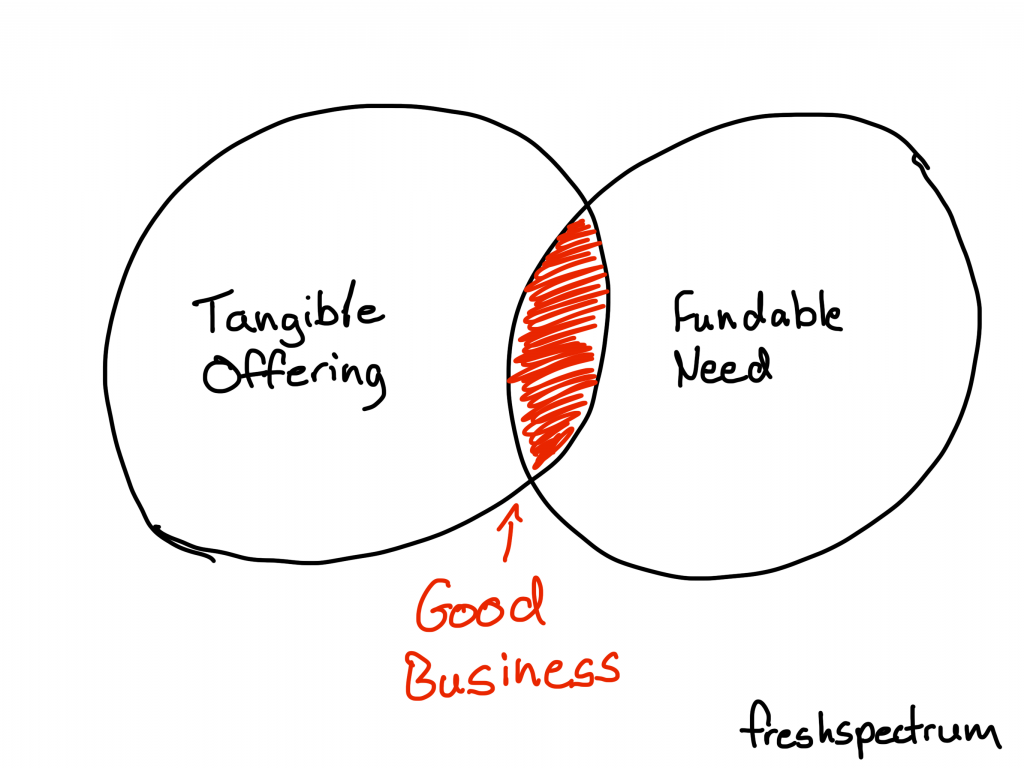
A Gig is a tangible offering.

Now a tangible offering is not enough on its own. You have to pair your offering with a fundable need. A fundable need is something that an organization, business, or individual has the budget and inclination to address.

Many problems exist, but only so many our worth paying to solve.

But here’s the thing.

A contract position in the gig economy is both a tangible offering (position description/objectives) and a fundable need (there is a budget or else they would not have listed the position).

A salaried position in the gig economy also meets that criteria.

If a company might be willing to pay someone 100K/year to do a thing. And you can do that same thing in half the on-the-clock time for 70K. You just saved the company 30K while making more money.

Gigs exist everywhere that a position exists. If you can structure your offering, and show that it makes sense, working with you can become a no-brainer.

The overlap between tangible offering and fundable need is good business.

Choosing your focus.

When choosing the Gigs you hope to pursue, here is something i find helpful.

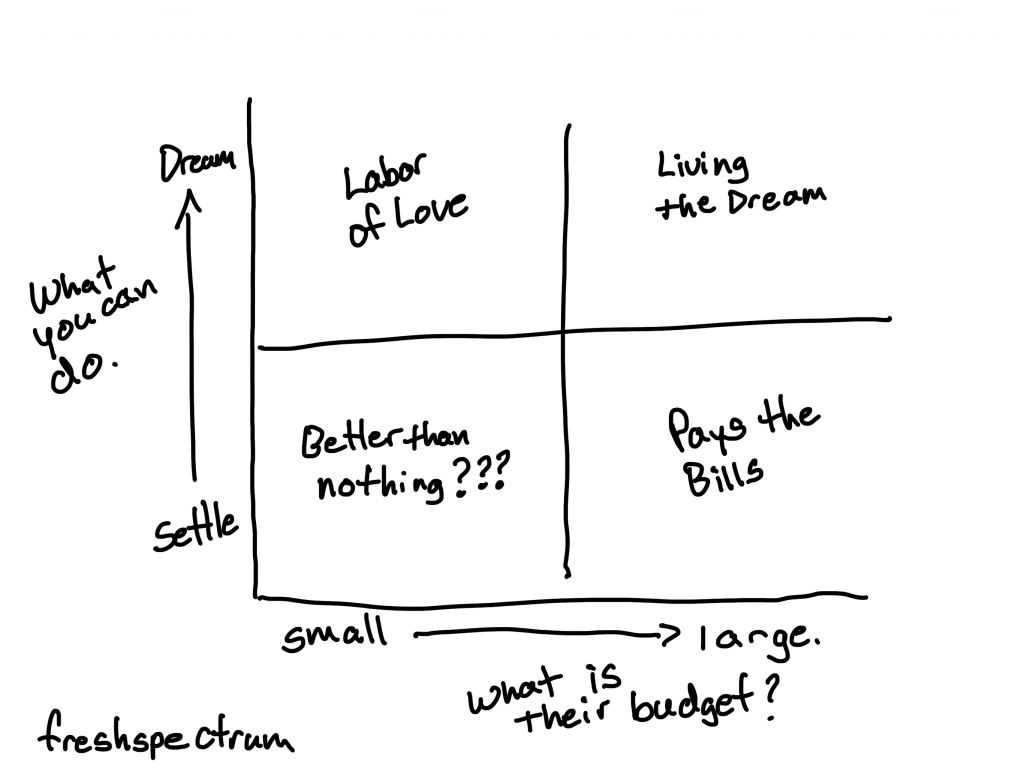
If you can find Gigs that you love to do (a dream role) with big enough budgets to pay your salary, you’re set.

Depending on your needs, dream roles with small budgets are also workable. So are larger budget boring jobs.

Just try to get away from undercharging for boring work.

Living the dream is doing something you love for a large budget. A labor of love is doing you something you love for a small budget.

Settling for something with a large budget pays the bills.  And settling for something with a small budget is better than nothing, right?

Next Steps

Try to conceptualize what a big project you could offer would look like.

And if you’re struggling with Imposter Syndrome, think of it this way. You’re not designing a super expensive project but a well paying part time job.

Would love to hear what you think about this in the comments!
Written by cplysy · Categorized: freshspectrum

Jan 30 2020

The Effective Philanthropy Resource Site Showdown – [a graphic novel data analysis]

The digital world is filled with underutilized data. I created this experimental data analysis as a way to show how datasets embraced by the SEO world can be valuable evaluation resources.

If the analysis leaves you with more questions. At the end of the post you will find a link to a Tableau Public dashboard I created in the process. I encourage you to explore away.

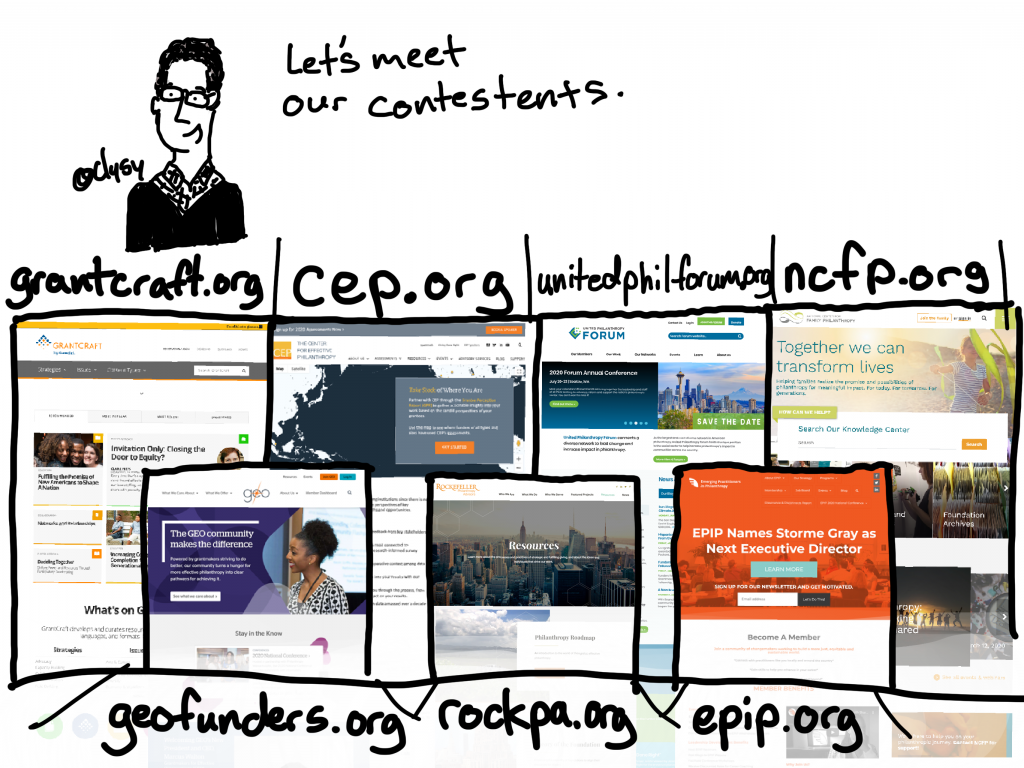
Sites compared in this analysis:

  • grantcraft.org
  • cep.org
  • unitedphilforum.org
  • ncfp.org
  • geofunders.org
  • rockpa.org
  • epip.org
The effective philanthropy resource site showdown. Put on your google thinking caps and let's look at some data.
Let's meet our contestants. grantcraft.org, cep.org, unitedphilforum.org, ncfp.org, geofunders.org, rockpa.org, epip.org
Now for the data. We'll be looking at search related data acquired through ahrefs.com 
Backlinks: pages linking directly to the domains of interest. n=22,910
Keywords: words and phrases where the domains of interest appear in the top 20 Google search results. n=32,710
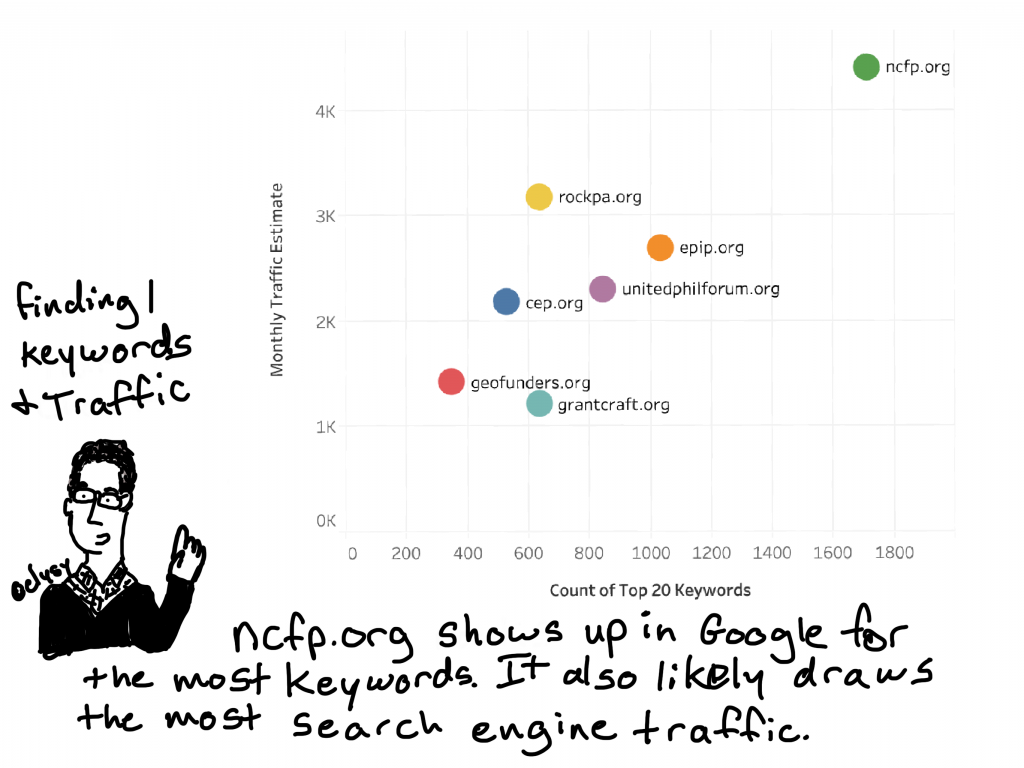
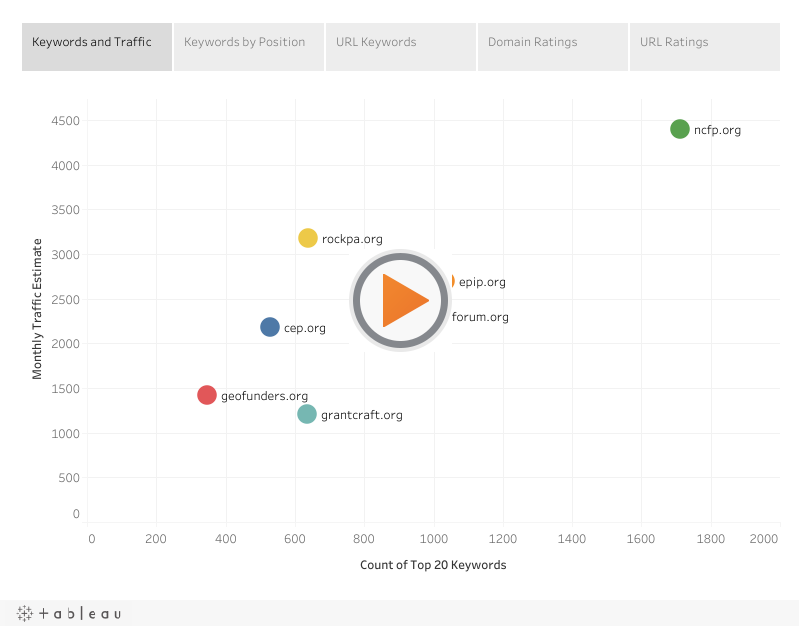
Finding 1 keywords and traffic. ncfp shows u in Google for the most keywords. It also likely draws the most search engine traffic.
Overall this looks like more keywords will correlate with more traffic. But rockpa.org and cep.org are exceptions.
This could be due to these sites ranking on higher ranking keywords, or simply ranking higher.
Okay, so before you comment. Yes! Of course more views and more search rankings are now how anyone would measure success. 
Let's dig deeper and look at the actual keywords.
This this view we see keywords, ranking, and dots comparing the different sites.  And the results are filtered by keyword.
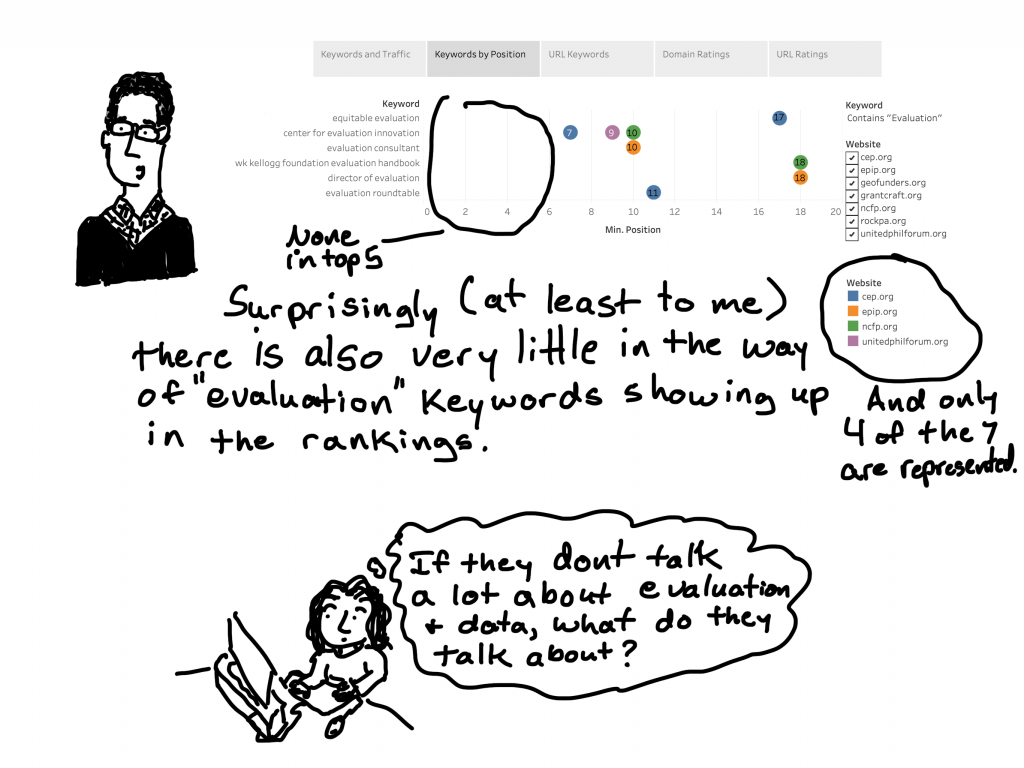
As we can see here, very few of the keywords ranked mention data.
Suprisingly (at least to me) there is also very little in the way of "evaluation" keywords showing up in the rankings.  And only 4 of the 7 sites are represented.
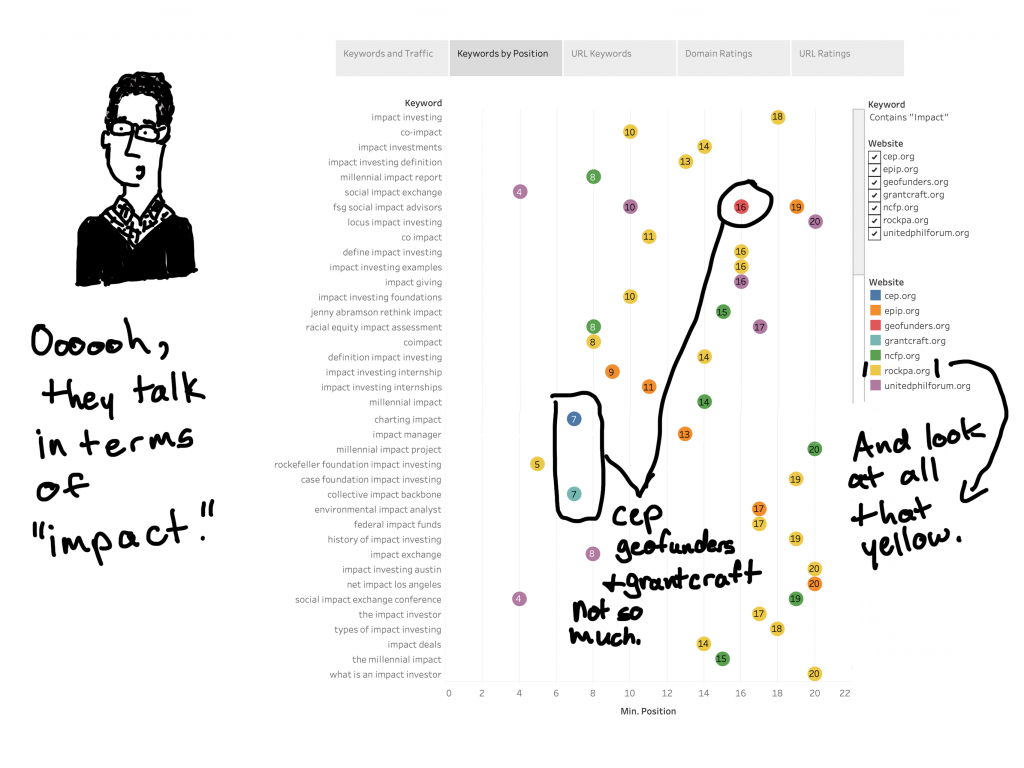
If they don't talk a lot about evaluation and data, what do they talk about?
Oooh, they talk in terms of "impact."
CEP, geofunders, and grantcraft not so much.  But rockpa, definitely.
How about a super relevant topic like "equity"?  
Certainly more than evaluation!
Looks like ncfp has a popular resource on racial equity lens.  Curiosity will have me search this one later (fakequity).  
No rockpa or epip.
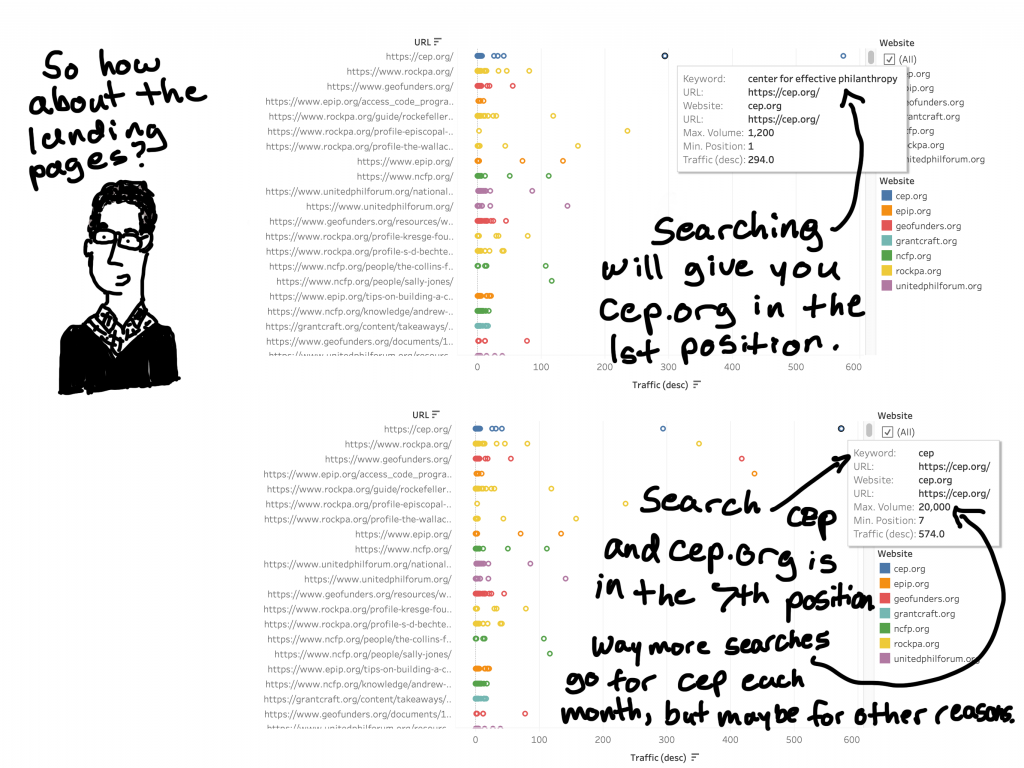
So how about landing pages?
Searching "center for effective philanthropy" will give you cep.org in the 1st position.
Search cep and cep.org is in the 7th position. Way more searches go for cep each month, but maybe for other reasons.
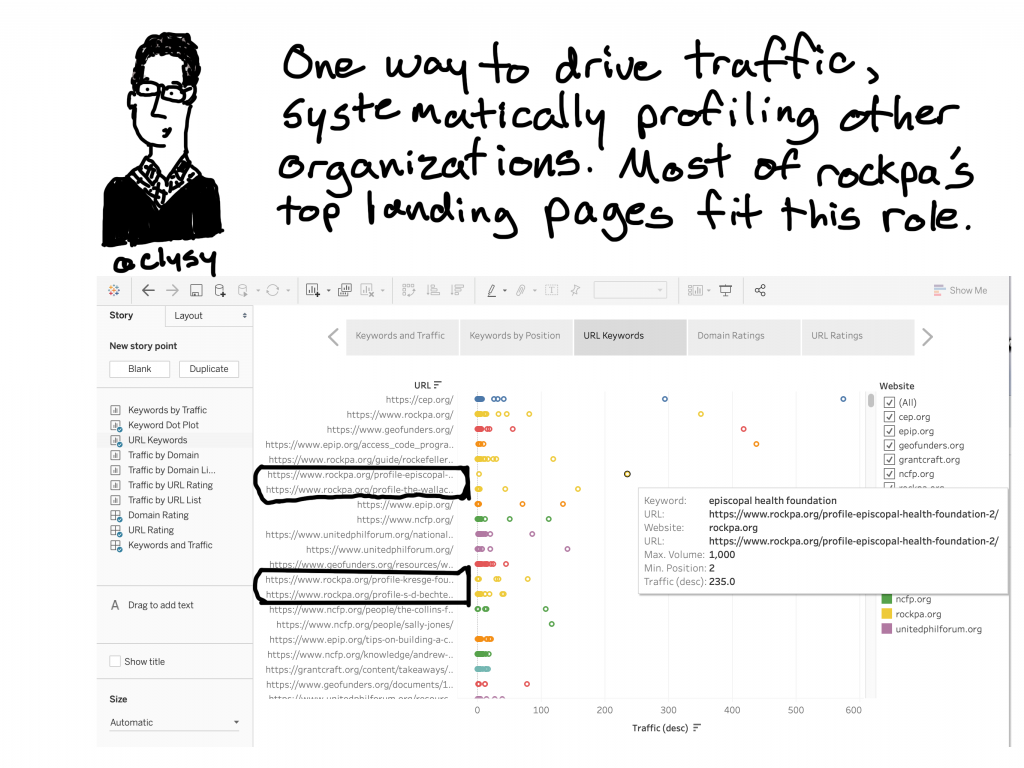
One way to drive traffic, systematically profiling other organizations. Most of rockpa's top landing pages fit this role.
Keywords go in Google.
Backlinks connect other sites to your site.
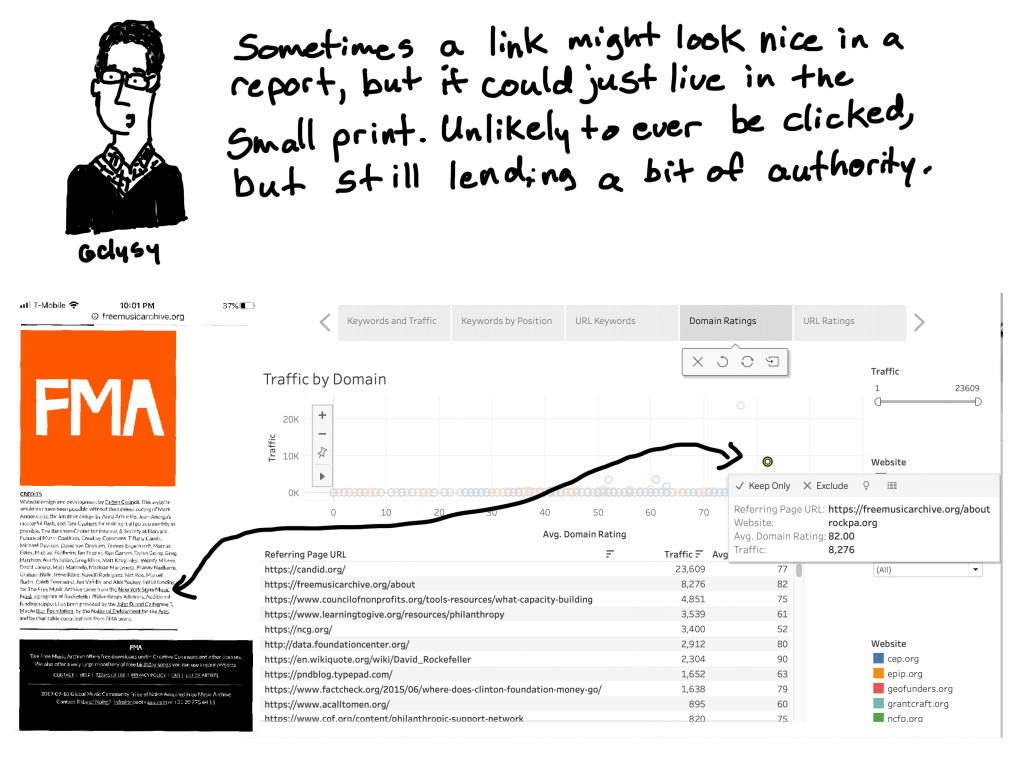
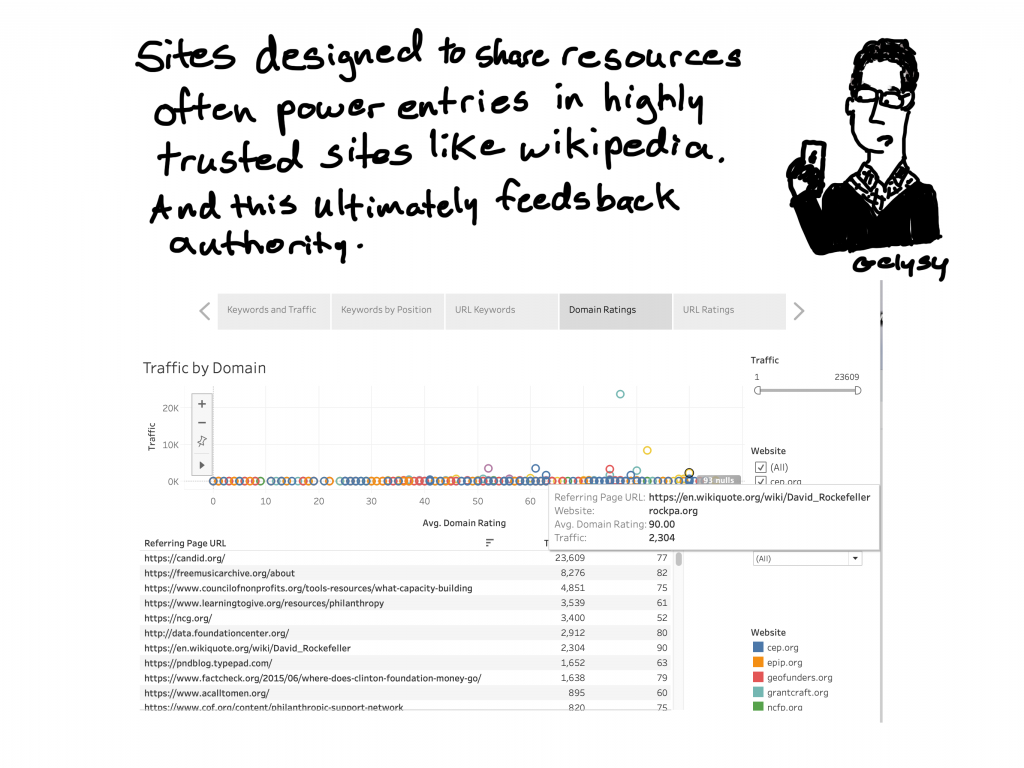
While keywords connect with web search language, Backlinks build authority. Good links from trustworthy sources show that you're trustworthy too.
In terms of high authority/high traffic backlinks, candid.org stands out.  It's the parent organization for grantcraft, and the result of a merger between guidestar and the foundation center.
In the wide world of resource sites there are countless examples of websites that borrow authority from parent organizations.
Sometimes a link might look nice in a report, but it could just live in the small print. Unlikely to ever be clicked, but still lending a bit of authority.
Sites designed to share resources often power entries in highly trusted sites like wikipedia. And this ultimately feeds back authority.
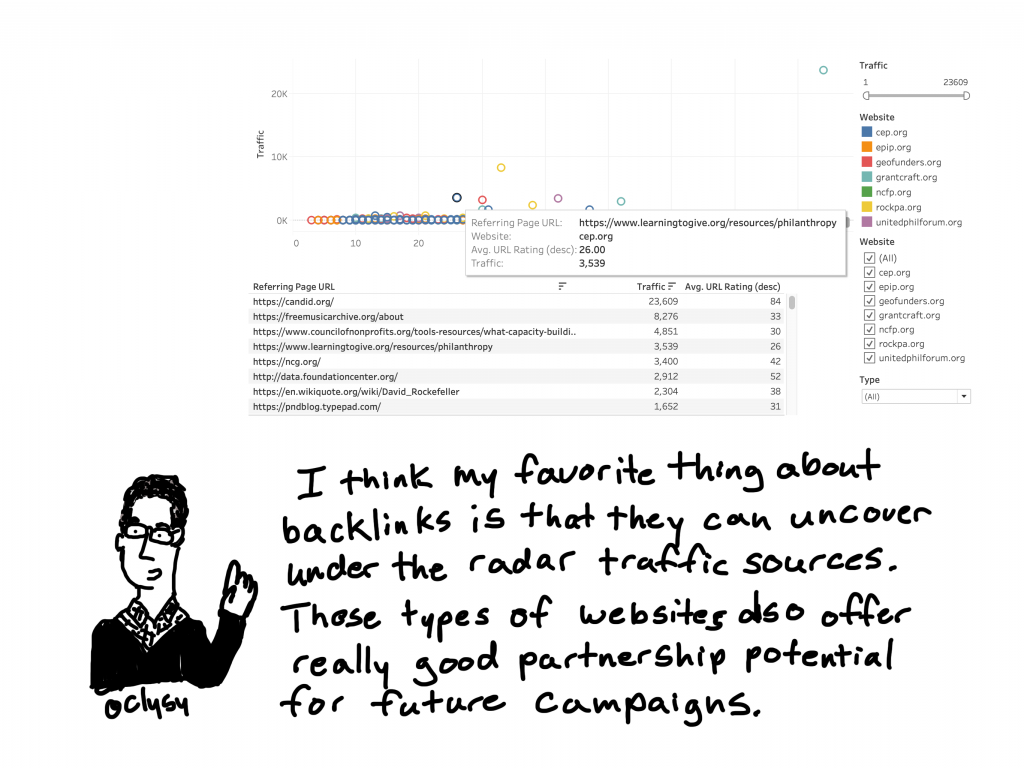
I think my favorite thing about backlinks is that they can uncover under the radar traffic sources. Those types of websites also offer really good partnership potential for future campaigns.
So after all of that, which site is the best?
I have no idea.
Sites with not-for-profit missions can't be evaluated in the same way as business sites or fundraising campaigns.
Sometimes the goal is really to connect with a specific small niche audience. Other times the goal is to provide information on obscure topics that will never draw much in the way of search engine traffic.
But here is what I do know. 
There are big useful data sources that are vastly underutilized.
A single Tableau Desktop license can boost the analysis potential.
In this analysis, I have only skimmed the surface of what is possible.
Evidence is always better in context, traditional analytics approaches lack the ability to analyze comparison sites.
And if you're running a site like this, here is my advice.
Don't try to create a resource.

Create THE resource.

The resource everyone else will want to link.
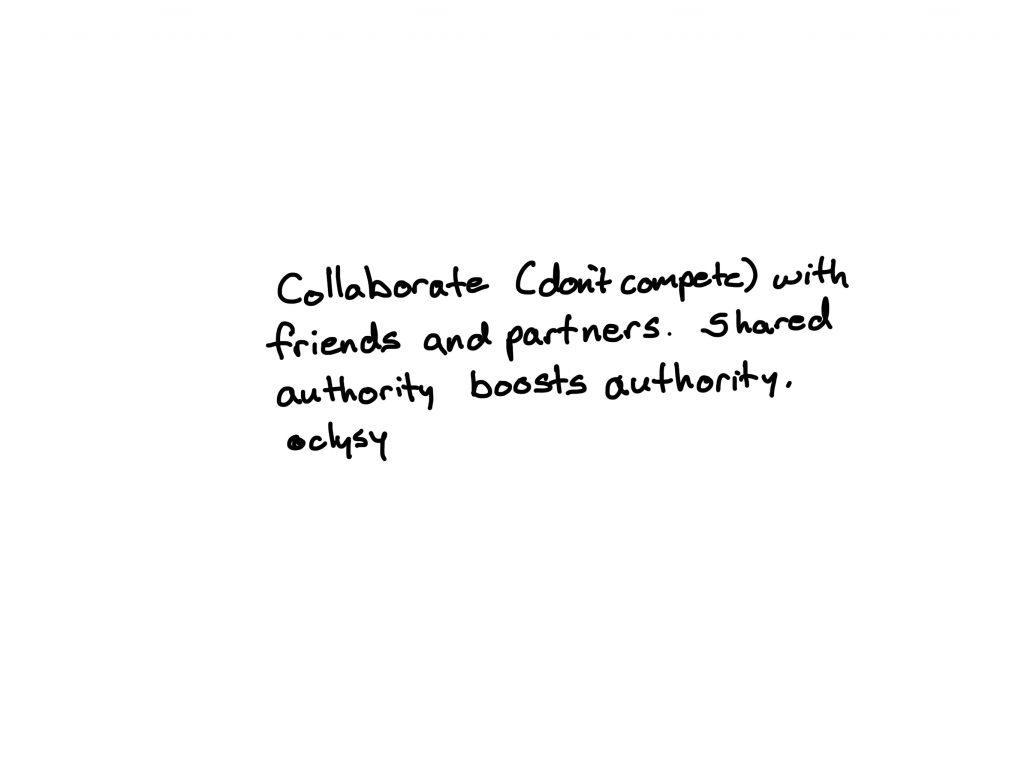
Collaborate (don't compete) with friends and partners. Shared authority boosts authority.
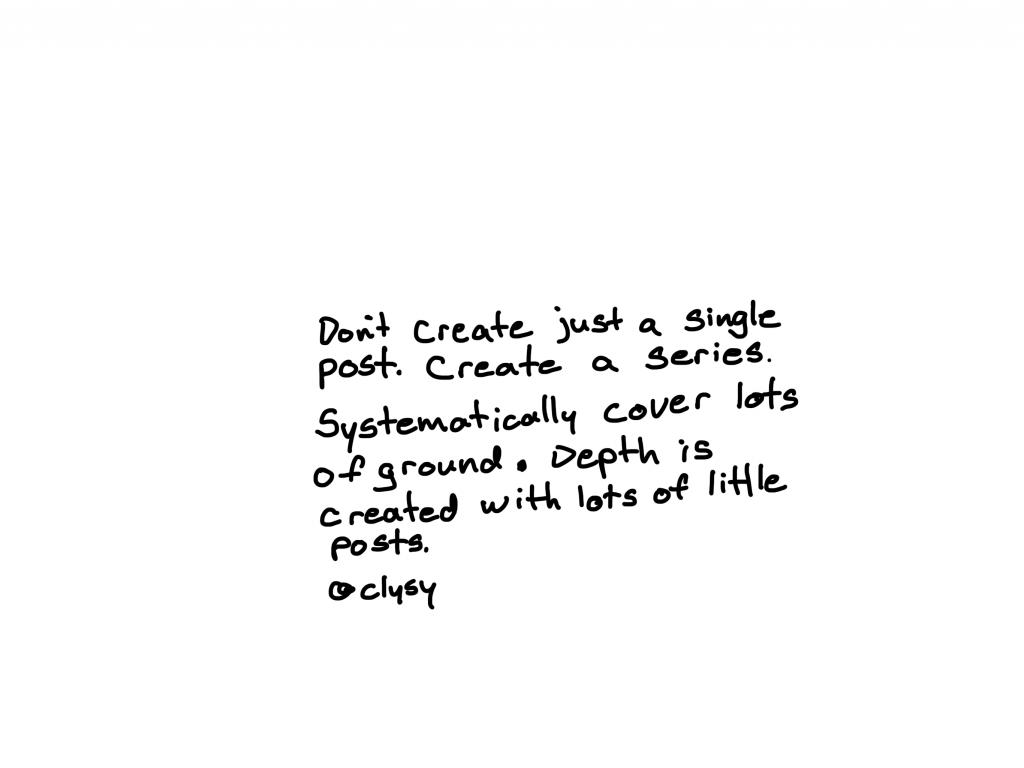
Don't create just a single post. Create a series. Systematically cover lots of ground. Depth is created with lots of little posts.
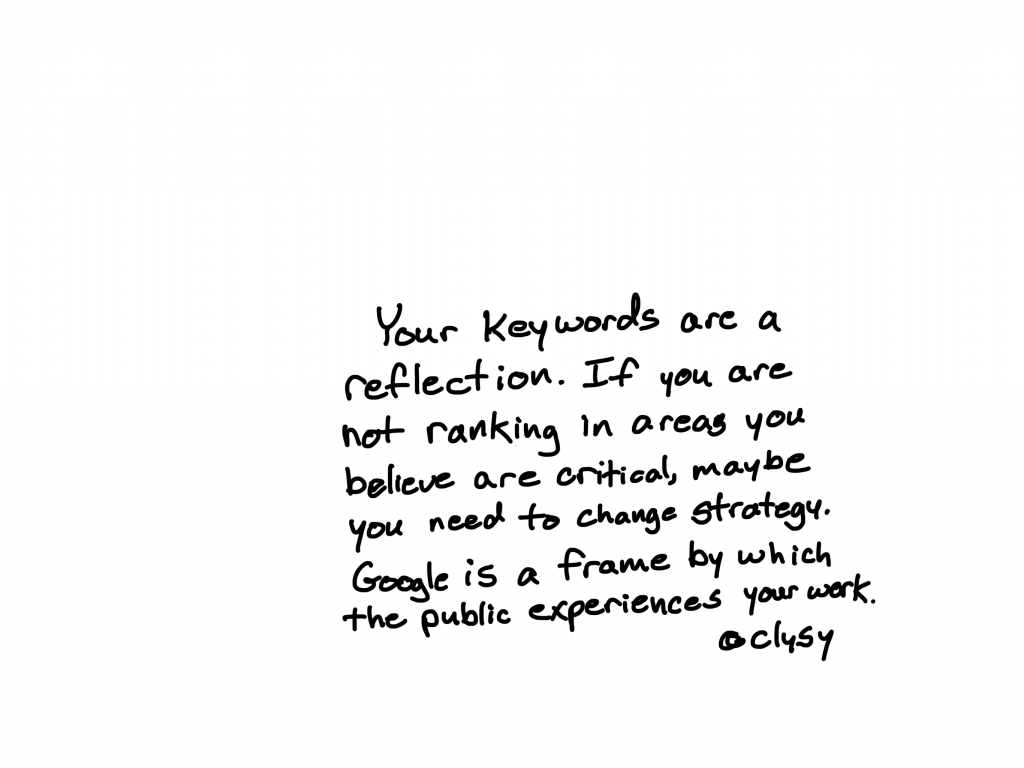
Your keywords are a reflection. If you are not ranking in areas you believe are critical, maybe you need to change strategy. Google is a frame by which the public experiences your work.
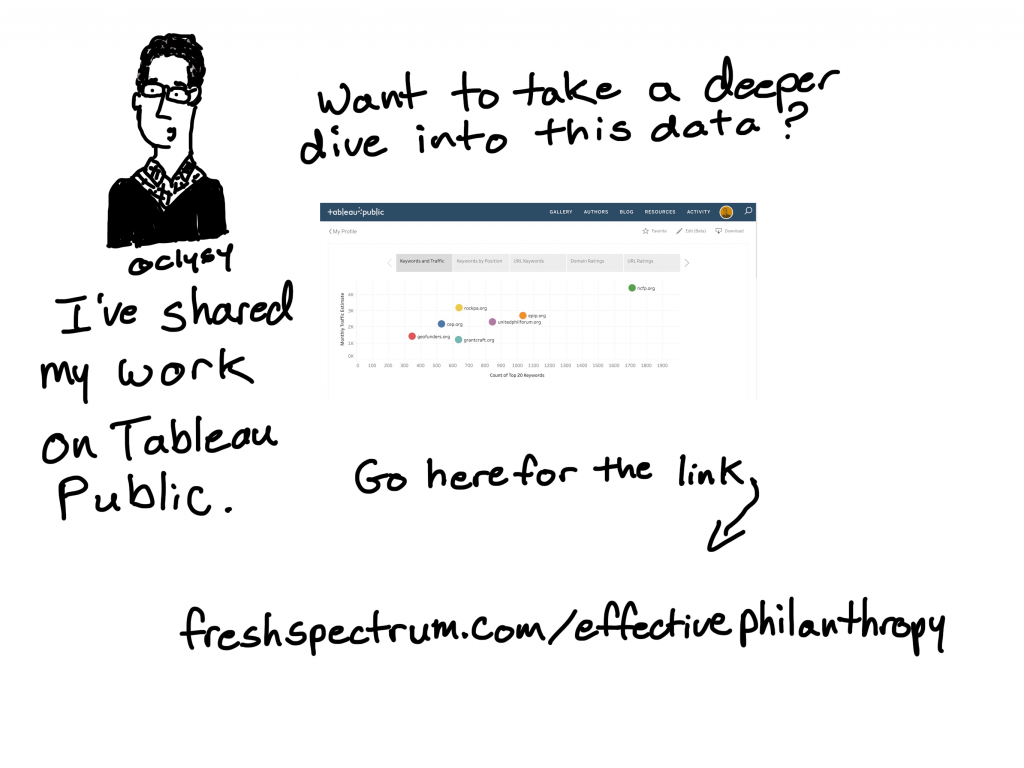
Want to take a deeper dive into this data?
I've shared my work on Tableau Public.  Go here for the link.

freshspectrum.com/effectivephilanthropy

You can see it here, or click this link to peruse it on Tableau’s site.

Written by cplysy · Categorized: freshspectrum

Jan 21 2020

Report Design as Magazine Design [Graphic Novel Blog Post]

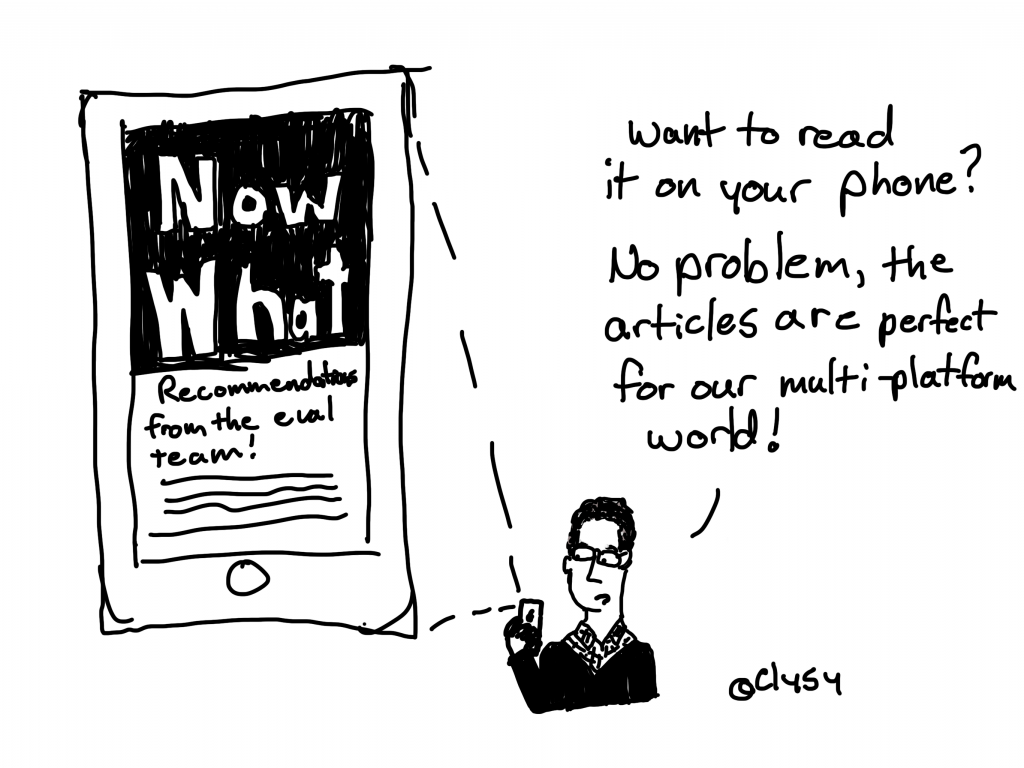
So what if you created reports the same way publishers created magazines? That’s the question behind today’s post.

So what if report design was magazine design.
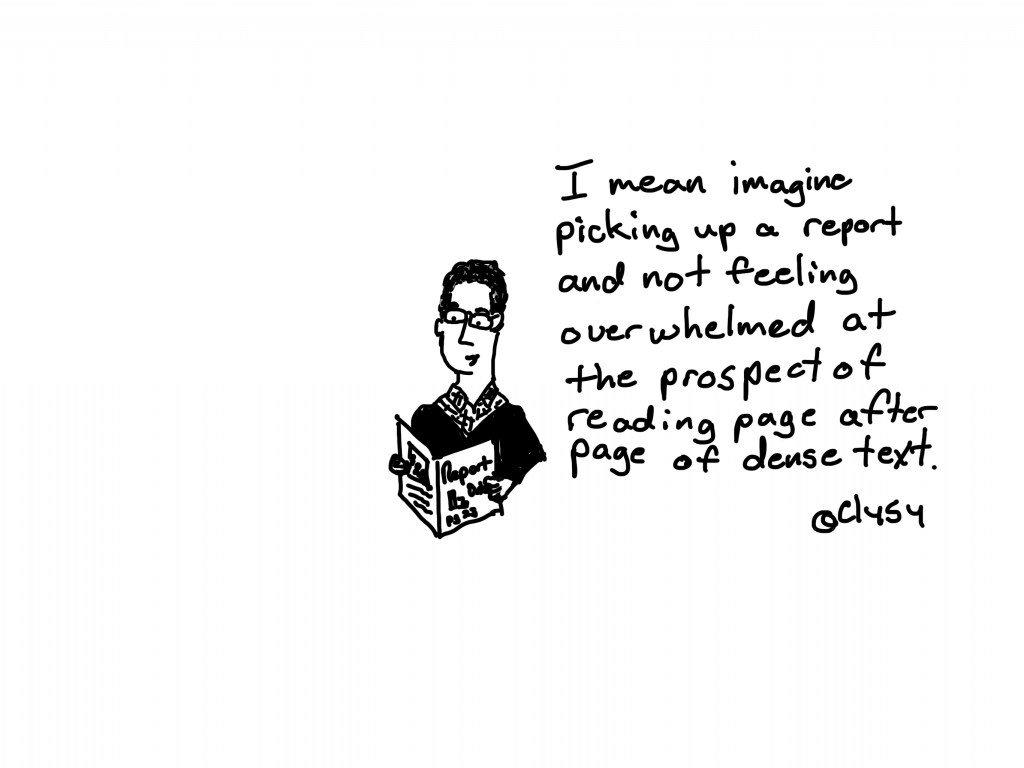
I mean imagine picking up a report and not feeling overwhelmed at the prospect of reading page after page of dense text.
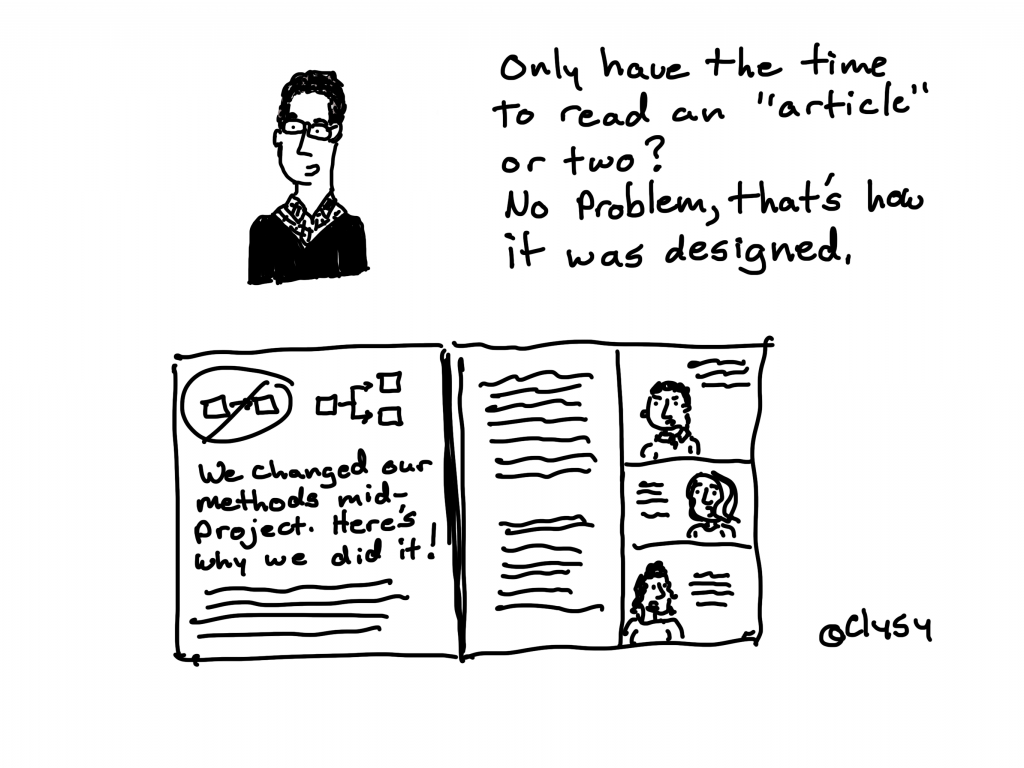
Only have the time to read an "article" or two? No problem, that's how it was designed.
Want to read it on your phone? No problem, the articles are perfect for our multi-platform world!
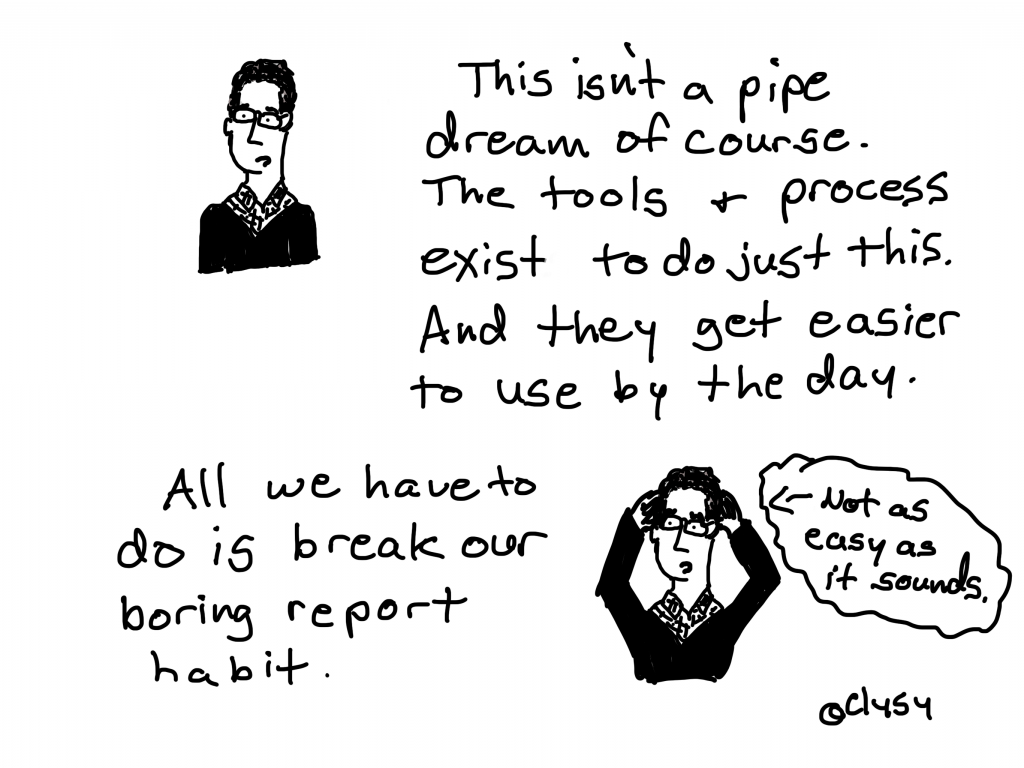
This isn't a pipe dream of course. The tools and process exist to do just this.  And they get easier to use by the day.  All we have to do is break our boring report habit. Not as easy as it sounds.
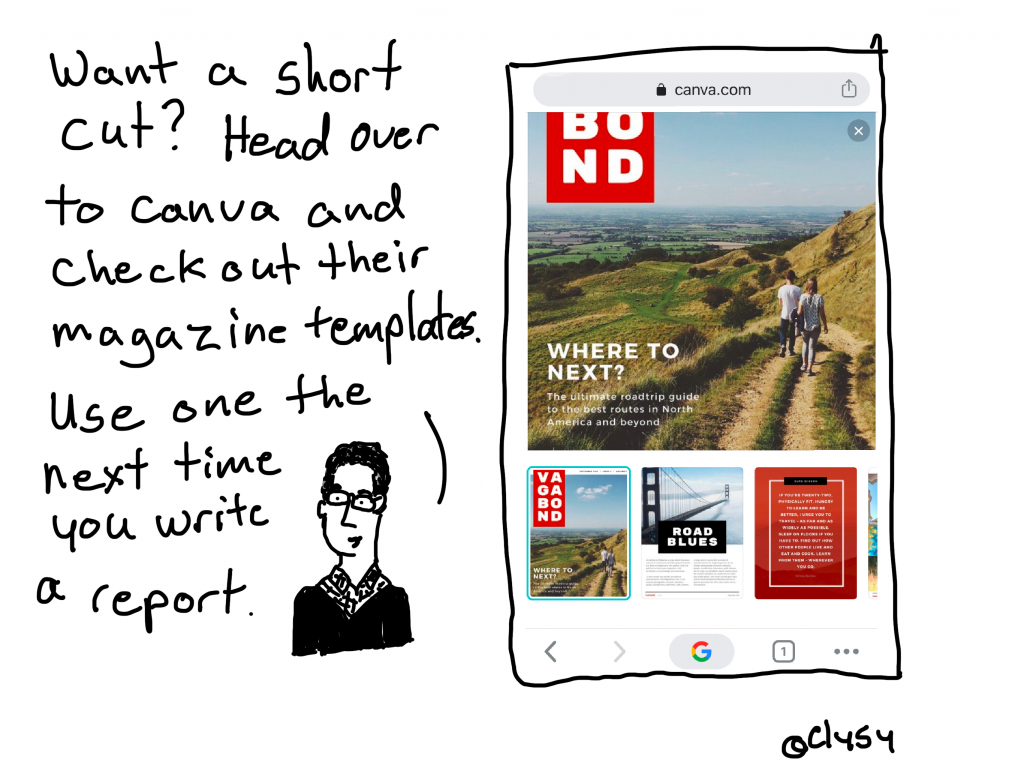
Want a short cut? Head over to canva and check out their magazine templates. Use one the next time you write a report.

Here is a link to Canva magazine templates.

Things to keep in mind when using Canva for this kind of report writing.

  • Magazine templates are shown as covers. But many have internal spreads as well (article templates). Choose a template based on the internal spreads, you can always add a different cover.
  • If a template has a premium stock image it will cost money to download/print. But if you replace out the premium image (or just delete it) the template is free again.
  • Short reports and guides are pretty easy to create this way. The longer the report, the harder it is to use Canva as it starts to get a little too graphically intense for your web browser. If this happens, try breaking it into sections.
  • Write first using Word or some other writing application. Keep it as close to plain text as possible, don’t try to format in Word. Track changes is still useful, especially when team writing. Then copy over the text to Canva for finishing!

Written by cplysy · Categorized: freshspectrum

  • « Go to Previous Page
  • Go to page 1
  • Interim pages omitted …
  • Go to page 52
  • Go to page 53
  • Go to page 54

Footer

Follow our Work

The easiest way to stay connected to our work is to join our newsletter. You’ll get updates on projects, learn about new events, and hear stories from those evaluators whom the field continues to actively exclude and erase.

Get Updates

Want to take further action or join a pod? Click here to learn more.

Copyright © 2026 · The May 13 Group · Log in

en English
af Afrikaanssq Shqipam አማርኛar العربيةhy Հայերենaz Azərbaycan dilieu Euskarabe Беларуская моваbn বাংলাbs Bosanskibg Българскиca Catalàceb Cebuanony Chichewazh-CN 简体中文zh-TW 繁體中文co Corsuhr Hrvatskics Čeština‎da Dansknl Nederlandsen Englisheo Esperantoet Eestitl Filipinofi Suomifr Françaisfy Fryskgl Galegoka ქართულიde Deutschel Ελληνικάgu ગુજરાતીht Kreyol ayisyenha Harshen Hausahaw Ōlelo Hawaiʻiiw עִבְרִיתhi हिन्दीhmn Hmonghu Magyaris Íslenskaig Igboid Bahasa Indonesiaga Gaeilgeit Italianoja 日本語jw Basa Jawakn ಕನ್ನಡkk Қазақ тіліkm ភាសាខ្មែរko 한국어ku كوردی‎ky Кыргызчаlo ພາສາລາວla Latinlv Latviešu valodalt Lietuvių kalbalb Lëtzebuergeschmk Македонски јазикmg Malagasyms Bahasa Melayuml മലയാളംmt Maltesemi Te Reo Māorimr मराठीmn Монголmy ဗမာစာne नेपालीno Norsk bokmålps پښتوfa فارسیpl Polskipt Portuguêspa ਪੰਜਾਬੀro Românăru Русскийsm Samoangd Gàidhligsr Српски језикst Sesothosn Shonasd سنڌيsi සිංහලsk Slovenčinasl Slovenščinaso Afsoomaalies Españolsu Basa Sundasw Kiswahilisv Svenskatg Тоҷикӣta தமிழ்te తెలుగుth ไทยtr Türkçeuk Українськаur اردوuz O‘zbekchavi Tiếng Việtcy Cymraegxh isiXhosayi יידישyo Yorùbázu Zulu