• Skip to main content
  • Skip to footer
  • Home

The May 13 Group

the next day for evaluation

  • Get Involved
  • Our Work
  • About Us
You are here: Home / Archives for allblogs / freshspectrum

freshspectrum

Aug 26 2020

Telling good stories, with or without data.

I don’t know how to feel when I see “data storytelling”.

Being an illustrator, data analyst and designer, I have been asked a time or two to teach a workshop on data storytelling. And I know what the requester is looking for when they ask (they want their employees to stop writing super boring generic-chart-filled reports). But I find the word pair irritating.

Because if you want compelling reports, you don’t need to teach data storytelling. You just need to teach your data people how to tell a good story. And then, if you want better charts, you need to teach your data people how to illustrate.

Today’s newsletter is about storytelling. You’ll find a range of examples, tips, and courses that could help you tell a better story.

Avoid certain storytelling tropes.
Glynn Washington’s Snap Judgement is one of a number of radio shows built around storytelling. The show itself provides lots of good storytelling examples. But there are also some nice tips on good storytelling practice to be found on their pitch page.

By the way, a trope is a kind of cliche or often used metaphor. They are so common that sometimes you can fall into writing a trope without even thinking about it.

Tropes to Avoid

> Something really sad or tragic happened to me and I got over it by doing something positive.
> I am an American and I met a bunch of impoverished foreign people and they taught me about privilege or appreciating what I have / zen / etc.
> Anything that relies heavily on sex, violence or shock factor in order to be a good story
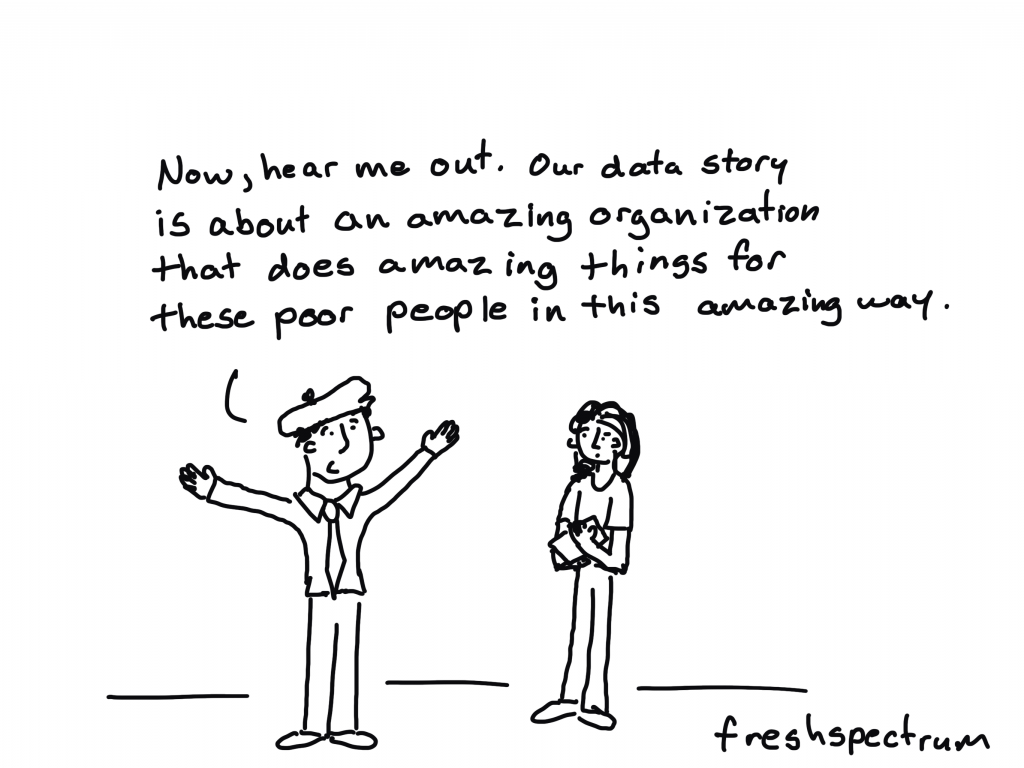
> This person or organization does an amazing thing helping people in this amazing way!
> This almost happened to me, but then at the last minute it didn’t! My reflections on that!
> My reflections on pretty much anything that isn’t event-based!

Snap Judgement’s What Makes a Good Pitch

Think through your story line.

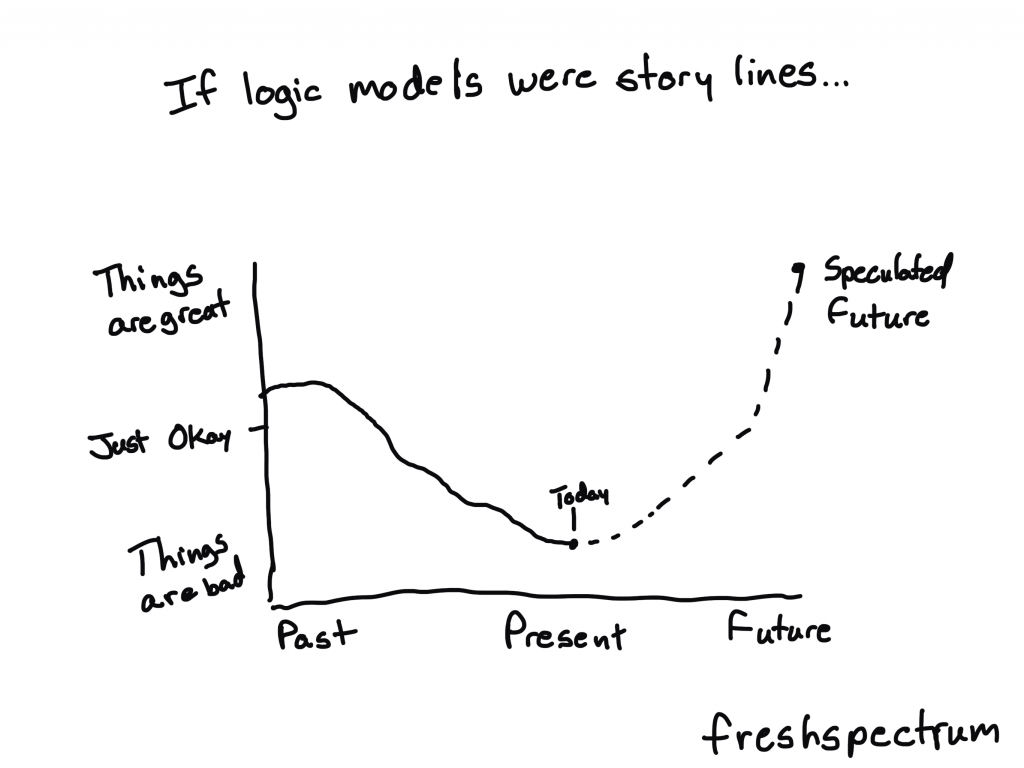
This short video of Kurt Vonnegut lecturing on the shapes of stories is one of my all time favorite storytelling resources. Thinking through the shape of your story can help you see it in a new way.

We call this kind of story, man in hole…somebody gets into trouble, gets out of it again. People love that story.

Kurt Vonnegut on the Shapes of Stories

Construct your story like you’re making a movie.
Good film is built from good story. So why not tap into some of the secrets used by filmmakers? You can probably blame this video for the way my blog posts have always skipped around so much. Basically I try to drop a topic when it gets boring and move on to something different.

If you tell a story that’s all “And then they, and then, and then,” you’re in big trouble.

F for Fake (1973) – How to Structure a Video Essay

But remember that sequence provides the sense of a destination.
Another radio show that provides really good examples of story is This American Life. There is a series of clips floating around the web that provides some storytelling advice from host Ira Glass.

Okay. So you have the building block which is like the actual sequence of actions, the anecdote part of it. This thing happened and then this thing and then this thing. That’s one building block.

Then the other big building block, your other tool, is that you have a moment of reflection.

Ira Glass on Storytelling, part 1 of 4 YouTube

There is more than one way to tell a good story, and we are all storytellers.
Pixar teamed up with Khan Academy to create a nice free storytelling course.

It’s a really good course from a company built around story. I like how it starts, reminding us that we are all natural storytellers. But if you want to be better, that takes work.

 Storytelling is something we all do naturally, starting at a young age, but there’s a difference between good storytelling and great storytelling. 

Pixar in a Box: The Art of Storytelling

Our choice in story matters, and not just in terms of engagement.
This is another problem with common tropes. These tropes often feature stereotypes that paint a singular picture of complex situations. Novelist Chimamanda Adichie makes that point in her fantastic TED talk from 2009.

What struck me was this: She had felt sorry for me even before she saw me. Her default position toward me, as an African, was a kind of patronizing, well-meaning pity. My roommate had a single story of Africa: a single story of catastrophe. In this single story, there was no possibility of Africans being similar to her in any way, no possibility of feelings more complex than pity, no possibility of a connection as human equals.

The danger of a single story | Chimamanda Ngozi Adichie | TEDGlobal 2009

Thinking beyond a single perspective.
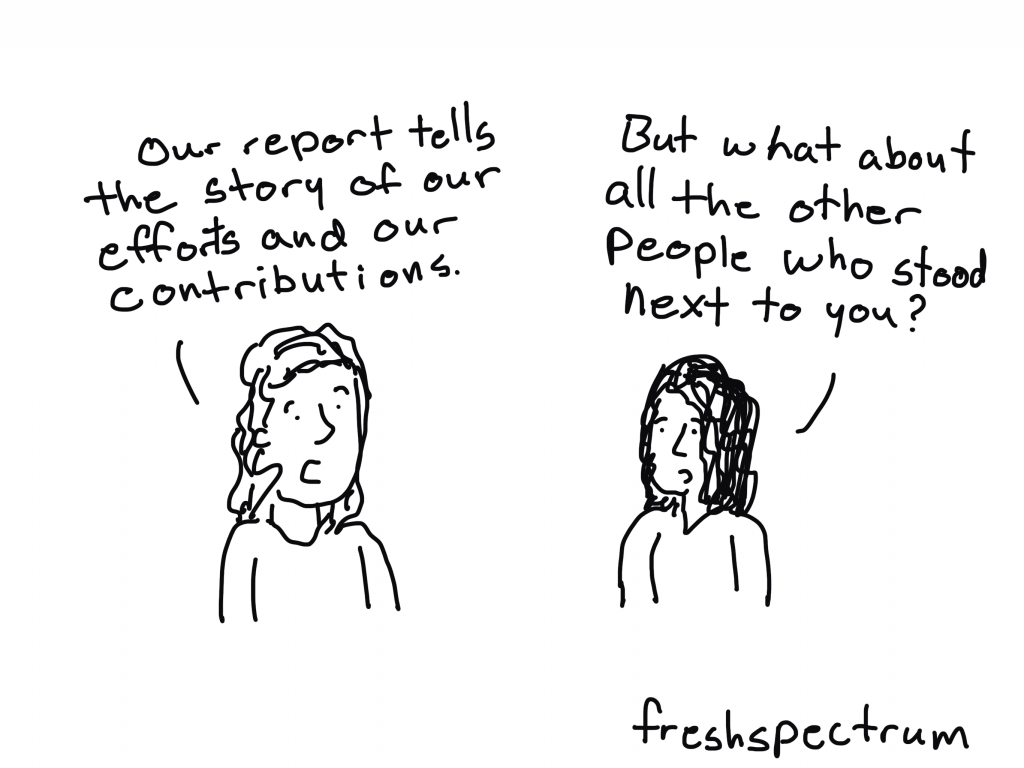
I love the point that Seth Fairchild makes in his TEDx talk about looking to the people next to you. I find when organizations go into story mode, they tend to focus on themselves as the key character. But life is always far more layered than that.

It is often said that Native Americans are not linear thinkers, that we think in terms of circles. We take a more holistic approach to life and everything that we do. And the beauty of a circle is that while you can look behind you and you can look in front of you, you can also look to your side, to the people next to you.

Native American Oral Storytelling & History | Seth Fairchild | TEDxSMU

From story writing to story collecting.
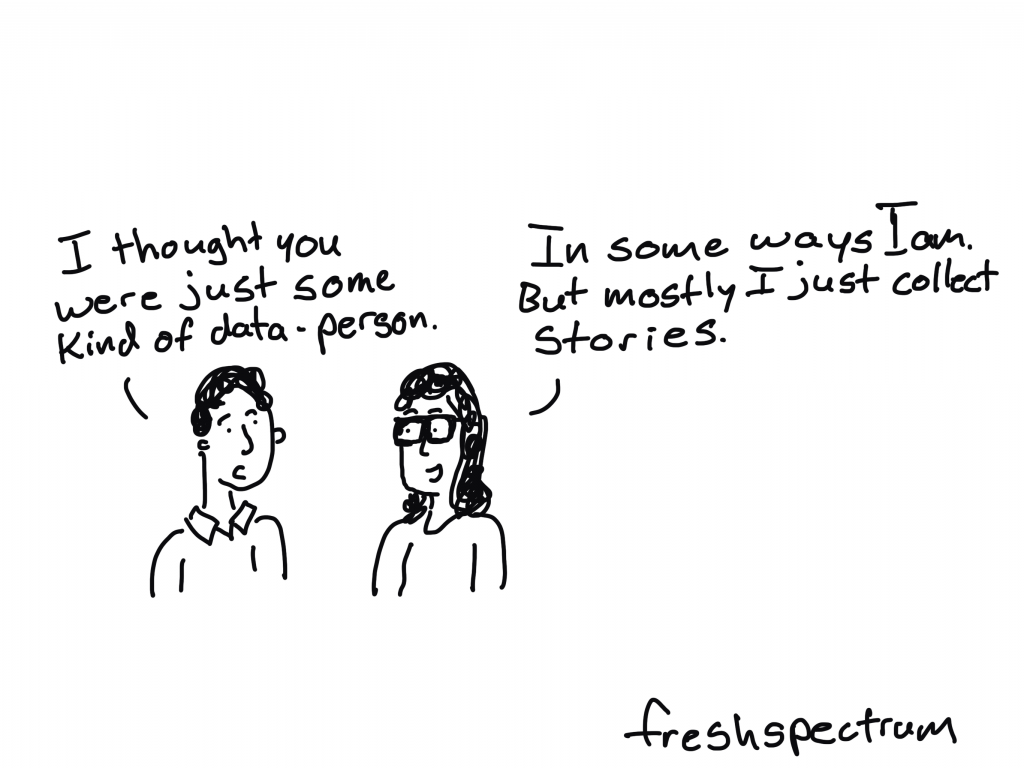
Everyone has stories. Some people have more than others. Some people have fewer but tell them better.

Yes, I would love to hear more of your personal stories. But honestly, you could make an even bigger impact by collecting stories from others than just telling your own. It’s good practice too.

If you listen to NPR you have probably heard a StoryCorps story at some point or another. They’ve actually developed a few DiY courses of their own.

After years of working closely with community partners, StoryCorps has created a new set of do-it-yourself resources to help organizations develop their own interview collection projects.
StoryCorps DiY

Written by cplysy · Categorized: freshspectrum

Aug 19 2020

Choosing the right images for reports, presentations, and blog posts.

You already know that images are important.

Without visuals there is no way we would be able to process the vast amount of information that we are now exposed to on a daily basis. 

An image is a trail marker, a waypoint.  It’s a preview of what’s to come, to help you decide before you click to the next page.  It’s a support to capture an audience’s attention while standing at a podium (or in a little box on Zoom) speaking our words.

This image has an empty alt attribute; its file name is 6-1024x768.png

I started drawing cartoons nine years ago because it was fun.  But I kept drawing them because it was important.  Hundreds of cartoons later, I’d like to think I’ve learned a thing or two about what makes for the right image.

In this week’s email I’ll share some of the important lessons I’ve learned over the years, along with some inspiration.

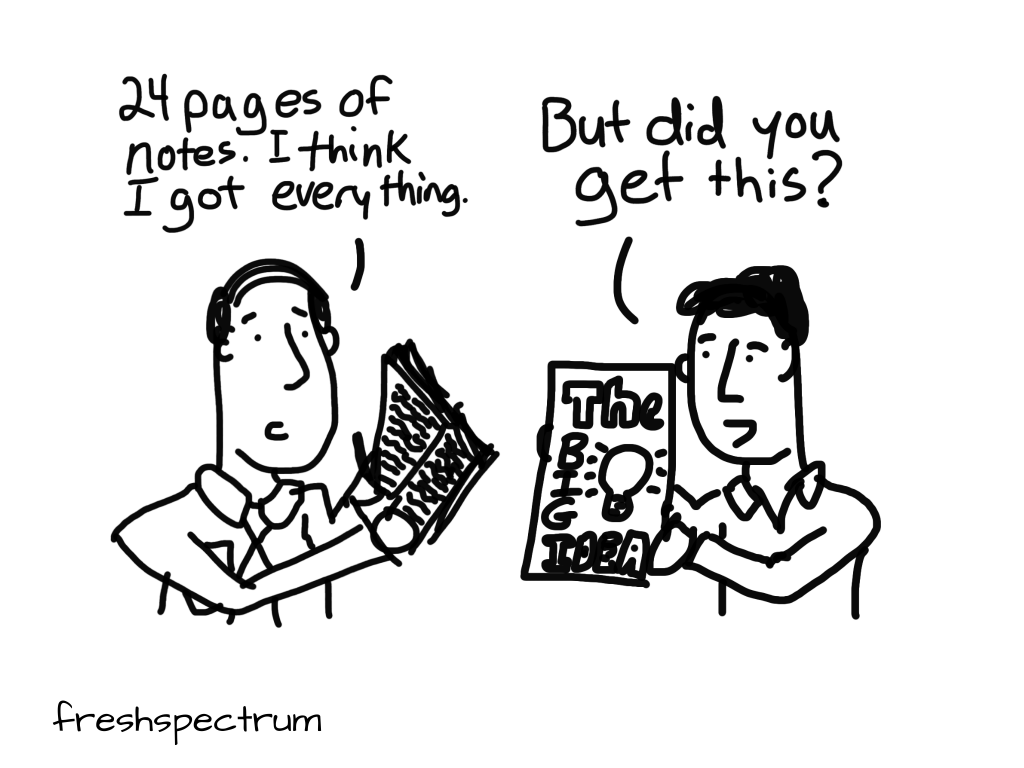
Your images should not just repeat what is written.

This image has an empty alt attribute; its file name is 3-1024x768.png

This is a lesson I learned from Maurice Sendak.  As an illustrator, slide deck designer, report writer, or data visualizer you have to fight the lazy tendency of just repeating what’s on the page with your visuals.  Is simply repeating your written analysis with a chart serving the words? 

An illustration is an enlargement, and interpretation of the text, so that the reader will comprehend the words better. As an artist, you are always serving the words.

You must never illustrate exactly what is written. You must find a space in the text so that the pictures can do the work. Then you must let the words take over where words do it best. It’s a funny kind of juggling act.

Sendak, Carle, Provensen, and 20 Other Beloved Illustrators’ Advice to Children on Being an Artist

There is nothing too serious for an image, even a cartoon.

This image has an empty alt attribute; its file name is 8-1024x768.png

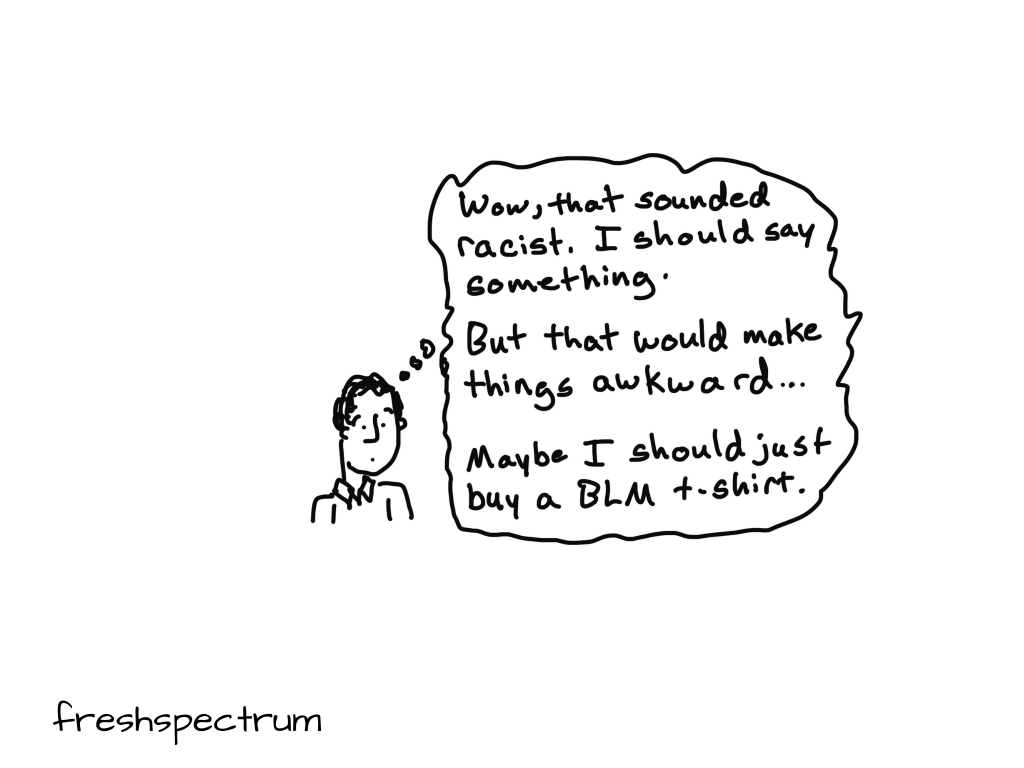
There are times when it’s hard to find the words to approach a tough subject.  But I find that the right photograph, chart, cartoon, or comic can create an entry point when words fail.  

For inspiration, check out a piece of amazing work created by Ben Passmore.

Your black friend is sitting in a coffee shop, your favorite coffee shop…

Congratulations Ben Passmore on “Your Black Friend” winning the 2017 Igantz Award for “Outstanding Comic” at this year’s Small Press Expo!

Find your own visual voice.

This image has an empty alt attribute; its file name is 7-1024x768.png

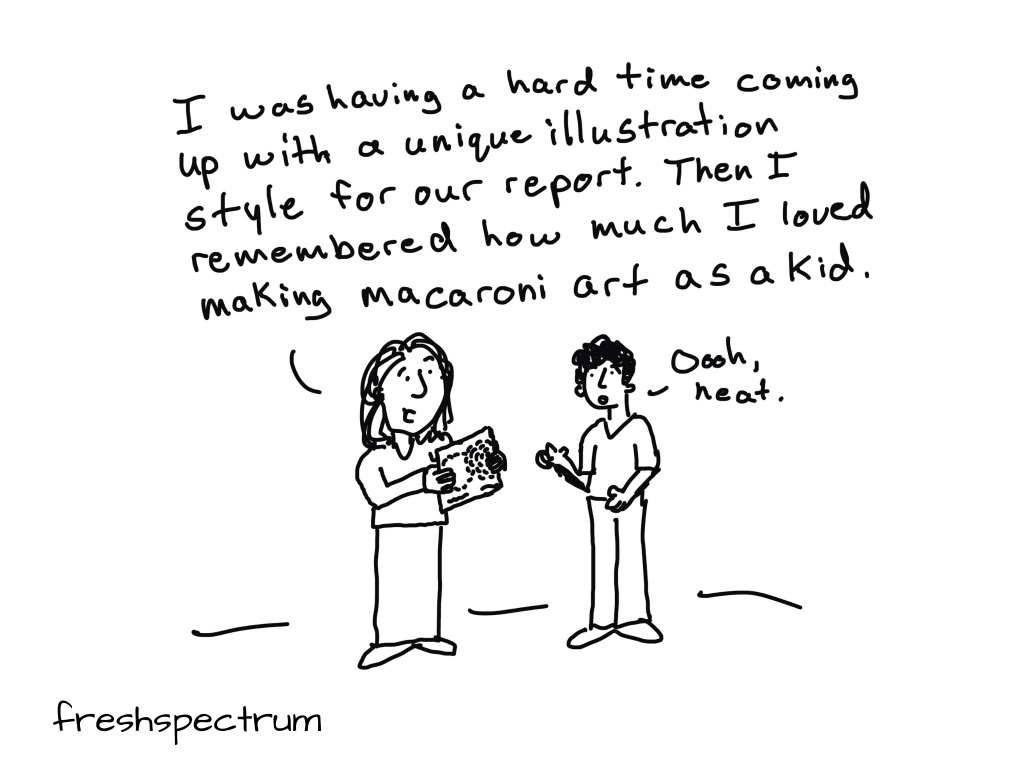
There are many different styles of illustration. Find one that works for you.

I know evaluators who prefer to illustrate their work with art. I know some who prefer to use infographics. I know others who use memes. Katherine Haugh is an evaluator who has also built up expertise as a graphic recorder. Check out some of her work for inspiration.

In addition to presenting on visual note-taking and journey mapping as evaluations tools, I also attended a few interesting sessions. Take a look below to see my visual notes from the sessions I attended.

Contribution, Leadership, Renewal: A Visual Recap of Evaluation 2019

It’s not the quality of the illustration that matters.

This image has an empty alt attribute; its file name is 4-1024x768.png

Having the ability to create your own illustrations can save a lot of time.

Lots of evaluators are readers and writers. But many are… how do I say this… “creatively tentative.”  Mike Rohde is one of a number of graphic notetakers who has written books with advice for the people who self proclaim, “I can’t draw.”  

People relax, try, experiment and are blown away by what they are able to produce of value with visuals when judgement on the quality of the drawing is removed and replaced with a focus on the ideas behind them. I call it ‘Ideas, Not Art.’

“Make ideas, not art”: The Sketchnote Workbook by Mike Rohde

Think of Data Visualization as a form of illustration.

This image has an empty alt attribute; its file name is 1-1024x768.png

Mostly because it is a form of illustration.

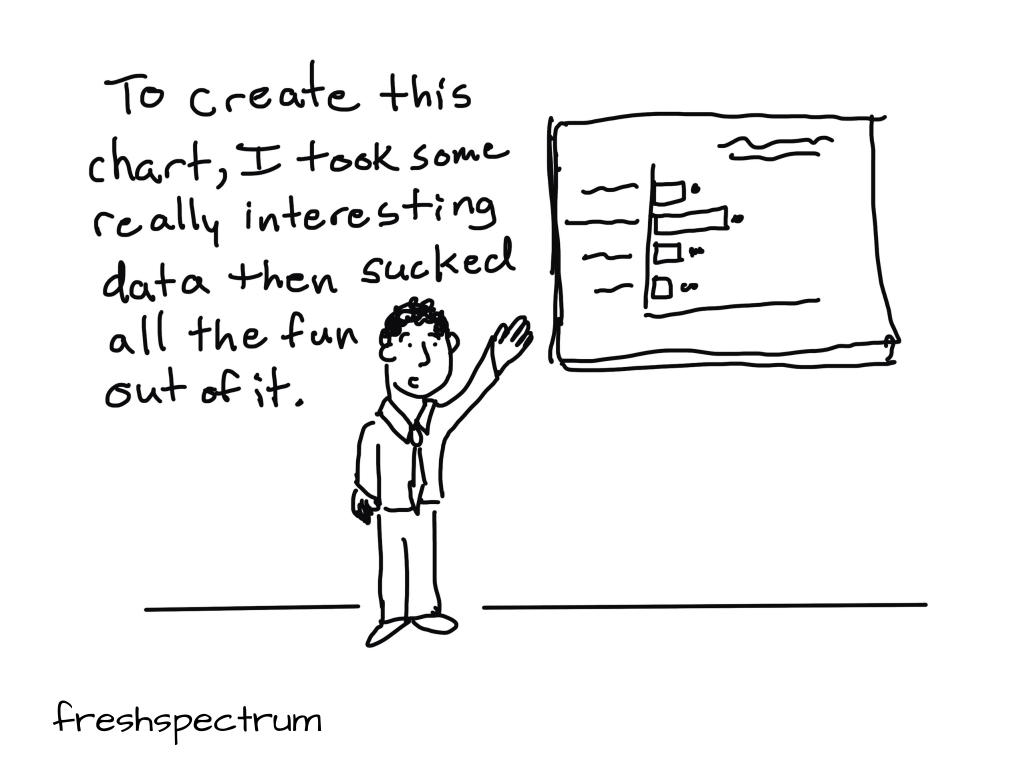
But also because it gives you a purpose beyond simply representing numbers.  To play off Maurice Sendak’s advice, as a visualizer you are creating images to serve the data.

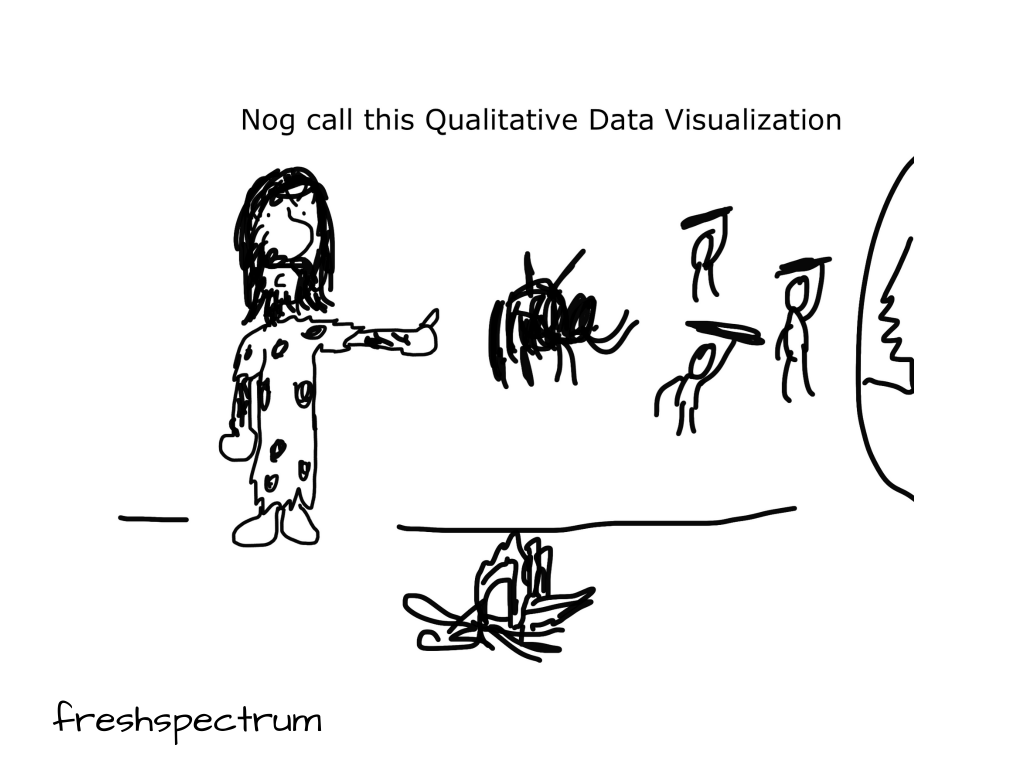
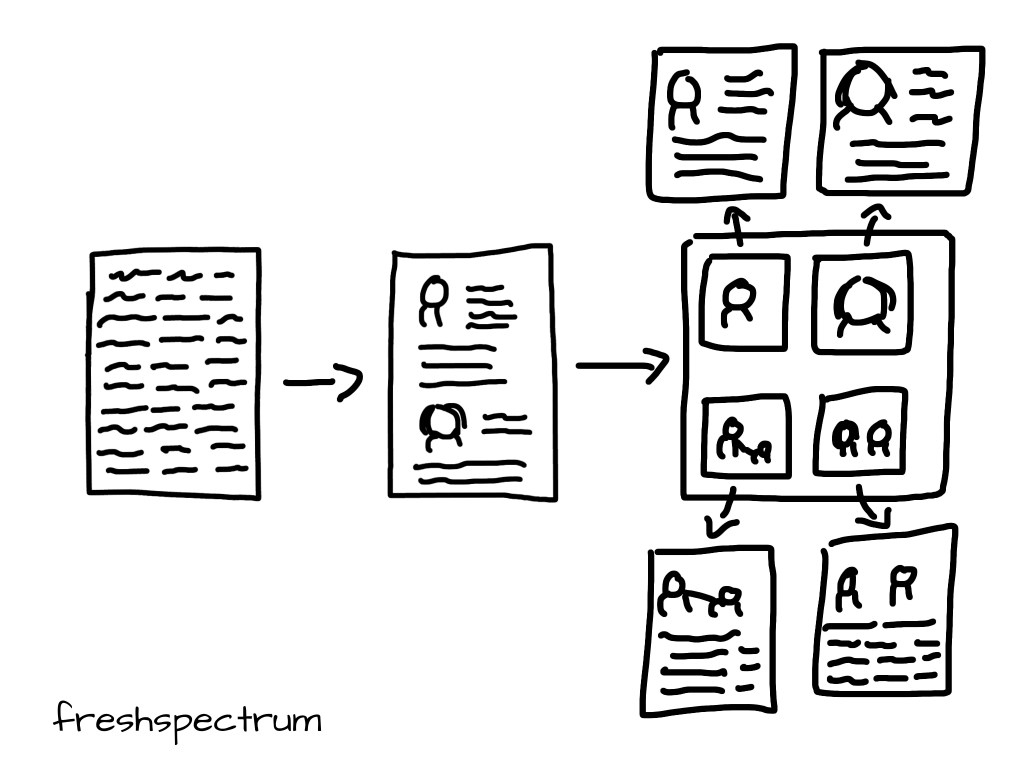
I get asked a lot for examples of how to visualize qualitative data, to which I always answer, illustration!  Ann K Emery wrote a nice post years ago summarizing a variety of styles.

Are you looking for ways to display your qualitative data? The vast majority of data visualization resources focus on quantitative data. In this article, let’s look at some of your options for qualitative data visualization, like word clouds, photographs, icons, diagrams, and timelines.

How to Visualize Qualitative Data

Images are a user-experience element.

This image has an empty alt attribute; its file name is 2-1024x768.png

So what does that mean?  Well your choice of image is going to interact with a reader’s experience of your work.  If you are really serious about how people receive your work, searching stock photo sites for just any image that “feels right” is insufficient.  

Also, there is a whole field who studies this kind of stuff.  Check out this post by Senior User Experience Designer Aurora Harley.

Videos, animated GIFs, images, and other multimedia components should not be added as “fluff” or to “jazz up” a website, app, or other medium. They are user-experience elements, and must be filmed, designed, and produced with an eye toward usability and interaction.

How to Film and Photograph Online Content for Usability: UX Details for Videos and Images

Just because it can be shared with a simple chart doesn’t mean it should.

This image has an empty alt attribute; its file name is 5-1024x768.png

I am a huge fan of Mona Chalabi and her ability to turn simple numbers into influential works of art.  Take this infographic for example.  The argument could have been made with a simple stacked bar chart or icon array.  But the way she presented it, the chart became a story book.

US courts have never looked like the populations they represent. But the overrepresentation of white men on federal benches had started to improve up until recently. According to the American Constitution Society (ACS), “under the Trump administration, this progress has stalled”.

Datablog: Trump’s courts takeover is male and white

Written by cplysy · Categorized: freshspectrum

Jul 22 2020

Why this evaluator is for abolition.

I am writing in response to Chris’ Evaluation as Protest blog. I appreciate the blog’s call to action and hope the examples of concrete actions shared will inspire evaluators to imagine something different and to take action. While reading the blog, I noticed that a perspective was missing: the police and prison abolitionist movement. Instead, I saw two approaches to reforming the criminal legal system or prison industrial complex: Campaign Zero and the Obama administration’s President’s Task Force on 21st Century Policing. I reached out to Chris to flag what I saw as a gap, and he asked me to write a blog about it. So, here I am!

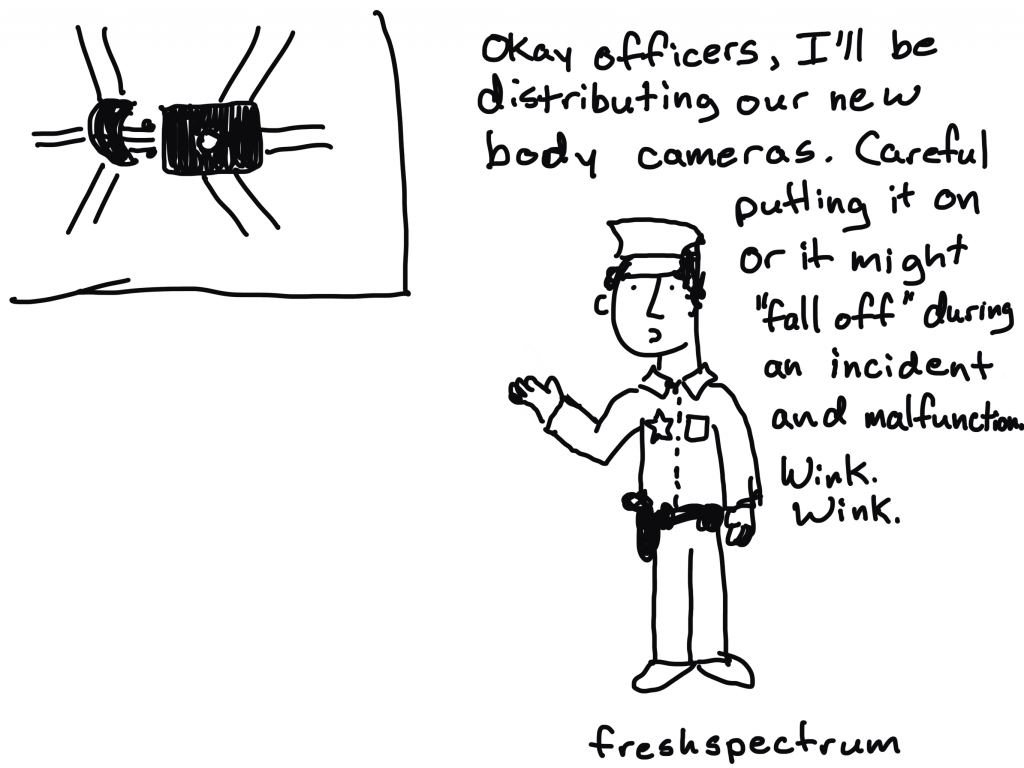
On the surface reform makes sense. And it has gained traction among many Democrats in this moment of increased attention on police brutality and growing support for BLM. Even where I am residing in Colorado a police reform bill passed in response to protests here locally, which includes reforms like bans on chokeholds and body camera requirements. In contrast to reforms, abolitionists have been arguing since the 1960s that reforming the prison industrial complex will not work.

I want to share a bit of the abolitionist perspective with you today, and then directly connect this to my evaluation practice. Perhaps it will inspire you to do the same. There is no way that I can do the decades of work preceding me and still happening justice in a blog post. However, there are a multitude of abolitionists you could turn to if my words inspire you to learn more (read on!).

One of the core arguments presented by abolitionists is that the prison industrial complex does not and has never provided safety, especially for BIPOC communities. In fact, the system has done exactly the opposite.

Policing and prisons have a long, consistent, and strategic history of violence against BIPOC and working-class communities and suppressing their organizing. Abolitionist Mariame Kaba eloquently states:

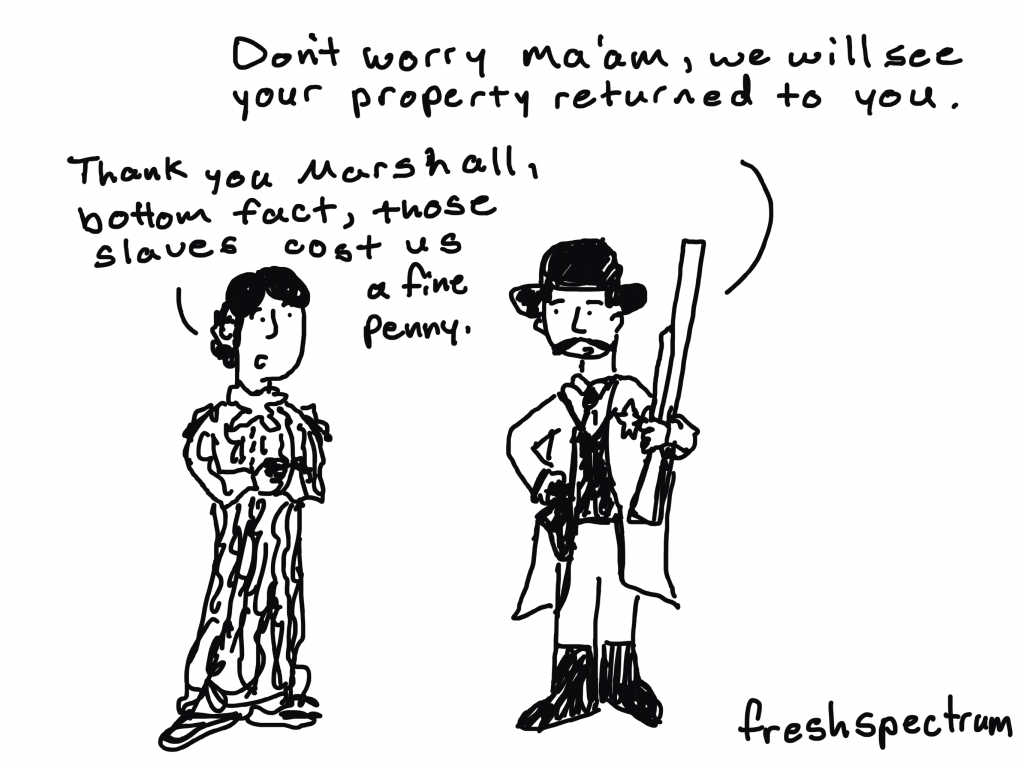
There is not a single era in United States history in which the police were not a force of violence against black people. Policing in the South emerged from the slave patrols in the 1700 and 1800s that caught and returned runaway slaves. In the North, the first municipal police departments in the mid-1800s helped quash labor strikes and riots against the rich. Everywhere, they have suppressed marginalized populations to protect the status quo. So when you see a police officer pressing his knee into a black man’s neck until he dies, that’s the logical result of policing in America. When a police officer brutalizes a black person, he is doing what he sees as his job.

Mariame Kaba

MPD150 in Minneapolis, “a participatory, horizontally-organized effort by local organizers, researchers, artists and activists” to quote their website, explains that turning to the police has never been a safe option for BIPOC communities:

“We want to make sure everyone has someone to call on for help. It’s critical to note, though, that for many of us, especially those of us living in under-resourced, Black, indigenous, and people of color communities, the police have never been helpful. In fact, they’ve been a major source of harm and violence. Millions of us already live in a world where we don’t even think about calling on the police for help; it isn’t some kind of far-future fantasy. “

MPD 150

Other accounts of this history explain “this tension between African American communities and the police has existed for centuries” and “police brutality isn’t an anomaly, but is built into the very meaning of law enforcement in the United States”. In short, the prison industrial complex does not and has never kept Black communities safe.

I have personally fielded a number of questions as I have engaged in dialogue with friends and family about abolition. Questions like: What about perpetrators of domestic and sexual violence? What about murders and rapists? Where will they go?

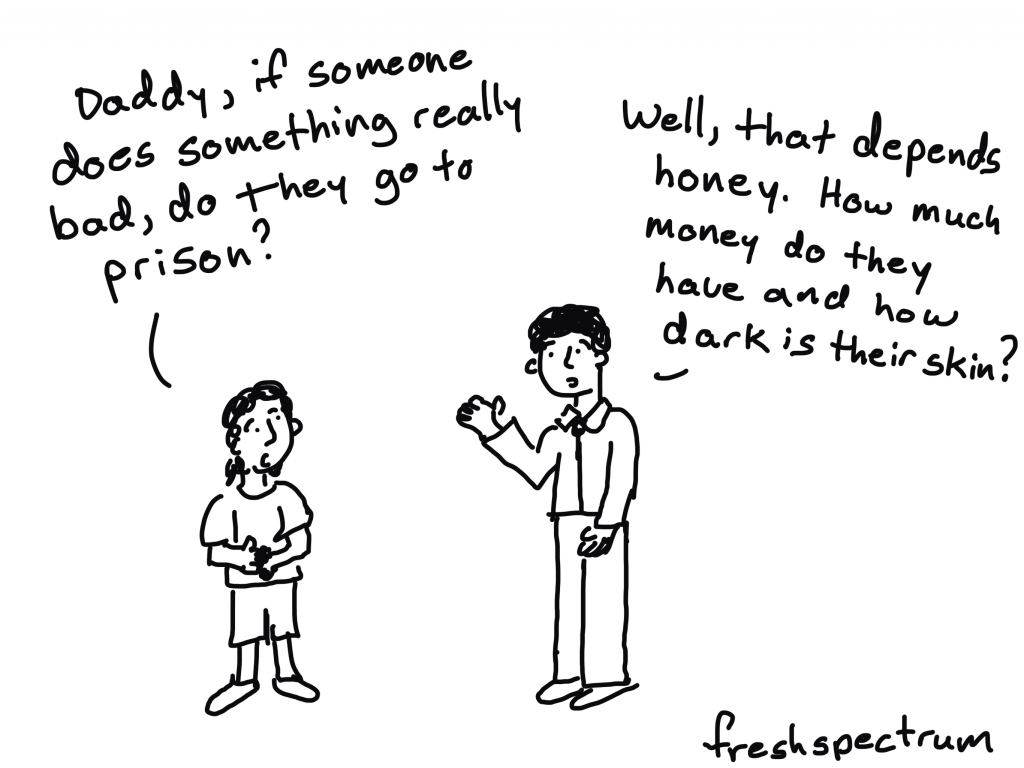
The first thing that comes up for me in these conversations is ways in which the prison industrial complex has consistently murdered, raped, and sexually assaulted BIPOC and LGBTQ communities. Safety is not what we get when we interact with this system and these questions ignore this reality. Specific to sexual violence, multiple studies have demonstrated that police officer sexual violence is a widespread, systemic problem in our country, especially for Black and other women of color. Moreover, we know that majority of perpetrators are someone survivors know personally, the vast majority of rapes and attempted rapes do not end with incarceration, the vast majority of incarcerated women have been victims to sexual and domestic violence, and women who act in self-defense of these crimes are often imprisoned, especially BIPOC and transgender women.

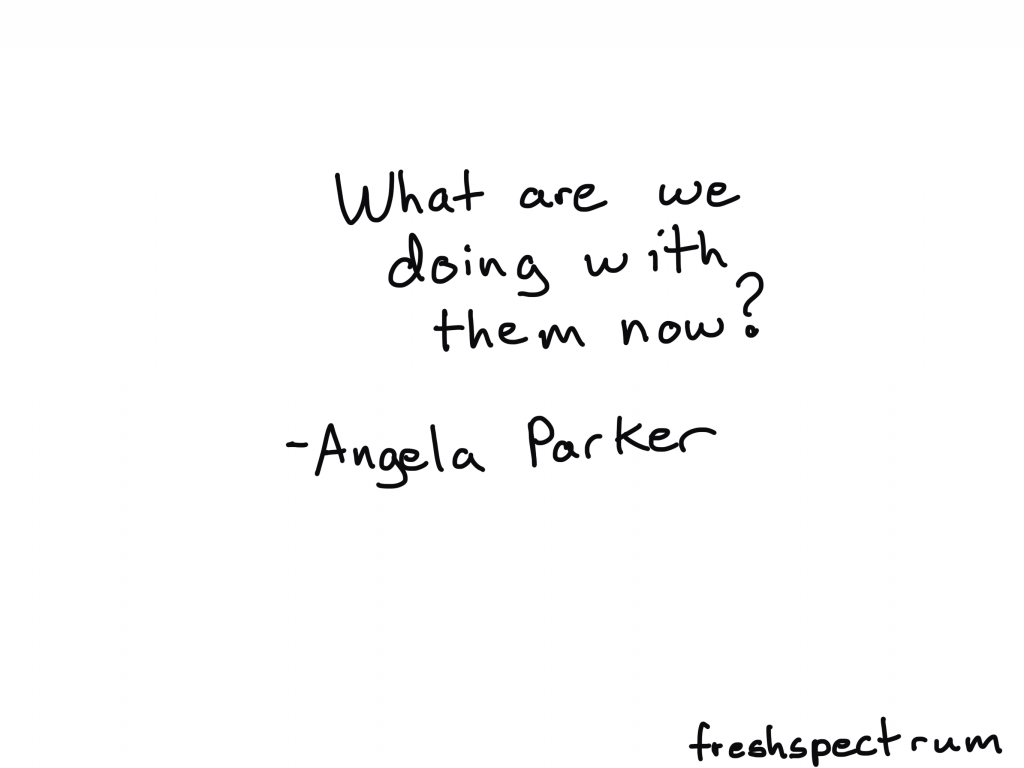
Abolitionist Angela Parker poignantly articulates a deeper explanation for why questions like these are missing the mark, and asks us to more deeply interrogate the assumptions undergirding these questions:

When people ask me what we will do with the rapists and murderers if we abolish the prison industrial complex, including prisons and police, I typically respond “what are we doing with them now?” The original question itself requires unpacking. To ask “what will we do about the rapists and murderers” implies that rapists and murderers primarily make up the 2.3 million people currently incarcerated, not inclusive of people impacted by mandates, probation, parole, and e-carceration. The underlying implication is that prison is a place where dangerous people go to be held accountable for their poor choices. If this were the case, then the fact that Black and indigenous folks, and immigrants primarily make up the prison population means we are predisposed to dangerous behavior and poor choices. Yet we know this is not the case. So before we dive deeper into this question, I want us to challenge this subconscious thought. Prison is not a place for bad people. In the U.S., prison is an invention of white supremacist capitalism. It functions, essentially, to disappear unwanted populations.

Angela Parker

In short: prisons and policing do not provide our communities with justice or safety. And they do not actually address the problems that lead people to commit acts of violence. Can you imagine a world where we funneled more funding to support community and survivor centered forms of accountability and healing?

You might be wondering why not just reform policing through more training, limiting use of force, and other reforms?

Reform assumes police follow rules, but in actuality police break rules all the time, including by acting violently against protestors. Police departments with reforms in place like body cameras and banned chokeholds do not stop them from breaking those rules in order to murder BIPOC people. Attempts to reform policing and the prison industrial complex have not worked historically, time and time again. For example, George Floyd was murdered despite a slew of reforms in place:

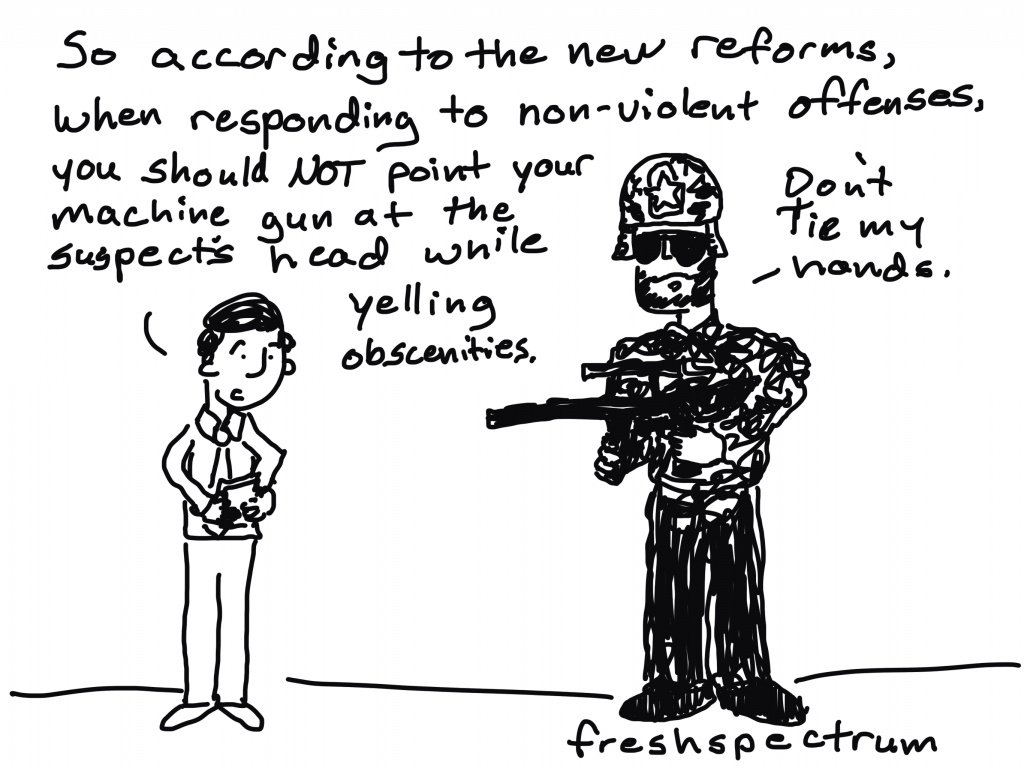
More training or diversity among police officers won’t end police brutality, nor will firing and charging individual officers. Look at the Minneapolis Police Department, which is held up as a model of progressive police reform. The department offers procedural justice as well as trainings for implicit bias, mindfulness and de-escalation. It embraces community policing and officer diversity, bans “warrior style” policing, uses body cameras, implemented an early intervention system to identify problematic officers, receives training around mental health crisis intervention, and practices “reconciliation” efforts in communities of color. George Floyd was still murdered. The focus on training, diversity and technology like body cameras shifts focus away from the root cause of police violence and instead gives the police more power and resources. The problem is that the entire criminal justice system gives police officers the power and opportunity to systematically harass and kill with impunity.

McHarris and McHarris

In another example, New York amended its patrol guide to treat transgender and gender nonconforming communities with dignity and respect — guidance included things like referring to people by their preferred gender pronouns — and yet transgender and gender nonconforming New Yorkers reported police abuses continued years after the reform. The Obama administration’s President’s Task Force on 21st Century Policing final report is another example of reform that a member of the task force has explicitly stated will not work and instead argues “policing as we know it must be abolished before it can be transformed.”

Okay, but really how else can we keep our communities safe?

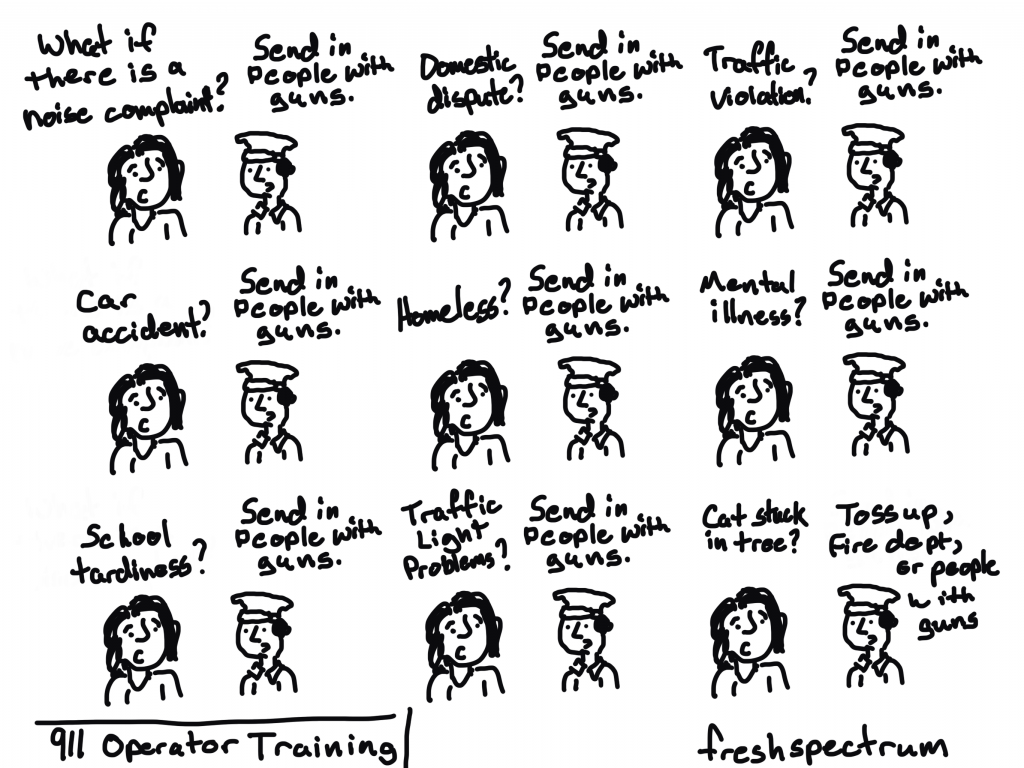
As I recently heard during a virtual teach in hosted by Critical Resistance, Black Visions Collective, Reclaim the Block, and many others “We can dramatically reduce policing now because policing is not about crime control”. In fact, a majority of police officers’ time is not spent on policing on violent crime as Alex Vitale, author of the End of Policing, explains during a Jacobin interview.

What if we could reimagine how we address social problems and move beyond conceptualizing violence as an individual problem (e.g., some police officers are good, there are just a few bad apples).

 Punishment centers individualistic understanding of crime and ignores the systemic and structural drivers that create the conditions that lead to crime and inequality. And this is directly linked to the neoliberal, racist capitalism, which also perpetuates individualist, racist perceptions of inequality: if Black and poor folks could just pull themselves up by their bootstraps, they could succeed. 

What if we could disentangle our understanding of accountability from punishment? Can you imagine a world where we hold people accountable for their violence and harm without punishment and throwing them in cages, which only perpetuates and nurtures violence?

So, what are the alternatives?

First, communities have demonstrated that they can create safety for their communities beyond policing. Communities across our country in the context of protests and organizing have banded together to create safer communities including things like mutual aid, coordinating the supply of personal protective equipment (PPE) and first aid, setting up networks to share information about upcoming police sweeps of unhoused people and anticipated attacks from white supremacists, pod mapping, and approaches to restorative and transformative justice grounded in community, not funneled through the prison industrial complex.

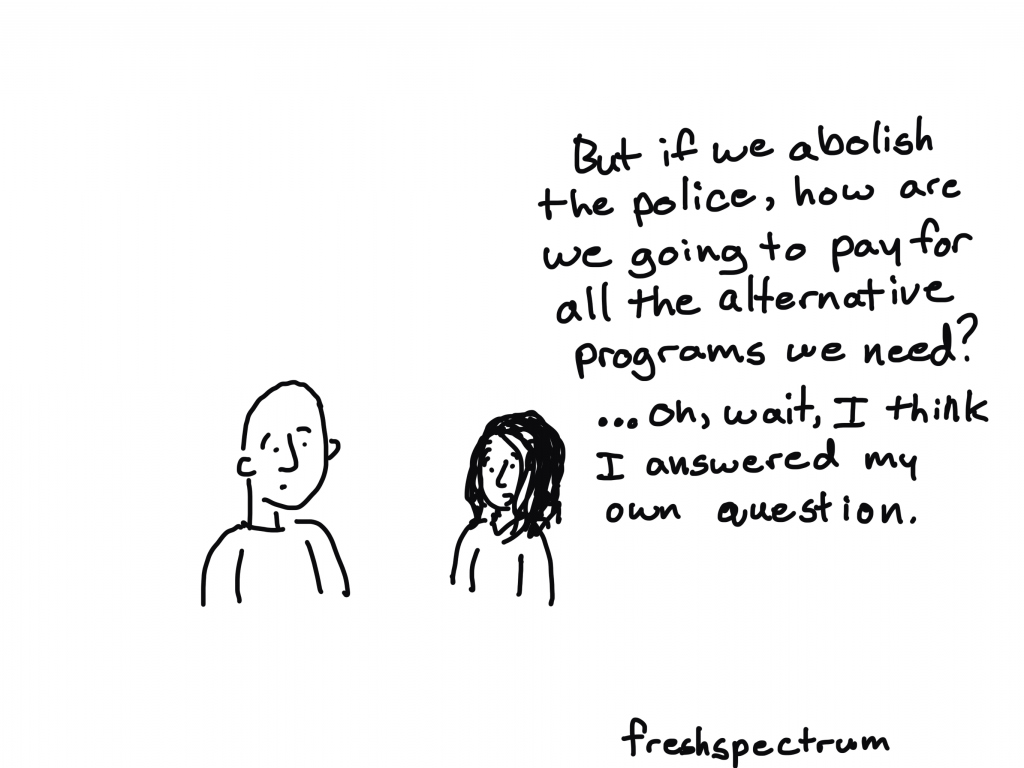
Second, rather than reforming a system that has been designed to harm and inflict violence, abolitionists argue that we should move towards abolishing the entire prison industrial complex, including policing, courts, and imprisonment. Abolitionists are not solely arguing to defund, divest, and dismantle the prison industrial complex, they are arguing to increase positive, proactive investments in community to foster healing, prevent harm, and create safer communities.

Mishi Noor, activist with Black Visions and Reclaim the Block, spoke to Trevor Noah about their rationale for shifts in their organizing strategy in Minneapolis from a focus on reform within the system to abolitionist demands to reduce the “the scope, the scale, and the power of police”.

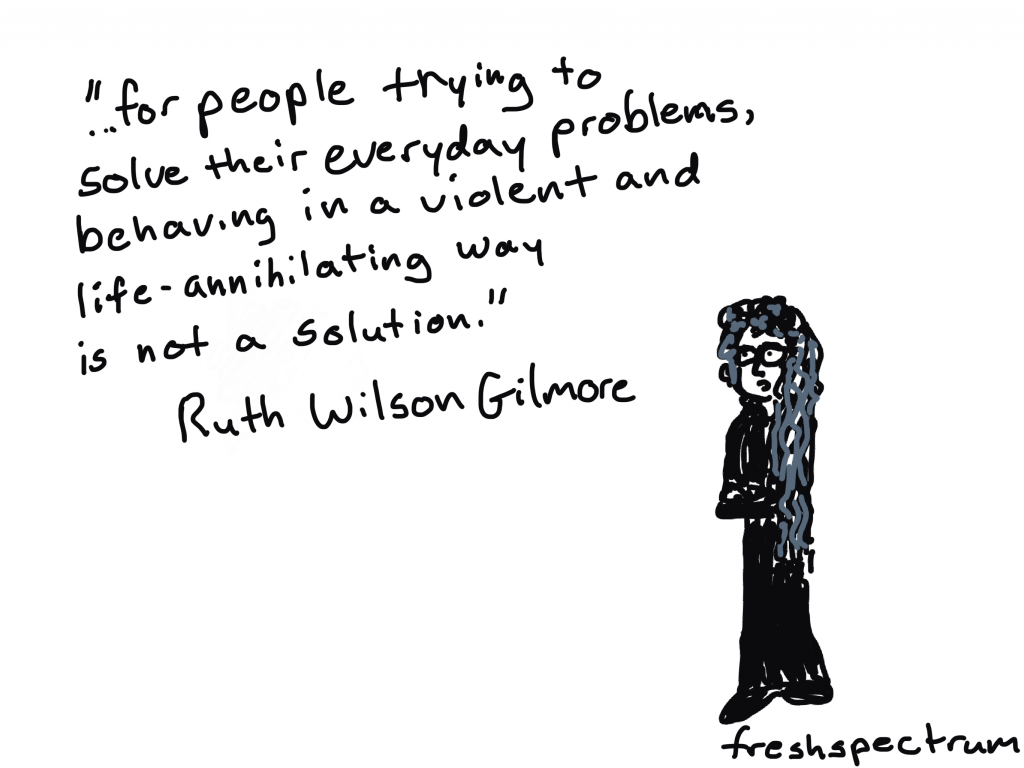
Abolitionists reject the idea that punishment is an effective solution when someone inflicts harm and reject racist, neoliberal capitalism that values profit over people and erases structural and systemic understandings of humans in favor of individualism. This notion that punishment is the solution to individual crime is so ingrained in our systems and minds that imagining a different reality is very difficult for many of us.

If you want to learn more, I can offer a few great places to start:

  • http://criticalresistance.org/
  • http://transformharm.org/
  • https://www.8toabolition.com/

Finally, you might be wondering what does this have to do with evaluation?

At its core, abolitionist practice centers healing, liberation, and transformation and harnesses constant reflection, collaboration, and connection in service of meeting community needs. It’s about going beyond tweaks and reforms, and instead crafting whole scale transformations and creating something new in order to dismantle racist, homophobic, sexist, ableist systems of oppression. Many of us have demonstrated solidarity and even engaged in direct action in support for BLM outside of our evaluation practice over the past few months. What would it look like if we wove an abolitionist perspective into our evaluation practice and explicitly interrogated the ways in which we perpetuate white supremacist values within our organizations and our evaluation practice? What whole scale transformations of evaluation could we foster if we looked closely at the ways in which we tokenize and push evaluators of color to assimilate to hegemonic ways of conceptualizing and practicing evaluation and in turn exclude subjugated forms of knowledge and practice?

In addition to the aforementioned Evaluation as Protest blog, ¡Milwaukee Evaluation! shared Dos and Don’ts for evaluators engaging in protest. And let’s not forget their Call to Arms teach in where they asked us to interrogate the ways in which evaluators are complicit in the normalization and rationalization of neoliberal capitalism and reflect critically on whose economic interests our evaluations serve (e.g. foundations who have made decisions about what matters and the types of questions to ask). Then, on an EvalCentral Unwebinar episode addressing the question Why is Evaluation so White? Vidhya Shanker systematically highlighted the erasure of POC evaluators in the evaluation canon and then shared a generative and transformational response — the co-creation of a Minnesota IBPOC Community of Practice.

These are just a few recent sources of inspiration that help me reflect on the ways I can bring an abolitionist perspective to my evaluation practice and across all of my networks and spheres of influence. For me this has meant reclaiming my time and energy by working directly on abolitionist organizing locally, reflecting on the ways in which I have personally been assimilated into the evaluation field, and moving towards centering subjugated forms of knowledge and practice through my consulting practice and collaboration with others.

If this resonates with you, how might you integrate abolitionist values and principles into your evaluation practice? I would love to hear from you if you want to share, discuss further, or if you have any questions.

In community,

Aisha

Aisha Rios, PhD is an evaluator, applied anthropologist, and the founder of Coactive Change, where she envisions a world where community knowledge is valued and coexists with evaluation to advance social justice.  Her mission is to support change agents, advance equity, and disrupt systems of oppression.

If you are interested in working with Aisha, you can schedule a free 30 minute consultation at https://calendly.com/aisharios.

Written by cplysy · Categorized: freshspectrum

Jun 24 2020

Evaluation, Compassion Fatigue, and Health Inequity

Doing something is a good start. But it’s not enough.

As evaluators we deal with all sorts of programs and activities that were launched out of a need to do something. Programs that keep on doing something, or something else, or something ineffective, or something effective, or something counterproductive, or something amazing, or nothing.

And it’s easy to come in and say, “well, why are you doing that?” or “what are you trying to accomplish?” That’s one of our jobs right? As an outsider, or quasi outsider, it’s not all that hard to ask these existential questions.

But what about the stuff that “we” do? Our work?

Not our methods, those are really just us doing things. What are we for?

EEI seeks to shift the evaluation paradigm so that it becomes a tool of and for equity and one that embraces the complexity of the age in which we live. 

An Interview with Jara Dean-Coffey, Founder, Luminare Group

Seizing Momentum and Resisting Fatigue

Do you feel it?

The news cycle slowly shifting away.

Back to the usual.

We have never been more aware of the appalling events that occur around the world every day. But in the face of so much horror, is there a danger that we become numb to the headlines – and does it matter if we do?

Elisa Gabbert – Is compassion fatigue inevitable in an age of 24-hour news?

I was listening to Sam Sander’s fantastic podcast, It’s been a minute. One question came up when he was speaking with his guest Candace Carty-Williams on the Black Lives Matter protests the UK. It was the why now question.

Would these protests be happening at this scale if so many people across the globe were not stuck inside their houses? Because things are different, are we less likely to let the monotony of everyday work take our attention away from important issues like normalized systems of white supremacy?

I worry about the overwhelm that seems to be a major component of our modern world.

Understanding that there is a problem and that I am part of that problem is a step. The compelling desire to do something, and following through, is another step. But to keep things moving forward, we have to counter the systemic racism with systemic anti-racism. We have to contribute to change that is bigger than any one of us.

Not just because channeling our efforts into changing the system brings more potential. But because failing to channel our efforts can quickly lead to fatigue.

Despite the predicted prevalence of CF, the literature also suggests that compassion fatigue can be mitigated through activities that promote resilience such as: self-awareness, self-care, and mindfulness training.

Tara Tucker, Maryse Bouvette, Shauna Daly, and Pamela Grassau – Finding the sweet spot: Developing, implementing and evaluating a burn out and compassion fatigue intervention for third year medical trainees

Don’t get me wrong, this is not a call for inaction. We’re in a moment, there’s momentum, we need to leverage that momentum.

Just doing things is a great start, but is rarely ever a great long term solution.

Health Inequity

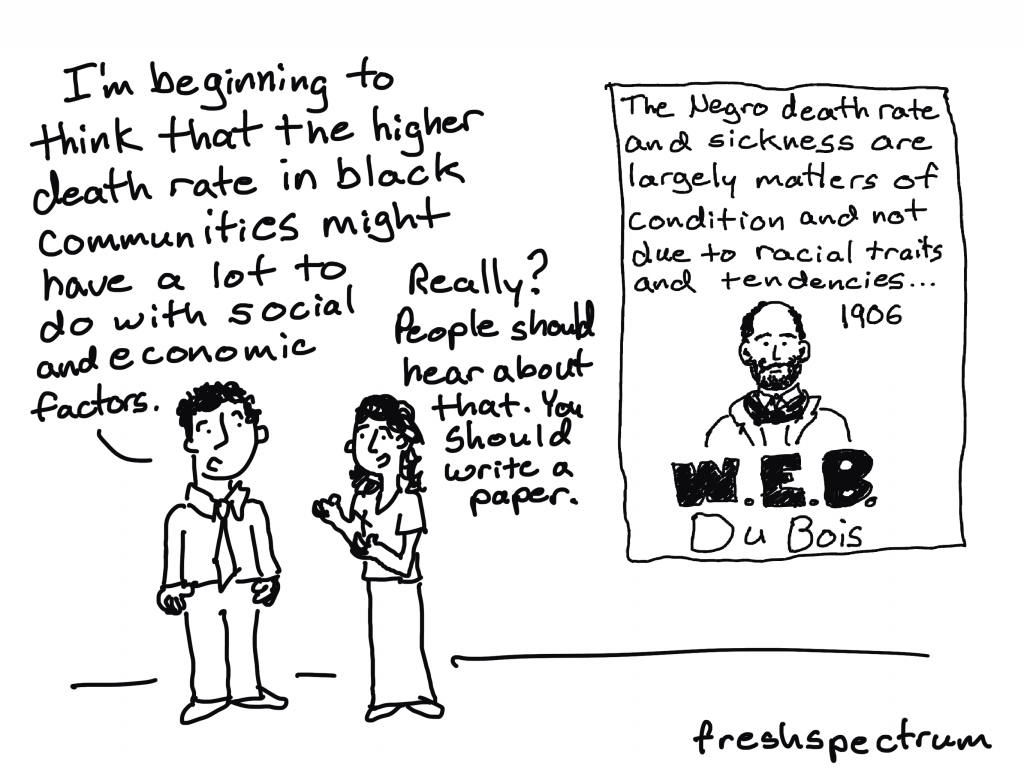
Today, Du Bois’ observation still stands true, as communities of color continue to experience higher rates of premature death and chronic disease compared to Whites, due to an interplay of social and economic factors, many grounded in the legacy of institutional racism and discrimination.

Shenae Samuels-Staple, PhD, MPH – The State of COVID-19 in Florida and South Florida: An Early Look at Disparities in Outcomes?

I’ve been working on the next module for my free dataviz for anti-racism course. It should be live sometime in the next week. I’ll send a message to everyone who is enrolled when it’s up.

The first module focuses on localizing police arrest data. The second module will dive into basic infographic design using special education data.

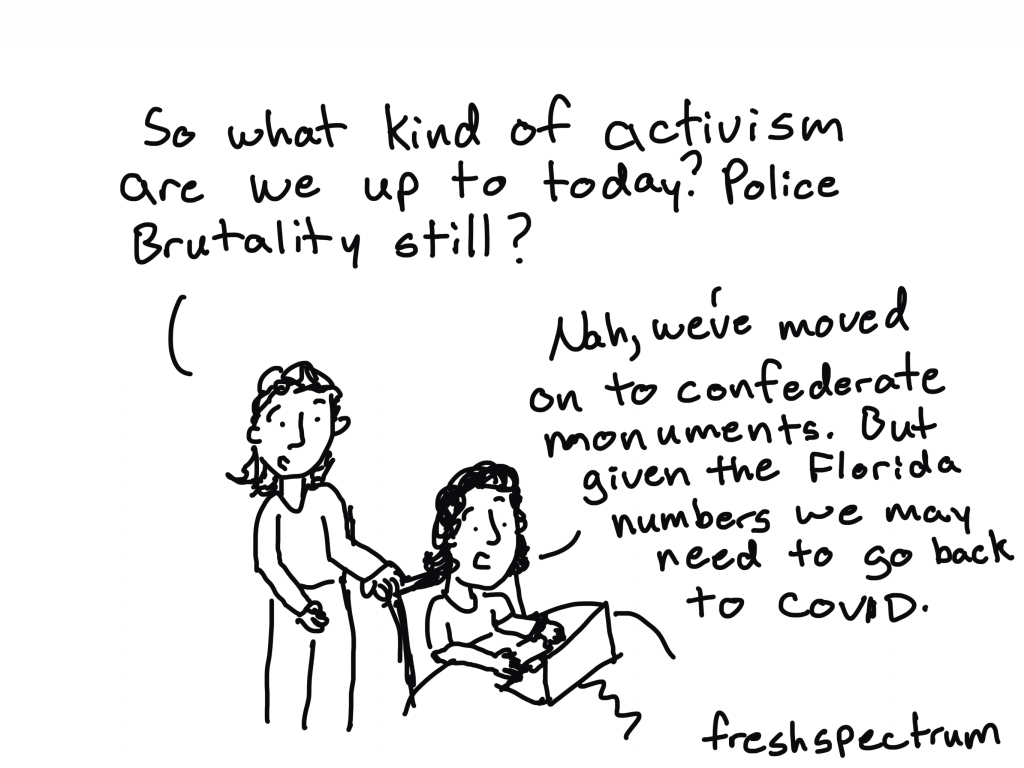
But given current COVID-19 trends, I thought I would take a little space today to run through uncovering inequity in public health data.

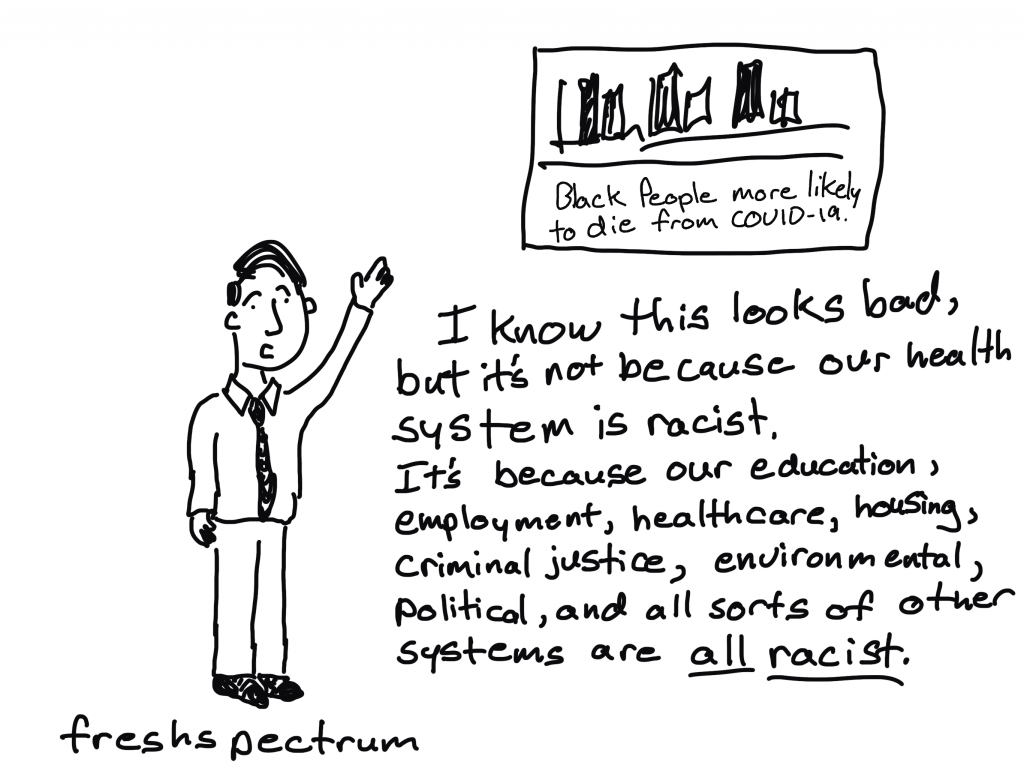
First things first, there is strong evidence of inequity within the COVID-19 data.

But it might not be easy to decipher in the numbers you see…

Data gets collected, analyzed, and reported in all sorts of ways. It varies across countries, states, and localities. But by and large, number of cases and number of deaths are common metrics.

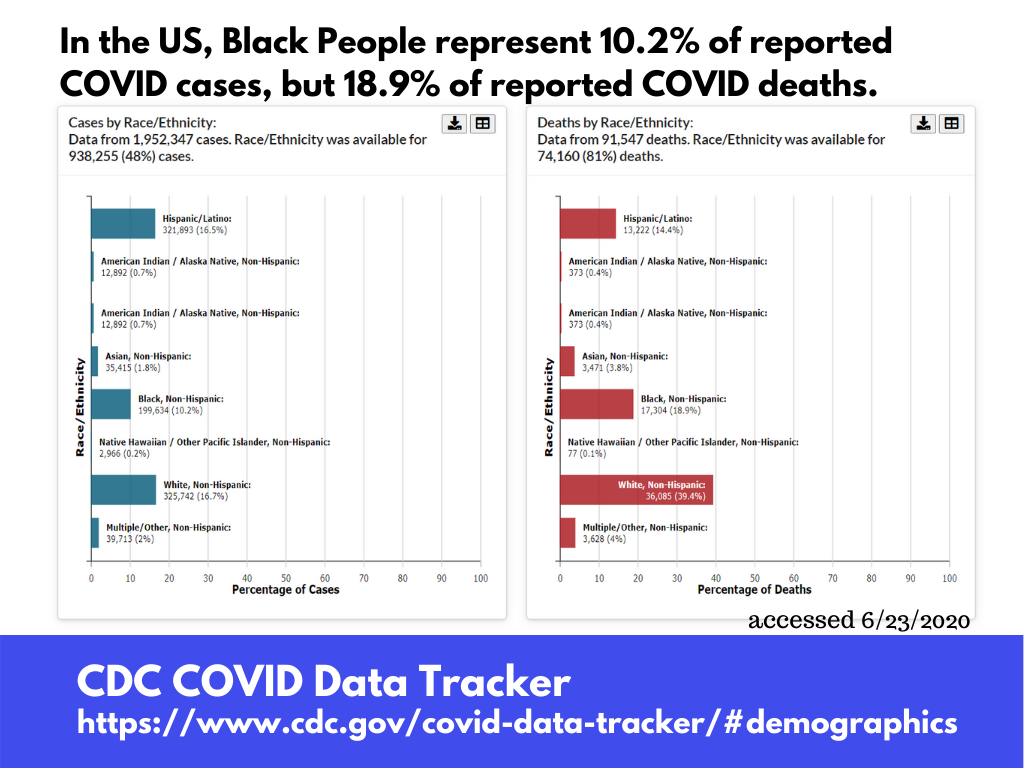
In most states, this data is also further broken down by race and ethnicity. The CDC also has a report that shows the incomplete aggregate data at the national level.

You could look at this data and say, whoa, look at the White People numbers. They represent 39.4% of the deaths but only 16.7% of the cases…

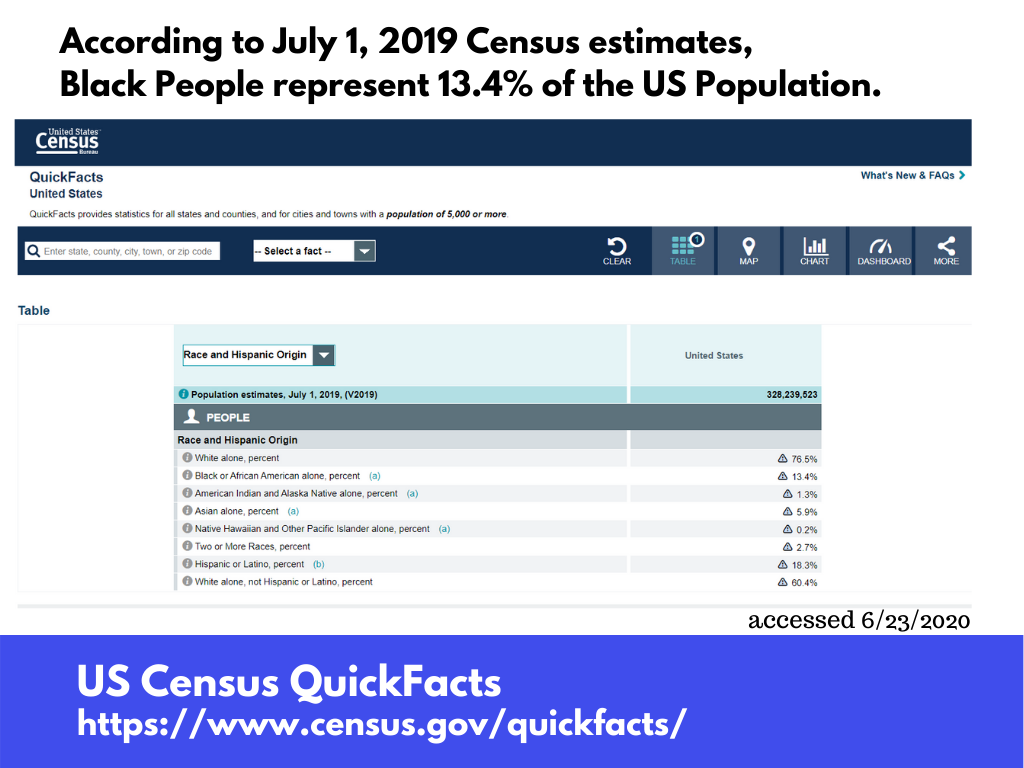
But we are also talking about a group of people that represent 60% of the US population. A lot of the COVID data we have on cases is pretty suspect, so comparing deaths to the overall population is likely to give a more reliable view.

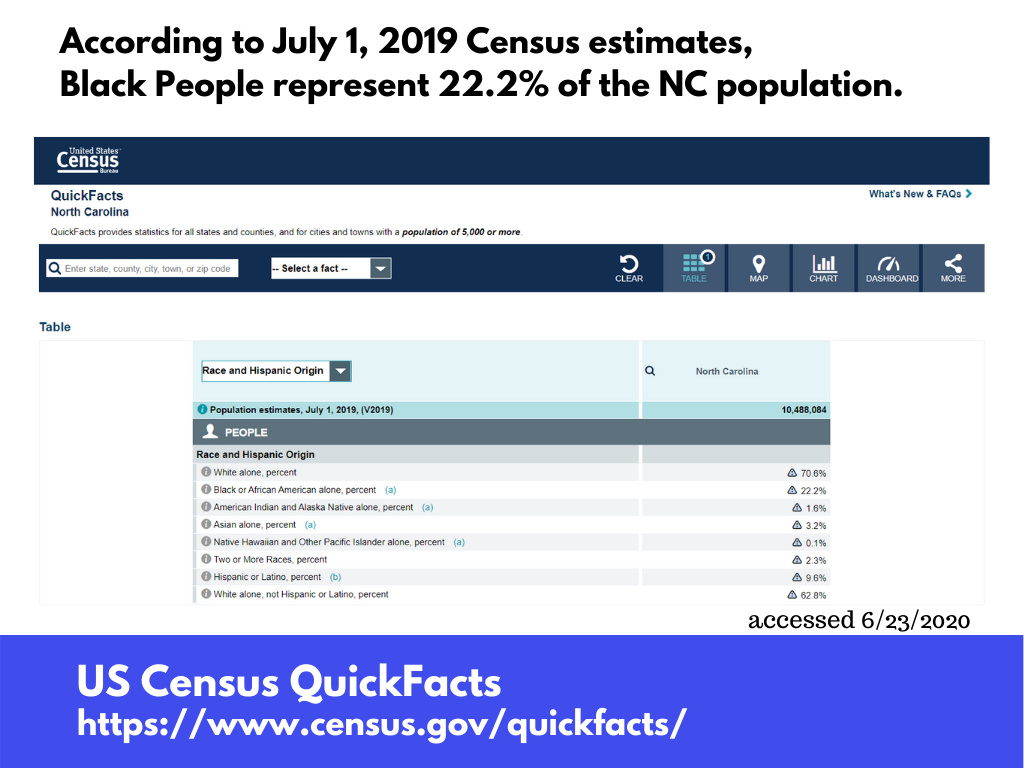
Given the incompleteness of the national data, let’s zoom down to the state level. And since general population data is often missing from datasets, let’s take a look at the overall population distribution first.

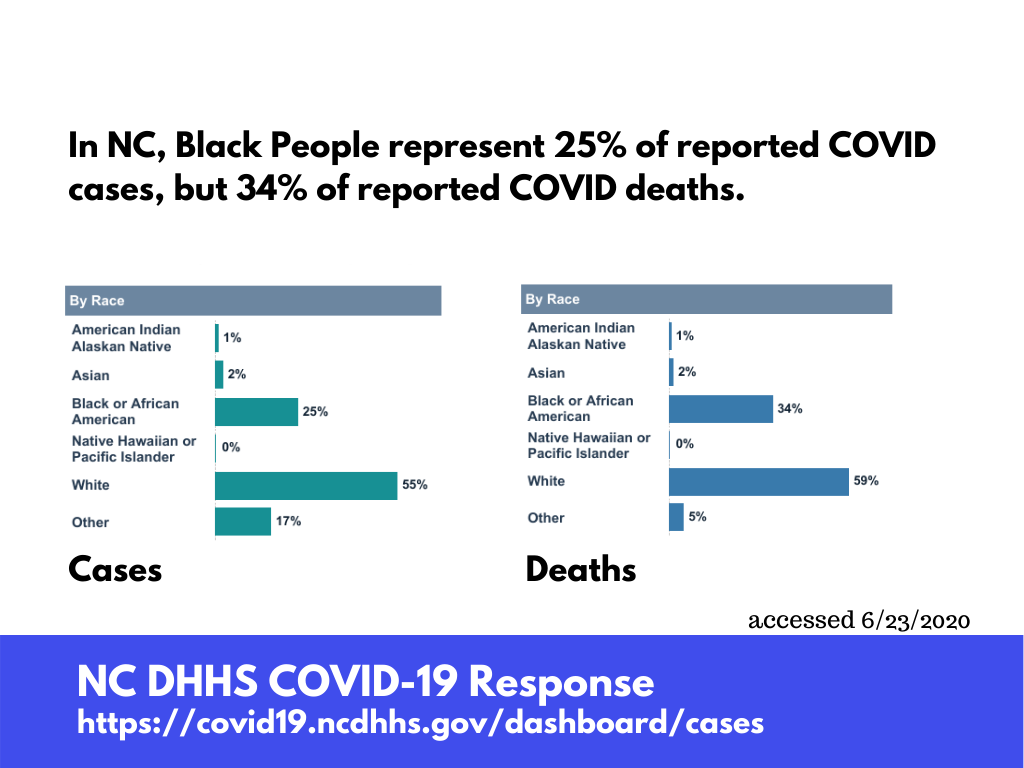
State data varies. But for health data I almost always start from the state’s health department. On NC’s site I found a page with the breakdown. And it was already in a format that made comparing cases and deaths pretty easy.

But as was mentioned before, let’s assume the death data is more reliable. So…

In North Carolina, Black People represent 22% of the population but 34% of the COVID-19 deaths. White People represent 71% of the population and 59% of the deaths.

This is the trend that seems almost universal across all sorts of data sources and fields. When something is bad, it’s usually worse for Black People than it is for White People. And the data reflects that.

So what about COVID-19 testing…

So after months and months, it’s still hard to trust the data we have on cases of COVID-19.

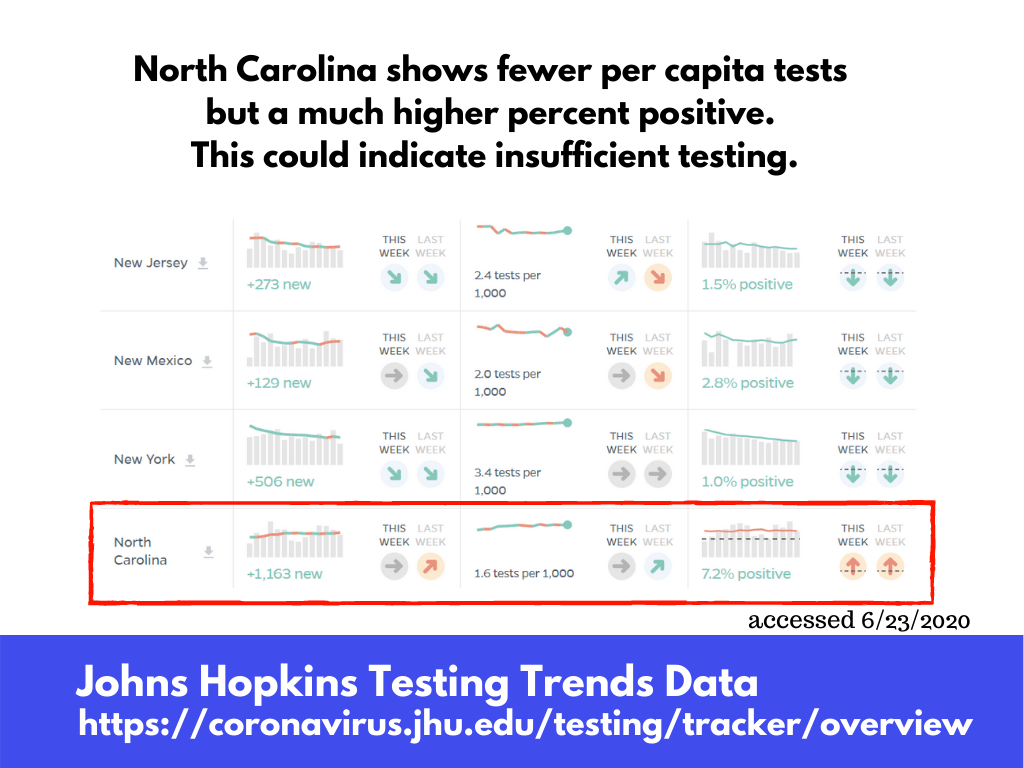
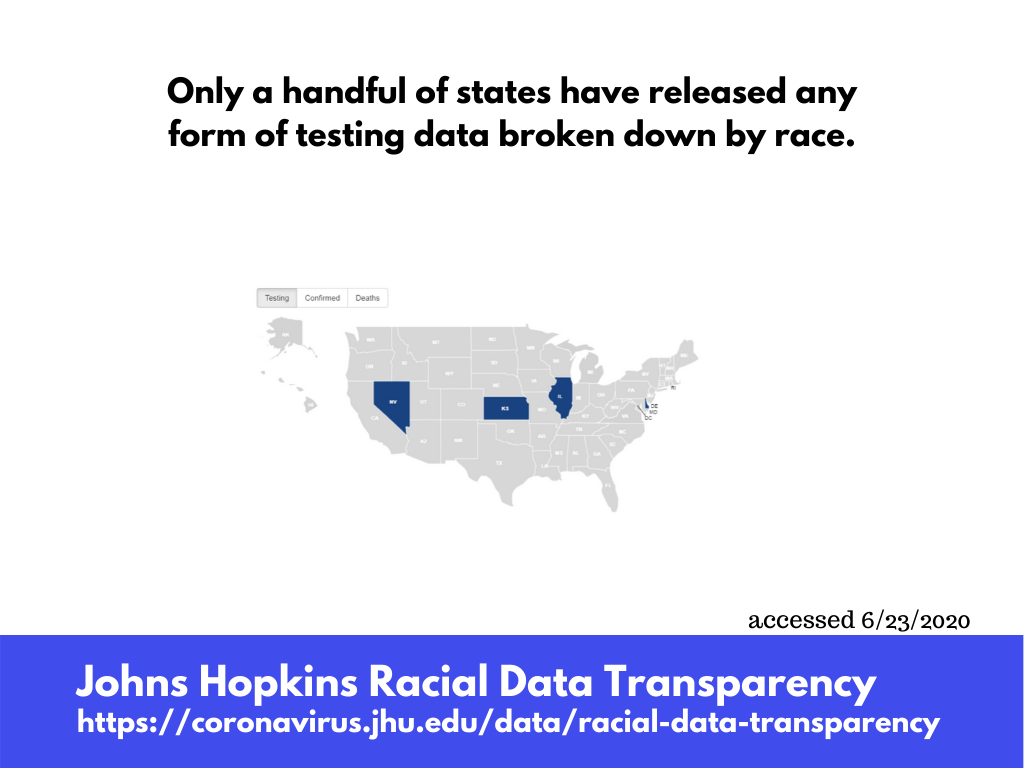
But like all things COVID, it’s harder to trust the case data in some states more than others. Johns Hopkins has a nice little visualization that compares all the states on their testing efforts. Let’s pull out a few.

So we start with number of tests. That number is then normalized to the population (making it so much easier to compare!). We also see the percent positive.

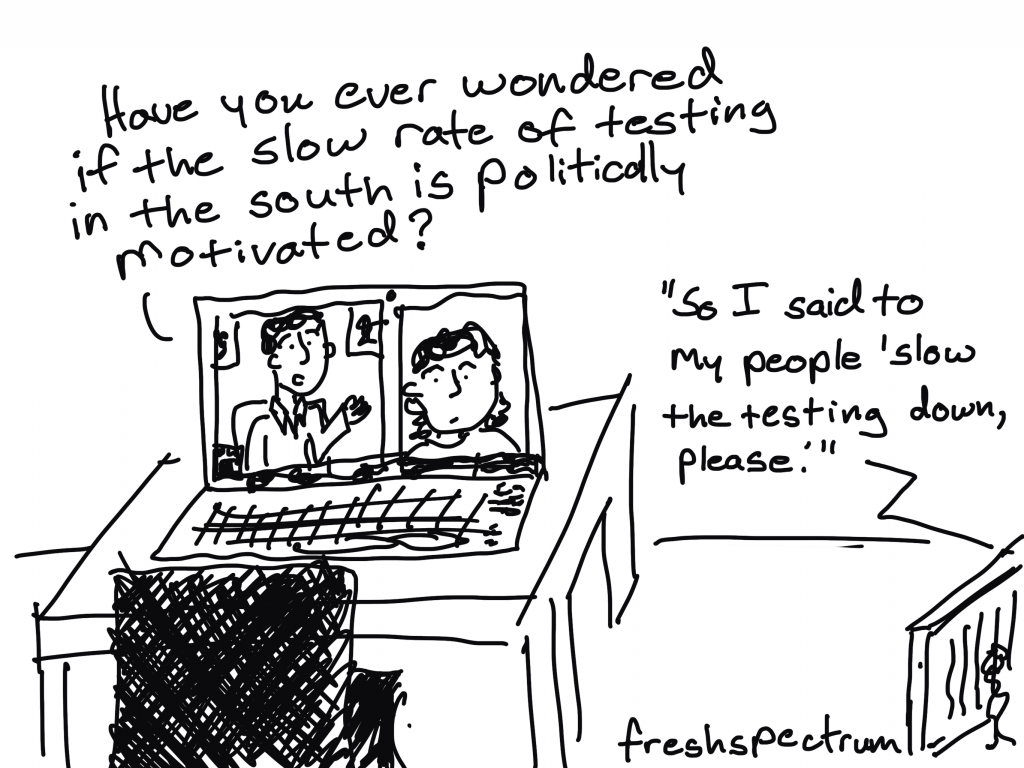
A combination of a high percent positive rate mixed with a low tests per 1,000 is a bit scary. It suggests under testing, which is also likely masking bigger numbers of cases.

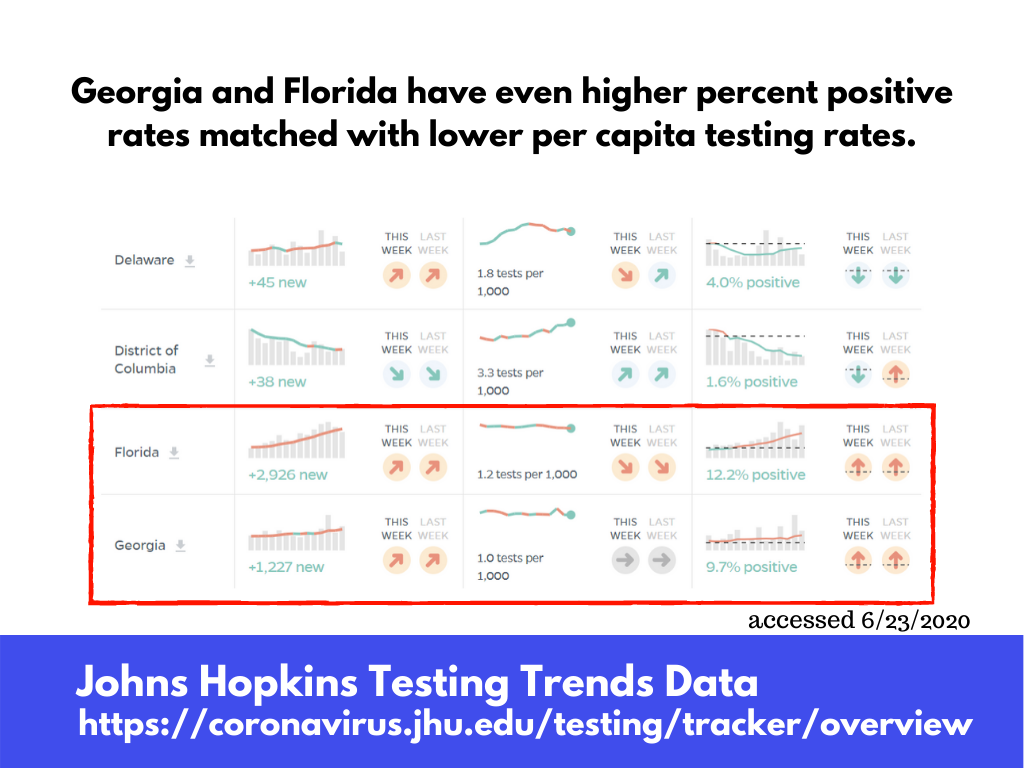
Two other southern states, Florida and Georgia, are also showing low testing rates and higher percent positive. Simultaneously, we’re still seeing pretty large spikes in cases for each of these states.

If only we could see how this testing slow down is impacting BIPOC communities.

But this data is not being shared…

Having that data could help inform local efforts in combating the spread. But there is nothing to say that having testing data broken down by race will alleviate disproportional negative outcomes.

But it is distressing to think that the most reliable way to currently monitor the inequities relies on death rates.

It’s hard to properly drive a car when you close your eyes.

June 24, 1PM Eastern (10AM Pacific) Eval Central UnWebinar

I hope you can join us for this week’s Eval Central UnWebinar.

Special Guest: Mary Davis

This week’s seed topic: What do Public Health evaluators do? 

Public health is a big, inclusive tent with evaluators from many disciplines and backgrounds. From her more than 25 years of experience, Mary will discuss the many roles that evaluators have in public health including preparedness–preparing for, responding to, and learning from pandemics and disasters.

Register Here

Written by cplysy · Categorized: freshspectrum

Jun 17 2020

DataViz for Anti-Racism [Free Course]

No new cartoons or lengthy blog post this week.

Instead I launched a course. It only has one module now, but I have plans for more. And did I mention it was free?

Register Here

What you will learn

Not everything that is faced can be changed, but nothing can be changed until it is faced. – James Baldwin

Racism is Systemic

It’s not hard to find inequities in data. All you really have to do is open your eyes.

As an analyst I’ve spent a career with my head in datasets of all sorts. I have been a part of large research and evaluation studies in health, urban development, criminal justice, and education. It doesn’t matter the area of study, when opening a data set that includes data on race and ethnicity, chances are strong that I will see our inequity reflected in the numbers.

As a designer, cartoonist, and blogger, I also know how hard it is to help people see what they would not like to see (self included). The uncomfortable facts that put into question our role in perpetuating a culture of white supremacy and racial inequality.

This is a course about making the numbers real.

There is no need to cherry pick. You don’t need to be super selective to find numbers to share. Numbers that could be used to support anti-racist causes are everywhere, hidden in plain sight and in public data sources.

But if you want the numbers to have an impact, you have to make them real. You have to make them hard to ignore.

That is the point of this course.

Course Structure

We’ll start with a module on a process I call localizing data.

The concept is simple, one way to make the data real is to show that the trends persist in your backyard. Data shared at federal, and event state, levels are too easy “to other”. To pretend that they don’t apply to your community.

But if you can show that the trends persist even when localized, it makes the numbers harder to ignore.

It also makes it easier to take action. As you can embed the data into your emails to politicians and police chiefs, strengthening your case.

If this course is useful, I’ll make additional modules focused on some other strategies.

Free Forever

I am launching this course for free. And then keep it free.

If you enjoy the course, and want to show appreciation, pay it forward.

Not sure how, here are two suggestions Color of Change and Campaign Zero.

Where do I sign up?

Register Here

Written by cplysy · Categorized: freshspectrum

  • « Go to Previous Page
  • Go to page 1
  • Interim pages omitted …
  • Go to page 48
  • Go to page 49
  • Go to page 50
  • Go to page 51
  • Go to page 52
  • Interim pages omitted …
  • Go to page 54
  • Go to Next Page »

Footer

Follow our Work

The easiest way to stay connected to our work is to join our newsletter. You’ll get updates on projects, learn about new events, and hear stories from those evaluators whom the field continues to actively exclude and erase.

Get Updates

Want to take further action or join a pod? Click here to learn more.

Copyright © 2026 · The May 13 Group · Log in

en English
af Afrikaanssq Shqipam አማርኛar العربيةhy Հայերենaz Azərbaycan dilieu Euskarabe Беларуская моваbn বাংলাbs Bosanskibg Българскиca Catalàceb Cebuanony Chichewazh-CN 简体中文zh-TW 繁體中文co Corsuhr Hrvatskics Čeština‎da Dansknl Nederlandsen Englisheo Esperantoet Eestitl Filipinofi Suomifr Françaisfy Fryskgl Galegoka ქართულიde Deutschel Ελληνικάgu ગુજરાતીht Kreyol ayisyenha Harshen Hausahaw Ōlelo Hawaiʻiiw עִבְרִיתhi हिन्दीhmn Hmonghu Magyaris Íslenskaig Igboid Bahasa Indonesiaga Gaeilgeit Italianoja 日本語jw Basa Jawakn ಕನ್ನಡkk Қазақ тіліkm ភាសាខ្មែរko 한국어ku كوردی‎ky Кыргызчаlo ພາສາລາວla Latinlv Latviešu valodalt Lietuvių kalbalb Lëtzebuergeschmk Македонски јазикmg Malagasyms Bahasa Melayuml മലയാളംmt Maltesemi Te Reo Māorimr मराठीmn Монголmy ဗမာစာne नेपालीno Norsk bokmålps پښتوfa فارسیpl Polskipt Portuguêspa ਪੰਜਾਬੀro Românăru Русскийsm Samoangd Gàidhligsr Српски језикst Sesothosn Shonasd سنڌيsi සිංහලsk Slovenčinasl Slovenščinaso Afsoomaalies Españolsu Basa Sundasw Kiswahilisv Svenskatg Тоҷикӣta தமிழ்te తెలుగుth ไทยtr Türkçeuk Українськаur اردوuz O‘zbekchavi Tiếng Việtcy Cymraegxh isiXhosayi יידישyo Yorùbázu Zulu