• Skip to main content
  • Skip to footer
  • Home

The May 13 Group

the next day for evaluation

  • Get Involved
  • Our Work
  • About Us
You are here: Home / Archives for allblogs

allblogs

Oct 07 2020

Ask Nicole: My Best & Worst Client Experiences

Have a question you’d like to be featured? Let me know. As we head closer to the end of 2020, I’m starting to think about where I want my business to go and who I want to be, have, and experience in 2021. Considering we’re still in the middle of a pandemic, it feels futile […]

The post Ask Nicole: My Best & Worst Client Experiences appeared first on Nicole Clark Consulting.

Written by cplysy · Categorized: nicoleclark

Oct 06 2020

Aprendizaje social: por observación

Fuente: https://valuexperience.com/los-beneficios-del-aprendizaje-social/

Dentro del Aprendizaje por observación, una de las teorías más influyentes del aprendizaje es la Teoría del Aprendizaje Social (TAS) formulada por Albert Bandura: La TAS se basa en que hay tipos de aprendizaje donde el refuerzo directo no es el principal mecanismo de enseñanza, sino que el elemento social puede dar lugar al desarrollo de un nuevo aprendizaje entre los individuos. La TAS es útil para explicar cómo las personas pueden aprender cosas nuevas y desarrollar nuevas conductas mediante la observación de otros individuos.

Así pues, esta teoría se ocupa del proceso de aprendizaje por observación entre las personas.

En la TAS de Bandura elaborada el año 1977 se basa en teorías del aprendizaje conductista sobre el condicionamiento clásico y el condicionamiento operante. Sin embargo, añade dos ideas importantes:

  1. Los procesos de mediación se producen entre estímulos y respuestas.
  2. Conducta es aprendida desde el medio ambiente a través del proceso de aprendizaje por observación.

De acuerdo con la TAS de Bandura, gran parte del aprendizaje humano es un aprendizaje que se realiza a través de la observación del comportamiento de otra persona que actúa como modelo. Por ello, es llamado aprendizaje observacional, aunque también recibe el nombre de aprendizaje social.


Aprendizaje social, aprendizaje por observación en los tiempos que corren: empezamos i qué idea i


Written by cplysy · Categorized: TripleAD

Oct 06 2020

What’s Missing from Your Organization’s Social Media Posts?

Today’s article comes from Amelia Kohm, the founder of Data Viz for Nonprofits. Thanks for these practical dataviz tips, Amelia! — Ann

What’s missing? Charts, maps, graphs and other data visualizations. When I peruse posts from organizations and businesses, I mostly see:

  • Grainy, low-resolution photos, 
  • Oddly-cropped photos that accidentally cut off important parts of the images once they’re transferred to social media posts,
  • Headshots,
  • Stock images (only some of which clearly relate to the text), or
  • No image at all.

Twitter, Facebook, and LinkedIn are like crowded highways packed with billboards. If we add charts, maps, and graphs to our billboards, we can both grab attention and say something meaningful. But the image and message should be simple and clear to travelers zooming by. 

What types of vizes work best? Here are four to consider.

1. Maps

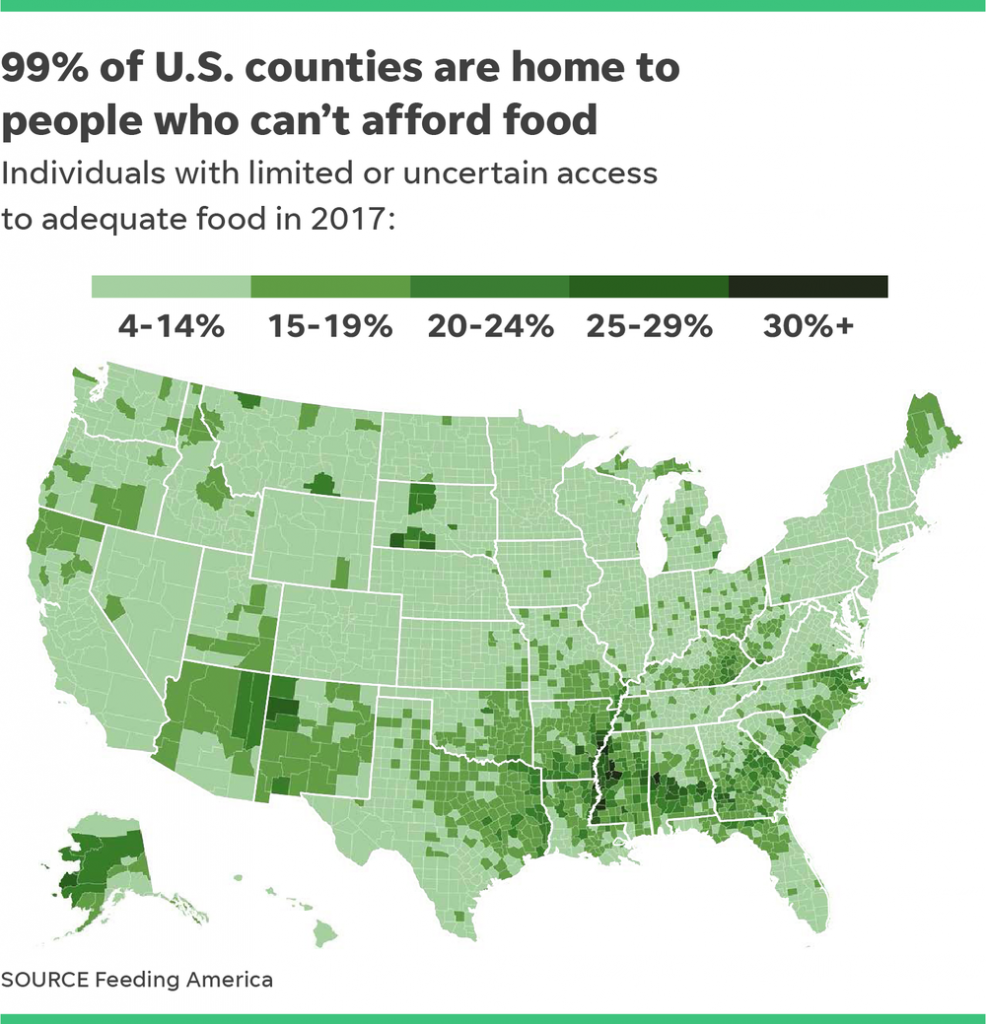
Map of the United States used in a social media post. Source: tennessean.com, image: feedingamerica.org.
Source: tennessean.com, Image: feedingamerica.org.

If the map shows a geography we know like our own city or country, we have a lot of prior knowledge that we can apply. This knowledge makes maps easy to digest on the fly. 

We look for our own location. We compare east to west or cities to rural areas. 

Consider showing the distribution of the need you are addressing, the location of your clientele, or where you are providing services using a map. 

The objective is to communicate one primary message but allow for one or two secondary messages. 

For example, the primary message of the map above is that almost every county in the U.S. has residents who can’t afford food. Both the map itself and the title convey this message. 

However, the map allows for a secondary message. The problem is particularly severe in the south. It also allows you to compare your area of the country to that of others.

When using maps in social media posts, make sure they are readable! Shrinking down a map to fit a post often means that the labels are too small for most of us to read. Consider increasing the font size, reducing the number of labels, and/or zooming in on a particular portion of the map.

More great examples of maps in social media posts:

  • A prison data map to shape reform by CommonHealth ACTION
  • Heat map of human trafficking cases by AWS Nonprofits
  • Two active storms threaten the Gulf Coast early this week by Bloomberg Graphics on Twitter
  • The six political states of Florida by the Washington Post on Twitter
  • In 21 U.S. states, minimum wage workers earn the federal rate by Pew Research Center on Twitter

2. BANs (Big A** Numbers)

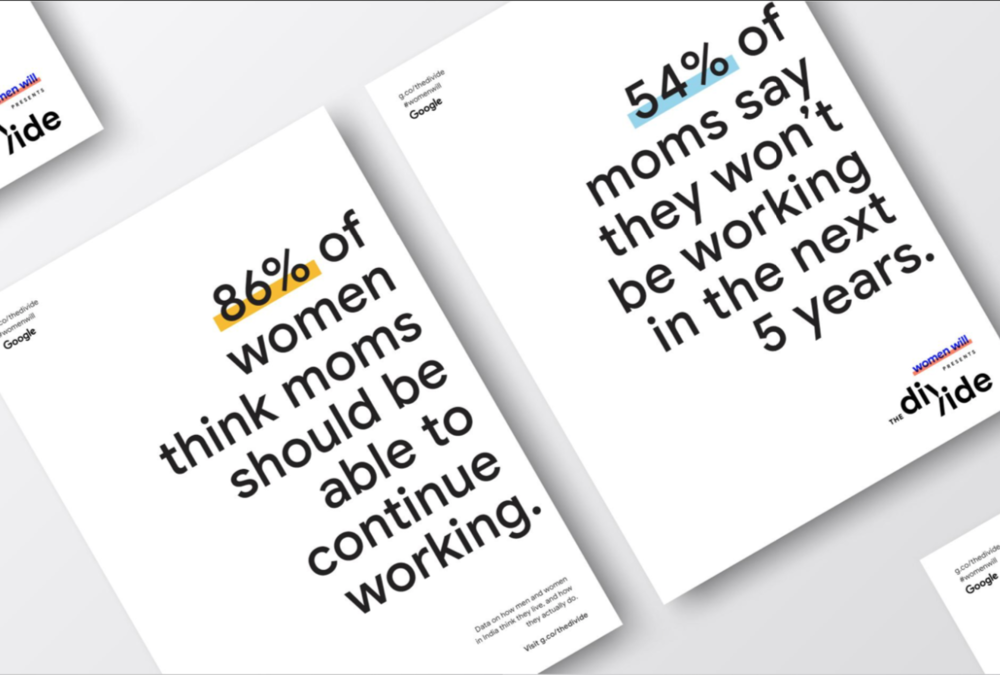
The BANs shown here are from Women Will, a Google initiative focused on economic empowerment for women. Source: shortyawards.com.
Source: shortyawards.com.

Just one large number can capture attention. 

The BANs shown here are from Women Will, a Google initiative focused on economic empowerment for women. They won a Shorty Award, which honors the best content creators on social media. 

Think about what single number you might share that could spark interest in your work. Numbers that are larger or smaller than most would expect work well. 

If the number you want to share is a percentage, consider converting it to a “natural frequency.” Say, for example, 1 in 10 people rather than 10% of people. We humans often struggle with percentages. Natural frequencies are more intuitive. We can imagine ten people we know. One hundred is more difficult, and percentages are based on 100. 

Add a link from your BAN post to a chart that provides more context and detail for that number.

More great examples of big numbers in social media posts:

  • 62% of Americans can identify the name of Islam’s holiest city. Can you? by Pew Research Center on Twitter
  • Our Census response rate is at 50% by the Maryland Census on Twitter

3. Line Graphs Showing Clear Trends

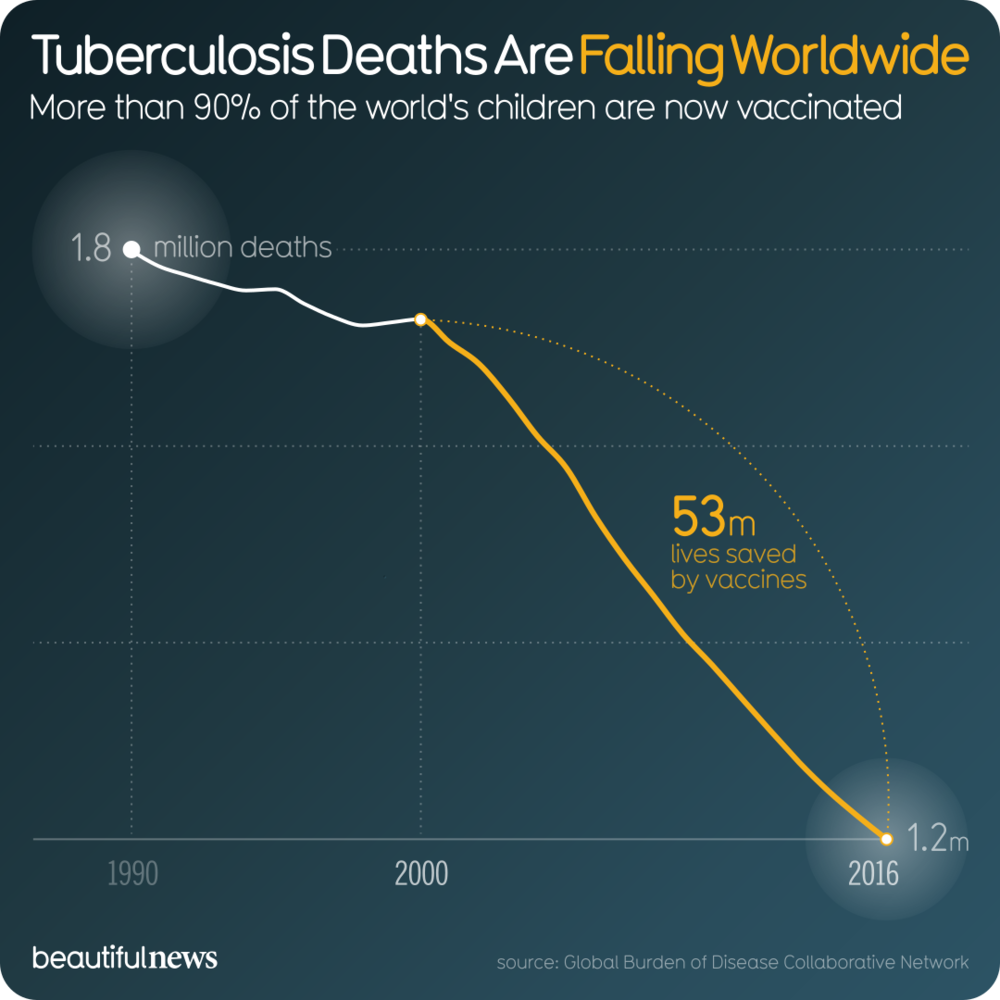
Line graphs are familiar. Many show change over time. So if we make it clear what is changing (here it's the number of deaths) and over what period of time, we can tell a quick and powerful story without much more than an angled line.
Source: informationisbeautiful.net.

Line graphs are familiar. Many show change over time.

So if we make it clear what is changing (here it’s the number of deaths) and over what period of time, we can tell a quick and powerful story without much more than an angled line. 

But keep it simple with only one line. 

Or, if you want to compare multiple trends using multiple lines, then highlight only one in color. 

For example, rather than show the overall world trend in tuberculosis deaths, you might want to have several lines each showing the trend within one country. Color one trend in a bright color and gray out the others. This will allow viewers to compare the selected country to the others. 

Consider using line graphs to show how the need for your services or your impact has changed over time.

Another great example of a line graph in social media posts:

  • Historic, current, and future population by continents by Visme on Twitter 

4. Bar Charts Showing Clear Comparisons

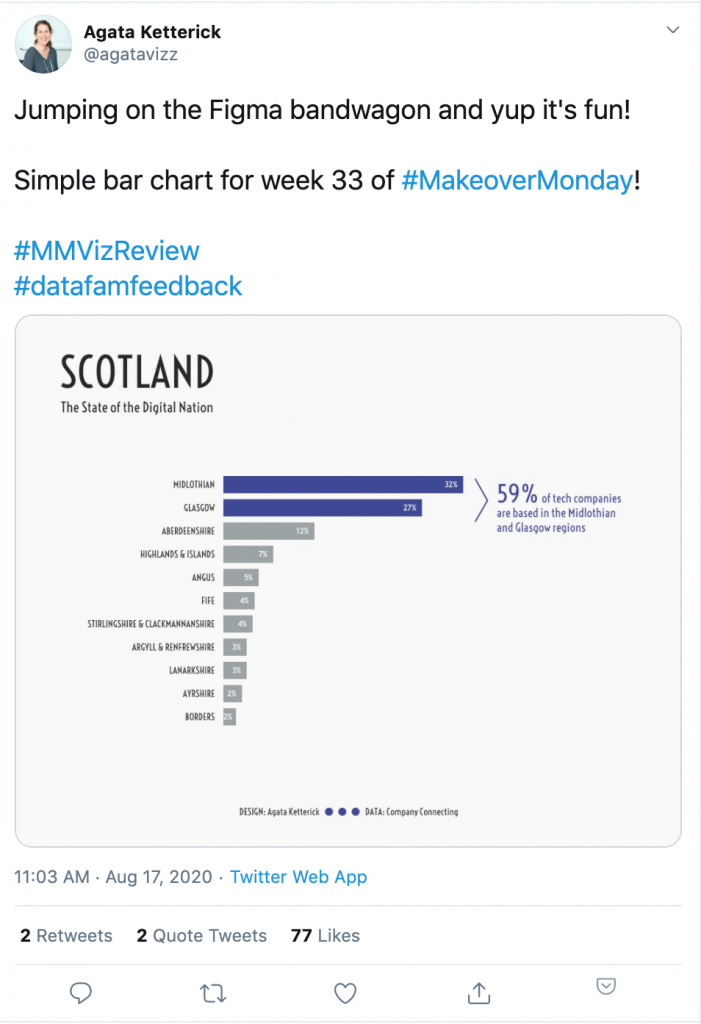
This bar chart by Agata Ketterick works well for a social media post. It’s simple use of color and limited number of bars make it pretty digestible. And the caption directs your attention to the key takeaway: that over half of the tech companies are located in just two of the twelve regions.

Bar charts also are trusted friends. We get them. 

When deploying bar charts, use color strategically to encourage particular comparisons. 

This bar chart by Agata Ketterick works well for a social media post. It’s simple use of color and limited number of bars make it pretty digestible. And the caption directs your attention to the key takeaway: that over half of the tech companies are located in just two of the twelve regions.

More great examples of bar charts in social media posts:

  • Coronavirus’ toll has hit minority communities the hardest by Bloomberg Graphics on Twitter
  • California’s five largest wildfires by the Washington Post on Twitter

A Parting Warning…

When using charts in your social media posts, strip them down to the essentials. 

Use only one chart and eliminate any visual elements that detract from the main message. 

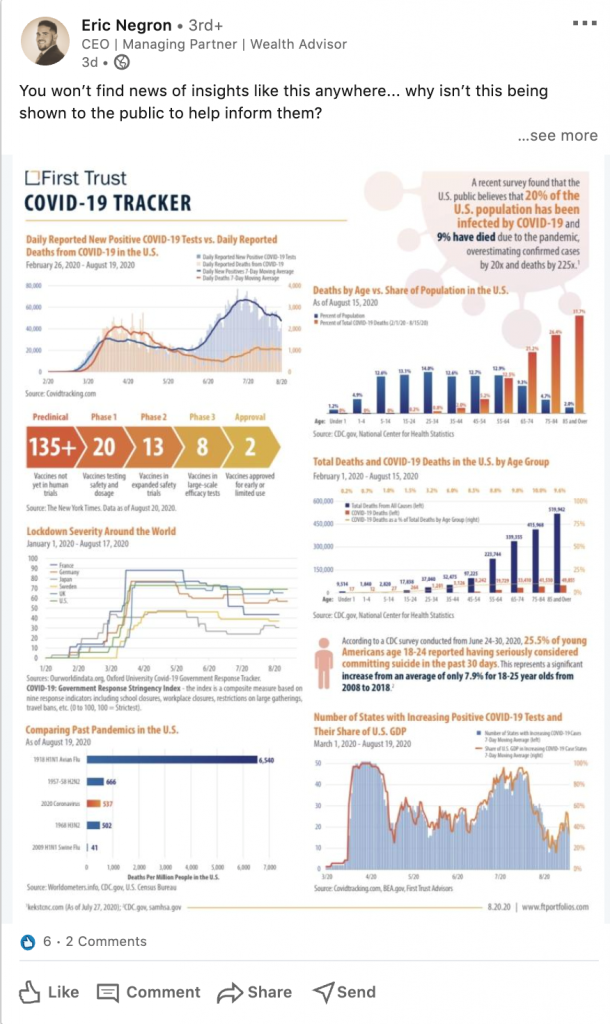
This post, for example, is too much to process for a busy, distracted social media reader.

When using charts in your social media posts, strip them down to the essentials. Use only one chart and eliminate any visual elements that detract from the main message. This post, for example, is too much to process for a busy, distracted social media reader.

Connect with Amelia Kohm of Data Viz for Nonprofits

Amelia Kohm, PhD, is the founder of Data Viz for Nonprofits (DVN). DVN delivers high-quality visualizations that help organizations to quickly grasp their data, improve their work, and show their impact. Sign up for DVN’s weekly 60-Second Data Tips.

Written by cplysy · Categorized: depictdatastudio

Oct 06 2020

Perspective Taking: The Power of Ten

Great innovators often see problems or solutions that others miss. This is as much about perception as it is anything else.

To illustrate the power of perception, consider the famous perceptual illusion below which profiles a young girl and an old woman (or “wife” and “mother in law”). The image, which dates back to 1888, shows how the same image can produce two very different stories about the subject matter.

There’s a way to create the same effect by looking at a situation through the lens of time. The Power of Ten is a perceptual forecasting and innovative technique that can help you can perspective on a situation, a product, or service by looking at the effects in layers, each offering a new possibility.

How to do it

The Power of Ten technique is simple. Take the current situation, topic, product, or service and forecast what might happen in ten minutes from now, ten hours, ten days, ten weeks, ten months, and ten years.

In some cases, you’ll find little effect or difference between the two and in others the differences are dramatic.

Consider waiting times for a service call. In that case, ten minutes might be a long time and ten hours is insufferable. If you are on a waitlist for an elective surgery, ten days might be incredibly fast, ten weeks reasonable, and ten months is anxiety producing.

What about a particular situation? Consider the dynamic situation that unfolded with the COVID-19 pandemic and policies that affected how and where we work. Time perception changed, value changed (e.g., Internet access), and certain things like parks, groceries, restaurants and bars, and video conference tools all changed their value in a matter of days, weeks, and months in different ways.

The Power of Ten activity is designed for you to forecast and spend some time thinking about what will something look like, feel like, interact with, and impact the world at each of these different scales.

This simple exercise will allow you to see constraints, opportunities, effects, and interactions that are either not present or imperceptible at one scale at other scales. This allows you to see connections between things that were not perceived before.

This is best done as a group and can be performed in a short time as a facilitated activity or at a distance.

If you want to see possible futures using this approach and want help, contact us. We can help you multiply your perspective by a power of ten.

Note: This exercise draws inspiration for a video first produced in the 1970s by the legendary design partnership of Charles and Rey Eames for IBM.

Written by cplysy · Categorized: cameronnorman

Oct 05 2020

Survey Fails … and How to Recover from Them

Sometimes you launch a survey, and you’re blown away by the number of responses you get. 

And sometimes, you’re not. 

I had one of these moments last week.

I was SUPER excited to try something new with my blog and launch a survey to hear what readers wanted to see in future posts. 

I sent out my blog to my email list, waiting with bated breath (okay, maybe I’m being dramatic) for all of the responses to pour in. 

… And then I realized that the survey I embedded didn’t even show up in the email. 

INSERT FACE PALM EMOJI.

Let’s just say that I didn’t get the response rate I was hoping for. 

But here’s the thing – it’s okay to have a survey fail. All hope is not lost.

If you don’t get the response rate you were hoping for, take a step back and consider: 

  • Did you use channels of communication that your target audience prefers?
  • Did you make the purpose (and value) of your survey clear in your messaging?
  • Is your survey designed in a way that makes it easy for your respondents to complete?
  • Did technical issues make it hard for your audience to complete the survey?
  • Does your audience just need a reminder?
  • Do you still have time to send it out again?

For me, technical issues definitely got the best of my survey attempt, but I also think a reminder wouldn’t hurt. 

So here’s my plug:

I’d love to know more about what you want to learn! I’d appreciate if you could take a minute to share your thoughts and preferences with me. I’ll report the results and use them to make this blog even more beneficial for you. 

The survey is embedded below, but if it’s not loading for you, click the button to go right to it. 

Take me to the survey!

Loading…

Written by cplysy · Categorized: engagewithdata

  • « Go to Previous Page
  • Go to page 1
  • Interim pages omitted …
  • Go to page 231
  • Go to page 232
  • Go to page 233
  • Go to page 234
  • Go to page 235
  • Interim pages omitted …
  • Go to page 310
  • Go to Next Page »

Footer

Follow our Work

The easiest way to stay connected to our work is to join our newsletter. You’ll get updates on projects, learn about new events, and hear stories from those evaluators whom the field continues to actively exclude and erase.

Get Updates

Want to take further action or join a pod? Click here to learn more.

Copyright © 2026 · The May 13 Group · Log in

en English
af Afrikaanssq Shqipam አማርኛar العربيةhy Հայերենaz Azərbaycan dilieu Euskarabe Беларуская моваbn বাংলাbs Bosanskibg Българскиca Catalàceb Cebuanony Chichewazh-CN 简体中文zh-TW 繁體中文co Corsuhr Hrvatskics Čeština‎da Dansknl Nederlandsen Englisheo Esperantoet Eestitl Filipinofi Suomifr Françaisfy Fryskgl Galegoka ქართულიde Deutschel Ελληνικάgu ગુજરાતીht Kreyol ayisyenha Harshen Hausahaw Ōlelo Hawaiʻiiw עִבְרִיתhi हिन्दीhmn Hmonghu Magyaris Íslenskaig Igboid Bahasa Indonesiaga Gaeilgeit Italianoja 日本語jw Basa Jawakn ಕನ್ನಡkk Қазақ тіліkm ភាសាខ្មែរko 한국어ku كوردی‎ky Кыргызчаlo ພາສາລາວla Latinlv Latviešu valodalt Lietuvių kalbalb Lëtzebuergeschmk Македонски јазикmg Malagasyms Bahasa Melayuml മലയാളംmt Maltesemi Te Reo Māorimr मराठीmn Монголmy ဗမာစာne नेपालीno Norsk bokmålps پښتوfa فارسیpl Polskipt Portuguêspa ਪੰਜਾਬੀro Românăru Русскийsm Samoangd Gàidhligsr Српски језикst Sesothosn Shonasd سنڌيsi සිංහලsk Slovenčinasl Slovenščinaso Afsoomaalies Españolsu Basa Sundasw Kiswahilisv Svenskatg Тоҷикӣta தமிழ்te తెలుగుth ไทยtr Türkçeuk Українськаur اردوuz O‘zbekchavi Tiếng Việtcy Cymraegxh isiXhosayi יידישyo Yorùbázu Zulu