• Skip to main content
  • Skip to footer
  • Home

The May 13 Group

the next day for evaluation

  • Get Involved
  • Our Work
  • About Us
You are here: Home / Archives for allblogs

allblogs

Apr 26 2020

Evaluador@s, transformando nuestra forma de ser y estar


Como de costumbre inspirardor y positivo mensaje de Zenda Ofir en “Transformando las evaluaciones y COVID-19, Parte 4. Acelerando el cambio en la práctica”, (20 de abril de 2020), donde Zenda Ofir indica que es el momento adecuado para que l@s profesionales de evaluación se alineen. Por “alinearse” Zenda se refiere a:

(1) Compartir algunos objetivos generales como profesionales de evaluación que desean contribuir al mundo. Compartir algunas prioridades, métodos y recursos comunes. Trabajando hacia una comunicación impactante sobre estos.

(2) Fomentar la práctica evaluativa que puede contribuir significativamente a un mundo sostenible en este momento.

(3) Desarrollar y compartir activamente conocimientos de vanguardia sobre temas prioritarios entre los silos de los profesionales de evaluación, mientras se mantiene la diversidad en el propósito y la acción.

(5) Apoyar a las generaciones actuales y futuras con todo esto en mente, utilizando algunos temas y puntos de vista comunes sin dejar de adaptar los planes de estudio y acciones para cada contexto.

(6) Acelerar las contribuciones de la práctica evaluativa a los cambios dramáticos de los que somos parte, o que necesitamos ayudar a fomentar.

Hay mucho potencial en nuestro campo de la evaluación, tanto por lo que estar entusiasmado, tanto por hacer y aprender.

A través de COVID-19, muchas viejas formas de trabajo, viejas normas y viejos sistemas en todo el mundo serán desafiados. Este es el momento de trabajar con nuevos conceptos, expertos y decisor@s políticos en campos con los que no estamos familiarizados, y trabajar creativamente para alinear nuestros esfuerzos.

Sin embargo, nos resulta difícil trabajar entre los silos de nuestro campo. O más allá de los silos en nuestras cabezas.

¿Es este el momento de comprometerse a utilizar el pensamiento sistémico y la ciencia de la complejidad con mayor frecuencia para promover el cambio y la transformación de los sistemas hacia el desarrollo sostenible? ¿Y para estar más “junt@s” mientras lo hacemos?

Estas son as observaciones de Zenda, (sin pretensión,  se alinean con algunos de los temas que venimos tratando en este blog):

Uno: nuestro campo de trabajo como profesionales de evaluación es emocionante, valioso y evoluciona continuamente.

Dos: tenemos que hacer mucho más para mostrar el valor total de la evaluación para una nueva era.

Tres: tenemos que avanzar más rápido hacia una visión informada de los sistemas y la complejidad de un mundo que necesita una transformación hacia el desarrollo sostenible.

Cuatro: tenemos que mejorar para demostrar, compartir y aprender a través / entre los muchos tipos de silos.

Cinco: tenemos que trabajar para ver y avanzar más allá de las narrativas, los marcos y las prácticas dominantes.


Zenda es una referencia en evaluación, una visionaria que marca la dirección, pero cómo no perdernos en el camino. En el detalle, en la práctica, cómo evitar caer en lo mismo, en la retórica, ¿cómo dejar de alimentar, con nuevas sabrosas razones, la inmortal inmoral y santa burocracia institucional, o los penosos y empobrecedores”ismos”, -por citar algunos-, el “egocentrismo”, el “partidismo”/ “sectarismo”/”integrismo”, el “nepotismo”, el “racismo” y el “machismo”? ¿cómo encontrar conductores, incentivos efectivos y eficientes? ¿cómo alinear todas esas “almas brillantes”? Seguimos, seguiremos…


FUEL FANDANGO – Shiny Soul

My heart is looking for a warming shining groovy soul
My heart is looking for a warming
I’m looking for your soul
I don’t know how I lose control
It’s time for me, to feed my soul, yeah
We always think of all of the things we should do
But never stop and try, you know what you have to do
They say we don’t have time, in this real world
To do what we dream about, dreams full of hopes
I try to listen, to listen to my soul, yeah
I’m a dream searcher, searching for my real soul
I don’t know how to say
Why I love you so
When I tell you that
This is something real
I dream about you
When I close my eyes
I don’t know how to say
Why I love you so
When I tell you that
This is something real
I dream about you
When I close my eyes
I’m looking for your soul, yeah
I don’t know how to say
Why I love you so
‘Cause your sweet smile feeds me
My body and soul wants more
I don’t know how to say
Why I love you so,
I don’t know how to say
How you feed my soul
We go to disco at night, we’re always looking
Looking for someone new, we’re always looking
We go to disco at night, we’re always looking
But now I’m sure I’ve found someone I really like
I don’t know how to say
Why I love you so,
When I tell you that
When I close my eyes
I’m looking for your soul, yeah
I don’t know how to say
Why I love you so
When I tell you that
This is something real
I dream about you
When I close my eyes
I don’t know how to say
Why I love you so
When I tell you that
This is something real
I dream about you
When I close my eyes
I don’t know how to say
Why I love you so
When I tell you that
This is something real
I dream about you
When I close my eyes

Songwriters: Alejandro Acosta Morales / Cristina Manjon Luque


Written by cplysy · Categorized: TripleAD

Apr 25 2020

Kellogg Logic Model (A Summary for Nonprofits)

Written by cplysy · Categorized: connectingevidence

Apr 24 2020

“Caja de herramientas” de Gestión del Conocimiento durante la pandemia

Esta semana participé junto a otr@s siete miembros de UNICEF en dos webinars para la difusión de la caja de herramientas sobre Gestión del Conocimiento de UNICEF (UNICEF Knowledge Exchange Toolbox). El objetivo es que esta herramienta sea útil al personal de UNICEF para la respuesta a la actual pandemia.

Una experiencia muy interesante preparar e impartir este webinar con Ian Thorpe (líder en gestión del conocimiento de UNICEF) y otr@s gurús de la gestión del conocimiento de UNICEF (Ivan Butina, Nima Fallah, Jasmin Suministrado, Adebayo Adekola, Bea Lumanas y Eric Mullerbeck). La idea / el propósito en el webinar fue presentar las herramientas, a partir de experiencias personales e indicando su aplicación en la situación actual del COVID 19 (colaboración y trabajo a distancia, teletrabajo y tal y tal…).

Esta caja de herramientas fue diseñada para ayudar al personal y los socios de UNICEF a planificar e implementar eventos exitosos de intercambio de conocimientos. Un evento exitoso es aquel que crea o comparte conocimiento práctico significativo, conocimiento que es relevante para lograr resultados. Esto puede ser académico o técnico, o puede ser “know-how”, basado en experiencias de cómo lograr resultados en un contexto particular, o cómo abordar desafíos específicos.

Pero esta caja de herramientas es para cualquier persona que necesite tomar decisiones efectivas, facilitar o guiar procesos efectivos de toma de decisiones, o administrar o coordinar el trabajo grupal en el desarrollo que requiere el conocimiento de varias personas para tener éxito.

Los usuarios de esta caja de herramientas pueden ser especialistas a tiempo completo en intercambio de conocimiento / gestión del conocimiento, mientras que otr@s pueden ser gestores y líderes de equipo que necesitan soluciones efectivas para problemas desafiantes. Aún otros serán especialistas técnicos que desean algunas herramientas adicionales en su haber, para complementar sus propias habilidades analíticas y de investigación.

Aquí están las herramientas, algunas de las cuales hablaremos en una futura ocasión:

Herramientas

    • After Action Review
    • Brainstorming
    • Brown Bag Lunch
    • Buzz Groups
    • Chat Show
    • Debrief
    • E-Discussion
    • E-Newsletter
    • Effective Meetings
    • Expert Interview (Individual)
    • Expert Interview (With Audience)
    • Fishbowl
    • Global Meetings
    • Icebreakers
    • Lessons Learned (template)
    • Lightning Talks
    • Meeting Facilitation
    • Online Jam
    • Online Tools for Face-to Face Meetings
    • Project-Level KM Action Plans
    • Real-time Evaluation Tools for Meetings
    • Retrospect
    • Study Visits
    • Surveys (online & informal)
    • SWOT and PESTEL
    • Timeline
    • Topsy Turvy
    • VIPP Card Collection and Clustering
    • Virtual Peer Assist
    • Webinar
    • World Café
    • Writeshops


Procesos

  • Online Communities


Seguimos/sigamos colaborando, seguimos/sigamos buscando, siempre buscando…


Written by cplysy · Categorized: TripleAD

Apr 24 2020

Randi’s Piece in the SuperHelpful Newsletter: Intentional Practice During a Crisis

Randi wrote a piece for this week’s SuperHelpful newsletter reflecting on the value of Intentional Practice during the current pandemic.  The questions she poses are an excellent jumping off point for anyone trying to navigate a purposeful path forward for their department or organization in these uncertain times. For example:

All museums will need to face the “who” part of the equation—who in our community has the greatest need now? Museums cannot be all things to all people (one of [Intentional Practice’s] core beliefs) and achieve impact. Now, more than ever, that core belief reverberates. Which one audience (yes, one) will you choose to serve now?

Check out the full post here.

The post Randi’s Piece in the SuperHelpful Newsletter: Intentional Practice During a Crisis appeared first on RK&A.

Written by cplysy · Categorized: rka

Apr 23 2020

Repost: Intentional Practice as Self-Care [During Coronavirus]

Updated April 23, 2020: I wrote and shared the following blog post about self-care almost two months ago in late February.  Coronavirus was in Seattle at the time, but I’m in New York, and the virus did not feel like a major threat to me or my work.  What a difference a couple of weeks would make, when on March 13 my world came to a grinding halt.  The allegory I shared in this post two months ago (about riding on an out-of-control horse) no longer feels relevant.  As many have already pointed out, Groundhog Day is a more apt story for the time we live in now.  On top of that, the threat of the pandemic to the museum profession (not to mention to our health and our social wellbeing) presents a new challenge, different from the wild horse, but similarly distressing.  My suggestion before for using Intentional Practice as a form of self-care feels just as, if not more, relevant now. 

If you only have a moment, read the bolded statement and items #1-3 below.  I think we will all have to find ways to ground and focus our work in ways that are less complicated and more purposeful than we were before coronavirus.  Riding a wild horse is not even an option now. 

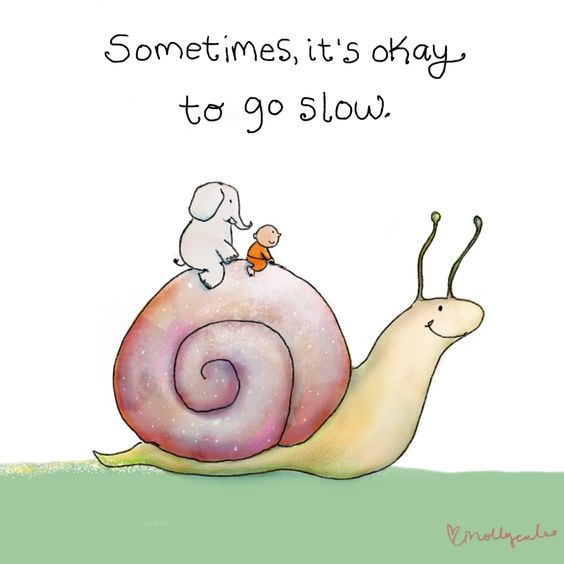
Sometimes its okay to go slow
Credit: Mollycules


In recent years, self-care has emerged as a compelling idea among museum practitioners.  The sentiment is that, like so many in the not-for-profit world, museum workers are deeply passionate about the work they do and too often, they are overworked and feel underappreciated (and underpaid).  Burnout is high, and the need to take care of oneself—physically, mentally, and spiritually—is imperative, even though doing so may feel out-of-reach.  As a consultant who meets and interacts with many museum professionals across a variety of settings, I can attest to the truth of this. All the time I see museum practitioners who are so busy “doing, doing, doing” that they intermittently and inadvertently lose touch with the spark that drove them to museums in the first place.

I recently read a brief allegory that reminded me of this phenomenon. It goes like this: “I once saw a person riding very fast on a horse. As they rode by me, I yelled, “Where are you going?” The rider turned toward me and yelled, “I don’t know, ask the horse!”   The pace at which museum professionals are often expected to do their work, the number of different audiences they are asked to serve, and the amount of programming they are tasked with creating and providing can leave them feeling like a person riding that wild horse.

What if I told you that your museum work could focus on accomplishing one pursuit, and that one pursuit is something you are passionate about and excel at, and that by doing this work, you would make a positive difference in the lives of the audiences you serve?  This is the essence of Intentional Practice. 

Intentional Practice means that all staff—from up and down and across the organization—take specific actions with the sole purpose of achieving a shared vision of intended impact on the audiences they serve. Transitioning an organization from the status quo to Intentional Practice is slow, as there are many moving parts and often unexpected distractions (insert wrench).  But, the beauty of Intentional Practice is its elegant simplicity, so while it is designed for organizations, individuals can also apply Intentional Practice concepts to their personal museum practice.

To return to the title of this post and the bolded statement above, I want to suggest three ways individual museum professionals can use Intentional Practice as a strategy of self-care.

  1. Prioritize your work to serve two or three audiences (one is even better if you can do that) rather than trying to be all things to all people. Then, focus in on the one specific impact you want to have on those audiences, with “impact” meaning the positive difference you make in the quality of their lives.  Write it all down—the audiences and the impact. Post it on the wall across from your desk.  Use it to continually remind yourself why you are there and to make decisions about where to put your energies and resources.
  2. To help you choose the audiences to prioritize and the particular difference you want to make in their lives, ask yourself “Why is working in this museum important to me?”—then ask, “Why is that important?” again, and again. You can do this alone or with a colleague.  The idea is to dig deep into what drives and excites you, what you care deeply about, and what gives you joy.  Use your passion to make decisions about #1, including helping you say “no” to tasks that move you off course.
  3. Ask yourself, “What am I really good at? What can I offer in my work that no one else can?”—be honest with yourself; do not respond with what you perceive as the “right answer.” Once you have identified what makes you unique in the workplace, draw from that to make decisions about how to serve your prioritized audiences in ways that make a positive difference in their lives.

Maybe this sounds like a pipe dream, like an impossibility.   And I’m not here to tell you it’s easy, especially trying to do it within an organization that has specific ways of functioning and operating.  As a first step, simply allow yourself to imagine a world where these three steps I’ve described can be your reality.  Make it your intention to return to this aspiration often (remember, post it on the wall to stare at as a reminder) and make decisions based on this aspiration.  In this way, you will be practicing self-care, which in turn will bring joy and renewed purpose to your work.

The post Repost: Intentional Practice as Self-Care [During Coronavirus] appeared first on RK&A.

Written by cplysy · Categorized: rka

  • « Go to Previous Page
  • Go to page 1
  • Interim pages omitted …
  • Go to page 272
  • Go to page 273
  • Go to page 274
  • Go to page 275
  • Go to page 276
  • Interim pages omitted …
  • Go to page 310
  • Go to Next Page »

Footer

Follow our Work

The easiest way to stay connected to our work is to join our newsletter. You’ll get updates on projects, learn about new events, and hear stories from those evaluators whom the field continues to actively exclude and erase.

Get Updates

Want to take further action or join a pod? Click here to learn more.

Copyright © 2026 · The May 13 Group · Log in

en English
af Afrikaanssq Shqipam አማርኛar العربيةhy Հայերենaz Azərbaycan dilieu Euskarabe Беларуская моваbn বাংলাbs Bosanskibg Българскиca Catalàceb Cebuanony Chichewazh-CN 简体中文zh-TW 繁體中文co Corsuhr Hrvatskics Čeština‎da Dansknl Nederlandsen Englisheo Esperantoet Eestitl Filipinofi Suomifr Françaisfy Fryskgl Galegoka ქართულიde Deutschel Ελληνικάgu ગુજરાતીht Kreyol ayisyenha Harshen Hausahaw Ōlelo Hawaiʻiiw עִבְרִיתhi हिन्दीhmn Hmonghu Magyaris Íslenskaig Igboid Bahasa Indonesiaga Gaeilgeit Italianoja 日本語jw Basa Jawakn ಕನ್ನಡkk Қазақ тіліkm ភាសាខ្មែរko 한국어ku كوردی‎ky Кыргызчаlo ພາສາລາວla Latinlv Latviešu valodalt Lietuvių kalbalb Lëtzebuergeschmk Македонски јазикmg Malagasyms Bahasa Melayuml മലയാളംmt Maltesemi Te Reo Māorimr मराठीmn Монголmy ဗမာစာne नेपालीno Norsk bokmålps پښتوfa فارسیpl Polskipt Portuguêspa ਪੰਜਾਬੀro Românăru Русскийsm Samoangd Gàidhligsr Српски језикst Sesothosn Shonasd سنڌيsi සිංහලsk Slovenčinasl Slovenščinaso Afsoomaalies Españolsu Basa Sundasw Kiswahilisv Svenskatg Тоҷикӣta தமிழ்te తెలుగుth ไทยtr Türkçeuk Українськаur اردوuz O‘zbekchavi Tiếng Việtcy Cymraegxh isiXhosayi יידישyo Yorùbázu Zulu