• Skip to main content
  • Skip to footer
  • Home

The May 13 Group

the next day for evaluation

  • Get Involved
  • Our Work
  • About Us
You are here: Home / Archives for allblogs / rka

rka

Jan 08 2021

Relevance Revisited

I wrote this blog post before the outrageous events of January 6, 2021 when a mob of Trump supporters made a violent, anti-democratic attack on the United States Capitol.  I hesitated to post this so soon afterward, fearing poor timing, especially as the aftermath of the event continues to unfold as I write.   But I stand by my words in this blog-“Be bold”- and a promise to myself to not avoid difficult topics or try to “wait it out,” and I ask the same of museums. 

As we enter 2021, we in the museum profession have hard work ahead of us.  In 2020, the museum field as a whole showed itself to be out of step with society, which led me to reconsider a word I hear over and over from museums professionals—relevance.  Over the past twenty years, when I ask (as all evaluators do) “how do you want to benefit your visitors or potential visitors?” the common response from museum professionals is that they want their offerings to be relevant.  I have observed that the pursuit of relevance is a common denominator among museums types.  Consequently, it has been jarring and discouraging as we watched museums in 2020 reveal themselves to be irrelevant. 

Obviously, museums didn’t become irrelevant overnight, but rather the events of 2020—the pandemic, social injustice, economic disparity—shined a light on the ways museums are out of step with their time.  2020 has swiftly exposed much of what museum professionals have been saying about museums amongst themselves for years—that they lack diversity among museum staff, their collections, and museum visitors; that they avoid confronting challenging societal and world problems; and that they are governed by skewed power structures, to name a few.  2020 tore away the status quo that protected many museums from addressing these issues transparently and directly. 
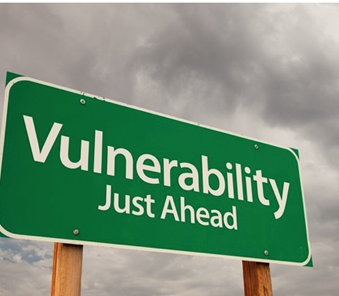
A green road sign in the foreground reads "Vulnerability Just Ahead." The sky is cloudy in the background.
Image credit: Vulnerability Just Ahead Green Road Sign with Dramatic Storm Clouds and Sky, Andy Dean Photography

It is with these thoughts about museums and relevance churning in my mind that I had a stimulating conversation with Emlyn Koster and read his recent article in Informal Learning Review (ILR), Relevance of Museums to the Anthropocene.  Emlyn is a field geologist with three decades of experience as a nature and science museum CEO; he is also a prolific writer and thought leader.  His recent publications and presentations have increasingly infused the largest challenges that confront the Earth with a holistic, past-present-future, all-species perspective.  In his ILR article, Emlyn emphasizes the urgency for relevance and asks museum professionals questions about their museums like, “Why does it exist? How does it align with surrounding environmental and/or societal needs?”  As I read Emlyn’s argument for relevance, one idea kept bubbling up to my consciousness over and over—”Be bold.”  I was speaking to myself as well as the museum profession as a whole.  Now is not the time to skirt around issues, to avoid addressing critical societal problems that are literally right in front of us screaming to be heard.  For museums and museum professionals to be relevant post-2020 is to be bold, to question the status quo, to take risks.  Boldness relates to vulnerability, which I wrote about in the early weeks of the pandemic.  Being truly bold requires that one be vulnerable and being vulnerable requires exposing oneself authentically, faults and all. 

It is within this context that I introduce Emlyn as a guest blogger for RK&A in 2021.   From his vantage point as a geoscientist, museologist, and humanist, Emlyn will explore difficult topics of our time through a series of op-ed style blog posts, imploring museums to be leaders in addressing these issues.  We are looking forward to what Emlyn has to say. 

The post Relevance Revisited appeared first on RK&A.

Written by cplysy · Categorized: rka

Nov 10 2020

RK&A’s anti-racism pledge

Over the last month, we have actively been drafting an anti-racism pledge as we study and reflect on equity in our work.  We are hopeful that under the leadership of President Elect Joe Biden and Vice President Elect Kamala Harris, who both addressed systemic racism in their acceptance speeches, our government will begin the hard work of addressing racism in earnest.  Our pledge demonstrates our own earnestness in pursuing anti-racist actions.

We at RK&A, individually and collectively, pledge our commitment to being anti-racist—which we recognize as an ongoing pursuit through our everyday actions.

We consider anti-racist practices a part of Diversity, Equity, Access, and Inclusion (DEAI) efforts that we already pursue.  However, we want to make a specific pledge to anti-racist practices to acknowledge the monumental challenge of combatting racism in our world. Being anti-racist is important to us because:

  • We want to contribute to a more equitable world for individuals facing racial injustices: Black, Indigeneous, and People of Color (BIPOC).
  • We want our research and evaluation work with museums and cultural institutions to confront and challenge systemic racism.
  • We believe in the educational missions of museums and cultural organizations, but we are concerned they will become irrelevant to the public if they do not address their entrenchment in racist systems.

We will take the following actions to embed equity and anti-racist actions into our research and evaluation practices:

  • Apply We All Count’s Data Equity Framework to systematically examine our work for bias, assumptions, unfairness, and prejudice at seven project stages:
    • Funding: We will always be explicit about a project’s funder and transparent about any implications of the funding source.
    • Motivation: As evaluators, we always seek to understand why our clients are motivated to do evaluation and use this as a guidepost for our work.  In our work, we remind clients of their motivations to keep projects on task.  We are committed to going one step further and challenging clients to reveal unconscious biases that may have racist undertones.
    • Project Design: We have long valued collaboration with our clients, and we have come to realize that we cannot pursue anti-racist work without collaborating authentically with our clients.  We must understand the audiences from which we are collecting data and the institution’s relationships with these audiences to design responsive studies.  
    • Data Collection: One guiding principle of evaluation is to collect only  actionable data (i.e., data you will use).  We will avoid optical allyship (i.e., recognizing the individual in a data collection instrument but not representing the individual in reporting) as we collect data about personal characteristics (e.g., race, ethnicity, gender, etc). 
    • Data Analysis: We will challenge ourselves to rethink how we approach data analysis and question the norms of what rigor looks like (e.g., should statistical significance be standard, random versus purposeful sample, considerations for intersectionality, etc.)
    • Interpreting Data: We will be more transparent in our reports that we are data interpreters (data does not speak for itself) by intentionally using terms and phrases like “We interpret this to be…”; “We infer from this data…”; etc.  
    • Communicating & Distributing Results: We have always customized our reports per the needs of a project or client, but we can take this further.  We will rethink report design and communication strategies to ensure the way we share evaluation results is anti-racist.  
  • Ask questions to challenge white supremacy thinking and encounters with interpersonal racism (i.e., don’t fall into white silence).
  • Continue personal and professional development in how to be anti-racist through various avenues (e.g., participate in VSA’s Bridging Communities FIG, attend sessions on CRE through VSA, AEA, Equitable Evaluation, and other evaluation organizations, etc.)
  • Listen to and elevate BIPOC voices on our social media and in conversations with clients and colleagues.
  • Remain open to criticism and critique in our endeavors to pursue anti-racist work (i.e., be vulnerable) 

We recognize equity and anti-racist practices to be ongoing work.  These are the first steps we will be taking, and we plan to reflect and expand upon these actions over time.

The post RK&A’s anti-racism pledge appeared first on RK&A.

Written by cplysy · Categorized: rka

Oct 14 2020

Comment on Sample Size: How many questionnaires is enough? by Chris Olusola Ogedengbe

Amanda, thank you so much for this important post. Everytime, I waste a lot of time in determining what should be the appropriate sample size even after the calculation of the sample. Your post confirmed that I am within the required range because Of usually use 380 – 400.

Written by cplysy · Categorized: rka

Aug 27 2020

Comment on If we cannot define “museums,” how do museums survive? by Fernando Almarza Risquez

Dear Amanda:
I have written an article – it is not the first – in which I incorporate more of my reflections on the subject of the updated definition of the museum. In it I quote you promptly. Now, it has just been published on the Museum Savvy blog.

http://museumsavvy.com/museum-savvy-blog.html?fbclid=IwAR0zi7kceYbOUp_MKLk98ger_HYunRPGtxFSahWWdzfOAeQZi9816KHVfww.

And your article, along with mine, has just been referenced on the Embassy of Culture website

https://embassy-of-culture.com/project/icom-museum-definition/?fbclid=IwAR38SgZ-R5tAr4Q25JyswLNLcohc2o6DB7j3Ta3yy0OVTvMrkigLX6_RXS4
from German museologist and colleague Dr. Matthias Henkel.

I greet you warmly, Amanda.

Written by cplysy · Categorized: rka

Aug 23 2020

Comment on If we cannot define “museums,” how do museums survive? by Fernando

In reply to Demetri Broxton.

Hello Demetri:
We can agree with the nature of the Museum, since it was a Greek “museion”, is to accumulate significant objects, expose them, and a long etcetera of “Hows” and “For what”. We can agree that a museum without a collection is just a worthy Exhibition Hall, a Kunsthalle.
Best regards.

Written by cplysy · Categorized: rka

  • « Go to Previous Page
  • Go to page 1
  • Interim pages omitted …
  • Go to page 8
  • Go to page 9
  • Go to page 10
  • Go to page 11
  • Go to page 12
  • Interim pages omitted …
  • Go to page 15
  • Go to Next Page »

Footer

Follow our Work

The easiest way to stay connected to our work is to join our newsletter. You’ll get updates on projects, learn about new events, and hear stories from those evaluators whom the field continues to actively exclude and erase.

Get Updates

Want to take further action or join a pod? Click here to learn more.

Copyright © 2026 · The May 13 Group · Log in

en English
af Afrikaanssq Shqipam አማርኛar العربيةhy Հայերենaz Azərbaycan dilieu Euskarabe Беларуская моваbn বাংলাbs Bosanskibg Българскиca Catalàceb Cebuanony Chichewazh-CN 简体中文zh-TW 繁體中文co Corsuhr Hrvatskics Čeština‎da Dansknl Nederlandsen Englisheo Esperantoet Eestitl Filipinofi Suomifr Françaisfy Fryskgl Galegoka ქართულიde Deutschel Ελληνικάgu ગુજરાતીht Kreyol ayisyenha Harshen Hausahaw Ōlelo Hawaiʻiiw עִבְרִיתhi हिन्दीhmn Hmonghu Magyaris Íslenskaig Igboid Bahasa Indonesiaga Gaeilgeit Italianoja 日本語jw Basa Jawakn ಕನ್ನಡkk Қазақ тіліkm ភាសាខ្មែរko 한국어ku كوردی‎ky Кыргызчаlo ພາສາລາວla Latinlv Latviešu valodalt Lietuvių kalbalb Lëtzebuergeschmk Македонски јазикmg Malagasyms Bahasa Melayuml മലയാളംmt Maltesemi Te Reo Māorimr मराठीmn Монголmy ဗမာစာne नेपालीno Norsk bokmålps پښتوfa فارسیpl Polskipt Portuguêspa ਪੰਜਾਬੀro Românăru Русскийsm Samoangd Gàidhligsr Српски језикst Sesothosn Shonasd سنڌيsi සිංහලsk Slovenčinasl Slovenščinaso Afsoomaalies Españolsu Basa Sundasw Kiswahilisv Svenskatg Тоҷикӣta தமிழ்te తెలుగుth ไทยtr Türkçeuk Українськаur اردوuz O‘zbekchavi Tiếng Việtcy Cymraegxh isiXhosayi יידישyo Yorùbázu Zulu