• Skip to main content
  • Skip to footer
  • Home

The May 13 Group

the next day for evaluation

  • Get Involved
  • Our Work
  • About Us
You are here: Home / Archives for allblogs / rka

rka

Feb 25 2021

Anti-racism Pledge: 3-month Update

It has been three months since we pledged our commitment to anti-racist practices.

We at RK&A, individually and collectively, pledge our commitment to being anti-racist—which we recognize as an ongoing pursuit through our everyday actions.

To hold ourselves accountable, we want to document publicly the work we have been doing and work still to be done.

First, we have continued personal and professional development in how to be anti-racist through various avenues.  We have read the CCLI National Landscape Study: The State of DEAI Practices in Museums, a first field-wide study of DEAI practices by Cecelia Garibay and Jeanne Marie Olson, participated in the Visitor Studies Association discussion of the report with our colleagues, and have referenced it in recent writings.  As a staff, we have read and discussed AAM’s TrendsWatch report, whose first trend addresses systemic equalities of wealth and power.  We have engaged in conversation with our clients about museums and neutrality and AAM’s recent Audiences and Inclusivity Primer.  Further, we have worked to stay abreast of developments in our field about anti-racism.  And unfortunately, confront the racist practices that persist, such as the release of a job posting for a museum position with duties that include maintaining its “traditional, core, white art audience” followed by a critique of this museum’s leadership by the former director who intones the same white supremacist language in calling for the museum’s return to “its historic purpose.”

A second step we have taken is to actively encourage our clients to share the results of our studies out with the people from whom we have collected data.  More and more, museums have been working to bring underrepresented voices into their development processes for exhibitions, programs, etc. through evaluation.  Our goal has been to make sure the museum approaches those relationships as equitable and not extractive.  For example, when we collect any data, we tell the person for whom the data is being collected and how it will be used (per IRB requirements).  However, for equity and accountability, we also want to tell audiences exactly when and how the museum will follow-up with them (e.g., sending them a written report, inviting them to a presentation by the evaluator, etc.), so they know specifically how their feedback is being considered—not just that is being considered in abstract terms.

Third, we have been considering how we can represent the individuals behind the data points.  Our professional development has taught us that aggregated data can hide inequities.  Therefore, we have had ongoing discussions about how to disaggregate data to explore equity issues (i.e., by ethnicity, gender identity, socioeconomics, etc.).  We are still trying to tackle the best approach to disaggregation within our work since (a) our samples tend to be of museum visitors (although we have been working to broaden our reach in this remote era); and (b) museum visitors tend to be largely homogeneous and do not allow for us to disaggregate with confidence statistically (although arguably those statistics are white supremacist structures).  We plan to continue to develop in these areas and also look forward to presenting more equitable data visualization, inspired by this AEA365 blog post.

There is of course more work for us at RK&A to do in our efforts to be anti-racist.  One of the most important steps we have taken over these last three months is to put anti-racist practices on the agenda for every one of our staff meetings to generate conversations to move our work forward.  We look forward to sharing with you our ongoing work.

The post Anti-racism Pledge: 3-month Update appeared first on RK&A.
Written by cplysy · Categorized: rka

Feb 22 2021

Comment on Museums and Climate Change: A Form-follows-Function Perspective by Emlyn Koster, PhD

As resources for reflection, museum experiences are at their most impactful when, one life at a time, they turn apathy into interest, interest into insight, and insight into action. As soon as public health conditions permit, museum toolkits should add topical conversations to their menu of exhibitions and programs. A tradition in museum offerings, lectures need to be as much about the present and future as the past. Every onsite, online and offsite step towards a grasp of the perils facing environments and societies — which increasingly the sciences and humanities view as inextricably linked — is like adding a fresh droplet to a needed glass of water. New opportunities for each age and stage of learning need to occur alongside new boardroom attitudes, both inside and outside the museum. Although consequential changes in the atmosphere are inseparable from humanity’s adverse impacts on the Earth’s other outer shells, the distinction between weather and climate is a tangible entry point towards scientific literacy for us all. Every now and then, ponder the words conversation and conservation: surely such a small difference should never have amounted to such a big problem!

Written by cplysy · Categorized: rka

Feb 17 2021

Vision-Driven Leadership: Now More Than Ever

Emlyn Koster urges the museum sector to combine operational recovery efforts with strategic pathways towards a more holistic societal and environmental future. 

“The very subject of our discussion shows the painful anxiety and uncertainty with which we search for our proper function in the national struggle for a better future.” What sounds like a synopsis of today’s situation was part of a speech during World War II at AAM’s 1942 Annual Meeting by A.E. Parr, then Director of the American Museum of Natural History. Not since comparable crises during the last century has the total responsibility of those appointed Director, Executive Director, or President & CEO — the leadership position ultimately accountable for what goes wrong and/or for what goes well in a museum — been so demanding yet so seldom talked about.

Since the pandemic began, the museum sector’s countless webinars have mainly involved mid-level staff focused on operational efforts, such as online programming and member retention. Airing of strategic considerations by senior leadership, such as the implications of major changes in social norms and business models, has been almost absent. The vital theme of International Museum Day 2021 is “The Future of Museums: Recover and Reimagine”. I fervently hope that “reimagination” features the pursuit of pathways into illuminating the perilous needs of the 21st century. Our ability to be externally meaningful and supportable in profoundly new ways is at stake.

As I switched from geology to museology 32 years ago with my focus shifting from the past to the future and from local to ‘glocal’ (a seamless local and global view), I became interested in the anatomy of leadership. Insights about what institutional relevance entails flowed from multiple sources. These included executive workshops in Toronto and Manhattan while CEO of the Ontario Science Centre and Liberty Science Center, an international workshop for nonprofit CEOs at the Harvard Business School, being a resource to the Getty and Noyce leadership institutes, and a board role at the Institute of Ethical Leadership at the Rutgers Business School. 

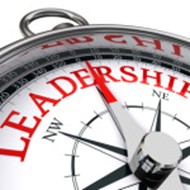
Close up of a compass pointing towards the word "leadership."
We need vision-driven leadership now more than ever. Image credit.

My most intense leadership experience was in the aftermath of the September 11, 2001 terrorist attacks while I was CEO of Liberty Science Center which is located across the Hudson River from the World Trade Center. Flowing from this institution’s innovative experiences in community engagement which was later described in a collection of exemplars of socially responsible museums, it partnered with a trauma psychologist and The Families of September 11. Several years later, I came across a resonant outlook by Jacqueline Gijssen, Vancouver’s cultural planner, in the magazine of the Canadian Museums Association: this imagined a future in which “the museum becomes critical to the long-range health of a place, central to think-tanks, and community transformations… one of those organizations a mayor calls upon when a crisis hits… an institution that others actively seek for guidance and expertise”. An analogous focus on environmental stewardship was highlighted in the conclusion of AAM’s decadal re-accreditation of the North Carolina Museum of Natural Sciences during my tenure as CEO: ”This institution has forthrightly evolved its interpretative philosophy and strategy to address bigger stories about humans as an inseparable element in the ecosystem of all life, and therefore to be concerned about matters of conservation and sustainability”.

The combination of those experiences and 2020’s existential crises have impelled me to urge an unprecedented paradigm shift in the museum sector (see my forthcoming article, “Paradigm Shift to Illuminate Our Disrupted Planet, in the Spring 2021 issue of Exhibition). In leadership terms, its baseline is a realization that vision then values then mission then strategy is the optimal order of institutional planning considerations. Also, and in integrated ways, the contributions of three thought-leaders known to me for several decades came into sharper focus.

  • In the compass recommended by Stephen Covey, the first three principles of individual effectiveness are be proactive®, begin with the end in mind®, and put first things first®. These underscore why vision and values should be early considerations. He also advised on the need for resilient interpersonal relationships: likening them to bank accounts, deposits must outweigh withdrawals with any overdrafts promptly attended to.
  • Covey also illustrated the conclusion of Peter Drucker that efficiency is doing things right and effectiveness is doing the right things. He likened efficiency to climbing the ladder of success and effectiveness to first determining the strongest wall for the ladder.
  • Burt Nanus used four dimensions to describe a balanced leadership approach for visionary organizations. Axes labeled internal/external and now/future frame the roles of coach (internal/now), change agent (internal/future), spokesperson (external/now), and direction setter (external/future).

When a museum appoints a new chief executive due to the resignation, retirement or termination of her/his predecessor, a new strategic chapter in the institution’s evolution inevitably begins. What is in the ethical, operational and strategic toolkit of experiences and insights that the next leader brings? And what is the probability that this individual will be up to mobilizing resources to respond to the institution’s evolving opportunities and unforeseeable needs? Referring to a ladder of increased abilities, those in leadership roles are ideally aware, both in themselves and in those around them, that unconscious incompetence à conscious incompetence à conscious competence à unconscious competence à reflective competence are the rungs of intertwined personal and professional growth.

“If you want the same old, same old; the tried and the true; the safe and secure, then visionary leadership is not for you”.

-Anne Ackerson & Joan Baldwin, Leadership Matters: Leading Museums in an Age of Discord

Museums that prioritize popularity over meaningfulness and that launch capital campaigns to become bigger but not more relevant to surrounding needs are, in my view, wrong-headed. I have long advocated for Aristotle’s philosophy that leadership should be about the harmonious pursuit of positive consequences in the world and John Cotton Dana’s viewpoint that a museum should fit itself to the needs of its surroundings. Returning to the subject of my January blog, the most pressing need of the museum sector is to illuminate the surging evidence of environmental and societal perils. The Anthropocene, a transdisciplinary concept which I unravel elsewhere, recognizes humanity as the predominant species which, in a geological nanosecond, has ecologically detached itself from the Earth System, endangering the future of both.

Emlyn Koster, PhD (koster.emlyn@gmail.com) has been the CEO of the Royal Tyrrell Museum of Paleontology, Ontario Science Centre, Liberty Science Center, and NC Museum of Natural Sciences. Combining his geological and museological experiences with a humanistic outlook, he is focused on humanity’s escalating disruption of the Earth System. Current appointments include an ambassador for the International Coalition of Sites of Conscience and adjunct professor in Marine, Earth and Atmospheric Sciences at NC State University.

The post Vision-Driven Leadership: Now More Than Ever appeared first on RK&A.

Written by cplysy · Categorized: rka

Jan 14 2021

Comment on Museums and Climate Change: A Form-follows-Function Perspective by Molly Paul

Fascinating commentary on the role of museums in educating visitors on climate change! It seems like it would be difficult to reconcile both the multi-million-year perspective a geoscientist might have with the year to year perspective a beach house owner may have, yet both are interested in the same climate issues. What is an example of a tool museums could employ to help close that gap in perspective? How could other sectors of our society support museums in this endeavor to merge science and humanity?

Written by cplysy · Categorized: rka

Jan 14 2021

Museums and Climate Change: A Form-follows-Function Perspective

Emlyn Koster, PhD, delves into why museums should illuminate the environmental and societal impacts of climate change.

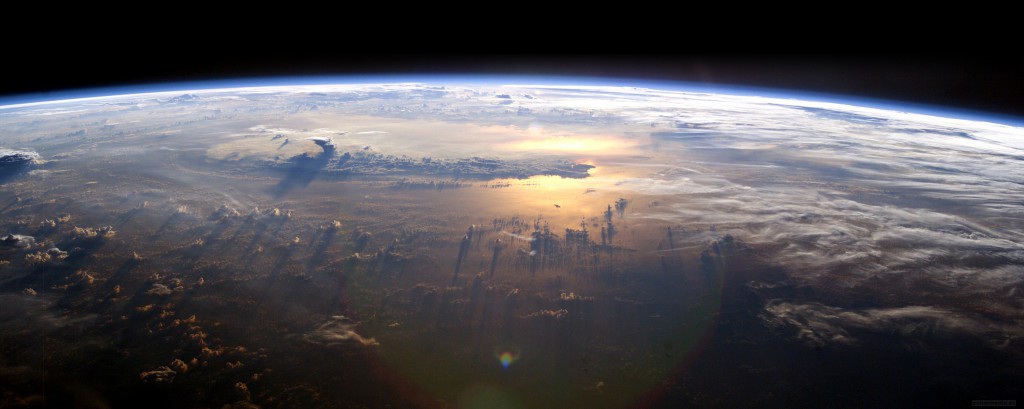
An image of the Earth from space showing the Earth's wafer-thin atmosphere looking like a blue rim
The Earth’s wafer-thin atmosphere, looking like a blue halo, is life’s protective envelope. Image credit

An undergraduate geologist in the UK in 1969, I was glued to the live transmission from NASA’s astronauts on the Moon with their mesmerizing panorama of the Earth. Not until recently though did I become aware that a British astronomer in 1948 predicted that the first photography of the Earth would unleash “a new idea as powerful as any in history.”

At university, I learned that the Earth’s environments are ecological responses to massive forces from above and below: climate changes that fluctuate sea-level and cause ice ages, plate tectonics that move continents and raise mountains. Although these processes are imperceptibly slow in the context of the geological nanosecond of human evolution, we are reminded of their power by sudden catastrophes such as tsunamis and developing disasters such as coastal inundation. Geologists get used to talking in timeframes of tens, hundreds and thousands of millions of years. Now rapidly, all of us ought to grasp the unwitting geological scale of our impacts on the Earth.   

In 1992, 2017 and 2019 — while board chair of the Geological Association of Canada and CEO of four relevancy-minded nature and science museums — thousands of concerned scientists, including most Nobel laureates, issued warnings about escalating rates of climate change and other environmental impacts. In 2015 a joint commission of the medical journal Lancet and the Rockefeller Foundation concluded that human health hinges on flourishing natural systems. The Covid-19 pandemic has begun to raise public awareness of the impacts of climate change on human health.

In 2016 the UN’s Paris Agreement began a global focus on the perilous outcomes of human-caused 1.5-2.0°C (2.7-3.6°F) warming of the lower atmosphere. While this difference seems trivial when compared to night-and-day temperature ranges that often exceed 10°C (18°F), ice sheets and glaciers, sea level, ecosystems and food chains, and extreme weather are susceptible to minor shifts in average temperature. On Earth Day 2020, a former UN official shared a jolting view that civilization has become “estranged” from the Earth.

As with severe storms like Katrina and Sandy, it has proven invaluable for communication purposes to name the dangers we face as they unfold. Whether or not it becomes added to the Geological Time Scale, I am an advocate for the value of using the term Anthropocene as transdisciplinary shorthand for human disruption of the Earth System. This encompasses the interconnected atmosphere, hydrosphere, cryosphere, biosphere with its predominant human species, and lithosphere.

With many megacities and much key infrastructure on low-lying coasts, ‘sea level rise’ unequivocally pinpoints one of the most severe, and unsustainable, outcomes of ‘climate change.’ An article in the latest issue of Anthropocene: Innovation in the Human Age states: “Like it or not, retreat from the coasts has begun … The only question left is whether it will be managed or chaotic.” As surmised in a book review about museums and climate change: “no one gets to sit this one out.” Terms such as ‘climate change’ and ‘sea level rise’ must also beckon our understanding of related crises, such as ‘climate refugees’.

The form-follows-function principle in architecture is an echo of John Cotton Dana’s opinion of a century ago that a museum should know its community’s needs and then align itself with those needs. With major gaps between wants and needs commonplace across society, visionary leadership of museums is vital. When Sesame Street’s Grover left The Everything in the Whole Wide World Museum, he exclaimed: “You know, I have seen many things in this museum … But I still have not seen everything in the whole wide world … Where did they put everything else?”. His curiosity points to a dilemma for museums that they are as accountable for what they present as much as for what they omit. I worry that much of society as well as many in the museum sector do not yet know enough to be also worried. In its year-end report for 2020, the UN Environment Program warned that, despite a brief dip because of the pandemic, the world is heading for a temperature rise of 3.2°C (5.8°F) this century.

Emlyn Koster, PhD (koster.emlyn@gmail.com) is a geologist, museologist and humanist with UK, Canadian and US citizenships. He was the CEO at the Royal Tyrrell Museum of Paleontology, Ontario Science Centre, Liberty Science Center and the North Carolina Museum of Natural Sciences. With recognition including the University of Ottawa’s 2019 Alumni Award of Excellence, he is an adjunct professor in Marine, Earth and Atmospheric Sciences at North Carolina State University.

The post Museums and Climate Change: A Form-follows-Function Perspective appeared first on RK&A.

Written by cplysy · Categorized: rka

  • « Go to Previous Page
  • Go to page 1
  • Interim pages omitted …
  • Go to page 7
  • Go to page 8
  • Go to page 9
  • Go to page 10
  • Go to page 11
  • Interim pages omitted …
  • Go to page 15
  • Go to Next Page »

Footer

Follow our Work

The easiest way to stay connected to our work is to join our newsletter. You’ll get updates on projects, learn about new events, and hear stories from those evaluators whom the field continues to actively exclude and erase.

Get Updates

Want to take further action or join a pod? Click here to learn more.

Copyright © 2026 · The May 13 Group · Log in

en English
af Afrikaanssq Shqipam አማርኛar العربيةhy Հայերենaz Azərbaycan dilieu Euskarabe Беларуская моваbn বাংলাbs Bosanskibg Българскиca Catalàceb Cebuanony Chichewazh-CN 简体中文zh-TW 繁體中文co Corsuhr Hrvatskics Čeština‎da Dansknl Nederlandsen Englisheo Esperantoet Eestitl Filipinofi Suomifr Françaisfy Fryskgl Galegoka ქართულიde Deutschel Ελληνικάgu ગુજરાતીht Kreyol ayisyenha Harshen Hausahaw Ōlelo Hawaiʻiiw עִבְרִיתhi हिन्दीhmn Hmonghu Magyaris Íslenskaig Igboid Bahasa Indonesiaga Gaeilgeit Italianoja 日本語jw Basa Jawakn ಕನ್ನಡkk Қазақ тіліkm ភាសាខ្មែរko 한국어ku كوردی‎ky Кыргызчаlo ພາສາລາວla Latinlv Latviešu valodalt Lietuvių kalbalb Lëtzebuergeschmk Македонски јазикmg Malagasyms Bahasa Melayuml മലയാളംmt Maltesemi Te Reo Māorimr मराठीmn Монголmy ဗမာစာne नेपालीno Norsk bokmålps پښتوfa فارسیpl Polskipt Portuguêspa ਪੰਜਾਬੀro Românăru Русскийsm Samoangd Gàidhligsr Српски језикst Sesothosn Shonasd سنڌيsi සිංහලsk Slovenčinasl Slovenščinaso Afsoomaalies Españolsu Basa Sundasw Kiswahilisv Svenskatg Тоҷикӣta தமிழ்te తెలుగుth ไทยtr Türkçeuk Українськаur اردوuz O‘zbekchavi Tiếng Việtcy Cymraegxh isiXhosayi יידישyo Yorùbázu Zulu