Thank you for sharing this insightful article. and the role that the museum community played. I am so very impressed and grateful for all you seek to do to improve our world!
rka
When Disaster Strikes: Assistance by Museums Nearby
By: Emlyn Koster
Emlyn recalls how Liberty Science Center, located across the lower Hudson from Manhattan and where he was President & CEO from 1996-2011, assisted the next-of-kin and surrounding community in the aftermath of the terrorist attacks on the World Trade Center on and after September 11, 2001.
Every year it seems, the museum world is jolted by breaking news of damage or destruction of an institution due to a fire, natural disaster, or an invasion. Recent examples are Brazil’s National Museum in Rio de Janeiro, Haiti’s Art Museum in Port-au-Prince, the Museum of Chinese in America in Manhattan, and antiquities in Afghanistan. Museum associations, including ICOM and the US Committee of the Blue Shield, may step in to help salvage collections. However, not making headline news―but the focus of this post—are situations of museums in the vicinity of a disaster which, while not directly impacted, assist next-of-kin and surrounding communities.
Twenty Years Ago
My vivid memory of the terrifying event across Liberty State Park and the lower Hudson from Liberty Science Center (‘the Center’) in full view of the World Trade Center’s twin towers has interwoven parts. Foremost is distress over what transpired at Ground Zero: the second is the aftermath involving the Center. Below is my recollection of an early moment that began the preface in a book about fostering empathy in museums:
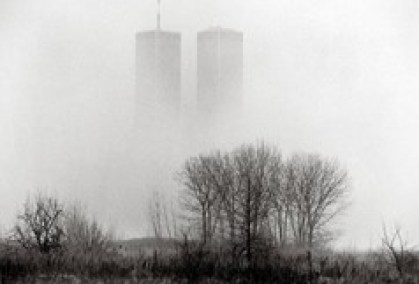
“One afternoon in late September 2001, I joined a ferry taking several hundred next-of-kin of New Jersey victims from the World Trade Center across the Hudson River to Lower Manhattan’s North Cove Marina, the closest dock to Ground Zero. Grieving family members clutched teddy bears given to them as we boarded. Arranged by the New Jersey Family Assistance Center at Liberty State Park… this trip was their first opportunity to visit the remains of the fallen World Trade Center twin towers. Anxiously huddled together, we slowly walked past ash-laden trees and walls covered with frantic messages about missing loved ones, past emergency officials and site workers with bowed heads, across empty roads, and onto a makeshift platform overlooking the smoldering mountain of jagged debris. Weeping and whispering were the only sounds as we solemnly reflected on the riveting scene before us. Indivisible were the gravity and uncertainty of the entire Ground Zero situation and the overwhelming, deeply personal sadness of everyone there. Personal tension was exponentially compounded by the indescribable sorrow of the next-of-kin all around me” (Emlyn Koster, 2016. Foreword. In: Fostering Empathy in Museums, Elif Gokcigdem (Ed.), Rowman & Littlefield, vii-xi).
Below is a reprise of details in a requested article for a magazine one year after the tragedy (Emlyn Koster, 2002, A Tragedy Revisited, Muse, Canadian Museums Association, September/October, 26):
“Around 8:15 am on September 11, 2001, the car radio told me that my commute would be delayed by a major highway accident, so I detoured though local city streets. As the station interrupted normal programing to report that a plane had just collided with the World Trade Center’s north tower, the Manhattan skyline came into full view and I saw smoke billowing from its upper floors… I sped to the office and was met by several frantic staff... it had just become evident that the plane hitting the tower was terrorism, not an accident. I wasted no time in ordering a building evacuation… [we were] confronted with the biggest news story in recent memory and our faces and cries expressed our deepening shock and grief… We notified the region’s emergency authorities that our institution stood ready to help in whatever way it could. Soon, medical teams left with our first aid supplies, and commuters who had escaped the disaster site by ferry poured into our building. By late evening, several dozen mobile TV news units from across the eastern U.S. and Canada were set up around the same spot where the staff had gathered that morning.
… Liberty Science Center was closed to the public for two weeks. We continued to support the media, assisted with police communication needs, and were involved in a public vigil organized by the State. When New Jersey developed its plan for an assistance center for the families of victims, it was concluded that Liberty Science Center would be in a support mode to a full-service facility [at the Hudson River bank]… Working overnight with State government officials and aid workers, our staff helped to set up this Family Assistance Center. We processed all security credentials for its staff and volunteers, our caterer worked with the Red Cross to provide meals, and we had staff ready and trained for families of victims… We were also working with trauma counselors to help ourselves come to terms with what had happened and to guide us on how to interact with visitors when we reopened. We made changes to an exhibition about buildings and to advertising for our new giant screen film about the human body in sensitivity to the new issues on people’s minds. Over the following weeks, we hosted a wide variety of related events, including an international religious ceremony… Almost a year later, we continue to be a venue for follow-up events. We also participate in the Gift of New York Program which gives free museum visits to families of victims.
… September 11, 2002 will be a special day. The staff will gather for breakfast, as we did every morning during our closure last September, and we will share our memories. There will be a blood drive for staff and news crews will return to our site for live network feeds.
… I have thought a great deal about the broader learning for the museum field afforded by this experience. The lessons are many, particularly because September 11 occurred at time of increasing external consciousness on the part of museums.
 … Does your museum have contact information for all emergency authorities in its region? Would you have to check with your board before closing and switching to an emergency assistance role? Do you have arrangements for assembly of staff elsewhere in the event of evacuation? Are computer records regularly stored offsite at more than one location? Can you access your phone system for changed public messages from the outside? Does your staff know how to access update information during an emergency or closure? What is your museum’s inventory of facilities and skills that could be useful in an area emergency and is this in the hands of those in charge of emergency planning? Have your museum’s learning environments ever served as a helping hand … at times of uncertainty and stress? … As the head of one of the mostly directly affected museums, I was proud of the way that Liberty Science Center did all it could to help. As an organization, we came closer together and we never blinked at the accumulating $700,000 direct cost of our participation... with a mission strongly rooted in social responsibility, we managed to approach an extreme situation with flexibility and fortitude.”
Trauma psychologists promptly documented their reflections about the Center as a place for comfort in a time of need and about its partnership with The Families of September 11 which nurtured a curriculum for how schools could boost their resilience in troubled times (Donna Gaffney and Emlyn Koster, 2016. Learning from the challenges of our time: The Families of September 11 and Liberty Science Center. In: Fostering Empathy in Museums, Elif Gokcigdem (Ed.), Rowman & Littlefield, 239-263). I later surmised that the Center’s track record of commitment to the welfare of its community helped to propel it through this extraordinary period.
As Liberty Science Center reopened, a public service announcement in The New York Times, The Star-Ledger and Jersey Journal at no charge to the Center. This began: “The trustees, president, employees, and volunteers of Liberty Science Center express their heartfelt sympathy to the many families, friends and communities of those who suffered losses, were injured, or are still missing as a result of the terrorist attacks at the World Trade Center, The Pentagon and in Pennsylvania”. And it ended: “Liberty Science Center joins the countless other voices that call upon all of us to strive for greater global harmony… We also express our desire for the peaceful use of science and technology to create a better world”.
Wider Reflections
Thinking back, there were additional uplifting, and even some truly transformative, moments. These included a requiem in Liberty State Park featuring Andrea Bocelli, an out-of-the-blue six-figure donation from a pharmaceutical company who knew the Center was hurting financially, and the board’s adherence to a long planned first meeting of a facilities task force which would lead to an $109 million expansion and complete renewal of the Center.
“A spring 2002 survey showed that the staff foresaw significant advantages and opportunities in the Center’s expansion plans. These included renewed visibility, enhanced image, recharged spirit, a better working environment, new jobs for the community, and more and better offerings. But not surprisingly, the study also revealed questions about job loss, whether the organization had the capability to handle such a major project, and whether departments could work together well enough to deliver on the plans… Frequent communications about developments and reminder continued apace. Piece by piece, our planning became a reality… All in all, this has been a story of mission above self. The idea that Liberty Science Center could be a more useful resource to the diverse communities in its surrounding region always seemed to trump the anxiety of the moment” (Emlyn Koster, 2007, The Reinvented Liberty Science Center, LF Examiner, 10:7, 1-9).
Also in 2007, museum critic Edward Rothstein for The New York Times wrote: “The Center, which reopened yesterday after two years of construction, has been rethought and reshaped, with the goal of doing nothing less than reinventing the science museum”. He quoted me: “The science museum … should provide ‘resources for living, learning, working in and caring for its surrounding area’ … It should aim for ‘relevancy’ and have the ultimate goal of leading its visitor to a form of activism”. Today, my outlook is exactly the same. A few days before Rothstein’s review, The New York Times expressed this editorial opinion: “…The new center also tries to make science feel accessible, even local… To its credit, the center does not shy away from the things we wish were less real-world. The skyscraper exhibition holds two pieces of the World Trade Center; one is an I-beam mangled by the heat and pressure into a twisted U”.
As the world warms and violence increases, and with more of humanity living next to natural hazards, it is probable that museums will increasingly find themselves in helping-hand situations. I hope the foregoing reflection ago encourages institutions to be maximally useful if and when a disaster strikes nearby and thereby to boost their resilience.
About the Author
Emlyn Koster, PhD is a geologist who also became a museologist and a humanist. The CEO of four major nature and science museums in Alberta and Ontario, Canada and then in New Jersey and North Carolina, he is an advocate for the museum sector’s alignment with ‘glocal’ societal and environmental needs. Following September 11, 2001, community recognition included an award from New Jersey’s Arab-American Anti-Discrimination Committee and the Humanitarian of the Year award from the American Conference on Diversity. He is a member of the Ambassadors Circle of the International Coalition of Sites of Conscience and involved in a new UNESCO-supported project about the global language of the Anthropocene. He welcomes comments and inquiries at koster.emlyn@gmail.com. You can read his previous blog posts for RK&A here.
The post When Disaster Strikes: Assistance by Museums Nearby appeared first on RK&A.
Comment on IRB 101: What are they? Why do they exist? by IRB 101: What is (and isn’t) human subjects research? » RK&A
[…] my first post in this IRB 101 series, I described what IRBs are and why they exist (i.e., to protect research […]
IRB 101: What is (and isn’t) human subjects research?
In my first post in this IRB 101 series, I described what IRBs are and why they exist (i.e., to protect research participants). In the second post, I focused on describing potential risks to research participants. This third post defines criteria for human subjects research by breaking down the term “human subjects research.”

Who are human subjects?
The Common Rule, which provides guidelines for research and evaluation, defines a human subject as “a living individual about whom an investigator (whether professional or student) conducting research:
- Obtains information or biospecimens through intervention or interaction with the individual, and uses, studies, or analyzes the information or biospecimens; or
- Obtains, uses, studies, analyzes, or generates identifiable private information or identifiable”
In layman’s terms, human subjects are living individuals who are participating in a research study. The more complicated part of this definition, the bulleted items, actually deals with defining “research” with human subjects.
What is research?
Generally, research is defined as a systematic investigation or study. The bullets in the Common Rule definition above break down specifically what is human subjects research. The first bullet focuses on the conditions in which data is collected, while the second bullet focuses on whether the data is identifiable.
Data Collection Conditions
The first bullet in the definition contains two technical research terms: (1) intervention; and (2) interaction. Interventions are any manipulation of the research participant or their environment for research purposes. Interventions happen when you are setting up an experiment. For example, a researcher wants to investigate whether visitors prefer an exhibition space with low light versus bright light. They study research participants in both light conditions. Interactions involve the researcher or another person communicating with a person for purposes of research (experimental or otherwise). Interventions can include interviewing visitors about their experience in an exhibition, sending an email survey to members about their satisfaction with the museum and member benefits, or focus groups to explore non-visitors’ perceptions of a museum. From my experience, visitor studies research typically involves interactions, but less often interventions.
Identifiable Data
The second bullet focuses on identifiable information. Identifiable means the researcher can identify the research participant, so the data is not anonymous. Information is clearly identifiable if it is linked to a person’s name, email address, social security number, etc. Information may also be identifiable if the researcher can discern the identity of a person based on research conditions. For example, if you are interviewing participants in a teacher cohort that is small and has worked closely with museum education staff for a long period of time, it would be easy to identify research participants based on their feedback. Please note that this bullet specifically about whether you collect and study identifiable data. You may opt to keep the identifiable information confidential by not reporting names or other identifiable information, but you are still conducting human subjects research if the data is identifiable to the researcher.
What is not human subjects research?
There are a few activities similar to research that are not considered human subjects research. For example, journalistic activities are not human subjects research. So, if your institution wants to publish a personal interest story about a staff member, it is not human subjects research. In this scenario, you are beholden to ethical guidelines for journalistic activities but not human subjects research.
Why does this all matter?
If you are doing human subjects research, you need to consider whether IRB is required. There are some exceptions as to whether human subjects research requires IRB, which I will describe in my next post. However, determining whether you are conducting human subjects research is the first step in determining whether you need IRB review.
The post IRB 101: What is (and isn’t) human subjects research? appeared first on RK&A.
Museums during Existential Crises: Long and Wide Lenses for Directional Thinking
By: Emlyn Koster
An Earth scientist with 32 years at the helm of four large nature and science museums and with publications and presentations continuing to delve into what leadership of external relevance entails, Emlyn reflects on the potentially greater value of museums in a world beset by crises.
The period since early 2019 has been an unprecedented slog of stressful uncertainty for every type of organization. Yet with the museum concept inspired by The Muses―the goddesses of the arts and sciences in Greek mythology—museums should, in particular I believe, be striving to use long and wide lenses to shape their most valuable responses to today’s circumstances.
During the pandemic, understandably, online exchanges among museums have been much more about pressing operational matters than big-picture strategic matters. Also, published leadership-level musings have been rare. Each a commendable sharing of reflective thoughts, these include the perspectives of directors at a cultural anthropology museum, art and nature museum, a group of middle managers at four natural history and marine science museums, and two former science museum directors.
Wicked Problems
Before this decade, an ‘existential crisis’ described individuals consumed with anxiety about how they see themselves and their purpose. Announced as new vocabulary by Dictionary.com, it began to also be a whole society term as climate change, the Covid-19 pandemic, and structural racism dominated the news.
Introduced in the 1960s, the term ‘wicked problem’ has long struck me as a jarring label because wicked refers to a morally wrong stance. However, it seems apt for the situation of the Covid-19 pandemic and its variants because they have harmed our diverse society so deeply and inequitably. John Camillus of the University of Pittsburgh Graduate School of Business stated that wicked problems “can’t be solved, but [they] can be tamed” and that “solutions to wicked problems are not true or false, but good or bad”. Pathways to better times, he concluded, lie with continuous scanning of pertinent circumstances with assumption monitoring and adaptive decision-making.
A Long Lens
I have been surprised by the scarcity of references to motivational outlooks of the museum sector during the Great Depression, World Wars I and II, and after the September 11, 2001 terrorist attacks. Here are several examples. Presentations at the 1942 AAM Annual Meeting stated: “With every crisis, there comes a spiritual awakening, and also an intellectual advancement… Our institutions are not merely guardians of the past, but are factors in the building and molding of character for the future” (L. Hubbard Shattuck, 1942, Wartime duties of historical museums, Museum News, October 1, 6-8) and “The very subject of our discussion shows the painful anxiety and uncertainty with which we search for our proper function in the national struggle for a better future” (A.E. Parr, 1942, The Wartime duties of natural history museums, Museum News, September 1, 6-8). In a cautionary note, “When the funds began to flow again, museums quickly forgot the shock of the Depression as well as their moments of innovation on behalf of the public… An opportunity to be societal role models for the wisest use of resources and talent was lost” (Marjorie Schwarzer, 2009, Bringing it to the people: lessons from the first Great Depression, Museum, May-June, 49-54). Recalling an initiative by The Families of September 11 and Liberty Science Center: “Our careers and backgrounds are so dissimilar that we could barely imagine how our professional lives could ever intersect: a mental health professional specializing in trauma and a president of a science center… We committed to a vision for the future based on what we learned”.
A Wide Lens
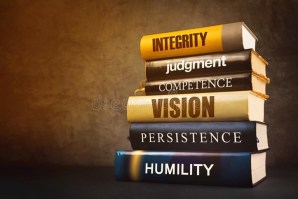
Also, I often lean on recommendations about organizational leadership that have passed the test of time. Here are several favorites. Aristotle (384-322 BC) viewed leadership as the harmonious pursuit of positive consequences in the world: significant, I think, because of his emphasis on linked internal and external dynamics. John Cotton Dana (1856-1929) advocated that museums align their activities with the needs of their communities: significant, I think, because he prioritized needs above wants. Stephen Covey (1932-2012) echoed Peter Drucker (1909-2005) in stressing the distinction between effectiveness and efficiency: respectively doing the right things and doing things right which they emphasized are the main responsibilities of leadership and management. John Kotter (1947- ), Emeritus Professor of Leadership at the Harvard Business School, listed these steps for a successful renewal:
- Establish a sense of urgency
- Form a powerful guiding coalition
- Create a vision
- Communicate the vision
- Empower others to act on the vision
- Plan for and create short-term wins
- Consolidate improvements and produce still more change
- Institutionalize new approaches
Because vision is a central thread, I also wish to cite a first page statement in a 1992 book titled ‘Visionary Leadership’: “There is no more powerful engine driving an organization toward excellence and long-range success than an attractive, worthwhile, and achievable vision of the future, widely shared”. A contrary view, which I also applaud because it encourages the weighing of options, has recently been advanced by a university art museum director.
Planning Parameters
A fair question in today’s chaotic world surrounds what is achievable? A quarter century ago, the 150th anniversary symposium of The Smithsonian Institution heard this admonition: “The mission statement of most museums which often states “Our mission is to collect, preserve and interpret fill-in-the-blank will no longer do. Such statements do not answer the vital question of ‘So what?’””. Arguably more than ever, museums need to specify their ‘so what?’ intentions in past-present-future contexts. This behooves museums to have less lofty missions with realistic content (exhibitions/programs/conversations) and audience (onsite/offsite/online) goals. In my view, this adaptive step becomes part of what continues to be a robust approach to strategic planning―namely, the following sequential, but needing to be frequently revisited, steps to distinctively define an organization and attract friends and funds to it:
- Values: Enduring attitudinal traits, typically 5-7, that define the organization’s core culture and that must not be violated by any transaction or decision (in a new organization these are a mix of early realities and credible aspirations).
- Stakeholders: Those with vested interests in the well-being of the organization, both those who can affect and be affected by its performance, most notably its core audience(s).
- Mission: Jargon-free, memorable, often one-sentence statement of the organization’s purpose / ‘so what?’ / raison d’être / beating heart in relation to external needs (a marketing tagline / slogan is a potential addition).
- Vision: Forward-looking, inspiring, one or two paragraph statement of a more advanced stage of the organization’s impacts.
- Strategy: High-level roadmap of the organization’s intentions as a guide to how value-conforming efforts will best advance the mission in the direction of the vision (there is definitional variation between several interrelated terms, including strategies, goals, key result areas, and objectives).
“Greatness is Not a Function of Circumstance”
Facing wicked problems requires bold and innovative leadership with a preparedness to revisit strategic plans for timely adjustments. In his manifesto for the social sector, Jim Collins (1958- ) concluded: “Greatness is not a function of circumstance. Greatness, it turns out, is largely a matter of conscious choice, and discipline”.
About the Author
Emlyn Koster, PhD was the CEO at Canada’s Royal Tyrrell Museum of Paleontology and Ontario Science Centre between 1986-96 and at NJ’s Liberty Science Center and the NC Museum of Natural Sciences between 1996-2018. Concurrently, he had advisory roles at the Getty and Noyce Leadership Institutes and attended ‘Strategic Perspectives for Nonprofit Management’ at the Harvard Business School. An ambassador for the International Coalition for Sites of Conscience and an adjunct professor at NC State University, he writes, speaks and advises on the Anthropocene which is transdisciplinary shorthand for human disruption of the Earth System. You can read his previous blog posts here.
The post Museums during Existential Crises: Long and Wide Lenses for Directional Thinking appeared first on RK&A.
 English
 Afrikaans
 Shqip
Shqip አማርኛ
አማርኛ العربية
 Հայերեն
 Azərbaycan dili
 Euskara
 Беларуская мова
 বাংলা
বাংলা Bosanski
 Български
 Català
 Cebuano
 Chichewa
 简体中文
简体中文 繁體中文
繁體中文 Corsu
Corsu Hrvatski
 Čeština
 Dansk
Dansk Nederlands
 Esperanto
 Eesti
Eesti Filipino
 Suomi
Suomi Français
 Frysk
Frysk Galego
 ქართული
 Deutsch
 Ελληνικά
 ગુજરાતી
 Kreyol ayisyen
 Harshen Hausa
 Ōlelo Hawaiʻi
 עִבְרִית
 हिन्दी
 Hmong
Hmong Magyar
 Íslenska
 Igbo
Igbo Bahasa Indonesia
 Gaeilge
 Italiano
 日本語
日本語 Basa Jawa
 ಕನ್ನಡ
ಕನ್ನಡ Қазақ тілі
 ភាសាខ្មែរ
 한국어
한국어 كوردی
كوردی Кыргызча
 ພາສາລາວ
 Latin
Latin Latviešu valoda
 Lietuvių kalba
 Lëtzebuergesch
 Македонски јазик
 Malagasy
 Bahasa Melayu
 മലയാളം
 Maltese
 Te Reo Māori
 मराठी
मराठी Монгол
 ဗမာစာ
ဗမာစာ नेपाली
 Norsk bokmål
 پښتو
پښتو فارسی
فارسی Polski
 Português
 ਪੰਜਾਬੀ
 Română
 Русский
 Samoan
 Gàidhlig
 Српски језик
 Sesotho
 Shona
Shona سنڌي
سنڌي සිංහල
සිංහල Slovenčina
 Slovenščina
 Afsoomaali
 Español
 Basa Sunda
 Kiswahili
 Svenska
 Тоҷикӣ
 தமிழ்
தமிழ் తెలుగు
 ไทย
ไทย Türkçe
 Українська
 اردو
اردو O‘zbekcha
 Tiếng Việt
 Cymraeg
 isiXhosa
 יידיש
יידיש Yorùbá
 Zulu
Zulu