• Skip to main content
  • Skip to footer
  • Home

The May 13 Group

the next day for evaluation

  • Get Involved
  • Our Work
  • About Us
You are here: Home / Archives for allblogs / thomaswinderl

thomaswinderl

Mar 20 2020

A Theory of Change

Probably as an inevitable result of the buzz in the past few years, many Theories of Change are often useless.

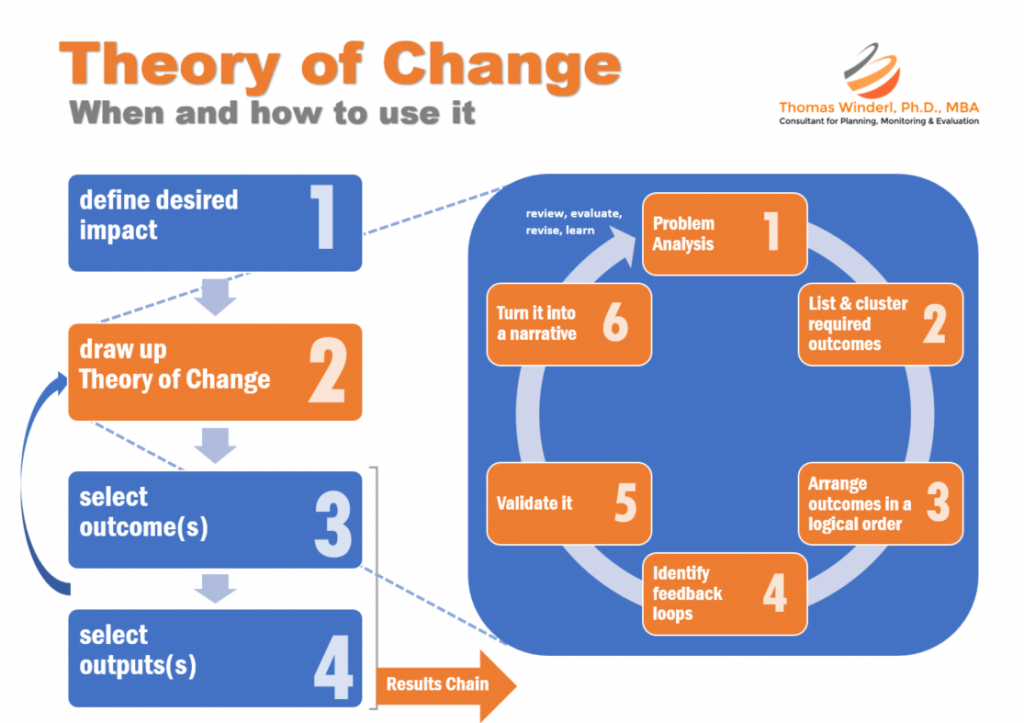
One reason for that is – is my feeling – that they are typically not developed in a logical sequence: without a thorough problem analysis, with a possible intervention already in mind, just as the opposite side of a result chain, etc.

Here is my suggestion in what sequence we should go about it:
The post A Theory of Change appeared first on Thomas Winderl.
Written by cplysy · Categorized: thomaswinderl

Mar 13 2020

Stop overthinking: Minimum Viable Product

MINIMUM WHAT?!?

Ok. What are we talking about?

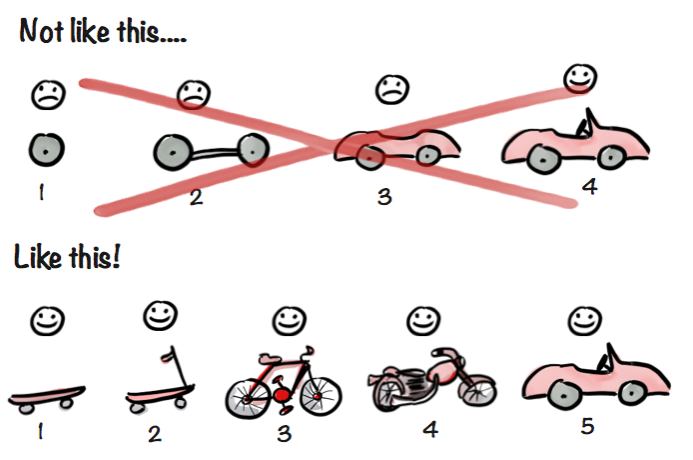
A minimum viable product – MVP in short – is a product with just enough features to gather validated learning about a possible intervention or product. It is deliberately imperfect; any additional work on it beyond what was required to start learning is waste, no matter how important it might have seemed at the time.

The idea of using minimum viable products is taken from product development ideas of the lean start-up movement in the private sector. The most well know writer about lean startup movement is probably Eric Ries with his book on ‘The lean startup: how constant innovation creates radically successful businesses’ (1).

The underlying reason to develop an MVP is to empirically test assumptions and hypotheses about what works and what does not. Using MVPs is a structured way to check that you have an efficient and appropriate solution or approach before rolling it out or making a big investment in it.

Minimum viable product can range in complexity from extremely simple ‘smoke tests’ (little more than an announcement or advertisement for a service or product) to actual early prototypes complete with problems and missing features.

Source: Stop overthinking…Just stop!, Matias Honorato

WHEN TO USE IT

Minimum viable products are the fastest way to get through the build-measure-learn feedback loop of adaptive programming (see section on adaptive programming). The goal of MVPs is to begin the process of learning, not end it. Unlike ‘prototypes’ or ‘proofs-of-concept’, MVPs are designed not just to answer product design or technical questions, but to test out theories of change and fundamental development hypotheses.

Some forms of minimum viable products to consider are:

  • Video MVP: simple, short video that demonstrates how a programme, project, policy, product or service is meant to work
  • ‘Concierge’ MVP: testing a programme, project, policy, product or service is meant to work with a single or very few clients
  • ‘Wizard of Oz’ MVP: clients believe to be interacting with an actual service or product, which is in fact only simulated by humans

AN EXAMPLE 

In Papua New Guinea, UNDP tested whether a low-cost tool can help the government address corruption and mismanagement, which gobbled up 40% of the country’s annual budget. In 2014, UNDP partnered with local Telecom companies to design a simple SMS-based minimum viable product. The MVP was subsequently tested with 1,200 staff in the Department of Finance, and updated based on user-feedback. Within four months, it led to over 250 cases of alleged corruption under investigation. Based on the uptake of the first version, the service was rolled out to six new departments and 25,000 government officials countrywide in 2015. (2)

For examples from a business start-up perspective see e.g. The Ultimate guide to minimum viable products by Scale up my Business.

———————————————–

This blog post is based on: The lean startup: how constant innovation creates radically successful businesses, Eric Ries, 2011, pp.92-113; Minimum viable product (MVP), Wikipedia; Prototype testing plan, Development Impact & You (DIY)

Sources:

(1) The lean startup: how constant innovation creates radically successful businesses, Eric Ries (2011)

(2) 6 ways to innovate for 2030, Benjamin Kumpf, 19-04-2016; Papua New Guinea: Phones against corruption, UNDP

The post Stop overthinking: Minimum Viable Product appeared first on Thomas Winderl.

Written by cplysy · Categorized: thomaswinderl

Mar 06 2020

Innovative programme design

It has always been clear to me: Monitoring and Evaluation depends to a large extent on how development or government programmes are planned and designed. That is why good M&E is strongly linked with good planning and design. In a way, programme design is a natural extension of our skill set in M&E.

That is why this blog post looks closer at the rapidly evolving landscape of options for innovative programme design.

DRIVERS OF INNOVATION

In my view, we have recently seen such a push for innovation in programme design for three reasons:

  • Disillusion with linear models: Linear planning tools such as logical frameworks and linear theories of change are ineffective in a more complex, complicated or chaotic context. If you are not yet convinced, look at Ben Ramalingam’s comprehensive critique of current planning models (1).
  • Complexity and wicked problems: Genuine progress toward sustainable development is increasingly complex: solutions are not simple or obvious, those who would benefit are the ones who most lack power, those who can make a difference are disengaged, and political barriers are too often overlooked. Look for example at the Manifesto ‘Doing Development Differently’ manifesto from 2014. That is why programme design must increasingly cope with ‘wicked’ problems: problems that are difficult to define clearly, are deeply interconnected, and driven by many factors and unforeseen events.
  • Data revolution: The world has been – and still is – undergoing a data revolution with far-reaching consequences for programme design: We now live in a world where 90 percent of the data out there today has been created in the last two years alone. Every minute, more than 270,000 tweets get published worldwide, Google receives no less than 4 million search queries, and over 200 million emails are sent.(2)

CHALLENGES TO INNOVATION

Despite this push, development organizations and governments have mostly kept more innovative programme designs contained in ‘innovation labs’ and small pilot projects. There are significant challenges to innovative programme design. Three reasons stand out in my view:

  • Mind set: Many of these innovations require ‘unlearning’ of the traditional, linear design approach based on a chain of results.
  • Rules and regulations: Many of these innovations may be difficult to carry out within the current rules and regulations for programme design and implementation.
  • Donor requirements: Testing these innovations may require flexibility by the donor.

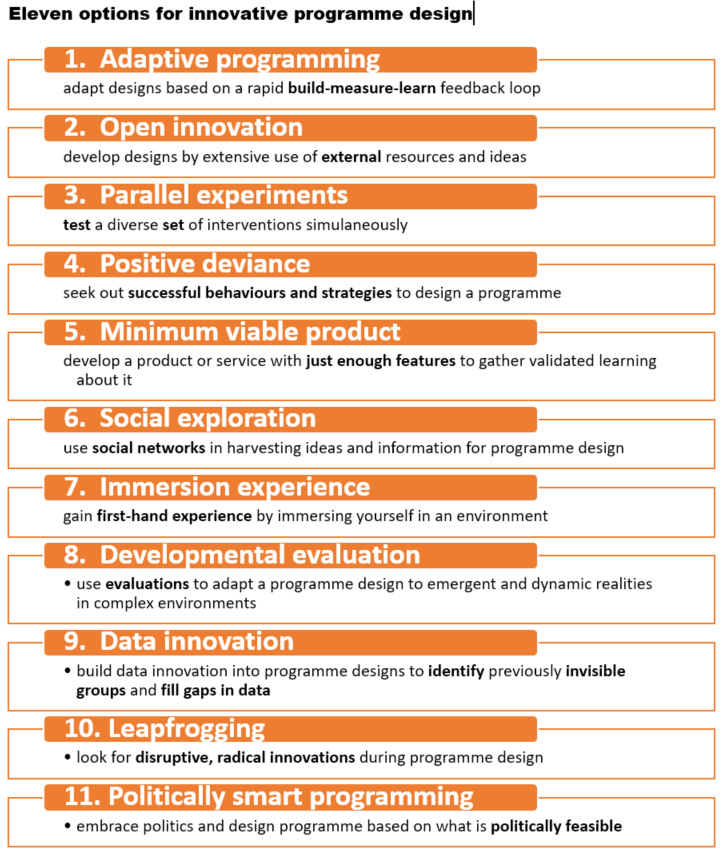
ELEVEN OPTIONS FOR INNOVATIVE PROGRAMME DESIGN

In my view, there are eleven concrete options for innovative programme design in complex, complicated or chaotic settings to consider for governments and development organisations:

Sources:

(1) Aid on the edge of chaos: rethinking international cooperation in a complex world, Ramalingam 2013

(2) Can big data help us make emergency services better? David Svab/Brett Romero, 20/04/2016

The post Innovative programme design appeared first on Thomas Winderl.

Written by cplysy · Categorized: thomaswinderl

Feb 27 2020

The Age of Data

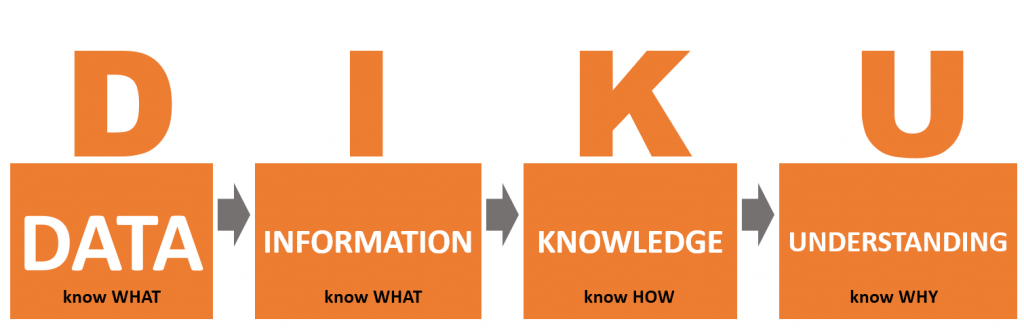
Data, information and knowledge

Professional Monitoring and Evaluation is based on hard facts: data, information, knowledge and understanding. Let us take a closer look at these concepts:

Hierarchy of data (know what) that can lead to information (know what), knowledge (know how) and understanding (know why)

WHAT IS DATA?

As you will know, data is a collection of objective facts, such as numbers, words, images, measurements, observations or even just descriptions of things. In other words: Data is chunks of raw facts about the state of the world.

For example: crime rates, unemployment statistics, but also handwritten notes of interviews, or a recorded description of an observation.

Data is raw, unorganized and lacks context. To be useful, it needs to be turned into information.

WHAT IS INFORMATION?

Information is data that has meaning and purpose. It can help us understand what is happening.

For example: the noises that I hear are data. The meaning of these noises – for example a running car engine – is information.

WHAT IS KNOWLEDGE?

Information can serve to create knowledge. Knowledge can instruct how to do something.

And finally, knowledge can be turned into understanding that explains why it is happening.

The post The Age of Data appeared first on Thomas Winderl.

Written by cplysy · Categorized: thomaswinderl

Feb 20 2020

Our toolbox for primary data collection

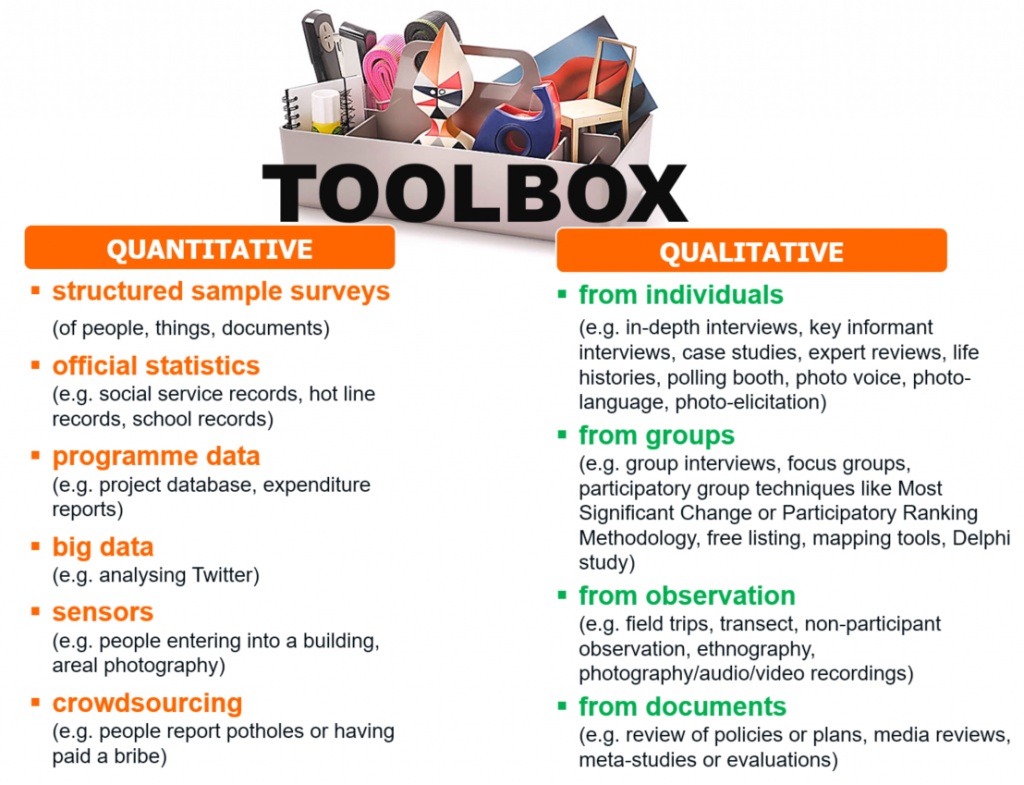
To collect primary data (data that we need to collect first ourselves), we can rely on a rather sophisticated tool box– largely from social sciences – that has been developed over decades.

There are tools for quantitative and qualitative data collection. Here is a list of some of the important tools available to us:

The post Our toolbox for primary data collection appeared first on Thomas Winderl.

Written by cplysy · Categorized: thomaswinderl

  • « Go to Previous Page
  • Go to page 1
  • Go to page 2
  • Go to page 3
  • Go to page 4

Footer

Follow our Work

The easiest way to stay connected to our work is to join our newsletter. You’ll get updates on projects, learn about new events, and hear stories from those evaluators whom the field continues to actively exclude and erase.

Get Updates

Want to take further action or join a pod? Click here to learn more.

Copyright © 2026 · The May 13 Group · Log in

en English
af Afrikaanssq Shqipam አማርኛar العربيةhy Հայերենaz Azərbaycan dilieu Euskarabe Беларуская моваbn বাংলাbs Bosanskibg Българскиca Catalàceb Cebuanony Chichewazh-CN 简体中文zh-TW 繁體中文co Corsuhr Hrvatskics Čeština‎da Dansknl Nederlandsen Englisheo Esperantoet Eestitl Filipinofi Suomifr Françaisfy Fryskgl Galegoka ქართულიde Deutschel Ελληνικάgu ગુજરાતીht Kreyol ayisyenha Harshen Hausahaw Ōlelo Hawaiʻiiw עִבְרִיתhi हिन्दीhmn Hmonghu Magyaris Íslenskaig Igboid Bahasa Indonesiaga Gaeilgeit Italianoja 日本語jw Basa Jawakn ಕನ್ನಡkk Қазақ тіліkm ភាសាខ្មែរko 한국어ku كوردی‎ky Кыргызчаlo ພາສາລາວla Latinlv Latviešu valodalt Lietuvių kalbalb Lëtzebuergeschmk Македонски јазикmg Malagasyms Bahasa Melayuml മലയാളംmt Maltesemi Te Reo Māorimr मराठीmn Монголmy ဗမာစာne नेपालीno Norsk bokmålps پښتوfa فارسیpl Polskipt Portuguêspa ਪੰਜਾਬੀro Românăru Русскийsm Samoangd Gàidhligsr Српски језикst Sesothosn Shonasd سنڌيsi සිංහලsk Slovenčinasl Slovenščinaso Afsoomaalies Españolsu Basa Sundasw Kiswahilisv Svenskatg Тоҷикӣta தமிழ்te తెలుగుth ไทยtr Türkçeuk Українськаur اردوuz O‘zbekchavi Tiếng Việtcy Cymraegxh isiXhosayi יידישyo Yorùbázu Zulu