• Skip to main content
  • Skip to footer
  • Home

The May 13 Group

the next day for evaluation

  • Get Involved
  • Our Work
  • About Us
You are here: Home / Archives for cplysy

cplysy

Jul 14 2022

Note-Taking for Learning and Innovation

Do your notes bore you? They shouldn’t if you’re serious about learning.

Note-taking is among the most powerful, accessible, and portable means to support innovation and learning. Yet, most of us do it poorly. Do you review your notes after you take them? Do you know why you are taking notes in the first place?

There is an art to good note-taking and to using notes effectively. Notes capture what happens, what is discussed or observed, and record insights and commentary — but only if we use them.

Let’s look at ways to improve this.

Tools of the Trade

Fast Company has a remarkably detailed and useful guide to selecting a notebook. The New York Times annually reviews the best pens. Your choice of both can make a big difference to your willingness to use them. That is the key. The best tools are the ones you use.

If pen-and-paper isn’t your thing, consider using one of many apps. In his new book, Building Your Second Brain, Tiago Forte explores how apps and systems can help us better record and retain information. The secret is that the best app is the one that matches the way that you learn and use notes in your practice.

Forte has conducted research into the use of note-taking apps by canvassing the thousands of people who attend his workshops and he’s found that the top tools are:

  1. Evernote
  2. Obsidian
  3. Notion

These aren’t the only ones out there, but they are the most used. Each of these map on to three different note-taking styles such as those suggested by Anne-Laure Le Cunff, which we’ll explore below.

Note-taking Styles

Anne-Laure Le Cunff from Ness Labs has written extensively on note-taking — read her detailed explanation here. She reviews the literature and suggests a variety of strategies that work depending on your goals and preferences. She also provides recommendations on which app to use based on the kind of note-taker you are.

Le Cunff proposes three main note-taking styles:

  • The architect. They enjoy planning, designing processes and frameworks, and need a note-taking tool that allows them to easily structure their ideas.
  • The gardener. They enjoy exploring, connecting various thoughts together, and need a note-taking tool that allows them to easily grow their ideas.
  • The librarian. They enjoy collecting, building a catalogue of resources, and need a note-taking tool that allows them to easily retrieve their ideas.

The best way to learn is to design your systems to match your needs, preferences, and style of note-taking.

Systems of Use

Once you’ve got tools and matched them to your preferences, the next is building an actual use system. This means getting serious about learning. Learning will fail in bad systems as illustrated in a post over on Censemaking.

We suggest asking yourself the following questions ahead of any learning-based activity like a course or webinar:

  • Will I create the time to review, integrate or reflect on what I am exposed to?
  • Is the delivery of this course suited to the ways in which I make sense of the world and develop new skills?
  • Am I invested in the product — a certificate, degree, or outcome — or the process?
  • Am I engaged with this program (course, webinar, tutorial) to escape from asking myself difficult questions about my work?
  • Do I have a system in place to revisit, re-work, and apply what I’ve learned in place before I start?

A good learning system involves the following:

A good learning system is something that:

  1. Reduces distraction (preserves and hones attention to find, gather, synthesize and sense-make the most useful information)
  2. Protects/creates/utilizes time (is fit-for-purpose in connecting our knowledge to our purpose and our strategy)
  3. Articulates care (creates principles for practice)
  4. Fits the culture of your organization (creates space for integration)

Learn By Design

As you can see, any good learning experience involves good design. Our choice of tools, motivation, and systems all shape what we learn, what we retain, and whether it’s of practical value.

Learning is easy to say, more complicated to do. But it is something we can design into our organization.

You can learn to learn better by design. Remember: the best system is the one that you use.

If you want help creating a learning system for your organization to help get the most out of what you do every day, reach out and let’s grab a coffee and learn from one another.

Photo by Jan Kahánek on Unsplash

The post Note-Taking for Learning and Innovation appeared first on Cense Ltd. .
Written by cplysy · Categorized: cameronnorman

Jul 14 2022

8 Simple Tools for Video Creation

In today’s post I walk you through 8 different tools you can use for easy video creation.

Video used to be the realm of camera lovers, animators, and production studios. But in our modern digital world, anyone can produce a video with the phone in their pocket. The number of tools can be a bit overwhelming so I created this post to ease you into a decision.

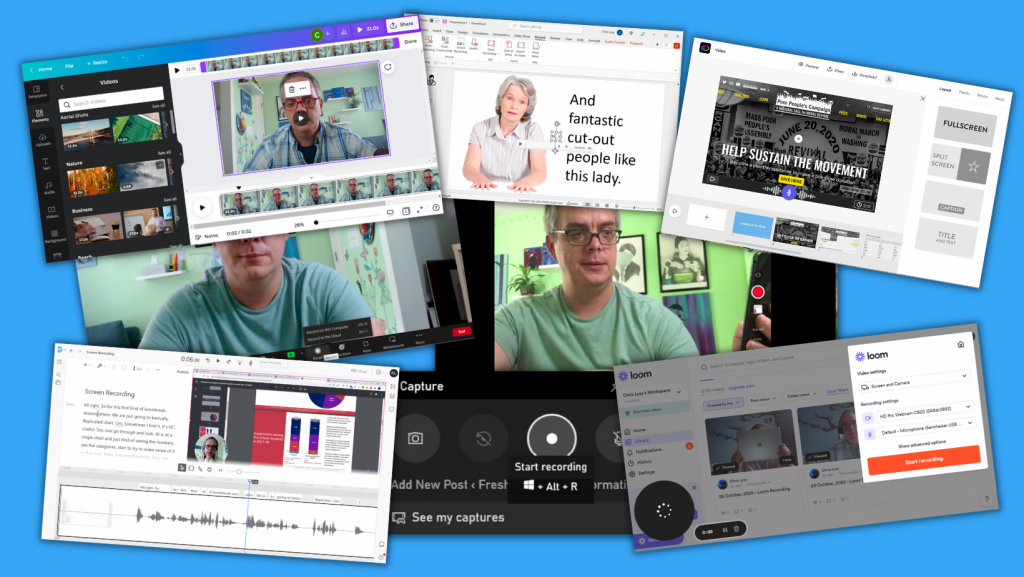
This post starts with 4 tools you likely already have in your pocket or on your computer. Then we’ll talk about 4 more web-based tools that you can try out for free.

8 Simple Video Tools

1. Pick up your phone, hit record.

Phones have come a long way over the last decade years. We all know how easy it is to just pick up your phone and hit the record button. Even if you are the kind of person who runs away from any cameras turned in your direction, your phone is probably the easiest tool you can use to capture video.

And while holding your phone selfie style while you’re out for a walk might not give you the best video or audio quality in the world, it does create a video. With these types of videos you are not pretending that the recording has a high production value, and in that way they can feel a bit more authentic, conversational, and human.

One thing to keep in mind. Watch your audio. People are pretty forgiving when it comes to poor video quality but nothing will make them stop watching faster than poor quality audio.

Screenshot, picking up phone to record.

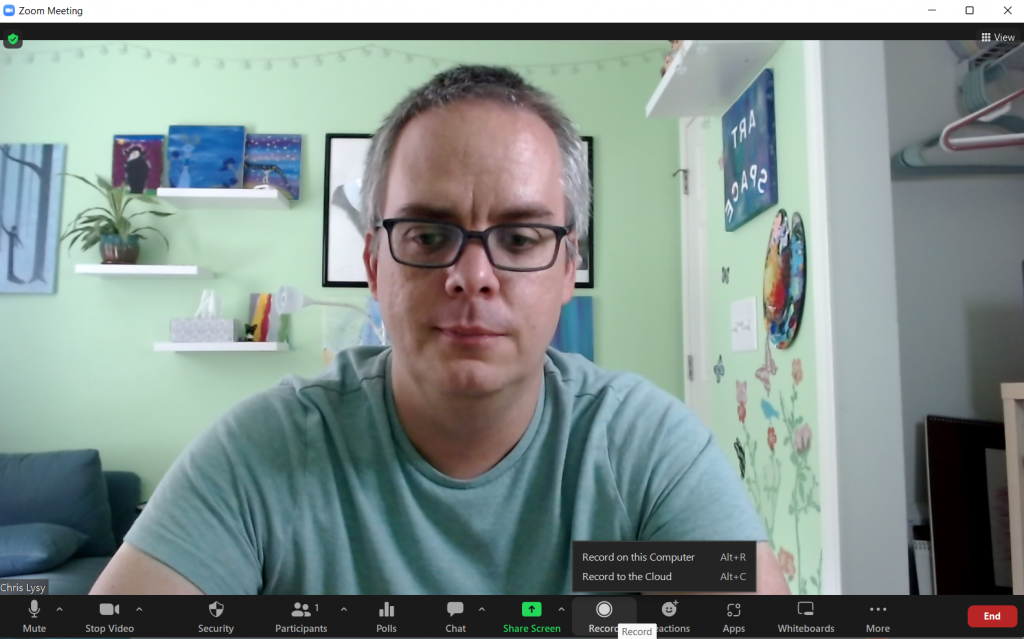
2. Use Zoom to record a video.

Do you have a Zoom account? Probably, over the last few years it’s really become an office standard. But have you considered just using Zoom for the sake of creating videos?

Think about it.

  • Zoom already connects to your webcam.
  • It will let you screenshare.
  • You can interview other people 1 on 1.
  • You can present a slide deck and deliver a presentation.
  • Video on, video off, it’s your choice.
  • Nothing stops you from starting a meeting with no other participants and hitting record.

Just a tip. Zoom will give you the option to record to the cloud or record on your computer. I suggest recording on your computer as it’s likely to give you a better quality video.

Zoom call recording screenshot.

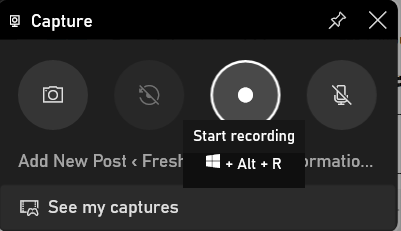
3. Screen Record on your PC or Mac with the click of a button.

Just want to do a quick screen recording?

Did you know that you have software already existing on your computer that let’s you do that?

  • To record your screen on a PC, press the Windows Key + G on your keyboard.
  • To record your screen on a Mac, press the Command + Shift + 5 keys on your keyboard. 

Microsoft added this feature particularly for gamers who wanted to screenshare their game playing. But you could share anything, from Excel tutorials to survey tool instructions.

Windows PC screen recording tool

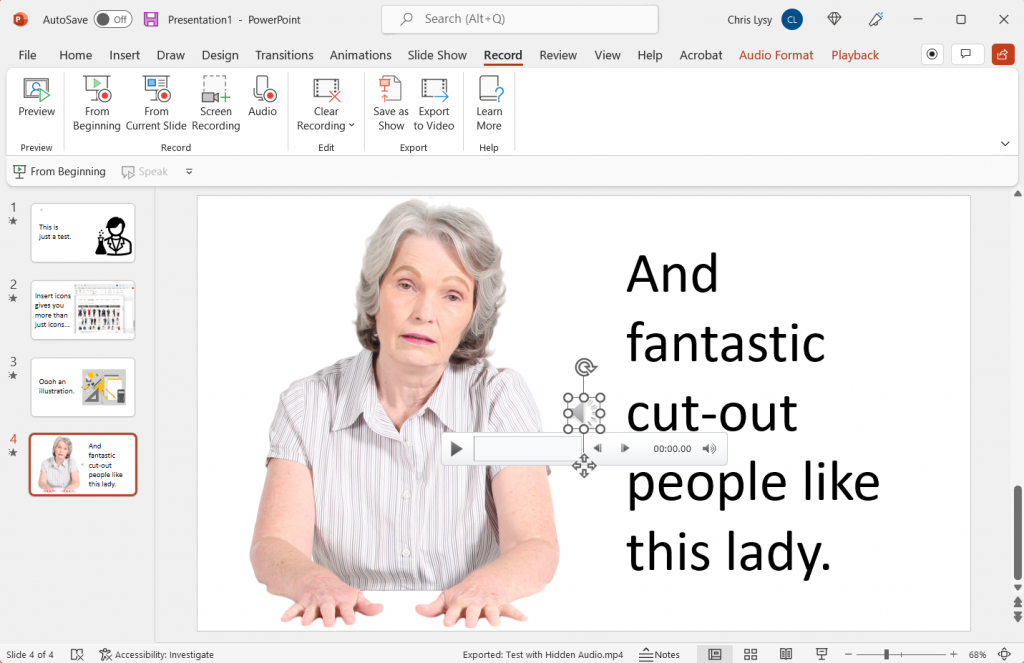
4. Create a Slideshow Video using PowerPoint

There are actually a few ways to create a video using PowerPoint.

You can record your presentation, which will open up another window and let you present as you flip through your slides. This is an easy option if you are already pretty comfortable presenting and the recording doesn’t throw you off.

Another way to create a video is to embed videos, screen recordings, and other audio onto individual slides. Then export to Video. In this way you can use the slides to record different scenes in your video, and you don’t need to record everything at once.

One tip, adding audio to slides will create a little speaker icon. This speaker icon stays on the screen in your exported video or live slideshow. If you don’t want it there (because why would you) you can click a box in the audio’s Playback menu to “Hide During Show.”

PowerPoint for Video

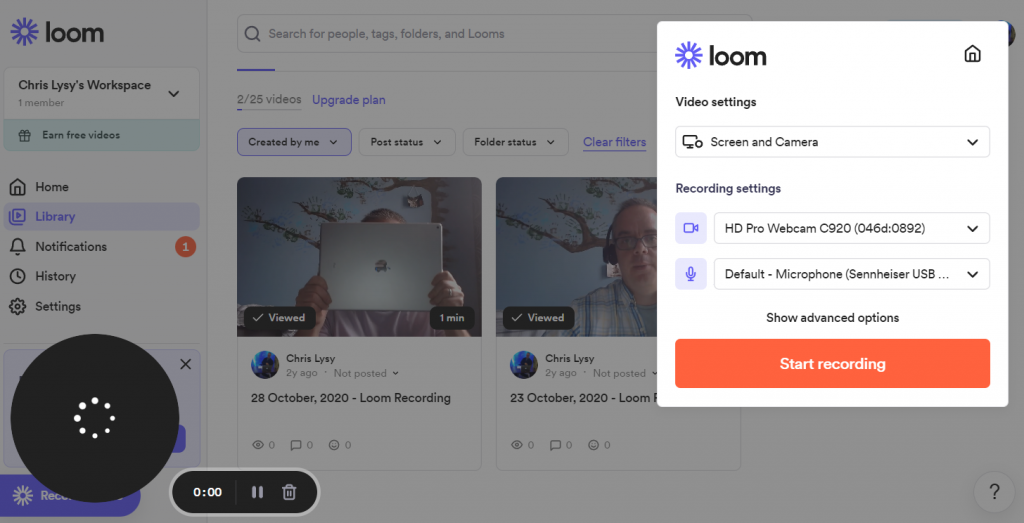
5. Screen Record with Loom

Loom is a nice freemium tool you can use for screen recordings. You can access via the web, but it also has a desktop app and a chrome plugin. For free you can record up to 25 individual <5 minute videos. Loom will also give you some basic editing tools.

Upgrading to a business plan for around $10/month will give you better video quality, unlimited videos, no watermark and other goodies.

Screenshot of Loom

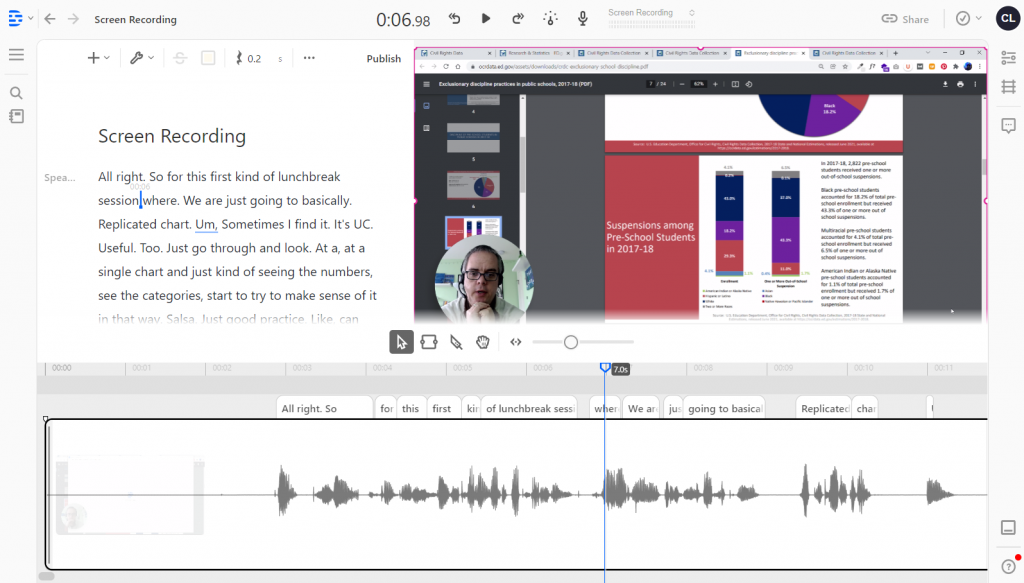
6. Create Your Video with Descript

Descript is a newer tool on the market. Like Loom it allows you to screen record or just record via your camera. What makes descript different is a novel approach to video editing.

Descript uses auto-transcription, and you can actually edit the video by editing the transcription. They also have this tool called Overdub, which can clone your voice for use in text-to-speech. Descript is definitely going for easy-to-use but because it’s both new and ambitious with its features, it can still be a bit finicky. But as a freemium tool it’s definitely worth a test.

Screenshot of Descript

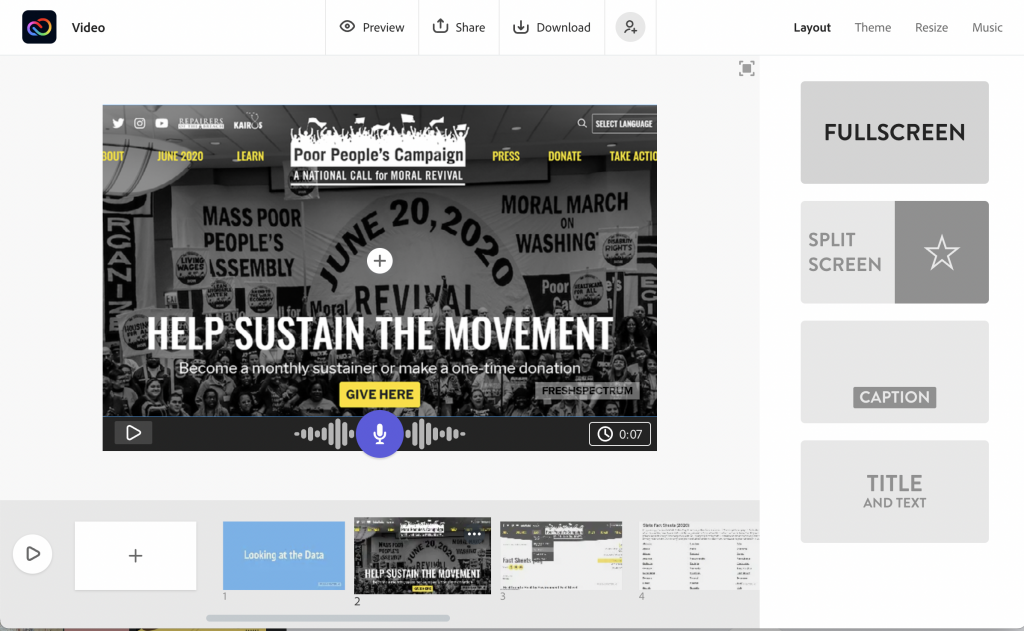
7. Use Adobe Express (Formerly Spark)

What is now Adobe Express started as a collection of iPad Apps you might know by the name Adobe Spark. Over time the apps have all been merged together and now make up Adobe’s alternative to Canva. If you’re looking for an easy way to create a slide style video, it doesn’t get much easier than Adobe Express.

In Adobe Express you record your voiceover on each slide by holding down the microphone button. There isn’t much flexibility in overall design as the layouts you choose dictate the videos look and feel.. But the trade off in features gives you a tool that’s really easy to use. Over the years I always used Spark when I just wanted to create quick eLearning modules and didn’t want to spend too much time making design decisions.

Screenshot of Adobe Express

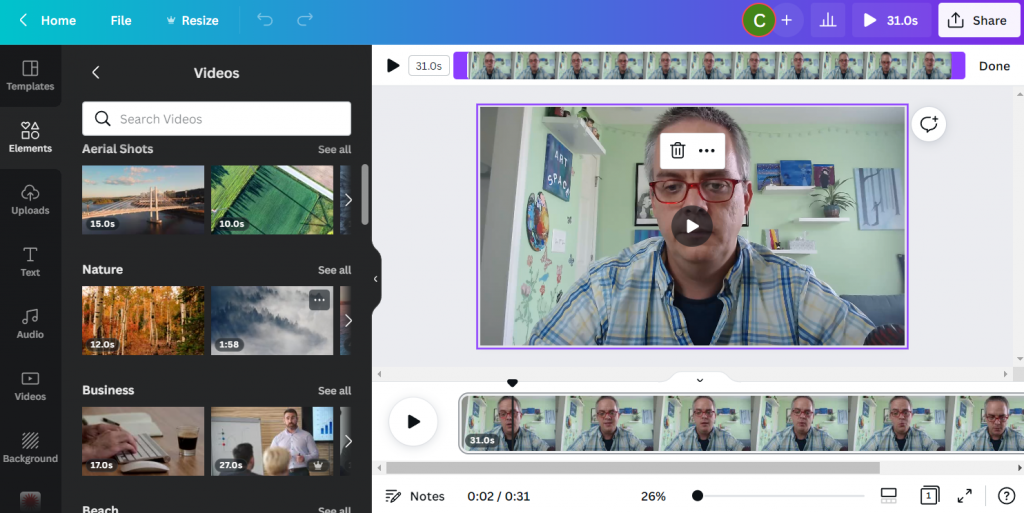
8. Use Canva to Create Your Video!

So if you’ve been following this blog you probably know that I’m a fan of using Canva for all sorts of design things. Well, that stays true even with video. Over the last few weeks I’ve been using Canva exclusively to create videos for my YouTube channel.

While Canva doesn’t offer the same amount of editing flexibility as a standard video editing tool (i.e Adobe Premiere, iMovie, etc.) it makes up for it in Assets. If you’re interested in learning the two different ways you can use Canva to create videos, check out my own Video on the topic I’ve embedded below.

Screenshot of Canva Video Editor.

How to Create YouTube Videos in Canva

What did I miss?

So there are tons of tools that you can use to make videos. The programs in the post are just a sampling, but I have used each one at different times in the past.

Do you have any favorites you think I should have included, please share in the comments!

Written by cplysy · Categorized: freshspectrum

Jul 14 2022

Perspective: Changing Your Evaluation Lens

Have you seen the new images from NASA’s James Webb Space Telescope? By viewing the same information through a different lens or perspective, we experience the world in a new way. We see a different level of detail, which presents new possibilities, questions, & learning. This is not just relevant to astronomy, it is a great lesson for evaluation too!

The post Perspective: Changing Your Evaluation Lens appeared first on Elizabeth Grim Consulting, LLC.

Written by cplysy · Categorized: elizabethgrim

Jul 06 2022

The Reporting Revolution

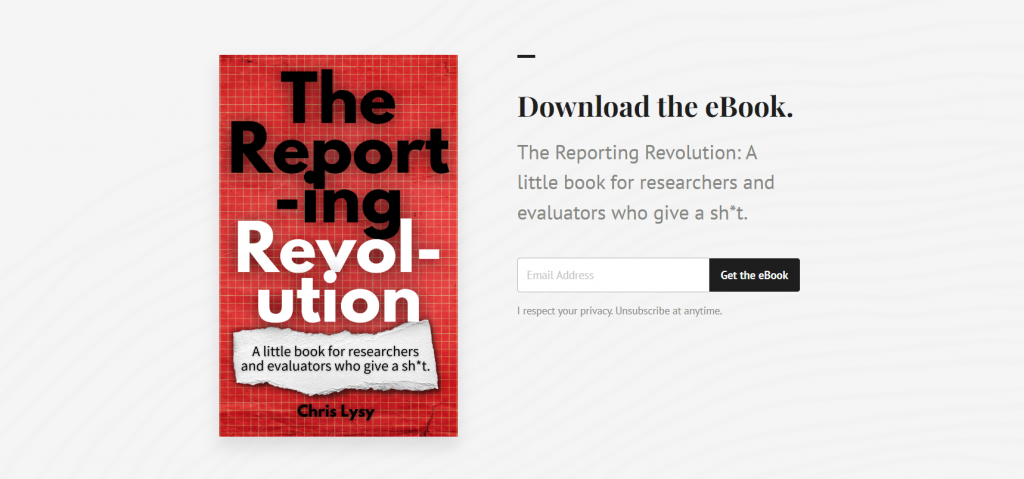
So I started writing a book. It’s called The Reporting Revolution: A little book for researchers and evaluators who give a sh*t.

I wanted to share with you what I have so far.

The final book is nowhere close to finished. I just started writing it a few days ago by collecting some of my most central thoughts on modern reporting. And then I put all of those thoughts into the eBook I share below.

Here’s the deal. If you download the current version of the eBook, I’ll keep giving you updates. All the way until it’s finished (if it makes it that far). Meaning you’ll get something for free that might eventually cost others actual money.

So what’s the catch?

There isn’t one. The currently 20 page book is free. If I gets a good response from readers, I’ll write more pages. If not, it’s still a nice little 20 page book.

Also, I’m hoping you’ll give me feedback.

Here is what’s inside:

  • Chapter 1. Why are we still reporting like it’s 1999?
  • Chapter 2. Our reports tell everyone else a story about our profession.
  • Chapter 3. Seeing our work through our audience’s eyes.
  • Chapter 4. Unintentional gatekeepers.
  • Chapter 5. Mindset change – Noun report to verb report.
  • Chapter 6. Not just better, faster too.
  • Chapter 7. Make it easy.
The Reporting Revolution: A little book for researchers and evaluators who give a sh*t.  
Screenshot of the eBook landing page.
Click here to go to the download page.

Written by cplysy · Categorized: freshspectrum

Jul 05 2022

La gestión del conocimiento personal de l@s evaluador@s

La gestión del conocimiento personal (en inglés Personal knowledge management /  PKM):

(1) Es un proceso que una persona utiliza (a) para recopilar, clasificar, almacenar, buscar, recuperar, compartir, internalizar e integrar conocimientos en sus actividades diarias,  y (b) la forma en que estos procesos respaldan sus actividades laborales. (Grundspenkis 2007 y Wright 2005)

(2) Es un enfoque de abajo hacia arriba para la gestión del conocimiento (KM) y una respuesta a la idea de que l@s trabajador@s del conocimiento deben ser responsables de su propio crecimiento y aprendizaje. (Pollard 2008)

L@s trabajador@s del conocimiento son aquell@s cuyo principal capital es el conocimiento, cuyo trabajo es «pensar para ganarse la vida». Como ejemplo de trabajador@s del conocimiento, tod@s aquellos en torno al sector de la evaluación (consultor@s, gestor@s, investigado@s…). ¿Cómo hacemos en la práctica en el sector de la evaluación para la gestión de nuestro conocimiento «personal»?

Referencias

Grundspenkis, J. (2007), «Agent based approach for organization and personal knowledge modelling: knowledge management perspective», Journal of Intelligent Manufacturing, vol. 18, no. 4, pp. 451–457, doi:10.1007/s10845-007-0052-6, S2CID 6466978.

Personal knowledge management 

Pollard, Dave (2008), PKM: A bottom-up approach to knowledge management. In Knowledge Management in Practice: Connections and Context, ed. T.K. Srikantaiah and M.E.D. Koenig, Information Today, pp. 95–114

Wright, Kirby (2005), «Personal knowledge management: supporting individual knowledge worker performance», Knowledge Management Research and Practice, vol. 3, no. 3, pp. 156–165, doi:10.1057/palgrave.kmrp.8500061, S2CID 58474736.

Written by cplysy · Categorized: TripleAD

  • « Go to Previous Page
  • Go to page 1
  • Interim pages omitted …
  • Go to page 122
  • Go to page 123
  • Go to page 124
  • Go to page 125
  • Go to page 126
  • Interim pages omitted …
  • Go to page 304
  • Go to Next Page »

Footer

Follow our Work

The easiest way to stay connected to our work is to join our newsletter. You’ll get updates on projects, learn about new events, and hear stories from those evaluators whom the field continues to actively exclude and erase.

Get Updates

Want to take further action or join a pod? Click here to learn more.

Copyright © 2026 · The May 13 Group · Log in

en English
af Afrikaanssq Shqipam አማርኛar العربيةhy Հայերենaz Azərbaycan dilieu Euskarabe Беларуская моваbn বাংলাbs Bosanskibg Българскиca Catalàceb Cebuanony Chichewazh-CN 简体中文zh-TW 繁體中文co Corsuhr Hrvatskics Čeština‎da Dansknl Nederlandsen Englisheo Esperantoet Eestitl Filipinofi Suomifr Françaisfy Fryskgl Galegoka ქართულიde Deutschel Ελληνικάgu ગુજરાતીht Kreyol ayisyenha Harshen Hausahaw Ōlelo Hawaiʻiiw עִבְרִיתhi हिन्दीhmn Hmonghu Magyaris Íslenskaig Igboid Bahasa Indonesiaga Gaeilgeit Italianoja 日本語jw Basa Jawakn ಕನ್ನಡkk Қазақ тіліkm ភាសាខ្មែរko 한국어ku كوردی‎ky Кыргызчаlo ພາສາລາວla Latinlv Latviešu valodalt Lietuvių kalbalb Lëtzebuergeschmk Македонски јазикmg Malagasyms Bahasa Melayuml മലയാളംmt Maltesemi Te Reo Māorimr मराठीmn Монголmy ဗမာစာne नेपालीno Norsk bokmålps پښتوfa فارسیpl Polskipt Portuguêspa ਪੰਜਾਬੀro Românăru Русскийsm Samoangd Gàidhligsr Српски језикst Sesothosn Shonasd سنڌيsi සිංහලsk Slovenčinasl Slovenščinaso Afsoomaalies Españolsu Basa Sundasw Kiswahilisv Svenskatg Тоҷикӣta தமிழ்te తెలుగుth ไทยtr Türkçeuk Українськаur اردوuz O‘zbekchavi Tiếng Việtcy Cymraegxh isiXhosayi יידישyo Yorùbázu Zulu