• Skip to main content
  • Skip to footer
  • Home

The May 13 Group

the next day for evaluation

  • Get Involved
  • Our Work
  • About Us
You are here: Home / Archives for cplysy

cplysy

Feb 22 2022

“I couldn’t have put it better myself”

“I couldn’t have put it better myself…”

We all know how powerful a startling statistic can be.

Maybe you’ve seen a PowerPoint presentation where there is just a huge number on the slide or a newspaper headline that highlights the stark realities of a situation.

Remember the New York Times’ cover early on in the pandemic that shared the tragedy of reaching 100,000 deaths from COVID?

Numbers are impactful. But words are too. 

I’m sure you’ve remarked to yourself at some point, “I couldn’t have put it better myself!”

Or, maybe when you were writing term papers, you struggled to paraphrase a source because you just didn’t know how something could be expressed better than the authors put it?

To me, those phenomena are the beauty of qualitative data – we don’t have to rephrase anything! We get to let people’s words speak for themselves. 

I’ve written before about a research project I’ve been working on to learn more about the effects of the pandemic on the lives of kinship caregivers (e.g., grandparents raising their grandchildren).

When I was conducting focus groups of caregivers, it was truly emotional to hear them share their experiences and the dedication and love they have for their children.

Now, a few months later, we are analyzing the data we collected, and I am seeing how impactful their words are, even in print.

I’m sure you’ve had the same experience through your family engagement work.

Have you ever had a conversation with a child or family member that just stuck with you? 

I bet their words and experiences began to inform your interactions with the next family you saw or the next time a similar situation came up.

And I bet the services and support you provided were better for it.

So how can we create more opportunities for families to share their brilliant insights and teach us about their lives?

Here are a few ideas to get you started:

– Add open-ended questions to your family surveys to allow families to provide some responses in their own words. 

– Host a listening session or “parent cafe” where the participants, not the educators, are the stars of the show. (TIP: If you get consent to record these conversations, you can use anonymous versions of their quotes to guide your work or highlight needs or impacts for grants or reports.)

– Post questions on social media and invite families to respond in the comments.

– Host your own focus groups or interviews with family leaders in the school community to pick their brains.

The families we work with are the experts on their kids and their lives. Let’s let them tell us what they need, in their own words. 

Over the next few weeks, I’ll be actively working through my mom brain to post more regularly and share more content about qualitative data – how you can collect it, analyze it, and use it to improve your work with kids and families.


Written by cplysy · Categorized: engagewithdata

Feb 20 2022

Revisando las implicaciones de la pandemia para l@s evaluador@s

Reviso el post de hace ahora casi dos años de MQPatton del 23 de Marzo de 2020, Implicaciones en la evaluación de la actual pandemia,  MQPAtton nos da su visión sobre la pandemia y las implicaciones que puede tener para la evaluación. Esta era su opinión sobre dónde estabamos y hacia dónde deberíamos ir como evaluador@s:

  1. Adaptemos ahora los planes y diseños de evaluación.
  2. Seamos proactivos: esto no va a pasar rápidamente.
  3. Centrémonos en el uso, no en nosotr@s.
  4. Reglas de datos en tiempo real.
  5. Consideremos el estándar de rigor «suficientemente bueno». Separarse del rigor como un estándar metodológico absoluto.
  6. Todo cambia en una crisis. Abraza el cambio, no te resistas.
  7. Participa en el pensamiento sistémico.
  8. Piensa globalmente, actúa localmente.
  9. Prepárate para defender el valor de la evaluación.
  10. Tengamos conocimiento, seamos un verificadores de hechos.
  11. Modela el pensamiento evaluativo sistemático.
  12. Aboga por mejores datos.
  13. Destaquemos la necesidad de una transformación hacia la sostenibilidad global a más largo plazo.
  14. Sigue aprendiendo.
  15. Apoyarse mutuamente como comunidad de evaluación.

Sería interesante revisar, ahora o en un tiempo, estos 15 puntos y reflexionar en torno a cómo respondió la evaluacion durante la pandemia, especialmente los puntos 7, 9, 11 y 15.

Written by cplysy · Categorized: TripleAD

Feb 20 2022

Comentario en Escucha y activa por Escucha y activa — «TripleAD»: Aprendiendo a Aprender para el Desarrollo | Desde mi Salón

[…] Escucha y activa — «TripleAD»: Aprendiendo a Aprender para el Desarrollo […]

Me gustaMe gusta

Written by cplysy · Categorized: TripleAD

Feb 19 2022

Escucha y activa

Fuente

Fuente

Escuchar, argumenta Erich Fromm, “es un arte, como la comprensión de la poesía” y ofrece algunas pautas para dominar el arte de la comprensión desinteresada: (1) la concentración completa del oyente, (2) librarse de ansiedad, (3) imaginación que funcione libremente y que pueda expresarse en palabras y (4) la capacidad de empatía con otra persona para tratar de comprender a otr@.

La escucha activa es una técnica, una forma / estrategia específica comunicación y/o un “arte” que: 

(1) requiere “disponibilidad, interés por la persona, comprensión del mensaje, espíritu crítico y prudencia en los consejos”,

(2) consiste en una forma de comunicación que ofrece disponibilidad y muestra interés por la persona que habla y demuestra que el oyente le ha entendido.

(3) no se limita a oír y dejar hablar al interlocutor sin interrumpir su discurso, sino que necesita de una atención física, psicológica y verbal, estar totalmente concentrados en el mensaje que el otro individuo intenta comunicar.

(4) se refiere a la habilidad de escuchar no sólo (a) lo que la persona está expresando directamente, sino también los (b) sentimientos, ideas o pensamientos que subyacen a lo que se está diciendo.


Algunas barreras para la escucha activa son (1) hablar excesivamente, (2) prejuzgar, (3) distracciones, (4) esperar o dar por supuesto que otros comparten nuestras creencias y valores personales, (5) malentendidos, (6) interrumpir o interrupciones, (7) hacer que escuchamos pero falsificando la atención, (8) dejarse llevar por las emociones, (9) el ruido y/o (10) el miedo o el temor.


En fin, esto de la escucha activa es también un filón de oro para el campo de la evaluación, y ¿no recuerda un poco a la canción de Carla Morrison? «…es escalofriante, tenerte de frente, hacerte sonreír, daría cualquier cosa por estar siempre aquí y entre todas esas cosas, no te fallaré, quiero perder contigo mi tiempo, guardar tus secretos, cuidar tus momentos, esperarte, adorarte, tenerte paciencia, tu locura es mi ciencia…»

Written by cplysy · Categorized: TripleAD

Feb 16 2022

The Role of Support in Innovation

The Beatles’ song made legendary by Joe Cocker speaks of getting by with a little help from our friends. The role of friends — associates, collaborators, trusted allies, partners — is vital to making innovation happen.

The myths about change-makers and innovators are many: The self-made woman/man, the great innovator, the great mind who works long and hard to succeed because of their own cleverness or ingenuity, the entrepreneur who transforms a market all by herself, a leader who takes an organization to new heights. Take your pick.

However, the evidence is clear: you need supporters to succeed. Whether it is early-stage support for ideas and potential or to deliver the finished product, support is critical to innovation. This was the topic that we recently covered on the latest episode of Censemaking: The Innovation Podcast.

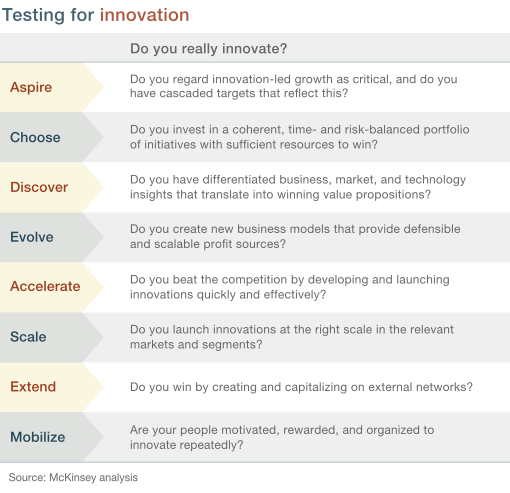
Look at the list below and you’ll see that most core items involve some kind of support mechanism either through teams, senior leadership, or markets.

Testing for innovation
https://www.mckinsey.com/business-functions/strategy-and-corporate-finance/our-insights/the-eight-essentials-of-innovation

Three Lessons for Support Generation

There are three core lessons from the literature on what to do:

  1. Find a tribe, build a community, join in with others. Whatever it takes, connect with those in your market, outside your market and those you wish to serve. Engage.
  2. Be a friend to have a friend. Share ideas, lessons learned, and assist your community however you define that. We see time and again that the best organizations are known and respected because they give from themselves. That also ensures that they receive just as much. You’re much more likely to attract the kind of knowledge that you need, the skills that you need when you share the knowledge and skills that you have. Creating a connected community of people who ‘get’ you is important.
  3. Leave the heroes to the comic books. Heroes make for great stories, but really lousy, real life models for change. What you need is a supportive structure. Mastermind group leadership teams, peer meetups – they all make a difference in reducing isolation and increasing the amount of contact points you have so that you can generate ideas and do so in a group that understands you. These can be internal or external — but they must allow for support to be gained and received.

You can’t do it alone. Find ways to connect with others who are doing something similar to what you’re doing, that support, which will be different for everybody, but that difference makes all the difference.

If you want to build a strategy to create connections within your organization contact us — we can help. We can also help you build the kind of internal structures to learn, share ideas, and innovate.

Photo by Neil Thomas on Unsplash

The post The Role of Support in Innovation appeared first on Cense Ltd. .

Written by cplysy · Categorized: cameronnorman

  • « Go to Previous Page
  • Go to page 1
  • Interim pages omitted …
  • Go to page 138
  • Go to page 139
  • Go to page 140
  • Go to page 141
  • Go to page 142
  • Interim pages omitted …
  • Go to page 304
  • Go to Next Page »

Footer

Follow our Work

The easiest way to stay connected to our work is to join our newsletter. You’ll get updates on projects, learn about new events, and hear stories from those evaluators whom the field continues to actively exclude and erase.

Get Updates

Want to take further action or join a pod? Click here to learn more.

Copyright © 2026 · The May 13 Group · Log in

en English
af Afrikaanssq Shqipam አማርኛar العربيةhy Հայերենaz Azərbaycan dilieu Euskarabe Беларуская моваbn বাংলাbs Bosanskibg Българскиca Catalàceb Cebuanony Chichewazh-CN 简体中文zh-TW 繁體中文co Corsuhr Hrvatskics Čeština‎da Dansknl Nederlandsen Englisheo Esperantoet Eestitl Filipinofi Suomifr Françaisfy Fryskgl Galegoka ქართულიde Deutschel Ελληνικάgu ગુજરાતીht Kreyol ayisyenha Harshen Hausahaw Ōlelo Hawaiʻiiw עִבְרִיתhi हिन्दीhmn Hmonghu Magyaris Íslenskaig Igboid Bahasa Indonesiaga Gaeilgeit Italianoja 日本語jw Basa Jawakn ಕನ್ನಡkk Қазақ тіліkm ភាសាខ្មែរko 한국어ku كوردی‎ky Кыргызчаlo ພາສາລາວla Latinlv Latviešu valodalt Lietuvių kalbalb Lëtzebuergeschmk Македонски јазикmg Malagasyms Bahasa Melayuml മലയാളംmt Maltesemi Te Reo Māorimr मराठीmn Монголmy ဗမာစာne नेपालीno Norsk bokmålps پښتوfa فارسیpl Polskipt Portuguêspa ਪੰਜਾਬੀro Românăru Русскийsm Samoangd Gàidhligsr Српски језикst Sesothosn Shonasd سنڌيsi සිංහලsk Slovenčinasl Slovenščinaso Afsoomaalies Españolsu Basa Sundasw Kiswahilisv Svenskatg Тоҷикӣta தமிழ்te తెలుగుth ไทยtr Türkçeuk Українськаur اردوuz O‘zbekchavi Tiếng Việtcy Cymraegxh isiXhosayi יידישyo Yorùbázu Zulu