Maddison Staszkiewicz is a Depict Data Studio student and evaluator. She was part of the 2020 Great Graphs: Excel How-To’s cohort and is sharing her experiences with us. Thanks Maddison! –Ann
—–
I was ecstatic to register for the Great Graphs: Excel How-To’s course and transform my graphs using Excel instead of online data visualization software. I already had Excel, my data was there, and it did not make sense to use another platform to make the graphs I needed.
I had tried other options before, and it was always clunky because instead of focusing on the data and the message I was trying to show, I was inevitably focusing on the different software programs and how they would interact.
Tips, Tricks and Community
Through the Great Graphs: Excel How-To’s course, I learned more tips and tricks than I ever expected. But the most impactful, yet unexpected, outcome was joining a community and making connections with others that were also along their own journey of improving their graphs as a way of sharing messages and insights through data.
Throughout the course, I was exposed to new ways of thinking about graphs, Excel, and how data visualization can be used in the workplace to guide more data-informed decisions.
Now, I look at data visualization differently.
When I see data visualization in the newspaper or on social media, I think about what it was trying to show and whether it was successful. This critical eye helped me be a better peer and colleague when seeking to get the message across from my own data and in collaborating with others.
As we started the course, I got to know my peers also in the course.
When I was working on producing graphs for a blog based on my graduate work in evaluation surrounding the perceived effects of medication access from COVID-19, we reviewed and workshopped them together with live feedback in an office hour session.
Because of the varied backgrounds of those in the course, I was thinking about my work in a completely new and improved way. I started experimenting with graph types I had not used before, with some having greater success than others.
Before: Audience Left with Questions
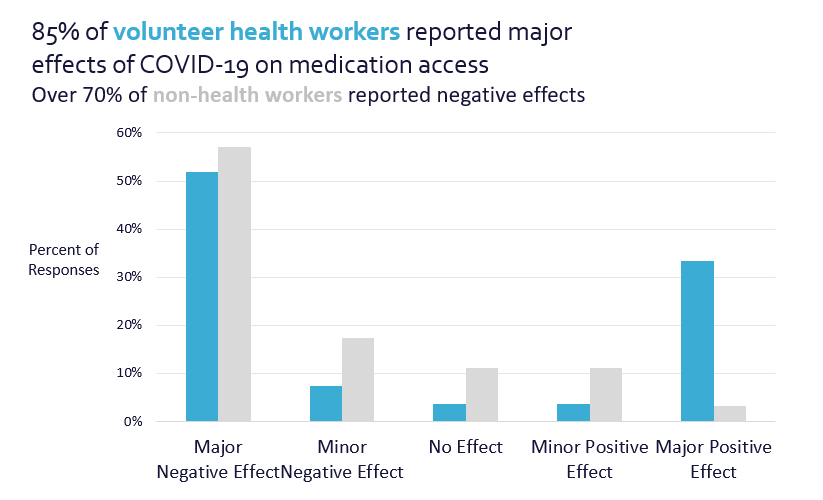
My original graph applied many of the lessons we had covered – I used my color palette, I had storytelling titles, but there was room for improvement.
There was much left up for the audience to discern when reviewing the graph – was the 85% or 70% most important? Why were different values mentioned in the heading?
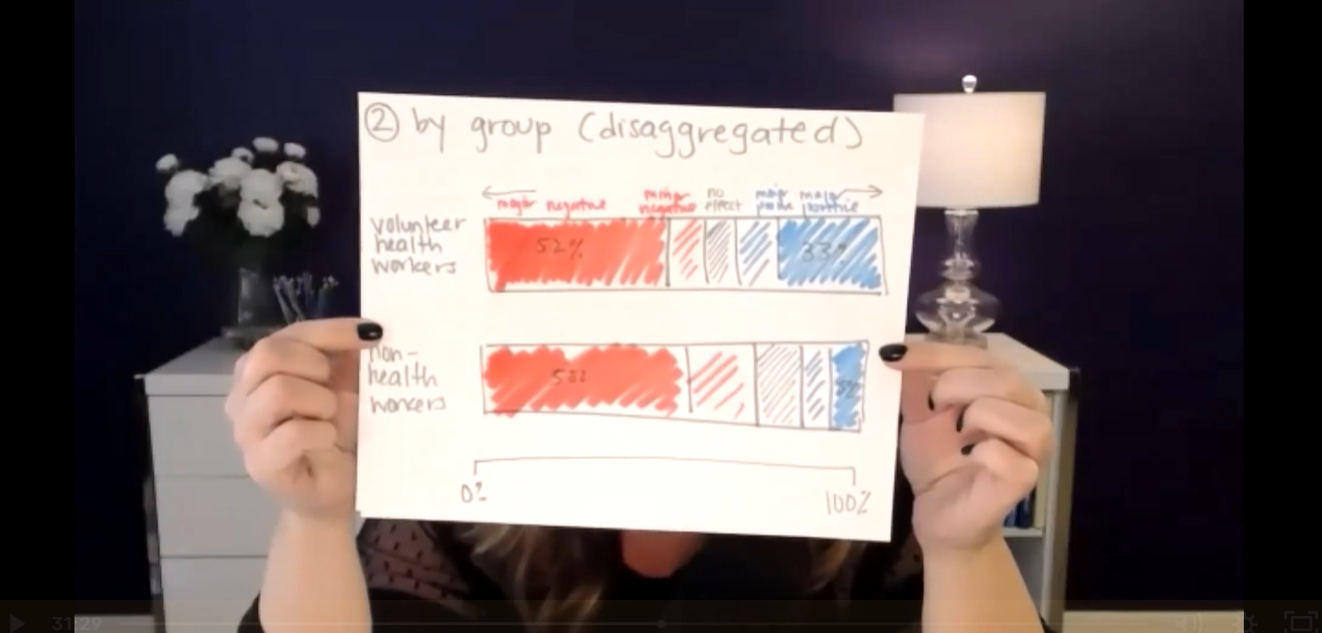
Live Editing During Office Hours
During the office hours, we mocked up what the graphs could look like and ultimately edited them to produce higher quality, easier to understand visuals. We took the original column charts and turned them into 100% stacked bar charts.
After: Clear Focus
Focusing on the major effects (both positive and negative) also provided a stronger narrative instead of hoping the audience would understand the message.
Highlighting the ends of the bars gave not only visual focus, but a clear visual.

The final product was influenced by the feedback I received throughout the course. Getting feedback from the group changed the style of the graphs, colors, way I utilized text, and I was even encouraged to turn the graphs into a GIF for better online engagement.
Shared Learning is the Best Learning
As much as I looked forward to continuing the lessons, I was excited for the live office hour sessions when I would get to hear from someone else in the field and learn how they might use a graph style as well as how they did it.
Questions and discussions sparked thinking and problem solving about my data visualization in new ways, past the technical work in Excel.
As the course continued, my skills improved, and so did my connections with my peers. We connected on LinkedIn and offline to get to know more about each other’s work – similarities and differences abounded.
I found a great benefit in this as there was so much knowledge to be shared, wherever we were along our data visualization or professional journey. As a new evaluator, learning what others found to be successful also helped me in thinking about what I could apply to my own work.
The supportive community that was built goes beyond the technical skills we learned throughout the course, as I know I have a wider network to connect with for questions, feedback, and advice long after the course ended.
Connect with Maddison
LinkedIn: @maddison-staszkiewicz
Website: www.maddisonstasz.com
 English
 Afrikaans
 Shqip
Shqip አማርኛ
አማርኛ العربية
 Հայերեն
 Azərbaycan dili
 Euskara
 Беларуская мова
 বাংলা
বাংলা Bosanski
 Български
 Català
 Cebuano
 Chichewa
 简体中文
简体中文 繁體中文
繁體中文 Corsu
Corsu Hrvatski
 Čeština
 Dansk
Dansk Nederlands
 Esperanto
 Eesti
Eesti Filipino
 Suomi
Suomi Français
 Frysk
Frysk Galego
 ქართული
 Deutsch
 Ελληνικά
 ગુજરાતી
 Kreyol ayisyen
 Harshen Hausa
 Ōlelo Hawaiʻi
 עִבְרִית
 हिन्दी
 Hmong
Hmong Magyar
 Íslenska
 Igbo
Igbo Bahasa Indonesia
 Gaeilge
 Italiano
 日本語
日本語 Basa Jawa
 ಕನ್ನಡ
ಕನ್ನಡ Қазақ тілі
 ភាសាខ្មែរ
 한국어
한국어 كوردی
كوردی Кыргызча
 ພາສາລາວ
 Latin
Latin Latviešu valoda
 Lietuvių kalba
 Lëtzebuergesch
 Македонски јазик
 Malagasy
 Bahasa Melayu
 മലയാളം
 Maltese
 Te Reo Māori
 मराठी
मराठी Монгол
 ဗမာစာ
ဗမာစာ नेपाली
 Norsk bokmål
 پښتو
پښتو فارسی
فارسی Polski
 Português
 ਪੰਜਾਬੀ
 Română
 Русский
 Samoan
 Gàidhlig
 Српски језик
 Sesotho
 Shona
Shona سنڌي
سنڌي සිංහල
සිංහල Slovenčina
 Slovenščina
 Afsoomaali
 Español
 Basa Sunda
 Kiswahili
 Svenska
 Тоҷикӣ
 தமிழ்
தமிழ் తెలుగు
 ไทย
ไทย Türkçe
 Українська
 اردو
اردو O‘zbekcha
 Tiếng Việt
 Cymraeg
 isiXhosa
 יידיש
יידיש Yorùbá
 Zulu
Zulu