• Skip to main content
  • Skip to footer
  • Home

The May 13 Group

the next day for evaluation

  • Get Involved
  • Our Work
  • About Us
You are here: Home / Archives for cplysy

cplysy

Nov 11 2020

Finish the Cartoon – Engaging Stakeholders

When I lead workshops, one of my favorite types of activities involves using half-finished cartoons.

Sometimes I print out the cartoons as handouts, or I put them up on a slide and ask the participants to pull out a pen and paper. Then I ask them to try their hand at finishing the cartoons.

After that, we share out the results.

It’s a super fun way to launch a discussion into all sorts of topics. I’ve been in experimental mode lately and thought I would create a few sets that might be useful for evaluators. Let me know what you think, and if you would like me to create more of these.

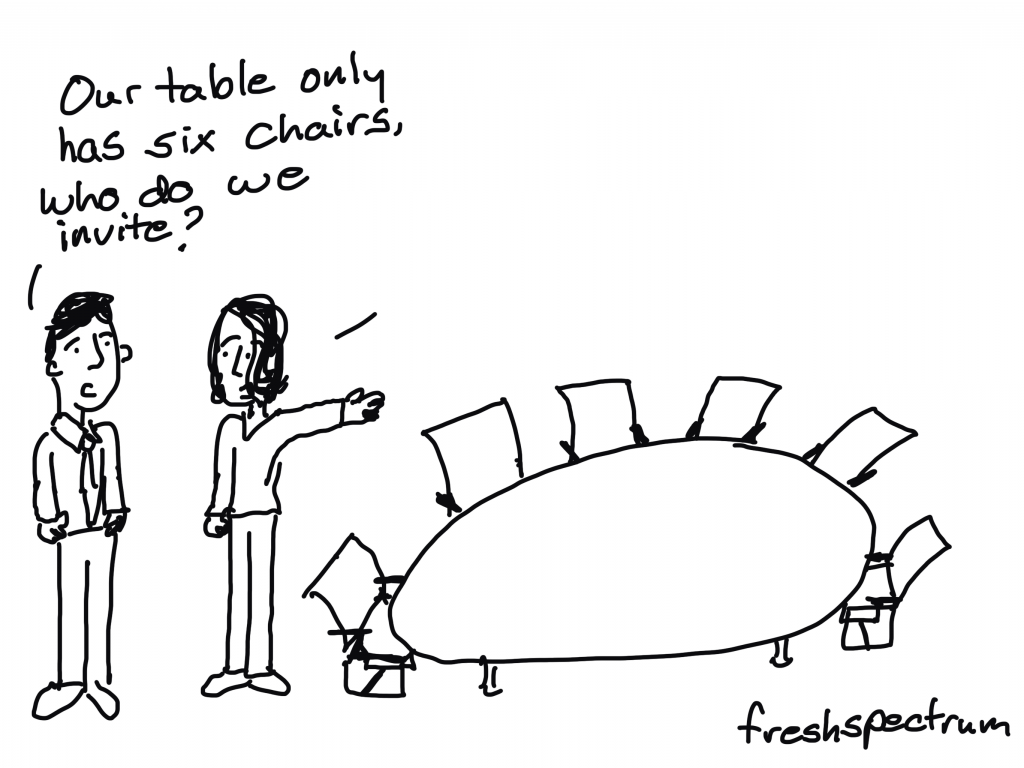
Who is at the table?

The easiest way to form a consensus is to not invite anyone else to the table when it’s time to discuss the issue. Especially anyone who might not agree with you.

This is also the worst way to form a consensus.
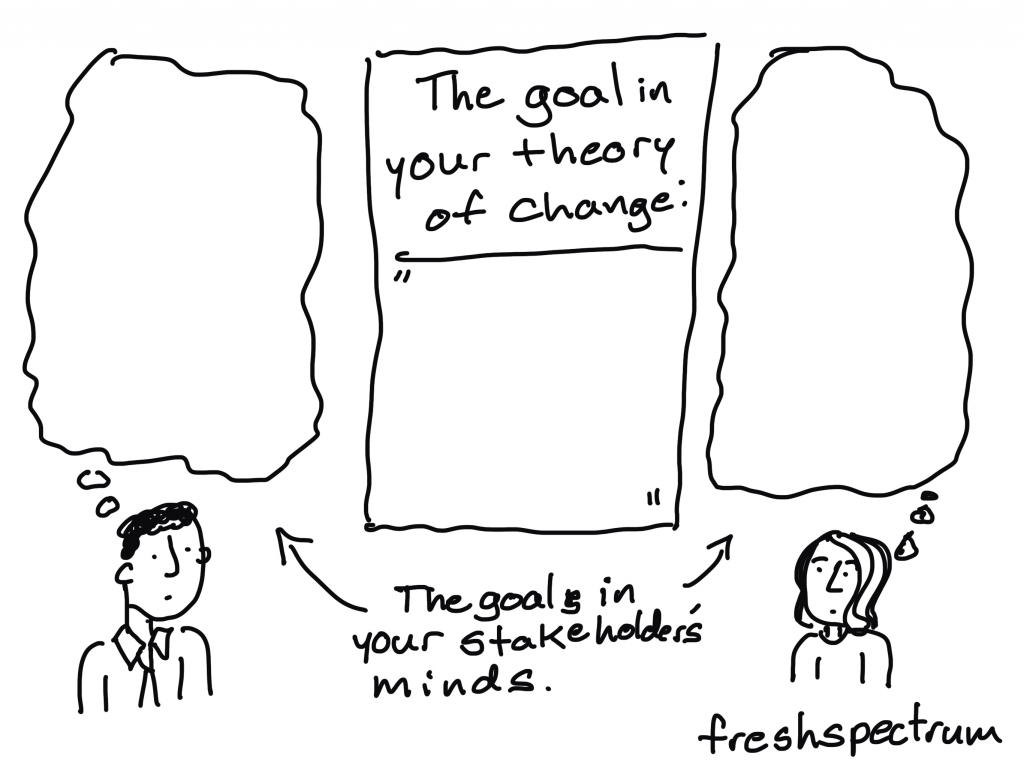
Theories of change are negotiations.

You might all agree to a set of words that you put at the end of a logic model or theory of change. But that doesn’t mean that the goal written is the goal held in everyone’s minds. This cartoon is to help you start to find some of those unwritten goals.
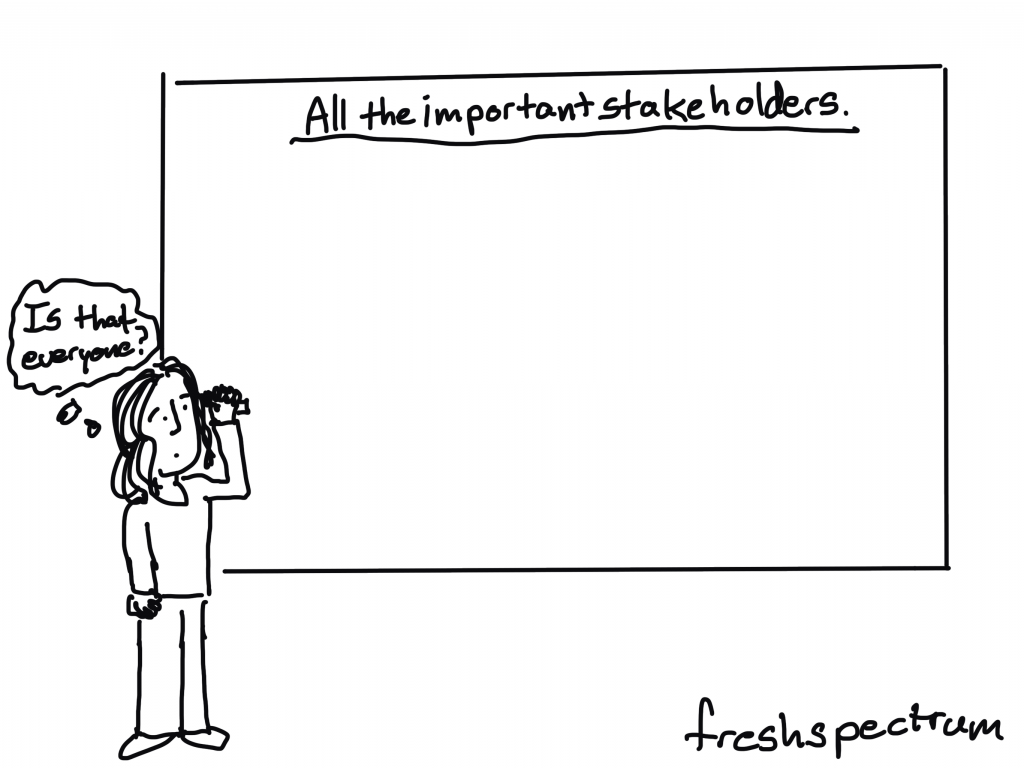
All the important stakeholders.

You might want to create an exhaustive list of everyone who has a stake in your program or project. Especially the people who are not a part of your team.
Keep going with it.

I’d suggest going further and further down the rabbit hole. Keep asking the question in different ways.
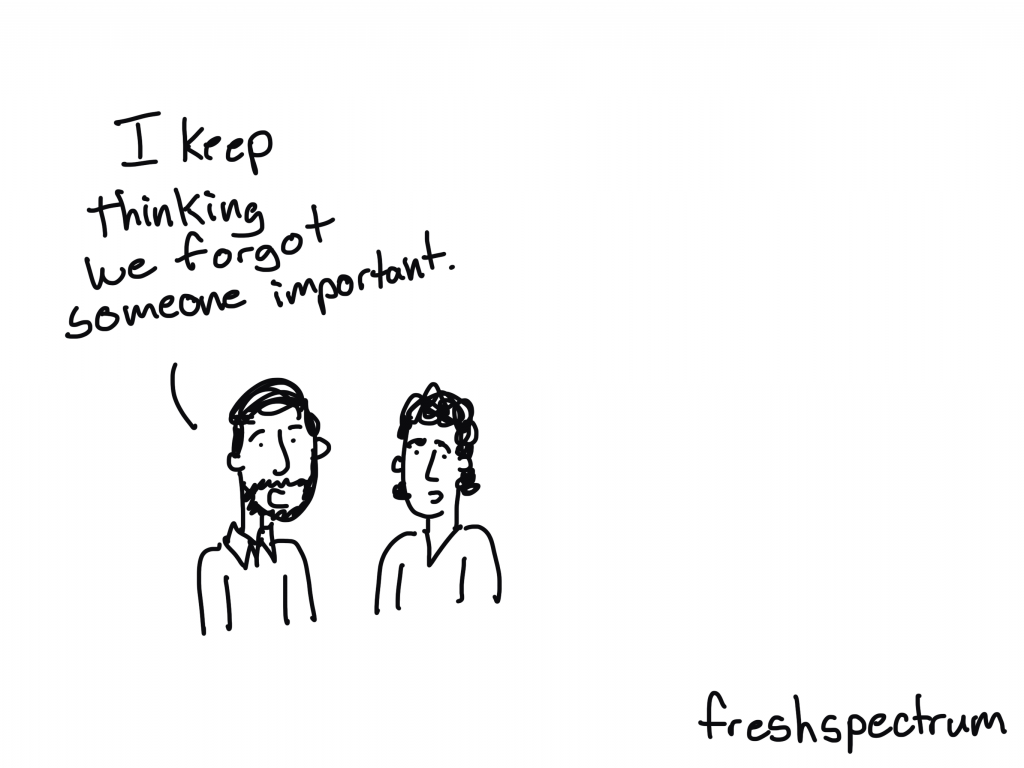
Gut check time.

Many evaluators view themselves as speakers for a broad range of people.

But we can’t escape our own biases and privileges. Is your evaluation team composition representative of the community you are working within? If not, why not?
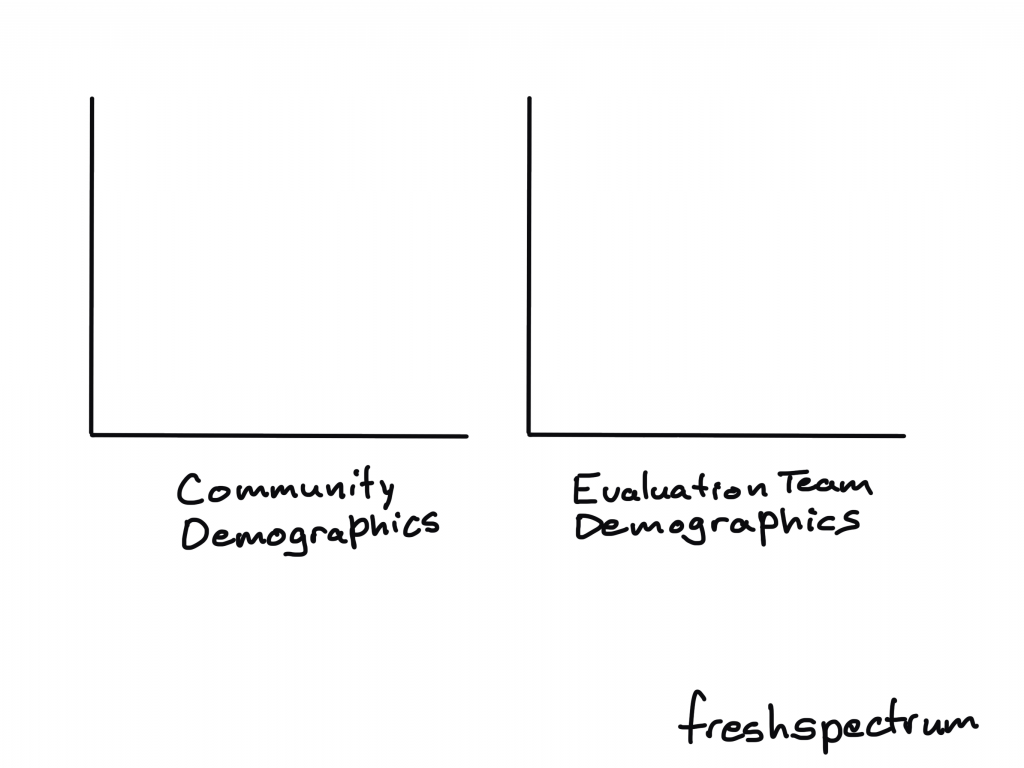
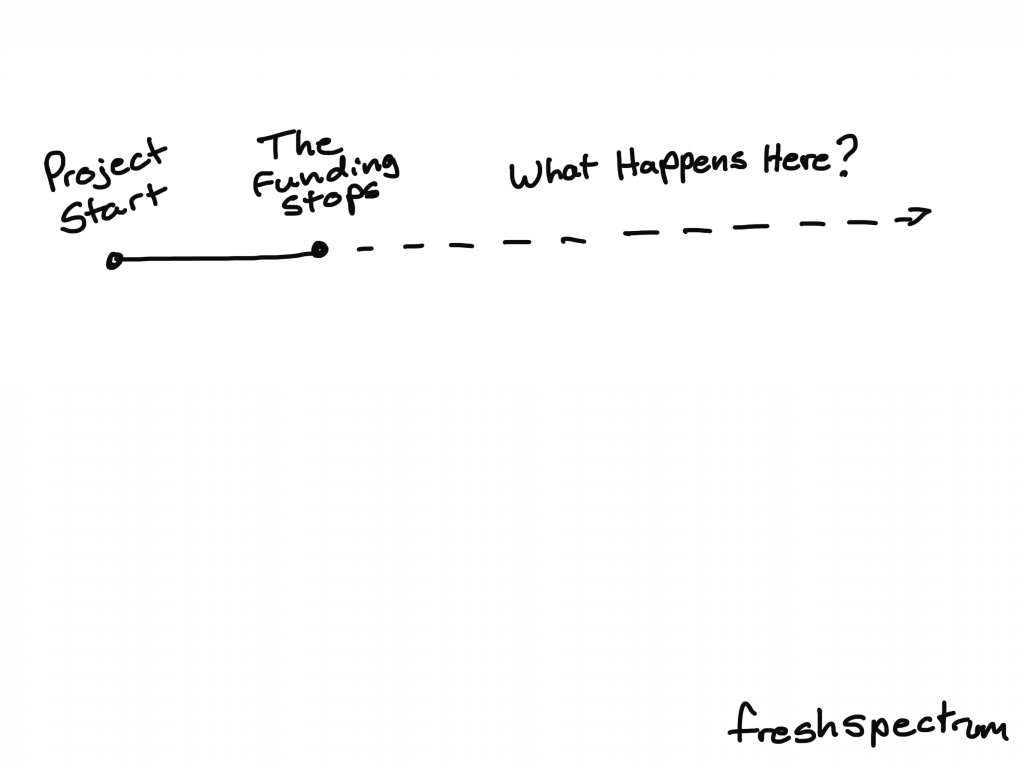
What happens when the funding stops?

Projects have lifespans. Some live longer than others. Recognizing the mortality is important.
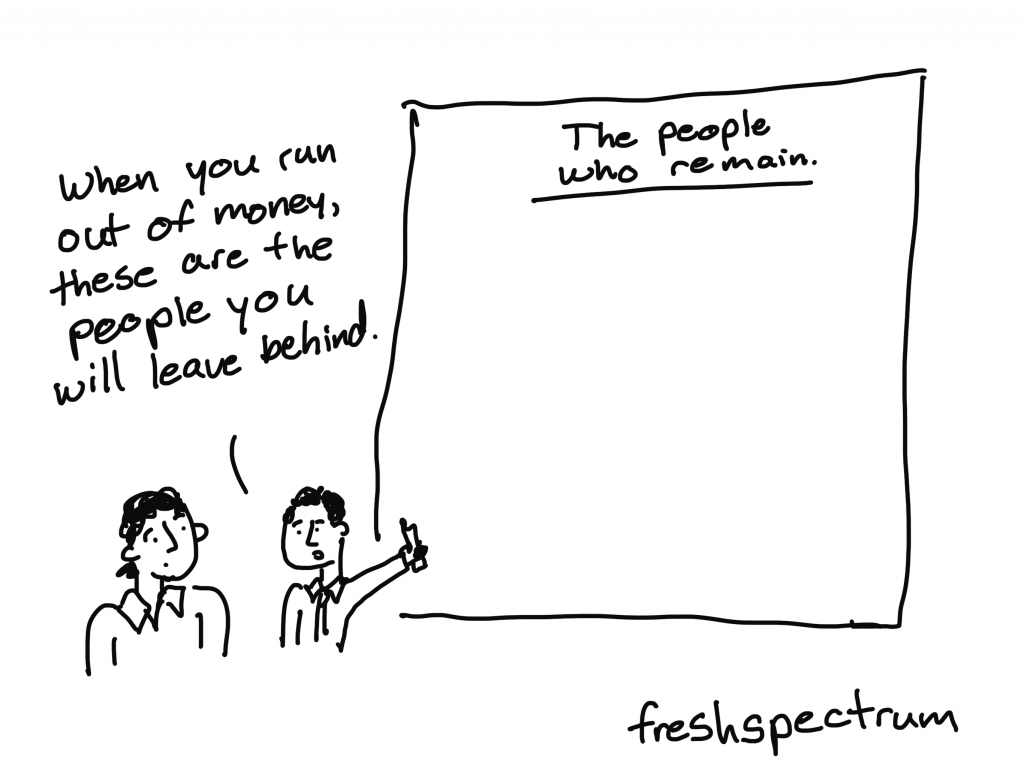
And who is left behind?

People get caught up in projects. But after the project ends, people remain. Who are those people that will remain?
Download the 7 cartoon set as a Power Point deck.

You can now download the Power Point deck via Gumroad. For a free download, just put $0 in the box.

My Independent Consulting Jumpstart course is now Pay What You Want.

I decided I wanted to make the course way more accessible. So now you can grab it from Gumroad for whatever price you want to pay. This includes $0.

And there is absolutely no judgement for you putting $0 in the box.

https://gumroad.com/l/consultingjumpstart

Written by cplysy · Categorized: freshspectrum

Nov 11 2020

Comment on I’m back to blogging by Beth

Thanks, Lais! It does help with motivation to know that my postings are useful to others!

Written by cplysy · Categorized: drbethsnow

Nov 11 2020

Comment on I’m back to blogging by Lais

I can relate to that feeling, I literally have embroided this phrase on a hoop and hanged it on my wall. If it helps with motivation, as an emergent evaluator your posts on evaluation competences have helped me a lot in planning the next steps of my professional development. I’d love to see what comes next! Thanks for the hard work.

Written by cplysy · Categorized: drbethsnow

Nov 10 2020

Evaluators as Change Agents: Evaluating Community Coalitions

Hi everyone!

A few weeks ago, I was privileged to speak with the West Michigan Evaluators Network (WMEN) about evaluating coalitions and collaboratives. I started from the framework and opinion that evaluators can and should be social change agents. After all, my company’s (Community Evaluation Solutions) tagline is Partnering for Social Change. I believe that evaluators are not (just) objective observers of the programs and communities we serve. Rather, I believe that coalitions can be a powerful catalyst for change, and that evaluators can help them achieve their goals.

As evaluators we have the great opportunity to work for social change by partnering with community coalitions.

What are coalitions and collaboratives? (Note, I use these terms interchangeably).

So just why are coalitions so important? Coalitions at their best:

Coalitions are a formal arrangement for cooperation and collaboration between sectors of the community, in which each group retains its identity but agree to work together toward a common goal.

– Fran Butterfoss

  • Engage community members from all sectors, but most especially those who are most affected by the public health and social problem of interest (those with low income, are marginalized in some way, and people of color).
  • Bring together fragmented systems and help maximize resources;
  • Build community capacity for solving community problems;
  • Increase civic engagement; and
  • Organize community members, help them leverage their collective voice and maximize political power to help create long-term, systemic change.

Coalitions are MOST effective when they address community-wide problems using a public health approach to address systems level change.

Coalitions, while they have their strengths and benefits, are fraught with challenges. So, a word of warning – coalitions involve people and those people represent their organizations and themselves. They may have a hard time setting aside their perspectives for the good of the coalition or community. Structure (by-laws, committees, effective meetings) are important, but many coalition members want to skip this important work. Conflict is inevitable, and dare I say, necessary? Perhaps the most important challenge is coalition leadership. A good leader is a must for all effective coalitions. An effective coalition leader can inspire the group, bring them all together, and engage them in the work.

Coalition Development

Just like any other group, coalitions cycle in and out of stages and evaluation questions should change to reflect these stages.

During the formation stage, be mindful of the community’s context and history. Ask who is engaged and maybe more importantly, who is not engaged? Are by-laws and committees established? Are meetings effective? Does the coalition know what collaboration even is? I once worked with a new coalition and every time something needed to be done, they whipped their heads around to look at the coalition director. In that situation, we had to do some training on what it really means to collaborate before we could move on to the work.

During the maintenance stage, everyone has settled into their roles (hopefully) and fences mended (again, hopefully). Evaluation questions at this stage may include, are members satisfied with how the coalition is functioning? Are meetings effective? Is membership (still) representative of the community? Is implementation effective? Is there evidence of short-term outcomes?

Finally, after some years, the coalition reaches some level of stability. Evaluation questions at the institutionalization stage should include a focus on long-term outcomes and sustainability. Has the coalition grown in its organizational, leadership and evaluation capacity? As the coalition cycles through these stages, the evaluation plan should as well.

At times you may be called on to be a trainer, a strategy or program developer, a conflict manager and sometimes an evaluator. I promise, evaluating coalitions is often rewarding and most certainly, never boring.

Send me an email to connect with me to talk all things evaluation and community coalitions at aprice@communityevaluationsolutions.com and let me know if you want me to add you to my contact list. I am on Twitter at @annwprice or on FaceBook at @CommunityEvaluationSolutions.

Written by cplysy · Categorized: communityevaluationsolutions

Nov 10 2020

Conocimiento: de aprendices a enseñantes

Fuente: https://www.sundaynews.co.zw/

Nick Milton nos cuenta en “Nunca dejas de aprender, pero debes empezar a enseñar” que en una organización del aprendizaje, todos somos aprendices, pero con el tiempo cada individuo pasa a ser también un “enseñante”.

Cuando un empleado es muy nuevo en una organización o en un tema, suele ser bastante tranquilo en las actividades de Gestión del Conocimiento; en reuniones de captura de lecciones, por ejemplo, o en foros comunitarios. Todavía están aprendiendo los conceptos básicos, que obtienen de la capacitación, de la base de conocimientos de la comunidad, y pasan el 100% de su tiempo de GC viendo, escuchando y leyendo debates comunitarios. No suelen hacer preguntas; sus preguntas siguen siendo bastante básicas y, si las hacen, la respuesta suele ser una versión de “leer el manual”.

Después de un tiempo, y quizás con bastante rapidez en algunos casos, el empleado comienza a enfrentar problemas y cuestiones que no están en la base de conocimientos. Ahí es cuando comienzan a hacer preguntas a los demás y comienzan a utilizar personal más experimentado como recurso de conocimiento. Pasan del 100% al acecho y la lectura a (con el tiempo) al 100% preguntando.

Después de un poco más de tiempo, los empleados comienzan a darse cuenta de que ellos mismos pueden responder las preguntas de los demás. Esto también puede suceder con relativa rapidez

Los miembros más experimentados pueden asumir un papel de liderazgo para su tema, quizás convirtiéndose en expertos en la materia, con la responsabilidad de enseñar y de poseer algunos de los Activos de Conocimiento de la Comunidad.

Sin embargo, incluso el mejor experto nunca deja de aprender.  Incluso el experto más avanzado debería dedicar algún tiempo a preguntar, algo de tiempo a responder y algo de tiempo a enseñar. Y cuando enseñas, también aprendes. La mejor manera de aprender realmente un tema es enseñar a otros.

Una vez que salgamos de la fase de acecho, nuestra responsabilidad de aprender comenzará a convertirse en una responsabilidad de enseñar también.

Written by cplysy · Categorized: TripleAD

  • « Go to Previous Page
  • Go to page 1
  • Interim pages omitted …
  • Go to page 220
  • Go to page 221
  • Go to page 222
  • Go to page 223
  • Go to page 224
  • Interim pages omitted …
  • Go to page 304
  • Go to Next Page »

Footer

Follow our Work

The easiest way to stay connected to our work is to join our newsletter. You’ll get updates on projects, learn about new events, and hear stories from those evaluators whom the field continues to actively exclude and erase.

Get Updates

Want to take further action or join a pod? Click here to learn more.

Copyright © 2026 · The May 13 Group · Log in

en English
af Afrikaanssq Shqipam አማርኛar العربيةhy Հայերենaz Azərbaycan dilieu Euskarabe Беларуская моваbn বাংলাbs Bosanskibg Българскиca Catalàceb Cebuanony Chichewazh-CN 简体中文zh-TW 繁體中文co Corsuhr Hrvatskics Čeština‎da Dansknl Nederlandsen Englisheo Esperantoet Eestitl Filipinofi Suomifr Françaisfy Fryskgl Galegoka ქართულიde Deutschel Ελληνικάgu ગુજરાતીht Kreyol ayisyenha Harshen Hausahaw Ōlelo Hawaiʻiiw עִבְרִיתhi हिन्दीhmn Hmonghu Magyaris Íslenskaig Igboid Bahasa Indonesiaga Gaeilgeit Italianoja 日本語jw Basa Jawakn ಕನ್ನಡkk Қазақ тіліkm ភាសាខ្មែរko 한국어ku كوردی‎ky Кыргызчаlo ພາສາລາວla Latinlv Latviešu valodalt Lietuvių kalbalb Lëtzebuergeschmk Македонски јазикmg Malagasyms Bahasa Melayuml മലയാളംmt Maltesemi Te Reo Māorimr मराठीmn Монголmy ဗမာစာne नेपालीno Norsk bokmålps پښتوfa فارسیpl Polskipt Portuguêspa ਪੰਜਾਬੀro Românăru Русскийsm Samoangd Gàidhligsr Српски језикst Sesothosn Shonasd سنڌيsi සිංහලsk Slovenčinasl Slovenščinaso Afsoomaalies Españolsu Basa Sundasw Kiswahilisv Svenskatg Тоҷикӣta தமிழ்te తెలుగుth ไทยtr Türkçeuk Українськаur اردوuz O‘zbekchavi Tiếng Việtcy Cymraegxh isiXhosayi יידישyo Yorùbázu Zulu