• Skip to main content
  • Skip to footer
  • Home

The May 13 Group

the next day for evaluation

  • Get Involved
  • Our Work
  • About Us
You are here: Home / Archives for cplysy

cplysy

Apr 06 2020

How COVID-19 is Bringing Inequality to the Forefront

For the past few weeks, one image has been recurring in my mind. I keep picturing the living conditions of a student whose home I visited a few times when I was working as a community school coordinator in Baltimore. This student had struggled at other schools but was thriving at ours. He had repeated second grade, so his maturity compared to his peers was notable, but overall, he was just a really sweet kid. We did a number of home visits for him that year because he missed a lot of school, and as a black child from a low-income home with documented learning disabilities, school was even more important for him than most.
​
Every time I get frustrated with having to stay home – in my very comfortable apartment, with my husband and dog, and with fairly steady work – I’ve been trying to check myself. I keep thinking of my former student and imagining how difficult it must be to be confined to a space that may not be healthy, safe, or developmentally appropriate. I keep thinking about all the students I’ve known who love coming to school because there are people there who love them, two to three meals a day, and a sense of community. I keep thinking that I wish I knew how to help them all right now. 

There is no question that low-income students struggle to get to school. (I wrote about this in my last blog post as well.) According to Attendance Works: 

“Children living in poverty are two to three times more likely to be chronically absent—and face the most harm because their community lacks the resources to make up for the lost learning in school. Students from communities of color as well as those with disabilities are disproportionately affected.”

Unfortunately, they’re struggling to access school online as well. The New York Times reported this week that large percentages of low-income students in districts across the country are absent from the virtual education being provided as a result of COVID-19. ​So not only are students from disadvantaged backgrounds missing out on the resources that many of them so desperately need and want to access, but they are also disconnected from their school communities. Since it is unclear when we will be able to return to work and school, there is the possibility that our highest-need children could be without school for many months, only exacerbating already-existing gaps in achievement and opportunity. 

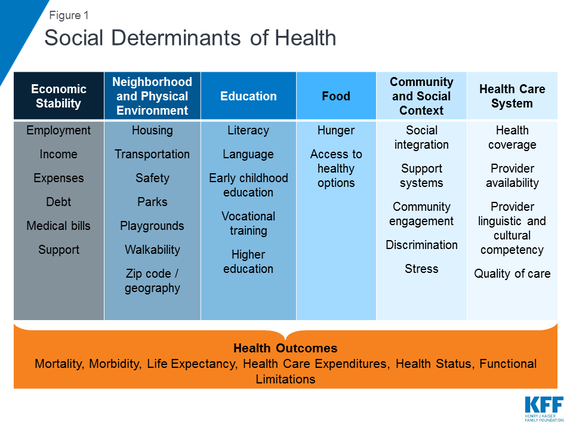
Making matters worse, black communities are disproportionately becoming victim to COVID-19. As one of the many social determinants of health, education joins other critical factors such as adequate housing, socioeconomic status, access to and coverage of healthcare, and more to comprise health outcomes for people and communities. As you can see in the chart below from the Kaiser Family Foundation, these factors have a profound impact on a person’s ability to live a healthy life. 
Picture

For low-income black communities in particular, the collective impact of these factors has not only disastrous outcomes but also clear roots. Dr. Camara Jones, a physician and epidemiologist, is cited in the article linked above about the disproportionate impact of COVID-19 on black communities:

“COVID is just unmasking the deep disinvestment in our communities, the historical injustices and the impact of residential segregation… This is the time to name racism as the cause of all of those things. The overrepresentation of people of color in poverty and white people in wealth is not just a happenstance.”

Our unequal and unfair society is how it is by design and not by chance. COVID-19 is showing us how this is even more urgently a matter of life or death. Other than overhauling our government systems and laws entirely, I struggle with not knowing how these issues can be fixed or what I as an individual can do to make things better for others. I just hope that opening up the dialogue about these issues will start to lead to changes for students like mine and the families and communities in which they live.

Written by cplysy · Categorized: engagewithdata

Apr 06 2020

Finding Inspiration through Designers-in-Training

For the past few years, I’ve traveled to New York City every spring to do a guest lecture for a class of graduate students who are part of the Fashion Institute of Technology’s (FIT) Exhibition and Experience Design program. For obvious reasons, I couldn’t go in person this year, but luckily we were still able to connect remotely through WebEx.  The students called in from their homes around the world—some in New York but others as far as Turkey, Taiwan, and India!

Since these are exhibition designers in training, I focus my talk each year on how evaluation fits into exhibition design.  What does evaluation look like in this context?  As designers, what might you want to test, when, and how? I always try to find a balance between talking about evaluation theory (the big picture stuff) and sharing a mix of practical examples from RK&A’s diverse portfolio of work.  Using real examples from our front-end, formative, and summative exhibition evaluations helps students get a sense of what exhibition evaluation really looks like.

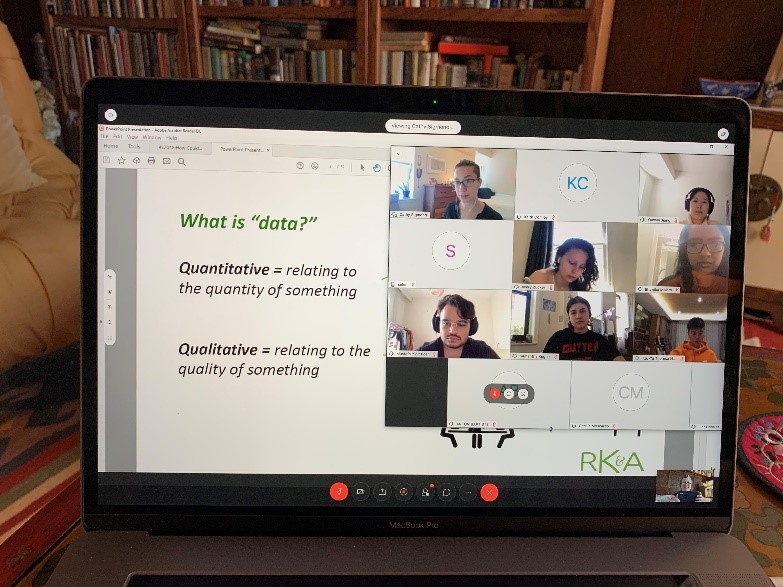
Screenshot of virtual lecture with powerpoint slide and participants' webcams.
Cathy and the FIT students talk about evaluation through WebEx


I’m usually excited for this lecture because it’s a chance to talk about an area of evaluation I’m very passionate about.  This year, however, I was also somewhat nervous going into it because of the precarious state of the world and museums right now.  Would students be able to see the value of evaluation to their work as budding designers or would they feel too distracted by our global circumstances to find meaning in these ideas (which, frankly, would be completely understandable)?  I was also nervous about whether I could accurately convey the field of evaluation to these students when it—just like everything else—feels like it is changing so fast under these new stay-at-home circumstances. Would examples of past exhibition evaluation projects, many of which involved testing onsite with museum visitors, feel irrelevant in this time of uncertainty for the museum field?

Luckily, my worries were for nothing. The students showed up with a tenacious curiosity and infectious energy (which was especially impressive given that we were all in different time zones!), and we had a lively conversation about how evaluation can help designers move forward confidently in their work.  When they asked about sampling methods (how many, how do you recruit people, etc.), I was able to answer honestly that while the answer is always and will always be “it depends,” this principle is more true now than ever.   Although I momentarily worried this answer would disappoint students (even if it’s true), they surprised me and instead seemed invigorated by the idea of adaptable, flexible evaluation studies, since this aligns so well with the notion of experimentation and iteration that permeates their design training.  Their enthusiasm gave me confidence to embrace flexibility in our evaluation projects (more on that soon!).  As Amanda said, now is the time to put on our creative thinking hats. I’m grateful to the FIT class for the invitation to speak and for being so cheerfully open-minded in times like this.

The post Finding Inspiration through Designers-in-Training appeared first on RK&A.

Written by cplysy · Categorized: rka

Apr 03 2020

Acting in Complex Times

The complexities and complications of circumstances tied to the COVID-19 pandemic represent a hyper-exaggerated version of situations organizations find themselves in moments of disruption due to economic, social, and technological shifts. It is a moment of innovation.

What makes the current situation distinct is that the issues are global. Usually we have safe refuge in a new market, region, or setting, but now we don’t. How can we develop or implement strategy when things are continually changing for us and our partners, suppliers, and customers or clients?

Smallest Visible Systems (SVS)

Systems thinking helps us to understand how things are connected and structured, while complexity science can help us appreciate the challenges associated with how to understand the nature of the problems that present themselves. What both can teach us is that in times that are truly unprecedented in their complexity and scope it can be difficult to know what to do and how to act.

The temptation with systems approaches to strategy is to look at the whole system, but that is dependent upon whether we can see the boundaries of the system to help us understand the range of activities we need to consider in developing a model to guide us.

  1. Coherence is what we are seeking. In order to achieve coherence, we need to take some kind of action (often called a probe) and then see what that does. This helps us to examine how the system is behaving and how an action generates reactions and where (or whether) coherence forms. Coherence is basically a way of saying that things go together with some manner of alignment where
  2. Seeing or creating coherence is about meaning and meaning is context-dependent. What is meaningful for us depends on our circumstances, but it also provides us with a means to focus our attention amid the various signals we’re getting. Various patterns, relationships, interconnections and signals that we see that align together and create something meaningful are coherent.
  3. Coherence also provides us with a language to communicate. When you observe coherence it begins to create a language you can use to communicate to others about what you’re seeing. When we look at what is happening at a societal level, its difficult to find what coherent narratives are actionable. At a smaller level, we might find them and this allows us to communicate more fully with others and this will allow us to scale and grow our learning.

This is the smallest visible system (SVS) in which you can make a difference. Once you can act wisely on this system, you can expand the boundaries and scope to work larger.

Acting on Systems

What this means for action is this:

  1. Pay attention to what is going on around you. Ask yourself: what is important and meaningful to me?
  2. Be systematic, but not rigid, in how you pay attention. This could mean looking at sales numbers, social trends, meeting minutes and observations from everyday life. If you’re working in teams, ask people about what they are paying attention to and what has meaning for them. What things are they organizing their work or life around? Reflective journaling can help, too. This is data.
  3. Gather the meaning. Bring together those things that offer some coherence to see how they make sense for what you are doing, seeking to become, or what you wish to accomplish. This is a social process called sensemaking. By guiding yourself through the data it’s possible to see patterns and what is called emergent properties — new forms of order arising from what might seem unordered.
  4. Start to act on this new coherence narrative and then repeat the cycle from step 1.

This will help you to determine what is useful and not useful for you in whatever context you are operating in. It’s a simple, but powerful means to start the journey toward a greater understanding of your present situation and help you see how and where you can act, whether that is in a time of massive upheaval or something merely disruptive.

Keep safe and know there’s more that you can do than you realise.

If you need help in setting this process up, implementing it, and making sense of it all, reach out. This is what we do.

Written by cplysy · Categorized: cameronnorman

Apr 03 2020

Reporting Findings Effectively (Simple Nonprofit Tips)

Written by cplysy · Categorized: connectingevidence

Apr 01 2020

The Evaluation Mindset: Not Your Data

In 2018, 87 years after it was completed, Zora Neale Hurston’s Barracoon was released to the public.

Reading the book today the story of Cudjo Lewis feels completely relevant to our contemporary times. It is heartbreaking, illuminating, and honest.

In the way she writes, Hurston allows Cudjo to tell his own story. They are his words, told in his way. She is an active participant in the collection of those words, a supporting character in the telling, and a translator through her authorship.

And because of Hurston’s insistence that the book remain that way, and not adapted to meet the desires of publishers wanting the writing altered from dialect to language, the words were almost lost to time.

Poor Zora. An anthropologist, no less! A daughter of Eatonville, Florida where truth, what was real, what actually happened to somebody, mattered. 

Alice Walker’s blog post introducing Barracoon

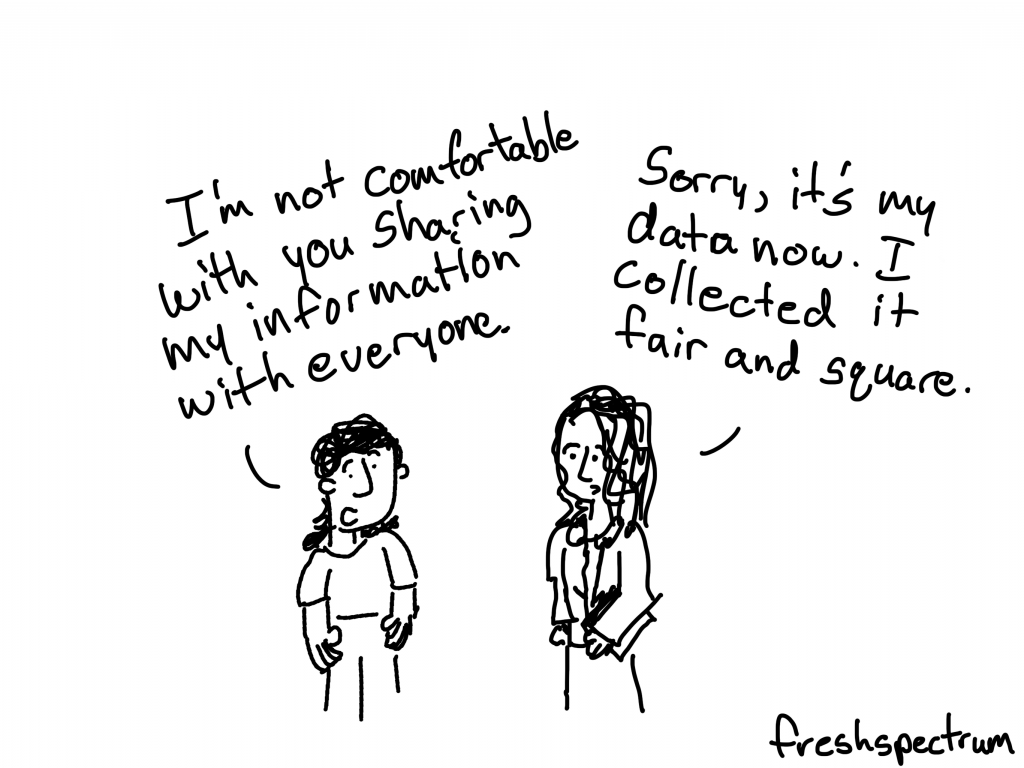
Who owns the data?

A few years ago I had the honor of attending a presentation by Stafford Hood and Nicole Bowman. And something from the Q&A has been stuck in my head ever since.

For me, it’s a no brainer…If they are saying they don’t want that data published, it’s over.

Stafford Hood – 2016 EERS Eleanor Chelimsky Forum [YouTube recording! Thanks EERS!]

Data is too simple a word for what it represents. As if collections of characteristics, thoughts, feelings, and stories are not reflections of humanity and filled with complexity.

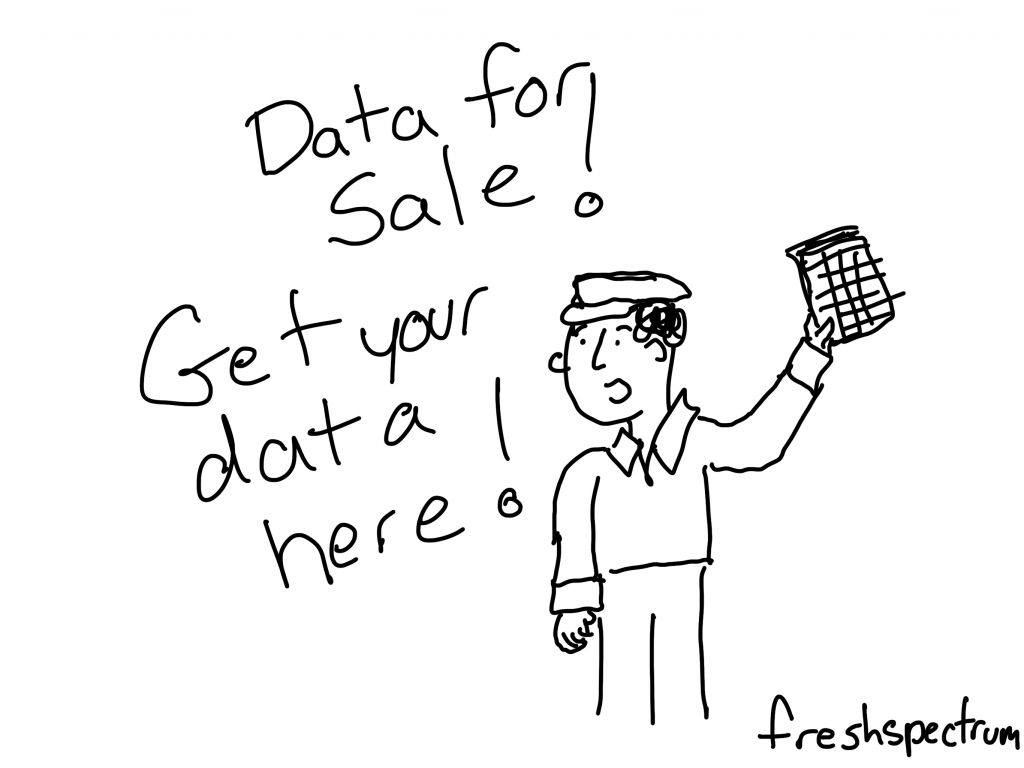
Of course simplifying something so personal allows it to become marketable. If you detach data from people, turn the observations into a series of ones and zeros few can understand, all of a sudden it’s a product that can be sold?

Disconnecting “data” from people doesn’t make it objective. It just hides the origin. Just like giving a cell a name like HeLa, and allowing it to be bought and sold, doesn’t mean it wasn’t lifted without permission from a person named Henrietta Lacks.

Putting Research before People

For long before you and I, science has been used as a justification for both ethical and unethical practices.

The human subjects protections we have today don’t exist because scientists and policymakers were forward thinking. They exist because of past atrocities and unethical studies that put the pursuits of science over the rights and well-being of people.

The men were never given adequate treatment for their disease. Even when penicillin became the drug of choice for syphilis in 1947, researchers did not offer it to the subjects. 

The CDC’s Page on the Tuskegee Syphilis Study

Today’s Data Challenge

There’s a good case for using smartphone data in the COVID-19 response, but Americans deserve an explanation.

Casey Newton for The Verge

Do you want to know how to make a member of an Institutional Review Board freak out? Just show them the amount of personal data available to your run-of-the-mill online marketer.

Want to know who clicked what, when, and where, well our digital world keeps a record. And the records can be compiled together to paint a bigger picture. Ultimately you can get a story of a person who likely had little idea they were ever being followed.

Most of the time the data being collected seems harmless enough. At least until it’s not.

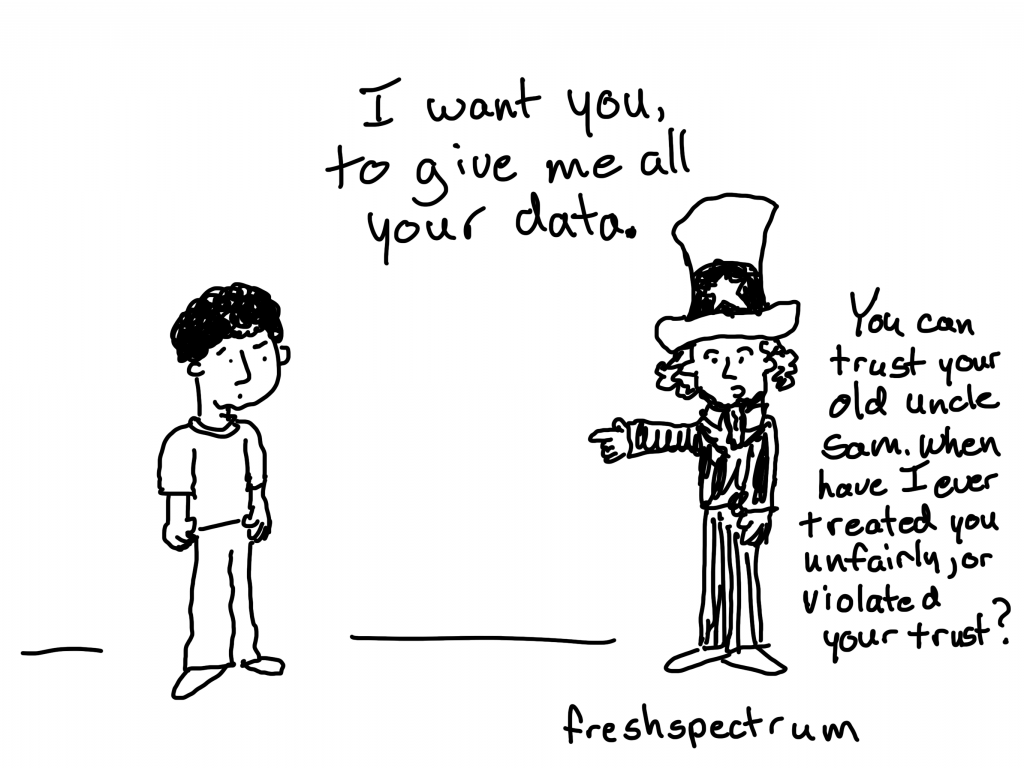
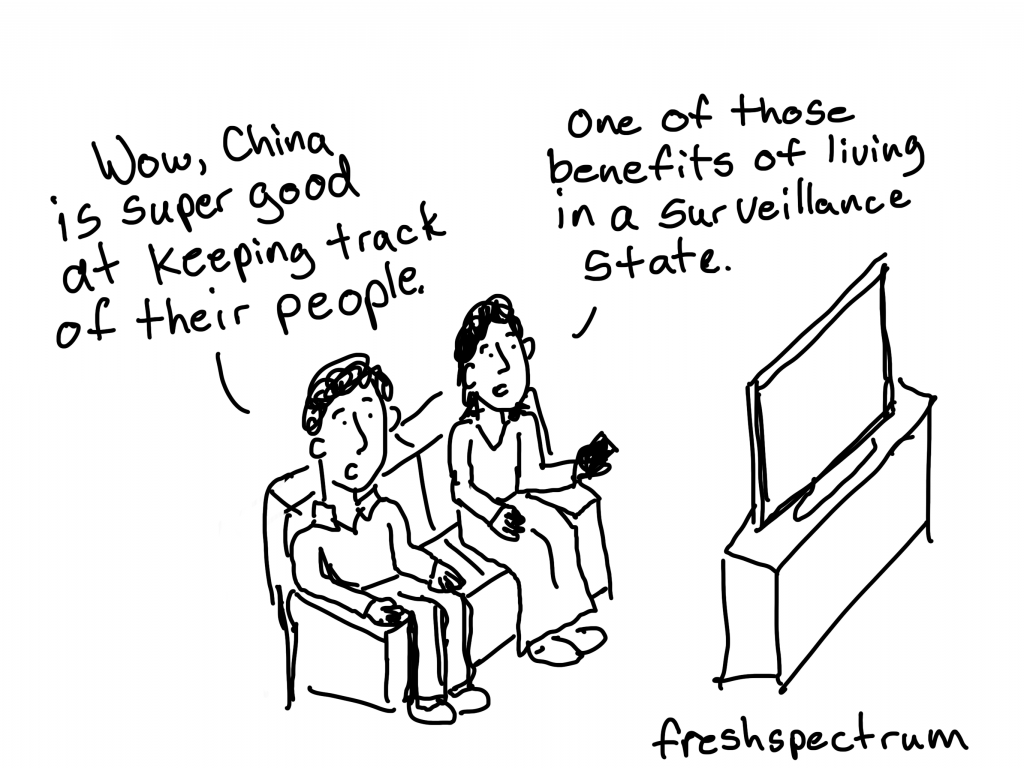
Right now the same marketing data is being engaged in efforts to combat the spread of a pandemic. Does that make the social media industry’s collection, storage, and commercialization right? Does contact tracing justify China’s development of a surveillance state?

These are open questions, and not always easy ones to answer.

Being a data steward

Evidence has value, but it also comes with a price tag (societal cost). Our values, and the values of our organizations, guide our usage.

That is, if it’s on anyone’s radar.

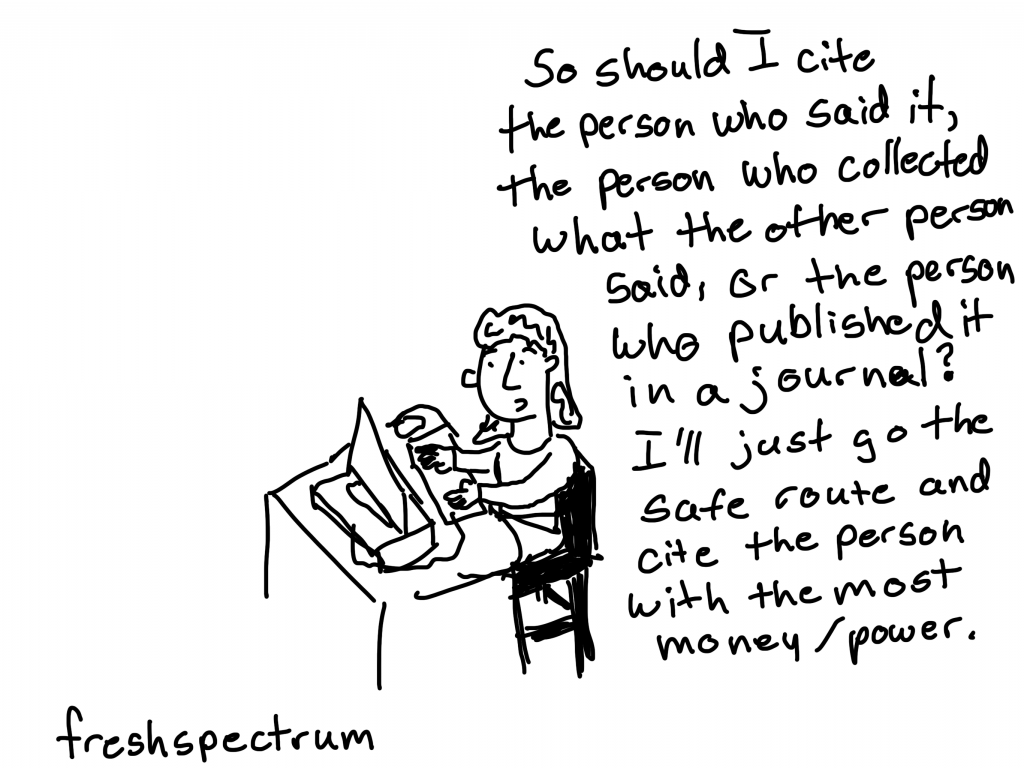
As an evaluator it is often not your role to choose, but it is your role to guide choice. Who does data belong to? Where did it originate? How is it being used?

These are all questions we need to help answer. Because there is no guarantee that anyone else will.

Written by cplysy · Categorized: freshspectrum

  • « Go to Previous Page
  • Go to page 1
  • Interim pages omitted …
  • Go to page 273
  • Go to page 274
  • Go to page 275
  • Go to page 276
  • Go to page 277
  • Interim pages omitted …
  • Go to page 304
  • Go to Next Page »

Footer

Follow our Work

The easiest way to stay connected to our work is to join our newsletter. You’ll get updates on projects, learn about new events, and hear stories from those evaluators whom the field continues to actively exclude and erase.

Get Updates

Want to take further action or join a pod? Click here to learn more.

Copyright © 2026 · The May 13 Group · Log in

en English
af Afrikaanssq Shqipam አማርኛar العربيةhy Հայերենaz Azərbaycan dilieu Euskarabe Беларуская моваbn বাংলাbs Bosanskibg Българскиca Catalàceb Cebuanony Chichewazh-CN 简体中文zh-TW 繁體中文co Corsuhr Hrvatskics Čeština‎da Dansknl Nederlandsen Englisheo Esperantoet Eestitl Filipinofi Suomifr Françaisfy Fryskgl Galegoka ქართულიde Deutschel Ελληνικάgu ગુજરાતીht Kreyol ayisyenha Harshen Hausahaw Ōlelo Hawaiʻiiw עִבְרִיתhi हिन्दीhmn Hmonghu Magyaris Íslenskaig Igboid Bahasa Indonesiaga Gaeilgeit Italianoja 日本語jw Basa Jawakn ಕನ್ನಡkk Қазақ тіліkm ភាសាខ្មែរko 한국어ku كوردی‎ky Кыргызчаlo ພາສາລາວla Latinlv Latviešu valodalt Lietuvių kalbalb Lëtzebuergeschmk Македонски јазикmg Malagasyms Bahasa Melayuml മലയാളംmt Maltesemi Te Reo Māorimr मराठीmn Монголmy ဗမာစာne नेपालीno Norsk bokmålps پښتوfa فارسیpl Polskipt Portuguêspa ਪੰਜਾਬੀro Românăru Русскийsm Samoangd Gàidhligsr Српски језикst Sesothosn Shonasd سنڌيsi සිංහලsk Slovenčinasl Slovenščinaso Afsoomaalies Españolsu Basa Sundasw Kiswahilisv Svenskatg Тоҷикӣta தமிழ்te తెలుగుth ไทยtr Türkçeuk Українськаur اردوuz O‘zbekchavi Tiếng Việtcy Cymraegxh isiXhosayi יידישyo Yorùbázu Zulu