• Skip to main content
  • Skip to footer
  • Home

The May 13 Group

the next day for evaluation

  • Get Involved
  • Our Work
  • About Us
You are here: Home / Archives for cplysy

cplysy

Feb 29 2020

‘how do you like to be held accountable?’

Photo by  ian dooley  on  Unsplash

Photo by ian dooley on Unsplash

Do yourself a favour and check out this post from Mariah Brothe Gantz, “The Realm of Possibility in Evaluation”. (And once you’ve clicked through and read it in its entirety, also click through and read all the posts that Mariah links to! They’re all brilliant.) I love how Mariah embraces her “youth” as an evaluator as a way to call on all of us to re-examine and renew our spirits and our practices. There’s a surge of energy in the field around questions like these, spurred by the young and young-at-heart among us. It’s a beautiful and critical time to be an evaluator as we hash out what that can and should mean.

In the article, Mariah pushes back on the idea that evaluation is “simply an accountability mechanism, something to keep you in line and something that might show you failed even without meaning to” when what it can be is “a mechanism that can help to advance social justice and equity”. I’ve been in a lot of conversations with people about the capacity for evaluation to foster and support transformative change through learning that is purposeful, collaborative, and rooted in justice. Last year on the Eval Cafe podcast, guest Chris Corrigan offered up a desire for us to “recover learning from the trauma of being judged”, and it’s a statement that’s stuck with me as I explore what it looks like for evaluation to be a healing practice instead of a harming one.

And.

And.

Let’s not give up on accountability.

Let’s take it back.

Bear with me. Accountability does not feel like a fun and delightful topic. It does not sound deep and meaningful, it sounds kind of boring, maybe even mean. It sounds like report cards and audits and scrutiny and being called out and dressed down and judged and found wanting. It sounds like punishment. It sounds like all the things that most evaluators I know try to distance ourselves from, because we don’t WANT to be the scary ogres in the room who freak everyone out or bring the mood crashing down with wagging fingers and shaking heads. It sounds like when you have to take all the beautiful, important, complex, sacred things that you do and squeeze them into a series of boxes in a fillable PDF form generated by a distant and inflexible bureaucracy in order to justify your existence and the worthiness of the work that you do to someone who won’t see or know anything about it or about you outside of that but still gets to decide if you and/or your staff get paid or not.

Yikes.

But we don’t have to concede to a definition of accountability as mindless, wasteful, status quo-justifying, weaponized compliance activities rooted in fear and mistrust and impersonal tick-boxes (even though that is absolutely how it often appears and operates, as evidenced by this recent article on the long history of dysfunctional government funding of non-profits in Canada). And learning and accountability don’t have to be separate and competing. It’s not a zero-sum game where one has to be sacrificed or diminished for the other to thrive. The more time I have spent thinking about accountability and learning, the more I have realized that in evaluation they are and must be the same thing, part of the same process of transformation and flourishing. We need to recover them both from the traumatic ways we’ve gone about them.

What if I said accountability—being accountable and being held accountable—is an act of love? Of trust? A profoundly relational and relationship-building act? Something that enriches rather than diminishes? Lifts up, witnesses, and heals? That’s how I see it, when I think of it in its ideal.


“How do you like to be held accountable?”

A question offered by Eroc Arroyo-Montano on an episode of the Healing Justice podcast. The episode is called Tender Masculinity, and I’m mindful of the way that masculinity is something else with a bad reputation right now, not undeservedly so within a context of patriarchy and toxic masculinity. But masculinity itself is not the problem, and I offer that accountability isn’t either, although we are certainly surrounded by ‘toxic accountability’.

“How do you like to be held accountable?”

The question is both powerful and tender. The word “held” is significant. How do you like to be held? is a question for intimates and lovers. And accountability is a form of holding. When liberated from punishment and blame, it can be steady and uplifting, rather than crushing.

Eroc goes on to say this:

I think that for me, the process of accountability has been a gift. And the ways in which I can be accountable to myself and the people I love in my community increase my capacity and ability to be whole, to be healthier, and to be able to walk in the world in the way that I wanna walk in the world. Which makes me someone who can be proud of the example that I’m giving, not just the rhetoric I’m spittin, you know? … I had to realize that there are some people who love me so much that their critique was not actually an attempt to tell me that I wasn’t worthy. It was actually them showing my worth. You’re worthy of hearing ways in which you can be a better person in this relationship, in this community, in this world.

He’s not talking about accountability the way it comes up in evaluation work, when we’re thinking about deliverables and reporting back to funders or out to communities. The “we did what we said we would do” version of accountability. He’s talking about the accountability of being in relationship, of addressing harms in acts and omissions, of the ways in which we fail each other and ourselves and have to deal with what that causes. If anything, it’s a much more terrifying type of accountability, where the stakes are high and very direct and personal. When we talk about accountability in the context of transformative justice, it means we are in the midst of injury and pain, recent, on-going, and historical, and need processes that allow us to come through it whole, as individuals and communities. The work being done on accountability in this spaces is next level, because it has had to be. It is the incredibly difficult work of creating and holding human spaces that refuse to let people be disposable, whether they have caused or been subjected to harms (or both), particularly those people most likely to have their humanity denied to make it more convenient to discard them.

It may seem worlds apart from what accountability represents in evaluation discussions, but to me it all connects. I don’t believe that accountability is about ticking off a check-list of things we said we’d do. It’s fundamentally about how we are responsible to and in integrity with each other and ourselves. A recent tweet from Kai Cheng Thom, a luminary writer in this space and author of one of the articles linked above, summed it up like this: “Integrity is our accountability to self. Honour is our accountability to others.”


In her article, Mariah, using phrasing I often find myself using and hear regularly from many in our field, notes the “disconnect in how most people think about what evaluation is for (just accountability) and what evaluation could be (a mechanism that can help to advance social justice and equity)”, and I ask myself—are these not the same thing? Is accountability not a crucial part of advancing social justice and equity? A recent report on the use of culturally-responsive evaluation in Wisconsin began with a quote that included this statement: “People who educate the next generation of academics and award contracts, grants, keynotes, or presidential sessions MUST be held accountable for structurally ensuring and requiring diversity in curricular content, human resources, funding priorities, contract/grant awards, keynotes, publications, etc., or things won’t change.” (Italics mine, capitals not.)

We recognize that accountability is an essential part of the fight for change. It’s also something I find to be in high demand, when I listen closely.

When I start an evaluation project, I try to find out why it matters to the people who will be involved in it (including but definitely not limited to the person who commissioned the evaluation). What’s important about it to them? Why evaluate? Answers vary, and there’s usually a mix of references to both learning and accountability. “It’s a funding requirement” comes up a lot, but not as the main goal. And “learning” blurs with “accountability”. When I ask what people want to learn, they want to know what is going well, but as much (sometimes more) they want to know what’s not working. Where the challenges and problems are. I am sometimes pressed for reassurance that negative feedback will be heard, that disappointing results won’t be hidden or glossed over, that the data will be credible and speak to what’s really going on no matter what. I notice that these questions often come most earnestly from those doing direct service delivery or are otherwise working closely with (or are part of) the communities and people they’re trying to support. It’s the kind of responsibility you feel when you have to look someone in the eye, be connected with them, and know that you want to be offering something that is real and meaningful and true to what you say it is.

Another way it appears is a strong focus on how learning will be shared throughout networks, with partners, and the community. It’s the sense of responsibility to one’s community, to building and strengthening the shared practice space and the relationships among those working for common goals. “Learning in plain sight” is a lovely turn of phrase often shared by Trilby Smith from her work at the Vancouver Foundation. Is that not also accountability? When we show up and share what we’re learning, as we’re learning it, with authentic vulnerability to receiving the judgement of others, is that not an effort to be accountable? “Here I am. Here is what I’m doing. What do you think? Is this useful to you?”

Judgement is scary. So is falling in love and being human and any number of important things we do. One of my favourite quotes, “If we want the rewards of being loved we must submit to the mortifying ordeal of being known”, for me resonates deeply with Eroc’s words above, “… critique was not actually an attempt to tell me that I wasn’t worthy. It was actually them showing my worth.” Judgement is part of evaluation. We need judgement, discernment in order to move ahead with what we learn. Part of a learning culture is a good accountability culture, one that is about being better humans together instead of just something that keeps us “in line”. The struggle is not in accountability itself, but in how the dominant accountability processes we have and are subjected to come from a place of fear and control that is both grounded in and reinforcing of systemic injustice and oppression, so that we end up with structures that require excessive “accountability” from those with the least power and influence and little, if any, from those with the most.

And where this leads me is that if we are to have meaningful accountability, in addition to transforming our own relationships with it, we must also challenge those with the most power, influence, and resources—including funders—to be accountable for that power. Because how can we ask for accountability for anyone if we aren’t asking for it from everyone? And in equivalent proportion to the power and authority they have? Reclaiming accountability is also a call to step into our role as advocates for change, for justice and equity. To de-weaponize accountability. To take it back. To see doing so as a profound act of love.


So the pivot in my practice is to lean into accountability, rather than away from it. To seek out understandings of accountability that are founded in trust, love, and respect. To learn about, be thoughtfully attentive to, and boldly interrogative of dynamics of power and influence—especially those sourcing from historically-embedded and on-going systemic oppression, including settler colonialism and white supremacy culture—within my evaluation practice and the contexts in which I practice to resist replicating and reinforcing unjust dynamics with control-oriented compliance activities.

To that end, here are some of the questions I’m learning to attend to when thinking about accountability within evaluation:

  • Who is accountable to whom? For what and why and by what processes and with what consequences?

  • Who is not required to be accountable? Who is able to determine their level of participation in accountability processes, and with what consequences?

  • Who is making decisions about what constitutes accountability?

  • What is the relationship between the answers to those questions and how power, influence, and resources are distributed and concentrated within the relevant context?

  • What would constitute meaningful accountability (definitions and processes) to different individuals and groups within the relevant context?

  • How would we like to be accountable to ourselves? To each other?

And, of course, how do I like to be held accountable?


Acknowledgements

I have been influenced by many people in my thinking and actions in this space, and have to give credit and gratitude where it is due.

  • to Kim van der Woerd, of Reciprocal Consulting, and the teaching she offers on culturally responsive evaluation in the Transformative Evaluation Landscapes course

  • to Jara Dean-Coffey, of the Luminare Group, and her work with the Equitable Evaluation Initiative

  • to Vu Le, and his blog NonprofitAF, a catalogue of all the things we could and should be doing (and not doing) in the non-profit and funding worlds

  • to Kris Archie, Executive Director of The Circle on Philanthropy, for so much (and one of her recent powerful twitter threads on structural racism, settler philanthropy, and what is needed is too good not to link)

  • to Shawn Wilson, for his book, Research is Ceremony: Indigenous Research Methods, which was my introduction to relational accountability

  • to Edgar Villanueva, for his book, Decolonizing Wealth, which offered me new frames of critique and ways of thinking about using power

  • to Kai Cheng Thom, for her inspirational writing and speaking and being

  • to adrienne maree brown, for her blog, books, and general brilliance

  • … and to many countless others who have educated and shared with me in community. Thank you!

Also a particular gratitude to Mariah for her words and thoughts. Seriously, if you haven’t read her beautiful article on transformative possibility in evaluation yet, go do that!

Subscribe

Sign up with your email address to receive news and blog updates.


We respect your privacy.

Thank you!
Written by cplysy · Categorized: carolyncamman

Feb 27 2020

The Age of Data

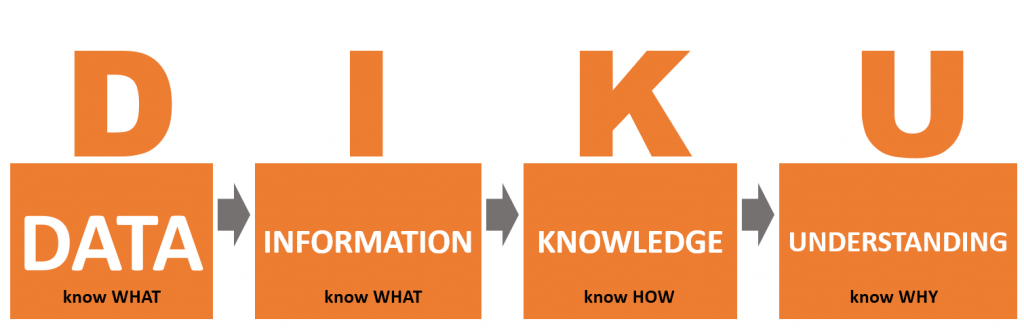
Data, information and knowledge

Professional Monitoring and Evaluation is based on hard facts: data, information, knowledge and understanding. Let us take a closer look at these concepts:

Hierarchy of data (know what) that can lead to information (know what), knowledge (know how) and understanding (know why)

WHAT IS DATA?

As you will know, data is a collection of objective facts, such as numbers, words, images, measurements, observations or even just descriptions of things. In other words: Data is chunks of raw facts about the state of the world.

For example: crime rates, unemployment statistics, but also handwritten notes of interviews, or a recorded description of an observation.

Data is raw, unorganized and lacks context. To be useful, it needs to be turned into information.

WHAT IS INFORMATION?

Information is data that has meaning and purpose. It can help us understand what is happening.

For example: the noises that I hear are data. The meaning of these noises – for example a running car engine – is information.

WHAT IS KNOWLEDGE?

Information can serve to create knowledge. Knowledge can instruct how to do something.

And finally, knowledge can be turned into understanding that explains why it is happening.

The post The Age of Data appeared first on Thomas Winderl.

Written by cplysy · Categorized: thomaswinderl

Feb 27 2020

Three Ways Intentional Practice Can Support Self-Care

In recent years, self-care has emerged as a compelling idea among museum practitioners.  The sentiment is that, like so many in the not-for-profit world, museum workers are deeply passionate about the work they do and too often, they are overworked and feel underappreciated (and underpaid).  Burnout is high, and the need to take care of oneself—physically, mentally, and spiritually—is imperative, even though doing so may feel out-of-reach.  As a consultant who meets and interacts with many museum professionals across a variety of settings, I can attest to the truth of this. All the time I see museum practitioners who are so busy “doing, doing, doing” that they intermittently and inadvertently lose touch with the spark that drove them to museums in the first place.

I recently read a brief allegory that reminded me of this phenomenon. It goes like this: “I once saw a person riding very fast on a horse. As they rode by me, I yelled, “Where are you going?” The rider turned toward me and yelled, “I don’t know, ask the horse!”   The pace at which museum professionals are often expected to do their work, the number of different audiences they are asked to serve, and the amount of programming they are tasked with creating and providing can leave them feeling like a person riding that wild horse.

What if I told you that your museum work could focus on accomplishing one pursuit, and that one pursuit is something you are passionate about and excel at, and that by doing this work, you would make a positive difference in the lives of the audiences you serve.  This is the essence of Intentional Practice. 

Intentional Practice means that all staff—from up and down and across the organization—take specific actions with the sole purpose of achieving a shared vision of intended impact on the audiences they serve. Transitioning an organization from the status quo to intentional practice is slow, as there are many moving parts and often unexpected distractions (insert wrench).  But, the beauty of intentional practice is its elegant simplicity, so while it is designed for organizations, individuals can also apply Intentional Practice concepts to their personal museum practice.

To return to the title of this post and the bolded statement above, I want to suggest three ways individual museum professionals can use intentional practice as a strategy of self-care.

  1. Prioritize your work to serve two or three audiences (one is even better if you can do that) rather than trying to be all things to all people. Then, focus in on the one specific impact you want to have on those audiences, with “impact” meaning the positive difference you make in the quality of their lives.  Write it all down—the audiences and the impact. Post it on the wall across from your desk.  Use it to continually remind yourself why you are there and to make decisions about where to put your energies and resources.
  2. To help you choose the audiences to prioritize and the particular difference you want to make in their lives, ask yourself “Why is working in this museum important to me?”—then ask, “Why is that important?” again, and again. You can do this alone or with a colleague.  The idea is to dig deep into what drives and excites you, what you care deeply about, and what gives you joy.  Use your passion to make decisions about #1, including helping you say “no” to tasks that move you off course.
  3. Ask yourself, “What am I really good at? What can I offer in my work that no one else can?”—be honest with yourself; do not respond with what you perceive as the “right answer.” Once you have identified what makes you unique in the workplace, draw from that to make decisions about how to serve your prioritized audiences in ways that make a positive difference in their lives.
horseback rider silhouette riding on beach at sunset
Photo by Alex Wigan on Unsplash

Maybe this sounds like a pipe dream, like an impossibility.   And I’m not here to tell you it’s not hard, especially trying to do it within an organization that has specific ways of functioning and operating.  As a first step, simply allow yourself to imagine a world where these three steps I’ve described can be your reality.  Make it your intention to return to this aspiration often (remember, post it on the wall you stare at it as a reminder) and make decisions based on this aspiration.  In this way, you will be practicing self-care, which in turn will bring joy and renewed purpose to your work.

The post Three Ways Intentional Practice Can Support Self-Care appeared first on RK&A.

Written by cplysy · Categorized: rka

Feb 25 2020

How to Enter Cleaner Data AND Automate the Entire Analysis and Visualization Process

This is a brand new bonus module for current and past students in my data analysis course, Simple Spreadsheets: From Spreadsheet Stress to Superstardom with Microsoft Excel. The once-a-year registration period is open this week only! Register by Friday, February 28, 2020–or wait ’til next year.

—

“How can I get cleaner data???”

This is one of the most common questions I get.

Let’s pretend you’re entering “workplace setting.” And you’re supposed to type “hospital” as one of the categories. But you, or someone else, enters “hospitals.” Plural, argh!

Later on, you have to do all this data cleaning… and you have a mess of entries.

It’s impossible to enter perfectly clean data when you’re doing it by hand.

Common Data Sources

I realize you might not be hand-entering all your data. Your spreadsheets might come from…

  • Email attachments
  • Downloading a csv file from your agency’s database (where the data was already entered into a form)
  • Downloading a file from a website (like a government website with public data)
  • Manual data entry

Oftentimes, at least some spreadsheets are entered by hand.

Typos Are Not Inevitable!!!

You can get a virtually clean spreadsheet with a little but of upfront planning.

You work hard, a little bit, in the beginning.

And then your Future Self gets to sit back and enjoy the fruits of your labor.

What You’ll Learn

I’m going to teach you how to use:

  • data validation
  • drop-down menus
  • pivot tables
  • formulas
  • pivot charts
  • regular charts, and
  • quickie charts

to set up foolproof data entry spreadsheets.

You set up your structure first. Then, someone else goes off and enters data for you. And then it’s automatically tallied—and visualized!

This might sound hard if you’ve never done it before, but it’s not! It’s easy. Let’s get started.

How to Enter Cleaner Data AND Automate the Entire Analysis and Visualization Process

With a little upfront planning, you can automate the rest of the analysis and visualization process. Here’s how.

(Current and past students in Simple Spreadsheets: Log in here >> https://depictdatastudio.teachable.com/p/simple-spreadsheets/ << and watch the video version of this lesson. You can also download two spreadsheets and practice alongside me. It’s 37 minutes of some of my favorite techniques I’ve ever taught. I promise that the 37-minute time investment will compound and save DAYS of your time.)

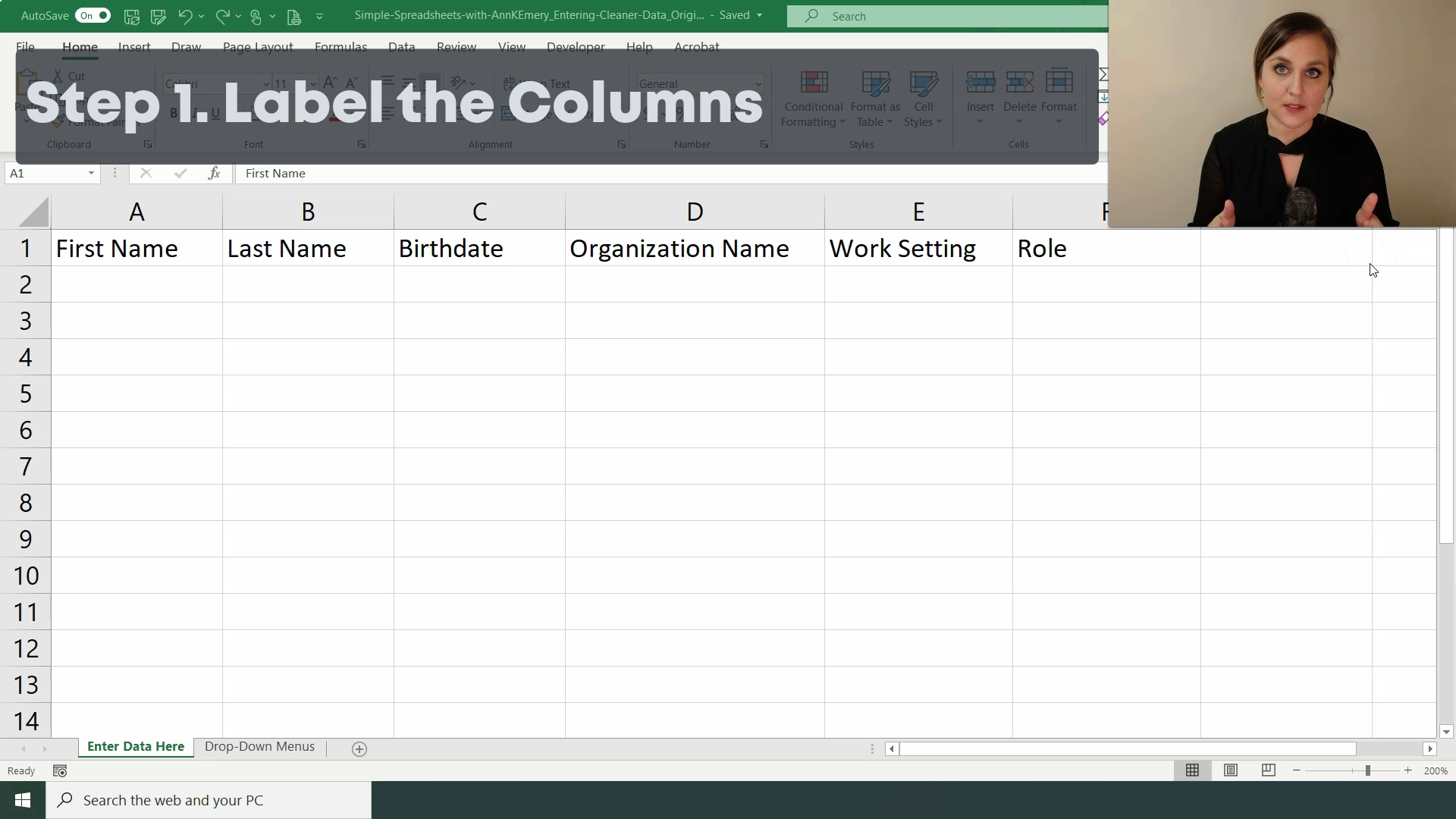
Step 1. Label the Columns

First, label the columns. This is a fictional spreadsheet, but we’re pretending we want someone to enter peoples’ first names, last names, birthdates, organization names, work settings, and roles.

Step 1. Label the Columns

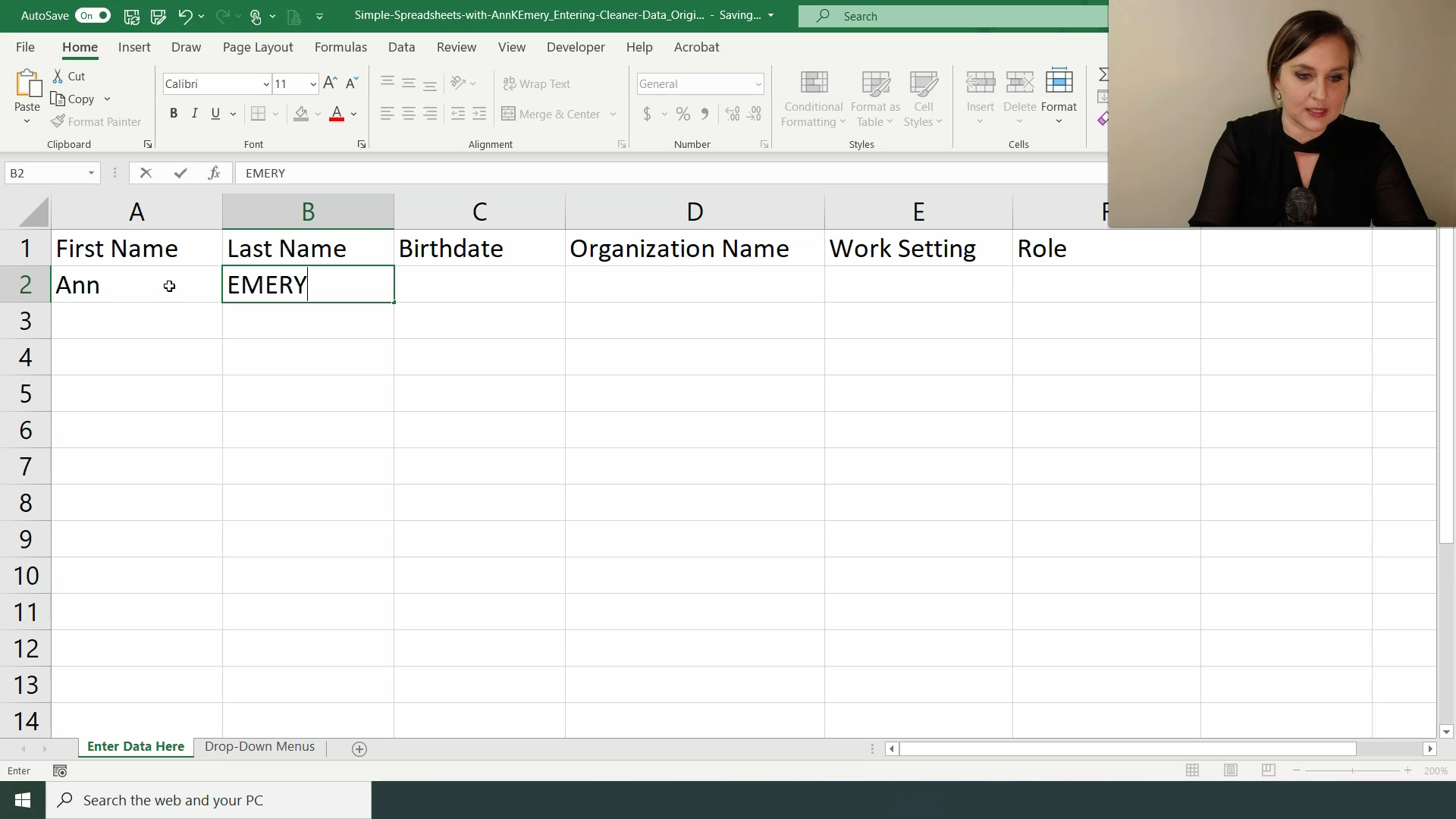
Step 2. Enter Some Sample Data

I like to add a few sample entries at the very beginning. It helps the data entry person later on.

For now, let’s just enter the person’s First Name, Last Name, and Organization Name. We’ll address the Work Setting and Role variables in a moment.

And because this happens in real life all the time, we’ll pretend our data entry person entered my last name in ALL CAPS, ha! I’ll show you how to clean that up in a moment.

Step 2. Enter Some Sample Data

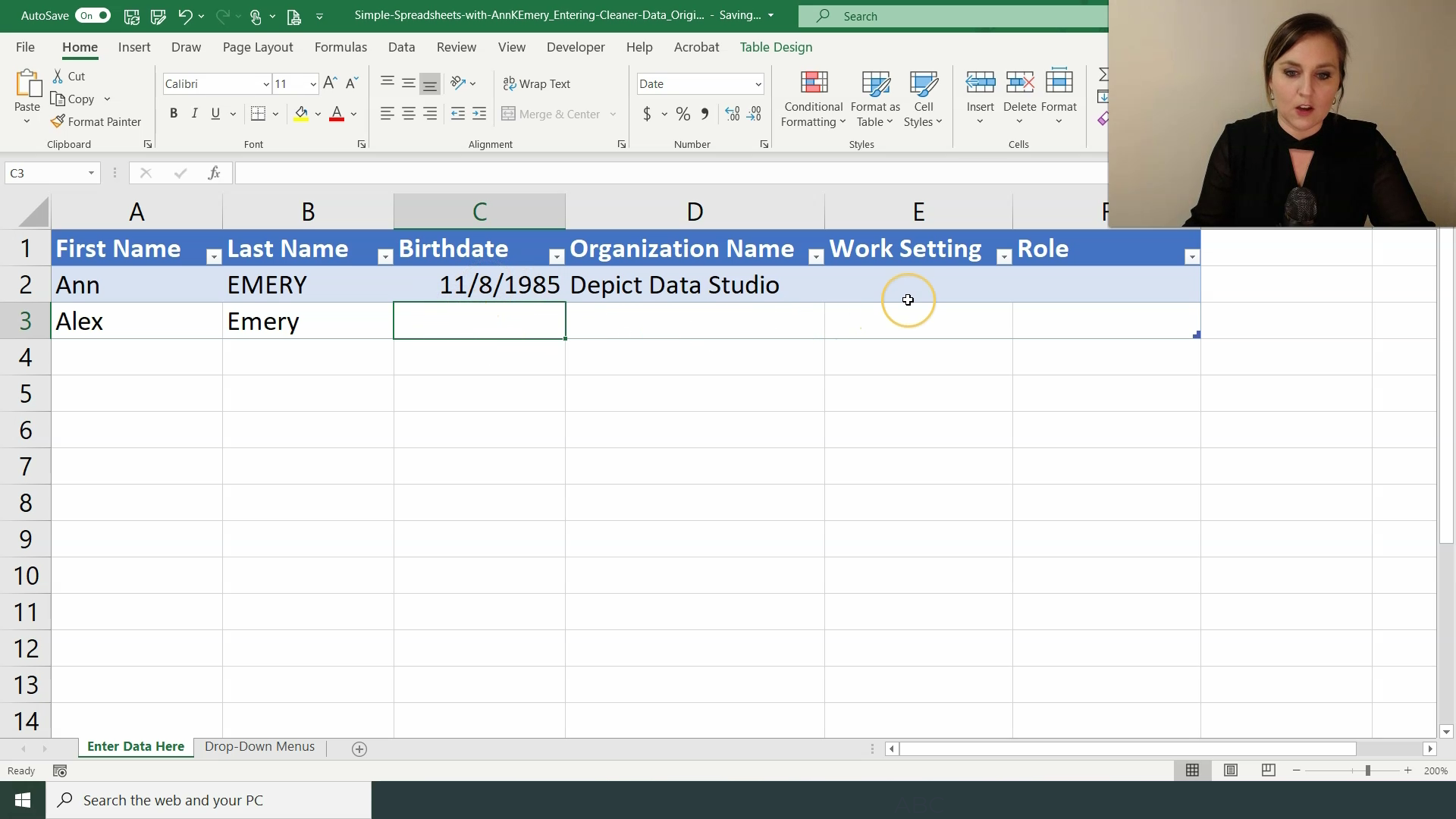
Step 3. Apply an Excel Table

An Excel Table is not a regular table. An Excel Table is a certain type of formatting that is magical. I wish I would’ve learned these earlier!

To apply an Excel Table:

  • Click on the upper left corner of your spreadsheet (usually cell A1, if you started typing your variable names into the first row of your spreadsheet).
  • Go to the Insert tab.
  • Click on Table.

Excel Tables can future-proof your datasets. They allow you to continue entering data later on and keep all your beautiful formulas and linkages.

Step 3. Apply an Excel Table

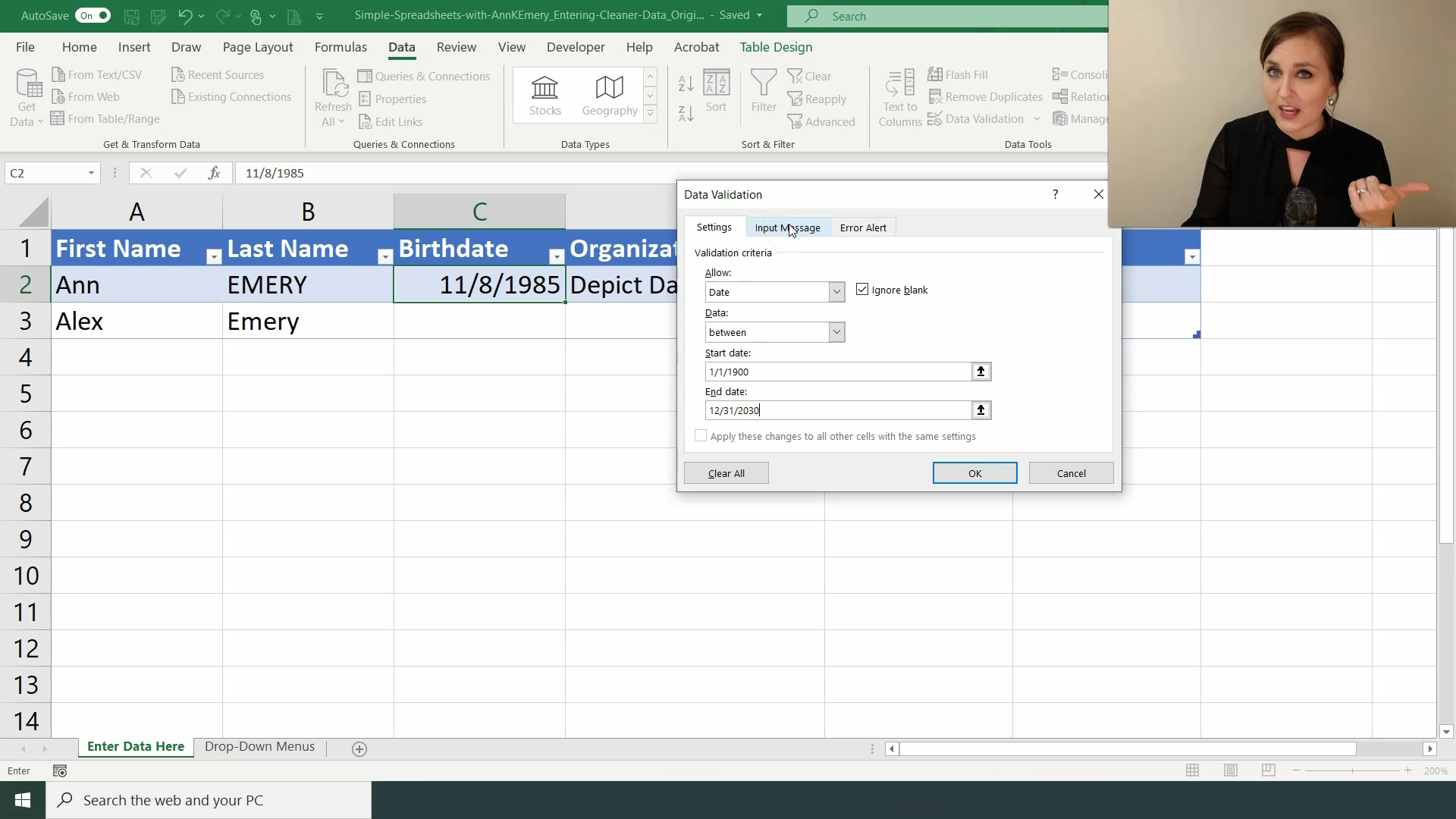
Step 4. Add Data Validation

Data validation is one of your strongest weapons against typos.

How to add data validation:

  • Click on the cell that you want to edit (“validate”).
  • Go to the Data tab.
  • Go to the Data Validation icon.
  • Under Settings, you can Allow a Whole Number, Decimal, List, Date, Time, or Text Length. You can also set Minimum and Maximum values.
  • Optional! Under Input Message, write instructions for the person who will be entering data. This is the message that the data entry person will see when they click on the cell.
  • Optional! Under Error Alert, write custom error messages. This is the message that the data entry person will see if they make a mistake while typing.

In this example, I’m adding a data validation rule that prevents you from entering weird dates.

Step 4. Add Data Validation

Step 5. Create Drop-Down Menus

If there’s a set list of categories that someone should be entering, then that’s when you need a drop-down menu!

Here’s how you create drop-down menus:

  • Insert a new sheet called Drop-Down Menus. Type a list of the response options.
  • Go back to your original data entry spreadsheet. Click on the cell where you want to create a drop-down menu.
  • Go to the Data tab.
  • Go to the Data Validation icon.
  • Allow a List.
  • Tell your computer where the list is located.
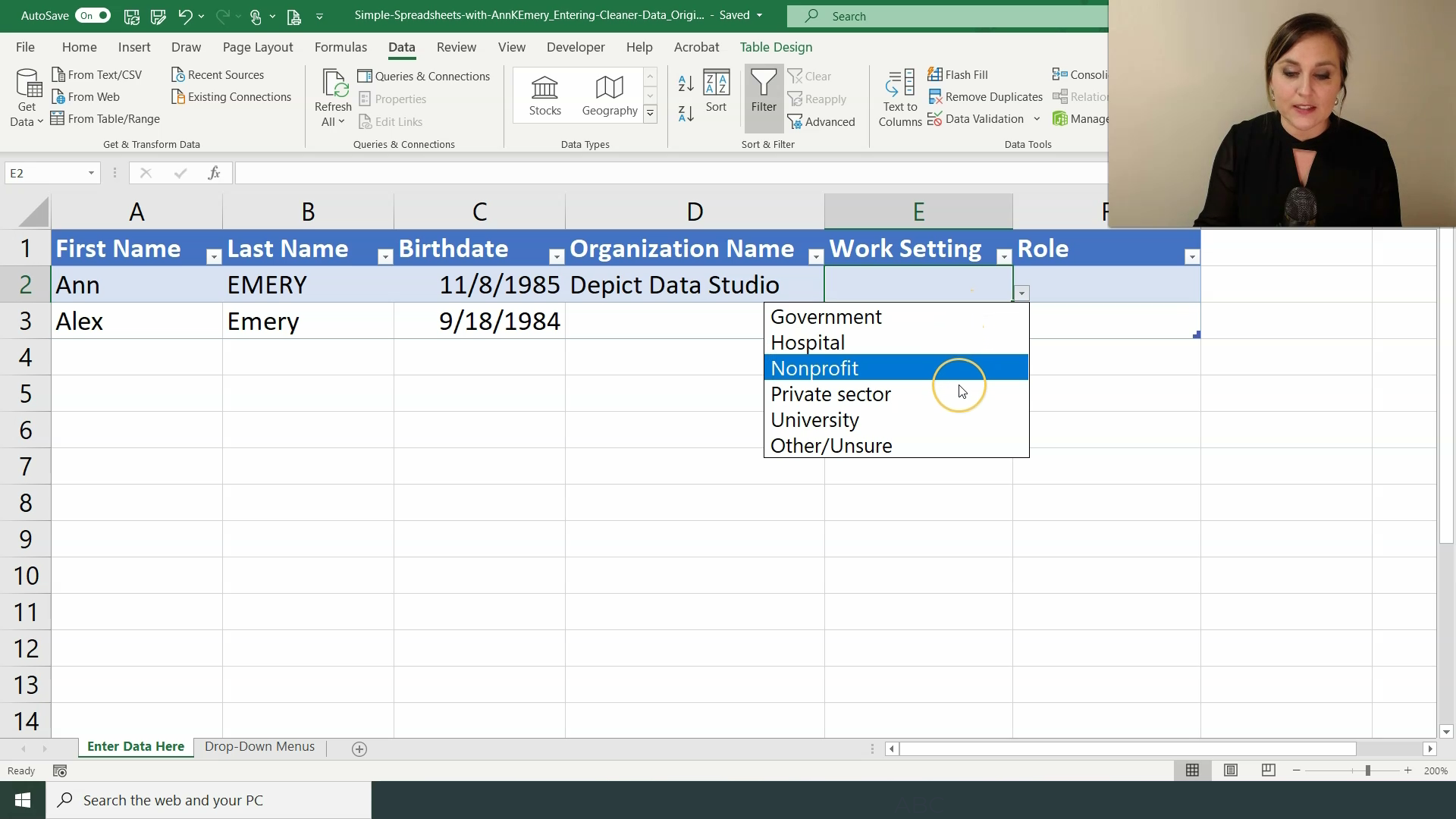
  • Hit OK. If needed, drag your new format downwards so that it fills the entire column.
  • Hide the Drop-Down Menus sheet so it doesn’t distract the person who’s entering the data.

In this example, I’m adding a list of work settings.

Step 5. Create Drop-Down Menus

Step 6. Add Formulas for Recoding Data

Try to anticipate what type of cleaning and recoding may be necessary. Then, enter those formulas off to the right.

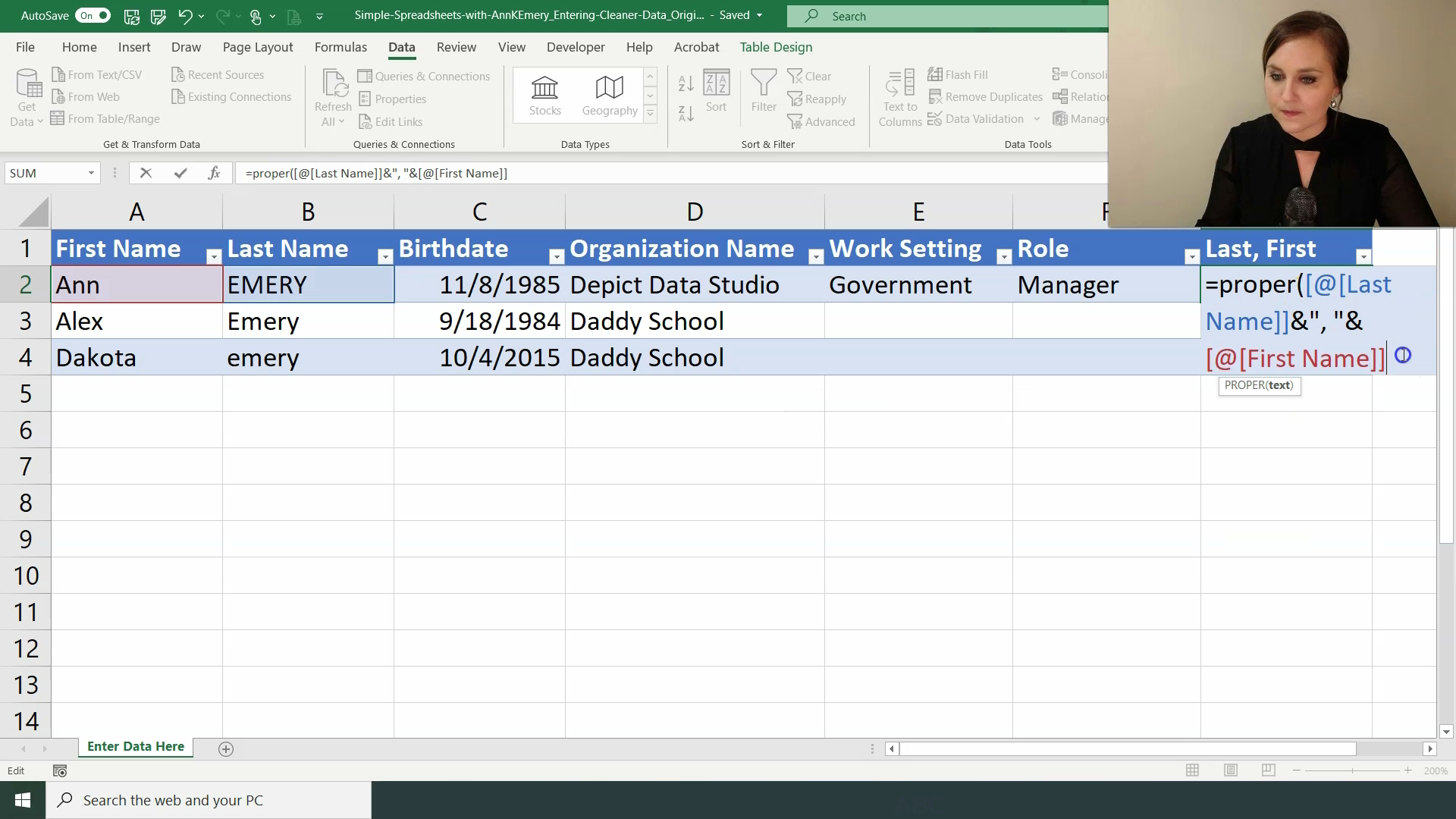
For example, will you need the names in Last, First format? If so, write a formula that concatenates the first and last names together. Don’t forget to transform the messy uppercase and lowercase letters into proper case.

Will you need the birthdates to be transformed into ages? If so, write a formula that calculates how many years old the person is based on today’s date and their birthdate.

I realize your spreadsheet won’t look exactly like this. You might not be dealing with demographic data like names and ages at all. But the concept is the same: Your data entry person will enter data on the left, and then those variables will automatically get cleaned and recoded in new columns off to the right.

In my real life projects, I might have 10, 20, or 30 columns off to the right with all the data cleaning formulas I need.

Step 6. Add Formulas for Recoding Data

Step 7. Pre-Summarize the Data with Pivot Tables and/or Formulas

You’ve got two choices:

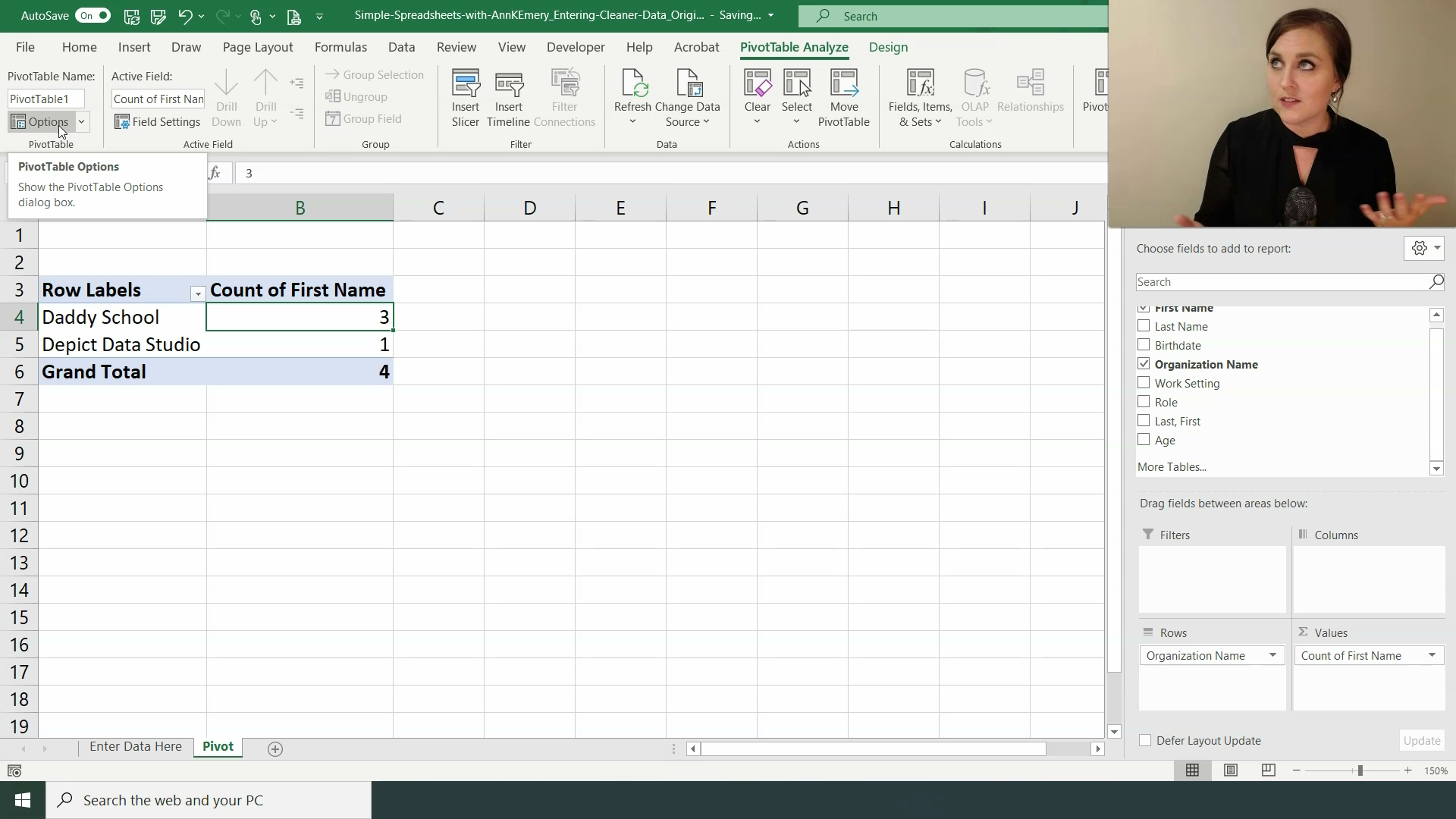
  • Summarize the data with pivot tables
  • Summarize the data with formulas

Pivot tables are often easier for novices because you don’t have to memorize any formulas.

I prefer formulas because they give me more control over formatting (and more control over the charts that I’ll create in the next step).

Step 7. Pre-Summarize the Data with Pivot Tables and/or Formulas

Step 8. Pre-Visualize the Data

Whoa! This is where it gets really fun.

We haven’t even entered the data yet.. but we’ve already got the analysis finished. And we’re about to get the visualization finished, too.

You’ve got three choices for visualizing data:

  • Pivot charts
  • Regular charts
  • Quickie charts

Pivot charts are linked directly to the pivot tables you already created in the previous step. Pivot charts are fine… but they’re not fancy. You can only make some chart types. And your formatting control is limited. They’re a good starting point but I never use them in practice.

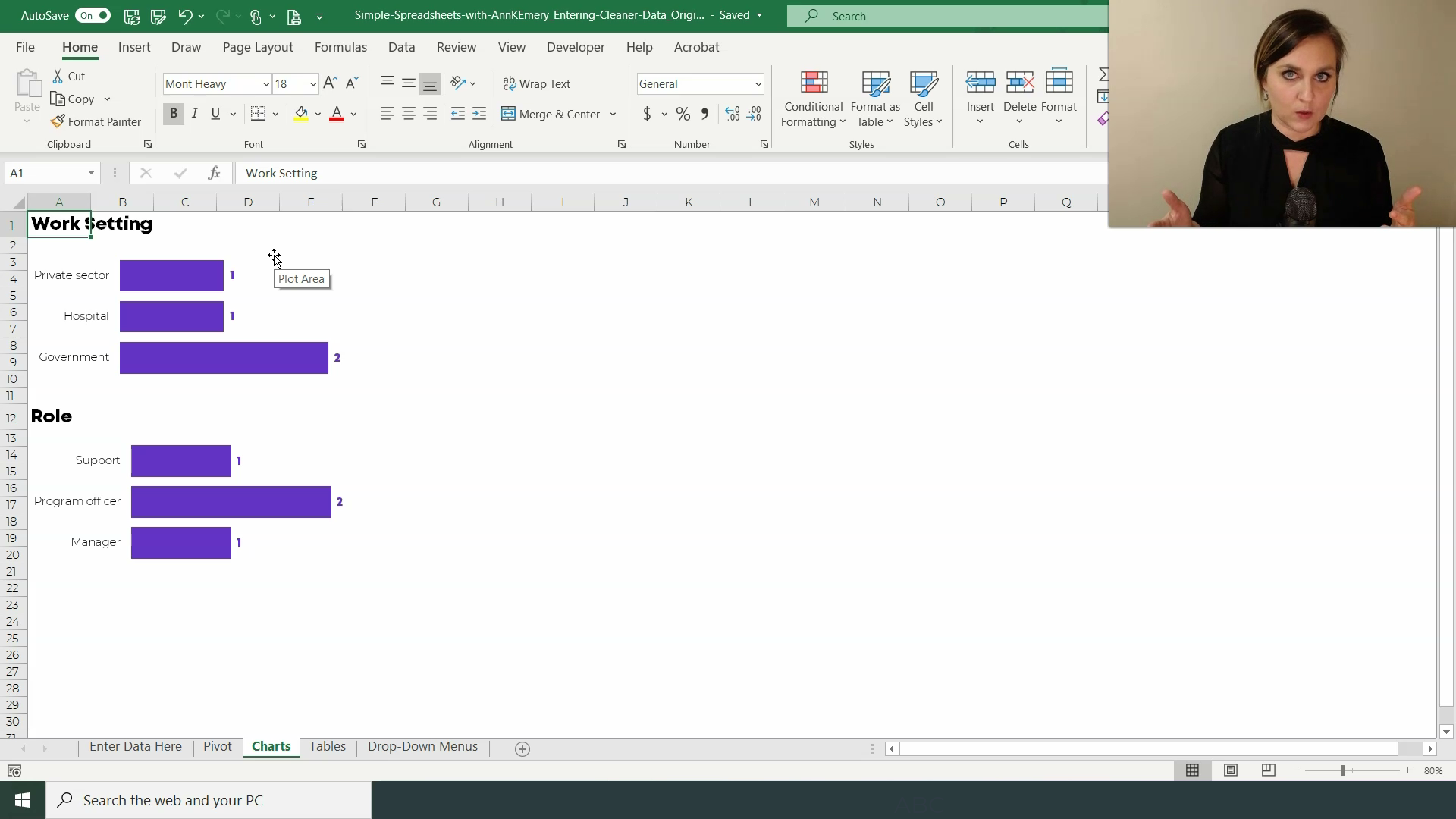
I usually make regular ol’ charts, which are linked to the formulas I wrote in the previous step. Charts linked to formulas give me SO MUCH editing power. I can customize the chart exactly how I need it.

And I make quickie charts (data bars, heat tables, spark lines, etc.) whenever possible because they’re, well, quick! They’re often sufficient for my quick turnaround reporting needs as well.

Step 8. Pre-Visualize the Data

Your Turn

Reply and let me know:

Are you already following this process for all your projects? Where you set up the skeleton of your spreadsheet beforehand, and then sit back and relax as the automatically-cleaned-analyzed-and-visualized data comes in? I love meeting fellow time-saving spreadsheet users! Reply and let me know what your workflow looks like.

Or, is this process brand new to you? I had to learn this automation process the long, hard way, so don’t feel bad if you haven’t been exposed to it yet.

Reply and let me know where you’re at. Our team reads every message.

Ann

P.S. Enrollment closes on Friday, February 28, 2020 for our data analysis course. If you can teach this process in your sleep, then the course isn’t for you, ha! But if some of these terms were new for you, or you have to do a lot of tedious data cleaning in your projects, then this is the course for you! Register: https://depictdatastudio.teachable.com/p/simple-spreadsheets/

P.P.S. Current Simple Spreadsheets students–what other bonus modules would you like to see? There are three case studies based on your requests. There are two bonus data analysis modules based on your requests. There’s a Getting Started with Dataviz module based on your requests. Keep the requests coming! You’re grandfathered-in to all future updates and additions.

Written by cplysy · Categorized: depictdatastudio

Feb 25 2020

The Evaluation Mindset: Actions and Consequences

When I started getting into data visualization design, human centered design, and user experience design I had this hope that a better understanding of design methodologies would ultimately help me to become a better evaluator.

But I had the causal direction flipped.

What I have learned over a decade of being both an evaluator and a designer is that while knowing design might make you a better evaluator, having a firm understanding of evaluation will definitely make you a better designer. Whether you are trying to design a business plan, website, or software application, having an evaluation mindset can give you a unique and rare perspective into our ever changing, complicated, and confusing modern world.

This post is the first in a series that I’m dubbing the “Evaluation Mindset.”

And I’m dedicating the series to all of you who see yourselves in my cartoons, who hang them up on your office walls and quietly chuckle at the kinds of jokes that nobody else seems to get. I hope this series resonates.

Our Actions have Consequences

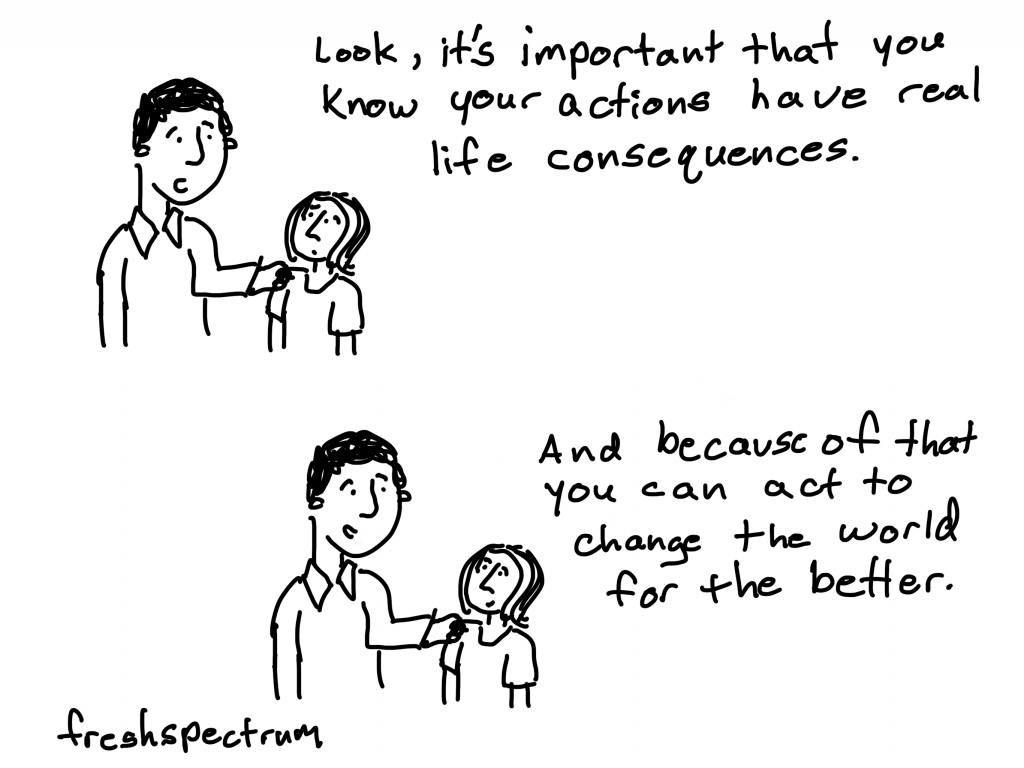
It’s the kind of thing you try to teach your kids.

Often in the context of a temper tantrum or as part of a lecture following a “bad decision.”

“No, screaming and kicking your feet will not get you ice cream.”

“How do you think your little brother feels when you punch him in the arm?”

But there is also an incredible beauty to the idea that actions have consequences. If our actions did not have consequences there would be no reason to do anything. Our actions having consequences makes design possible.

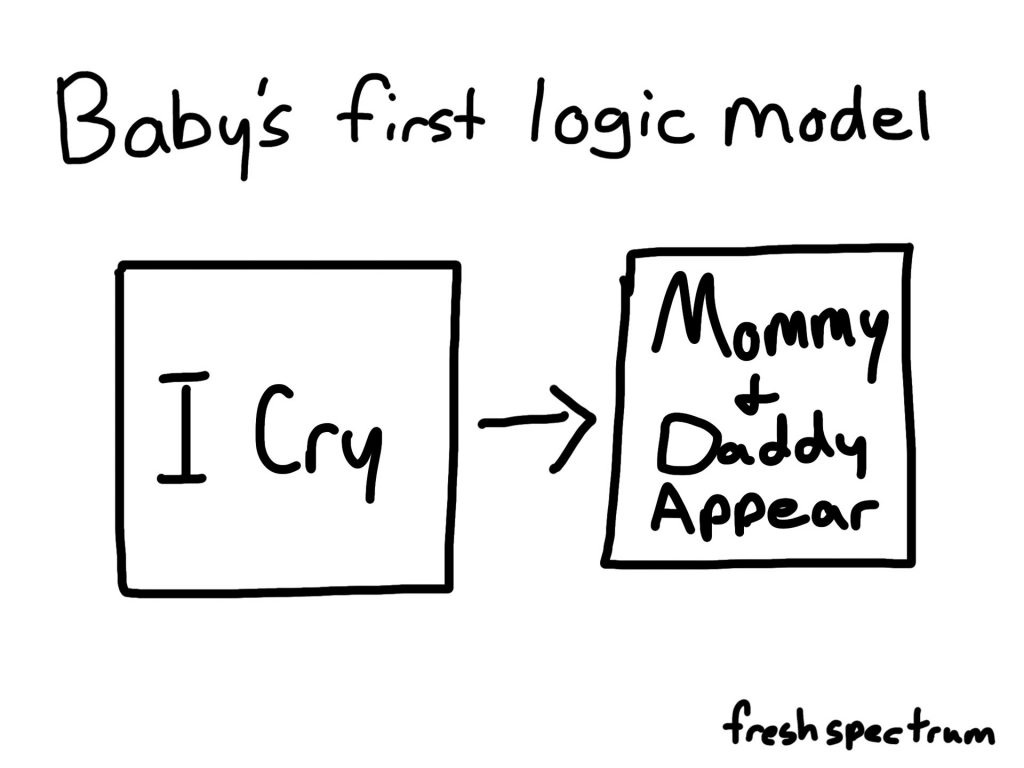
Why do babies cry?

At first crying is likely the response to an overwhelming new world. Feelings, pains, visions, thoughts.

But over time children make a connection. When they cry, a parent appears.

Amazing.

Hungry, try crying. Just filled a diaper, cry. Don’t feel like being alone in the crib at night. Cry.

It works wonders, well at least until the parents start Googling bedtime routines and the Ferber method. Then all of a sudden, crying doesn’t just bring the parent.

The action (crying) doesn’t have the consequence (parent appearing). So the baby can keep trying, give up, or come up with some kind option C (i.e. project break outta the crib).

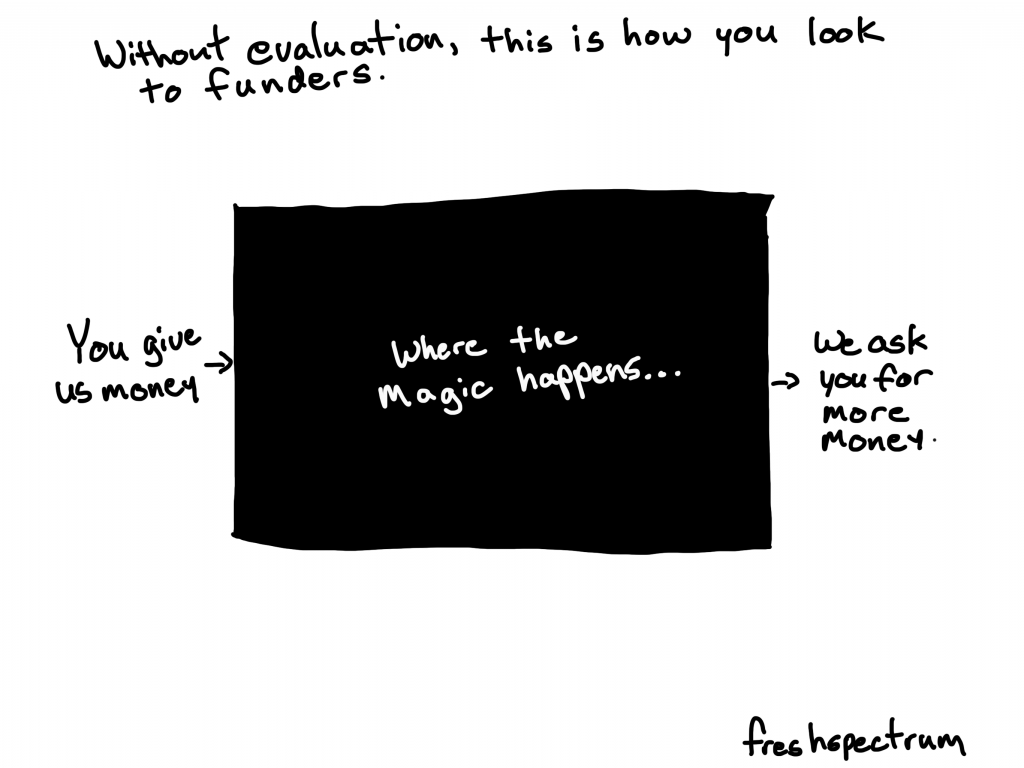
Inside the Black Box

If you have enough trust built up, or charisma, or slick marketing, or luck, or delusion, or slimy conman talk, you don’t need to connect your actions with the consequences you are trying to bring about.

Some of us though don’t really like doing things we don’t understand.

My mom had a saying she would pull out every now and again, “well, it is what it is.”

I have never believed that.

To me that’s give up talk. It’s the way we dismiss things as unchangeable. It’s the secret behind perpetuating the status quo. It’s the reason why people don’t vote, and worse, don’t run.

Embracing the idea that our actions have consequences gives us power. And being able to conceptualize the actions that lead to our ideal consequences can give us insight and put our work in context.

In evaluative terms, our actions are activities. Our consequences are outcomes. They are the impact a program’s activities can bring about.

And if you build around those ideas, you can model your design. You can collect evidence and evaluate. You can iterate your idea and make it better.

Good and Bad Impacts

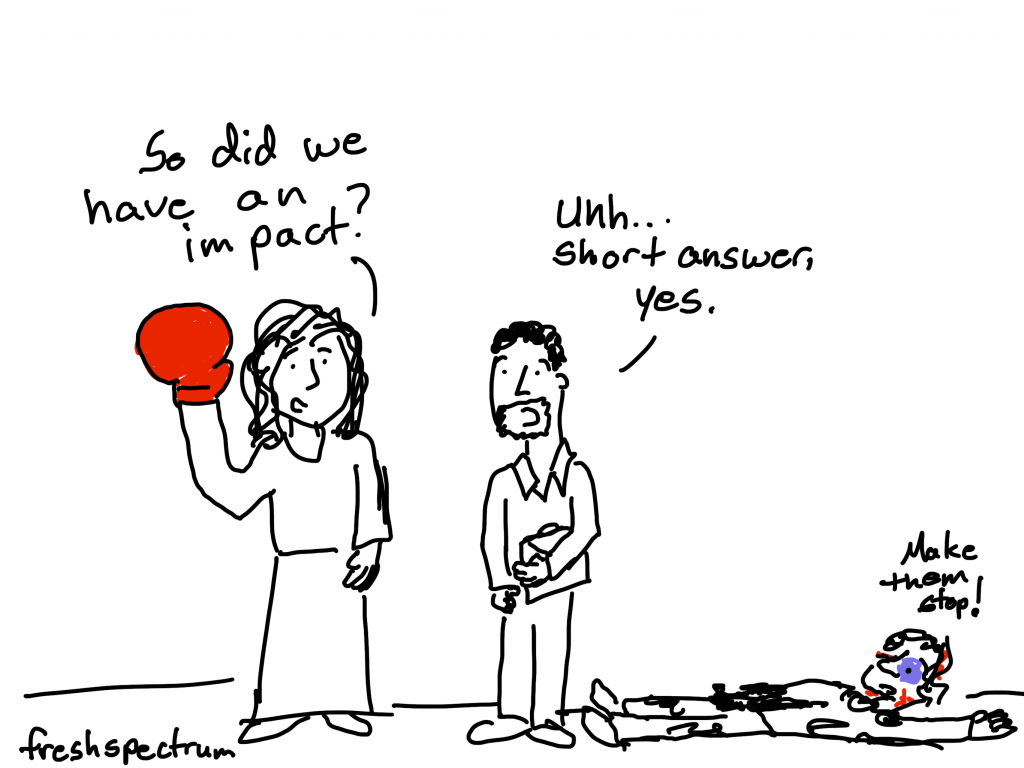
Impact is a consequence.

It can be good, it can be bad, it can be both, and it can be neither.

But if actions lead to consequences, those consequences exist whether or not we recognize their existence.

Failing to measure a consequence doesn’t make it go away.

When a government program takes action to increase the availability of credit to low income neighborhoods it may bring about its intended consequence. But it also might bring about an unintended consequence, like an increase in high interest debt.

Inaction also has consequences.

You know the saying, “damned if you do, damned if you don’t.”

Inaction also has consequences. Doing nothing about climate change doesn’t make it go away. Given our pace, doing nothing is a choice in its own right.

Not voting will not make a certain president cease to exist. Quite the contrary.

Evaluation Mindset Practice

Okay, now it’s time to practice.

What are some of the actions you have taken today? What consequences have they brought about?

Is there a non-profit organization that you really respect? What actions do they take? What are the consequences of those actions?

Are there are other action/consequence pairs that come to mind? What would happen if you changed the action? What other kinds of consequences exist?

If I want people to read my blog, I have to publish posts and share them. Those are actions. I’ll consider this post successful if people read it (I’ll see that in my analytics) and then share it (Twitter @clysy) or comment on it.

So please do!

Written by cplysy · Categorized: freshspectrum

  • « Go to Previous Page
  • Go to page 1
  • Interim pages omitted …
  • Go to page 279
  • Go to page 280
  • Go to page 281
  • Go to page 282
  • Go to page 283
  • Interim pages omitted …
  • Go to page 304
  • Go to Next Page »

Footer

Follow our Work

The easiest way to stay connected to our work is to join our newsletter. You’ll get updates on projects, learn about new events, and hear stories from those evaluators whom the field continues to actively exclude and erase.

Get Updates

Want to take further action or join a pod? Click here to learn more.

Copyright © 2026 · The May 13 Group · Log in

en English
af Afrikaanssq Shqipam አማርኛar العربيةhy Հայերենaz Azərbaycan dilieu Euskarabe Беларуская моваbn বাংলাbs Bosanskibg Българскиca Catalàceb Cebuanony Chichewazh-CN 简体中文zh-TW 繁體中文co Corsuhr Hrvatskics Čeština‎da Dansknl Nederlandsen Englisheo Esperantoet Eestitl Filipinofi Suomifr Françaisfy Fryskgl Galegoka ქართულიde Deutschel Ελληνικάgu ગુજરાતીht Kreyol ayisyenha Harshen Hausahaw Ōlelo Hawaiʻiiw עִבְרִיתhi हिन्दीhmn Hmonghu Magyaris Íslenskaig Igboid Bahasa Indonesiaga Gaeilgeit Italianoja 日本語jw Basa Jawakn ಕನ್ನಡkk Қазақ тіліkm ភាសាខ្មែរko 한국어ku كوردی‎ky Кыргызчаlo ພາສາລາວla Latinlv Latviešu valodalt Lietuvių kalbalb Lëtzebuergeschmk Македонски јазикmg Malagasyms Bahasa Melayuml മലയാളംmt Maltesemi Te Reo Māorimr मराठीmn Монголmy ဗမာစာne नेपालीno Norsk bokmålps پښتوfa فارسیpl Polskipt Portuguêspa ਪੰਜਾਬੀro Românăru Русскийsm Samoangd Gàidhligsr Српски језикst Sesothosn Shonasd سنڌيsi සිංහලsk Slovenčinasl Slovenščinaso Afsoomaalies Españolsu Basa Sundasw Kiswahilisv Svenskatg Тоҷикӣta தமிழ்te తెలుగుth ไทยtr Türkçeuk Українськаur اردوuz O‘zbekchavi Tiếng Việtcy Cymraegxh isiXhosayi יידישyo Yorùbázu Zulu