• Skip to main content
  • Skip to footer
  • Home

The May 13 Group

the next day for evaluation

  • Get Involved
  • Our Work
  • About Us
You are here: Home / Archives for cplysy

cplysy

Mar 10 2020

The Evaluation Mindset: The Role of the Evaluator

“Let’s take a shortcut back to the car.”

I was 19 and hiking through the woods with one my best friends. We were both eagle scouts, and had spent much of our young lives wandering through the woods. The area we were exploring was one of our favorites and we had hiked it a dozen times over the preceding couple of years.

But as we traveled down our little mountain shortcut, things seemed different. We were walking by a camp we had never visited. Then we came to roads we had never traveled and a few small country houses we had never seen.

We spotted a county maintenance pickup truck sitting on the side of the small road with two guys seemingly catching a break. And we asked them, “do you happen to know which way it is to the Wolf Rock parking lot?”

They looked at each other then pointed to the back of the pickup and said, “we’ll take you.” It was as we drove out towards the main highway that my friend and I came to a realization that almost seemed too obvious.

Our shortcut had taken us down the wrong side of the mountain. And lucky for us, we stumbled upon two county workers who had the time to provide a ride for a couple of clearly lost hikers.
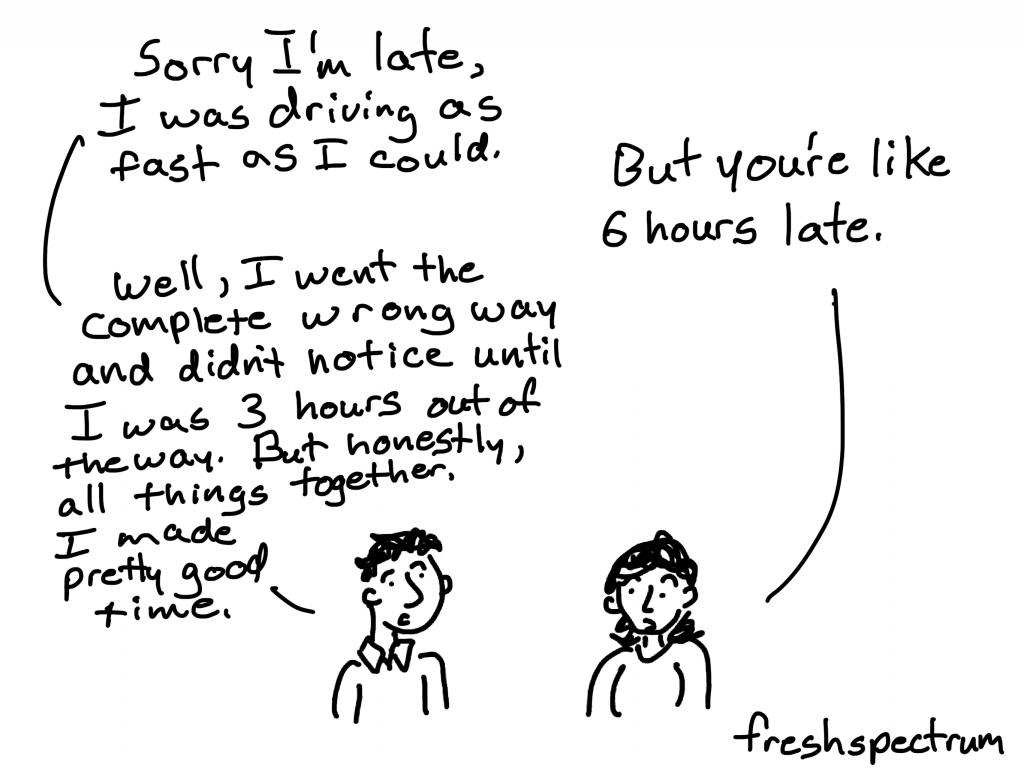
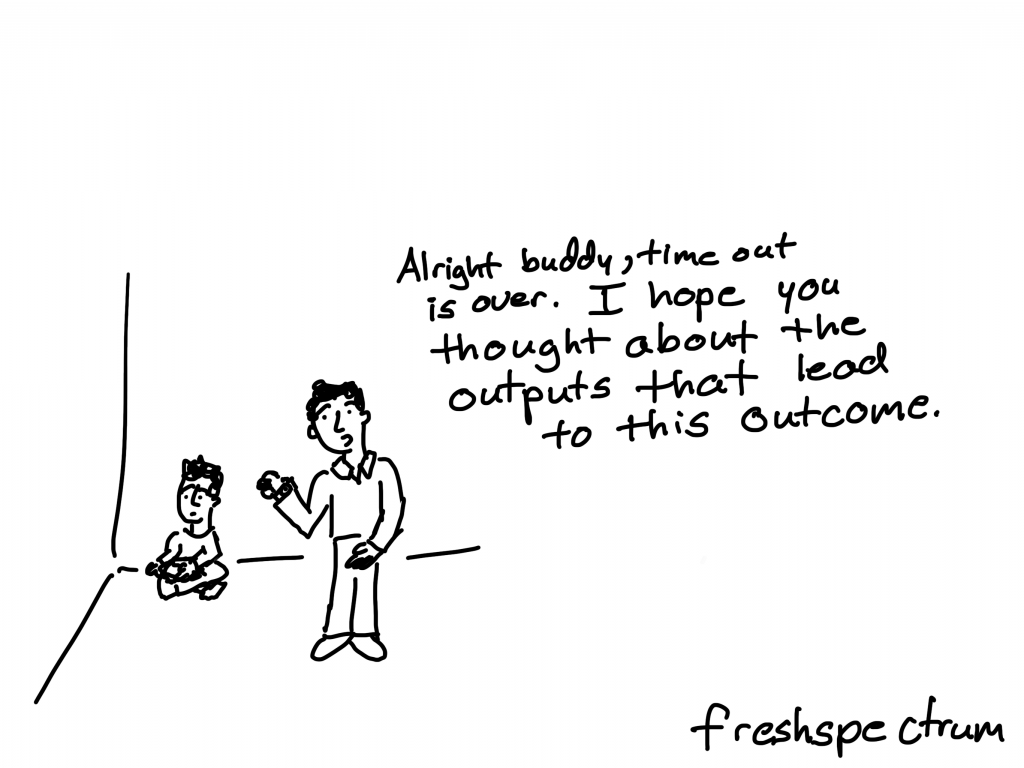
Even in the best of circumstances.

When the origin and the destination are both well-known. And the path between the two is one that has been ventured over and over again. And the people on the journey have ample experience.

We are always just one wrong turn from ending up on the wrong side of the mountain.

The World in the Weeds

Our world is complex.

The faraway problems that were once obscured by distance are now delivered right to your social media feed.

And our society, it’s changing rapidly. Symptoms of overwhelm can be seen everywhere. Things like increasing anxiety, depression, and a general sense of disconnect.
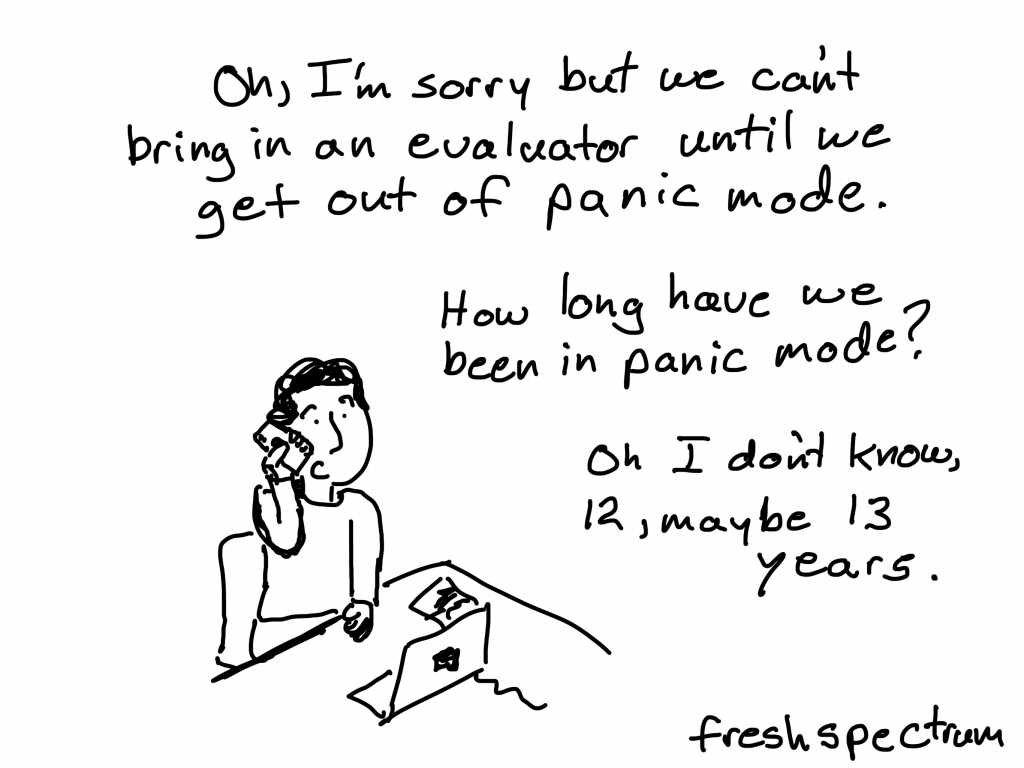
If you have ever worked in a restaurant you might have heard the phrase, “in the weeds.” It’s the line you use when a fellow server gets overwhelmed. Their eyes and actions communicate that overwhelm as a silent call for help.

As I walk around my co-working space I can’t help but notice that look. I see the same look in the eyes of colleagues and friends. And I see the look in the eyes of the people who are tasked with changing the world.

Our society is in the weeds.

And when you’re in the weeds, when the origin is fuzzy, when the destination is unknown, when the path is unclear, and when design is really just a series of educated guesses, it is not the best of circumstances.

Our society needs help.

Our society needs evaluators.
Evaluation as Wayfinding

As the voyages became longer, they developed a highly sophisticated navigation system based on observations of the stars, the ocean swells, the flight patterns of birds and other natural signs to find their way over the open ocean.

Wayfinders, A Pacific Odyssey [PBS]

Thousands of years before Europeans on their big ships began conquering and colonizing the world (a.k.a. “exploring”), the indigenous peoples of the Pacific were discovering and populating new lands.

The Europeans were surprised when “discovering” Pacific islands already inhabited by people who only seemed to possess the simplest of tools. The Polynesians didn’t have the metal, maps, or fancy instruments that the Europeans believed to be prerequisites to cross such distances. But yet, here they were.

The traditional way of navigating used all the natural science to guide the canoe. And that would be in the heavens, the stars and the moon at night, the sun and the moon during the day, as well as the ocean waves. The system incorporated reading the signs of the clouds and also the animals, especially the seabirds to determine where land is. It was an ingenious system that required tremendous observation of the elements of nature to make successful landfall.
Nainoa Thompson

In the years that I have spent working as a UX designer and visual data scientist I have noticed something peculiar. We are faced with an overwhelming abundance of data and evidence. And our response is usually to develop something technical and complex (AI/Machine Learning/Blockchain) in an effort to make the complex digestible.

But while inventors work to develop the modern equivalents of sextants and compasses, much of the evidence remains accessible but untapped.

We don’t need the expensive tools to navigate our way through the modern world. We just need the discipline to see the evidence, understand our origin, imagine our destination, and plot our course.

This is the role of the evaluator.

To leverage evidence and expertise in order to help our society navigate out of the weeds and toward a better future.
Written by cplysy · Categorized: freshspectrum

Mar 06 2020

Innovative programme design

It has always been clear to me: Monitoring and Evaluation depends to a large extent on how development or government programmes are planned and designed. That is why good M&E is strongly linked with good planning and design. In a way, programme design is a natural extension of our skill set in M&E.

That is why this blog post looks closer at the rapidly evolving landscape of options for innovative programme design.

DRIVERS OF INNOVATION

In my view, we have recently seen such a push for innovation in programme design for three reasons:

  • Disillusion with linear models: Linear planning tools such as logical frameworks and linear theories of change are ineffective in a more complex, complicated or chaotic context. If you are not yet convinced, look at Ben Ramalingam’s comprehensive critique of current planning models (1).
  • Complexity and wicked problems: Genuine progress toward sustainable development is increasingly complex: solutions are not simple or obvious, those who would benefit are the ones who most lack power, those who can make a difference are disengaged, and political barriers are too often overlooked. Look for example at the Manifesto ‘Doing Development Differently’ manifesto from 2014. That is why programme design must increasingly cope with ‘wicked’ problems: problems that are difficult to define clearly, are deeply interconnected, and driven by many factors and unforeseen events.
  • Data revolution: The world has been – and still is – undergoing a data revolution with far-reaching consequences for programme design: We now live in a world where 90 percent of the data out there today has been created in the last two years alone. Every minute, more than 270,000 tweets get published worldwide, Google receives no less than 4 million search queries, and over 200 million emails are sent.(2)

CHALLENGES TO INNOVATION

Despite this push, development organizations and governments have mostly kept more innovative programme designs contained in ‘innovation labs’ and small pilot projects. There are significant challenges to innovative programme design. Three reasons stand out in my view:

  • Mind set: Many of these innovations require ‘unlearning’ of the traditional, linear design approach based on a chain of results.
  • Rules and regulations: Many of these innovations may be difficult to carry out within the current rules and regulations for programme design and implementation.
  • Donor requirements: Testing these innovations may require flexibility by the donor.

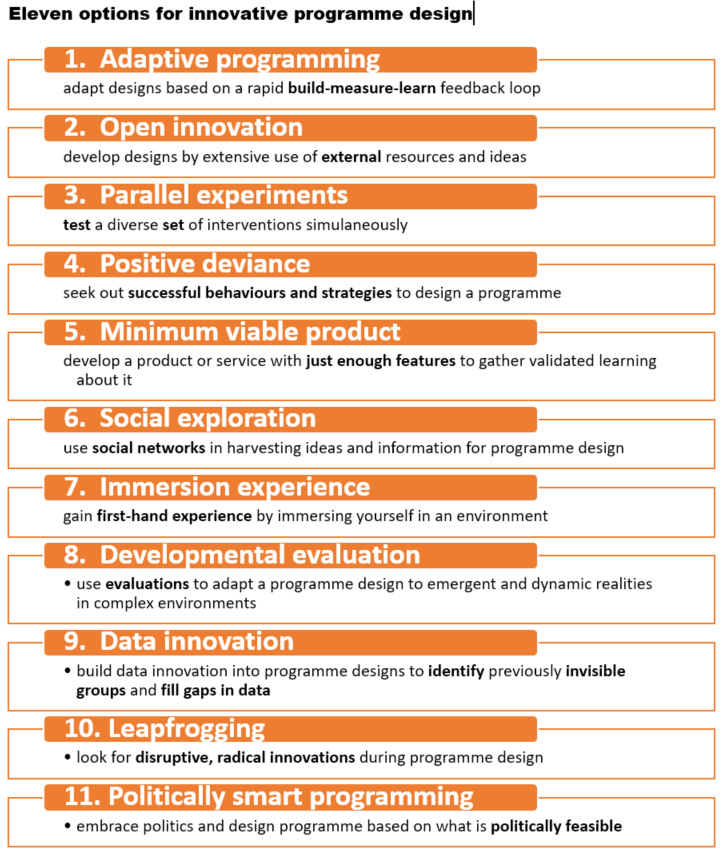
ELEVEN OPTIONS FOR INNOVATIVE PROGRAMME DESIGN

In my view, there are eleven concrete options for innovative programme design in complex, complicated or chaotic settings to consider for governments and development organisations:

Sources:

(1) Aid on the edge of chaos: rethinking international cooperation in a complex world, Ramalingam 2013

(2) Can big data help us make emergency services better? David Svab/Brett Romero, 20/04/2016

The post Innovative programme design appeared first on Thomas Winderl.

Written by cplysy · Categorized: thomaswinderl

Mar 05 2020

How Muay Thai Helped Me Re-Think Evaluation

I’ve been training in Muay Thai (kickboxing) for a few years. I am always learning something new and being pushed outside of my comfort zone … and I love it. However, I am and have always been a perfectionist. It’s something I’ve struggled with my whole life: sometimes, I’m really proud that I’ve been lenient with myself, and other times, the perfectionism rears its ugly head. Lately, I’ve noticed it manifesting at the gym. As I’m trying to apply a new skill in work with a partner or coach, I’ve been getting frustrated and self-critical. My self-protective instincts (ironically not working to appropriately block a punch or kick) have made me think, “I don’t like this aspect or that skill,” instead of allowing me to see that this is a process of growth and that there is no place for perfection in that process.

I think organizations (and the people within them) can be the same way when it comes to evaluation. We get used to our routines, we think we’ve perfected them, and then one of a few scenarios happen that push us out of our comfort zones. Maybe we are required to learn a new system or skill, or — even worse! — we get feedback that doesn’t match our own perceptions. Now at the gym, my feedback can be a simulated sparring round that doesn’t end so well for me. But in our workplaces, while we are focused on serving the people we care about, feedback that we’re not doing so well is upsetting to hear and painful to accept. That upset and pain is followed by questions — “What could we do differently?” Why is so-and-so doing well at this when we’re struggling?” or even “Is this feedback accurate or reliable?” Our self-protective instincts kick in.

The anticipation of negative feedback — in whatever form — is a huge barrier for people (including myself!) to try new things, reflect on their own performance, or seek help and other perspectives. Certainly, the accountability culture in education has only made these innate fears and insecurities worse. 

Today at the gym was different though. The past few days, I’ve been more reflective about why I’m getting so frustrated and how that is keeping me from truly learning and growing. So today, I tried to pay attention to the moments when I got frustrated (ie. I collected some data on myself!). I worked with my coach to talk through those negative feelings and develop some strategies I could try in those situations. Then, I practiced and stayed open to more feedback… and by the end of the session, I felt more resilient and confident in my skills than I had in awhile. 

Terms and methods like “continuous improvement” and “improvement science” get used a lot in both education and evaluation, and they are proven methods for making institutional (or personal) changes on all levels. I’m sure that what I did at the gym today was just a tiny Plan-Do-Study-Act cycle. Yet for me, these formal frameworks for self-assessment and reflection can sometimes be hard to grasp – and they can feel like another thing we’re accountable for doing. However, we can look at them more simply: sometimes, all we need to do is recognize that we’re passionate but not perfect, allow ourselves to be open to feedback, and develop an authentic plan for how we can improve. This is true for individuals and organizations.

As an evaluator, I love the moments when conversations about data lead to a-ha moments instead of feelings of defeat. (Data visualization is especially helpful here.) Sometimes, when we take a step back and think about why we’re assessing or evaluating, we can see that it’s not all about accountability and funding requirements (and not about our individual or collective insecurities either). Sometimes, it is just about putting our guard down (or up, if you’re at the gym), remembering that we can always do better, and learning to see our imperfections as a sign of growth in the making.

Written by cplysy · Categorized: engagewithdata

Mar 03 2020

10+ Tips from an International Dataviz Speaker

I was on a podcast–finally! My friend Jon Schwabish of PolicyViz has asked me to be on his podcast at least ten billion times and I finally agreed.

Maybe I was afraid he’d grill me–he did.

Maybe I was afraid he’d ask something to get me in trouble–he did!

Maybe I was just too busy–I was.

I’m so glad I finally sat down to talk with Jon for a proper podcast!

We thought it’d be fun to video-record our convo, too. You can listen to the podcast through Jon’s site or watch the video below.

About Jon

Don’t know Jon yet?

Jon is an economist, writer, teacher, and creator of policy-relevant data visualizations. He is considered a leading voice for clarity and accessibility in how researchers communicate their findings.

We’ve known each for nearly a decade already, and even tell the funny story of how we met in the podcast.

The PolicyViz podcast logo, which is navy, orange, and white, and features a microphone in the center.

10+ Tips from an International Dataviz Speaker

After traveling all over the world to provide data visualization training for the past six+ years, I’ve made list of tips from the point of view as an international dataviz speaker.

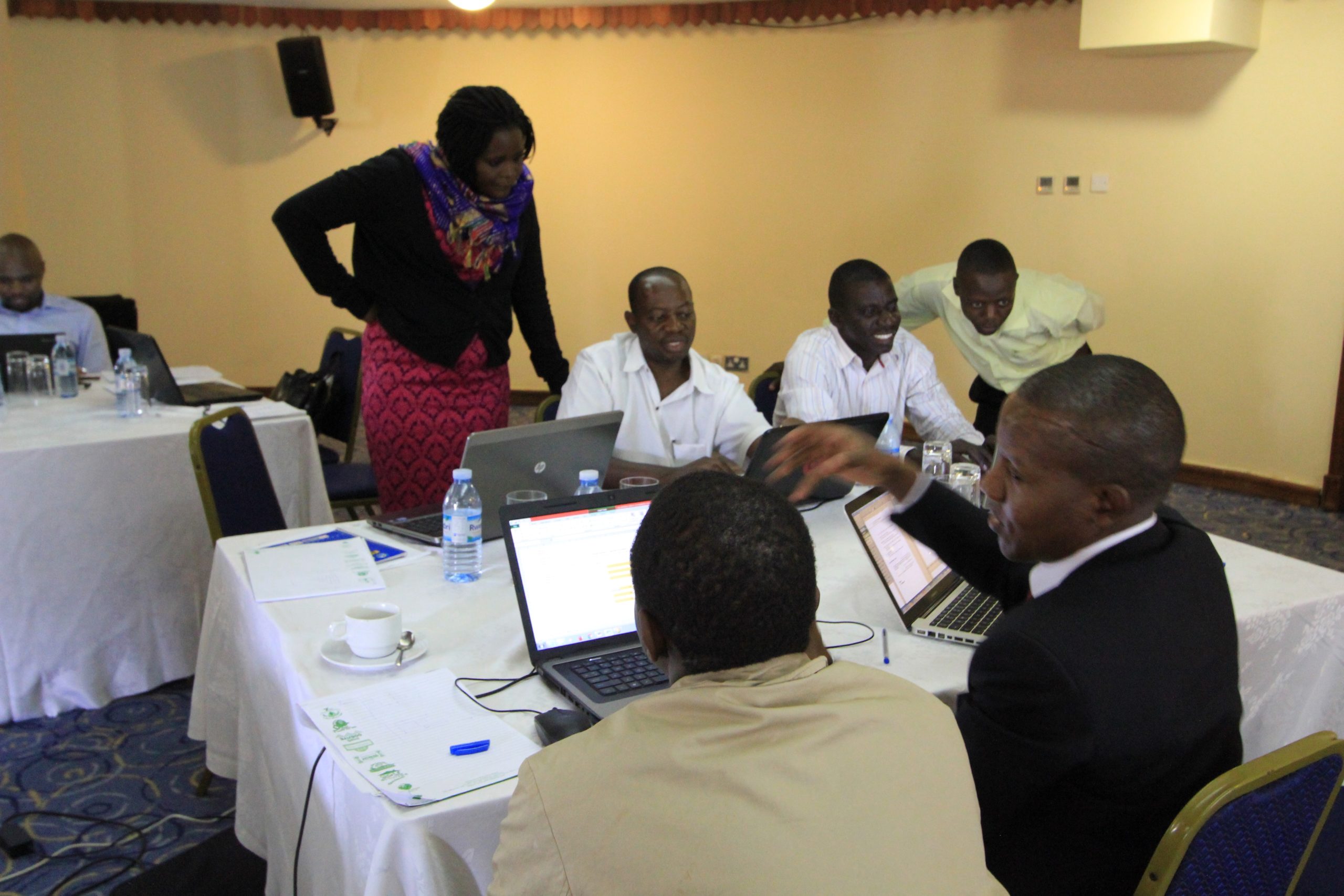
A photo of seven data analysts in Kampala working together on their laptops at a conference room table
Speaking in Kampala in 2014

(We recorded this podcast in January 2020 and you’ll hear me say that I was about to travel to China. That trip is postponed indefinitely for obvious reasons.)

These are the things I wish I knew sooner about adapting my U.S.-centric trainings so that they’re not so U.S.-centric; working with foreign language interpreters; and even translating from Fahrenheit to Celsius.

Tip #1: Talk to the Person, not to the Interpreter

I’ve worked with sign language interpreters at universities and government agencies. More recently, I worked with foreign language interpreters in Hanoi (in which the attendees were wearing headsets so they can hear the interpreters translating my words).

The best practice is to look at the attendees, not at the interpreters. For example, if someone in the audience asks a question, the speaker should look at the audience member the entire time–not at the interpreter.

Making eye contact with the attendees is not only respectful, but helpful to both of you. Communication involves words, but communication also involves eye contact, body language, and the speed and tone of your speech. By looking at the attendee, you can pick up on all the nuances of his or her facial expressions and body language, which you would miss if you solely looked at the interpreter.

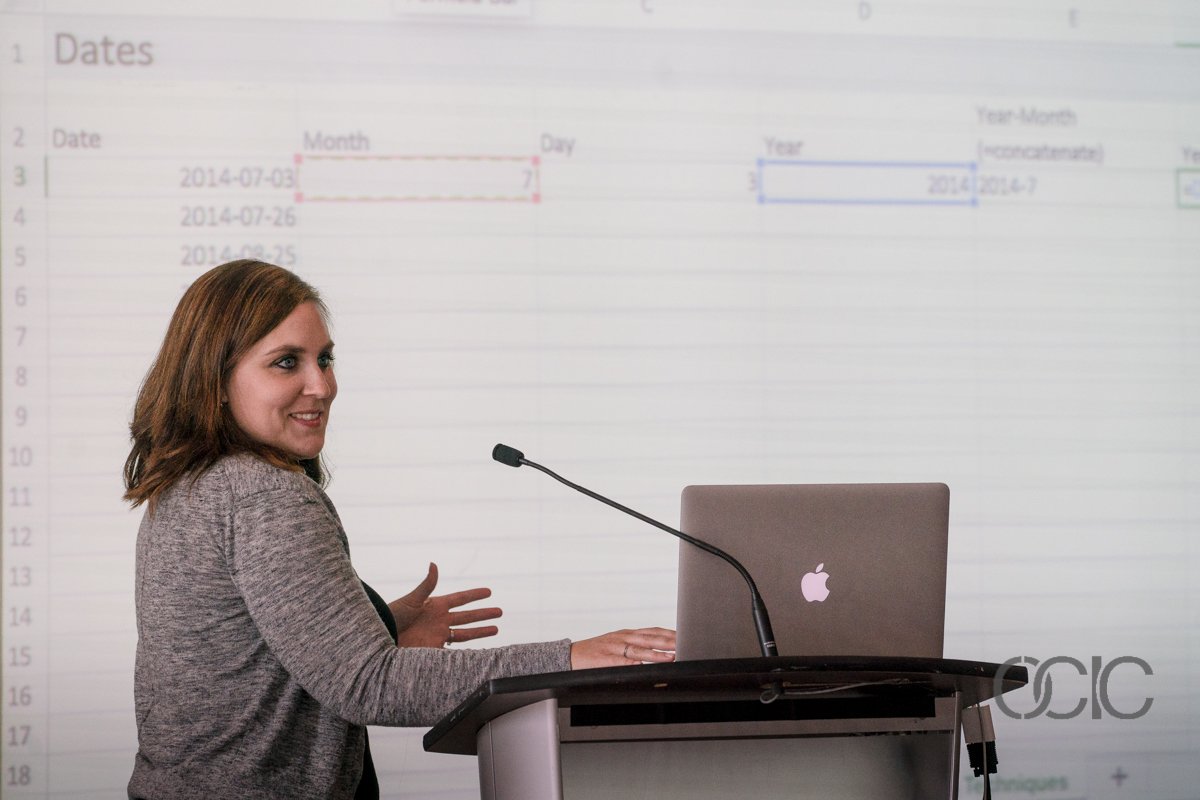
Speaking in Ontario in 2016

Tip #2: Share the Training Material with Interpreters in Advance

Sharing materials in advance is so helpful for the interpreter and the person needing the interpretation. It allows them the time to review the materials, become familiar with the topic, and also to know your key words and new vocabulary. For example, a sign language interpreter or foreign language interpreter may not have heard the terms “data visualization” or “dataviz” before your talk.

Sharing materials in advance also helps the interpreters to see how you’re planning to structure and organize your talk.

I don’t follow scripts, so I don’t have a script or speaking notes written out for the interpreters to read ahead of time. They’ve told me they simply like having a “head’s up” about the topics and vocabulary.

I usually share handouts during the presentation and then share a PDF’d copy of my slides after the presentation. Sharing materials in advance was new for me. It involves a little more prep time for the speaker, and forces you to finish your prep work much earlier than you normally would’ve, but the payoff for the attendees needing the interpreters makes it worth it.

Tip #3: Talk with the Interpreters Ahead of Time

I always try to talk to the interpreter ahead of time–and not just at 8:59 am for a 9:00 am presentation.

The first time I worked with sign language interpreters was at a university in a big hall. Knowing they would be there ahead of time was so helpful to me. I met with them about an hour before and went over my slides with them, gave them the overall format of my talk. That way, they know when I’ll break for an activity, etc. They also know when they’ll need to spell out terms like d-a-t-a-v-i-s-u-a-l-i-z-a-t-i-o-n or find a synonymous sign.

Hiccups happen though, and sometimes the interpreter shows up at 8:59 am for a 9:00 am presentation. In those cases, I give a quick rundown and start a few minutes late. The time spent with the interpreters is worth it, even if it means starting a few minutes late, because it means the day will go so much better for the attendees needing the interpreters.

Tip #4: Try to Avoid Slang and Idioms

This is hard one: Try to avoid slang or idioms. They’re everywhere, so this is tough!

For example, I might say, “At the end of the day…”

But what does that mean to a Vietnamese speaker for whom English is their third or fourth language? What this phrase really means is, “The most important thing I want you to remember is…”

Or, a “low-hanging fruit edit” would instead be “the easiest edit to make to your graph is…”

It was hilarious–and humbling–to listen to this podcast recording! I heard a dozen more idioms and slang terms throughout my conversation with Jon.

Over the years I’ve had to unlearn my bad academic habits of speaking way too formally. I actually used to try to sound like a textbook with perfect speech and sentence structure. Argh, how boring and awkward!! Now, my speech is intentionally imperfect and conversational in workshops. That style is perfect for English speakers, but it’s a huge challenge for everyone else. I’ve given hundreds of talks to English-speaking audiences, but only a dozen talks to non-native English speakers, so this is something I’m still working on. Sigh. I’ll get there!

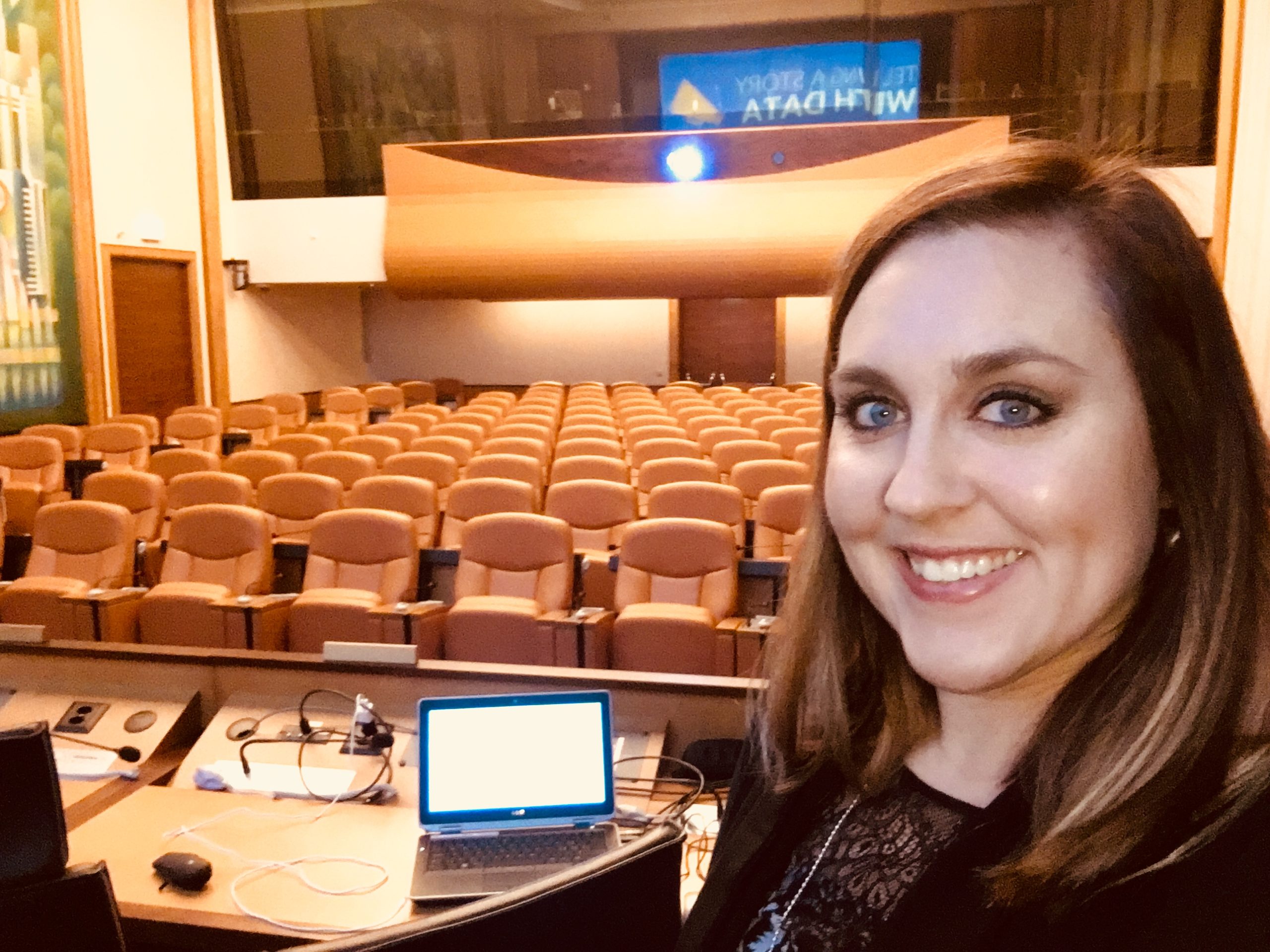
Ann K. Emery at the United Nations
My third trip to speak at the United Nations in Geneva in 2017

Tip #5: Try to Avoid Contractions

Try not to speak in contractions.

Instead of saying “don’t do this thing,” say “do not.”

For a lot of us, the “t” in “don’t” is nearly silent… or there’s a noise in the room… and our attendees will only hear the “do.”

I’ve learned to instead say “do not” and make sure to put an emphasis on the “not” with both my voice and my hands to ensure that the meaning is clear.

I even do this in the U.S. because most training settings have poor audio quality. There’s construction noise outside… someone’s phone rings… the door slams shut… there are conversations outside in the hallway… coughs… sneezes… shuffles of papers… the list goes on.

Saying “do not” instead of “don’t” is more than just a speech pattern; it’s forced me to become more clear on my dataviz recommendations. 

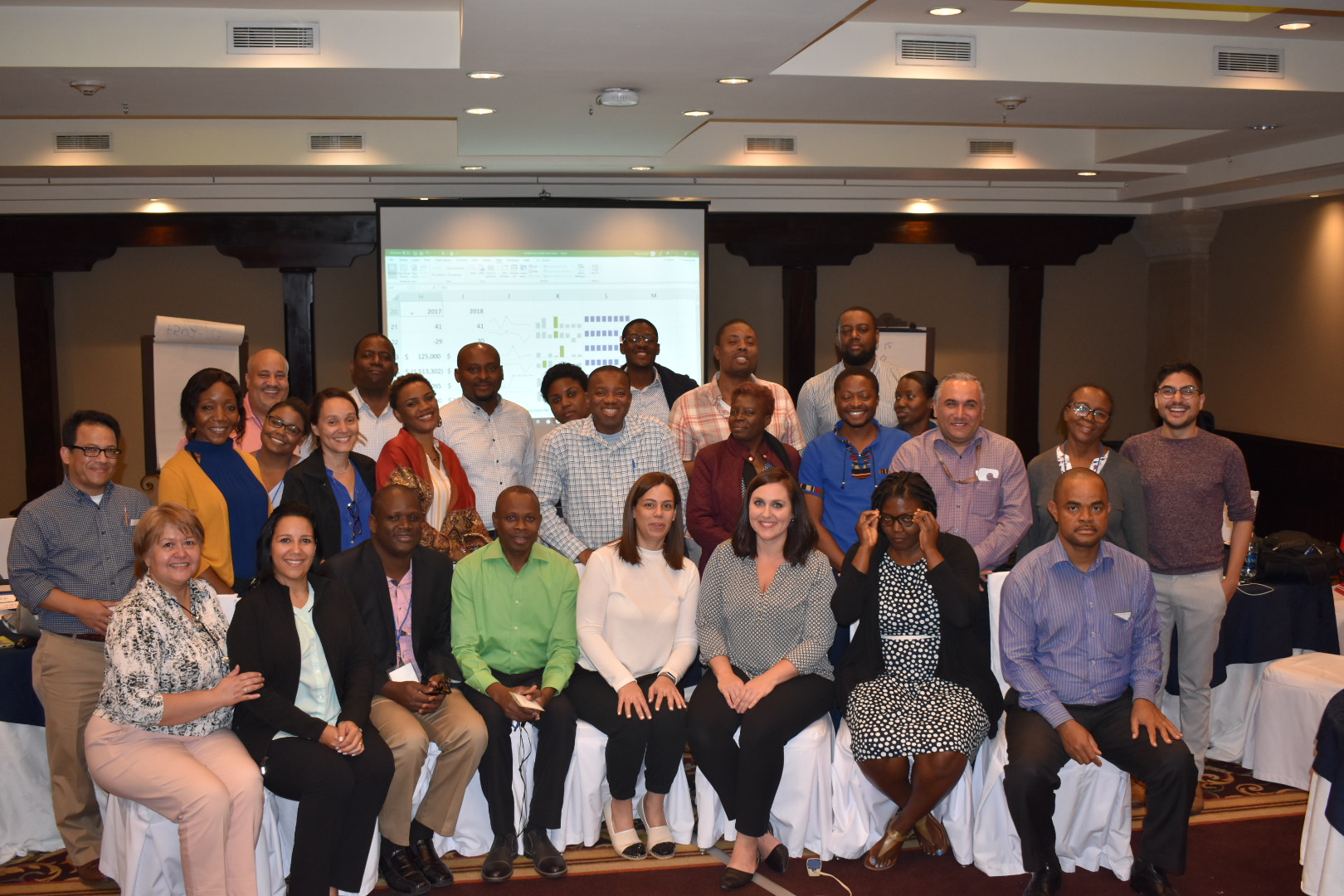
Ann K. Emery in Guatemala
Speaking in Guatemala in 2019

Tip #6: Try to Avoid Religious Phrases

Since speaking in Southeast Asia, I have actively tried to avoid using religious phrases.

For example if I’m holding my laser pointer, and it flies out of my hand (which happens more than you think!), my instinct would be to say “oh my goodness!” or “oh my gosh!”  

That phrase has zero translation to someone who’s not in a Judeo-Christian culture.

Interpreters will translate everything in an effort to make it feel more real and natural. What do interpreters make of the phrase “oh my goodness?” Does that mean it’s literally good that I dropped my laser pointer? What a confusing phrase.

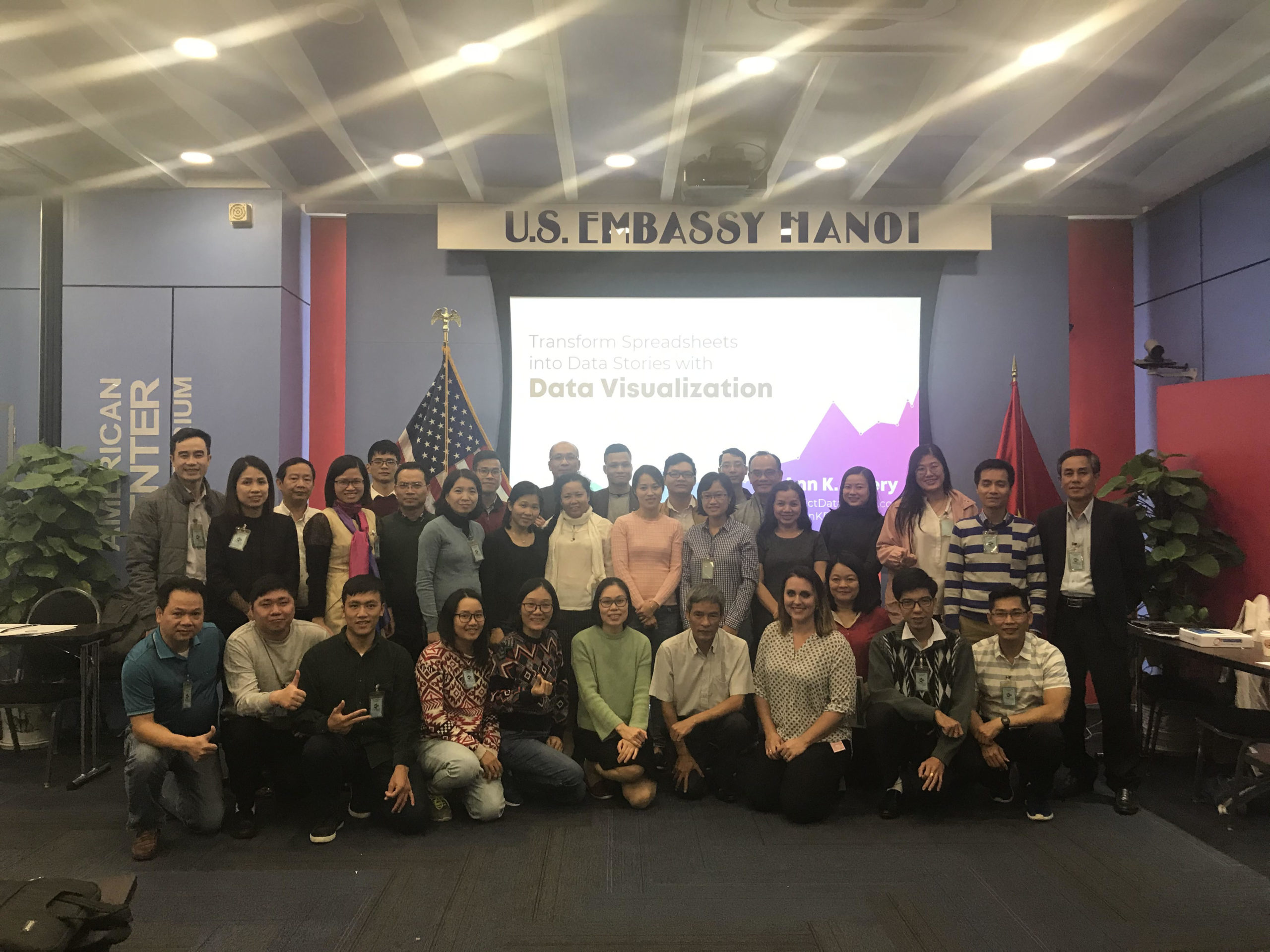
Ann K. Emery speaking in Vietnam
Speaking in Hanoi in 2019

Tip #7: Try to Use Your Clearest, Accent-Free Voice

This may be a little controversial… but try to avoid speaking with an accent.

I’m from Virginia and don’t have a southern accent, in my opinion… except when I’m around people from the south. Then, I can get a little southern-sounding.

When
I’m around fellow millennials, I can get a little millennial-sounding.

You have to turn all that off. You have to speak in the purest, accent-free version of yourself.

Ann K. Emery speaking in Zambia
Speaking in Lusaka in 2019

Tip #8: Use Body language

As I said earlier, communication is not just words. Body language is also another way we communicate with each other and it can be so helpful (or harmful) in a presentation.

Body language and cues matter because if an attendee is listening to an interpreter there’s often a delay in what I say and then what they hear. During that time though they’re looking at me and can see from my body language if what I’m saying is positive or negative.

If
you’re asking them to start using a new dataviz practice…

  • nod your head
  • smile with your mouth and with your eyes
  • give a thumbs up
  • give an “okay” sign

If
you’re asking them to avoid using a dataviz practice…

  • Shake your head “no” from side to side
  • Use your facial expressions to indicate “no”
  • Give a thumbs down
  • Make an “x” motion with your arms

Talking with your hands isn’t just for decoration. And it doesn’t have to be distracting. You can use your hands productively to reinforce what you’re saying with your voice.

Ann K. Emery in Thailand
Speaking in Bangkok in 2019

Tip #9: Find Non-U.S. Graphs and Maps

When you’re speaking in another country, make sure you’ve got examples from that country.

For example, if you’re showing currency, use the currency symbol for the country you’re speaking in.

When showing how to color code maps, I use a U.S. map in the U.S. but a South American map if speaking in South America.

Tip #10: Adjust the Agenda to the Culture You’re In

You have to adjust the agenda to the culture you’re in. In the podcast, Jon shared an example where one of our speaker friends was giving a training in the United Arab Emirates. That speaker needed to account for planned prayer time during his training agenda. There are cultural differences that you need to build in to your agenda and be considerate of.

I’ve worked with several religious groups in the U.S. who incorporate prayer time and religious services into the workday. They’ve always told me about prayer time in advance, which is helpful. Then I can plan the rest of the content around those scheduled blocks.

Tip #11: Translate Between the 12-Hour or 24-Hour Clock

Speaking of agendas… Remember that many countries follow the 24-hour clock, which Americans sometimes refer to as military time.

If I have a slide showing the day’s agenda, or a printed agenda, I’ll quickly translate the times between 12-hour and 24-hour time before the session.

View this post on Instagram

A post shared by Ann K. Emery 📊 (@annkemery) on Feb 2, 2020 at 5:14am PST

Tip #12: Learn to Translate Fahrenheit to Celsius

Here’s another tip that I remembered at the very end of the podcast–Fellow Americans, we have to learn to translate Fahrenheit to Celsius!

I’ve needed this translation in the most practical ways. For example, I remember sitting in a way-too-cold training room in Guatemala, and I was having trouble adjusting the wall thermostat by myself. I needed to call the hotel staff and request a new temperature–in Spanish, and in Celsius. Room temperature in the U.S. is around 70 degrees Fahrenheit, which is around 21 degrees Celsius. This 70-to-21 temperature translation is honestly the only one I can remember, but it’s the most practical and important for my work.

View this post on Instagram

A post shared by Ann K. Emery 📊 (@annkemery) on Dec 28, 2019 at 8:43pm PST

Formatting Reports

In the podcast, Jon surprised me when he asked about formatting reports. I always thought everyone was concerned with formatting reports, and I never really realized how many blog posts I’ve devoted to this topic before.

I work with a lot of different types of groups: for-profits, non-profits, big, small, etc. In a perfect world, they would all have very short, succinct reports in addition to many other formats (slideshow, handouts, info graphic, social media, press release, etc). And while that’s the case in some groups, for most it’s not in process and not happening yet. But they all do have a report of some kind, so my plan is always to take that and make it a great report.

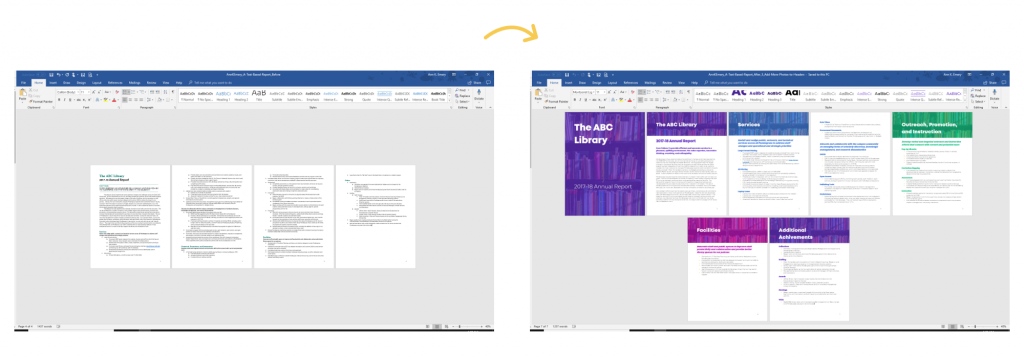
Color-Coding Reports by Chapter

Jon and I talked about one of my favorite dataviz techniques, which is color-coding reports by chapter.

The idea behind this is you might have a long report but we still need to make it easy for people to find what they’re looking for.

I recommend people use their branding colors rather than picking at random.

So Chapter 1 is brand color 1, Chapter 2 is brand color 2 and so on.

And everything in that chapter is the same color: the headings, the graphs, the call-out boxes, and even the bullet points.

When the reader sees a new color, they know that a color change = a content change.

Size your fonts according to their importance. A text hierarchy tells your viewers which information is most important (headings) and which information is least important (the regular ol' paragraphs).

You can view more examples of color-coding by category here.

If you only have a few hours to edit your report, color-coding by chapter is, by far, the best use of your editing time.

Using Everyday Software in Reports + Dataviz

I’m not a huge fan of specialized software, I use everyday products to make great reports. Word, Excel and PowerPoint are the common denominators when you’ve got many people working on the same report. Creating reports in a software everyone is familiar ensures that they will continue to use the report even when I’m gone.

Controversial Dataviz Advice

Jon loves to get me in trouble, so he asked me whether I have any controversial dataviz advice!

There are definitely some topics that are debated in the data viz world. Here’s my stance on just a couple of controversial topics.

Pie Charts Are Okay

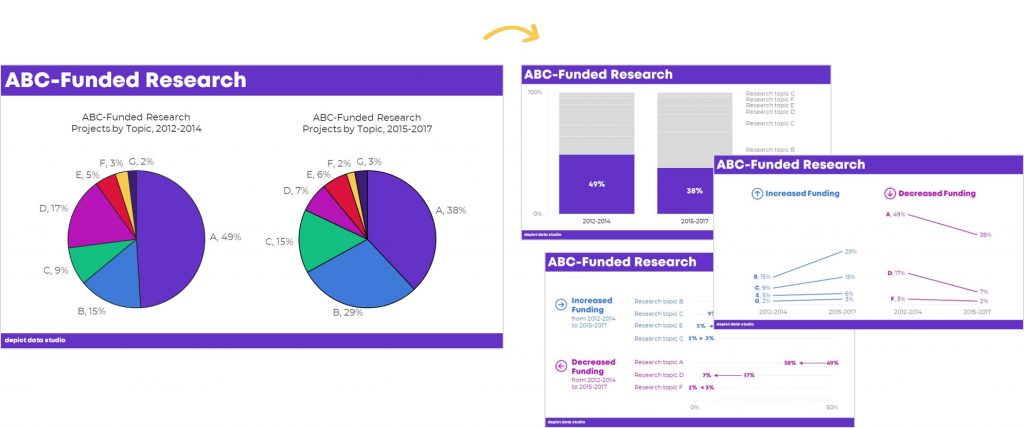
I teach that pie charts are okay–in certain situations. I have a whole blog post with a list of seven rules for using pie charts.

A million people in the dataviz community disagree and say that we should never use pie charts. But, they never follow up with advice on what to do instead. It’s SO unhelpful to bash pie charts without offering better alternatives, which is where all my pie chart makeover blog posts come in.

There are several ways to transform a pie chart. For example, you can use a stacked bar/column chart, a slope chart, or a dot plot.

Whether Bar Charts Should Start at Zero

There’s differing opinions on whether bar charts should start at zero (also known as a zero axis or zero baselines). I would suggest you listen to Jon’s PolicyViz podcast episode #66 with Jessica Witt. She’s an expert on this and I think her recommendation is a good guideline to follow.

In my workshops, I am very clear that you must label your minimum and maximum. I wasn’t always to clear on this but I changed my tune after the last election cycle because I felt like graph-makers were purposely being misleading by not starting charts at zero–and also not labeling their scales.

Your Turn

I brainstormed a dozen ways that we need to adapt our training styles when speaking in our home country vs. when visiting another country… but there are probably a dozen more. Someday, in all my “spare” time, I’ll write a follow-up blog post with additional tips. In the meantime, what am I missing?

Written by cplysy · Categorized: depictdatastudio

Mar 03 2020

The Evaluation Mindset: Charting a Course

Describing how a process works is valuable for two reasons. It forces you to make sure you know how it works. Then it forces you to take the reader through the same sequence of ideas and deductions that made the process clear to you.

William Zinsser

The whole point of having an evaluation mindset is that by knowing how something works (or does not work) you can try to make it work better. Or it can inform you as to when you should abandon your plans and take a different path. Or it can give you insight on other pathways to reaching your target consequences.

But mindset doesn’t mean just keeping the thoughts in your head. There is incredible value in putting ideas down on paper.

Modeling your evaluation thought process creates something that can be built upon. It makes your thoughts and evidence tangible, so they can be measured and tweaked.

And it gives you something you can share with others. A representation of your thought process.

All Models are Wrong

But some are useful.

I have always liked that quote by the late British statistician George Box.

In the field of evaluation, models are important. We use them to ground our work and communicate our assumptions.

They carry different names depending on your context, sometimes called logic models or log frames and other times theories of change. Over time these concepts have naturally evolved, increasing complexity and decreasing accessibility.

But for your evaluation mindset, I encourage you to think of them as something else.

Representations.

They can be simple depictions of the actions and consequences discussed in my last post.

And like all models, they will be wrong.

But our goal isn’t to make them right.

Our goal is to make them useful.

Doodle Modeling

So let’s draw some useful models.

We’ll start with a basic action – consequence pair. Then we’ll expand up on it, adding additional details and space for measurements/context.

We’ll doodle it out on a piece of paper using arrows and boxes to connect different pieces.

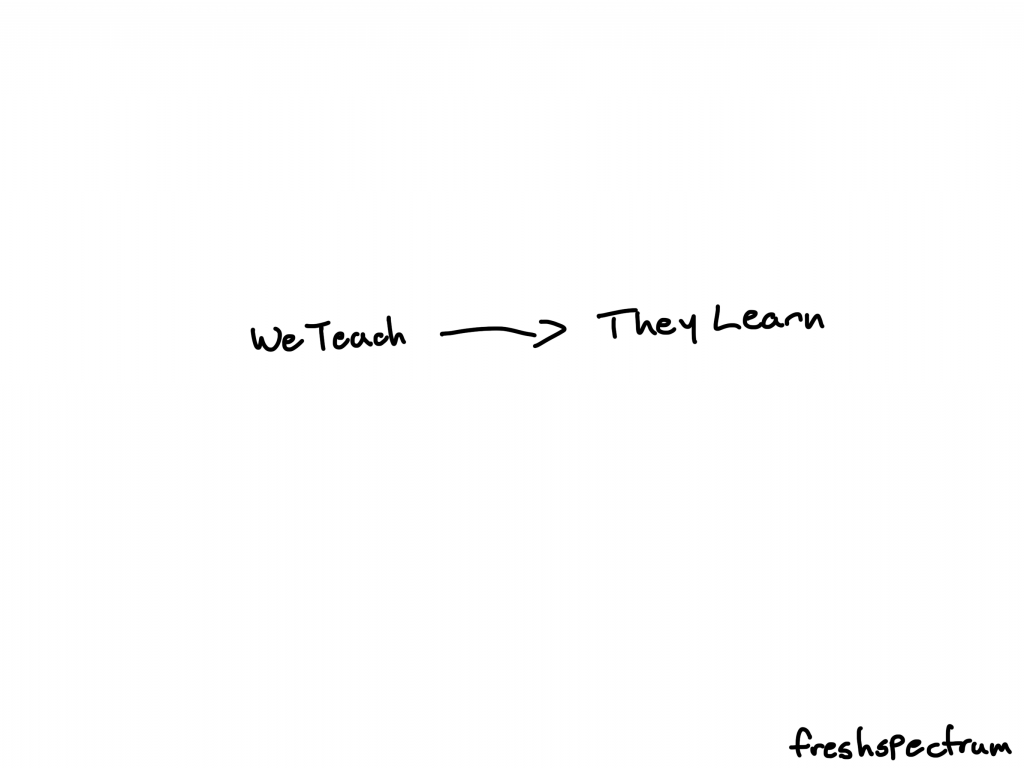
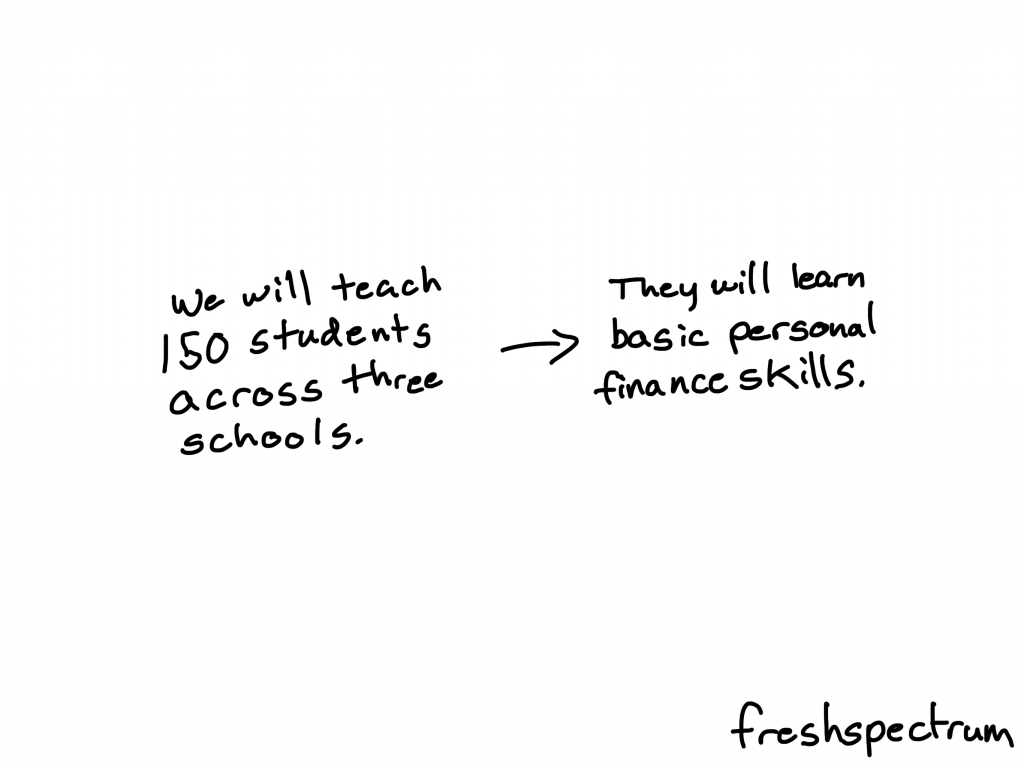
Action: We Teach ______
Consequence: They Learn _____

Now let’s expand upon it a bit.

Action: We Teach _____
Measure: How much did we actually teach? How many people did we teach? How long did we spend teaching them?

Consequence: They Learn _____
Measure: Did they actually learn _____? How much of what was taught did they learn _____?

Now let’s go a little bit further with more detail.

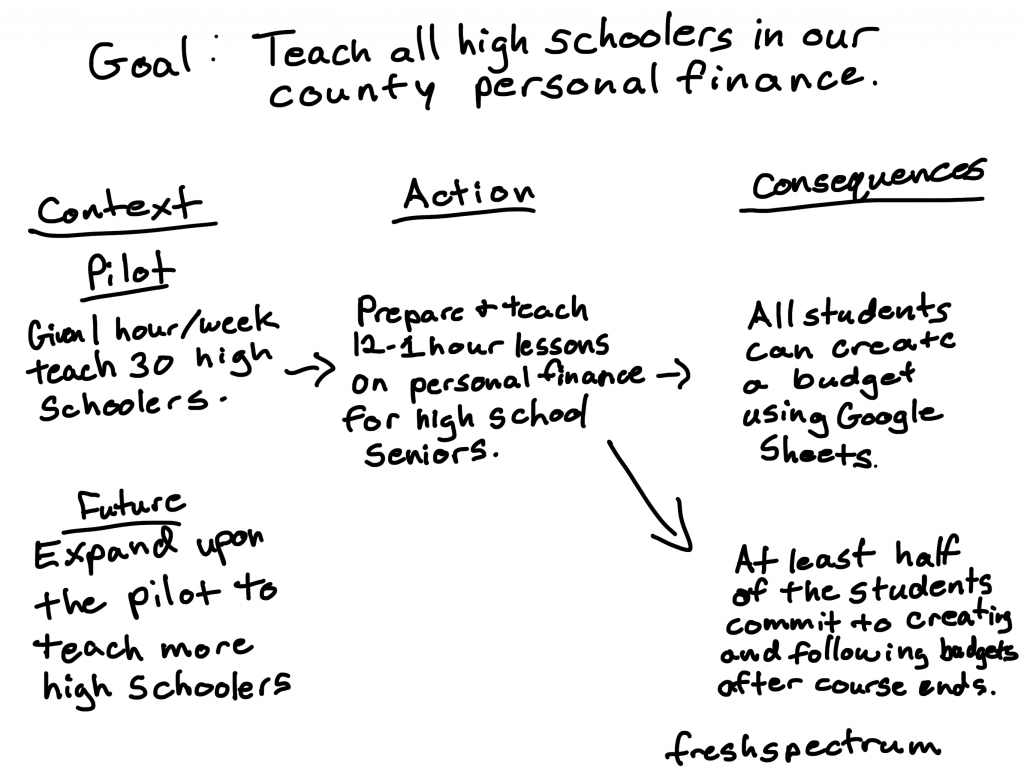
Goal: We want to teach all high schoolers in our county personal finance.

Context: We are given an hour once a week to speak to a single class of high school seniors. This class is mandatory and we will see the same students over and over again. We were awarded a local government grant to put on a single class and cover a little bit of prep time.

Action: We teach practical personal finance lessons for students who will soon be off to higher education or fully into the working world.
Measure: How many lessons were taught? Were all of the students present for all lessons?

Consequence: They learned how to create a budget and tips for staying on that budget. They also learned how to use tools to monitor their progress.
Measure: Did they actually learn how to create a budget? Will they start creating/following budgets on their own after the program has ended?

Doodle Modeling an Indie Business

Alright, so let’s do another example.

Action: Create Websites
Consequence: Get Paid

It doesn’t take long before it dawns on you that just creating websites doesn’t get you paid.

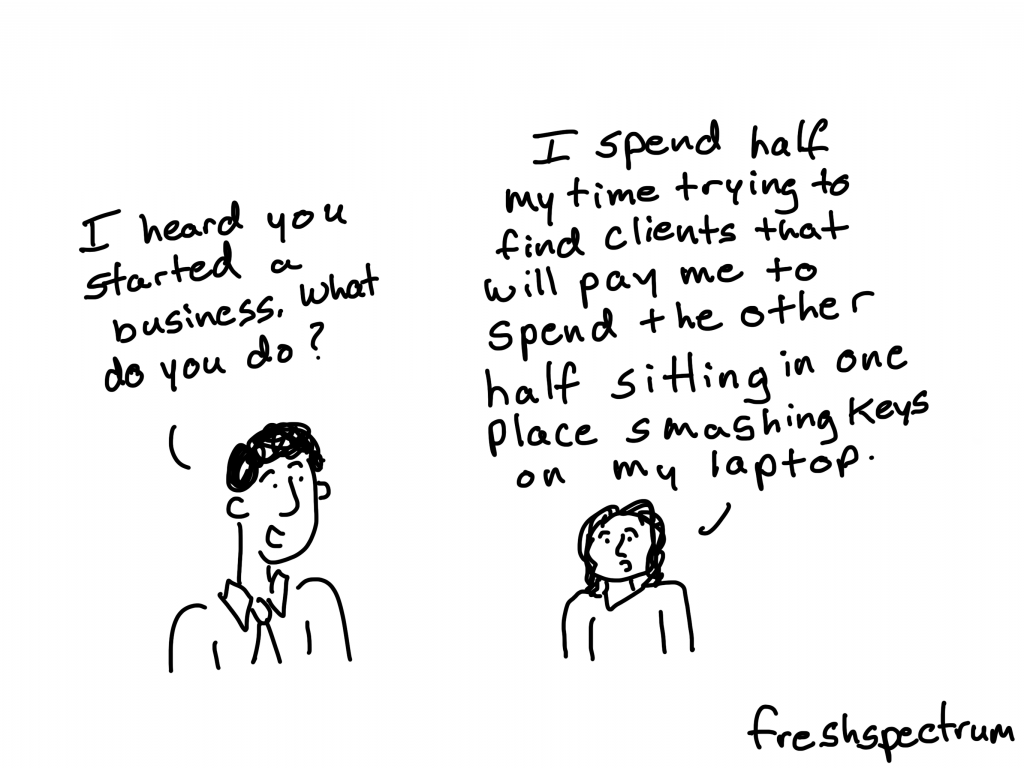
You need to find people who will hire you to create websites. Then you can create the websites and get paid. So the tricky part of the business, most of the time, is finding clients.

It’s not that getting paid to create websites isn’t the work. It’s just not particularly useful to focus a lot on that aspect. So instead of building out that model, let’s build out another one.

Action: Attending Networking Events
Consequence: Get Clients

Okay, so this pair is a bit more useful in my opinion, at least for most of the indie businesses I know who are constantly struggling to find new clients.

Let’s expand it out a little.

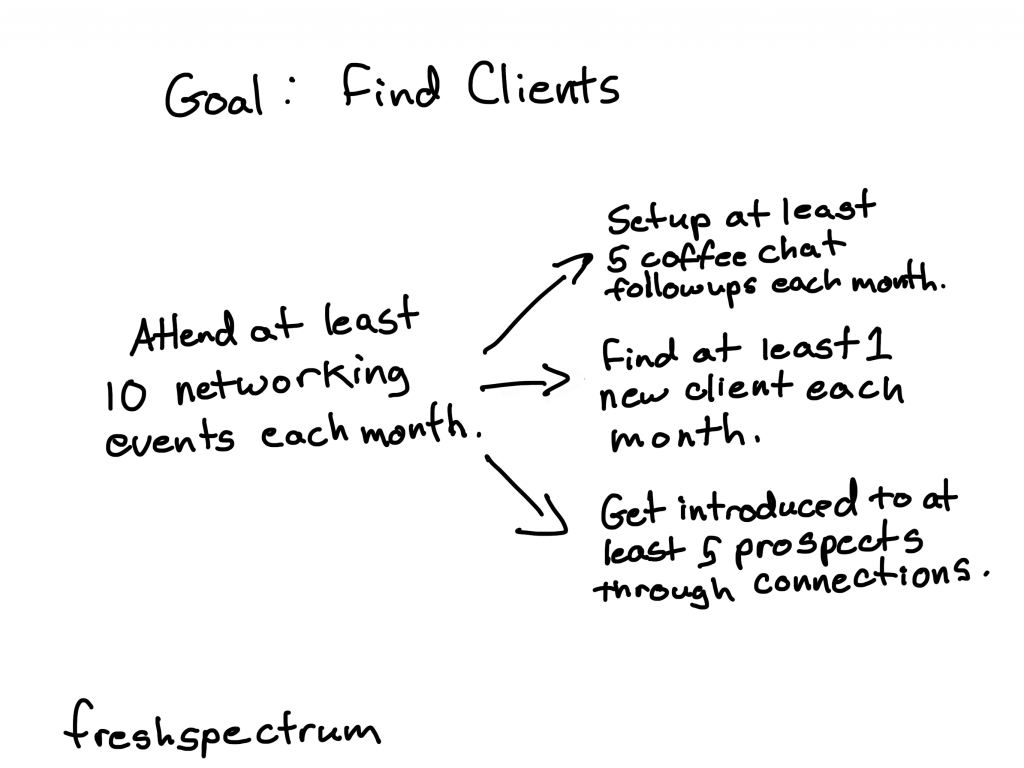
Action: Attending Networking Events
Measure: How many networking events did you go to? How many prospective customers did you meet?

Consequence: Get Clients
Measure: How many follow-up coffee chats were setup? How many new clients were found that can be directly connected to that event? How many indirectly connected new clients?

Models make actions and consequences tangible.

The goal of most models isn’t academic.

It’s about translating a bunch of ideas, evidence, goals, and strategies into something tangible. Something that you can wrap your mind around. Something that you can use to discuss your plans with other people.

You are creating a useful representation.

You don’t need a special degree or certification to create a model. It doesn’t have to be super fancy or made with super fancy software.

A pen and paper is a great place to start.

Where Doodle Models meet Logic Models

So for all of you professional evaluators and nonprofit program managers who are trying to tie this to the work you do right now. This is how I connect the two.

Outputs are measurable actions.

Outcomes are measurable consequences.

Tip: Start Simple then Expand

The action-consequence pair is the heart and soul of the model.

If you begin with that, you can then start to expand and add more detail. You can add more measurements, more context, more detail.

And while in our complex world, the idea of boiling our projects down to action-consequence pairs might seem wrong, it can certainly be useful.

Practice Time

Time to doodle some of your own models. To get you started, here are some prompts.

Let’s say you want to have a fantastic weekend (consequence) what actions will help make that consequence a reality? How would you measure both your actions and consequences?

Maybe you would like to run, not walk, an entire 5K (consequence). What actions would help make that consequence a reality? How would you measure both your actions and consequences?

Let’s say you want to help the people who are important in your life feel more appreciation (consequence). What actions would help make that consequence a reality? How would you measure both your actions and consequences?

Thank You!

As our collective attention gets pulled in every which direction, it becomes increasingly meaningful to have your work read, discussed, and shared.

So thank you for reading, commenting, and sharing, it really means a lot.

Written by cplysy · Categorized: freshspectrum

  • « Go to Previous Page
  • Go to page 1
  • Interim pages omitted …
  • Go to page 278
  • Go to page 279
  • Go to page 280
  • Go to page 281
  • Go to page 282
  • Interim pages omitted …
  • Go to page 304
  • Go to Next Page »

Footer

Follow our Work

The easiest way to stay connected to our work is to join our newsletter. You’ll get updates on projects, learn about new events, and hear stories from those evaluators whom the field continues to actively exclude and erase.

Get Updates

Want to take further action or join a pod? Click here to learn more.

Copyright © 2026 · The May 13 Group · Log in

en English
af Afrikaanssq Shqipam አማርኛar العربيةhy Հայերենaz Azərbaycan dilieu Euskarabe Беларуская моваbn বাংলাbs Bosanskibg Българскиca Catalàceb Cebuanony Chichewazh-CN 简体中文zh-TW 繁體中文co Corsuhr Hrvatskics Čeština‎da Dansknl Nederlandsen Englisheo Esperantoet Eestitl Filipinofi Suomifr Françaisfy Fryskgl Galegoka ქართულიde Deutschel Ελληνικάgu ગુજરાતીht Kreyol ayisyenha Harshen Hausahaw Ōlelo Hawaiʻiiw עִבְרִיתhi हिन्दीhmn Hmonghu Magyaris Íslenskaig Igboid Bahasa Indonesiaga Gaeilgeit Italianoja 日本語jw Basa Jawakn ಕನ್ನಡkk Қазақ тіліkm ភាសាខ្មែរko 한국어ku كوردی‎ky Кыргызчаlo ພາສາລາວla Latinlv Latviešu valodalt Lietuvių kalbalb Lëtzebuergeschmk Македонски јазикmg Malagasyms Bahasa Melayuml മലയാളംmt Maltesemi Te Reo Māorimr मराठीmn Монголmy ဗမာစာne नेपालीno Norsk bokmålps پښتوfa فارسیpl Polskipt Portuguêspa ਪੰਜਾਬੀro Românăru Русскийsm Samoangd Gàidhligsr Српски језикst Sesothosn Shonasd سنڌيsi සිංහලsk Slovenčinasl Slovenščinaso Afsoomaalies Españolsu Basa Sundasw Kiswahilisv Svenskatg Тоҷикӣta தமிழ்te తెలుగుth ไทยtr Türkçeuk Українськаur اردوuz O‘zbekchavi Tiếng Việtcy Cymraegxh isiXhosayi יידישyo Yorùbázu Zulu